
Appraisal and value basics for Fantin-Latour Chrysanthemums prints
Fantin-Latour Chrysanthemums print value research should start with format identification, plate signature, paper, edition marks, margins, framing, condition, provenance, and comparable lithograph sales. Use this guide to compare the signals that matter before paying for a formal appraisal or deciding whether to sell.
Henri Fantin-Latour (1836–1904) is celebrated for still lifes—especially flower paintings. “Chrysanthemums” is a title collectors encounter in more than one format: museum-held originals, period prints, and later decorative reproductions.
The fastest path to an accurate value range is to document what you actually have: original painting vs. lithograph vs. modern reproduction. In Fantin-Latour’s market, those categories can mean the difference between a low-value decor print and a five-figure-plus work.
This migration rewrites a legacy “appraisal report” post into a practical guide: how to spot a plate-signed lithograph, what to photograph, which condition issues matter, and how recent auction results help anchor a value estimate.
Free first read
Check print evidence before paying for a report
Upload the full image, signature area, margins, paper surface, frame back, labels, and condition photos. The free screener can separate decor reproduction, lithograph, and higher-value fine-art evidence.
Start with a free screener. Use a signed report only if you need insurance, estate, donation, or sale documentation.
How We Research Valuation Data
Our appraisal guides are based on auction results, dealer pricing data, and professional appraiser insights. We may earn a commission when you use our free professional appraisal service. Learn about our editorial standards.
Appraisal value: what Fantin-Latour “Chrysanthemums” prints typically sell for
The legacy post behind this migration described a plate-signed lithograph (signature printed as part of the image) rather than a hand-signed, numbered fine-art edition. For that common scenario, a practical working range is:
- Decorative reproduction: usually valued as decor unless documentation proves otherwise.
- Fantin-Latour lithograph: comparable auction results commonly cluster around a few hundred dollars before condition and framing adjustments.
Values move up when the print is a documented limited edition (signed and numbered, with publisher marks) and move down quickly when the paper is stained, trimmed, or heavily foxed.
If what you have is an original oil painting by Fantin-Latour (rare for most households), you are in a different market entirely. Don’t rely on “print” pricing until you confirm the medium.
What you actually have: original painting vs. lithograph vs. later reproduction
The title “Chrysanthemums” gets applied to multiple images. Use these fast checks to sort the object into the right category:
- Original oil painting: visible brushstrokes, varied surface texture, and canvas weave that changes with the paint. Under raking light, highlights and shadows move across the surface.
- Period lithograph / fine-art print: ink sits on paper, not as raised paint. Under magnification you may see litho crayon grain, plate tone, and deliberate printing characteristics.
- Later reproduction (offset/photomechanical): very even surface and modern dot patterns under magnification. Many décor prints are made from photographs of paintings and are not collectible in the same way.
If you’re unsure, photograph the surface at an angle with side lighting. That single photo often reveals whether you’re looking at ink on paper or paint on canvas.
Signature clues: hand-signed vs. “signed in plate”
Fantin-Latour prints often show a signature that looks convincing at first glance. The key question is whether it’s actually applied by hand.
- Hand-signed: usually in graphite pencil or ink in a margin, with pressure variation and tiny skips in the line.
- Signed in plate: printed within the image area, perfectly flat, and identical across impressions. This is common on reproduction lithographs.
A plate signature is not “fake”—it’s just not a hand autograph. Market pricing is typically closer to decorative-print territory unless the edition itself is clearly documented.
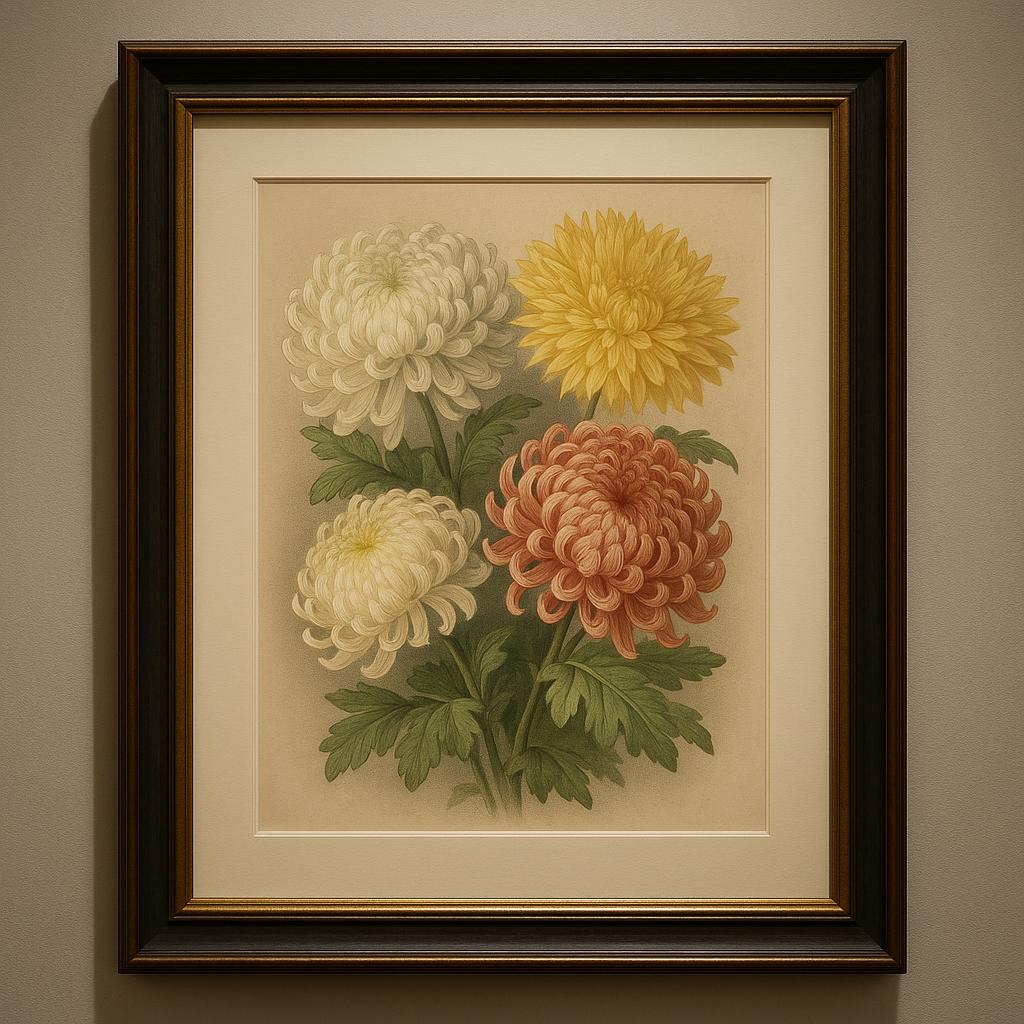
Printmaking clues: lithograph vs. offset reproduction
If you’ve established it’s a print on paper, one more step improves pricing accuracy: identifying whether it’s a true lithograph or a later offset reproduction.
- Offset dots: under a loupe, modern reproductions often show CMYK dot patterns (tiny colored dots creating the image).
- Lithograph grain: true lithographs can show a crayon-like texture and more organic grain in the ink.
- Margins and marks: look for an edition fraction (e.g., 12/200), a title, a publisher/printer blindstamp, or a watermark.
For many family-inherited “Chrysanthemums” pieces, the absence of edition markings and the presence of a plate signature points to a decorative reproduction.
Condition issues that commonly lower value
Prints are highly condition-sensitive, especially around the margins. A clean-looking front can still hide significant issues under the mat.
- Foxing: brown speckles caused by moisture/age (often worst in margins).
- Toning: overall yellowing of paper, especially on cheaper stocks.
- Mat burn / acid burn: a darker line where old mat board touched the sheet.
- Creases and edge tears: common on prints that were stored rolled or moved between frames.
- Trimming: cut margins can remove any identifying marks and reduce collector interest.
If you plan to sell, avoid “cleaning” the paper yourself—well-meaning cleaning attempts can create stains that are worse than the original issue.
What photos to take (fastest path to an accurate value)
- Full front shot, straight-on (include the frame edges if framed)
- Close-up of the signature area (include surrounding texture)
- Close-up of all four corners/margins (look for foxing, tears, or trimmed edges)
- Raking-light close-up (side-lit) to reveal texture
- Back of frame / backing paper (labels, stamps, and frame shop notes)
- Any paperwork (receipt, prior appraisal, gallery info)
Auction comps for Fantin-Latour lithographs and prints
These results are for lithographs and related print material, not original oil paintings. Use them only after confirming your sheet is a print and checking whether the signature is hand-applied or printed in the plate.
| Photo | Sale | Date | Lot | Realized | Notes | Source |
|---|---|---|---|---|---|---|
| No image | Rachel Davis Fine Arts, Henri Fantin-Latour lithograph | Aug. 13, 2022 | 49 | $275 | Recent lithograph baseline in the low-hundreds range. | Valuer Bridge dataset |
| No image | Rachel Davis Fine Arts, Henri Fantin-Latour lithograph | March 20, 2010 | 267 | $550 | Higher lithograph comp; condition and edition details still matter. | Valuer Bridge dataset |
| No image | Rachel Davis Fine Arts, Henri Fantin-Latour lithograph | March 20, 2010 | 271 | $350 | Comparable lithograph result for pricing framed prints conservatively. | Valuer Bridge dataset |
| No image | Dirk Soulis Auctions, Henri Fantin-Latour lithograph | Sept. 21, 2024 | 318 | $325 | Recent Fantin-Latour lithograph sale; useful for current market anchoring. | Valuer Bridge dataset |
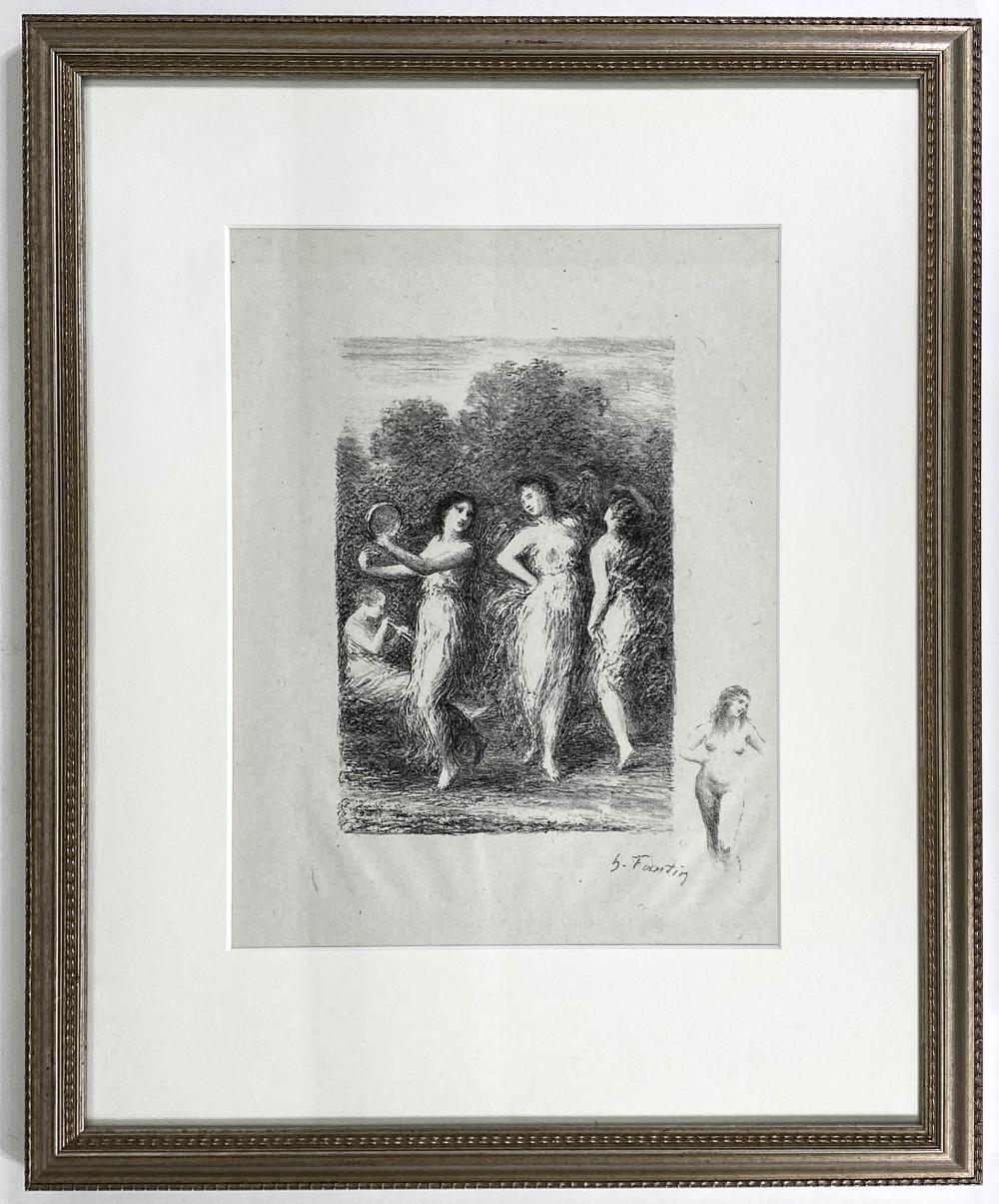 | Grant Zahajko Auctions, Henri Fantin-Latour lithograph | Dec. 4, 2024 | 67 | $275 | Documented lithograph comp with local auction image. | Valuer Bridge dataset |
| No image | Capo Auction, Henri Fantin-Latour lithograph | March 24, 2012 | 118 | $425 | Middle-band lithograph comp before paper-condition adjustments. | Valuer Bridge dataset |
Takeaway: a plate-signed or unnumbered Fantin-Latour print should usually be compared with lithograph/decorative-print results, not original oil-painting results. Original works are a separate market and need specialist authentication.
Have a Fantin-Latour print?
Check the signature, paper, margins, and print surface before pricing it.
Upload the full image, signature area, margins, paper texture, back labels, and condition details. The free screener can flag whether it looks like decor reproduction, lithograph, or a higher-value print case.
Upload photos for a free first lookHow to sell a Fantin-Latour “Chrysanthemums” print
Choose a channel that matches what you have:
- Decorative prints: marketplaces (eBay/Etsy) work well if you disclose dimensions, framing, and condition clearly.
- Signed/numbered editions: consider a print dealer, a gallery, or an auction house that can catalogue the edition.
- Original paintings: contact a reputable fine-art auction specialist. Don’t remove old labels or restorations—document everything first.
Packing note: ship framed works with corner protection and padding to prevent glass damage. For unframed prints, ship flat between rigid boards when possible; if you must roll, use acid-free interleaving and a wide tube.
Search variations collectors ask
Readers often Google these questions while researching Fantin-Latour “Chrysanthemums” prints:
- How much is a Henri Fantin-Latour “Chrysanthemums” lithograph worth?
- How can I tell if a Fantin-Latour signature is printed in the plate?
- Is my “Chrysanthemums” an original painting or a reproduction?
- What does “signed in plate” mean on a French lithograph?
- Does foxing in the margins lower lithograph value?
- What photos do I need for an art print appraisal?
- Where is the best place to sell a Fantin-Latour flower print?
- How do edition numbers and blindstamps affect print pricing?
- Are Fantin-Latour flower paintings always high value?
Each question maps to the identification, attribution review, and selling guidance above.
References
- Valuer Bridge/Appraisily auction dataset: Rachel Davis Fine Arts Fantin-Latour lithograph lots 49, 267, 271, and 270.
- Valuer Bridge/Appraisily auction dataset: Dirk Soulis lot 318 and Grant Zahajko lot 67 Fantin-Latour lithograph comps.
- Prices exclude buyer fees, shipping, taxes, framing, and paper conservation.
Wrap-up
For most inherited Fantin-Latour “Chrysanthemums” pieces, value is driven by one decision: original vs. print. Document the surface texture, the signature area (hand-signed vs. plate-signed), and the margins. Once you confirm the format, you can price the work using recent market evidence, disclose condition honestly, and choose the right selling channel.