Victor Vasarely Auction Prices and Value Guide
Victor Vasarely auction prices are tracked in Appraisily's artist market index, with source-directory coverage of 34,843 records. Use this page to review sold-lot activity, market context, and valuation factors before requesting a formal appraisal.
Victor Vasarely auction prices: quick answer
Victor Vasarely auction prices depend on medium, size, date, condition, provenance, edition details, attribution confidence, and recent comparable auction sales.
- Artist
- Victor Vasarely
- Source records
- 34,843
- Market update
- 2026-02-16
Victor Vasarely market snapshot
Victor Vasarely shows very deep auction liquidity with 2,162 tracked lots. Median realized sale is around $470. Category concentration is still broad or sparse. Last 12 months recorded 589 sales. Latest recorded sale: 2026-02-04.
Realized price distribution
- Under $1,000 (73.4% · 1,067 sales)
- $1,000 to $10,000 (16.8% · 244 sales)
- $10,000+ (9.8% · 143 sales)
- Median sale (last 12 months)
- $450
- Sales recorded (last 12 months)
- 589
- Median shift vs prior year
- +7.1%
- Latest recorded sale
- 2026-02-04
Artist context
About Victor Vasarely
Born
1906
Died
1997
Nationality
Hungarian, French
Also known as
Vásárhelyi, Győző, Vasarely, Győző, Yvaral (Jean-Pierre Vasarely, son)
Victor Vasarely (born Győző Vásárhelyi, 1906–1997) was a Hungarian-French painter, printmaker, and sculptor widely regarded as the founding figure of Op art. Born in Pécs, Hungary, he studied at the Bauhaus-influenced Műhely academy in Budapest before relocating to Paris in 1930, where he initially worked as a commercial graphic artist. Over the following decades Vasarely developed a rigorous visual language of geometric forms, optical illusions, and modular pattern systems that seemed to shift and vibrate on the picture plane. His manifesto-like concept of the "Alphabet plastique" proposed a universal vocabulary of shapes and colors that could generate infinite compositions, and his large public installations helped integrate abstract art into architecture. Major museums including the Museum of Modern Art, Tate, and Centre Pompidou hold significant collections of his work. Collectors today encounter his paintings, screen prints, lithographs, and sculptural multiples regularly at auction.
Op art (Optical art)Kinetic artGeometric abstractionpainting (acrylic, oil)screen prints and lithographssculpturegouachegeometric optical illusions and perspective distortionscheckerboard and grid patterns (Zèbres series)tessellations and cellular structures (Vega, Honfleur, Bellatrix series)
Common works and media
Collectors most commonly encounter Vasarely's screen prints and lithographs, many produced in numbered editions from the 1960s through the 1980s. His paintings—typically acrylic on canvas—feature undulating grids, distorted checkerboards, and spherical perspective projections from series such as Vega, Zèbres, Honfleur, and Bellatrix. Sculptural multiples in painted metal or resin, as well as tapestries and architectural reliefs, also appear on the market. Early graphic works on paper from the 1930s–1940s are rarer and represent a distinct phase of his career.
Market and appraisal context
Victor Vasarely is one of the most liquid twentieth-century artists at auction, with 2,452 recorded lots in the Appraisily auction index spanning from November 2007 through April 2026. Of these, 1,651 carry a realized price. The interquartile range sits between $280 and $1,000, with a median of $455—reflecting the high volume of editioned screen prints and lithographs that dominate his market. Unique paintings and sculptures from his principal 1950s–1970s period have achieved up to $2,500,000 at the top end, creating a very wide price dispersion driven almost entirely by medium and scale rather than by rarity of attribution. Trading activity is active and growing: 678 priced lots appeared in the most recent twelve-month window versus 622 in the prior twelve months, a roughly 9% increase in volume. Major houses including Christie's, Bonhams, Artcurial, and Cornette de Saint-Cyr appear alongside specialist print dealers such as RoGallery and regional firms like Hill Auction Gallery, DuMouchelles, and Soulis Auctions, indicating deep geographic and market-tier penetration. The most frequently observed categories are Post-War & Contemporary Art and Prints & Multiples, with screen prints, lithographs, and serigraphs making up the majority of turnover.
Auction categories and appraisal factors
Common auction categories
- Post-War & Contemporary Art
- Prints & Multiples
Value drivers
- Authentication by Pierre Vasarely and the Fondation Vasarely in Aix-en-Provence is the recognized authority for certificates of authenticity and catalogue raisonné entries
- Medium significantly affects value: unique paintings and sculptures command higher prices than editioned prints; large-scale paintings from the 1960s–1970s are particularly sought after
- Provenance tracing to the artist's estate, major galleries, or institutional collections strengthens attribution confidence
- Edition size, numbering, and condition are critical for print valuation; Vasarely produced a large volume of screen prints and lithographs
- Series and period matter: works from key series such as Vega, Honfleur, and Zèbres, and pieces from the 1950s–1960s Denfert period, are more frequently encountered at auction
- Medium is the primary value driver: unique paintings and large-scale sculptures from the 1960s–1970s can reach seven figures, while editioned screen prints and lithographs typically realize $175–$1,200 at auction.
Appraisal caveats
- Vasarely's large output of editioned prints and multiples means that attribution alone does not guarantee high market value; edition number, condition, and series all factor into appraisal.
- Some sources list Vasarely's birth year as 1908 (Tate, some VIAF entries) while the Library of Congress, RKD, and the Pierre Vasarely estate give 1906-04-09. The 1906 date is supported by the estate and multiple authority files.
- The existence of posthumous or unauthorized prints attributed to Vasarely has been reported; authentication through the estate is recommended.
- The auction dataset includes some false-positive lots for artists named Victor who are not Victor Vasarely (e.g., Victor Weisz, Victor O'Connor, Victor Szucs). These represent noise in the recent-lots sample but do not materially affect the aggregate price statistics, which are drawn from the full 2,452-lot dataset filtered to the artist.
Evidence
Sources for artist context
This source-grounded artist context passed Appraisily's promotion threshold: high confidence, strong sources.
- Library of Congress library authority
- RKD Netherlands Institute for Art History library authority
- Pierre Vasarely / Fondation Vasarely artist estate or foundation
- The Museum of Modern Art museum or university
- Tate museum or university
- Wikidata library authority
Recent sale records
Selected public auction records currently in the Appraisily lot index. Use them as market context, then request a formal appraisal before you sell, insure, or donate.
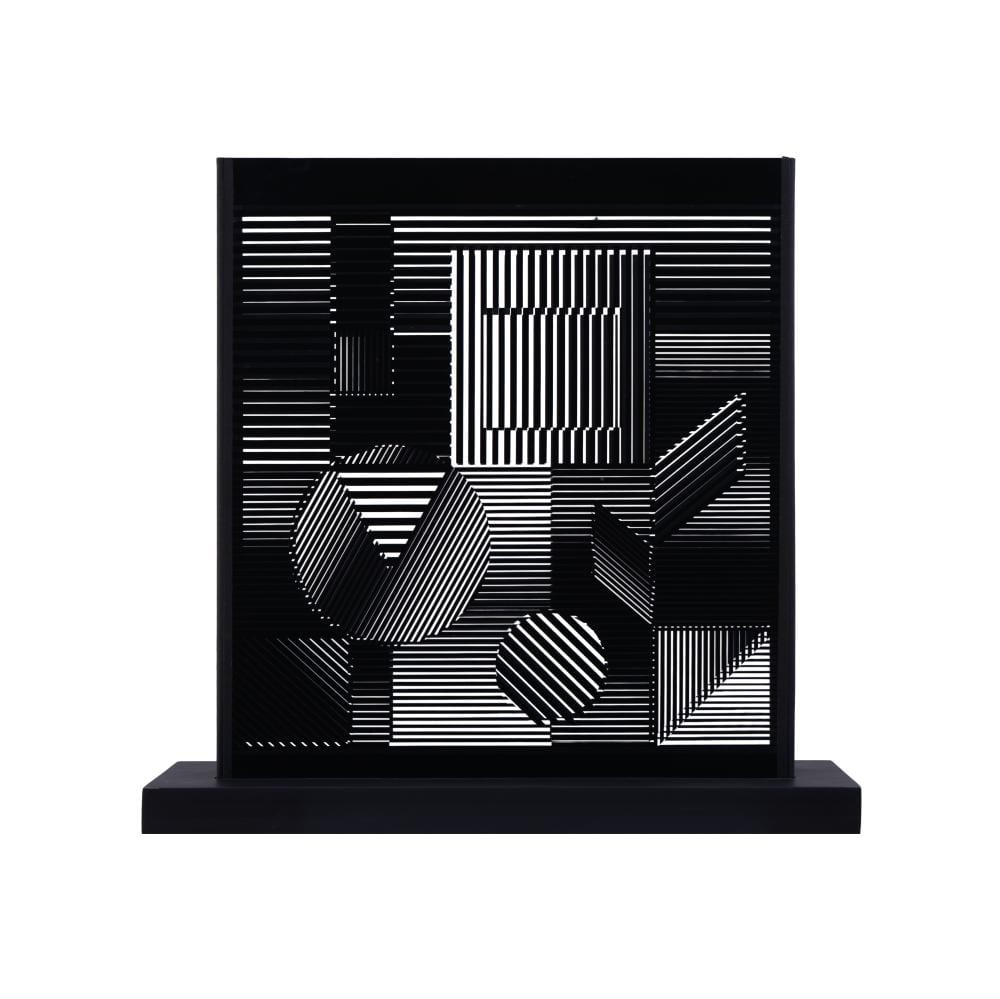
victor vasarely 1906 1997 naissances sf serigraf a sobre acr lico 58 5 x 60 x 17 cm · Lefebre Subastas · 2026-06-06 victor vasarely 1906 1997 naissances sf serigraf a sobre acr lico 58 5 x 60 x 17 cm Lefebre Subastas · 2026-06-06
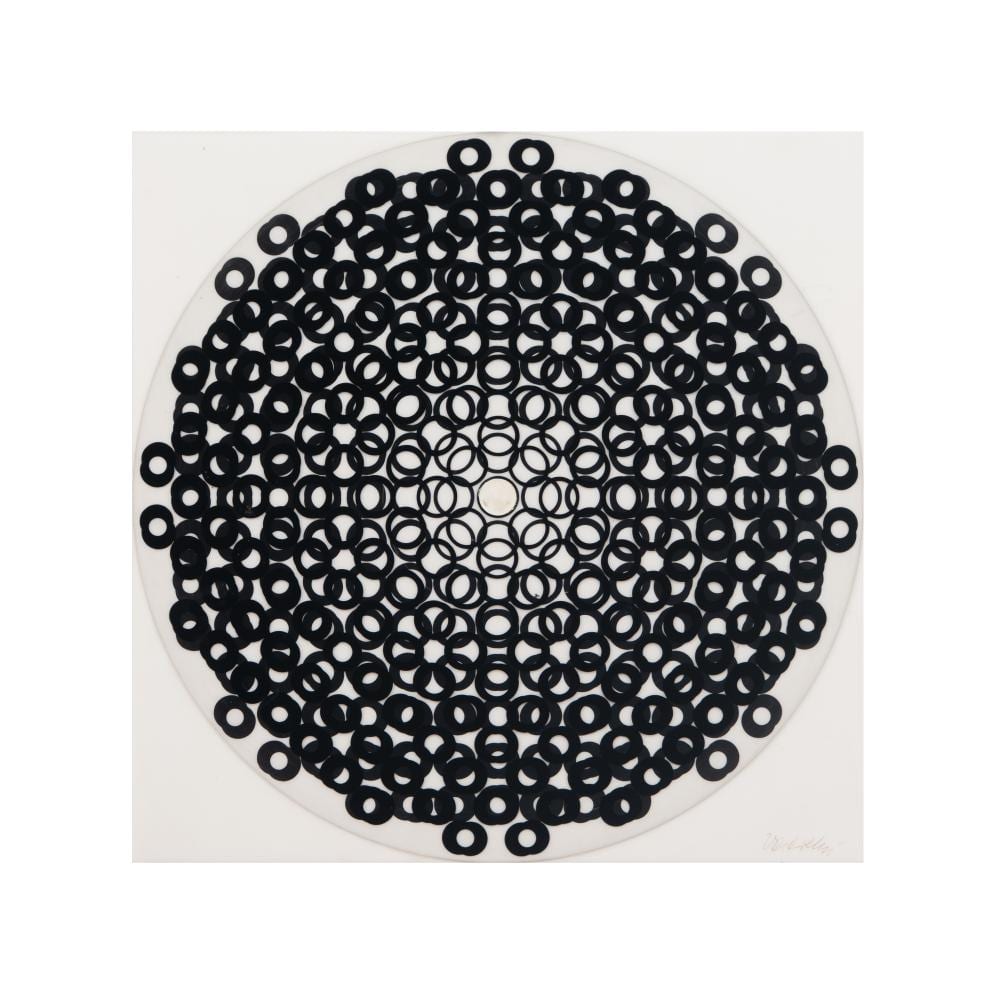
victor vasarely 1906 1997 sin t tulo sf plexiglass impreso ed sin numerar 56 x 56 cm · Lefebre Subastas · 2026-06-06 victor vasarely 1906 1997 sin t tulo sf plexiglass impreso ed sin numerar 56 x 56 cm Lefebre Subastas · 2026-06-06
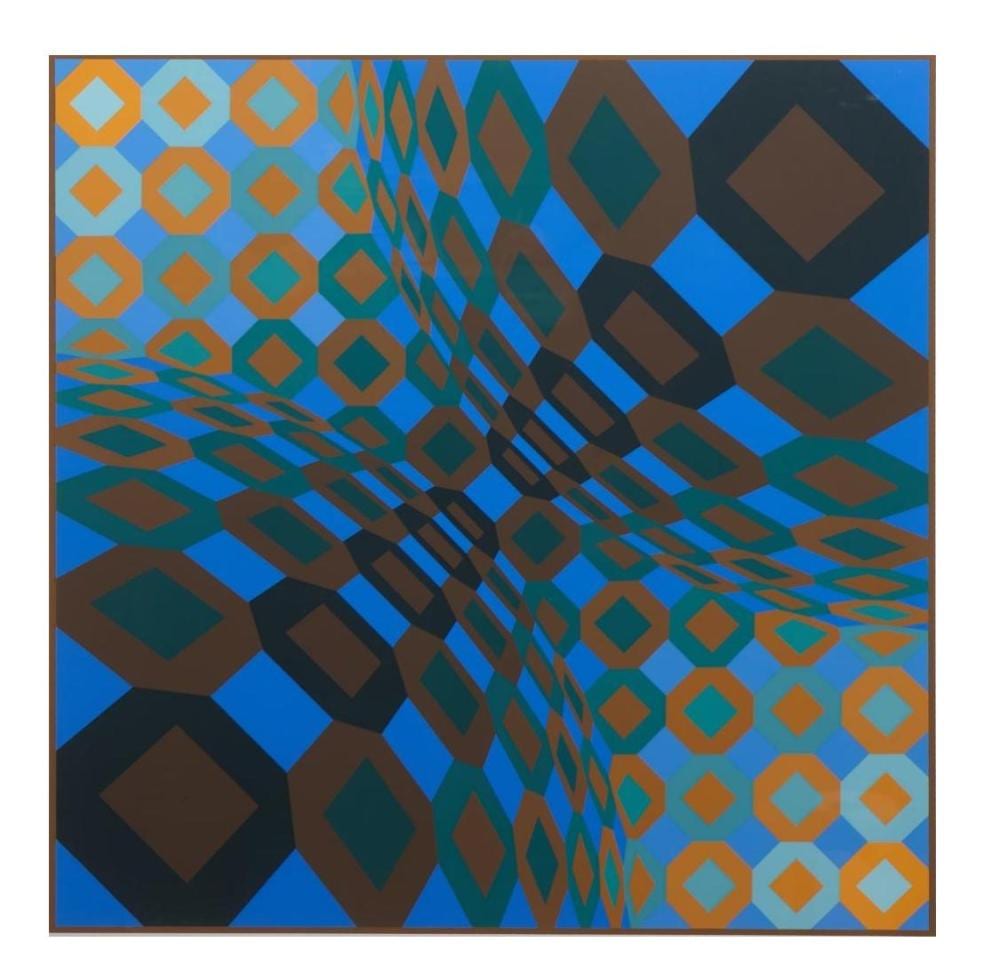
victor vasarely 1920 2004 homenaje a johann sebasti n bach 1973 serigraf a en color sobre papel medidas 75 x 60 cm ed 186 200 · Lefebre Subastas · 2024-11-06 victor vasarely 1920 2004 homenaje a johann sebasti n bach 1973 serigraf a en color sobre papel medidas 75 x 60 cm ed 186 200 Lefebre Subastas · 2024-11-06
Data basis
This page is built from Appraisily's public auction market index. Private transactions, incomplete sale feeds, and attribution changes may not be fully represented.
Artist value FAQ
How much is Victor Vasarely worth?
Comparable public auction sales are the best starting point, but final value depends on the specific artwork, condition, size, medium, provenance, and attribution confidence.
Can Appraisily value my Victor Vasarely artwork?
Yes. Appraisily can review photos, dimensions, signatures, condition, provenance, and comparable market data to prepare a current valuation.