
Signed Collini Framed Painting Value
Value a signed Collini framed painting by checking signature, original-vs-print evidence, frame, back, condition, provenance, and comparable sales.
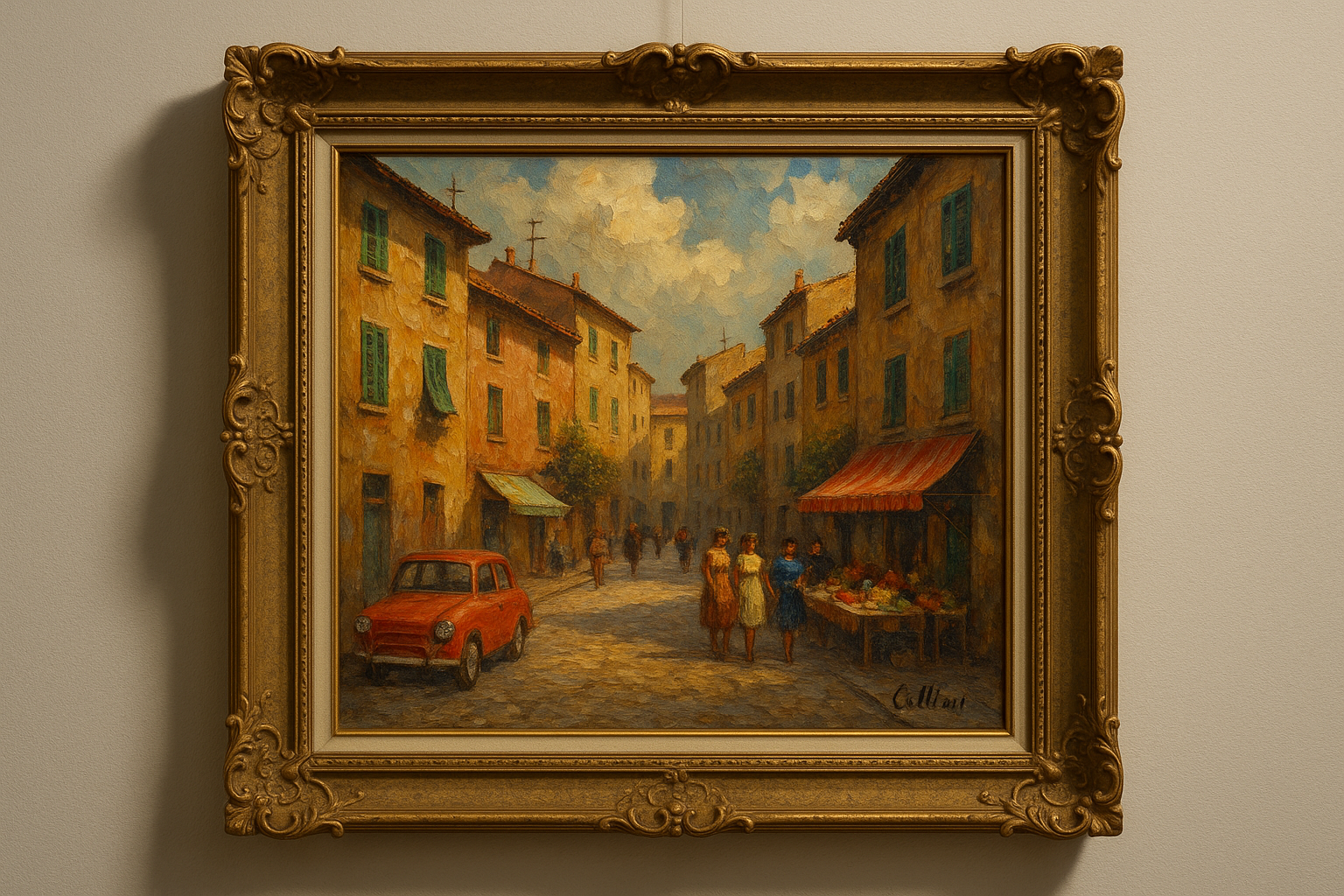
Get confident before you sell
Get a price-ready appraisal for your Collini painting
Answer a few quick questions and upload clear photos of the signature, the back, and the frame hardware. We route your request to an art specialist and deliver a documented valuation packet in about 24 hours.
Free first read. No obligation. We never publish your photos.
Continue reading first →Legacy WordPress appraisal posts often treated “Collini” as a single artist name, but in practice the surname alone is not enough. When a painting is simply signed “Collini,” your valuation depends on three basics:
- Which Collini: The signature may match more than one listed Italian artist; subject matter and technique help narrow it down.
- What the object actually is: original oil/acrylic work vs. print, giclée, or embellished print.
- How it presents and survives: size, condition, frame quality, and whether the back offers date clues.
This guide is written for the common scenario: a mid-20th-century framed painting with a visible corner signature, modern hardware, and no gallery paperwork.
Free first read
Check the Collini signature evidence before paying for a report
Upload the front, signature, paint surface, frame, back, labels, and condition photos. The free screener can separate a decorative signed painting from a case that needs deeper attribution research.
Start with a free screener. Use a signed report only if you need insurance, estate, donation, or sale documentation.
1) Identify the artist: why “Collini” can be ambiguous
Many mid-century decorative paintings are signed with a readable surname but no first name. “Collini” is one of those signatures that can point to more than one listed artist, and the correct match affects how you describe and price the work.
Two names that are frequently mentioned in legacy appraisal notes are Egidio Collini and Paolo Collini. Without relying on the signature alone, collectors often distinguish likely attribution using style and subject matter:
- Paolo Collini (born 1950): often associated with representational landscapes/seascapes; the work typically reads as decorative but “painterly” rather than purely abstract.
- Egidio Collini (20th century): commonly associated with more abstract/modern compositions. If your painting is clearly figurative (harbor scenes, pastoral landscapes, interiors), Egidio may be less likely.
Important caveat: attribution is a probability exercise unless you have supporting provenance (gallery receipt, label, catalog listing, or an archived exhibition record). If the back is blank and the signature is a common hand, it may be safer to describe it as “signed Collini” rather than definitively naming a first name.
2) Confirm it’s an original painting (not a print)
Because original paintings and embellished prints can look similar in online photos, this step prevents the most common overpricing mistake. Use the checklist below before you describe the piece to a buyer, insurer, or auction house.
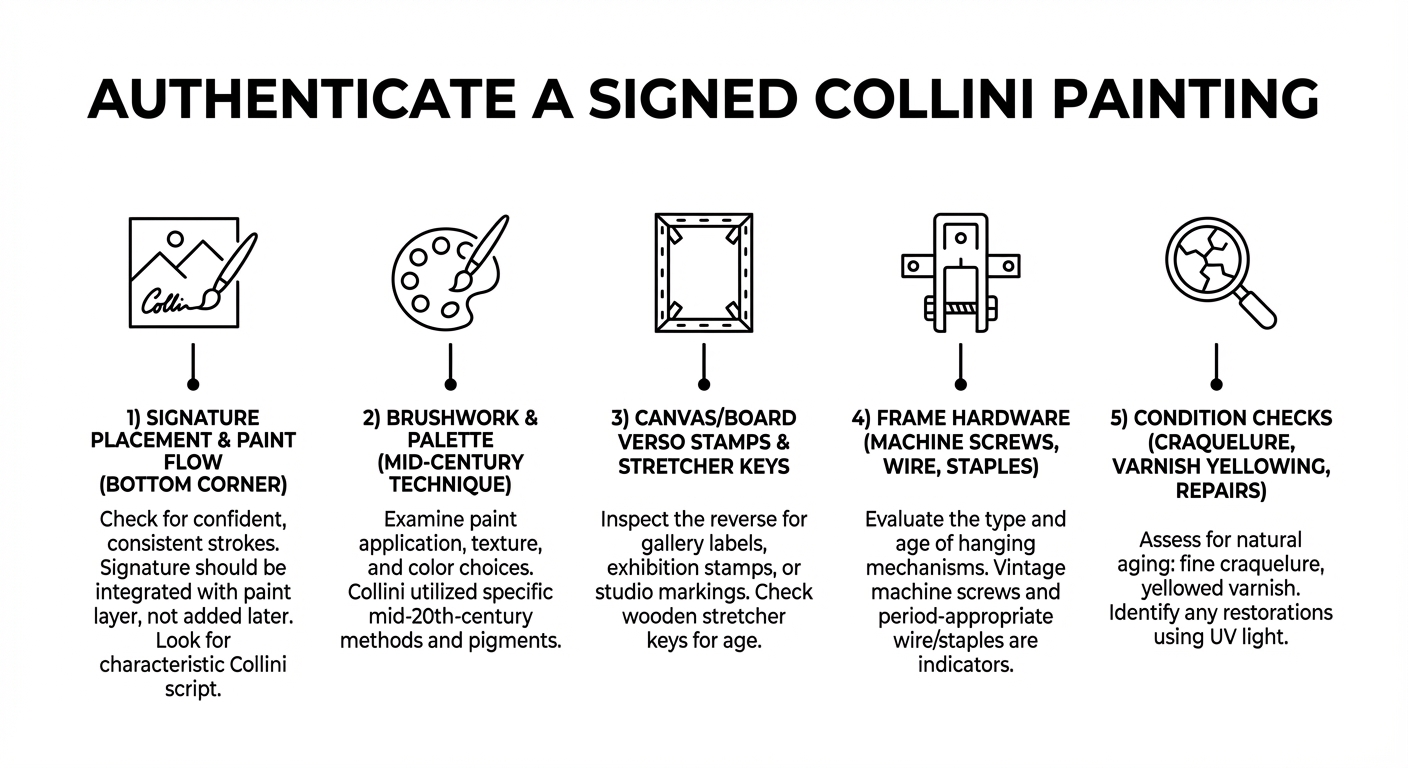
- Raking light test: shine a flashlight across the surface at a low angle. Real brushwork shows irregular peaks/valleys; prints are usually flatter.
- Edge inspection: look at the edge of the canvas/board inside the frame (if accessible). You may see paint wrapped around the edge or visible ground layer.
- Magnification: a phone macro lens can reveal dot patterns (print) vs. mixed pigment particles (paint).
- Back view: canvas weave, stretcher keys, and staples/nails offer dating clues and can support “original” vs. “reproduction” assertions.
3) Mid-century dating clues: the frame and the back matter
The front of a painting can be intentionally “old-master” in style (baroque-inspired landscapes, romantic lighting), but the back often tells the truth about when it was made.
For many mid-20th-century works, you may see:
- Machine-cut frame moulding with uniform miters and modern staples or brads.
- Wire hanging system with modern D-rings, screws, or plated hardware.
- Stapled canvas rather than hand-forged nails or antique tacks (older works can still be restretched, so treat this as a clue, not proof).
- Backing board/paper added by a framer; look for shop stamps, labels, or dates.
If your painting is described as “19th-century style,” that can be true aesthetically while still being a modern (mid-century) original. In valuation terms, the market tends to price based on the actual artist and date rather than the style it imitates.
4) Condition factors that move the value
For framed mid-century paintings, condition matters because buyers compare your work to clean, ready-to-hang examples. The most important issues to document (and to disclose) are:
- Surface cracking (craquelure): some age-appropriate cracking is normal, but lifting paint needs conservation.
- Varnish yellowing or grime: can dull the palette; a professional clean can help, but DIY solvents can permanently damage paint films.
- Repairs and overpaint: visible touch-ups reduce value unless documented by a conservator.
- Frame condition: the frame can add value when period-appropriate and intact; heavy damage or missing ornament lowers appeal.
- Water damage / mold: affects both canvas and frame; treat promptly and keep photos for documentation.
When you request an appraisal, include close-ups of any damage and a full photo of the back. Appraisers can price “as-is” and (optionally) give a separate conservation guidance note so you can decide whether to restore before selling.
Note: We couldn’t find relevant auction comps in our database for this topic right now. If you’re valuing a specific item, try searching by maker/model/material and we’ll expand coverage over time.
What similar items actually sold for
To help ground this guide in real market activity, here are recent example auction comps from Appraisily’s internal database. These are educational comparables (not a guarantee of price for your specific item).
| Image | Description | Auction house | Date | Lot | Reported price realized |
|---|---|---|---|---|---|
| No relevant auction comps found for this topic right now. | |||||
Disclosure: prices are shown as reported by auction houses and are provided for appraisal context. Learn more in our editorial policy.
6) How to sell a signed Collini painting (without wasting months)
Original paintings can take time to sell because buyers want confidence in authenticity, condition, and shipping safety. Your fastest path depends on your priorities:
- Online marketplaces: eBay, Etsy, and Facebook Marketplace can work if you supply excellent photos and are prepared for questions/returns.
- Local art dealers: a dealer can handle presentation and buyer screening, but you’ll net less after commission.
- Auction consignment: best when the artist is recognized by the house and the work fits a themed sale; the house will catalog and market it.
Whatever route you choose, avoid a common misstep: listing a very high asking price based on unrelated “similar style” artists. In art markets, buyers pay for artist + provenance + condition, not just the look.
7) What photos an appraiser needs (quick checklist)
To keep your review fast, capture these angles in natural light (no heavy filters):
- Full front photo, straight-on
- Signature close-up (and any inscriptions)
- Raking light detail showing texture (flashlight works)
- Full back of painting and frame
- Close-ups of labels/stamps, stretcher keys, and hardware
- Any damage close-ups (cracks, losses, frame chips)
References
- Invaluable: signed mid-century expressionist oil painting comp
- Invaluable: mid-century signed abstract oil painting comp
- Invaluable: framed signed mid-century oil painting comp
- American Institute for Conservation (AIC). Collections care basics (handling, storage, and when to consult a conservator).
- Tate. Art terms glossary (helpful definitions for varnish, craquelure, overpaint, and conservation vocabulary).
- Smithsonian Museum Conservation Institute. Overview of painting conservation work and research.
Collector search variations we cover
These long-tail questions come up in appraisal requests and are addressed in the guide above.
- how to tell if a signed Collini painting is an original or a print
- Paolo Collini painting value range in the US
- does a Collini signature increase value if the artist is unknown
- how to date a framed oil painting by the back and hardware
- mid century landscape painting appraisal with gilt frame
- what photos do I need for an online art appraisal
- how to ship a framed oil painting safely for sale
- is it worth cleaning varnish on an older oil painting
Each phrase maps back to the identification workflow, condition guidance, and selling advice above.
How We Research Valuation Data
Our appraisal guides are based on auction results, dealer pricing data, and professional appraiser insights. We may earn a commission when you use our free professional appraisal service. Learn about our editorial standards.
Choose your next step
Use the path that matches the decision you need to make about the item.
Not sure it is worth appraising?
Start with a lower-friction screen to understand the likely category, evidence, and next step.
Upload photos for a free first lookWant proof before paying?
See how a signed report documents photos, comparable evidence, condition notes, and value conclusions.
View signed report sampleNeed a signed report?
Use this for insurance, estate, donation, resale, or documented value decisions.
Need documentation now? Start signed appraisalNeed local or specialist help?
Compare directory options when the work needs in-person review or a specialist near you.
Find local art specialistsSee what the report looks like
Sample reports show how photos, comparable evidence, condition notes, and a value conclusion are documented.