
That old die-cast police motorcycle, tin robot, or boxed marbles set might be worth a meaningful sale value—or it might be mostly a fun keepsake. In both cases, the difference is usually visible in small details you can verify quickly: labels, casting seams, repairs, accessory completeness, and the story attached to the object.
For collectors, this guide should help you make one practical move first: separate your evidence from your hopes. A toy with a clean original finish and full provenance can anchor an appraisal path, while a similar-looking toy with modern refinishings or mismatched parts can sit in a far lower bracket even if the photos look equally strong.
There are strong recurring mistakes in this segment: overpricing by story, underpricing by condition, and treating any auction headline as proof of current value. Those mistakes are expensive, but they are easy to avoid with a better first pass.
Free photo check
Upload your toy details and get a clearer starting point.
Start with the free screener and remove guesswork before you list, price, or buy.
Takes about two minutes.
What collectors watch first: rarity, completeness, and proof
For vintage toys, most value is built from what can be trusted and what is still with the lot. The strongest value drivers are:
- Completeness: Box, tray, owner instructions, and accessories usually matter more than cosmetic shine.
- Condition: Chips, cracked castings, battery-contact wear, and repainting change value faster than small paint chips or minor scuffs.
- Era credibility: Confirmable dating and correct production-era hardware reduce doubt.
- Originality: Repaints, modern replacements, and mixed parts can move a collectible from “collector tier” into “nostalgia tier.”
- Provenance: Clear chain of ownership or event-linked history can support upper-band pricing, but unsupported stories should be treated conservatively.
Collectors are usually not buying “a toy” in these cases. They are buying a chain of proof: how original, how complete, and how defensible the history is.
How to inspect a vintage toy before pricing
Use this quick sequence so your first estimate is stable:
- Read every mark and inscription: maker marks, date marks, and packaging labels are not decorative—they are identity anchors.
- Check joins and pivots: hand-rebuilt hinges, glued seams, or replaced moving parts can signal later intervention.
- Find matching context: compare style, colorway, and component patterns to known catalog shots and known production runs.
- Document condition at scale: take top, side, detail, and underside photos to show wear lines and mechanical tension points.
- Separate lot-level from item-level value: a tray and display piece often move together, but the lot is not automatically additive.
When evaluating a lot, avoid this trap: if one item is original and one item is replaced, do not average blindly. A premium item can drag a lot up only slightly; a degraded item usually cannot carry a premium one up enough to offset repair risk.
Condition clues that usually hurt value faster than age
Age alone rarely kills value; uncertainty and visible, non-reversible interventions usually do. In this category, buyers are often paying for confidence, not just nostalgia. A few high-impact red flags:
- Repainted finish: if the finish profile looks uniform and the lettering softness is suspicious, the item is likely non-judged for premium resale.
- Incorrect decals or missing paint edges: these often indicate later restoration or non-original reassembly.
- Wrong-era parts: replacements that deviate in texture, metal composition, or tooling feel can collapse buyer confidence.
- Water and heat marks: especially around wiring channels, painted plastic, and motorized components.
- Soft, unproven claim history: “garage find from a family friend” is not disqualified, but it should be priced as weaker evidence until proof is added.
If the object is original with cosmetic wear and full context, it often stays in a strong resale lane. If it is visually exciting but hard to verify, reserve a wider price range and treat the estimate as “buyer-risk” value.
How provenance and completeness change what a buyer pays
Provenance works best when it adds verifiable context: old restoration receipts, lot records, old photographs showing packaging, or auction documentation. It should support a specific claim, not just a story. In Appraisily’s internal comps, similar toy lots with clear provenance and complete accessory sets tend to support tighter pricing than equivalent open-market lots with vague origins.
Two practical rules help avoid inflated expectations:
- Document before you guess: if you have records, scan or photograph them now, then use those files in your submission notes.
- Price with evidence tiers: value should be anchored to the most conservative verified condition first, and only then adjusted for proven provenance.
In short: provenance is a multiplier, not a base. If the base evidence is weak, provenance claims do not usually rescue value.
Real-world scenario: why one lot reads differently than another
An estate sale buyer found two vintage toy lots from the same house. Lot A included two boxed wind-up figures, clear manufacturer marks, and original packaging. Lot B included only painted castings and mixed replacement parts without any packaging. Buyers for Lot A asked quick follow-up questions and made stronger opening offers. Lot B required a larger discount before serious interest appeared, even though both lots looked “similar” at first glance.
This is common because buyers are pricing confidence in the same move as object condition. If your lot has stronger provenance and cleaner completeness, your article-ready estimate should reflect that by widening your confidence band upward.
What similar items actually sold for
Real auction sales of items like your tin toy. Open a sale to see the original listing.
Shown USD range: USD 13-USD 305. Median of these 5 USD examples: USD 165.
| Comparable | What sold | Auction house | Date | Lot | Source-reported amount |
|---|---|---|---|---|---|
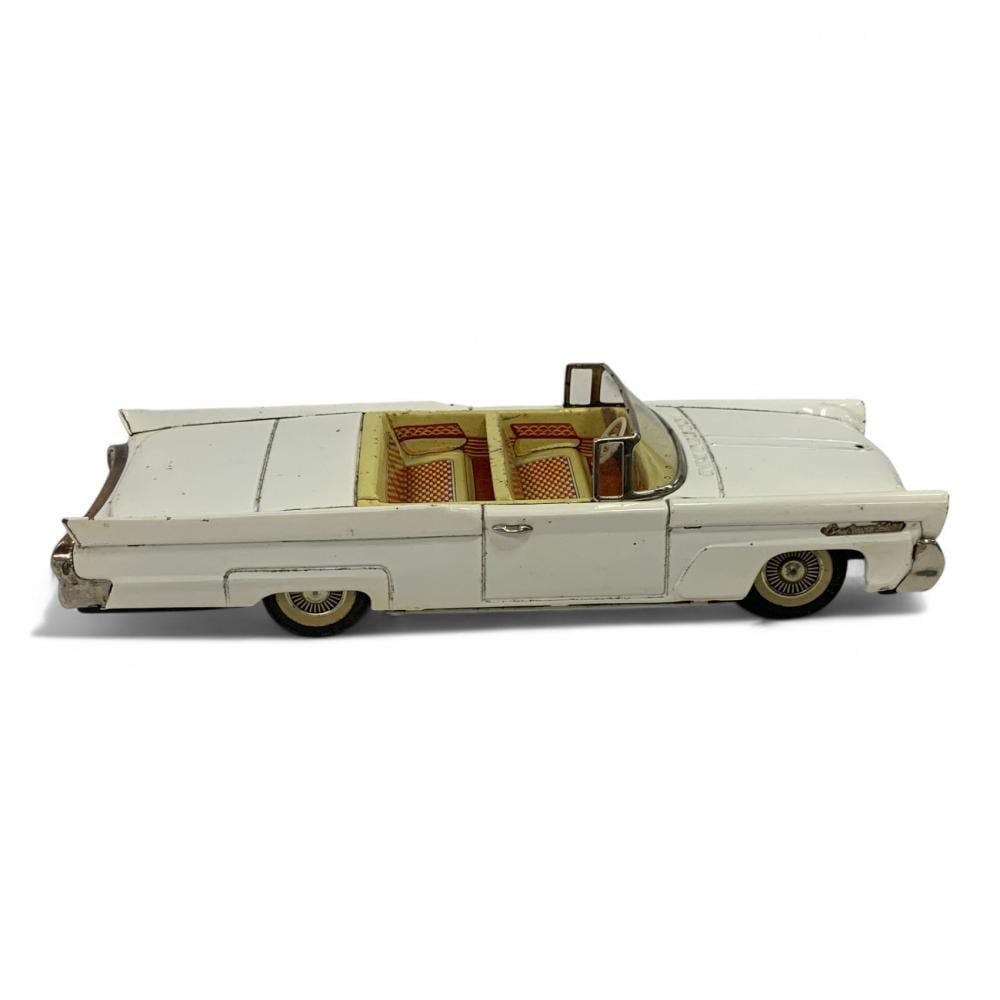 |
Vintage Tin Toy Car | Berner's Auction Gallery | 2025-09-11 | 1203 | USD 60 |
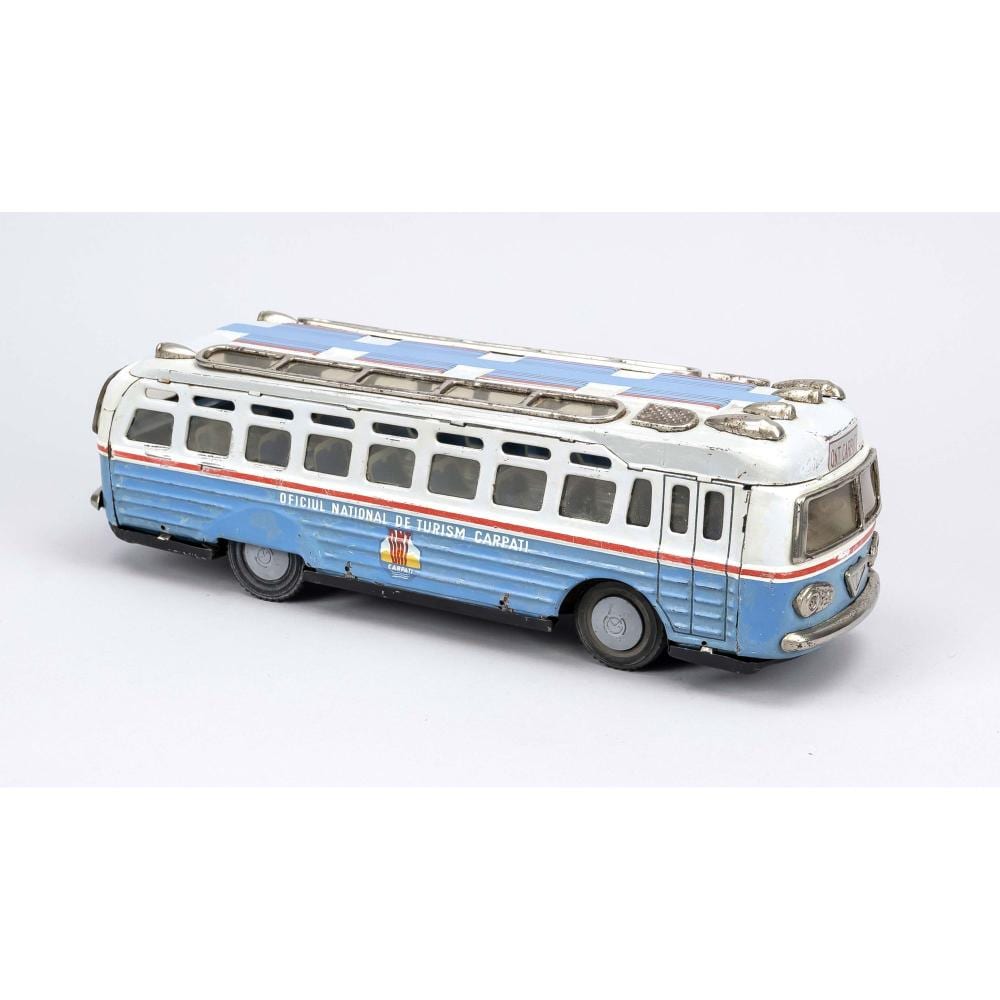 |
COACH TIN TOY, ROMANIA, MID-20TH C | Historia Auctionata | 2025-08-30 | 4362 | EUR 110 |
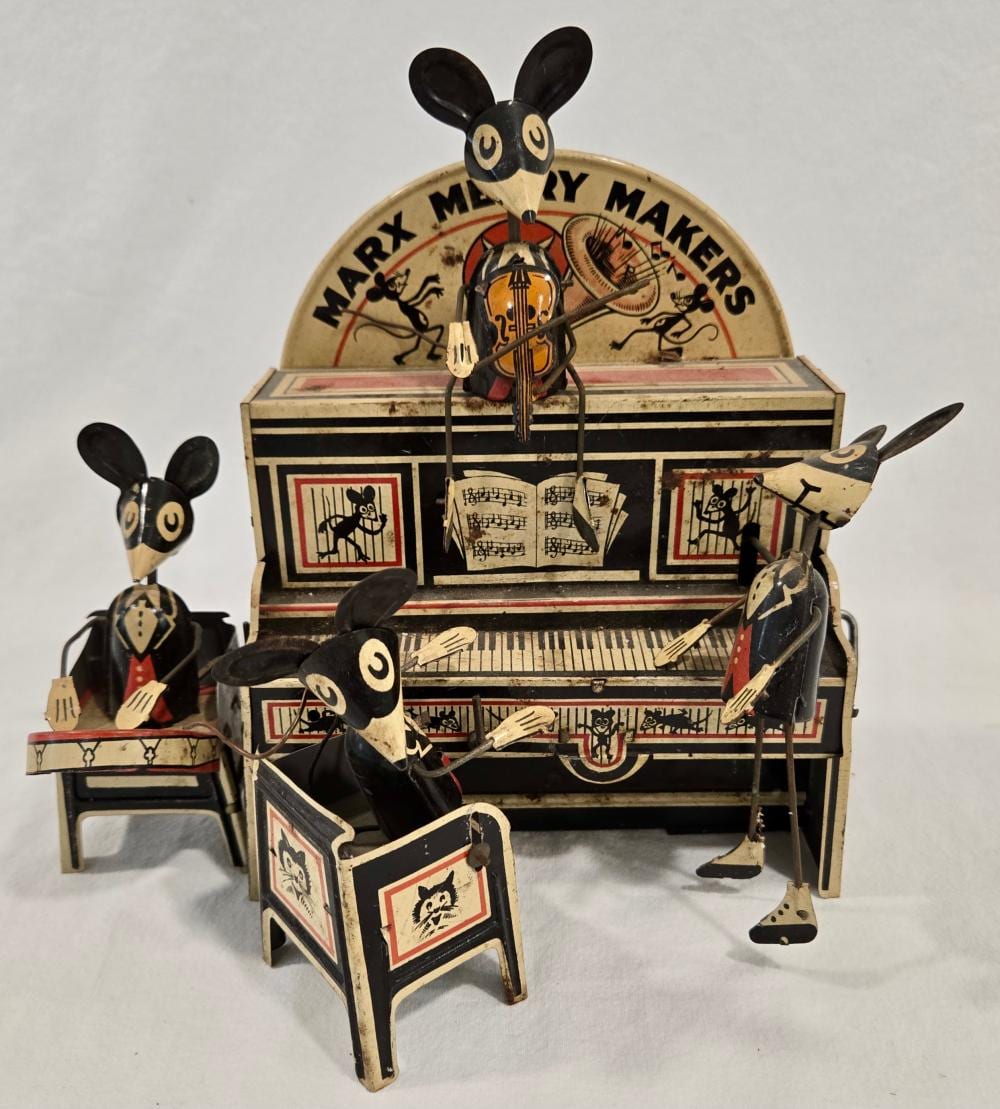 |
Marx Merry Makers Tin Toy | Gary R. Wallace Auctioneers Inc. | 2025-08-16 | 231 | USD 275 |
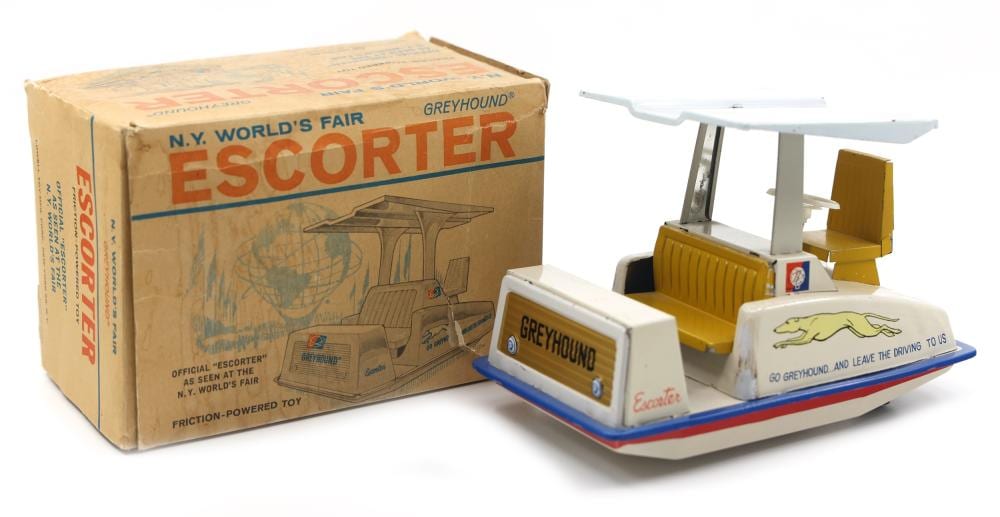 |
NEW YORK WORLD'S FAIR 1964 GREYHOUND ESCORTER TIN TOY | Omnia Auctions | 2025-09-06 | 90476 | USD 165 |
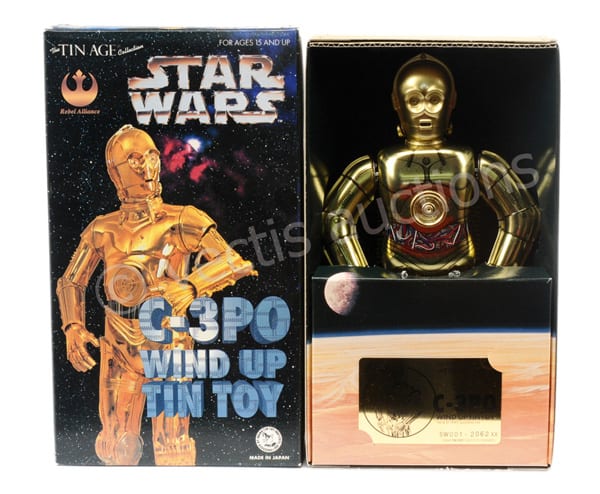 |
Osaka Tin Toy Institute (Japan) Star Wars R2-D2 | Vectis Auctions Ltd | 2016-02-25 | 4040 | GBP 130 |
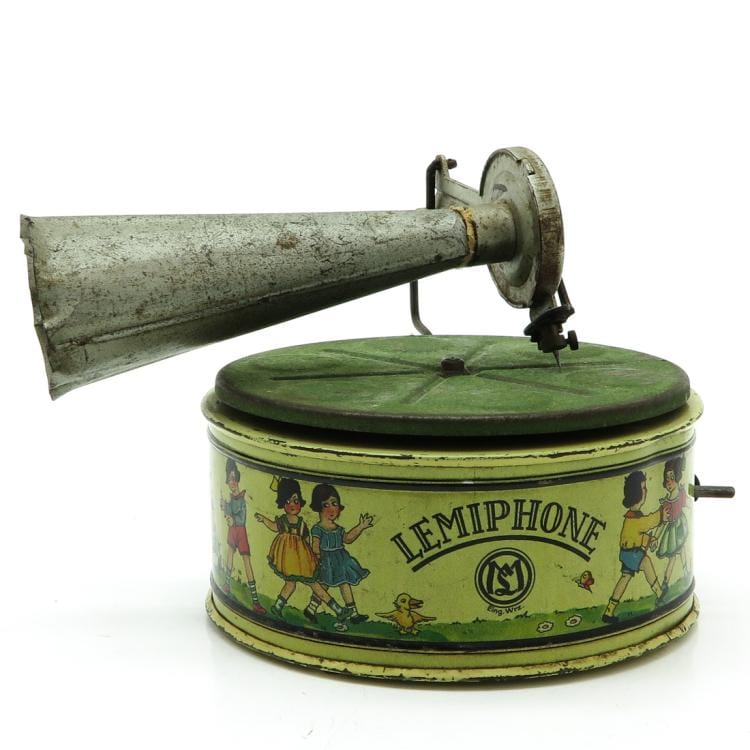 |
VINTAGE TIN TOY GRAMMOPHONE | Veilinghuis de Jager | 2018-04-24 | 1235 | EUR 80 |
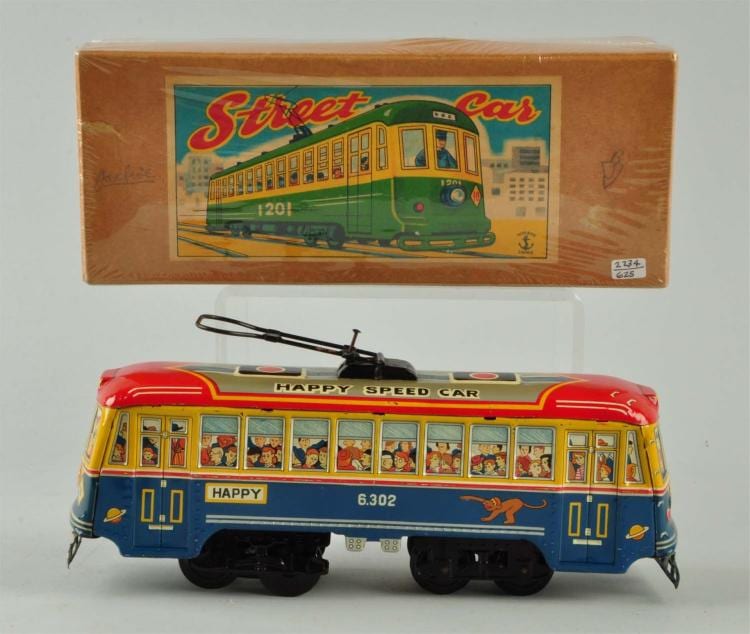 |
Japanese Tin Toy Trolley Bus | Morphy Auctions | 2015-11-14 | 702 | USD 305 |
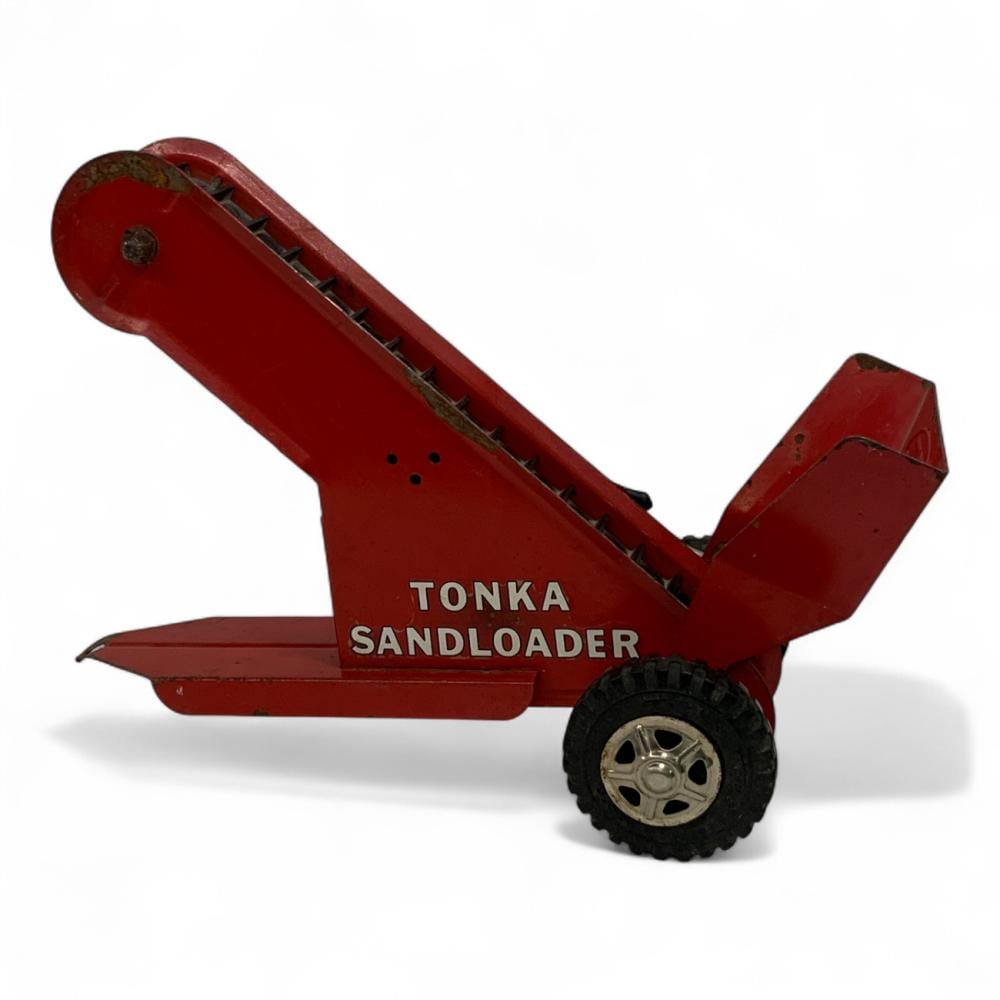 |
Tonka Sandloader Tin Toy | Berner's Auction Gallery | 2025-09-11 | 1233 | USD 13 |
How these auction records were verified
These sales are market context, not an object estimate.
Each row retains its exact source URL, lot identity, retrieval time, access result, and immutable record hash. Live source access was blocked; the exact record matched Appraisily's immutable pipeline provenance. Inspect the public comparable provenance record.
Collector-side checkpoints before listing or buying
Before you commit to a price, run a two-minute checklist:
- Can I prove originality from at least two visual clues (factory marks + construction details)?
- Are all critical parts present (motor, wheels, packaging, base labels, manual)?
- Do photos show one clear set of provenance evidence?
- Would I still pay the asking price if only half the claimed story is true?
If your answer to one point is “no,” keep your estimate conservative and document the unknowns. That keeps negotiations cleaner and your eventual appraiser handoff faster.
Why free appraisal-first pricing usually beats immediate listing
Free appraisal guidance is useful even for collectors who do not want a paid report. It helps calibrate your baseline without giving away momentum. If your item is stronger than expected, you can then decide whether a full report is worth the effort.
If your current item is for insurance, inheritance, donation, estate, probate, or a legal transfer, a paid signed appraisal may be the next step.
Free photo check
Not sure if your vintage toy is worth appraising? Let us take a look.
Upload a photo, tell us what you know, and get a free first read. If a full appraisal makes sense, we will say so.
Free. No card needed. Takes about two minutes.
Before you finish, use a practical decision path
If your goal is speed, use the free screener and refine only what is missing. If your goal is documented proof for insurance, estate, or donation, take the path in the decision cards below.
Related search variations readers ask
- vintage toy value guide for collectors
- how to tell if a vintage toy is valuable
- antique toy appraisal price guide
- vintage toy box lot value estimate
- vintage toy provenance and appraisal clues
- how to check condition of vintage toy collectibles
- what affects vintage toy resale value
These searches point to the same valuation core: origin, condition, completeness, and comparable sales.
References and comparable context
- Peenstra Antiques: The ultimate collectible toys value guide
- Potteries Auctions: Vintage toys collectors guide (auction context)
- ValueMyStuff: How to appraise toys and dolls
- Estate Jewelry Value Guide: Price Drivers, Appraisal Clues, and What Collectors Notice
- Sterling Silver Value Guide: Price Drivers, Appraisal Clues, and What Collectors Notice