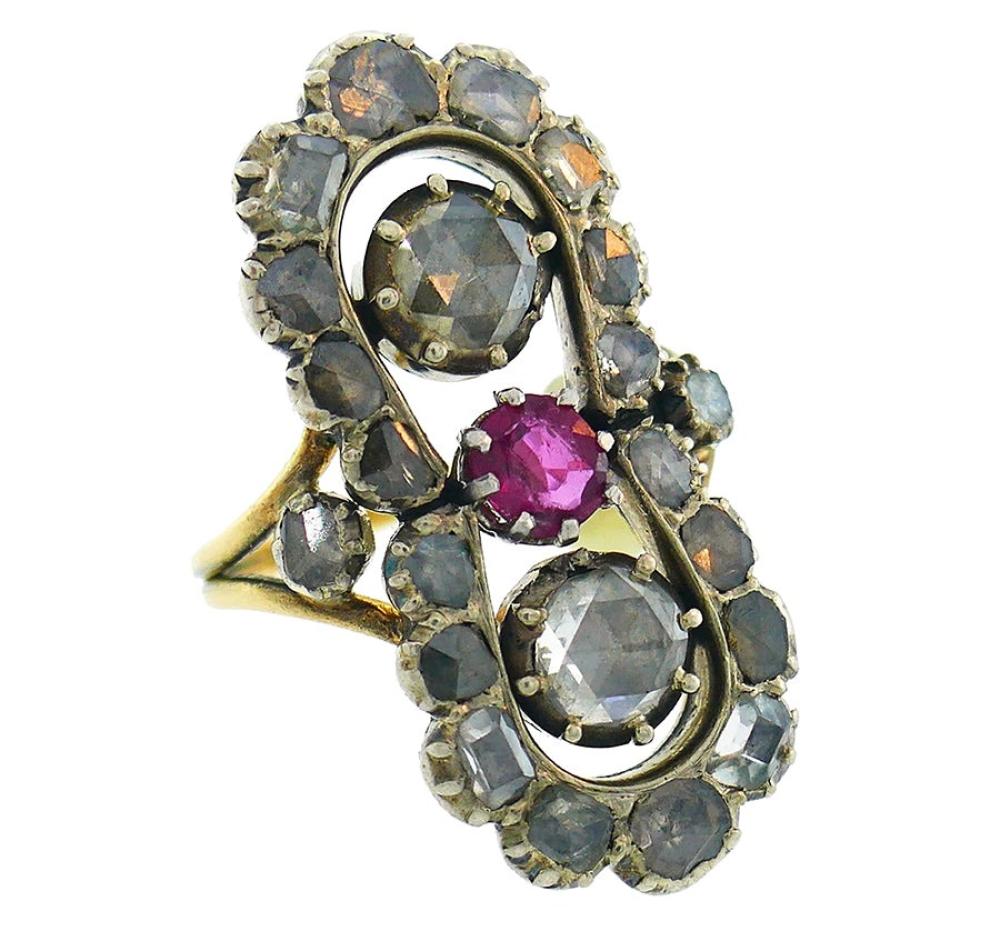
Estate Jewelry Value Guide Price Drivers Appraisal Clues and What Collectors Notice: appraisal and value basics
Estate Jewelry Value Guide Price Drivers Appraisal Clues and What Collectors Notice research should start with identification, condition, provenance, and recent comparable sales. Use this guide to compare the signals that matter before paying for a formal appraisal or deciding whether to sell.
Estate jewelry looks simple at first: metal weight, gem count, maybe a brand name. In practice, value is formed by an evidence stack. A buyer pays for materials, yes, but also for confidence: can we verify origin, assess condition quickly, and predict what will happen from here to closing.
That is why this guide uses a collector-first framing. Instead of one “final value,” we build a range that adapts to the channel, condition, and documentation quality. That gives a cleaner decision path for sale, inheritance transfer, insurance updates, or donation planning.
Across 2026, large lot-driven auction houses have again shown premium outcomes when provenance is clear and the artifact is cleanly attributable. At the same time, mixed-material or uncertain pieces still trade conservatively in secondary lanes. The same item can therefore move across two valuation worlds.
How estate jewelry gets its value
Think of price as the result of three layers that stack in order:
- Baseline value: metal, stone grades, scale, era, and replacement cost for equivalent modern pieces.
- Collectibility value: maker strength, design attribution confidence, style demand, and rarity in current buyer pools.
- Transaction value: what each channel is willing to pay after risk, timing, fees, and logistics.
Most valuation mistakes happen when people compare baseline value to transaction value and treat them as identical. For many estate groups, baseline can be lower than expected but transaction value is what matters in a real decision.
Choose your channel before the number
Lane selection is the part people skip and then regret.
Auction lane (auction houses, online catalog, specialist sales)
Auction can produce upside when multiple bidders compete and when documentation is complete. It can also collapse quickly if trust is weak, because uncertainty is priced into reserve assumptions and buyer behavior.
Dealer or specialist private sale lane
Dealers absorb risk, so they often pay for certainty. Clear photography, clean provenance, and repair discipline support this lane.
Consignment and private offers
These are useful for curated execution and narrative-heavy pieces, but timelines can be longer and outcomes more dependent on listing quality and seasonal demand.
Decision rule: if your item is highly desirable but documentation is incomplete, set channel-adjusted expectations before assigning your final range.
What comparable sales signal in practice
Use comps as calibration tools, not direct substitutes. A lot with strong hallmarks may carry a premium while a similar-looking but poorly documented lot carries a discount. You do not need perfect matches.
Note: We found 3 relevant comps in our database for this topic right now. We’ll continue to expand coverage over time.
What similar items actually sold for
To help ground this guide in real market activity, here are recent example auction comps from Appraisily’s internal database. These are educational comparables (not a guarantee of price for your specific item).
| Image | Description | Auction house | Date | Lot | Reported price realized |
|---|---|---|---|---|---|
| [SLAVERY & ABOLITION]. Notice...Three Likely Negroes. St. Louis, MO: N.p., 18 September 1846. | Hindman | 2023-02-28 | 12 | USD 3,000 | |
| [CIVIL WAR]. Provost Marshal's Notice, Another Call for Troops. Corunna, MI: John N. Ingersoll, 27 November 1863. | Hindman | 2022-06-22 | 317 | USD 425 | |
| A 19th century Royal Illustrated Atlas with an introductory notice by Dr. Norton Shaw, Secretary | Andrew Smith & Son | 2026-03-25 | 800 | GBP 650 |
Disclosure: prices are shown as reported by auction houses and are provided for appraisal context. Learn more in our editorial policy.
What collectors notice before they ask about a price
Collectors and specialist buyers often run a quick visual checklist. These are the strongest value drivers before they even see your asking number.
1) Hallmark and maker proof
A readable hallmark cluster is usually the first signal of lower discounting. Ambiguous marks, repeated refinishes, or inconsistent stamps can produce a cautionary discount even when material value looks stable.
2) Construction logic and repair evidence
Clean solder work, coherent geometry, and stable pivots suggest lower immediate intervention risk. Reworked clasps, replaced links, and visible refinish paths may be legitimate but still require transparency.
3) Completeness and compatibility
For sets or matched groups, one weak companion piece can cut the premium of the strongest piece. Buyers often price the collection as a unit unless each part is clearly documented.
Quick test: if you can describe each of those points in one paragraph, your item is ready for an initial lane discussion.
Two-step intake
Get the right appraisal for your estate jewelry
Share the basics of your item. We will route you to a specialist intake path and build a realistic value lane map.
Secure intake. Routed to the right specialist. Checkout only if you decide to proceed.
Metal, gemstones, and hierarchy of confidence
Gold, platinum, and silver pathways
Metal grade and weight remain a strong floor, but not the final story. Gold and platinum often retain value in broader stress periods; silver can remain compelling with maker support and condition. Mixed-metal pieces are judged on compatibility: buyers want clean coherence between materials.
Gemstone assumptions that can move your range
Grades, treatment disclosure, and color/clarity certainty all change buyer confidence. A visible treatment note without supporting reporting increases friction. Strong provenance can reduce that friction, but not erase it.
Size and setting complexity
Large stones are not automatically top value; they are only valuable within the design and historical context. A precise, period-appropriate mount often protects value better than sheer scale.
Condition as a pricing formula
Condition is where valuation turns from concept into finance. Build a simple repair grid:
- Cosmetic softness: light patina or wear that does not affect integrity can be absorbed in buyer tolerance.
- Functional risk: clasp stress, cracked seams, and weakened links increase downside and likely reduce liquidity options.
- Authenticity risk: substitutions, over-polishing, or obvious recuts reduce premium potential unless documented professionally.
A single structural issue can reduce the entire range for a lot, because specialist buyers evaluate resolution cost first and valuation upside second.
Build your own defensible range in five steps
- Photograph and map every view: full item shots, maker marks, interior details, and known flaws.
- Separate certainty buckets: what you know, what you can verify, and what remains unknown.
- Set three bands: low floor, best-anchored, and stretch for high-confidence buyer fit.
- Assign by lane: choose one range for auction, one for private sale, and one for insurance or estate transfer processes.
- Publish with a disclosure note: no “clean list price” without stating photos, documentation, and channel assumptions.
This process avoids the common error of forcing one number to fit sale, documentation, and tax use cases at the same time.
Most common valuation errors
- Confusing appraisal language with sell-now expectation.
- Underestimating repair and authentication cost before setting the floor.
- Letting missing context (receipt, maker history, restoration notes) weaken your final lane.
- Treating one lot as a standalone signal instead of a collection-wide reality.
If your first range cannot survive all four checks, narrow the floor and strengthen the documentation before listing.
Long-tail search variations
- How much is estate jewelry worth today?
- Why do appraisals differ from auction results?
- What clues make estate jewelry more collectible?
- How do hallmark mistakes affect resale value?
- How to price a mixed vintage jewelry lot?
- Can repairs reduce my estate jewelry value?
- Auction vs dealer pricing for inherited jewelry
- What documents improve appraisal accuracy?
- How to estimate a realistic sell/consignment range?
These terms map to the same workflow: make evidence explicit before setting final numbers.
References
- Appraisily internal valuation workflows, auction reference pipeline, and editorial methodology.
- Gemological Institute of America guidance on selecting valuation professionals and appraisal expectations.
- 2026 fine-jewelry market reports and comparable auction outcomes across major houses.
- Estate valuation standards and FMV framing for insurance, inheritance transfer, and donation contexts.