
Walter Brightwell A Day in June appraisal and value basics
Walter Brightwell A Day in June value depends on print process, edition evidence, signature type, condition, frame quality, and local decor demand. Most examples trade as decorative lithographs unless the margins show a pencil signature, numbering, or stronger publication evidence.
The most common backstory we hear is something like: “I inherited this Brightwell print from my parents or grandparents.” That lines up with how many Brightwell lithographs entered homes—gift shops, décor stores, and print distributors in the late 20th century.
The good news is that valuing a Brightwell lithograph is straightforward once you answer a few questions:
- Is it open edition or limited edition? Limited edition prints are typically numbered and often pencil signed.
- Is the signature hand-signed or plate-signed? A plate signature is printed (it’s part of the image).
- Is the condition clean? Mat burn, foxing, or moisture stains can reduce value quickly.
- Is the frame adding value? A quality frame can matter for décor buyers.
Free first read
Check the margin, signature, and back before pricing it
Upload the lower margin, full front, back of frame, edition marks, signature area, and condition photos. The free screener can flag whether the print looks open edition, plate-signed, or worth a formal print appraisal.
Start with a free screener. Use a signed report only when you need insurance, estate, donation, resale, or formal collection documentation.
How We Research Valuation Data
Our appraisal guides are based on auction results, dealer pricing data, and professional appraiser insights. We may earn a commission when you use our free professional appraisal service. Learn about our editorial standards.
Appraisal value range: what most owners can expect
For many late-20th-century Brightwell prints (especially examples that are not numbered and show a plate-printed signature), market value is driven more by décor demand than by rarity.
A practical retail range for a clean, nicely framed example is often around:
- $40-$125 for a common open-edition or plate-signed framed lithograph in clean decorative condition.
- $125-$300 when the frame is strong, the image is large, and local decor demand is good.
- $300+ only when there is convincing pencil signature, numbering, edition evidence, or unusual provenance.
Important: pricing varies by size, frame quality, and local demand. If your piece is numbered (e.g., “27/250”) and pencil signed, the value can move into a higher bracket.
What you likely have: open edition, plate-signed lithograph
A “lithograph” can mean different things in everyday listings. In this context, most Brightwell décor prints are traditional offset lithographs or similar print processes intended for broad distribution.
Two clues matter the most:
- No edition number. If there’s no “x/y” numbering on the margin, it’s usually an open edition.
- Signature “in plate.” If the signature looks perfectly integrated into the image (and has no raised graphite sheen), it is probably printed as part of the artwork.
How to identify the print process (simple at-home checks)
You don’t need special equipment to get a category-dependent amount of the way there. Start with a bright lamp and, ideally, a cheap 10× loupe.
1) Look for halftone texture and consistent ink
Many widely distributed lithographs show a regular “dot” or rosette pattern in areas of smooth tone (sky, shadows). That’s typical for offset lithography and similar commercial processes.
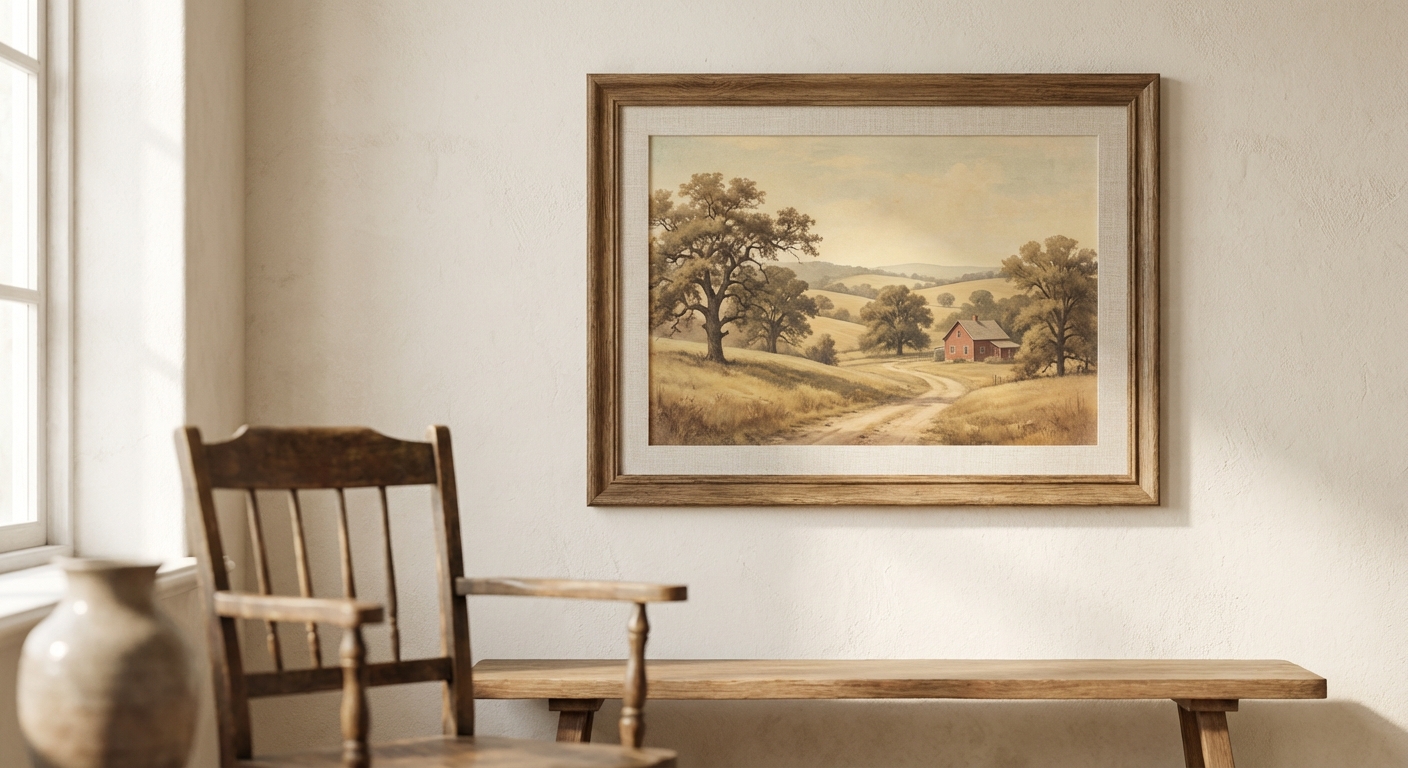
2) Check the lower margin for pencil marks
A limited edition print typically has pencil writing below the image:
- Left: edition number (e.g., 27/250)
- Right: artist signature (pencil)
- Center: title (sometimes) and/or printer/publisher info
If your “signature” looks printed, extremely uniform, or is inside the image area, treat it as plate-signed unless you can clearly see graphite (a slight metallic sheen under light) and minor hand variation.
3) Inspect the paper and the mat window
Paper quality varies. Thicker, textured paper and generous margins are more common in collector editions. Decorative prints are often on smoother paper and may be tightly matted.
Also look for mat burn: a slightly darker rectangle where the mat covered the sheet for decades.
Condition issues that affect value (and how to describe them)
Condition is a major price lever for framed prints because many buyers are buying the piece as wall décor.
- Foxing: small brown specks from humidity/age (often in margins)
- Fading: sunlight can wash out greens and blues
- Rippling or waviness: moisture exposure or poor framing
- Acid burn: yellowing where a non-archival mat touched the paper
- Frame problems: broken glass, loose backing, moldy dust cover
If you plan to sell online, it’s worth taking the print out of direct sunlight and photographing it in even light to avoid glare.
What to photograph for an appraisal or listing
For a Brightwell lithograph, the best set of photos is simple:
- Full front shot (straight-on, no flash glare)
- Close-up of the lower margin (edition marks, signature area)
- Back of the frame (dust cover removed if safe) showing labels, stamps, or framer notes
- Corner close-ups (paper condition, creases, foxing, mat burn)
- Frame profile (depth, finish, any damage)
How to sell a framed Brightwell lithograph
Most Brightwell décor prints sell best when you aim at buyers who want ready-to-hang wall art.
- Local sale (fast, no shipping risk): Facebook Marketplace, OfferUp, Craigslist. Include framed size and a clear photo.
- Nationwide buyer (bigger audience): eBay or Etsy. Be conservative about shipping—glass + frames break.
- Consignment: décor-oriented consignment shops may stage it better and reach interior designers.
Shipping tip: remove glass if you can do it safely (or replace with acrylic), protect corners, and double-box. Always insure for the full sale price.
When a professional appraisal is worth it
A professional review is especially useful if:
- The print is clearly numbered and pencil signed
- You have original paperwork, a gallery receipt, or a distributor label
- The work is unusually large or exceptionally well-presented
- You need a defensible value for insurance, donation, or estate planning
Auction and market comps for Brightwell lithographs and related prints
Direct sold records for A Day in June are thin, so use these rows as a bracket. Brightwell original oil paintings are included only to show why painting prices should not be copied onto open-edition lithographs.
| Photo | Sale | Date | Lot | Realized | Notes | Source |
|---|---|---|---|---|---|---|
| No image | Beck Auctions, Walter Brightwell A Day in June framed lithograph | Public listing observed 2026 | Not listed | Market listing | Direct-title market evidence; verify sale status and condition before treating it as a comp. | Web research |
| No image | Heritage Auctions, Walter Brightwell Rough Waters, oil on canvas | October 10, 2019 | 23221 | USD $280 | Artist-specific but different medium; do not use oil-painting prices as a lithograph baseline. | Valuer Bridge dataset |
| No image | Arader Galleries, Walter Brightwell New York oil painting | January 28, 2017 | 101 | USD $4,750 | Shows original-painting upside; only relevant if the submitted item is not a print. | Valuer Bridge dataset |
Takeaway: a common Brightwell plate-signed lithograph should usually be priced as ready-to-hang decor unless the margins prove a limited edition or hand-signed print.
Have a Brightwell lithograph?
Check the lower margin and back labels before pricing it.
Upload the full front, signature area, edition marks, back of frame, and condition close-ups. The free screener can flag whether it looks decorative or worth a signed report.
Upload photos for a free first lookSearch variations collectors ask
Readers often Google:
- Walter Brightwell A Day in June lithograph value
- is a Brightwell print signed in plate worth anything
- how to tell if a lithograph is hand signed or printed
- Brightwell lithograph open edition vs limited edition
- where to sell vintage framed lithographs near me
- how to ship a framed print without breaking glass
- what is foxing on paper and does it reduce value
- how to photograph the back of a framed print for appraisal
- does a numbered lithograph always have higher value
Each question is answered above (edition clues, condition drivers, and safe selling options).
References
- Smithsonian: Caring for your art (handling and condition)
- Library of Congress: Basic care for paper/prints
- The Appraisal Foundation: USPAP overview
Wrap-up
Most “A Day in June” Brightwell lithographs on the market are valued as attractive, collectible décor—especially when the print is not numbered and the signature is printed in the image. Start by documenting the margins and the back of the frame, confirm condition, then choose a selling path that fits your risk tolerance (local pickup vs insured shipping).