
Appraisal and value basics for unsigned paintings
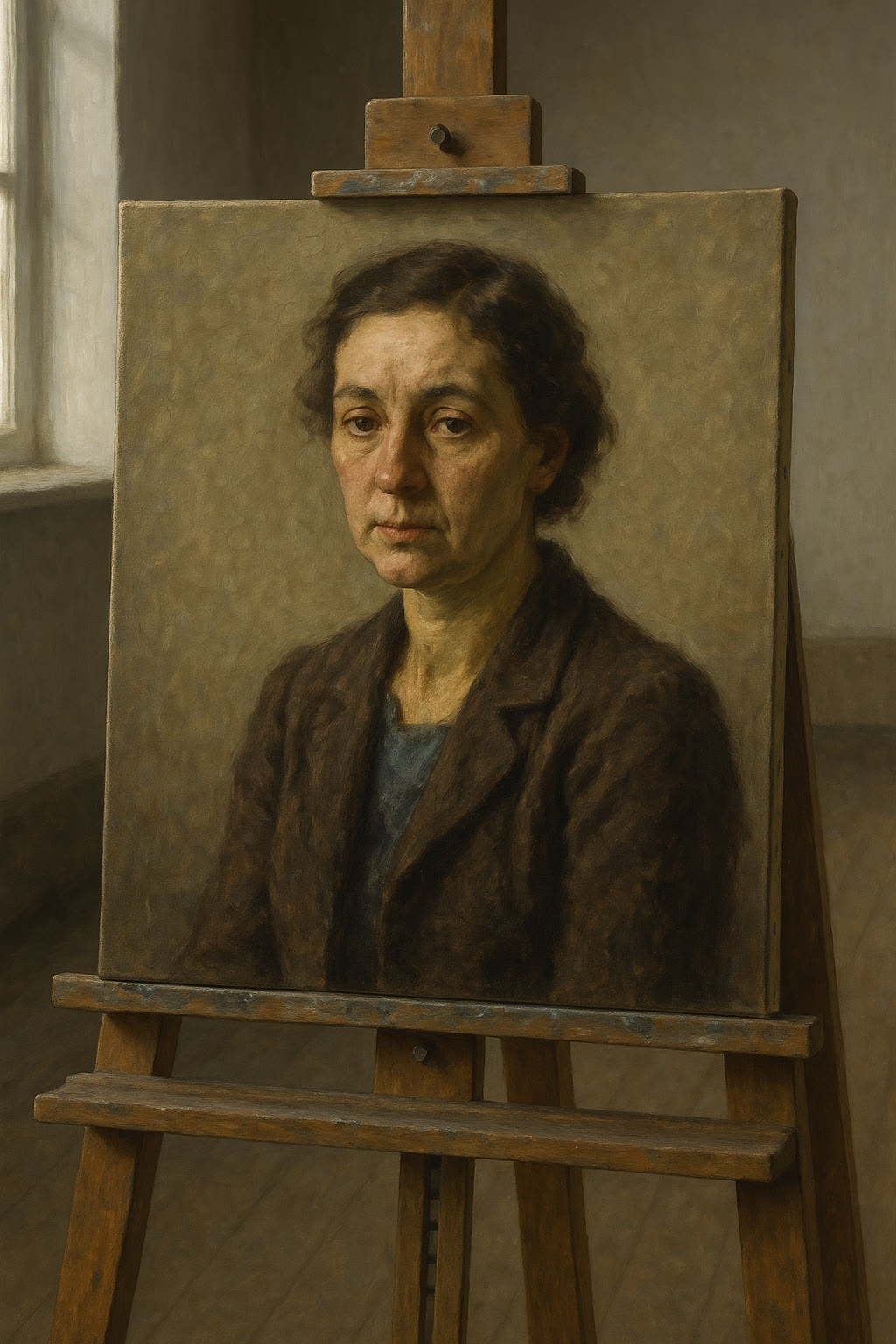
Unsigned 20th-Century Oil Painting Value research should start with identification, condition, provenance, and recent comparable sales. Use this guide to compare the signals that matter before paying for a formal appraisal or deciding whether to sell.
An unsigned painting can still be “original” and still be valuable—but without a signature and without provenance, the market treats it as a higher-risk purchase. That risk shows up as a lower price unless you can replace the missing information with strong physical evidence (materials, age, condition, and consistent stylistic clues).
This guide explains how professionals evaluate unsigned 20th-century oil paintings (especially portraits), what to photograph, how to avoid common attribution traps, and how to pick the best selling channel when the artist is unknown.
How We Research Valuation Data
Our appraisal guides are based on auction results, dealer pricing data, and professional appraiser insights. We may earn a commission when you use our free professional appraisal service. Learn about our editorial standards.
Appraisal value range: what’s realistic for an unsigned 20th-century oil painting?
With no signature and no documented provenance, most 20th-century oil paintings trade primarily as decorative works unless there is a strong reason to believe the artist is listed, the sitter is important, or the painting can be convincingly attributed to a recognized school.
A reasonable starting range for a well-executed, attractive, unsigned portrait-sized oil on canvas is often $200–$1,500, with outliers below and above depending on condition, size, and marketability. “High quality” helps—but the market still prices uncertainty.
- Lower range ($50–$300): common subject matter, heavy restoration, weak composition, damaged frame, or modern decor-store framing.
- Middle range ($300–$1,500): competent technique, solid condition, good size (roughly 16×20 to 30×40 inches), and a presentable frame.
- Upper range ($1,500+): unusually strong painterly quality, a desirable period look (mid-century modern, atelier work), compelling sitter, or evidence pointing toward a listed artist/school.
What to check first (before you assume it’s a “masterpiece”)
Professionals start with objective facts you can document with photos and measurements. These details influence both authentication and pricing.
1) Medium and support
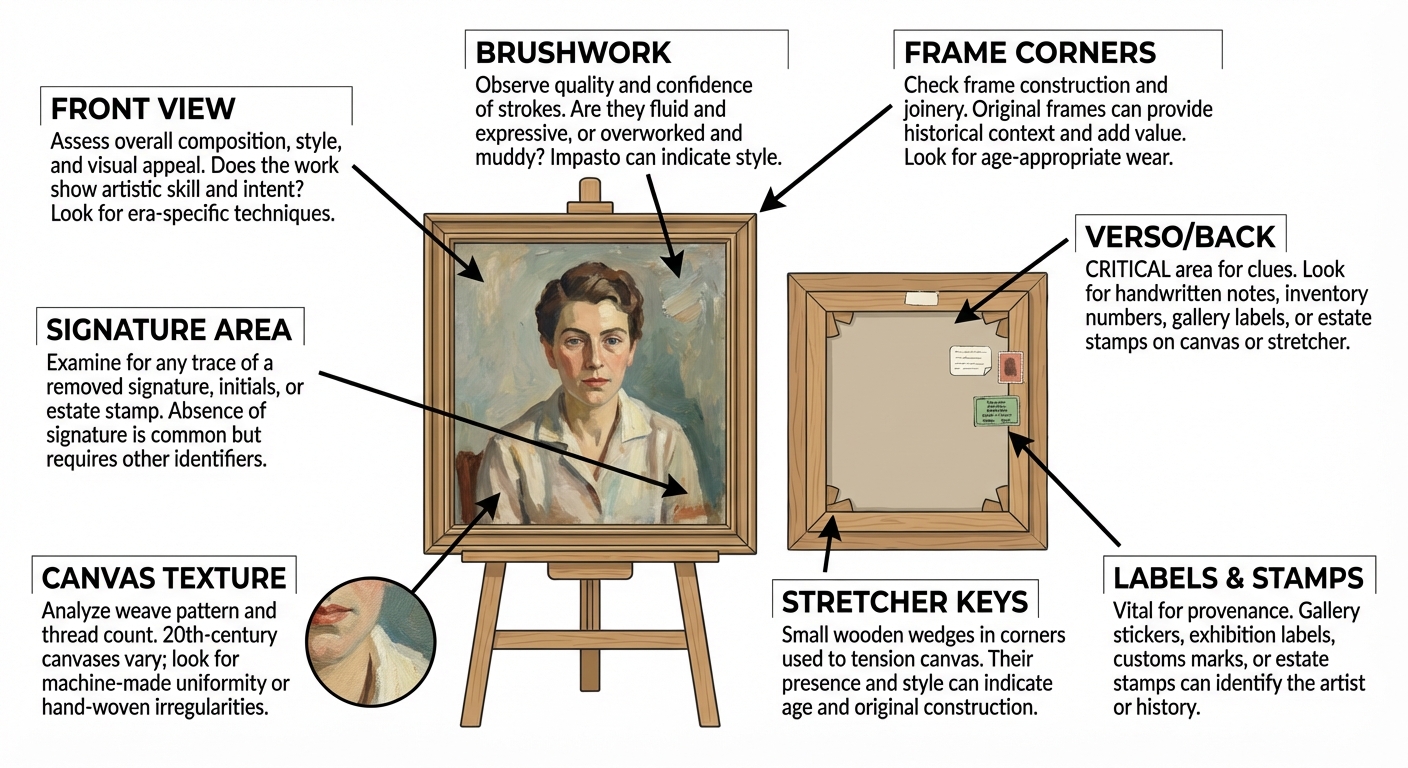
- Oil on canvas: note canvas weave, thickness, ground/primer color, and whether the canvas is lined (a second canvas attached later).
- Stretcher vs. strainer: keyed stretchers (with small wooden wedges/keys) often indicate traditional construction; fixed strainers can also be original but vary by region and era.
- Fasteners: tacks are common on older works; staples can appear in later 20th century or in re-stretching.
2) Verso (back) evidence
The back of a painting can be more valuable than the front for research. Photograph it straight-on, then close-ups.
- Gallery labels, framer labels, or exhibition tags
- Shipping labels and customs stickers
- Collection stamps, inventory numbers, or estate lot markings
- Handwritten notes (names, locations, dates)
3) Condition issues that change the number
Condition is usually the biggest swing factor for unsigned paintings. Collectors will pay for confidence; buyers discount hidden problems.
- Varnish yellowing: common and often treatable, but heavy, uneven varnish can flatten color.
- Craquelure vs. cracking: fine craquelure can be normal; active cracking with flaking paint is serious.
- Overpainting: large “touch-up” areas lower value. Under UV light, overpaint often fluoresces differently.
- Tears, punctures, and ripples: canvas damage almost always reduces value unless the work is important.
- Frame condition: a period frame can add value; a broken or cheap replacement can subtract value.
Why portraits often sell for less (unless the sitter matters)
Portraits are a narrower market than landscapes, still lifes, or abstract works. If the sitter is unknown and there’s no compelling story, many buyers treat it as decor. That doesn’t mean it’s worthless—it means the price is driven more by aesthetics and size than by attribution.
If you suspect the sitter is important, look for clues: uniforms, jewelry, medals, or regional costume. Even a partial identification can change where the painting should be marketed.
Note: We couldn’t find relevant auction comps in our database for this topic right now. If you’re valuing a specific item, try searching by maker/model/material and we’ll expand coverage over time.
What similar items actually sold for
To help ground this guide in real market activity, here are recent example auction comps from Appraisily’s internal database. These are educational comparables (not a guarantee of price for your specific item).
| Image | Description | Auction house | Date | Lot | Reported price realized |
|---|---|---|---|---|---|
| No relevant auction comps found for this topic right now. | |||||
Disclosure: prices are shown as reported by auction houses and are provided for appraisal context. Learn more in our editorial policy.
Free instant estimate
Not sure if your painting is worth appraising? Let us take a look.
Upload a photo, tell us what you know, and get a free first read. If a full appraisal makes sense, we will say so.
Free. No card needed. Takes about two minutes.
How to photograph an unsigned painting for a strong appraisal
If you want the fastest, most accurate estimate, capture evidence the way a conservator or cataloger would. Use indirect daylight, avoid flash glare, and include a ruler or tape measure.
- Full front (straight-on) and full back (straight-on)
- Four corner close-ups (front) and stretcher corner close-ups (back)
- Raking-light photo to show texture and condition (gentle side light)
- Close-up of the lower corners where a signature would typically appear
- Close-up of any labels, stamps, handwritten notes, or numbers
- Frame details (miter corners, carving, gilding wear)
How to sell an unsigned oil painting (best channels)
Because the artist is unknown, the selling strategy is about matching the work to the right buyer pool and keeping fees reasonable.
Option A: Local auction or estate auction
Often the best choice for decorative paintings and framed portraits. You’ll get market exposure and a transparent result, but expect buyer’s premium + seller fees to affect net proceeds.
Option B: Online marketplaces
Platforms like eBay, Chairish, Etsy, and Facebook Marketplace can work if you can ship safely (or sell locally). Use your appraisal photos and be honest about “unsigned/unknown artist,” size, medium, and condition.
Option C: Consignment gallery
A good fit when the painting has real quality and presentation. Galleries may decline unsigned works unless they can sell it based on aesthetics alone.
Option D: Specialty auction (only if evidence supports it)
If labels, stamps, or stylistic evidence point toward a known artist or school, it may qualify for a higher-end venue. In that case, attribution wording matters—avoid making claims you can’t support.
About the valuation method
Appraisers typically triangulate value from: (1) comparable auction results, (2) the painting’s physical facts (size, medium, support, condition), and (3) marketability (subject and décor compatibility). For unsigned works, we treat attribution risk as a discount unless provenance and material evidence narrow the possibilities.
References
- Invaluable: Roan Inc. unsigned portrait oil comp
- Auction comps from Valuer Bridge and Appraisily auction dataset snapshots; prices are hammer or realized values before buyer fees, taxes, shipping, and restoration.
Related questions people ask
- How do I find out who painted an unsigned oil painting?
- What is an unsigned portrait painting worth?
- Does an old frame increase the value of a painting?
- How can I date a canvas and stretcher from the back?
- What photos do appraisers need for an unsigned painting?
- Can an unsigned painting still be an original?
- How do auction houses describe “attributed to” vs “after”?
- Is it worth restoring an unsigned oil painting before selling?
- Where is the best place to sell an unsigned oil painting?