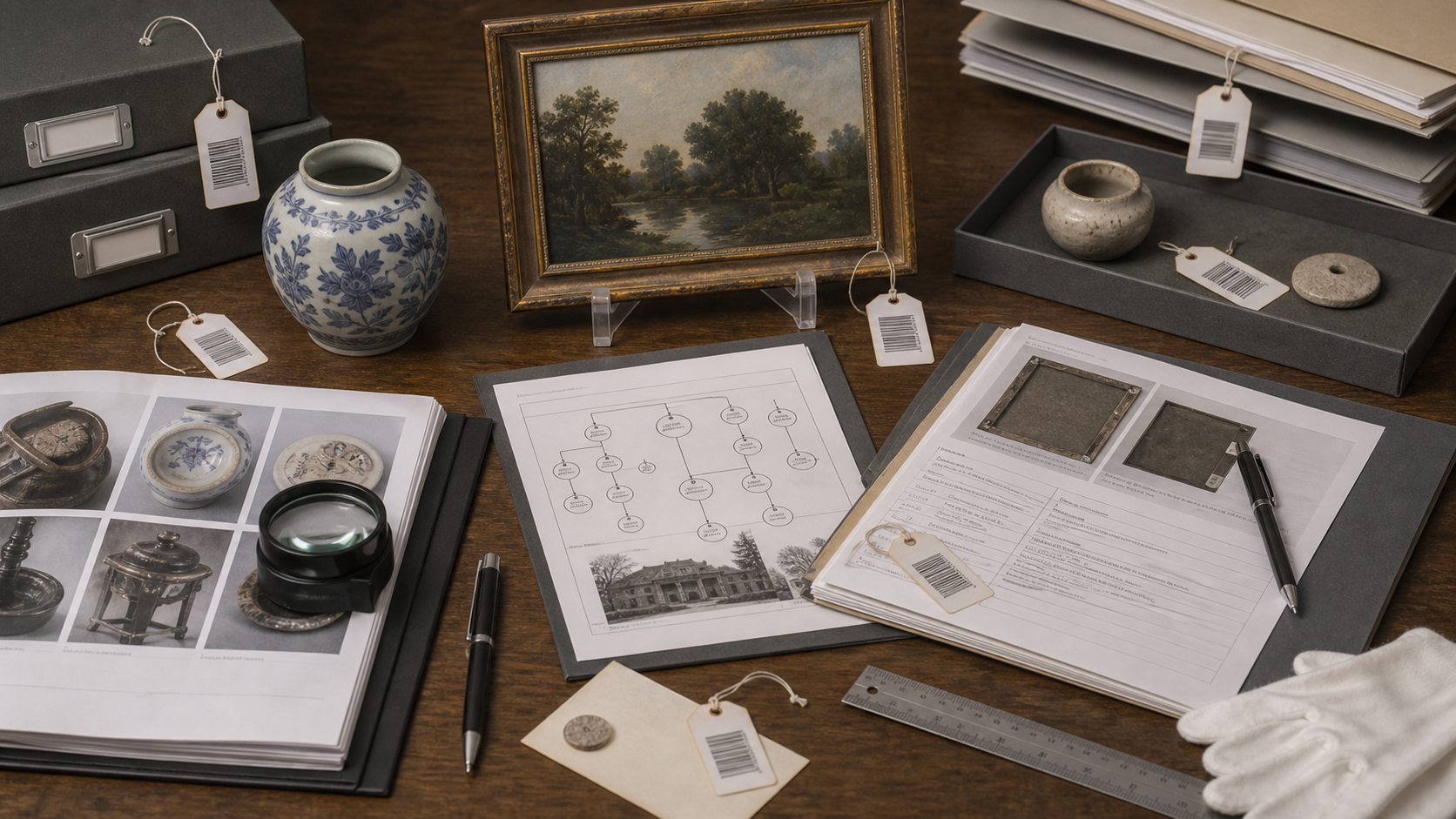
Object ID basics for appraisal workfiles
An object ID is the stable anchor that keeps an art or antique appraisal file from becoming a pile of disconnected photos, notes, invoices, and price research. It lets every record point back to one object, even when attribution or value changes.
Use this workflow for collection inventory, insurance scheduling, estate files, donation support, resale preparation, or any appraisal where provenance and condition evidence must stay traceable.
Our appraisal guides are based on object documentation standards, market research, and professional appraiser review. Learn about our editorial standards.
What an object ID should capture
The international Object ID standard, maintained by the museum and cultural-property community, focuses on the minimum information needed to identify art, antiques, and antiquities. For appraisal work, those same fields also make valuation evidence easier to audit.
- Type of object: painting, sculpture, clock, mask, table, textile, vessel, print, or another clear object type.
- Materials and techniques: oil on canvas, carved walnut, cast bronze, silver, porcelain, blown glass, woven wool, or mixed media.
- Measurements: height, width, depth, diameter, image size, sheet size, frame size, weight, and units.
- Inscriptions and markings: signatures, dedications, hallmarks, inventory numbers, gallery labels, foundry marks, and purity marks.
- Distinguishing features: repairs, damage, manufacturing defects, unusual construction, labels, or other traits that identify the exact item.
- Title, subject, date or period, and maker when known or reasonably attributed.
Photograph the ID record before interpretation
Good object records begin with photographs. Take overall views and close-ups before cleaning, reframing, restoration, or removal of labels. Include scale whenever possible.
- Overall front, back, sides, underside, interior, and any separate components.
- Close-ups of marks, labels, inscriptions, damage, repairs, signatures, and hardware.
- Raking light for surface texture, craquelure, carving, dents, scratches, and tool marks.
- UV or other specialist images only when relevant and safe for the material.
- File names that include the object ID and view type, such as object-ids-art-antique-appraisals-front.jpg.
Note: We couldn’t find relevant auction comps in our database for this topic right now. If you’re valuing a specific item, try searching by maker/model/material and we’ll expand coverage over time.
What similar items actually sold for
To help ground this guide in real market activity, here are recent example auction comps from Appraisily’s internal database. These are educational comparables (not a guarantee of price for your specific item).
| Image | Description | Auction house | Date | Lot | Reported price realized |
|---|---|---|---|---|---|
| No relevant auction comps found for this topic right now. | |||||
Disclosure: prices are shown as reported by auction houses and are provided for appraisal context. Learn more in our editorial policy.
Use IDs to keep provenance checkable
Provenance work often changes as new documents are found. The object ID should stay fixed while the record gains source notes, confidence levels, and unresolved gaps.
- Build a timeline with owner, location, document type, date, and confidence level.
- Photograph labels in place before removing backing boards, mounts, or old frames.
- Keep dealer stock numbers, estate lot numbers, and exhibition labels even when they are not maker marks.
- Separate owner-provided history from independently verified records.
- Flag sensitive gaps for cultural property, wartime loss, export, or restricted-material review.
Turn your object record into a valuation report
If you have photos, marks, measurements, condition notes, or provenance records, Appraisily can connect the evidence to an appraisal report and comparable-market support.
Make the appraisal report traceable
A signed appraisal should let the reader see how each value conclusion connects to the object record. This is especially important when attribution, provenance, or condition is uncertain.
- Use the object ID in photo captions, condition notes, comparable-sale files, and final report appendices.
- Record which photos and documents were reviewed and which evidence was unavailable.
- State attribution language clearly: by, attributed to, studio of, circle of, follower of, after, or unknown maker.
- Keep excluded comparables in the workfile with a short reason for exclusion.
- Version the report when new provenance, testing, or conservation information changes the conclusion.
FAQ
Is an inventory number the same as an object ID?
It can be, if the number is stable, unique, and tied to a complete record. A casual sticker number is useful only after it is connected to photos, measurements, marks, condition, provenance, and supporting documents.
Should I change the ID if attribution changes?
No. Change the record and attribution notes, not the ID. The point of the ID is to remain stable while research evolves.
Can object IDs help with insurance claims?
Yes. Clear photographs, measurements, marks, and distinguishing features can help identify the exact object after loss, theft, or damage and support a replacement-value report.
What if I only have a cryptic old code?
Keep it. Photograph it, transcribe it, and search related labels, invoices, and collection records. An old code may connect the item to a dealer, auction, estate, or exhibition record.
Reference links
Get an appraisal tied to your object record
Upload the object photos, marks, dimensions, provenance notes, and condition details you already have. A specialist can review the record and prepare a signed appraisal for the intended use.