
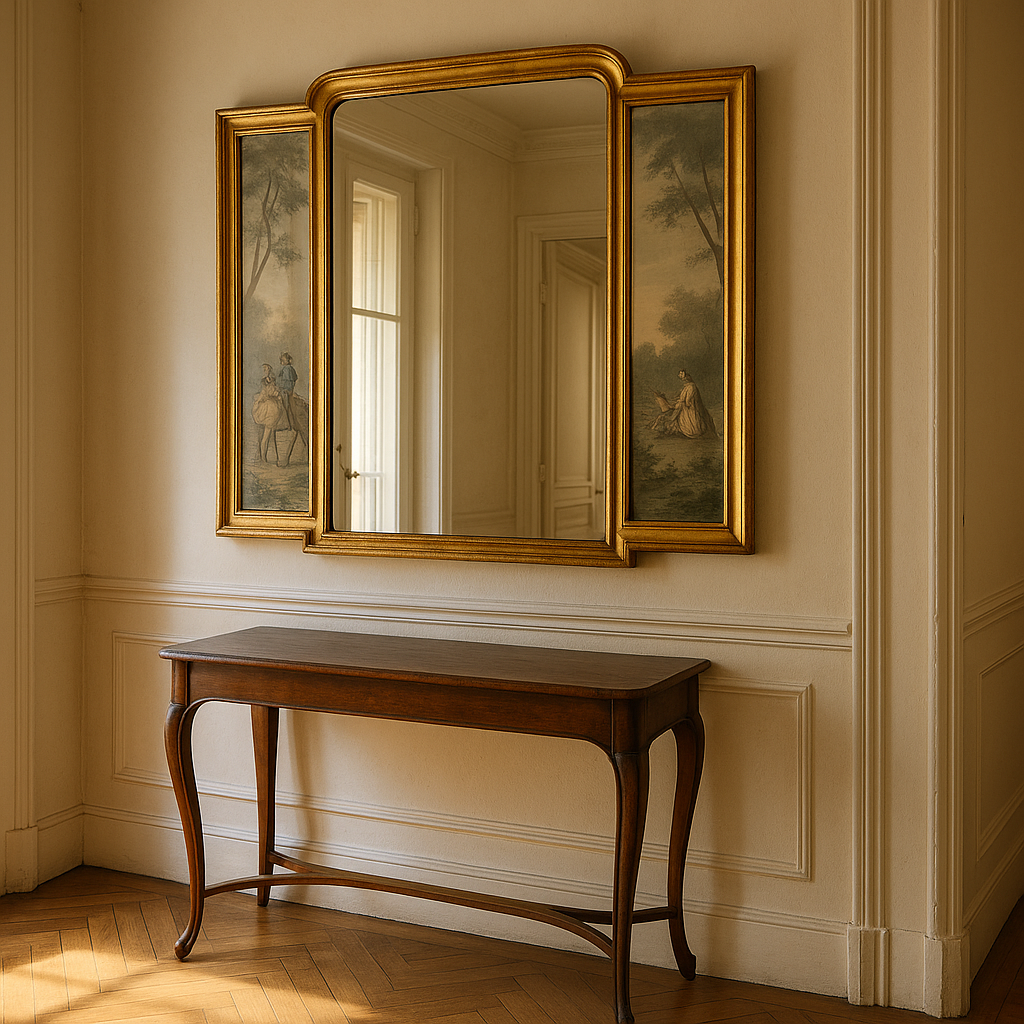
Mirrors like this sit in a sweet spot between decorative arts and practical interior design: they’re functional, they’re architectural, and they can be surprisingly collectible when the frame, glass, and decoration remain original.
Your description points to a mid-20th-century “French style” mirror (often described as trumeau, pier, or overmantel style) with a central mirror plate and two flanking lithograph panels under glass. A date such as 1943 (written or stamped) fits well with post-Art Deco transitional pieces that borrow older French motifs (gilt gesso, neoclassical lines) while using more modern construction.
Free first read
Check frame, mirror plate, lithograph panels, and scale before pricing it
Upload the full front, back construction, frame corners, mirror plate, lithograph-panel close-ups, measurements, and any labels or date marks. The free screener can flag whether it looks like decorative mid-century furniture or a stronger trumeau mirror candidate.
Start with a free screener. Use a signed report only when you need insurance, estate, donation, resale, or formal documentation.
What is a “French style” mirror with side lithographs?
In the decorative-arts trade, “French style” often means the mirror was made inspired by French designs (Louis XV, Louis XVI, Empire, or Art Deco), but not necessarily in France or by a documented maker. Many mid-century examples were made for export markets and may have no maker’s label.
The “side lithographs” are typically paper prints (lithographs) mounted behind glass. They can depict pastoral scenes, still lifes, or architectural motifs. Because they’re paper-based, the lithograph panels are a major condition driver: fading, foxing, and water staining can reduce value even if the mirror plate is excellent.
Key dating clues for a 1940s mirror
- Back construction: mid-century boards and fasteners are more standardized than 19th century work; look for machine-cut backing panels and uniform nails/screws.
- Hanging hardware: D-rings, wire, or stamped hangers are common after the 1930s; hand forged hooks are earlier.
- Mirror glass: true 18th–early 19th century plates show characteristic waviness and extensive spotting; 1940s glass is typically flatter but can still show light age speckling.
- Gesso and gilding: gilt gesso molding can be crisp in 1940s pieces, but the surface often shows a slightly more uniform leaf/paint application than earlier water-gilded frames.
How the lithograph panels affect value
For mirrors with side prints, value usually hinges on four interacting factors:
- Originality: are the prints original to the mirror, or later replacements?
- Condition: foxing (brown speckles), rippling, frame burn, and moisture stains are common.
- Subject and color: crisp black-and-white architectural prints often sell better than washed-out florals.
- Presentation: intact mats, spacers, and clean glass make the panels read as “designed,” not improvised.
Condition checklist (what to photograph)
If you want the most accurate valuation, photograph the mirror in bright, indirect light and capture the following:
- Full front: straight-on, to show proportions and overall design.
- Close-ups of corners: chips, losses, regilding, cracks in gesso, repairs.
- Side lithographs: close enough to show paper texture and any foxing or staining.
- Back: construction, label remnants, stamps, date notes, and hanging hardware.
- Mirror surface: spotting, silver loss, scratches, and any replaced plate.
Value range: what a fair market appraisal looks like
For a typical mid-20th-century French style mirror with side lithographs in original condition (no major losses to the gesso or print panels), a reasonable retail asking range is often:
- $175-$350 for a smaller mid-century French-style mirror with print-panel fading, foxing, or frame losses.
- $350-$800 for a clean single trumeau-style mirror with good scale, intact gilt/gesso surface, and attractive print or painted panels.
- $800-$1,600+ for larger or older giltwood trumeau mirrors, especially with strong painted-panel decoration, provenance, or pair value.
High-style period French trumeau mirrors (18th–19th century) can bring much more, but those are a different market segment and are usually supported by stronger construction evidence, provenance, and more sophisticated gilding.
Auction comps for French-style and trumeau mirrors
Compare single mirrors to single mirrors first. Pair results and 19th-century giltwood examples can sit above a mid-century decorative mirror with lithograph side panels.
| Photo | Sale | Date | Lot | Realized | Notes | Source |
|---|---|---|---|---|---|---|
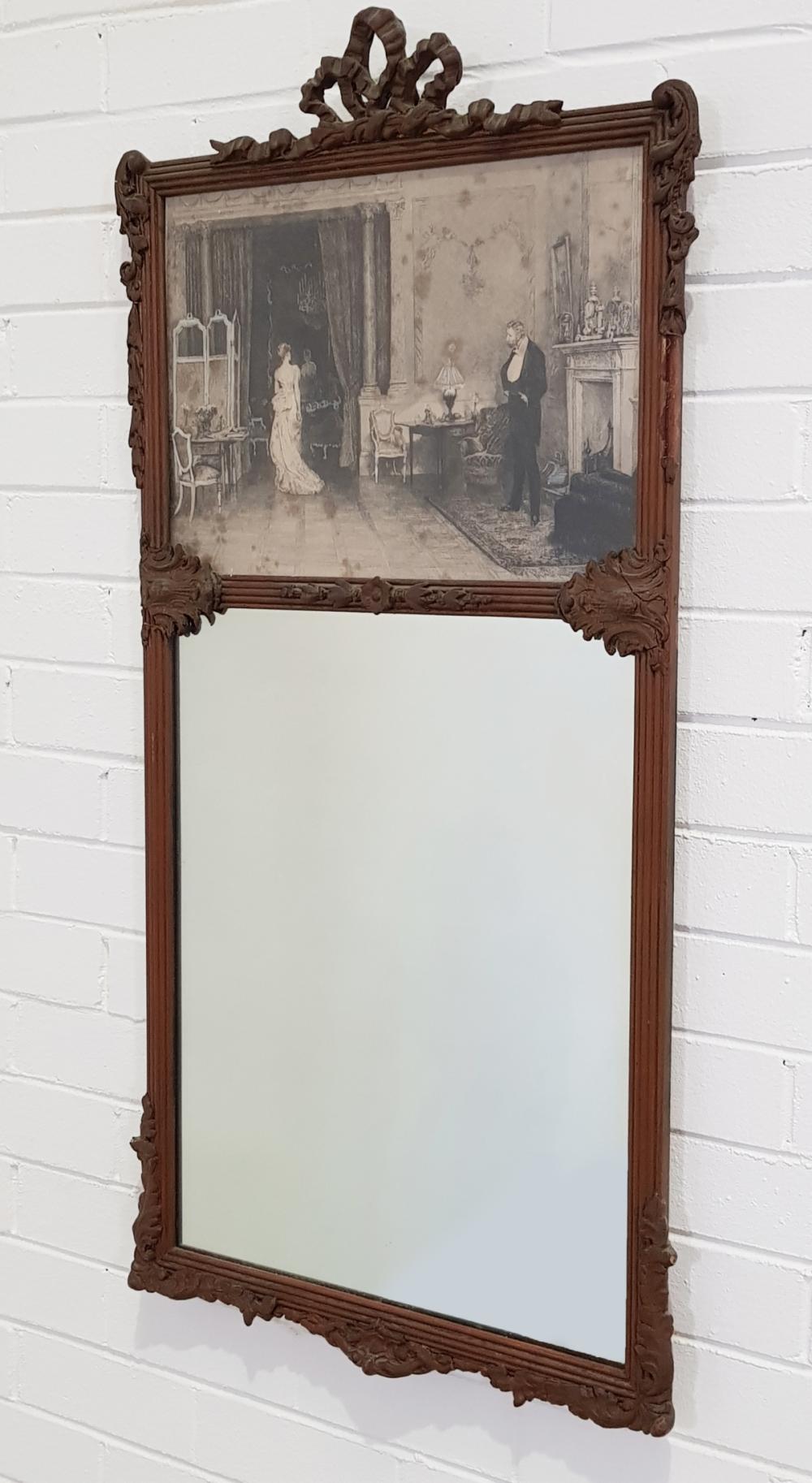 | Lawsons, French-style gilt trumeau mirror with Edwardian print, foxing to print | August 25, 2022 | 1206 | AUD $260 | Closest process/condition comp; useful for mirrors where the print panel has foxing or staining. | Valuer Bridge dataset |
| No image | Lawsons, French trumeau mirror with still-life oil-on-canvas panel | September 30, 2025 | 104 | AUD $475 | Single mirror with panel decoration; relevant when scale and frame quality are similar. | Valuer Bridge dataset |
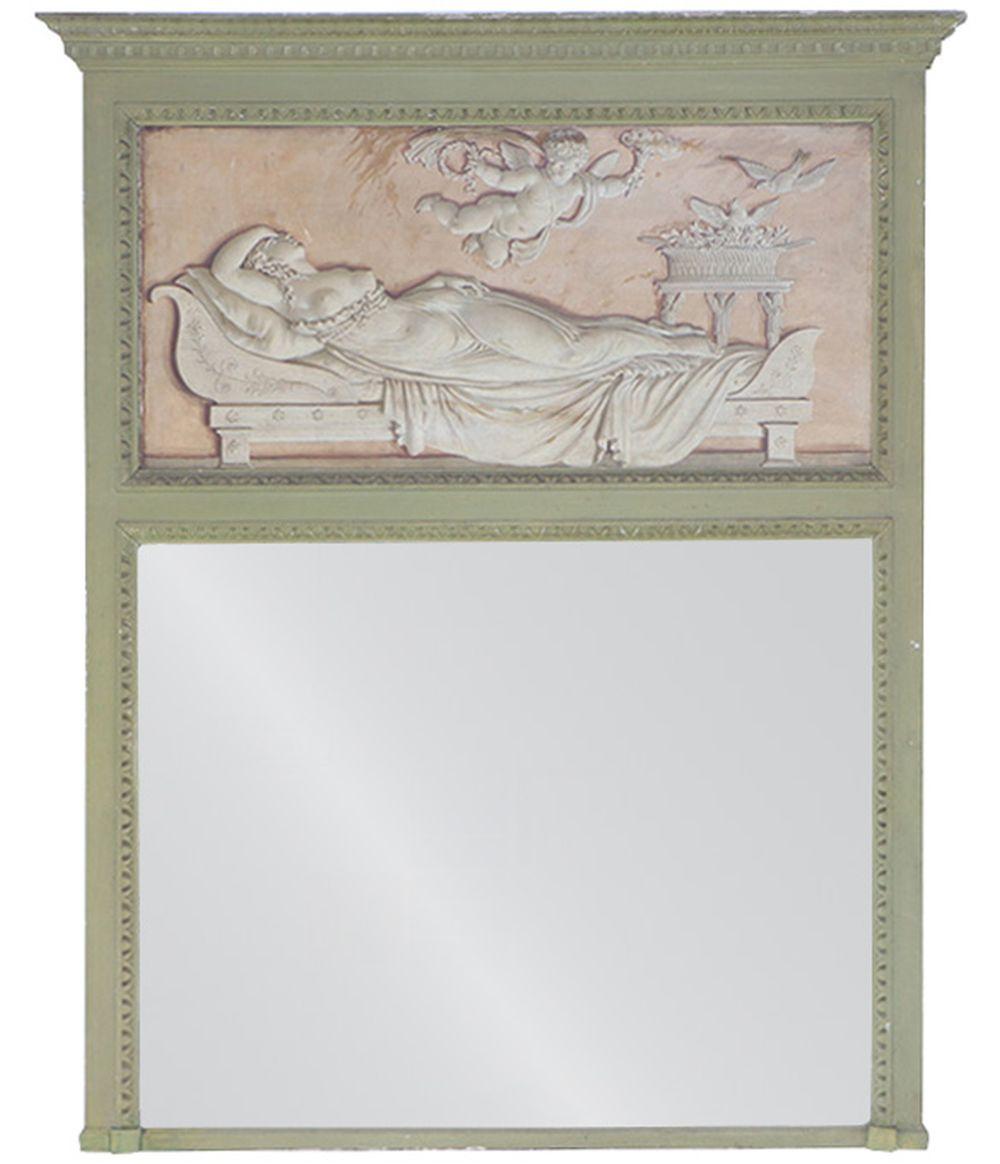 | Kamelot Auctions, French painted trumeau mirror with painting on board, circa 1880 | November 18, 2025 | 1085 | USD $500 | Older painted-panel comp; use as upside context for stronger construction and painted panels. | Valuer Bridge dataset |
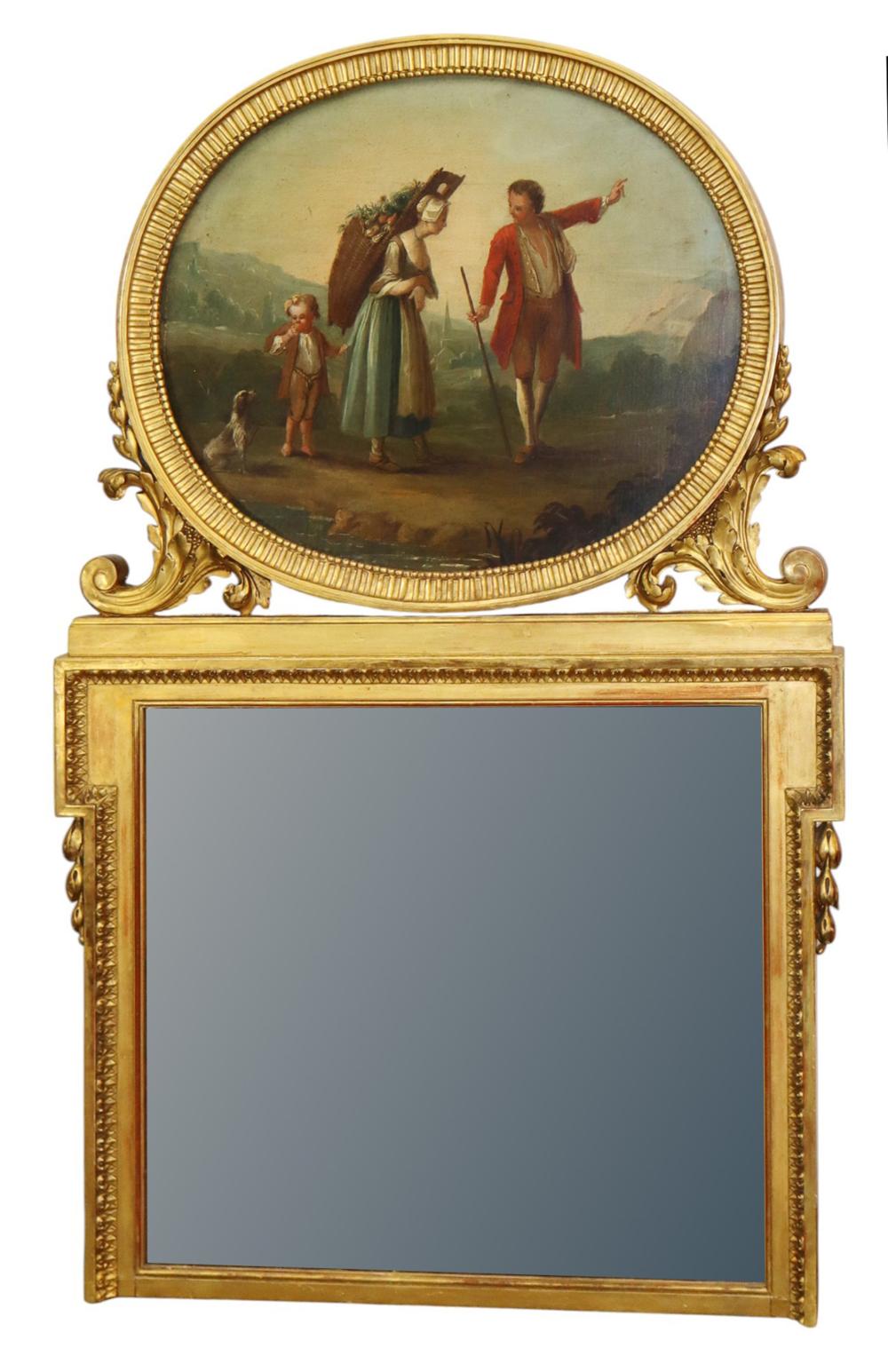 | King Galleries, French giltwood trumeau mirror with oval painting | January 17, 2026 | 294 | USD $800 | Higher single-mirror comp; useful when giltwood surface, panel, and size are notably better. | Valuer Bridge dataset |
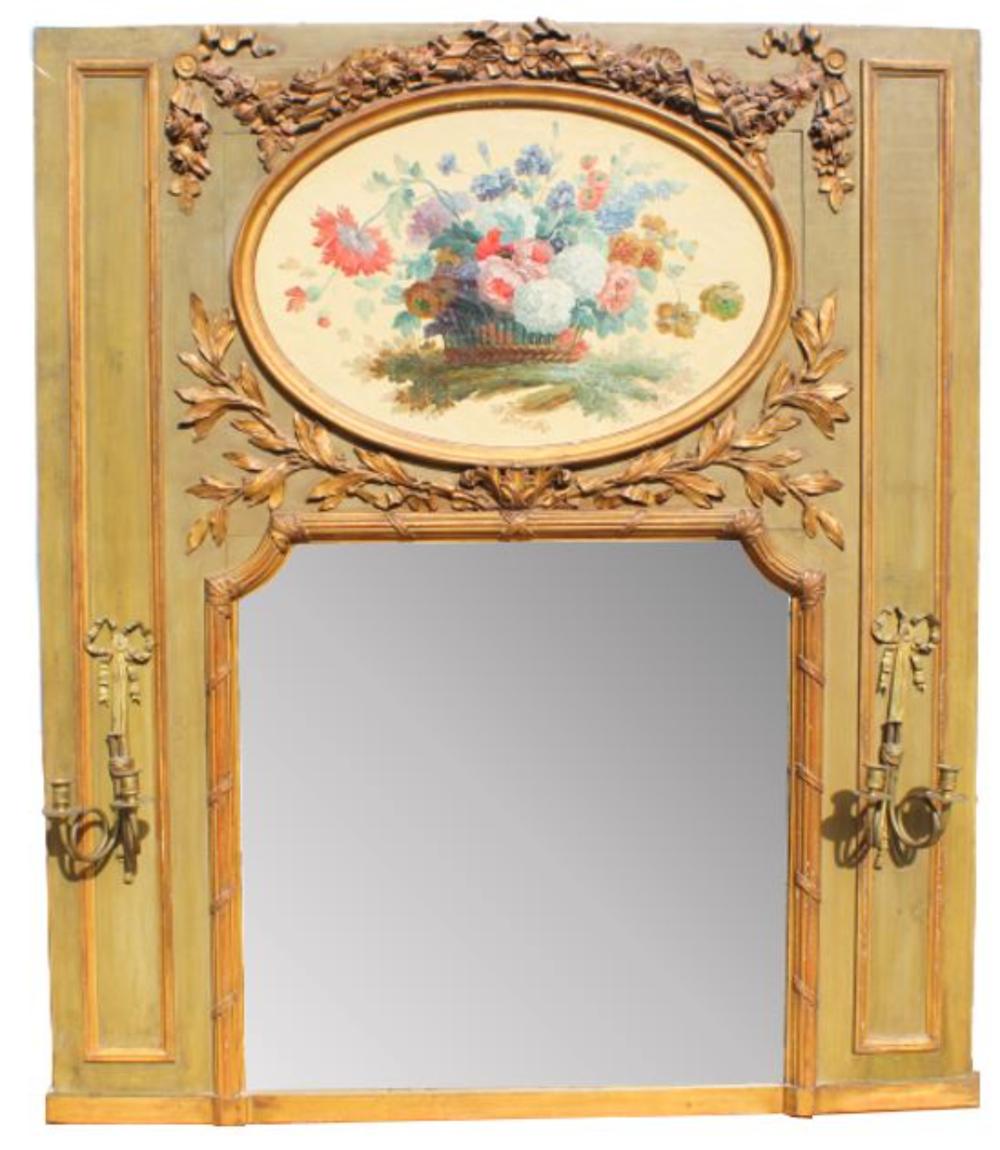 | Sarasota Estate Auction, large antique French trumeau mirror with oil painting | December 12, 2021 | 753 | USD $600 | Large antique trumeau context; likely above a common mid-century lithograph-panel mirror. | Valuer Bridge dataset |
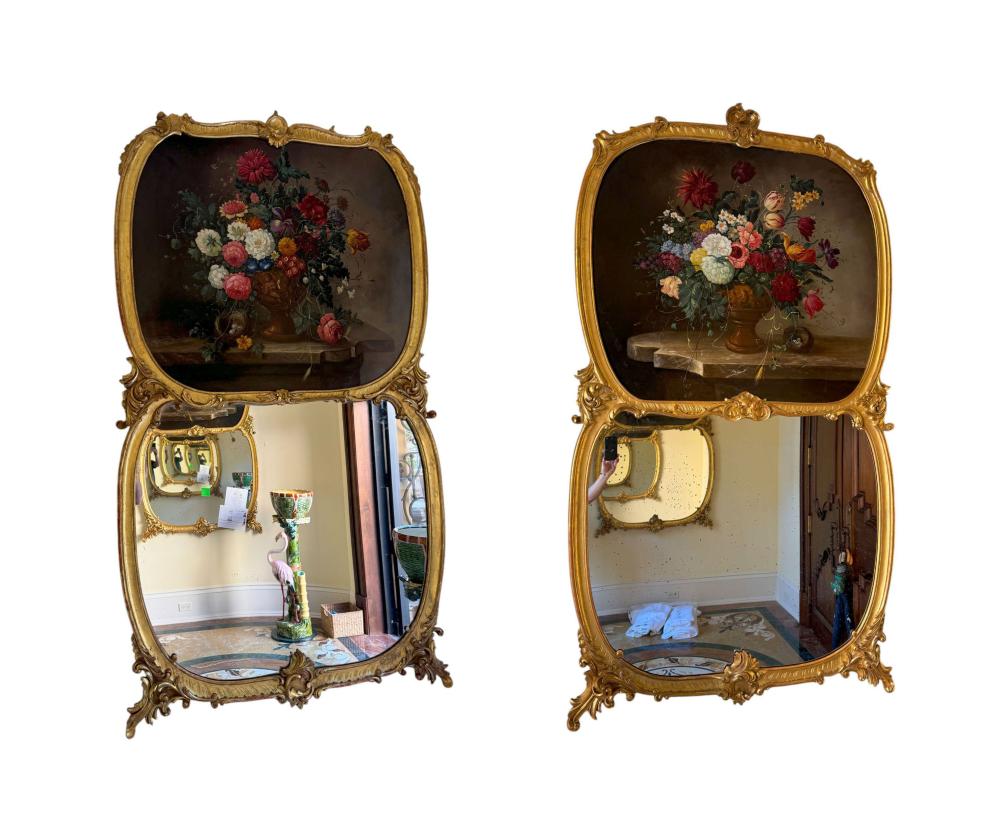 | Bill Hood & Sons, pair of French giltwood trumeau mirrors, circa 1890 | April 8, 2025 | 196 | USD $1,600 | Pair result; divide and adjust for single-mirror comparisons before applying. | Valuer Bridge dataset |
Takeaway: print-panel damage pulls many decorative mirrors into the low hundreds, while larger giltwood trumeau mirrors with painted panels can move into the high hundreds or more.
Have a French-style mirror?
Check frame, glass, lithograph panels, and size before pricing it.
Upload front, back, corner, label, mirror-plate, and print-panel photos. The free screener can flag whether it belongs in the decorative or higher-end trumeau market.
Upload photos for a free first lookHow to sell (without damaging value)
- Measure first: list height × width × depth and, if possible, weight. Size is a major pricing variable.
- Don’t clean aggressively: avoid metal polishes on gilded surfaces; use a dry microfiber cloth and consult a conservator for flaking gesso.
- Local pickup performs best: mirrors are fragile and shipping is expensive; many buyers filter for pickup.
- Use the right marketplace: for decorative mid-century mirrors, Facebook Marketplace and local consignment are often fastest; for higher-end gilt frames, consider specialist auctions.
- Pack like artwork: if shipping, double-box, protect the glass with foam board, and insure for replacement cost.
FAQ
Q: Does “French style” mean it was made in France?
A: Not necessarily. It typically means the design vocabulary is French-inspired; country of manufacture
requires labels, stamps, or construction evidence.
Q: Should I replace cloudy mirror glass?
A: Replacement can improve décor appeal, but originality matters to collectors. If you replace the plate,
keep the old glass and document the change.
Q: Are the lithographs valuable on their own?
A: Usually the value is in the complete decorative object. Paper condition still matters because it’s part
of the design.
Q: What’s the fastest way to raise value?
A: Presentation. Clean the glass, photograph well, and disclose condition honestly. Avoid “restoring” the
gilding unless done by a specialist.
Search variations collectors ask
Readers often Google:
- 1943 French style mirror value
- how to date a trumeau mirror with lithograph panels
- are lithograph panel mirrors collectible
- gilt gesso frame repair cost vs value
- best way to ship a vintage wall mirror safely
- French Art Deco transitional mirror appraisal
- how to tell if a mirror is original glass
- where to sell a French style wall mirror locally
Each question is addressed in the valuation guide above.
Get your mirror professionally appraised
Unsure whether your mirror is decorative mid-century or a higher-end gilt frame? Appraisily’s certified appraisers can review photos, condition, and market evidence and deliver a written valuation.
No obligation. Secure upload.