
Which painting condition problems cut bids first?
This list is for someone looking at an oil on canvas or panel and trying to tell a stable, catalogable picture from a treatment-risk lot.
Buyers price three visible facts: the paint layer still sits, the support still holds, and the identity on the front or verso is still readable.
The strongest tells from a photo:
- Open losses, abrasion, or a cataloged tear.
- Tide-lines or a cockled swell in the canvas.
- Yellowed varnish versus a stripped, chalky surface.
- Slack canvas, a bent stretcher, or a disclosed lining.
- Heavy inpainting or a restorer’s note.
- Failed miters versus an original frame named in the title.
- A missing signature or faded back label.
- Mold, insect, or smoke residue.
- Corner dents, not only even age crackle.
A cataloged tear is uncommon. Most sales attached to this page are paintings sold as paintings, so original-condition oils stand in for water, mold, and overcleaning titles the catalog never used.
Keep each defect as a check. An intact oil is the high side of those gaps, not proof that a tide-line is harmless.
Start with the paint layer
1) Paint loss, abrasion, and edge wear
Flaking at the tacking edge, rubbed highlights, and chipped corners are what a bidder sees before the subject. They are usually permanent, and they raise the next question: will the layer still hold after the next move.
Northgate Gallery Auctions cataloged George Barker’s oil on canvas, A Sussex Farmhouse, as “AF (Small Tear)” as lot 50 on 16 July 2022. That is a titled support tear, not an invented damage sale.
Kodner Galleries cataloged an oil in the style of Franz Reinhold with craquelure and losses as lot 182 on 14 January 2015. Paint loss is on the ticket.
Check first: Photograph all four tacking edges in raking light before you wrap the picture.
2) Water stains, tide-lines, and swelling
Moisture often hides as a dull band or a cockled swell under varnish, not as a dramatic rip. Adhesion can keep failing after the sale, which is why a localized stain still changes the bid.
Water stain, tide-line, and swelling were not lot titles in this evidence set. Palm Beach Auction Gallery sold a David Burliuk still-life oil on board as a painting, lot 70A on 5 January 2015. Antiques Supermarket sold a Rene Lelong oil on canvas the same way, lot 232 on 13 January 2015. Those are original-condition lots, not water-damage examples.
Check first: Sight across the canvas for a tide-line or a cockled swell before you blame dirty varnish.
What similar items actually sold for
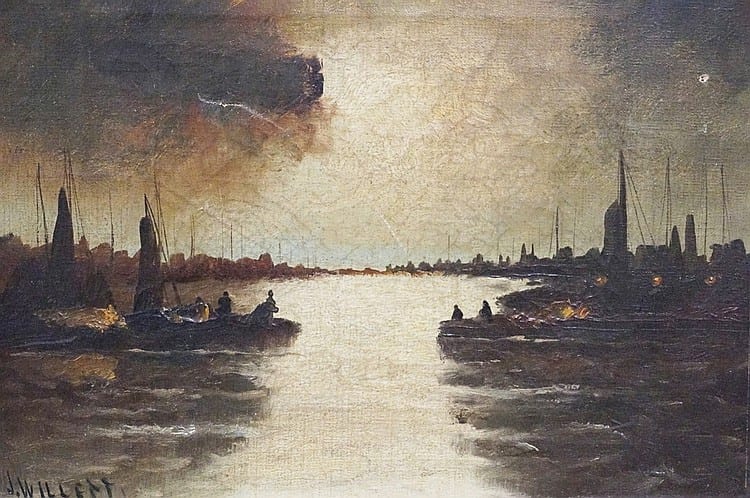
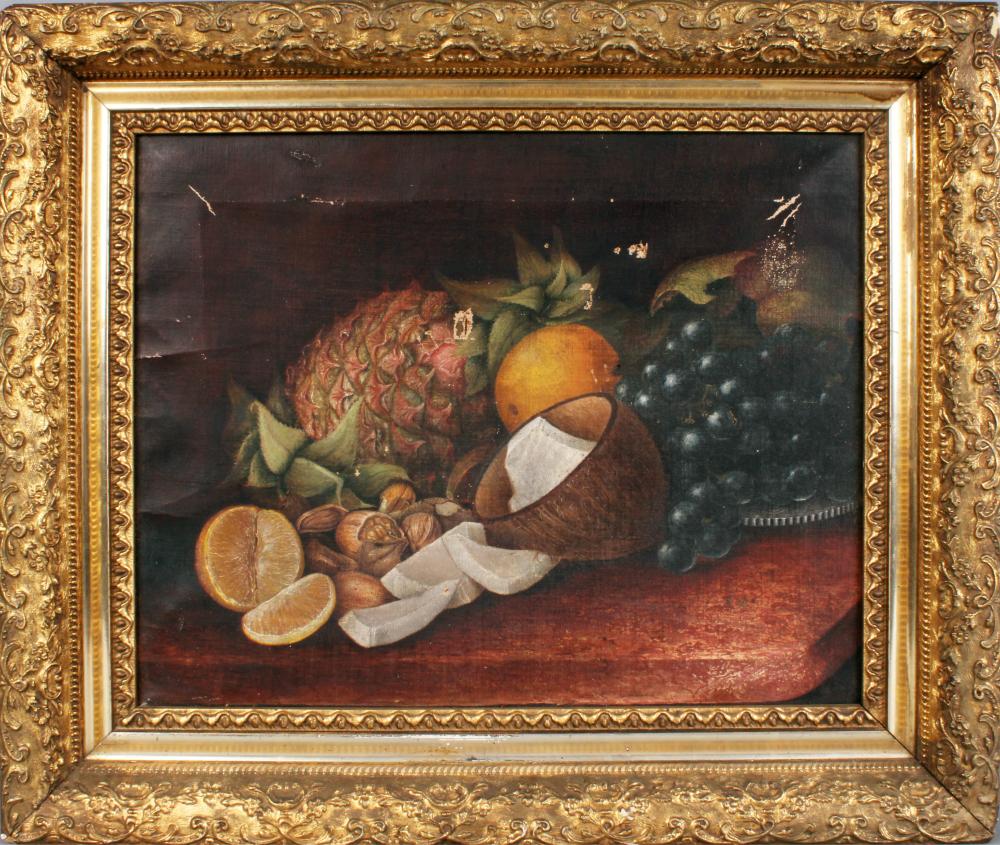
To help ground this guide in real market activity, here are recent example auction comps from Appraisily’s internal database. These matched sales are market context only, not an object estimate or identification, and they do not guarantee a price for your specific 9 painting condition problems that cut value fast.
Shown USD range: USD 40-USD 4,500. Median of these 5 USD examples: USD 325.
How these auction records were verified
Each row retains its exact source URL, lot identity, retrieval time, access result, and immutable record hash. Inspect the public comparable provenance record.
Disclosure: prices are shown as reported by auction houses and are provided for appraisal context. Learn more in our editorial policy.
Support, varnish, restoration, and the frame
3) Acidic or oxidized varnish and yellowing
A yellow film flattens contrast and can make a tonal landscape look later than it is. Buyers treat that color shift as a storage story, and as a warning that someone may already have cleaned too hard.
The search term “overcleaned painting” returned no matching lots. Overcleaning was not invented. Bruce Kodner Galleries sold a Ferdinand Pitard oil on canvas, circa 1850, as a painting, lot 178 on 4 January 2015. Greenwich Auction sold a Josef Foshko oil on canvas the same way, lot 243 on 1 January 2015. Those lots are the optical-surface high side, not stripped paint.
Check first: Tilt the picture: overall yellow-brown versus thin, chalky color in the lights is a different problem.
4) Support issues: bent stretcher bars, sagging canvas, cracked panel
A bowed stretcher, slack keying, or a warped panel still displays from across a room. Buyers discount because the next crate, and the next frame, have to carry that structural risk.
Kodner Galleries cataloged William A. Breakspeare’s signed 1876 oil The Letter as “Good Relined Condition,” lot 167 on 11 February 2015. Bill Hood & Sons described an Orrin Sheldon Parsons fall landscape as oil on relined canvas, lot 34 on 17 February 2015. Relining is the support-repair fact on those tickets, not a guessed tear.
This pack has no public-safe appraisal of a sagging stretcher, cracked panel, or lining.
Check first: Look at the verso for lining fabric or a bowed stretcher; do not key it tighter yourself.
5) Over-restoration and clumsy retouching
Islands of color that sit on top of the crackle, or a glaze that does not match the surrounding paint, make buyers ask whether they are looking at the artist or at a later reconstruction.
O’Gallerie sold Eliza R. Barchus’s oil of Mount Shasta with conservator notes attached verso and disclosed professional restoration, lot 828 on 9 June 2004. Restoration is on the ticket; clumsy retouching is not invented.
Eldred’s cataloged an Andrea Cherubini oil, signed and dated 1865 Roma, as “Needs restoration,” lot 871 on 13 December 2003. Skinner noted minor scattered retouch and craquelure on Aiden Lassell Ripley’s Grouse Cover, lot 324 on 9 March 2001, and lining plus retouch plus scattered craquelure on Fabio Fabbi’s The Dancer, lot 352 on 23 January 2015.
Clumsy inpainting was not described on a public-safe appraisal card.
Check first: Scan for islands of color that sit on top of craquelure, then ask for a treatment note.
6) Damaged or missing frame and hardware
The frame is transport hardware as much as it is presentation. Split miters, failed hangers, or missing glazing raise logistics cost even when the paint layer is fine.
A damaged, missing, or broken frame was not in the lot titles. Setdart Auction House sold Jules Marie Sevestre’s The Bather with an original Louis XIV frame named in the title, lot 43 on 17 June 2025. Grogan & Company sold Claude Venard’s Nu sur la plage with an original frame sized in the title, lot 38 on 21 June 2015. Those are the complete-frame side of the gap.
Check first: Press each miter and hanging point; a loose corner is a shipping cost even if the paint is fine.
Labels, contamination, and handling scars
7) Labeling ambiguity: missing signatures, studio marks, or cataloging
A faded verso stamp does not by itself collapse value. It does push a bidder toward a conservative number when the front is also unsigned and the medium is unclear.
Pacific Galleries sold Gaylen Hansen’s oil on canvas September Hatch, signed lower right and titled on the painting, as lot 100 on 6 January 2015. Flanders Auctions sold a signed E. Leroth oil, Marché aux animaux à Liège, as lot 820 on 2 April 2026. Readable authorship is the labeling side of the gap versus a blank stretcher.
Check first: Photograph the signature, verso labels, and any gallery stamp before you clean the back.
8) Biological and contamination issues: mold, insects, smoke
Spotting, a musty verso, or a smoke film is read as a latent treatment bill. Insurers and buyers budget for remediation even when the image still reads from a distance.
Mold, insect, and smoke were not catalog headings on the kept lots. Kamelot Auctions sold an oil on canvas titled as a Bouguereau nymph, lot 604 on 7 February 2015, as a painting. That original-support lot is the high side of the contamination gap, not a mold example.
None of the reviewed appraisal images showed active mold or insect damage.
Check first: Smell the verso and look for spotting; do not brush suspected mold.
9) Poor handling and transport history
Corner dings, stretcher-bar impressions from a drop, and repeated unpadded moves tell a bidder the next trip is also a risk. Age crackle is a different fact.
Transport and handling marks were not catalog headings. Craquelure is the nearest named surface-age condition, not transit trauma. Thomaston Place Auction Galleries noted minor craquelure on Carroll Thayer Berry’s Yellow House, Falling Branch in Snow, lot 1027 on 30 August 2015. Kodner Galleries cataloged an Andrew Loomis portrait with craquelure, lot 69 on 14 January 2015.
Check first: Separate corner dents and stretcher-bar impressions from even age crackle.
Typical inherited-wall scenario
A typical inherited wall has a named landscape in an ornate gilt frame hanging next to an unsigned portrait with slack canvas. The gilt frame can still be the complete-frame object if the miters and hangers hold.
The unsigned portrait is a labeling problem and a support problem at once. Photograph the verso, the tacking edges, and any restorer’s note before you decide which picture is the listing.
People also ask about painting condition
Does craquelure always cut a painting’s value?
No. Even, age-consistent crackle can sit on a signed oil that still finds a specialist bidder. Treat it as a surface-age note, then look separately for losses, retouch sitting on top of the cracks, or corner trauma from a drop.
How do I tell yellowed varnish from overcleaning?
Look at the lights and the shadows separately. If only the highlights look thin, ask whether the surface was cleaned before you treat the whole picture as yellowed varnish.
Should I restretch a sagging canvas before I sell?
No. Keying or restretching at home can crack the paint layer. Record the slack, photograph the verso for lining, and leave structural work to a conservator if a buyer needs it.
Does a missing signature kill the price?
Not automatically. A blank front still needs verso labels, a studio stamp, or another catalog identity. A named, dated, or titled oil is easier to bid; an unsigned work is not worthless, but it is a more conservative lot.
When should I get a written painting appraisal?
When you need a documented number for sale, insurance, estate, or donation. A free first look can read photographs; a written report is optional unless you need that document.
Related questions buyers search
- How much does faded varnish reduce a painting’s resale bid?
- Do buyers pay more for old paintings with a stable canvas?
- Can conservation repair restore auction confidence quickly?
- What condition defects cause the biggest listing discounts?
- How do you prove restoration quality to a painting buyer?
- Is frame condition included in a painting valuation?
- When should I wait on a full appraisal instead of a DIY estimate?
- Do minor craquelure and edge wear always reduce value?
References
- Auction records cited above: Northgate Gallery Auctions, Kodner Galleries, Palm Beach Auction Gallery, Antiques Supermarket, Bruce Kodner Galleries, Greenwich Auction, Bill Hood & Sons Arts & Antiques Auctions, O’Gallerie, Eldred’s, Skinner, Setdart Auction House, Grogan & Company, Pacific Galleries, Flanders Auctions, Kamelot Auctions, and Thomaston Place Auction Galleries.
- Appraisily editorial policy and sourcing standards: /editorial-policy/.