Document the artwork before you touch it
Start by photographing the front, back, frame, and any labels or handwriting. Jot down measurements, medium (oil on canvas, watercolor on board, etc.), signatures, inscriptions, and any receipts or letters you already have. Provenance is the story that moves value, so scan bills of sale, gallery stickers, customs paperwork, and exhibition catalogs. Store everything in a single digital folder so you can share it with a potential buyer or appraiser without scrambling.
Assess condition and restoration red flags
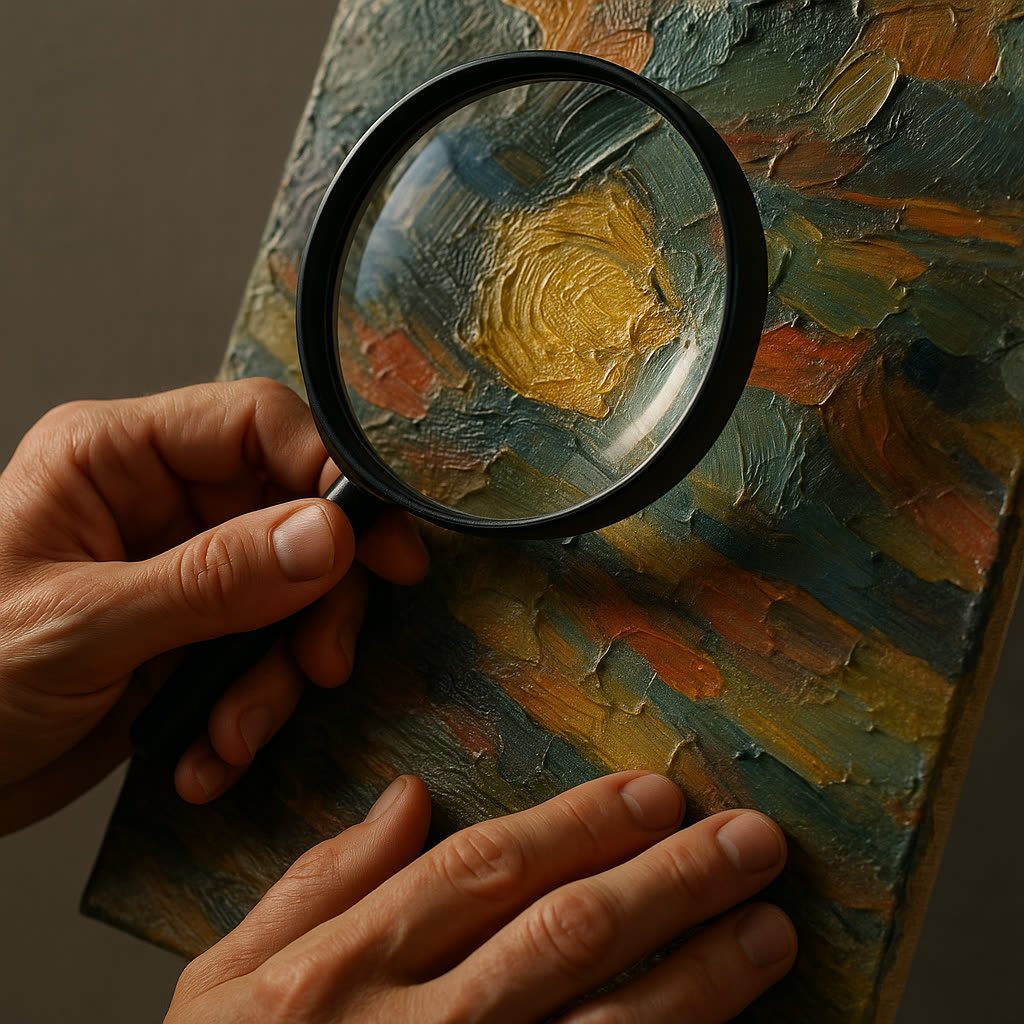
Use indirect daylight and a flashlight at a low angle to look for craquelure patterns, paint losses, lifting varnish, ripples in the canvas, or warping in the panel. Flip the work over: patches, new stretcher bars, or non-original nails suggest prior repairs. Minor, stable cracking is normal in 19th-century works, but active flaking or mold must be stabilized before consigning or insuring the piece. Take close-up photos of problem areas so a conservator or remote appraiser can judge the severity.
Research the artist and comparable sales
Search auction databases such as Sotheby's, Christie's, Invaluable, and MutualArt for the artist's name plus medium. Filter to the past five years to understand the current market. Pay attention to size, subject, and quality: a signed coastal scene on canvas may fetch triple the price of a similar unsigned sketch. When you can't find the exact artist, look for peers from the same school, movement, or region. Keep a spreadsheet noting sale date, auction house, hammer price, and currency; it becomes the backbone of your valuation narrative.
Translate evidence into the right type of value
Fair market value (FMV) reflects what a willing buyer would pay a willing seller, usually based on recent auction comps. Retail replacement value is higher because it assumes the cost of sourcing a similar piece quickly through a dealer. Donation appraisals for the IRS must reference FMV and include Form 8283. Insurance schedules demand replacement numbers. Decide which scenario you need first—trying to negotiate a sale price with FMV while simultaneously asking an insurer to cover a higher replacement figure is normal as long as the rationale is documented.
Know when to call a certified appraiser
Online resources can take you 80% of the way, but a USPAP-compliant report signed by a human expert carries weight with insurers, attorneys, and serious buyers. Choose an appraiser who specializes in your period (Impressionist, Latin American, mid-century, etc.), provides comparable sales, and is willing to stand behind the valuation in writing. Remote services such as Appraisily use your photos, provenance notes, and our 3M+ comparable database to deliver a PDF in ~24 hours, complete with resale guidance. That $59 investment often prevents four-figure mistakes.
How We Research Valuation Data
Our appraisal guides are based on auction results, dealer pricing data, and professional appraiser insights. We may earn a commission when you use our free professional appraisal service. Learn about our editorial standards.
Note: We couldn’t find relevant auction comps in our database for this topic right now. If you’re valuing a specific item, try searching by maker/model/material and we’ll expand coverage over time.
What similar items actually sold for
To help ground this guide in real market activity, here are recent example auction comps from Appraisily’s internal database. These are educational comparables (not a guarantee of price for your specific item).
| Image | Description | Auction house | Date | Lot | Reported price realized |
|---|---|---|---|---|---|
| No relevant auction comps found for this topic right now. | |||||
Disclosure: prices are shown as reported by auction houses and are provided for appraisal context. Learn more in our editorial policy.
Free instant estimate
Not sure if your painting is worth appraising? Let us take a look.
Upload a photo, tell us what you know, and get a free first read. If a full appraisal makes sense, we will say so.
Free. No card needed. Takes about two minutes.
Choose your next step
Use the path that matches the decision you need to make about the item.
Not sure it is worth appraising?
Start with a lower-friction screen to understand the likely category, evidence, and next step.
Upload photos for a free first lookWant proof before paying?
See how a signed report documents photos, comparable evidence, condition notes, and value conclusions.
View signed report sampleNeed a signed report?
Use this for insurance, estate, donation, resale, or documented value decisions.
Need documentation now? Start signed appraisalNeed local or specialist help?
Compare directory options when the work needs in-person review or a specialist near you.
Find local art specialistsSee what the report looks like
Sample reports show how photos, comparable evidence, condition notes, and a value conclusion are documented.
Need a defensible appraisal for your painting?
Upload your photos and notes to Appraisily for a certified PDF you can use for insurance, estates, or a confident sale.
No obligation. Secure upload.