Direct answer first
Short answer: most old encyclopedia sets are modest in value, with exceptions
Free. No card needed. Photo upload takes about two minutes.
Need a signed keep-file? online antique appraisal services is the $59 report. Instant stays unsigned.
Most modern encyclopedia sets from the 1960s onward have low resale value unless they are complete, unusually complete in condition, and sold into a decorative or design-focused market. Truly stronger examples are earlier editions, museum-grade bindings, and rare subject sets that can still find collectors or institutions.
A World Book set sits with those ordinary sets, the same way a late Britannica does.
Before deciding what to do, check volume count and completeness first. One missing book can often reduce value by far more than condition issues alone, because buyers and dealers value immediate usability and completeness.
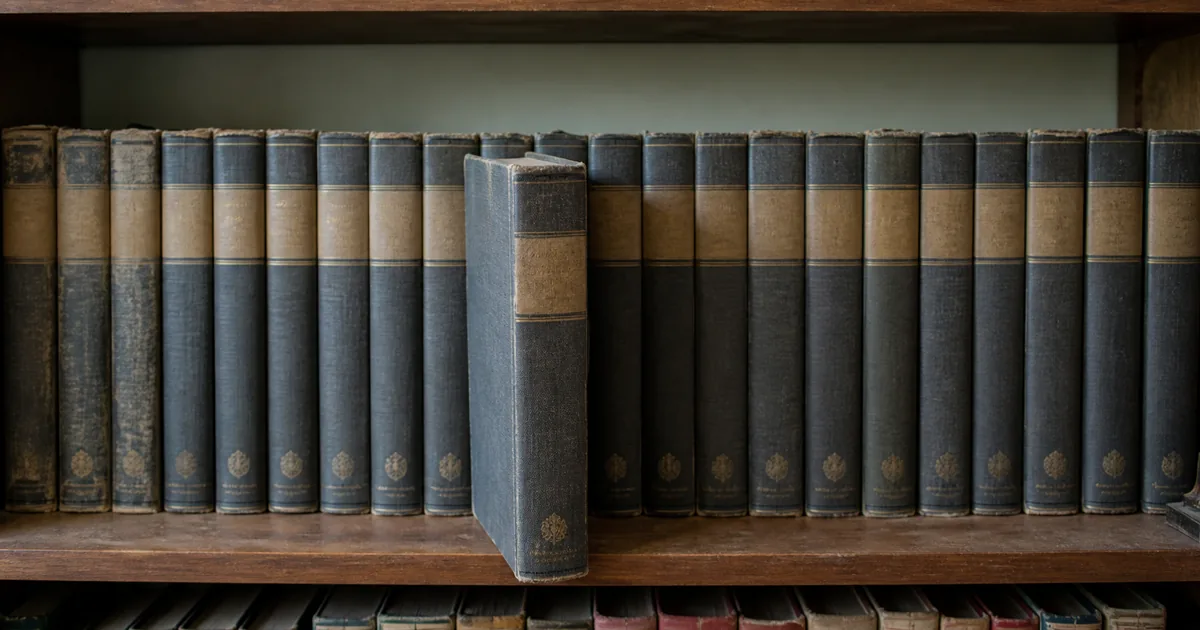
Page-specific auction evidence is shown only when exact, source-linked sale records pass the current provenance contract. Otherwise this guide displays an explicit no-evidence state. See Editorial policy.
What this guide covers
What actually drives value in old encyclopedias
Most value is set by four broad factors: completeness, condition, demand channel, and evidence.
- Completeness: full sets are significantly more desirable than partial runs, especially if original indexes, supplements, yearbooks, or companion material remain.
- Edition and publication context: major sets tied to major eras or institutions can hold better long-term value than generic modern sets.
- Condition and handling: warping, missing pages, water marks, and loose bindings are major drag factors.
- Demand channel: resale through a general used-book market is different from private collectors or institutional buyers.
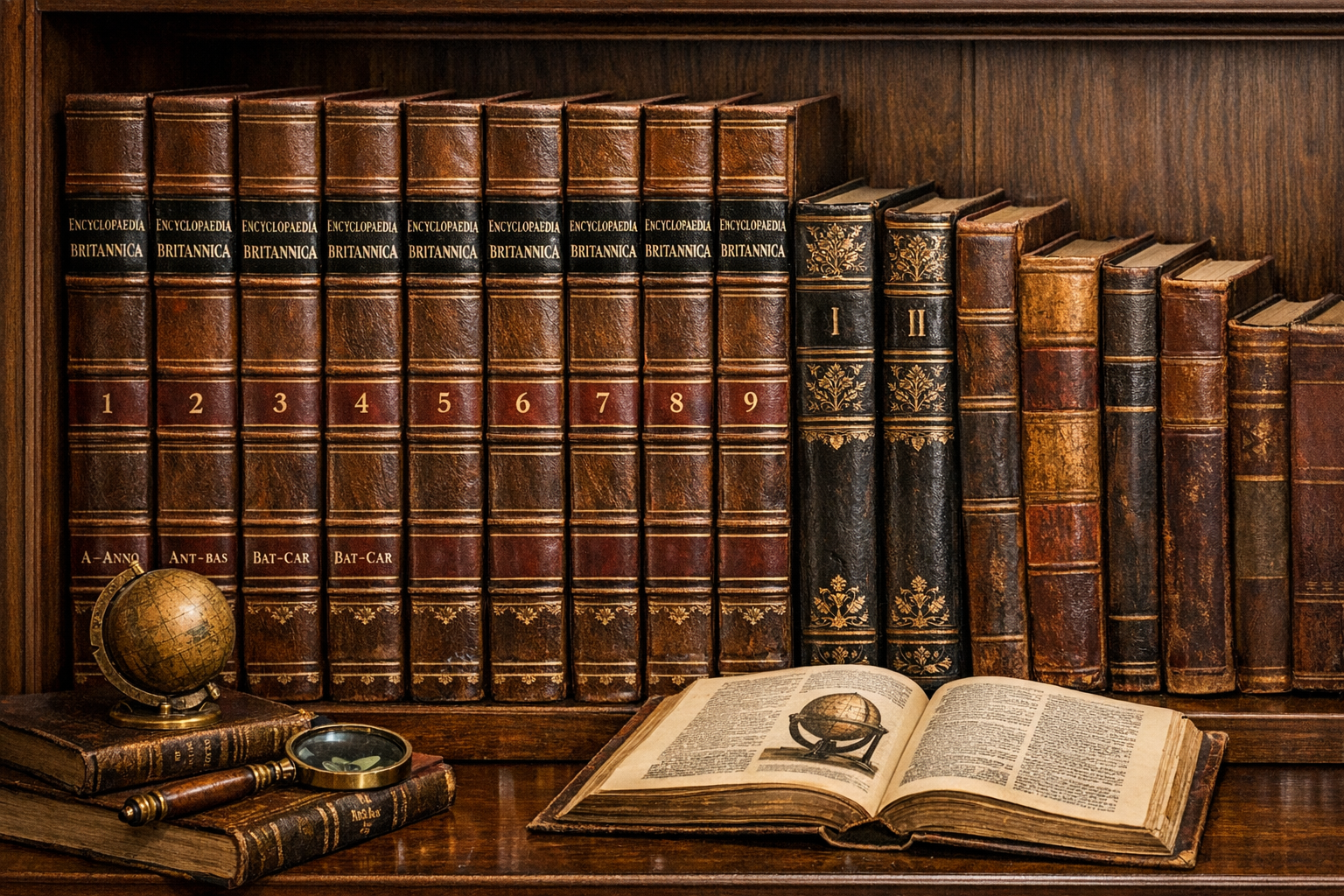
Practical value ranges (guidance only)
Use this grid as an orientation point, not a guarantee. Each item must be evaluated on records, completeness, and condition.
| Set profile | Typical market context | Common buyer behavior |
|---|---|---|
| Mid-century mass-market world-book style sets | Most common profiles move slowly and often trade in the lower-value range. | Often sold locally, in lot form, or as décor-first listing. |
| Complete, early or rare reference runs with clean bindings | Can attract higher interest in niche collector channels. | Price sensitivity is driven by condition and completeness. |
| Illustrated or subject-specialty sets with provenance | Sometimes attract stronger curiosity if condition supports it. | Potentially slower but less crowded sale path. |
| Partial or mixed-era sets with missing volumes | Typically lower liquidity unless part of a broader thematic lot. | Best suited for quick local sales, donation, or repurposing. |
How Much Is a Set of Encyclopedias Worth? Which Old Sets Sell and Which Rarely Do
For most sets the honest answer is very little. Twentieth-century encyclopedias such as World Book, Collier's, Compton's, Funk & Wagnalls, the Americana and later Britannica printings were produced in very large numbers and sold door to door and by subscription to millions of households. Used-book dealers see them constantly, and many complete sets do not sell at all. A set that sits unsold for months is market evidence too.
Sets that draw collector interest
- Early Encyclopaedia Britannica editions. The first edition was published in Edinburgh from 1768 to 1771 in three volumes. Later 18th- and 19th-century editions also have buyers among book collectors.
- The ninth and eleventh Britannica editions. The ninth (1875 to 1889) and the eleventh (1910 to 1911, 29 volumes) are the editions book collectors discuss most among the later sets.
- Early European encyclopedias, such as the French Encyclopédie of Diderot and d'Alembert, first published from 1751. These are antiquarian books and belong with a rare-book specialist.
- Fine bindings. Full leather sets in good condition can sell to decorators even when the contents are common.
Check the edition and printing year
The title page names the edition, and the copyright page gives the printing years. This matters for Britannica: the fourteenth edition was revised and reprinted every year from 1929 to 1973, so "14th edition" alone does not date a set. The fifteenth edition, from 1974, is split into Propædia, Micropædia and Macropædia volumes. Facsimile reprints of early editions also exist, and the copyright page will usually say so.
When you compare sales, match the title, edition, printing year, volume count and binding, and look only at sold listings, not asking prices. Then check those against the sold results on this page and this guide to how edition, condition and demand affect old encyclopedias.
What to check before you decide
- Count all volumes and identify exactly which publications are missing.
- Photograph bindings, spine labels, and publisher marks.
- Inspect for mildew, water staining, binding tears, and loose or loose pages.
- List whether any volumes were repaired, rebound, or re-shelved with mixed sets.
- Confirm whether there are original inserts, maps, supplements, or updates.
- Estimate whether local pickup/delivery is realistic for a local buyer and size of lot.
That last point is practical: for heavy or bulky items, local sale can improve net outcome by reducing shipping cost and risk.
If most of your volumes are present and condition is strong, your set usually performs best when framed as a complete reference collection rather than a “miscellaneous books” lot.
How people usually sell old encyclopedias
- Estate sale route: clear for mixed lots and families with multiple household library items.
- Collector-focused route: strongest for documented, complete, and clean sets with evidence of provenance or special subject focus.
- Online listing route: works best with excellent photos, complete inventory details, and transparent condition notes.
- Alternative use: complete sets with limited resale demand can still retain aesthetic value in display contexts.
For many general readers, a free estimate first is the safest route to avoid overpricing or underpricing from incomplete facts.
Identification and documentation checklist
Use this short internal memo as you prepare photos:
- Publisher and imprint information from front and back matter.
- Publication year range shown on spine or title page.
- Volume list with a short missing-item count.
- Condition notes by severity: good / fair / poor.
- Any original ownership notes, library stamps, or provenance marks.
The clearer this record is, the easier it is to move from “storybook estimate” to reliable direction.
What should be your next move?
If you want a quick answer path, start with the free screener and then decide between local listing, donation, or specialist review.
If your set is complete and in good condition, specialist review can help define how to present it for stronger market positioning.
Upload photos for a free first lookWhat similar items actually sold for
Real auction sales of items like your encyclopaedia britannica. Open a sale to see the original listing.
Shown GBP range: GBP 320-GBP 343,750. Median of these 4 GBP examples: GBP 850.
| Comparable | What sold | Auction house | Date | Lot | Source-reported amount |
|---|---|---|---|---|---|
 |
1771 FIRST EDITION ENCYCLOPAEDIA BRITANNICA. | Sydney Rare Book Auctions | 2025-11-30 | 58 | AUD 250 |
 |
A set of antique Encyclopaedia Britannica: a Dictionary of Arts, Sciences, and General Literature, Ninth Edition, circa 1882 | Gibson's | 2024-03-03 | 421 | AUD 2,000 |
 |
Three Leather Bound Encyclopaedia Britannica Volumes 1 2 3 | Because Auctions | 2026-06-19 | 5127 | AUD 40 |
 |
Encyclopaedia Britannica | Lyon & Turnbull | 2026-06-16 | 139 | GBP 320 |
 |
Encyclopaedia Britannica. 40 volumes | Dominic Winter Auctions | 2024-02-07 | 220 | GBP 1,050 |
 |
[FLINDERS, Matthew (1774-1814)] Encyclopaedia Britannica; or, a dictionary | Christie's | 2021-12-15 | 102 | GBP 343,750 |
 |
Encyclopaedia Britannica. Or, A Dictionary of Arts, Sciences, 18 vols., 3rd ed., 1797 | Dominic Winter Auctions | 2026-03-04 | 97 | GBP 650 |
How these auction records were verified
These sales are market context, not an object estimate.
Each row retains its exact source URL, lot identity, retrieval time, access result, and immutable record hash. Inspect the public comparable provenance record.
Frequently asked questions
Are old encyclopedias usually worth anything?
Most common post-1920s sets have limited practical resale value in standard channels. Still, complete sets and stronger historical profiles can outperform general assumptions when properly documented and sold in suitable channels.
How much can a complete Britannica set be worth?
Values vary by era, condition, and completeness. Older or rarer reference runs can show a wider range than modern mainstream sets, so broad “flat” estimates are usually misleading.
What does a missing volume do to value?
Missing any core component usually reduces buyer confidence and often lowers practical resale quickly. In many cases, one or two missing books can change a lot from collectible to decorative or practical category.
Should I sell online or local?
Large, heavy sets are often best handled locally unless buyers are comfortable with freight handling and insurance. If shipping is expensive, local options frequently preserve more net proceeds.
What evidence should I provide to get a better review?
Start with a clean checklist: inventory photo set, missing-volumes list, binding and page-condition close-ups, and any provenance or labels.
How do I tell which edition of Encyclopaedia Britannica I have?
Open the first volume to the title page, which names the edition, then turn to the copyright page for the printing years. The fourteenth edition was reprinted with revisions every year from 1929 to 1973, so record the exact year. Sets from 1974 onward are divided into Propaedia, Micropaedia and Macropaedia volumes. A facsimile reprint of an early edition will normally say so on the copyright page.
What can I do with an encyclopedia set that will not sell?
Many libraries, schools and charity shops no longer accept encyclopedia sets, so call before you drive anything over. Other options are offering the set free locally, selling attractive bindings to decorators or home stagers by the shelf, keeping a single volume with a family inscription, or using a recycling program that accepts hardcover books, which often asks for the covers to be removed.
Free first look
Not sure whether this old encyclopedia set needs an appraisal?
Photograph the whole item, maker or identifying marks, dimensions, materials, condition, repairs, and any provenance or documentation. The photo-based Screener can help identify the likely category and visible evidence gaps before you pay for documentation.
Upload photos for a free first lookFree. No card needed. The photo upload usually takes about two minutes.
A set that needs a keep-file belongs on online antique appraisal services. Instant is not the signed PDF.
Search variations people ask
- Are incomplete encyclopedias worth anything in 2026?
- How do missing encyclopedia volumes affect resale value?
- What is a complete encyclopedia set worth nowadays?
- Which old Britannica sets are most sought after by buyers?
- Is leather-binding a strong signal for encyclopedia value?
- How to document an encyclopedia lot for fair valuation
- Do illustration-heavy encyclopedias sell better than text-only sets?
- Free estimate for old encyclopedias before I ship anything?
References and related guidance
Take the next practical step
Use the free instant estimate if you want a quick, practical read before deciding a final sales or appraisal strategy.
Upload photos for a free first lookQuick next move
Unsure whether your set is valuable enough to list?
Get a free first read. No card needed.
Upload photos for a free first look View signed report sample