
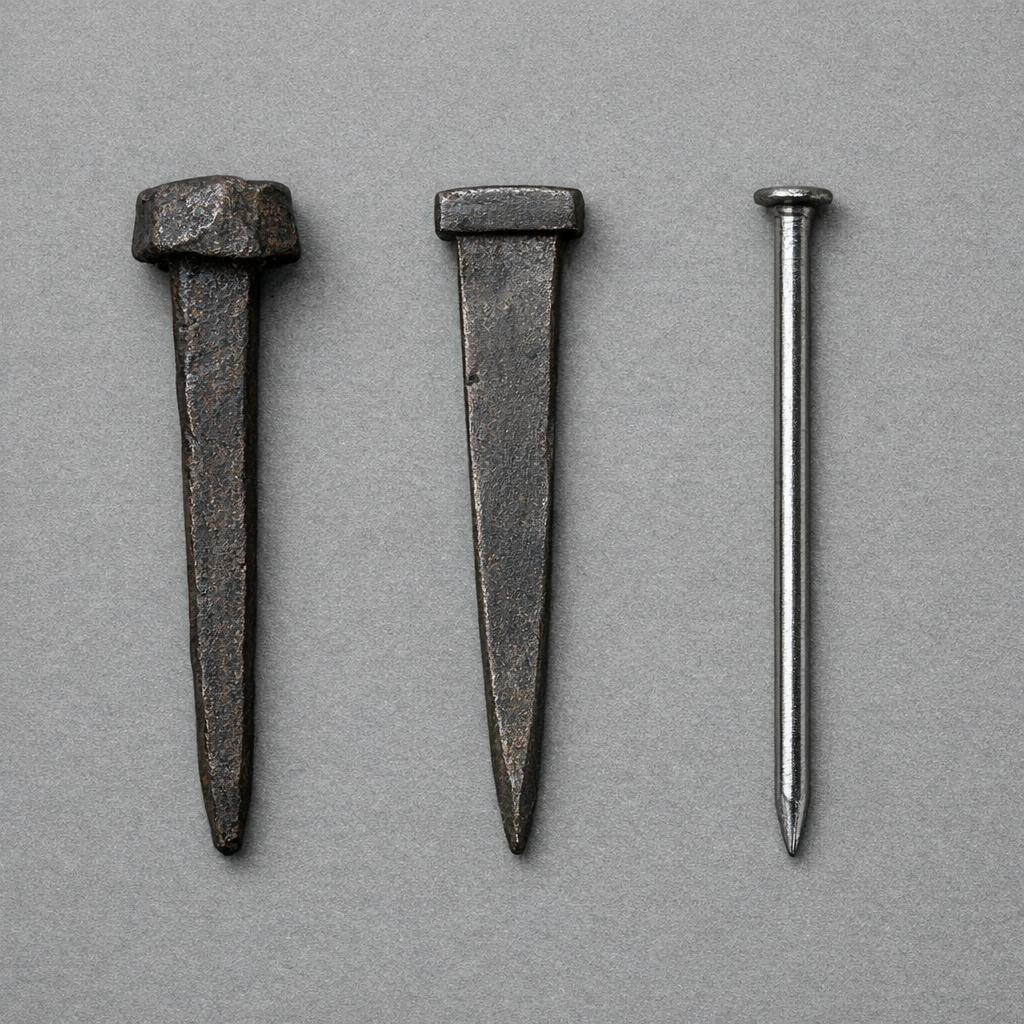
Cut nail, square nail, and hand-forged nail identification basics
Start with the nail itself: cross-section, head shape, taper, tool marks, corrosion, and the construction context around it. Nail evidence can support a date range, but repairs and reused boards mean it should be checked against the whole object.
Why Nail Identification Matters
A single nail can reveal the age, origin, and authenticity of a piece of furniture or a historic building. For antique furniture collectors, architectural salvage enthusiasts, and homeowners restoring period properties, knowing how to identify cut nails, square nails, and hand-forged nails is one of the most practical dating tools available — and it costs nothing more than a close look and a few minutes of observation.
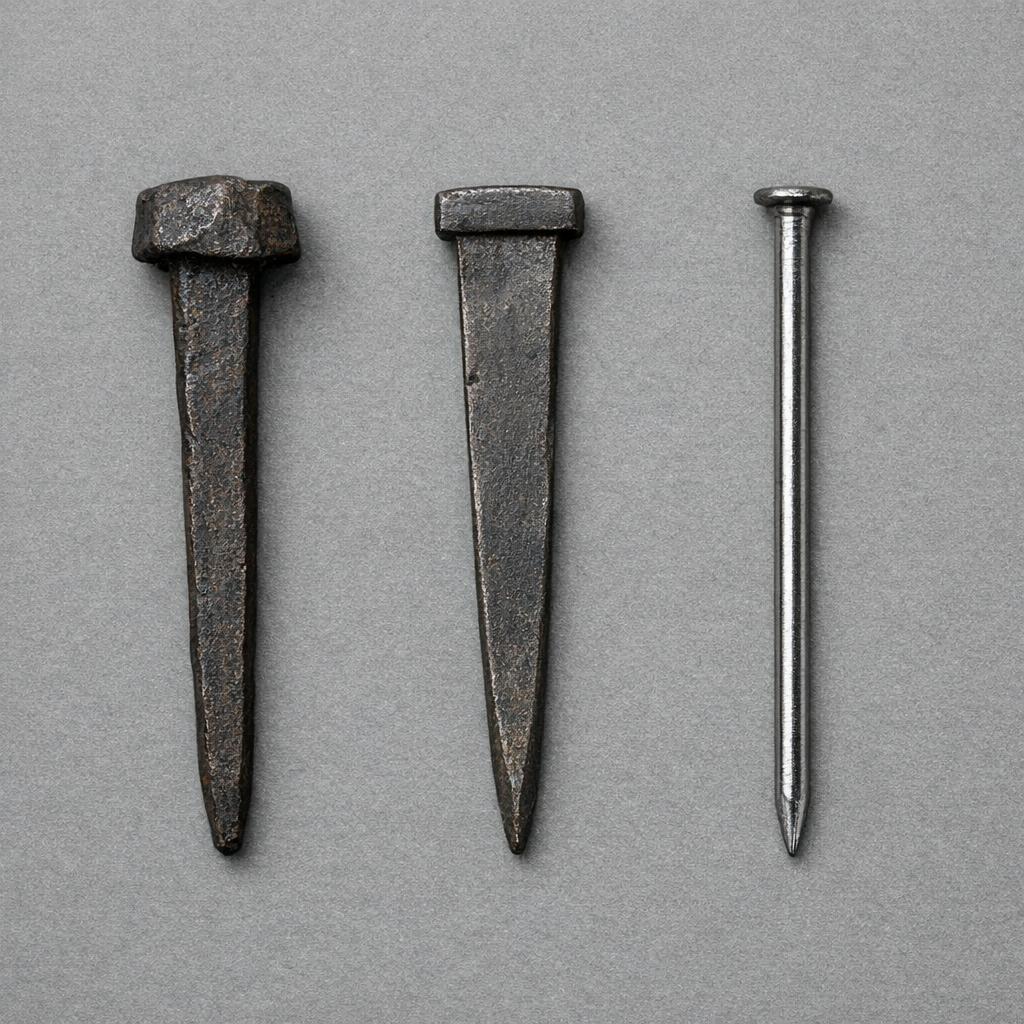
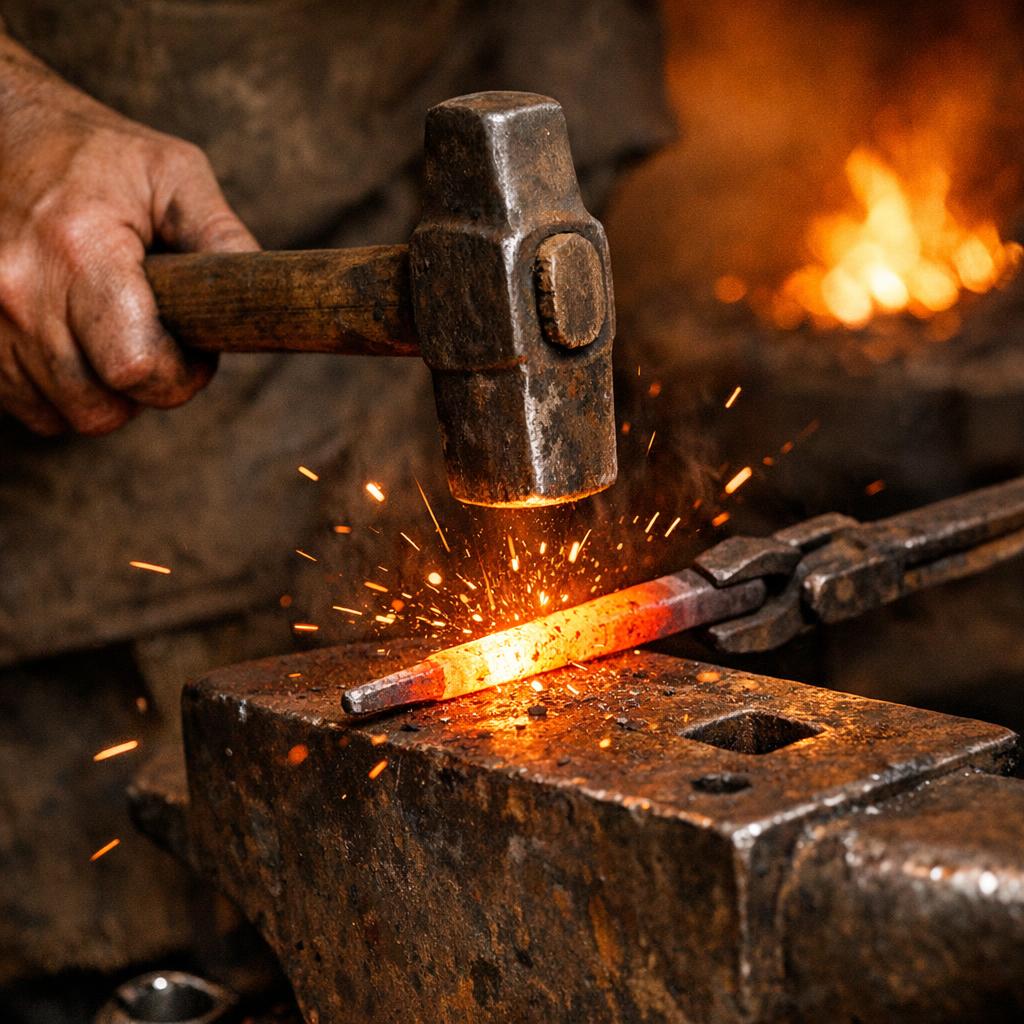
Until around 1800, virtually every nail was hand-forged by a blacksmith: individually heated, hammered into a roughly square shaft, and shaped with a distinctive domed head that bears the marks of the hammer blow. The Industrial Revolution introduced machine-cut nails (c. 1790–1890), which were sheared from iron plate and featured rectangular shafts with parallel shear marks. By the 1890s, modern wire nails — perfectly round, uniform, and mass-produced — had displaced both earlier types.
This guide walks you through a step-by-step identification workflow so you can classify any nail you find, estimate its approximate date, and understand its collector value. The secondary market for antique nails has surged in 2025–2026, with lots of hand-forged specimens regularly appearing on Invaluable.com and specialist auctions — making identification not just an academic exercise, but a practical skill for anyone renovating a historic property or evaluating an estate.
Visual Reference Gallery
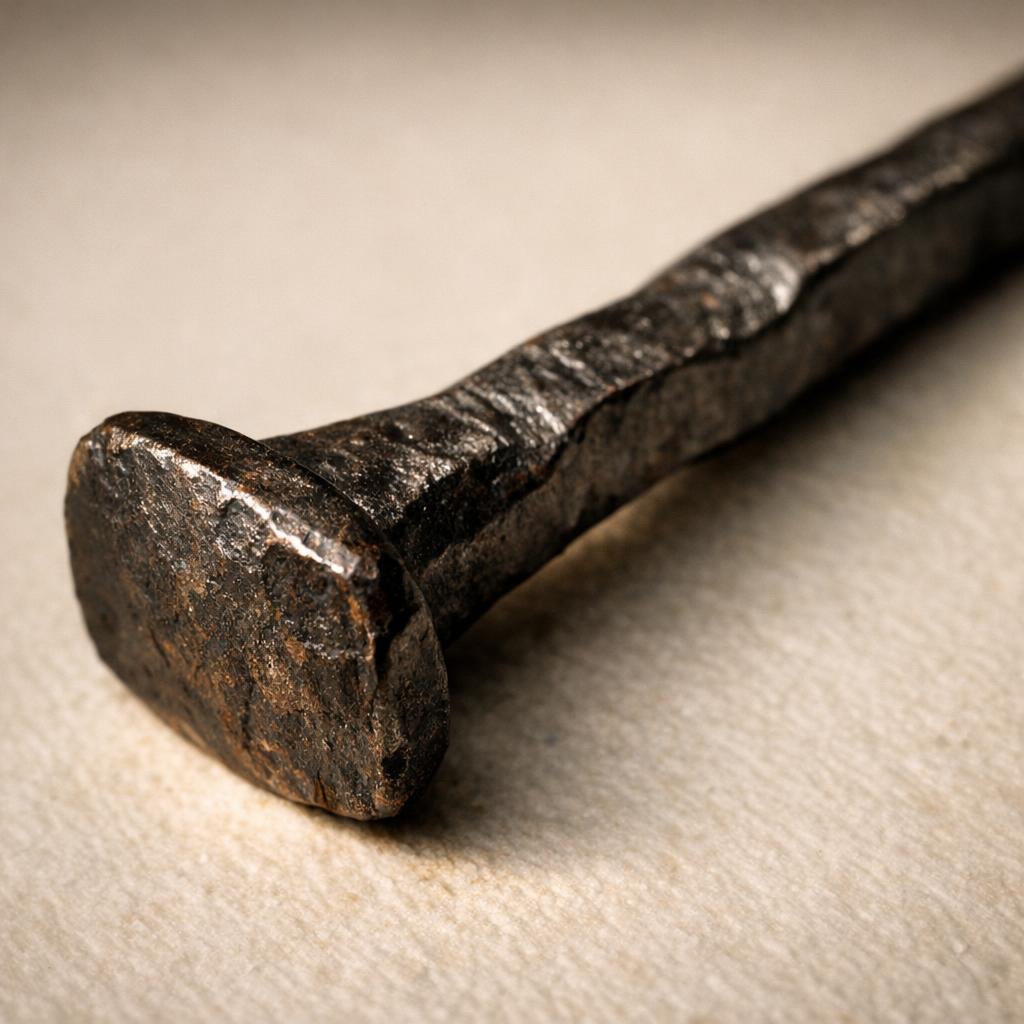
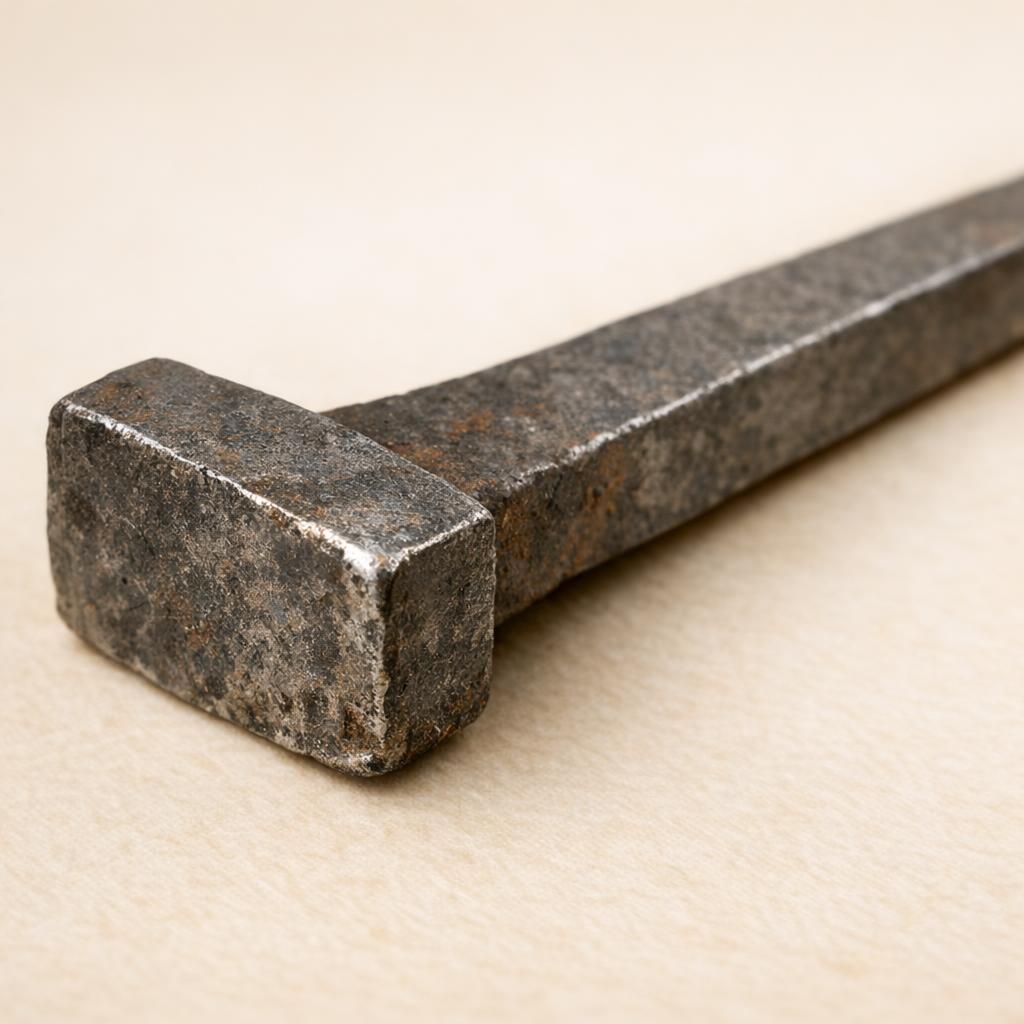
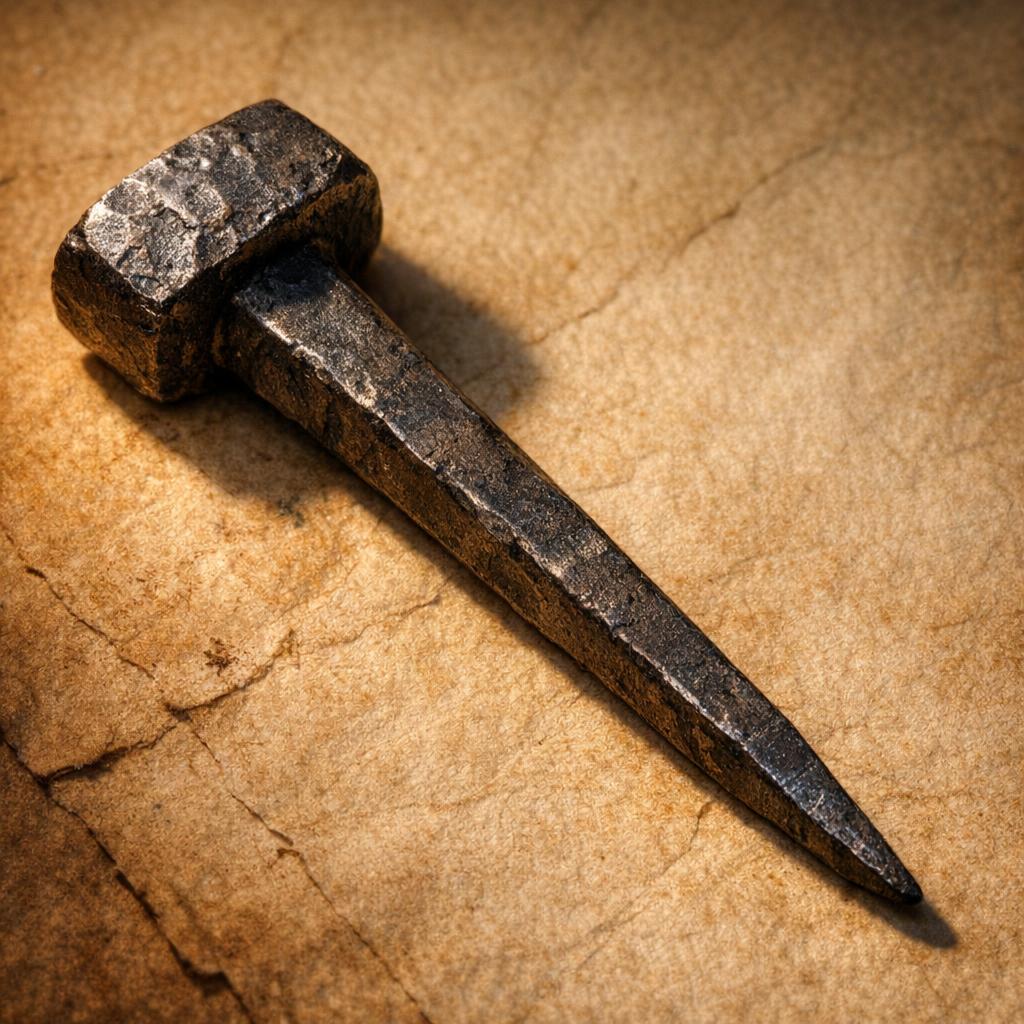
Use these reference images to compare against nails you're examining. Each image highlights a key identification feature discussed in the checklist below.
The 10-Minute Nail Identification Checklist
Follow these steps in order. You will need a magnifying loupe (10× is ideal), a bright flashlight, and a flat surface for examining the nail's shaft cross-section.
Step 1: Examine the Shaft Cross-Section
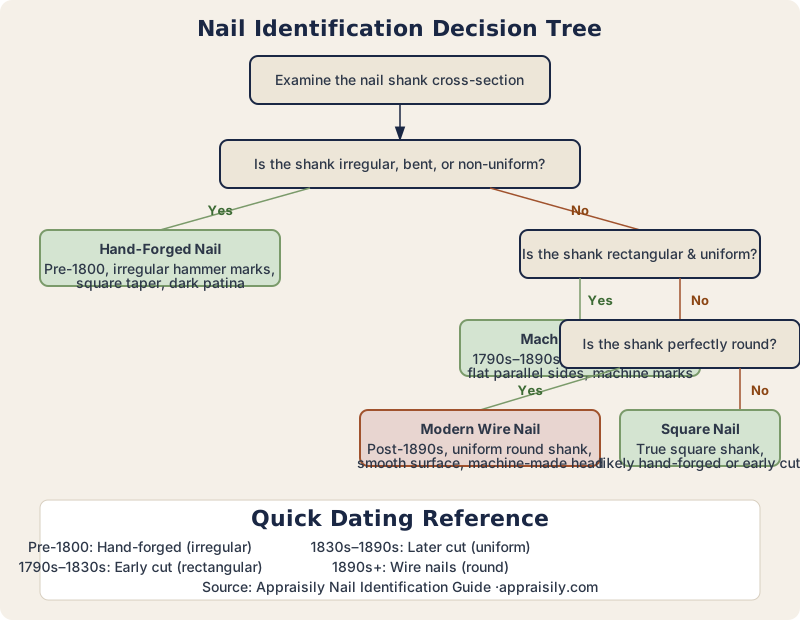
- Round and perfectly uniform? → Modern wire nail (post-1890). These have no collector value and indicate modern construction or repair.
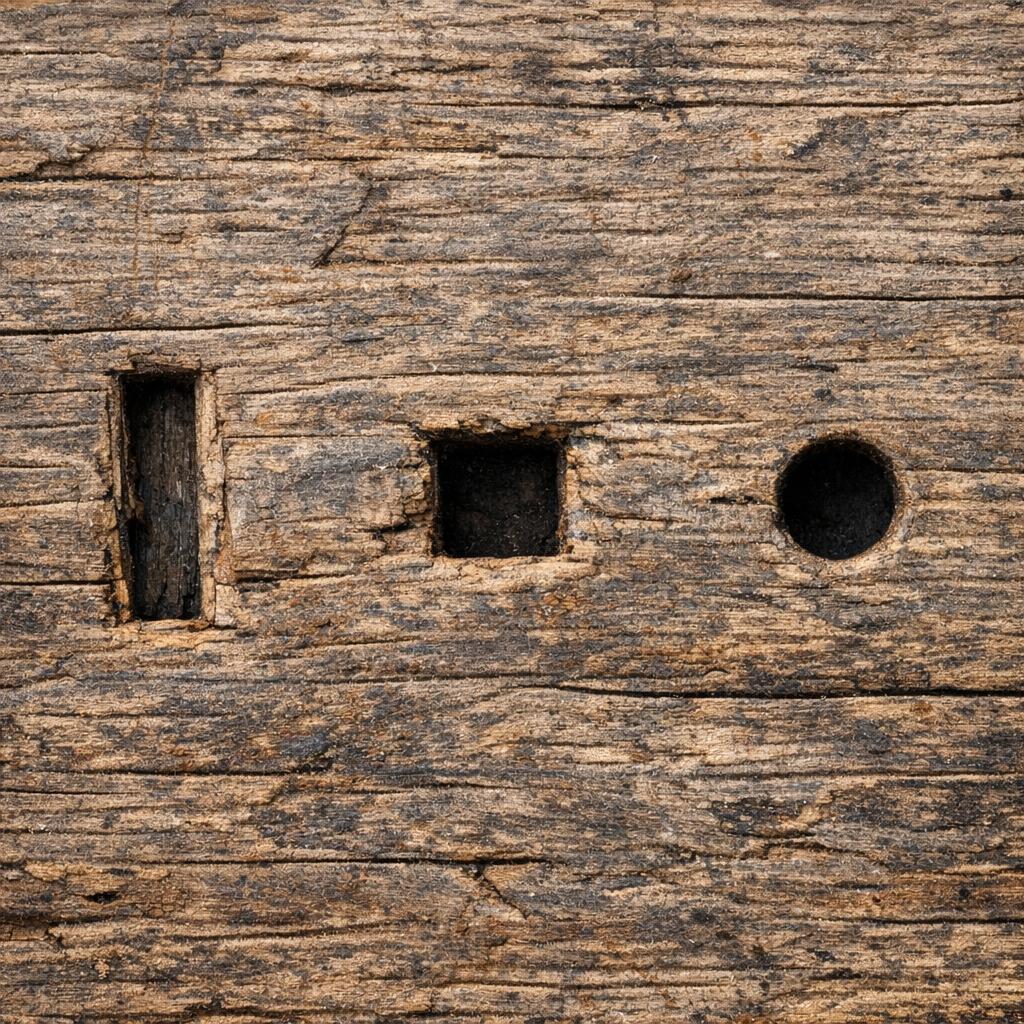
- Rectangular with straight, parallel shear marks on the faces? → Machine-cut nail (c. 1790–1890). This is the most common type found in Federal and Victorian-era buildings.
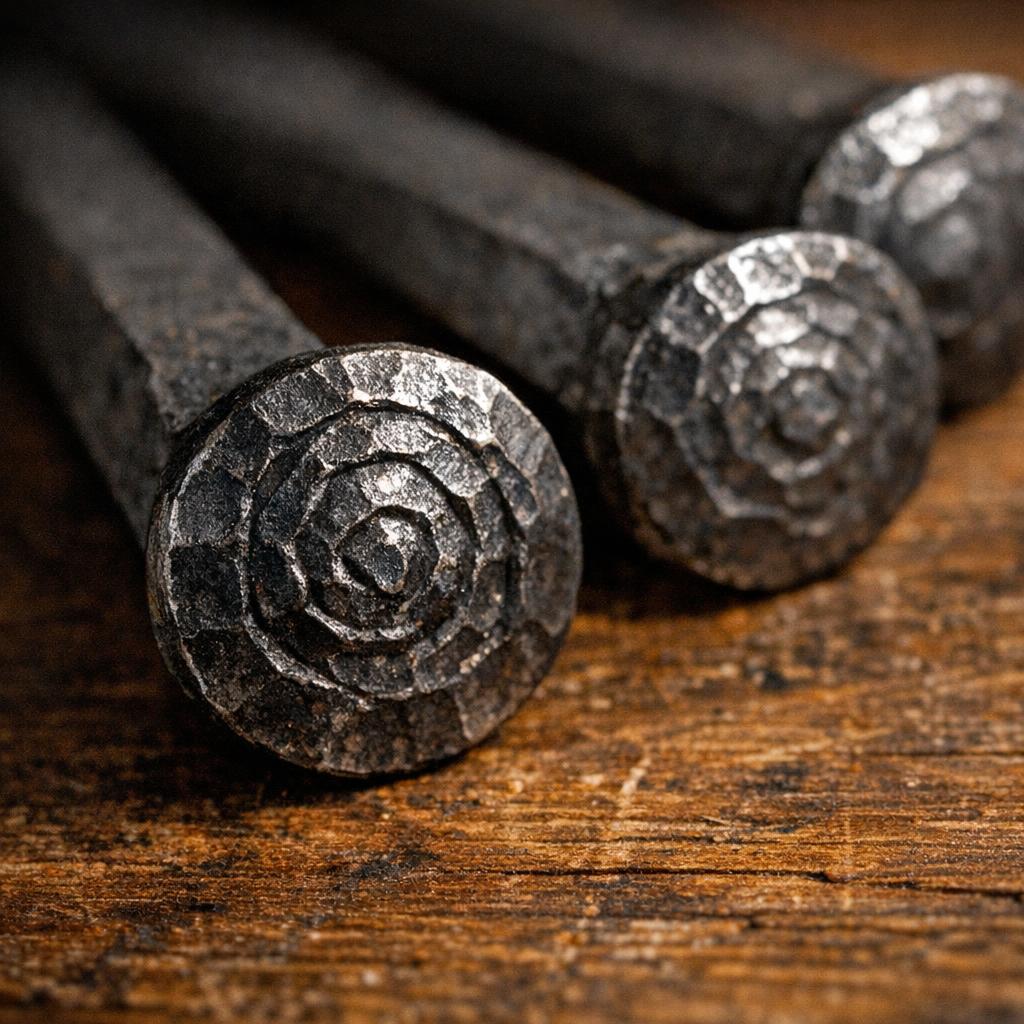
- Roughly square with irregular edges and visible hammer marks? → Hand-forged nail (pre-1800). Each nail is unique; these carry the highest collector and historic value.
Step 2: Examine the Head Shape
- Irregular, slightly domed with visible hammer strike marks? → Confirms hand-forged. The head was shaped individually on the anvil.
- Flat, uniform, and machine-stamped? → Confirms machine-cut. Factory production created consistent head shapes.
- Round or oval "rose head" shape? → Rose head cut nail (c. 1815–1850). A desirable subtype prized by architectural salvage collectors.
- Perfectly round, smooth, and identical to others? → Confirms modern wire nail.
Step 3: Check the Surface and Patina
- Hand-forged nails show natural rust patina, surface pitting, and uneven oxidation that developed over centuries. The iron may have a warm brown to orange-brown tone.
- Cut nails develop a more even patina but still show age-appropriate oxidation. The shear-mark faces often retain visible tooling lines beneath the patina.
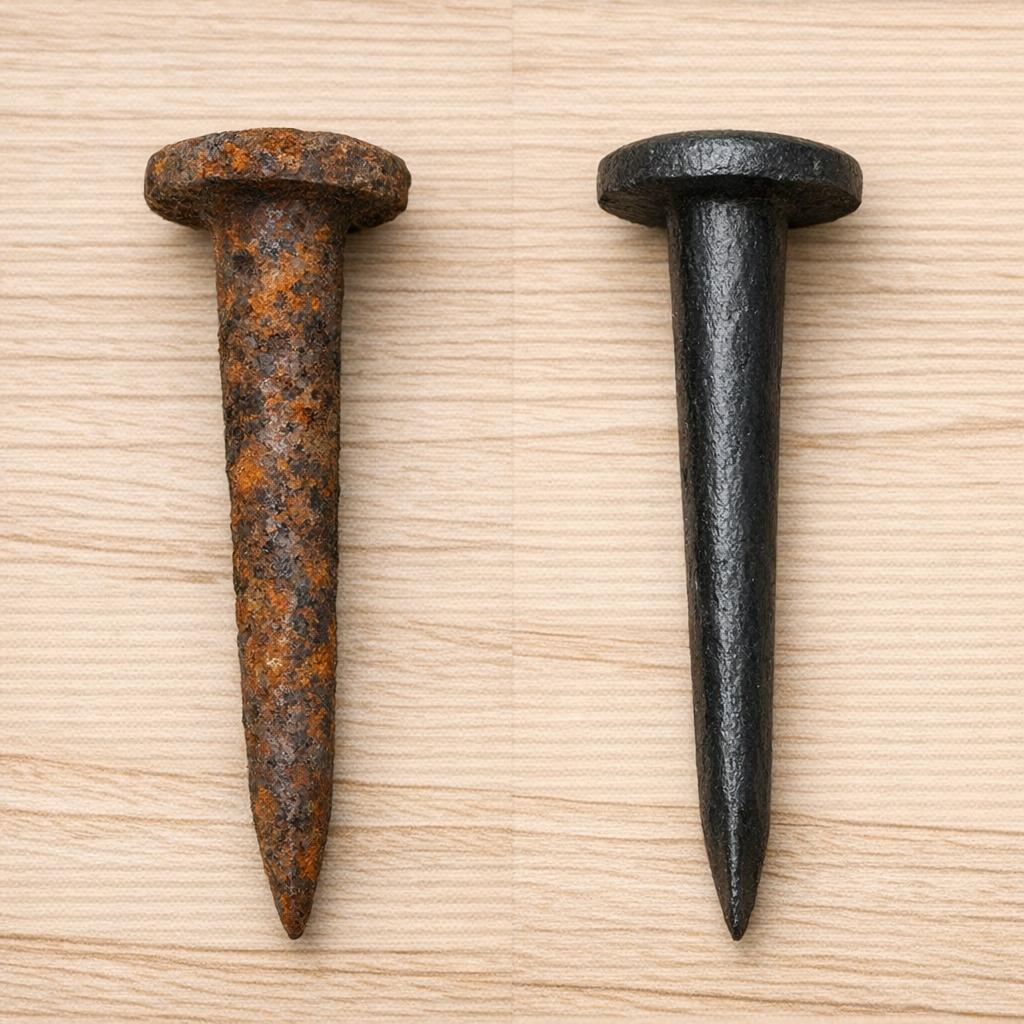
- Beware artificial aging: Reproductions are sometimes chemically darkened to look old. Authentic patina has depth and variation — a uniform dark coating is a red flag.
Pro Tip — Raking Light Technique
Hold a bright flashlight at a low angle (almost parallel to the nail shaft). This "raking light" technique reveals surface texture that flat lighting hides: hammer marks on forged nails, shear lines on cut nails, and the unnaturally smooth surface of wire nails or reproductions.
Quick Identification Decision Tree
Print or save this decision tree. Start at the top with your nail's shaft cross-section and follow the matching path to an identification.
Nail Manufacturing Timeline
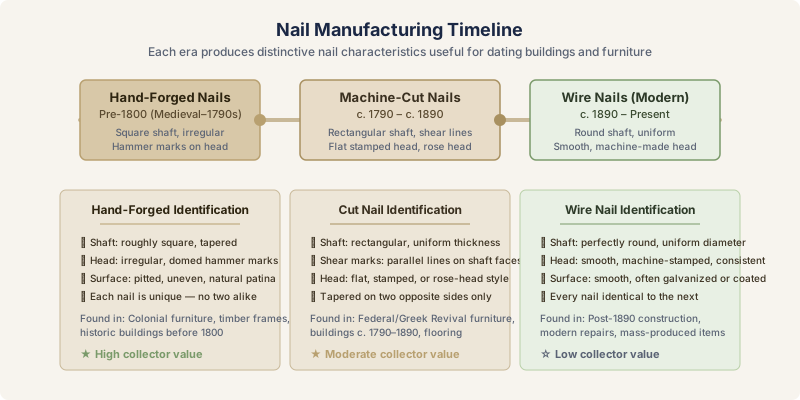
Understanding when each nail type was produced is essential for dating buildings, furniture, and archaeological sites. The National Park Service's nail chronology remains the foundational reference used by building conservators and archaeologists.
Key Dating Periods
- Hand-forged (Medieval–c. 1790): If your building or furniture contains only hand-forged nails, it almost certainly dates before 1800. These nails are individually forged, so each one is slightly different in shaft thickness, head shape, and length.
- Machine-cut (c. 1790–1890): Cut nails appeared during the transition period. Early cut nails (c. 1790–1820) were often still finished by hand, so they may have some hand-forged characteristics. Later cut nails (1820–1890) are more uniform and may feature rose heads or other stamped patterns.
- Wire nails (c. 1890–present): The presence of wire nails in an otherwise older structure indicates repairs, additions, or that the piece is not as old as claimed.
Original Nails vs. Later Repairs
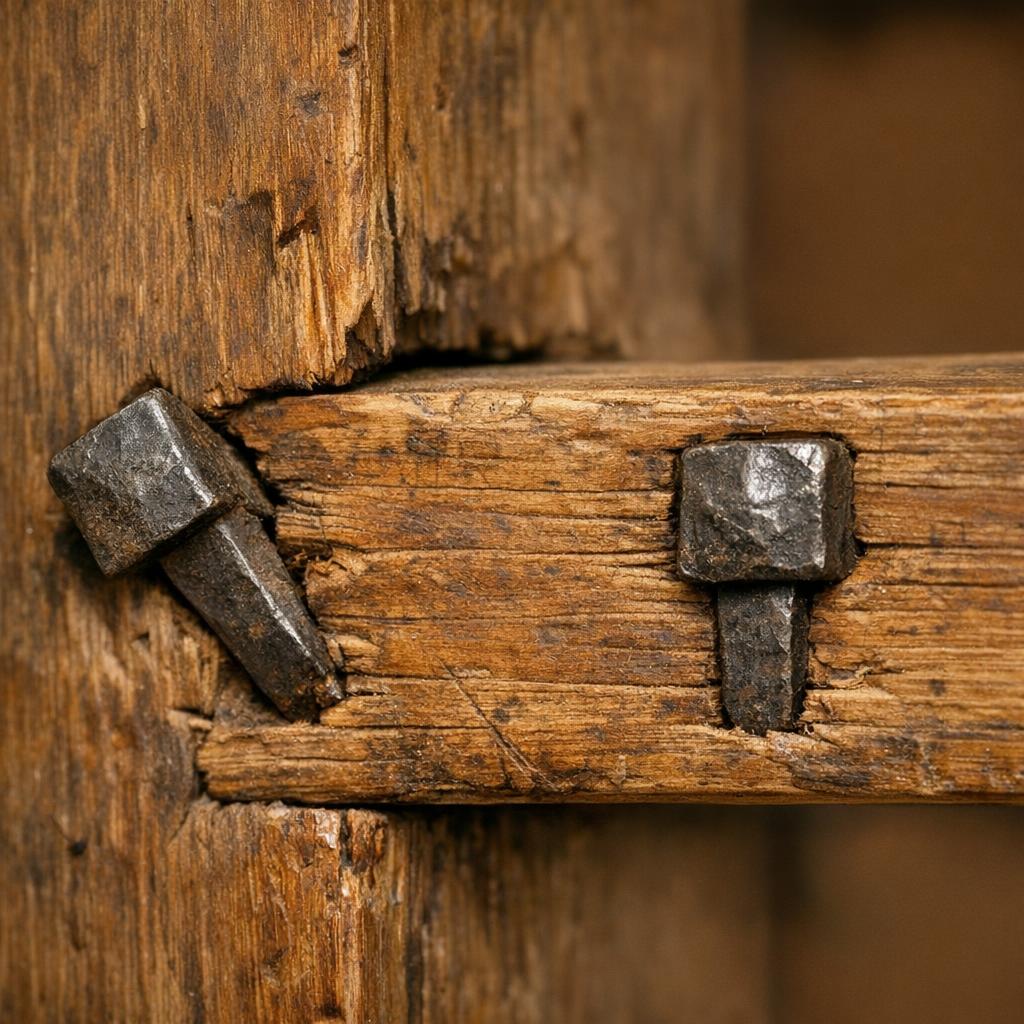
When evaluating a piece of antique furniture or a historic building, the mix of nail types tells a story. It is common to find hand-forged nails in the primary structure of a pre-1800 piece, with cut nails from a later repair, and wire nails from a 20th-century restoration. Here is how to interpret what you find:
- All hand-forged nails throughout: Strong evidence of pre-1800 construction with no major repairs. This significantly increases both historic and collector value.
- Hand-forged plus a few cut nails: The original piece is pre-1800, with repairs made during the 19th century. Still highly valuable — period repairs are themselves part of the object's history.
- Wire nails mixed with older types: Modern repairs or restoration work. Does not diminish the piece's age but affects provenance documentation for insurance or sale.
- Only wire nails: Either a modern reproduction or a piece that has been entirely rebuilt. Exercise caution before attributing an early date.
Common False Positives and Reproductions
The market for antique nails has grown alongside interest in period-correct restoration of historic buildings. This means reproductions exist, and it is important to know how to spot them.
Red Flags for Reproductions
- Uniform dark coloration: Real patina has variation — some areas darker, some lighter, with visible orange-brown rust transitions. A nail that looks uniformly black or dark brown was likely chemically treated.
- Too many identical "antique" nails: Hand-forged nails are by definition unique. If you have a box of 50 nails that all look hand-forged but are identical in shape and size, they are likely modern cast reproductions.
- Sharp, fresh edges on "old" nails: Centuries of oxidation soften edges. A nail with crisp, sharp edges and a supposed 18th-century date is suspect.
- Price that is too good: Genuine hand-forged nails command a premium. If someone is offering hundreds at a few cents each, ask for provenance.
What Antique Nails Are Worth
Antique nail values vary dramatically by type, condition, and provenance:
- Hand-forged nails: Individual hand-forged nails in good condition can sell for $8–15 each in small lots. Exceptional examples with documented provenance from notable buildings or ships can command much higher prices. Sets of 10 or more from a single source sell at a premium on Etsy and eBay.
- Cut nails (including rose heads): Antique cut nails typically sell for $3–8 each in small quantities. Bulk lots of 100 unused antique cut/square nails regularly list for $35+ on eBay. Rose head cut nails from the 1815–1850 period are particularly sought after by architectural restoration buyers.
- Wire nails: No collector value individually. Modern cut-nail reproductions for restoration work cost $0.50–$2 each new.
Market Context
The secondary market for antique hardware remains strong in 2026, driven by historic building restoration and period-correct renovation projects. Square cut nails and hand-forged examples are regularly listed on eBay, Etsy, and specialized antique hardware dealers. Individual appraisals are recommended for large collections or nails with notable provenance.
Note: We couldn’t find enough auction records that directly match Cut Nails vs Square and Hand-Forged Nails to publish a defensible price table. If you are valuing a specific item, include its maker, model, material, photos, and condition so the search can be narrowed.
What similar items actually sold for
The current auction search does not contain at least three clean, directly matched sales for Cut Nails vs Square and Hand-Forged Nails yet. If you’re valuing a specific item, use the free estimate flow so the search can be narrowed by maker, material, photos, and condition.
| Image | Description | Auction house | Date | Lot | Reported price realized |
|---|---|---|---|---|---|
| No relevant auction comps found for this topic right now. | |||||
Disclosure: prices are shown as reported by auction houses and are provided for appraisal context. Learn more in our editorial policy.
Free instant estimate
Not sure if your item is worth appraising? Let us take a look.
Upload a photo, tell us what you know, and get a free first read. If a full appraisal makes sense, we will say so.
Free. No card needed. Takes about two minutes.
When to Call a Professional Appraiser
Nail identification is a powerful first step, but some situations call for expert assessment:
- Large discoveries: If you have found hundreds of hand-forged or cut nails in a single location (such as during a demolition or renovation), a professional can catalog types, dates, and provenance for insurance or historical documentation purposes.
- Notable provenance: Nails attributed to a specific historic building, ship, or documented maker should be professionally appraised. Provenance can multiply value far beyond generic market prices.
- Disputed attribution: If the nail type conflicts with the claimed age of a building or piece of furniture (e.g., wire nails in a piece sold as pre-1800), an expert can determine whether the nails are original, replacements, or evidence of reconstruction.
- Insurance or estate documentation: For formal valuations needed for insurance coverage, estate settlement, or charitable donation, a USPAP-compliant appraisal provides the documentation that informal assessments cannot.
Our intake process is designed for exactly these situations. Share your photos and context, and we will route your case to a specialist who understands antique hardware and architectural elements.
More Identification Reference Photos
Sources & Further Reading
- National Park Service, Nail Chronology as an Aid in Dating Old Buildings — the foundational typology for nail identification by manufacturing period.
- InspectApedia, Hand-Wrought Nail Identification Key and Cut Nail Age & ID Guide — detailed photographic references for nail types.
- Harp Gallery, The Humble Nail — A Key to Unlock the Past (2026) — nail identification as a furniture dating technique.
- RealOrRepro, Nails as Clues to Age — using nail types to distinguish genuine antiques from reproductions.
- Glasgow Steel Nail Co., What Are Cut Nails? — technical explanation of the cut nail manufacturing process.
Search Variations Collectors Ask
Readers often search for these related questions — each one is addressed in the identification guide above:
- How to tell if a nail is hand-forged or cut
- What are square nails called and when were they used
- How to date a building by its nails
- What do antique cut nails look like
- Are old square nails worth anything
- Hand-forged nail identification with pictures
- How to spot reproduction antique nails
- Cut nail vs wrought nail difference
- Where to sell antique nails
- What nails were used in 1800s furniture
Each question above is answered in the identification checklist, timeline, and value sections above.
This article was researched and written by the Appraisily editorial team. Market value references are based on observed secondary-market listings (eBay, Etsy, and specialist dealers) as of early 2026 and should not be taken as formal appraisals. For insurance, estate, or donation valuations, consult a USPAP-compliant appraiser. We welcome corrections and additional sourcing at our editorial desk. Read our full editorial policy.