Six-factor antique and art appraisal protocol basics
This protocol organizes appraisal work around six factors: identification, provenance, condition, conservation, market analysis, and risk/reporting. Use it when an antique or artwork needs more than a quick price guess.
The goal is a defensible value conclusion for the intended use: resale, insurance, estate planning, donation, equitable distribution, or collection management. Each factor should leave evidence in the workfile, and gaps should be disclosed rather than hidden.
Free first read
Check the six value factors before ordering a report
Upload the full object, detail photos, measurements, marks, provenance, condition issues, and the decision you need to make. The free screener can flag which factor is missing.
Start with a free screener. Use a signed report when you need insurance, estate, donation, resale, or formal documentation.
How We Research Valuation Data
Our appraisal guides are based on auction results, dealer pricing data, and professional appraiser insights. We may earn a commission when you use our free screener. Learn about our editorial standards.
Factors 1-2: Identification and provenance
Identification defines what is being valued: maker, artist, title, subject, date, materials, dimensions, edition, and attribution level. Provenance tests the history behind that identification through labels, invoices, prior appraisals, catalog entries, ownership records, and exhibition history.
Factors 3-4: Condition and conservation
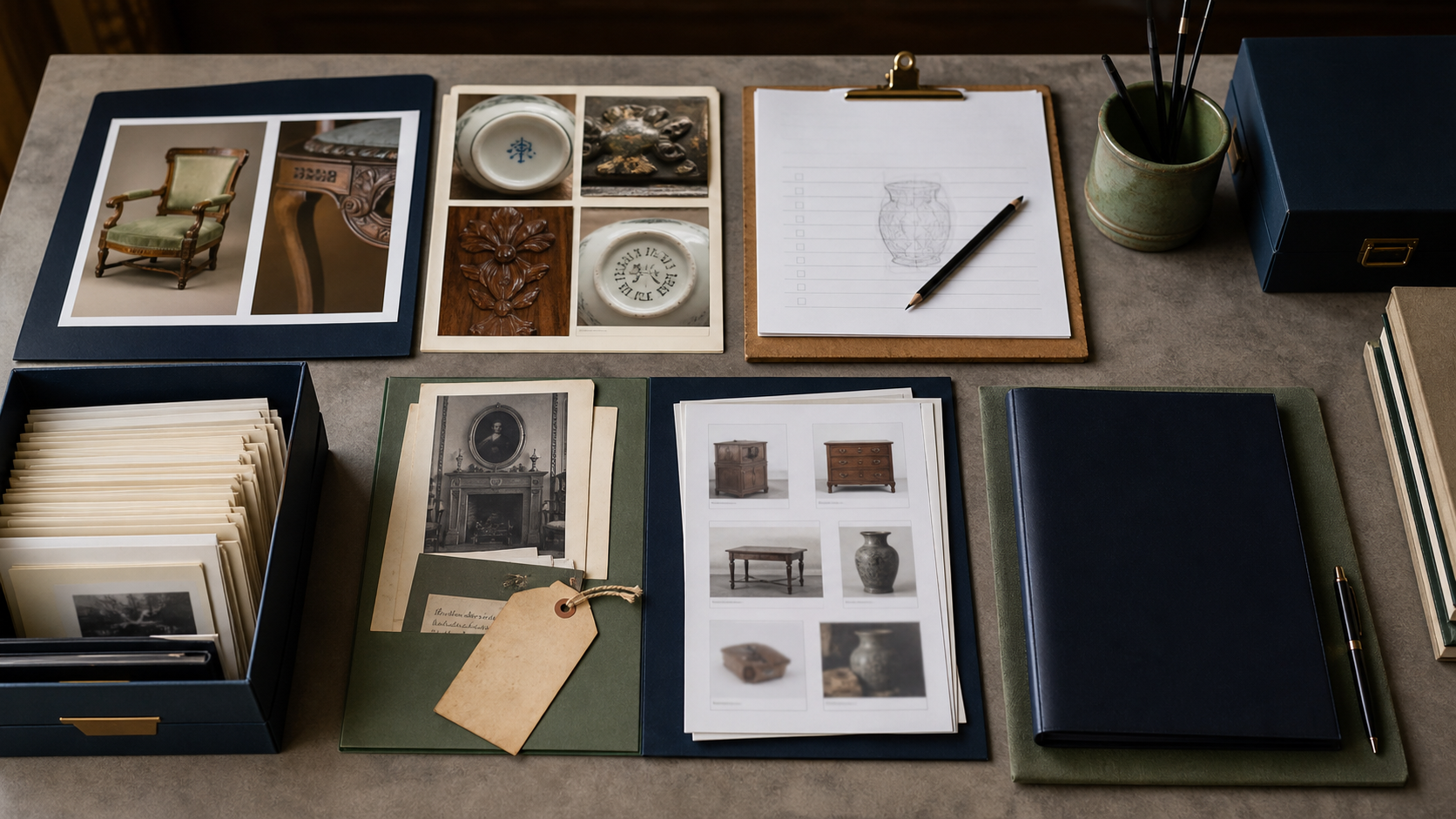
Condition affects both value and salability. Note repairs, losses, fading, cracks, stains, relining, overcleaning, regilding, replaced parts, and mounting. Conservation is a separate decision: treatment should be recommended only when it is likely to be safe, appropriate, and economically sensible for the assignment.
Factors 5-6: Market analysis and risk management
Market analysis selects relevant comparable sales by maker, medium, date, size, subject, condition, provenance, and sale venue. Risk management explains uncertainty: attribution risk, title concerns, cultural-property issues, condition limitations, thin market data, or assumptions about sale channel and exposure time.
Note: We couldn’t find relevant auction comps in our database for this topic right now. If you’re valuing a specific item, try searching by maker/model/material and we’ll expand coverage over time.
What similar items actually sold for
To help ground this guide in real market activity, here are recent example auction comps from Appraisily’s internal database. These are educational comparables (not a guarantee of price for your specific item).
| Image | Description | Auction house | Date | Lot | Reported price realized |
|---|---|---|---|---|---|
| No relevant auction comps found for this topic right now. | |||||
Disclosure: prices are shown as reported by auction houses and are provided for appraisal context. Learn more in our editorial policy.
Practical field checklist
- Photograph the whole object, details, marks, labels, damage, and underside/back.
- Record dimensions, materials, inscriptions, and condition before researching price.
- Separate confirmed facts from assumptions and owner-provided history.
- Choose comps only after category, date, size, condition, and market level are clear.
- State whether the value is fair market, replacement, retail, auction, or liquidation guidance.
- Preserve the workfile so the conclusion can be reviewed later.
Search variations people ask
Collectors often search these protocol questions:
- six factor antique appraisal protocol
- art appraisal risk management condition provenance
- how many comparables are needed for appraisal
- how to report uncertain attribution in art appraisal
- insurance value vs auction value appraisal
- when to conserve an antique before sale
- what evidence supports an appraisal report
- how provenance and condition affect value
Each question maps to one of the six factors above.
References
Wrap-up
The six-factor protocol keeps appraisal conclusions tied to observable evidence and market logic. Identify the object, document provenance, inspect condition, understand conservation, select relevant comps, and disclose risk before relying on a value.