How to Tell If Rookwood Pottery Is Original Old or a Later Copy: appraisal and value basics
How to Tell If Rookwood Pottery Is Original Old or a Later Copy research should start with identification, condition, provenance, and recent comparable sales. Use this guide to compare the signals that matter before paying for a formal appraisal or deciding whether to sell.
Quick Answer: Six Marks That Reveal the Truth
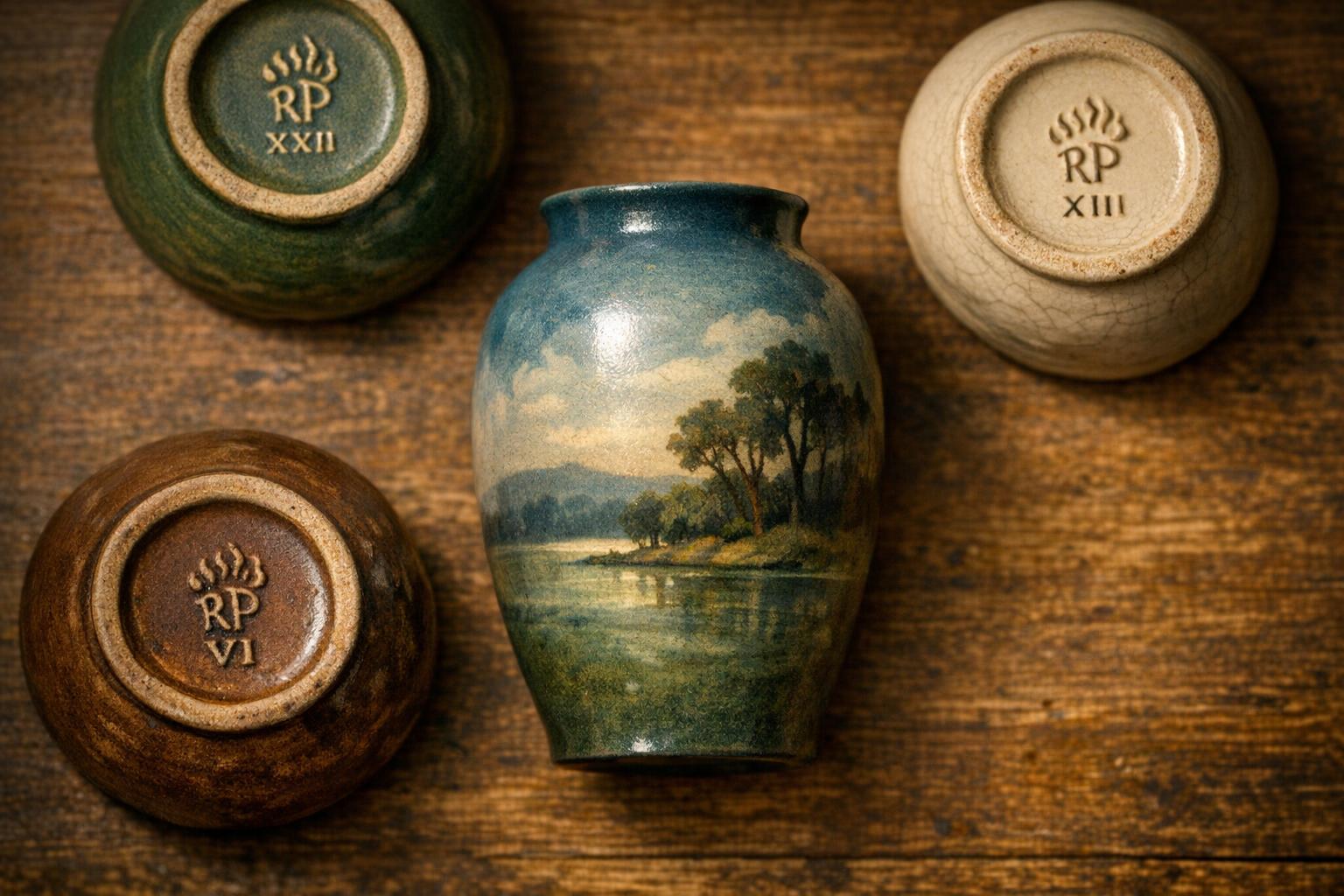
Every genuine Rookwood Pottery piece — whether made in 1887 or 2024 — carries the RP flame mark on its base. But that mark alone doesn't prove age. You need to check six data points that together tell you the piece's origin:
- Flame count — originals have 1–14 radiating flames; fakes may have none or inconsistent counts.
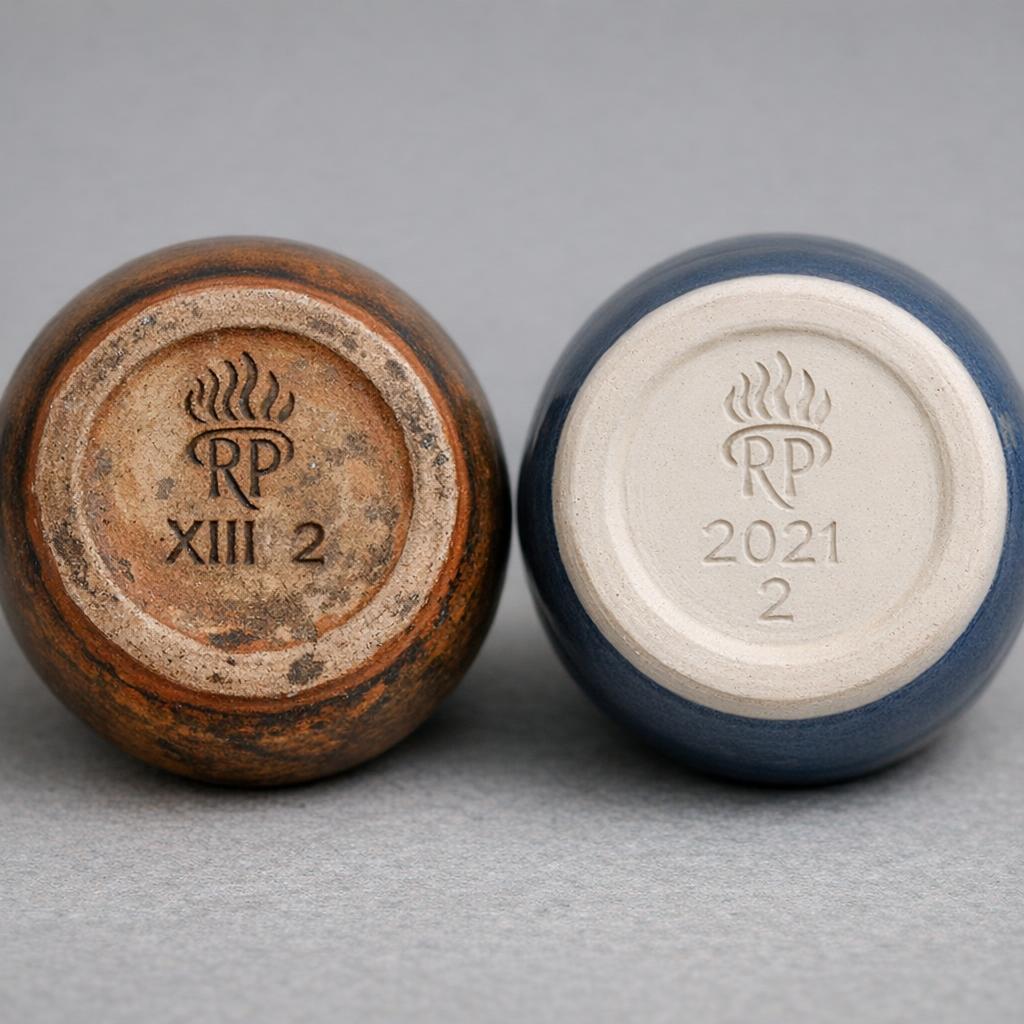
- Date numeral style — Roman numerals signal 1901–1959 originals; Arabic numerals indicate 1982–2005 Townley revivals.
- Clay body color — red, yellow, sage, or white bodies each have era-specific glaze pairings.
- Glaze code letter — impressed letters (V, G, W, P) identify the glaze formula used.
- Artist signature or finisher marks — hand-painted or incised signatures dramatically raise value.
- Shape number — an Arabic numeral that matches Rookwood's production catalogue.
If all six points check out, you almost certainly have a genuine Rookwood. The remaining question is when it was made — and that determines whether your piece is worth $200 or $200,000.
What Is Rookwood Pottery — and Why Do Collectors Pay So Much?
Rookwood Pottery was founded in Cincinnati, Ohio, in 1880 by Maria Longworth Nichols. Over its 85-year original run (1880–1967), the firm produced over 100,000 pieces of art pottery, hand-decorated by some of America's most celebrated ceramic artists. The company operated continuously — one of the longest runs of any American art pottery — and its output is well-documented.
In 2025, a vase decorated by master artist Kataro Shirayamadani sold for $350,000 at Rago Arts, the highest auction price ever recorded for Rookwood. Even modest undecorated "Production Ware" vases routinely sell for $250–$500 at auction. The market is deep: LiveAuctioneers lists over 6,700 Rookwood price results, and major houses like Heritage Auctions, Artemis Gallery, and Rago Arts run dedicated art pottery sales every year.
That value attracts reproduction. The biggest concern for collectors today isn't outright counterfeits — it's later revival pieces sold as "antique" by sellers who either don't know or don't disclose the production era. The most common trap is the Townley revival (1982–2005), whose pieces carry a convincing RP flame mark but are fundamentally different from the 19th- and early 20th-century originals.
The Flame Mark: Rookwood's Dating System, Explained
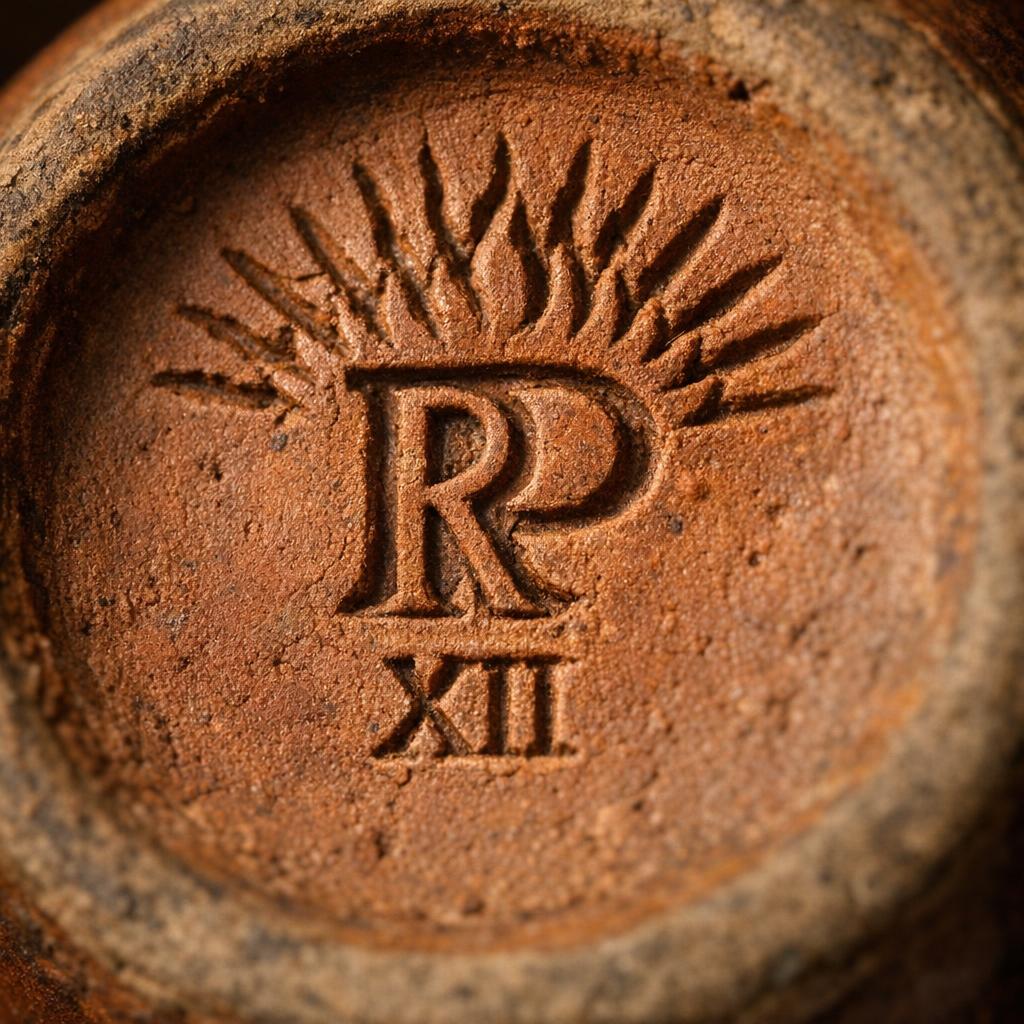
The RP flame mark is the single most recognizable feature on any Rookwood piece. It's a stylized reversed "R" fused with a "P," surrounded by radiating flame lines. The mark evolved over time, and those changes give you a precise way to date your piece.
How to Read the Flames by Year
| Period | Flame Count | Date Indicator |
|---|---|---|
| 1880–1882 | None (anchor, scroll, or kiln icons) | Block stamp "ROOKWOOD" + Arabic year |
| 1887–1900 | 1–14 flames (added one per year) | No additional date code — flames alone date it |
| 1901–1959 | Always 14 flames | Roman numeral below (e.g., XXII = 1922) |
| 1960–1967 | 14 flames | "Rookwood Pottery Starkville, Miss." + Roman numeral |
| 1982–2005 | 14 flames (Townley revival) | Arabic numerals etched into glaze |
| 2005–present | 14 flames | Roman numerals beginning with MM (e.g., MMXII = 2012) |
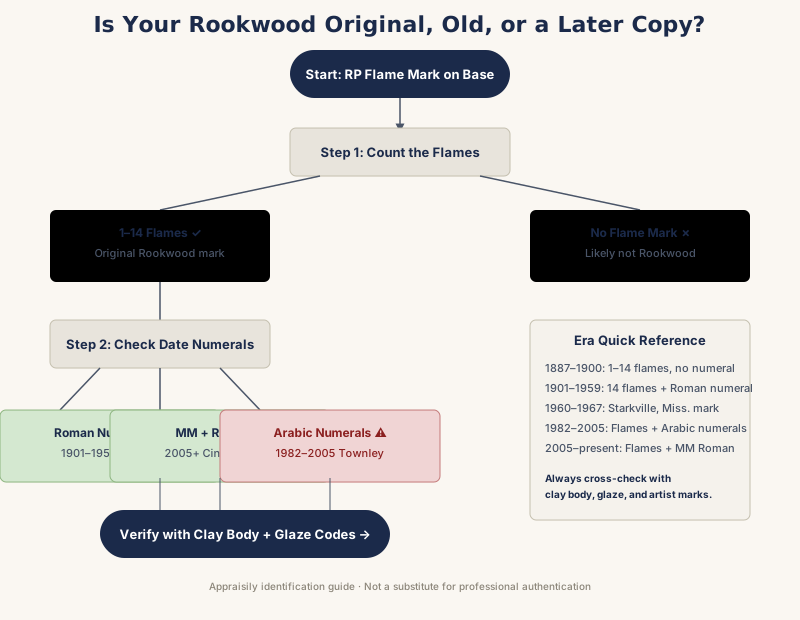
Key identification tip: Do not count the curved "tail" of the R as a flame. The flame count stopped at 14 in 1900. If you see 14 flames, look for the date numeral below to determine whether it's a 1901–1959 original or a modern piece.
The Townley Trap: Arabic Numerals = Later Production
Between 1982 and 2005, the Townley Pottery revived Rookwood production using original plaster molds — mostly for smaller figurines and decorative vases. The Townley pieces carry the same RP flame icon, which makes them visually convincing. But there's one dead giveaway:
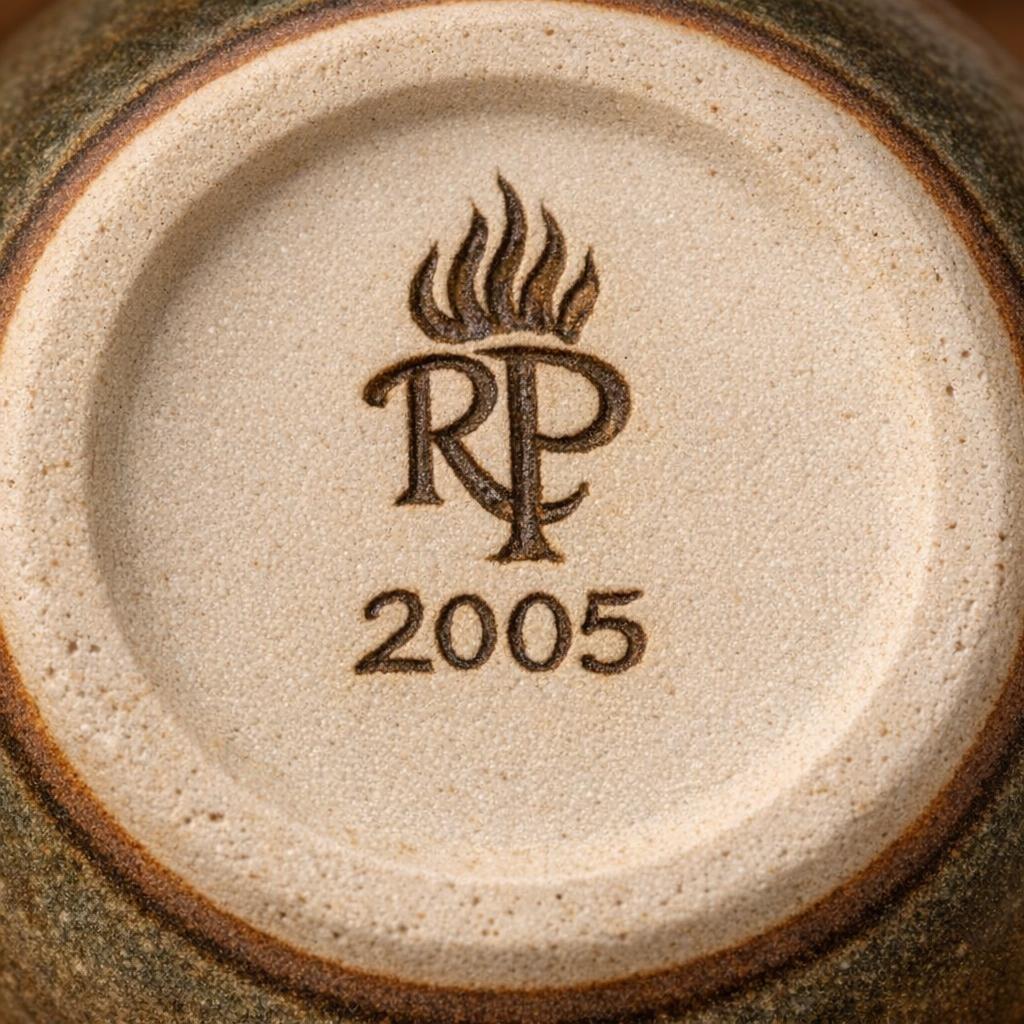
Townley pieces date with Arabic numerals (1983, 1990, 1995) scratched into the glaze rather than the Roman numerals (XXIII, XXX, XXXV) impressed into the clay body that genuine originals used. This is the single most reliable way to separate a 1990s revival from a 1930s original. If you see "1995" on the base, your piece is a Townley-era production, not an antique.
Identification Decision Tree
Use this visual workflow when examining your piece. Start with the RP flame mark and follow each branch:
Clay Body and Glaze Codes: What the Letters Mean
Beyond the flame mark, Rookwood impressed single-letter codes into the base that tell you which clay body and glaze formula the factory used. These codes are an important secondary authentication check — reproductions rarely replicate them accurately.
| Code | Meaning | What to Look For |
|---|---|---|
| V | Vellum glaze | Matte, soft-focus surface that looks almost painted; popular 1900s–1930s |
| W | White clay / Iris glaze | Cream-white body with delicate overglaze decoration; premium tier |
| G | Sea Green glaze or ginger clay | Distinctive green-to-turquoise surface; highly collectible |
| P | Soft porcelain | Smoother, less porous than standard earthenware |
| R / Y / S / O | Red / Yellow / Sage / Olive clay body | Visible at the unglazed foot ring; the base clay color should match the code |
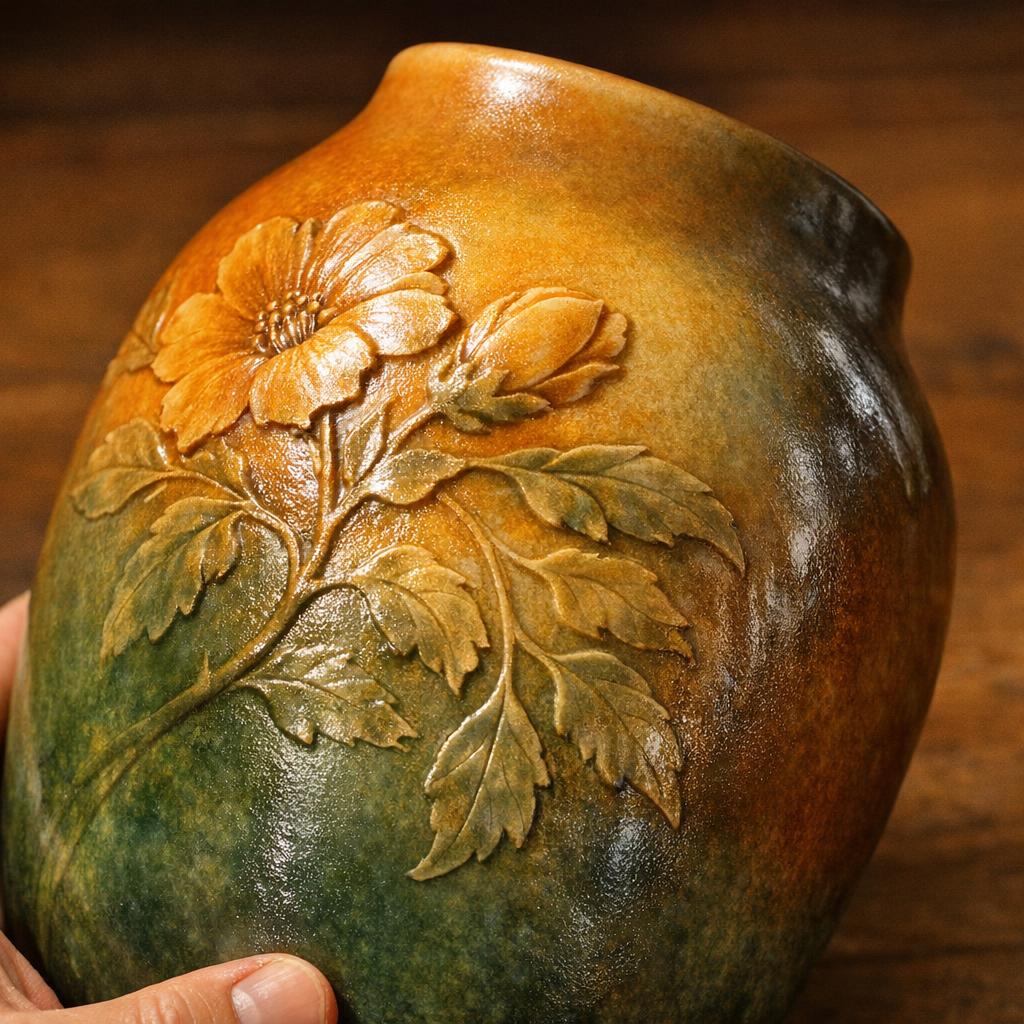
Pro tip: Hold a piece under a desk lamp angled from the side (raking light). Original Rookwood relief decoration will cast tiny shadows that reveal hand-sculptured detail. Many reproductions have flat, printed, or decal-applied decoration that looks lifeless under the same light.
Artist Signatures and Shape Numbers
The most valuable Rookwood pieces carry an artist's hand-painted or hand-incised signature on the base. The firm employed several celebrated decorators whose names are well-documented in pottery reference books.
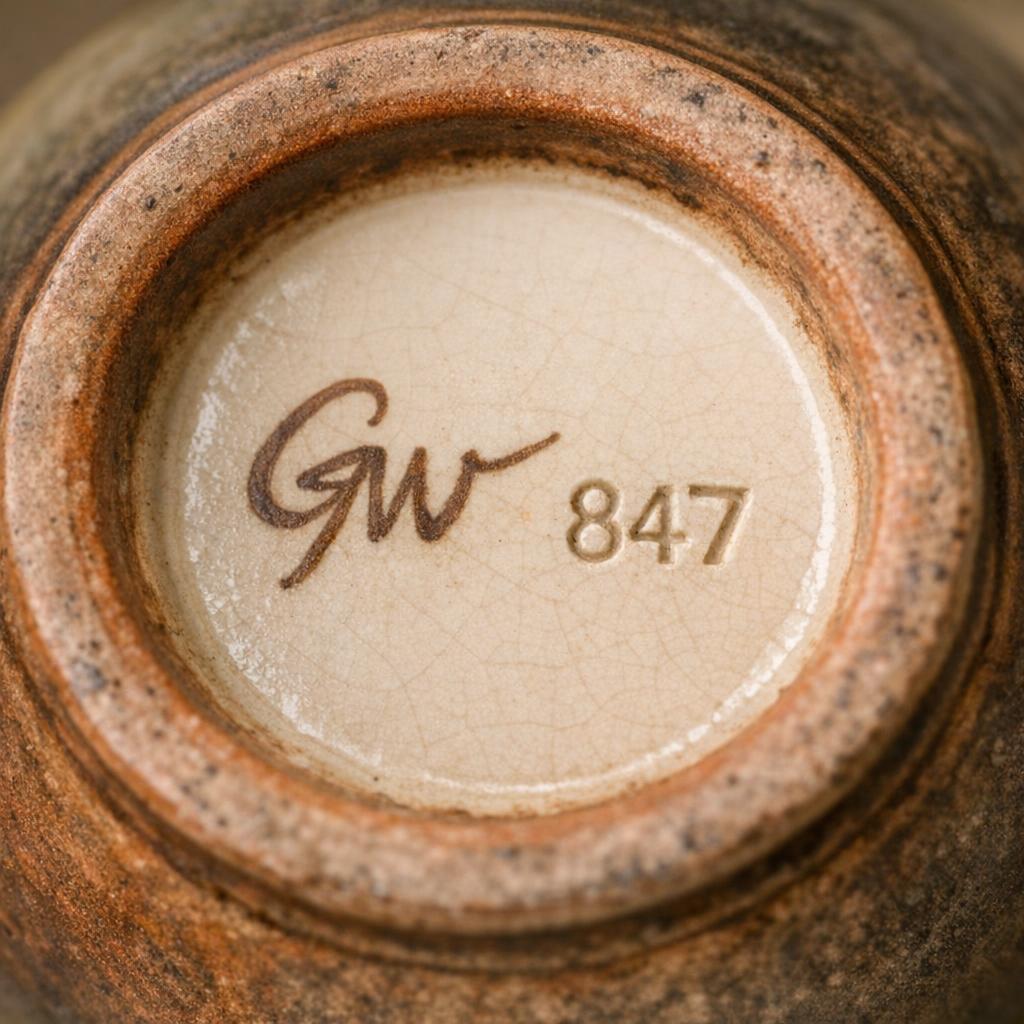
Known Rookwood artists whose signatures raise value significantly:
- Kataro Shirayamadani — master painter of scenic landscapes; his pieces have reached $350,000 at auction.
- Fred Rothenbusch — known for floral and insect decoration; auction results $300–$550+.
- Elizabeth Lincoln — floral and botanical motifs; recent comps $250–$400.
- Charles S. Todd — scenic and landscape decoration; comps $275–$550.
- Martin Rettig — early animal and Native American motifs; comps $300+.
- Sallie Coyne — scenic vases; comps $550+.
- Lorinda Epply — floral decoration; comps $300+.
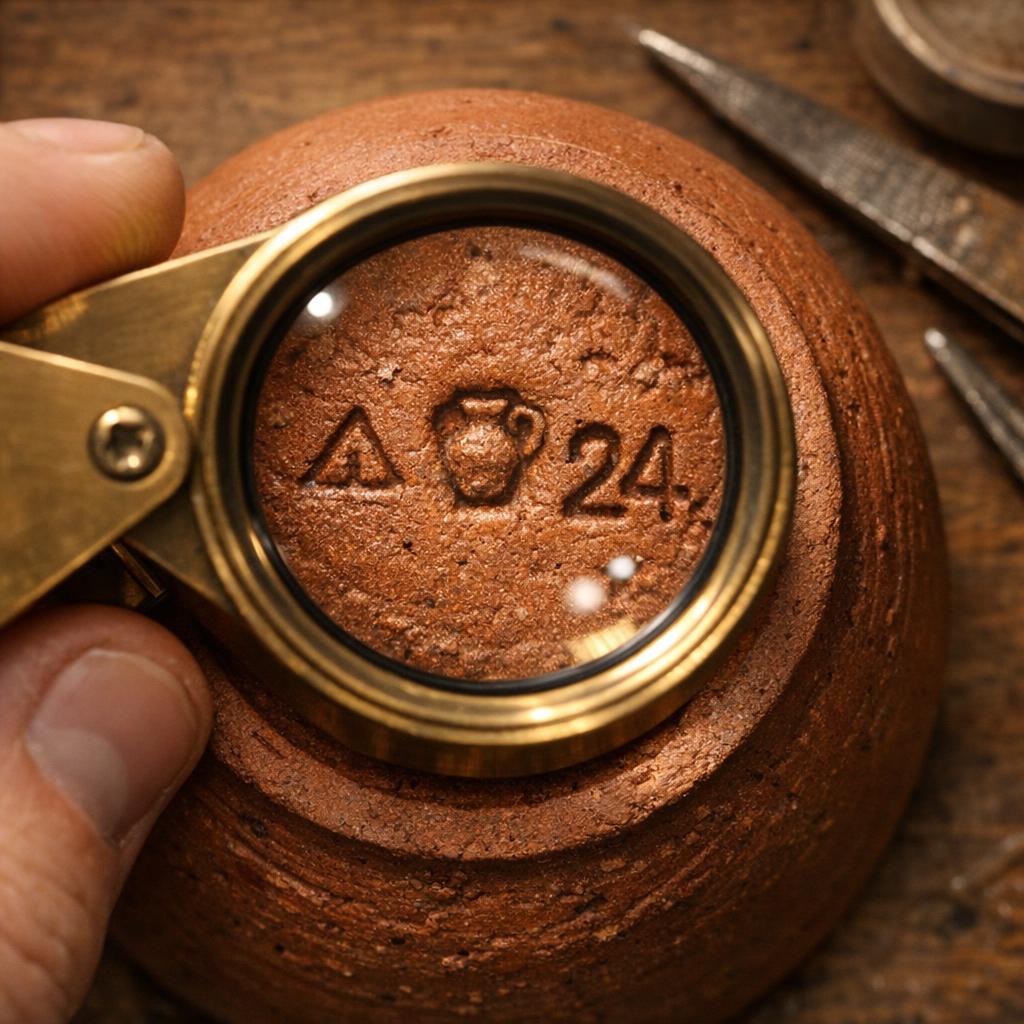
Alongside the artist signature, look for a shape number — an Arabic numeral (e.g., 847, 1242) impressed into the clay. This number identifies the mold used and can be cross-referenced with Rookwood production records. Some pieces also carry a size letter (A through F, where A is the largest), and a finisher's mark — a small dot, triangle, or cross placed by the artisan who added the final decoration.
Special quality marks also appear:
- S — special or one-of-a-kind piece, sometimes a drawn shape.
- Z — trial shape, experimental form.
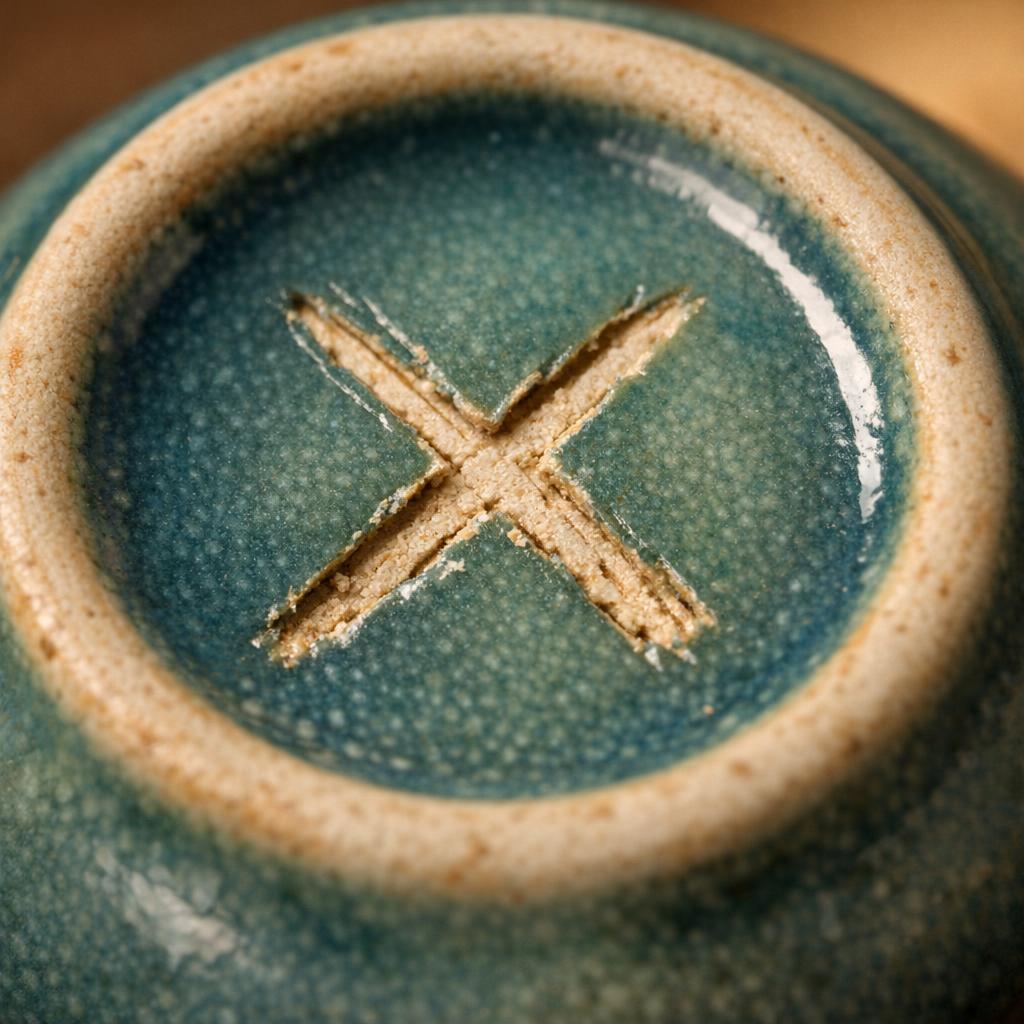
- X — ground into the glaze; indicates a factory "second" (defective piece sold at a discount). While still genuine Rookwood, X-marked pieces are worth less.
Common Reproduction Traps — What Buyers Get Wrong
Most "fake" Rookwood on the market isn't counterfeit in the criminal sense. The bigger problem is misattributed revival pieces — genuine later-production Rookwood that sellers list as "antique" because they don't know the difference.
Townley Revival (1982–2005)
Townley acquired some original Rookwood molds and produced pieces — mostly smaller figurines and vases — from 1982 to 2005. These are real pottery made by a company with rights to the molds, but they are not antiques. Common tells:
- Arabic date numerals etched into the glaze (not impressed into the body).
- Lighter, whiter clay body than the red/yellow/sage originals.
- Decoration is often simpler — fewer artist-signed pieces.
- Shape numbers may match originals, but the quality of the casting is slightly softer.
Auction prices for Townley-era pieces typically range from $40–$150, versus $200–$500+ for undecorated originals and four to six figures for artist-signed golden-era work.
Herschede / Starkville Era (1959–1967)
When Rookwood moved operations to Starkville, Mississippi, the mark changed to read "Rookwood Pottery Starkville, Miss." alongside the flame icon. These are legitimate Rookwood pieces from the original company's later years — not reproductions — but collectors value them less than Cincinnati-era work.
Outright Counterfeits
Pure fakes — pieces made by third parties with no Rookwood connection — are less common but do appear, especially online. Red flags include:
- No flame mark at all, or a flame mark that looks printed/painted rather than impressed.
- Weight that feels too light (modern slip-cast vs. original hand-thrown).
- Decoration that looks like a decal or transfer print rather than hand-painted brushwork.
- A base that's too uniform — originals have natural throwing rings and tool marks.
How Value Changes With Authenticity and Era
Knowing what you have changes everything about what it's worth. Here's the hierarchy, supported by recent auction results:
| Category | Typical Price Range | Example |
|---|---|---|
| Artist-signed golden-era (1900–1940) | $1,000–$350,000+ | Shirayamadani scenic vase — $350,000 (Rago Arts 2025) |
| Artist-signed mid-century (1940–1959) | $300–$2,000 | Edward T. Hurley marine vase — sold at Rago Arts Feb 2026 |
| Undecorated original (Cincinnati era) | $200–$650 | Fred Rothenbusch vase — $550 (Artemis Gallery 2022) |
| Factory second (X-marked) | $75–$300 | Depends on glaze type and form |
| Starkville era (1959–1967) | $100–$400 | Standard production vases |
| Townley revival (1982–2005) | $40–$150 | Smaller figurines and vases from original molds |
The gap between a Townley revival at $100 and a signed golden-era piece at $10,000+ is the reason this identification matters. It's not academic — it's a 100x valuation swing.
When to Get a Professional Appraisal
If your piece checks out as a genuine Rookwood on the marks above, the next question is whether a professional appraisal is worth the cost. Here's when it makes sense:
- Insurance coverage: If you plan to insure the piece, most carriers require a written appraisal from a qualified specialist (ISA, ASA, or AAA credentialed).
- Consignment or sale: An auction house will give you a free estimate, but a pre-sale appraisal helps you set a reserve and understand whether to sell locally or through a dedicated art pottery auction.
- Estate or donation: IRS-qualified appraisals are required for charitable donations above $5,000.
- When marks are unclear: Some early Rookwood pieces (pre-1887) used anchor, scroll, or kiln icons rather than the flame mark. If the mark doesn't match the patterns in this guide, send photos to a specialist.
If you're unsure after working through this checklist, the safest next step is to have a specialist review photos of your piece. Appraisily connects you with vetted ceramics appraisers who can evaluate your piece from clear photographs of the base, decoration, and any marks.
Recent Market Context: What Rookwood Is Selling For Now
The Rookwood market remains active with deep liquidity across price tiers. Documented maker attribution can lift auction prices by 30% to several hundred percent — a Shirayamadani-signed vase achieved $350,000 at Rago Arts in May 2025, while undecorated production pieces from the Cincinnati era routinely trade for $250–$650. Townley revival pieces, by contrast, rarely exceed $150.
What similar items actually sold for
To help ground this guide in real market activity, here are recent example auction comps from Appraisily’s internal database. These matched sales are market context only, not an object estimate or identification, and they do not guarantee a price for your specific rookwood pottery.
Shown USD range: USD 50-USD 3,800. Median of these 10 USD examples: USD 115.
| Comparable | What sold | Auction house | Date | Lot | Source-reported amount |
|---|---|---|---|---|---|
 |
Lorinda Epply for Rookwood Pottery, Decorated Porcelain vase with lotus flowers | Toomey & Co. Auctioneers | 2024-11-15 | 299 | USD 100 (buyer’s-premium treatment unknown) |
 |
Rookwood Pottery Bowl | Link Auction Galleries | 2015-02-11 | 31 | USD 50 (buyer’s-premium treatment unknown) |
 |
Rookwood 1927 Vintage Arts And Crafts Pottery Matte Green Ceramic Vase 1903 | Crafted Auctions | 2026-06-28 | 98 | USD 130 (buyer’s-premium treatment unknown) |
 |
Rookwood Pottery Bowl | Peachtree & Bennett | 2015-02-14 | 522 | USD 100 (buyer’s-premium treatment unknown) |
 |
ROOKWOOD POTTERY VASE | New Hampshire Auctions and Appraisals LLC | 2024-11-15 | 163 | USD 50 (buyer’s-premium treatment unknown) |
 |
Salie Coyne for Rookwood Pottery Vase | Leonard Auction | 2022-12-11 | 256 | USD 275 (buyer’s-premium treatment unknown) |
 |
Rookwood Pottery "Orchid" Vase | Fontaine's Auction Gallery | 2025-11-22 | 260 | USD 450 (buyer’s-premium treatment unknown) |
 |
ROOKWOOD POTTERY VASE | Freedom Auction Company | 2025-09-27 | 159 | USD 140 (buyer’s-premium treatment unknown) |
 |
Rookwood Pottery Bowl 2572D | Main Auction Galleries | 2021-08-15 | 165 | USD 70 (buyer’s-premium treatment unknown) |
 |
Lorinda Epply for Rookwood Pottery, Large Decorated Porcelain vase with Art Deco flowers | Toomey & Co. Auctioneers | 2024-06-13 | 377 | USD 3,800 (buyer’s-premium treatment unknown) |
How these auction records were verified
Each row retains its exact source URL, lot identity, retrieval time, access result, and immutable record hash. Inspect the public comparable provenance record.
Disclosure: prices are shown as reported by auction houses and are provided for appraisal context. Learn more in our editorial policy.
Auction comparable data sourced from the Appraisily valuer-agent database covering 6,700+ Rookwood price results. Prices are hammer prices and do not include buyer's premium.
Search Variations Collectors Ask
Readers often Google these questions — each is answered in the identification guide above:
- how to tell if Rookwood pottery is original or reproduction
- what do the flames on Rookwood pottery mean
- how to read Rookwood pottery marks and dates
- how to identify Townley revival Rookwood pottery
- are Rookwood pottery reproductions worth anything
- how to tell antique Rookwood from modern copies
- what does the X mark mean on Rookwood pottery
- how much is Rookwood pottery worth today
- Rookwood pottery artist signatures and values
- how to authenticate Rookwood pottery at home
Each question maps to a section in this guide — from flame mark decoding to Townley identification to professional appraisal guidance.