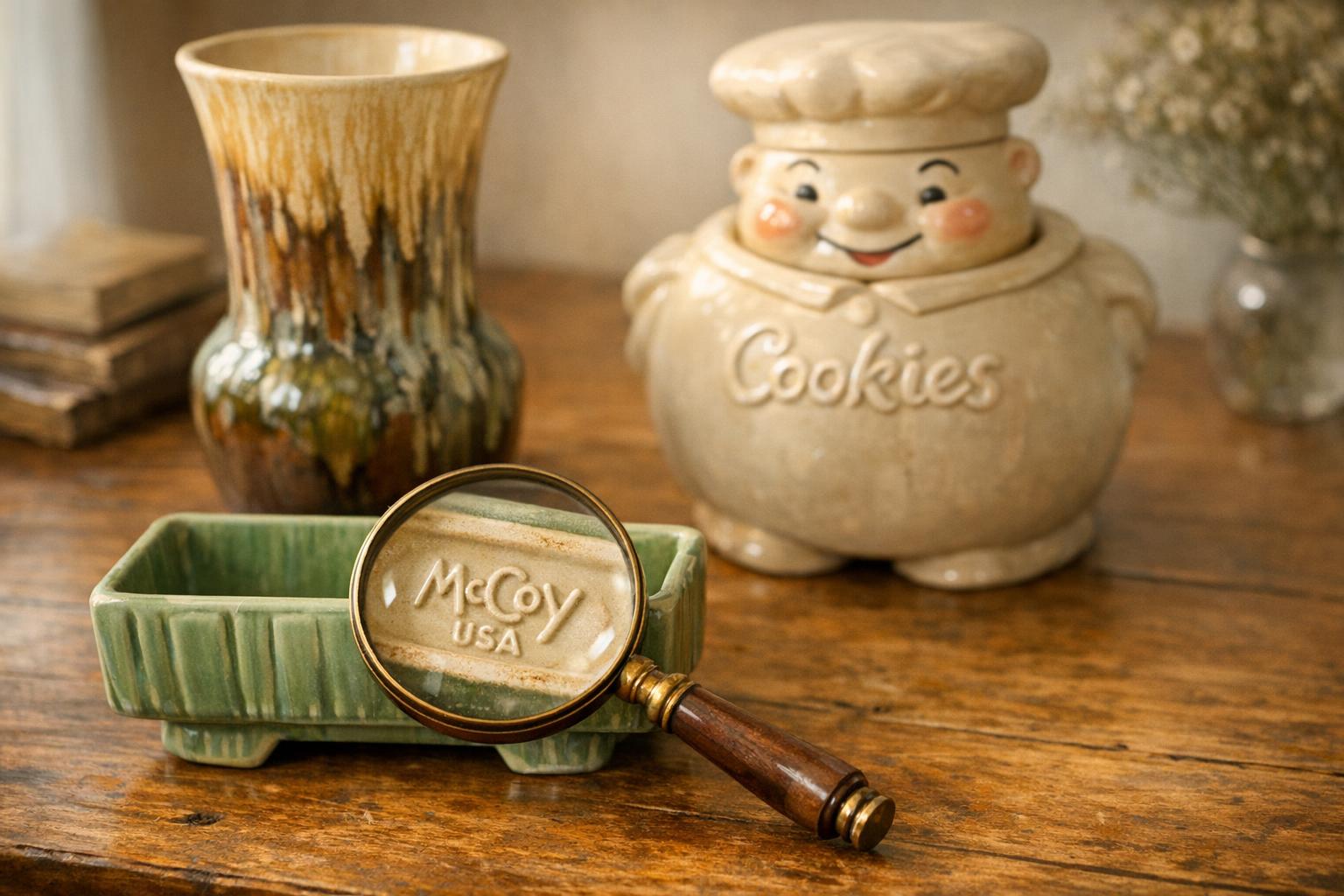
McCoy pottery identification basics
Start with the underside, then confirm the mark against shape, clay body, glaze, mold quality, and wear. A McCoy-style mark alone is not enough to rule out later reproductions or lookalikes.
If you picked up a piece of pottery at a flea market, inherited it from a relative, or spotted it at an estate sale and wondered whether it's genuine McCoy, you're in the right place. McCoy Pottery ran from 1910 to 1990 in Ohio, producing hundreds of recognizable forms — and nearly every piece carries identification clues on its underside. With the right approach, you can identify McCoy pottery without guessing by reading marks, decoding form numbers, and inspecting glaze and clay characteristics.
This guide walks you through the exact checkpoints that collectors, dealers, and appraisers use to authenticate McCoy pottery. Follow each step in order, and you'll know whether your piece is genuine McCoy, roughly when it was made, and what it might be worth.
In this guide
Start with the Underside — Read the Mark
Every McCoy pottery identification begins the same way: turn the piece over. The underside — also called the "bottom" or "foot" — carries the most reliable authenticity evidence. McCoy used a progression of marks across its 80-year history, and each mark type corresponds to a specific production era.
The McCoy Mark Timeline
1910–1929: No mark or minimal marking. Early McCoy pieces from the Ohio company's founding years often carry no maker's mark at all. Identification during this period relies on form shape, clay body color, and glaze characteristics rather than a stamped or incised mark.
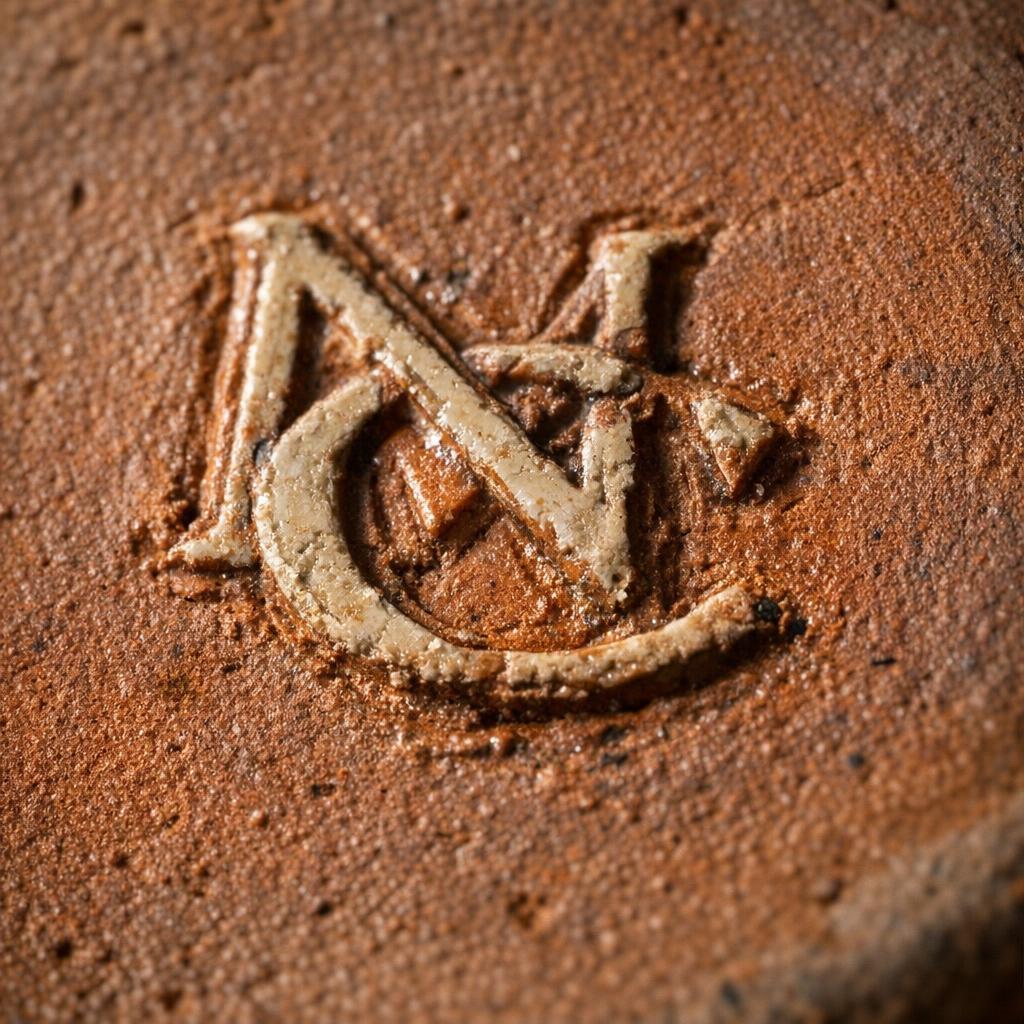
1929–1939: Overlapping "NM" or "MC." After 1929, McCoy began marking pieces with either an overlapping "N" and "M" (standing for Nelson McCoy) or "M" and "C" (McCoy). These marks were typically incised into the clay before glazing, which means you'll see glaze pooling inside the letter grooves — a key authenticity cue. The letters appear hand-stamped, slightly irregular, and sit at an angle rather than perfectly aligned.
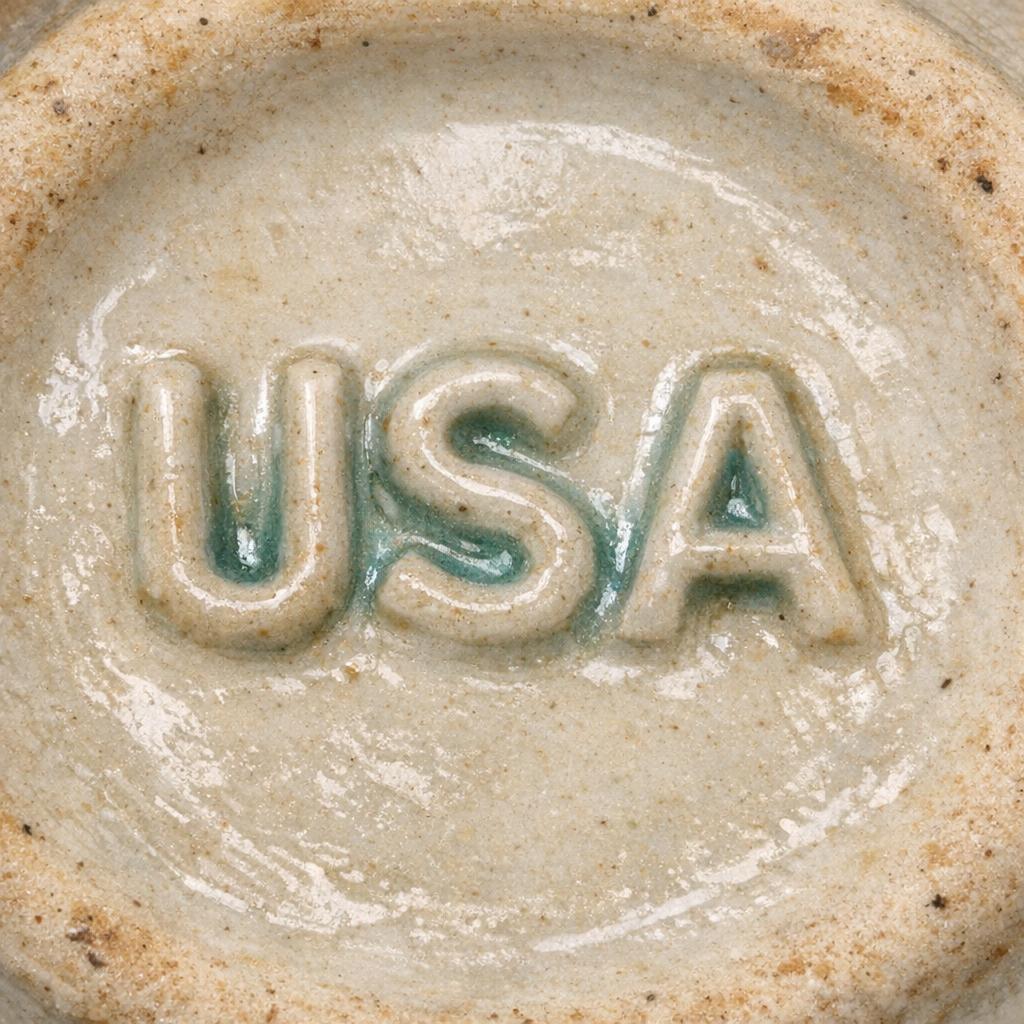
1939–1974: "USA" stamp. Around 1939, McCoy switched to a bold "USA" mark, often accompanied by a shape number. This is the most common McCoy mark you'll encounter and covers the company's peak production years — including the popular mid-century cookie jars, planters, and mixing bowl sets. The USA stamp was applied with a metal die, so it appears deeper and more uniform than the earlier NM/MC marks.
1974–1990: "McCoy" script. In 1974, McCoy adopted a cursive-style script mark reading "McCoy." Pieces with this mark are from the company's later years and are generally more common and less collectible than earlier marks, though certain novelty forms (cookie jars, character planters) remain highly sought after.
Not all McCoy pottery is marked. Smaller utility pieces, some early items, and pieces where the mark was obscured by heavy glaze may not show a visible mark. In these cases, move to the next identification steps: shape numbers and clay body analysis.
Decode Shape and Form Numbers
Alongside the maker's mark, most McCoy pieces carry an incised shape number — sometimes called a form number or mold number. This is typically a 2- to 4-digit number pressed into the clay on the underside, separate from the mark itself.
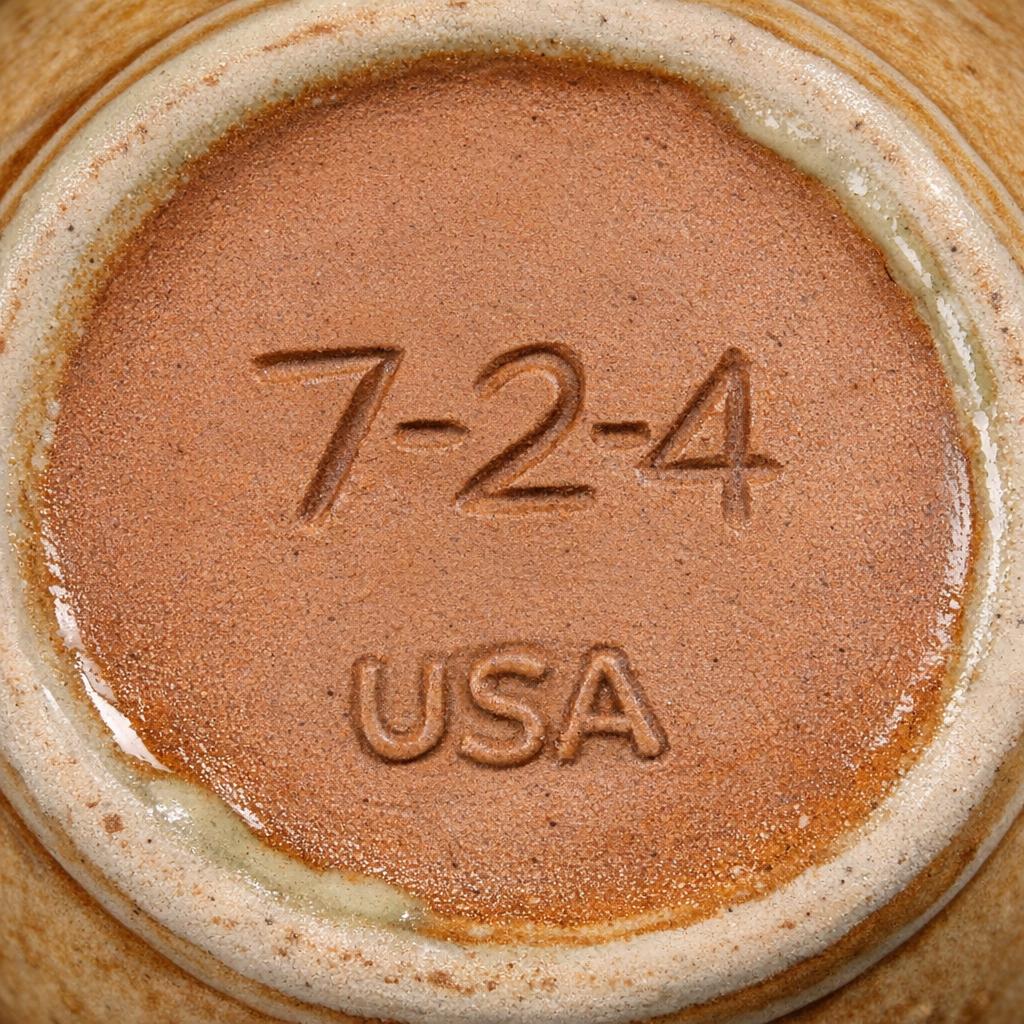
Shape numbers are your best friend for identification. The Nelson McCoy Collectors Society and several published price guides (such as the Brush-McCoy Identification & Price Guide) catalog thousands of shape numbers with photographs, production dates, and current values. Here's how to use them:
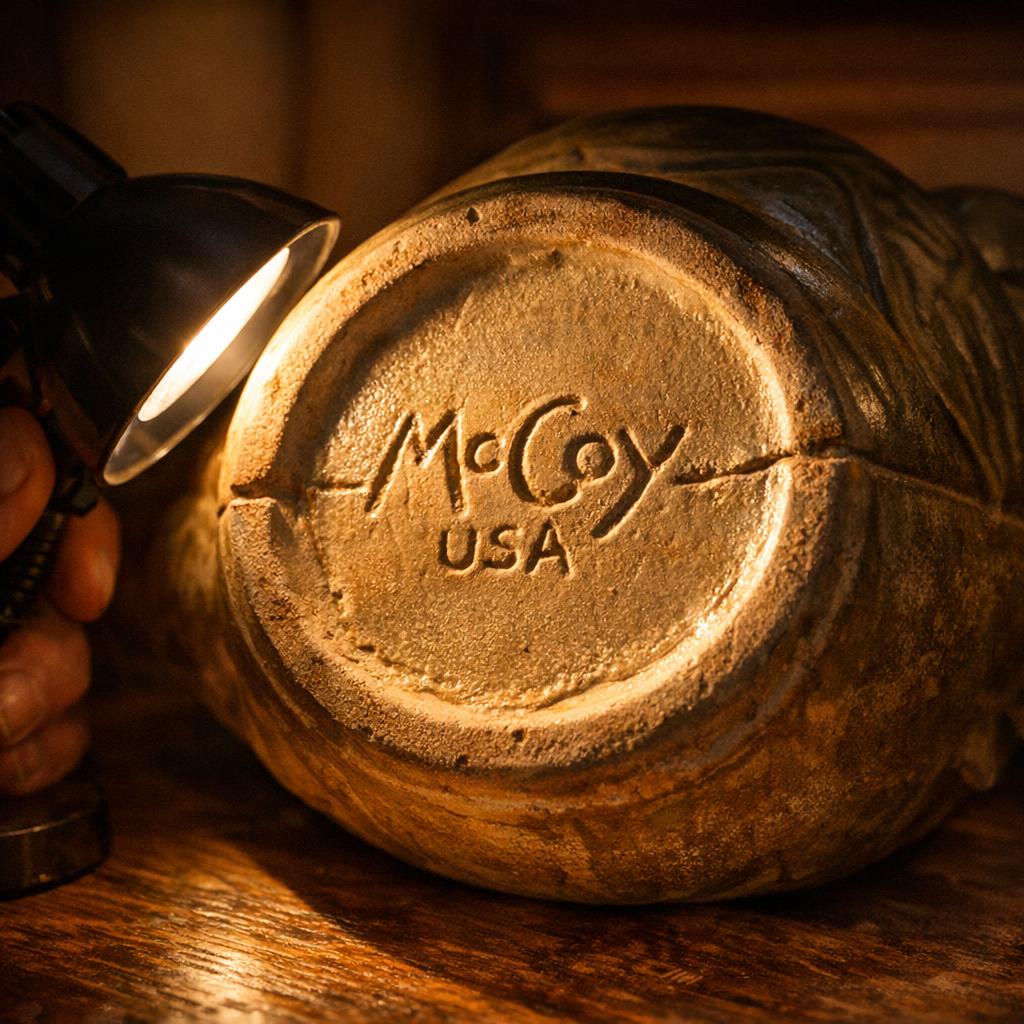
- Read the number carefully. Clean the underside gently with a damp cloth. Shape numbers are incised into the clay and may be filled with glaze or dirt. Use raking light (a desk lamp at a low angle) to make the number visible.
- Record the full number. Note every digit — "724," "1235," "623" — and whether it appears with any additional letters or symbols.
- Cross-reference with a collector guide. Search the number in the McCoy Pottery Collectors Society database, reference books, or collector forums. A matching entry confirms the piece's form name, approximate production year, and whether it's a known form.
- Compare the physical piece to the catalog photo. If the shape, size, glaze color, and mark style all align with the catalog entry, you've confirmed authenticity.
Shape numbers that don't match any known McCoy form are a red flag — they may indicate a reproduction, a piece from a different manufacturer, or (in rare cases) an undocumented McCoy form that warrants professional review.
Inspect the Clay Body and Glaze
McCoy pottery's manufacturing process left distinctive physical characteristics that go beyond marks and numbers. The clay body color, glaze application style, and surface wear patterns all contribute to a reliable identification.
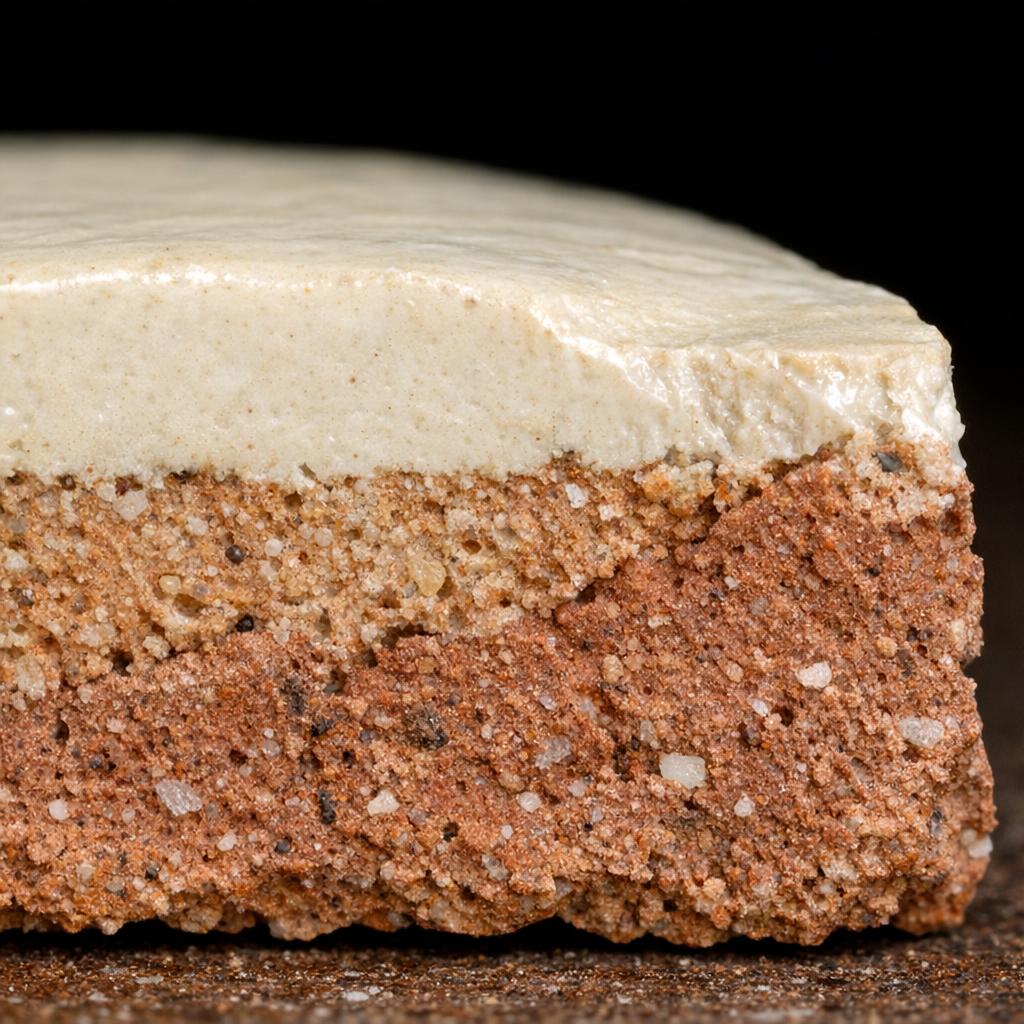
Clay Body Color
Authentic McCoy pieces use a buff-to-reddish clay body sourced from Ohio deposits. When you look at unglazed areas — the foot ring, the inside rim, or any chip — you should see a warm, earthy tone ranging from light tan to reddish-brown. Many reproductions, especially Chinese imports, use a grey-white or pale clay body that immediately distinguishes them from original McCoy.
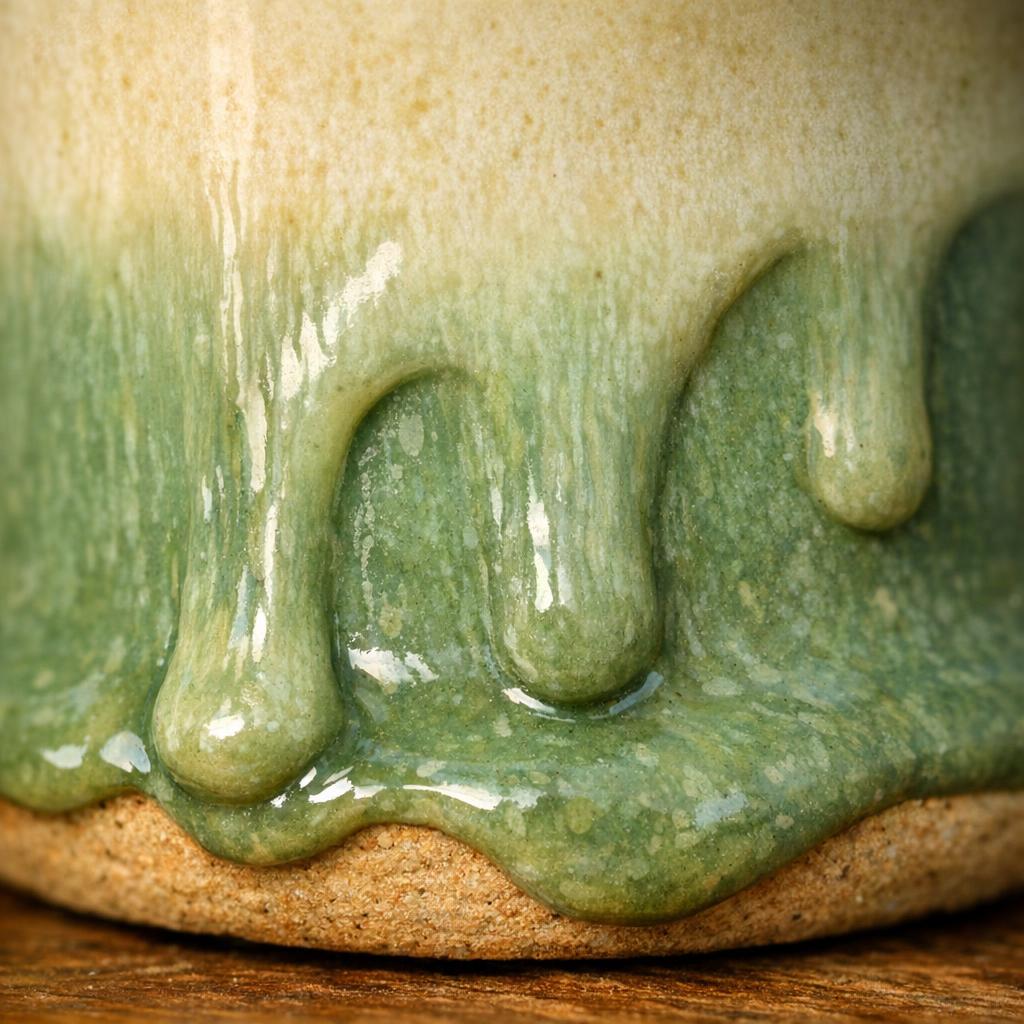
Glaze Pooling and Drips
McCoy's mid-century production process used a dip-and-pour glazing method that created characteristic glaze pooling at the base of pieces. Look for thick, glossy glaze accumulation near the foot — often with visible drip lines or "runs" where excess glaze flowed downward during firing. This is a hallmark of genuine McCoy and is difficult for reproductions to replicate convincingly.
Raking Light Inspection
Hold a desk lamp or flashlight at a very low angle across the piece's surface — this is called raking light. The angled illumination reveals surface texture, casting seams (from the mold-making process), sprue plugs (where clay was injected), and the depth of incised marks. Genuine McCoy pieces show natural mold seams and subtle surface irregularities from production. Reproductions often have unnaturally smooth surfaces or marks that look "printed" rather than stamped.
Spot Reproductions and Fakes
McCoy pottery's popularity has driven a steady market in reproductions and fakes. The most common sources are modern Chinese imports, re-struck pieces made from original molds, and misattributed pottery from other American manufacturers. Here's how to identify them.
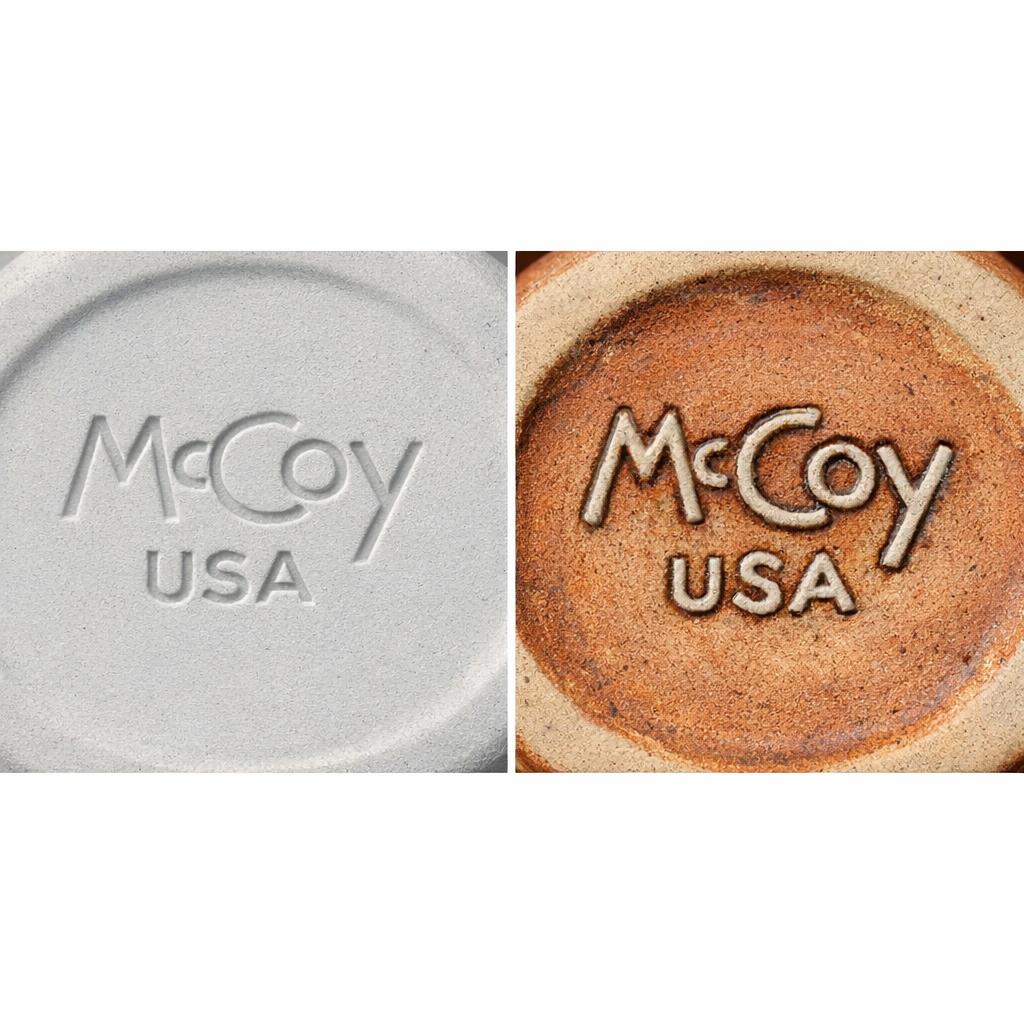
Red Flag 1: Marks That Are Too Perfect
Authentic McCoy marks were applied with hand-stamping or simple dies — they show slight irregularities, varying depth, and often sit at a slight angle. Reproductions frequently have marks that look too crisp, too shallow, or laser-engraved. If the letters appear machine-perfect with no glaze pooling inside the grooves, be suspicious.
Red Flag 2: Wrong Clay Color
As noted above, McCoy used buff-to-reddish Ohio clay. Reproductions from China or other sources often use grey-white or very pale clay. Check any unglazed area — if the clay looks grey, white, or artificially white, it's almost certainly not McCoy.
Red Flag 3: Weight and Finish
Original McCoy pieces have a substantial weight from the thick clay body and a semi-gloss glaze finish that feels smooth but not glass-smooth. Some reproductions feel lighter or thinner and have an unnaturally glossy, almost glass-like glaze that differs from McCoy's characteristic matte-to-satin finish.
Red Flag 4: Forms McCoy Never Made
If your piece's shape doesn't appear in any McCoy collector catalog or database — no matching shape number, no photographic precedent — it may be a piece from a different manufacturer being misattributed. The Nelson McCoy Collectors Society maintains the most comprehensive catalog of known forms. When in doubt, cross-reference before buying or insuring.
What Your McCoy Pottery Is Worth Today
McCoy pottery values span a wide range depending on age, rarity, condition, and form. Based on recent auction activity and collector market data, here's what to expect:
Condition matters enormously. Chips, cracks, and glaze wear reduce value significantly. A piece with a pristine glaze, no damage, and a clear mark/shape number combination will fetch the highest price in any market. If you suspect your piece falls into the premium or high-value category, a documented appraisal is worth the investment — especially for insurance, estate, or consignment purposes.
When to Call a Professional Appraiser
- Conflicting or unclear marks. If the underside shows multiple marks, an unfamiliar stamp, or a mark that doesn't fit the standard McCoy timeline, a specialist can determine whether the piece is genuine McCoy, a different manufacturer, or a reproduction.
- Potential high value. If your piece appears to be an early form (pre-1939), carries an NM/MC mark, or matches a rare shape number in collector catalogs, documented appraisal protects your investment for insurance, estate planning, or sale.
- Estate or insurance documentation. Insurance companies and estate executors require formal appraisals — not online estimates. A written appraisal from a qualified specialist provides defensible value documentation.
The fastest way to get clarity is to start your appraisal online. Upload clear photos of the underside (mark and shape number), the glaze surface, and the overall form. A ceramics specialist will review your submission and provide a written assessment — usually within 24 hours.


