How to Identify Rookwood Pottery Without Guessing: appraisal and value basics
How to Identify Rookwood Pottery Without Guessing research should start with identification, condition, provenance, and recent comparable sales. Use this guide to compare the signals that matter before paying for a formal appraisal or deciding whether to sell.
Quick answer: the 30-second Rookwood check
If you are holding a piece of pottery and wondering whether it is genuine Rookwood, start here: flip it over and look for a hand-incised reversed "RP" monogram on the base. If you see it, you are almost certainly looking at an authentic piece from the Rookwood Pottery Company of Cincinnati, Ohio — one of America's most celebrated art potteries, active from 1880 to 1967 (revived in 2006 under new ownership).
Beneath the RP mark, you should find flame marks (each representing a production year), a shape number, and often a tiny artist cipher. Together these tell you who made the piece, when, and what glaze line it belongs to. If any of these elements are missing, blurry, or machine-stamped, treat the piece with suspicion.
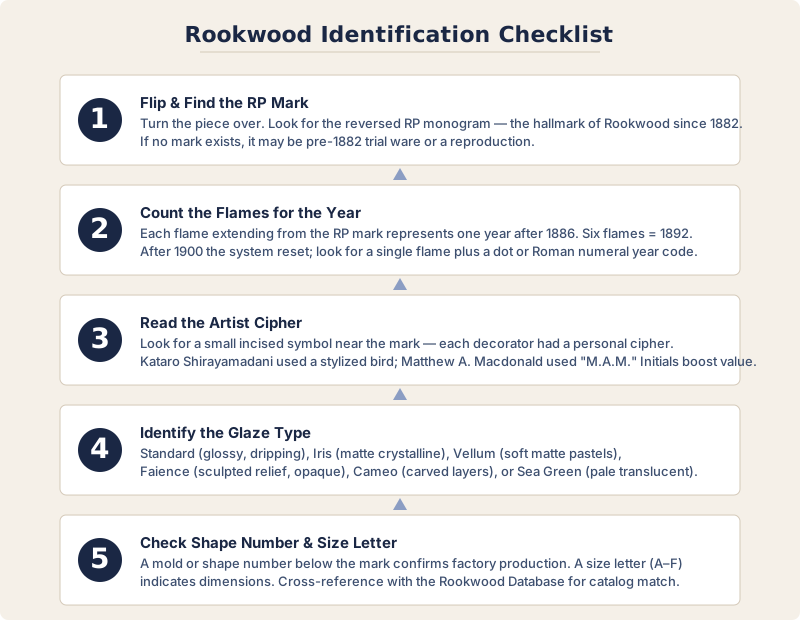
The checklist below walks you through each identification cue in detail — so you can move from guessing to knowing in under ten minutes.
Step 1: Flip & find the RP mark
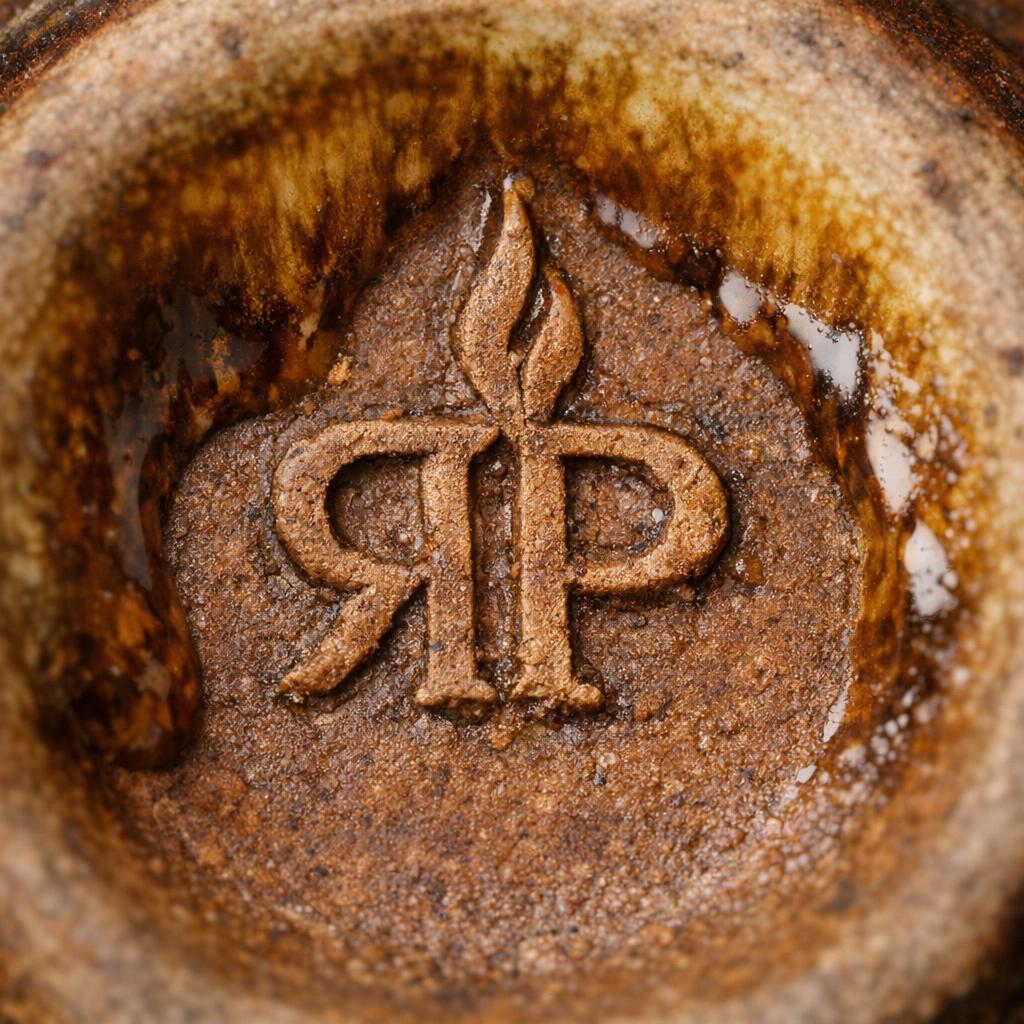
Every genuine Rookwood piece produced after 1882 bears the company's reversed RP monogram — a backwards "R" intertwined with a "P." This mark was hand-incised into the soft clay body before glazing, not stamped or printed. Under magnification (a 10× jeweler's loupe works well), you should see slight irregularities in the cut depth and angle that confirm hand tooling.
What to look for:
- Reversed "R": The left leg of the R curves backwards (mirror-image of a normal R). This is the single most recognizable Rookwood identifier.
- Intertwined "P": The P loops through or alongside the R. Early marks (1880–1882) sometimes omit the P entirely — these are rare "trial ware" pieces from Maria Longworth Nichols's founding period.
- Incised, not stamped: The edges of the letters should look hand-cut, with slight variations in depth and width. Machine-stamped marks with uniform edges are a red flag for reproductions.
- Glaze pooling: On Standard-glaze pieces, the thick glaze naturally drips and pools around the incised mark. This organic interaction between mark and glaze is difficult to fake convincingly.
If the piece has no mark at all, it could be an 1880–1882 trial piece (extremely rare and valuable), an unmarked production experiment, or a modern reproduction. In doubt, escalate to a specialist who can examine the clay body, glaze chemistry, and forming technique.
Step 2: Count the flames for the year
Rookwood's dating system is one of the most elegant in all of American ceramics. Starting in 1886, the factory added one flame extending upward from the RP monogram for each year of production.
How to count:
- 1886 = RP with no flames (the "perverted mark" year — the R was accidentally facing the correct direction on some pieces).
- 1887 = RP + 1 flame
- 1888 = RP + 2 flames
- …and so on through 1899 = RP + 13 flames.
After 1900: The system reset. Pieces from 1900 onward typically show a single flame plus a dot or a Roman numeral year code below the mark. By 1959, Rookwood switched to Arabic numerals for the full year (e.g., "1960").
Quick reference: A piece with 6 flames dates to 1892. A piece with a single flame and one dot dates to 1901. A piece stamped "1931" is from Rookwood's Depression-era production period — a time when output quality remained high but volume declined.
The flame system is one reason Rookwood is so collectible: you can date a piece to the exact year without any external reference. No other American art pottery used such a consistent, readable dating code across its entire production run.
Step 3: Read the artist cipher
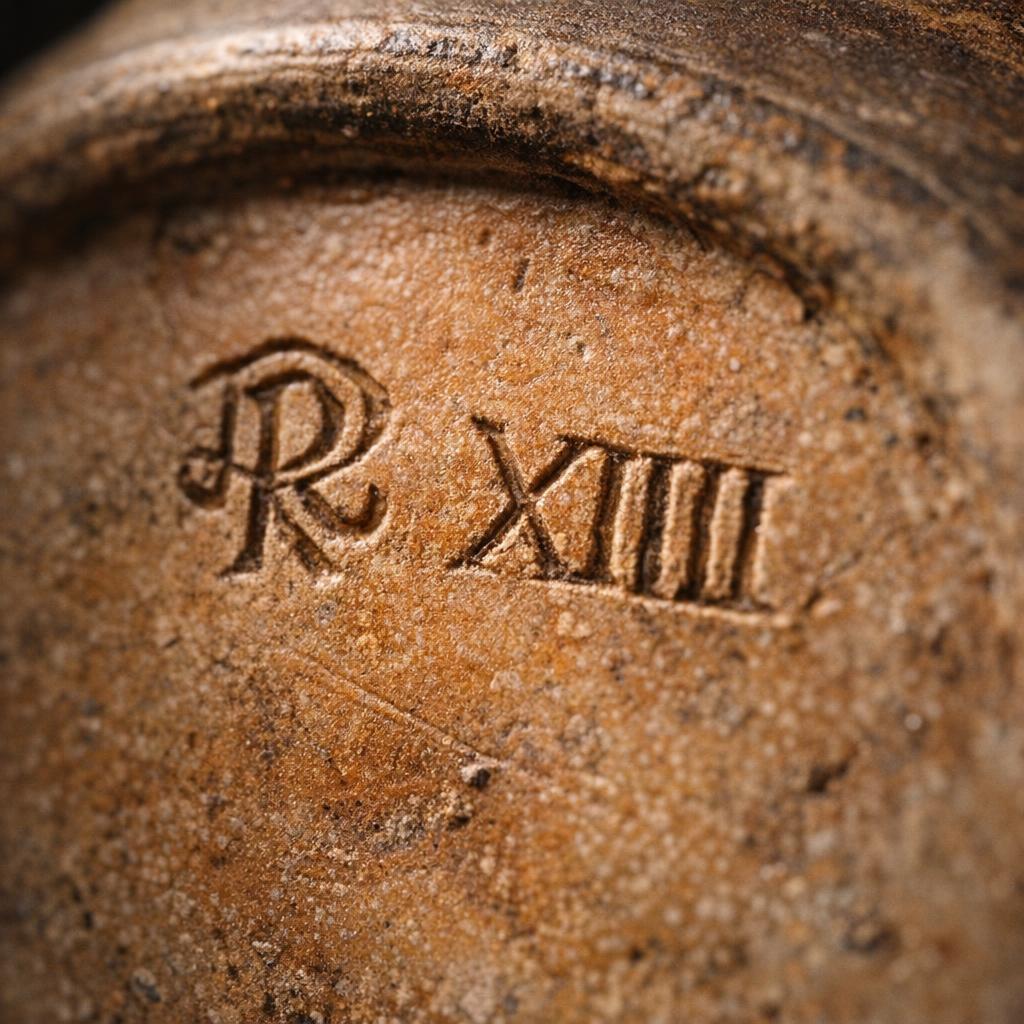
Nearly every Rookwood decorator signed their work with a personal cipher — a tiny incised symbol, monogram, or set of initials placed near the RP mark. These ciphers are one of the most exciting elements of Rookwood identification because they connect a piece to a specific artisan and often drive significant value.
Notable artist ciphers include:
- Matthew A. Macdonald: Signed "M.A.M." Known for scenic landscape vases in Standard glaze.
- Sarah S. Hallowell: Used "S.S.H." or a shell motif. Specialized in floral and botanical decorations.
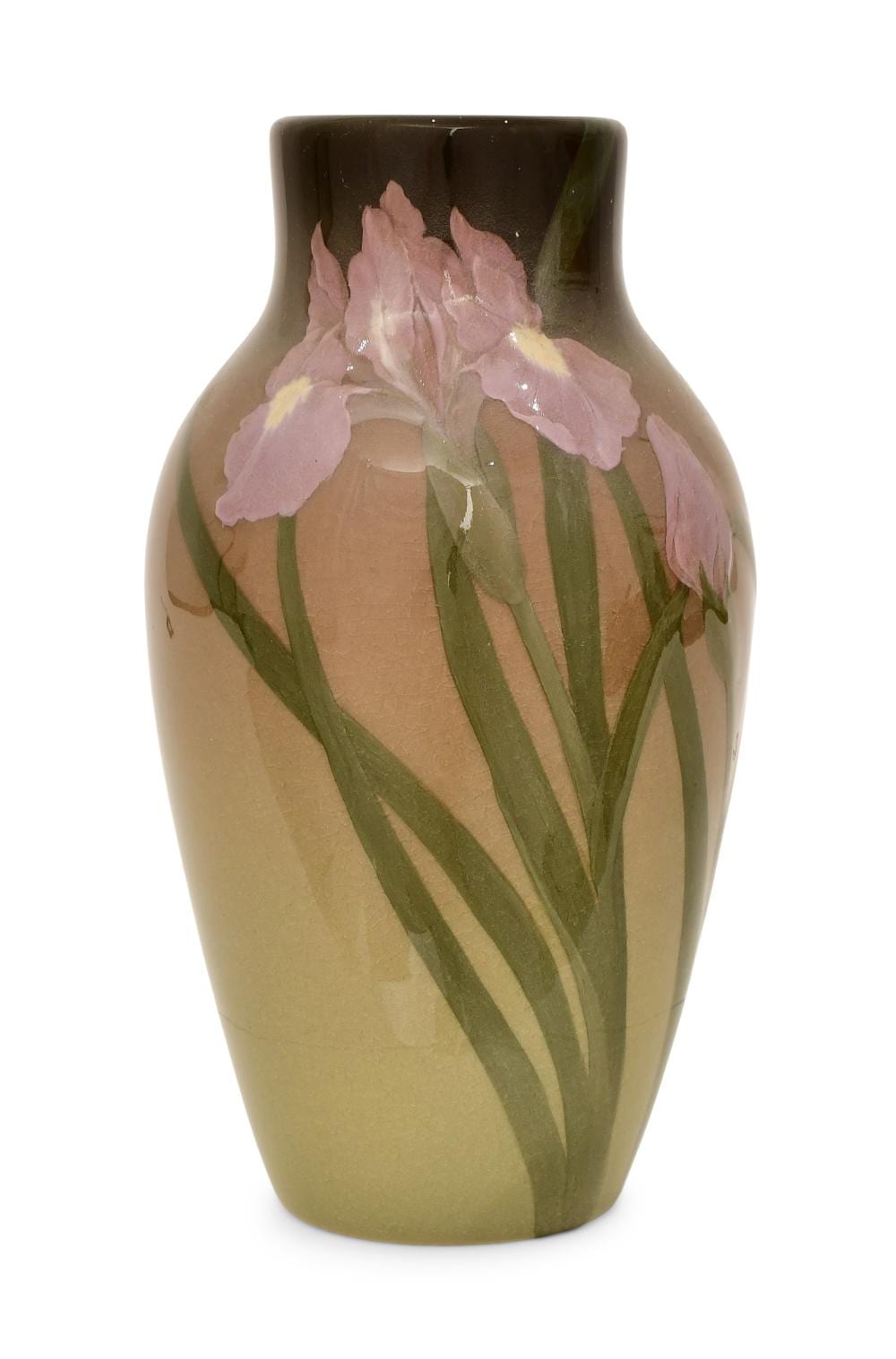
- Anna Marie Valentien: Signed "A.V." or "A.M.V." Noted for Iris and Vellum glaze work with native wildflower motifs.
- Carl Schmidt: Used a monogram "C.S." Active in the early 1900s, known for faience and vellum pieces.
For a comprehensive list of ciphers, the Rookwood Database Markings page maintains a visual catalog of known artist marks. The definitive printed reference remains Nicholson & Thomas's Rookwood Pottery Identification & Value Guide (Schiffer Publishing), which documents over 250 forms with photographs.
Value note: Pieces with a documented artist cipher typically sell for 30% to several hundred percent more than unattributed Rookwood production ware. If you can identify the decorator, you have already done the single most impactful thing for your piece's market value.
Step 4: Identify the glaze type
Rookwood developed and trademarked several distinctive glaze lines over its 87-year Cincinnati production run. The glaze type is often the fastest visual identifier — an experienced collector can spot a Standard, Iris, or Faience piece from across a room.
Standard Glaze (1880–1967)
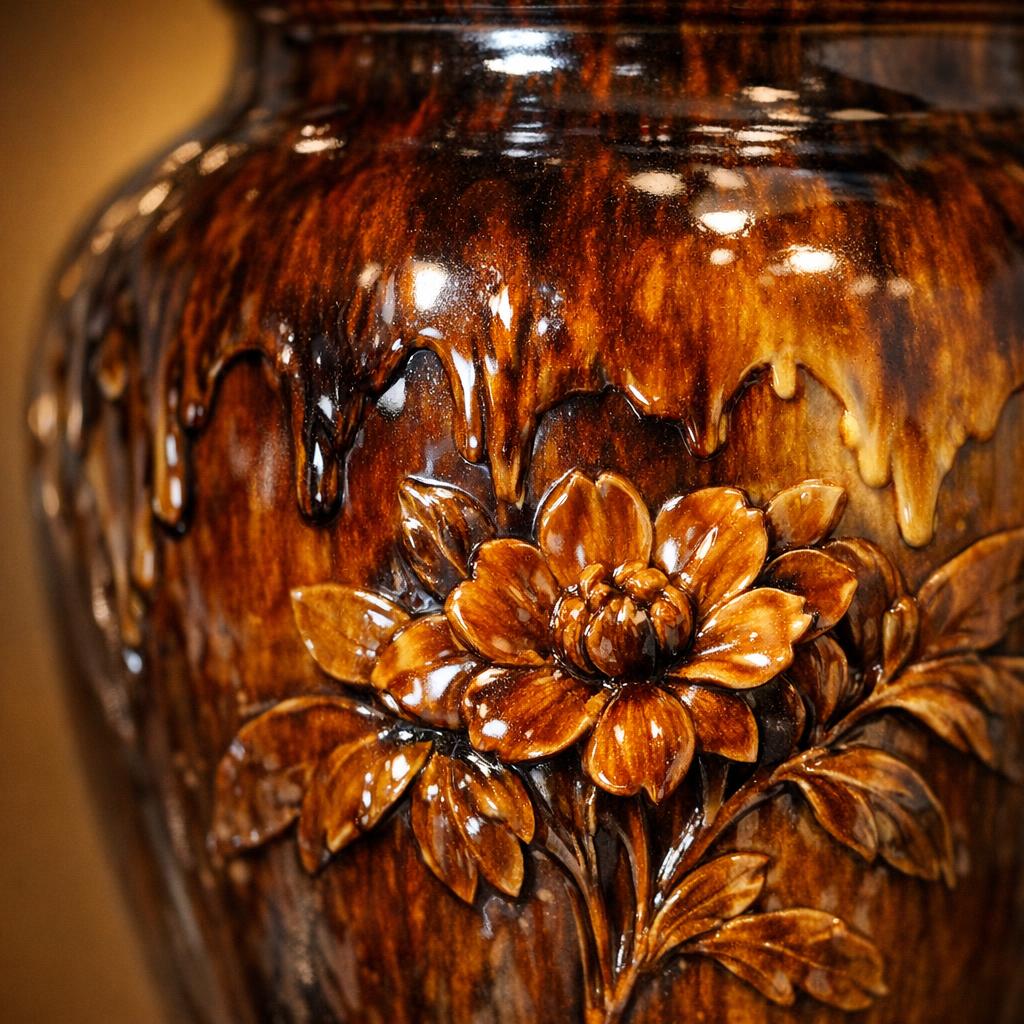
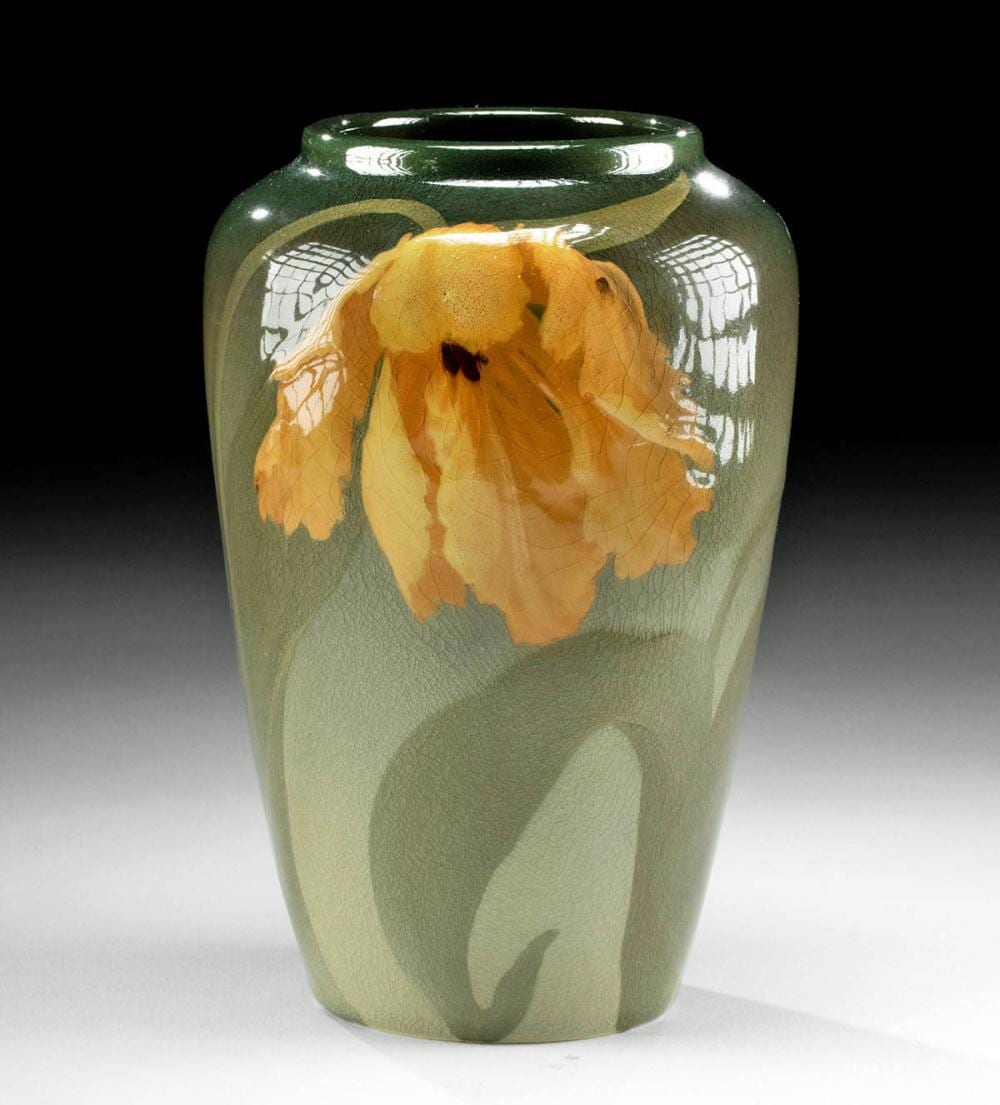
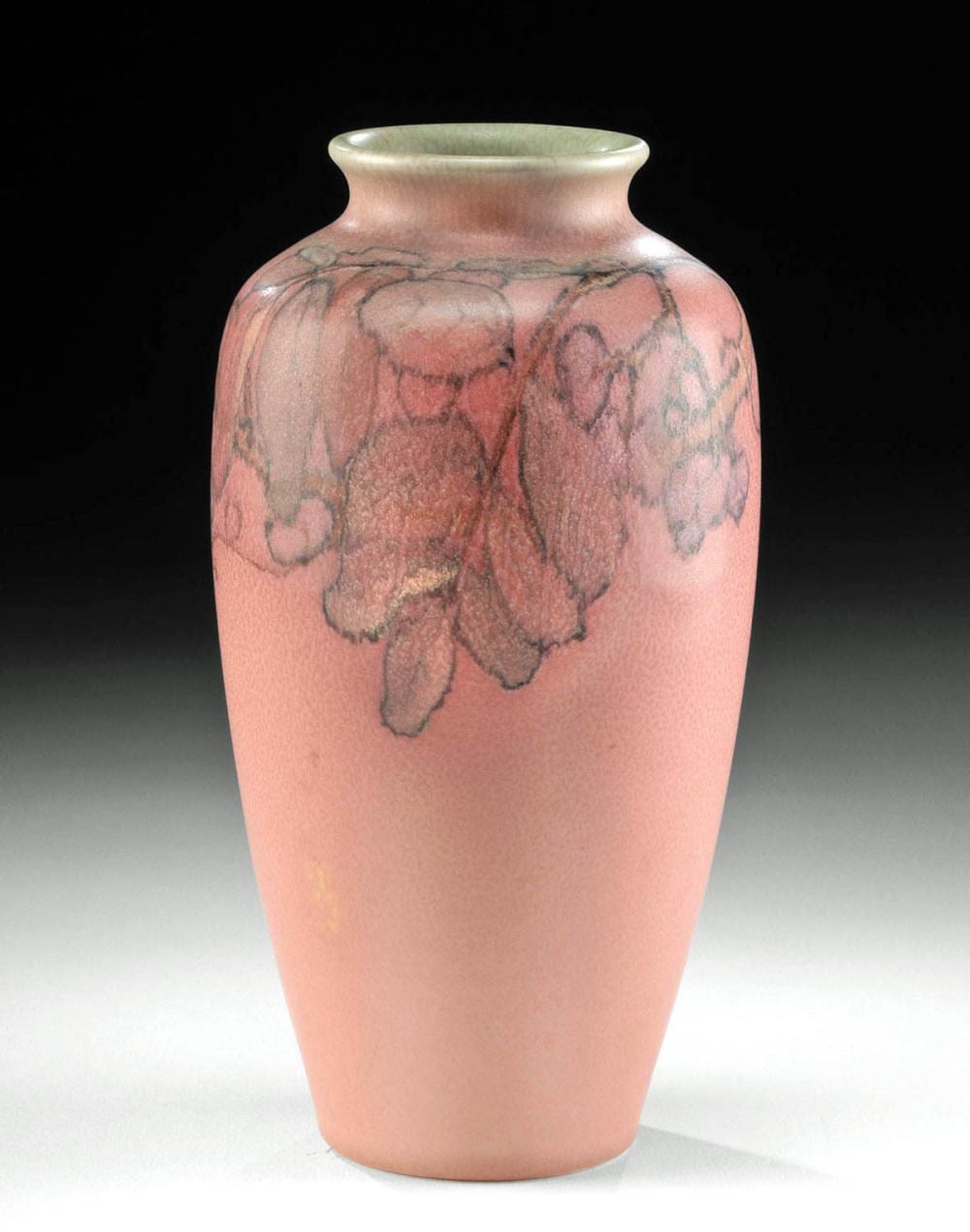
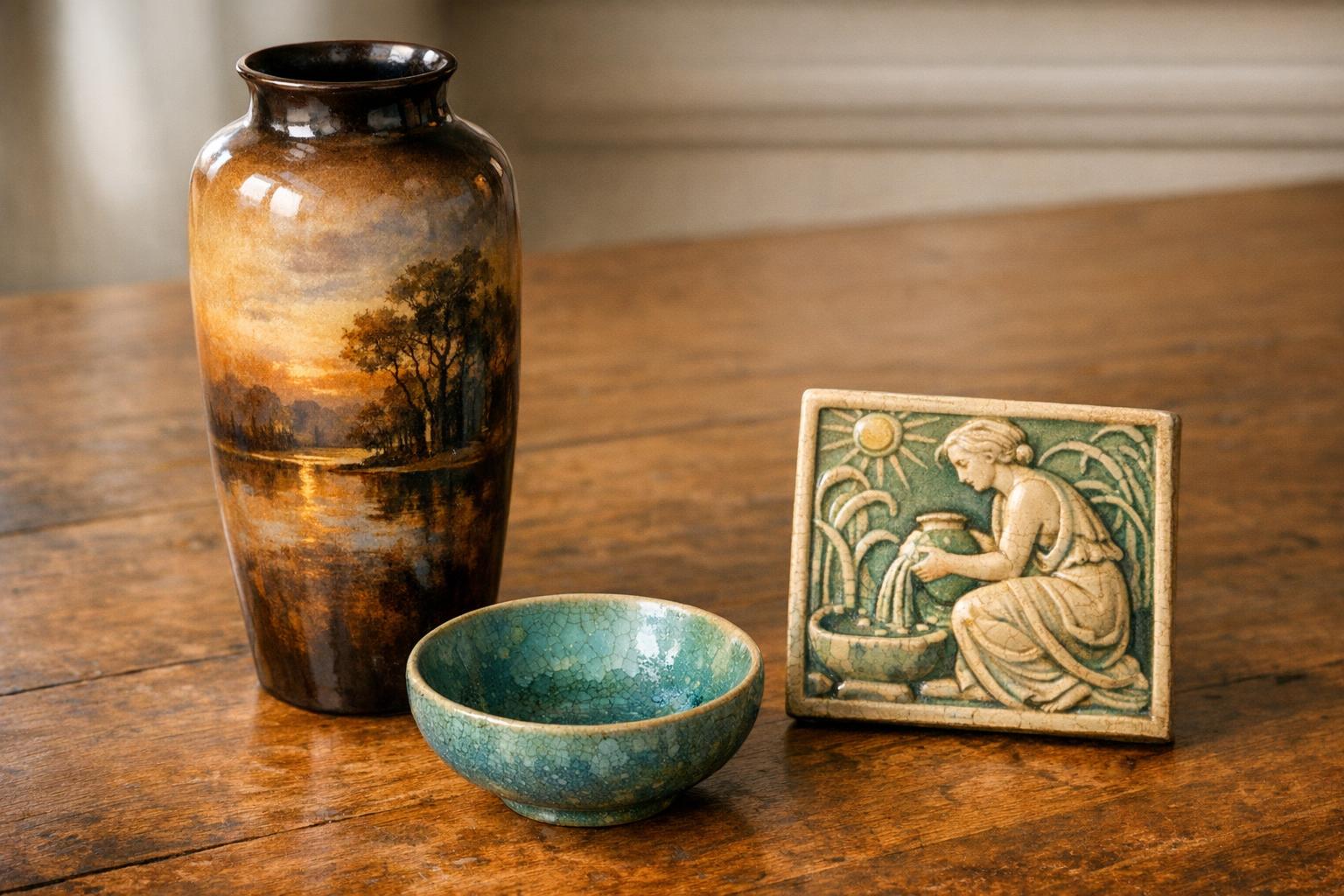
The original and longest-running Rookwood glaze. Standard pieces feature a high-gloss surface with thick, rich glaze that drips and pools over relief-molded decoration. Color palettes lean toward warm earth tones — ambers, browns, deep blues, and greens — often applied in layered, scenic landscapes. The dripping is not a flaw; it is an intentional aesthetic that gives Standard glaze its signature depth and movement.
Iris Glaze (1894–1918)
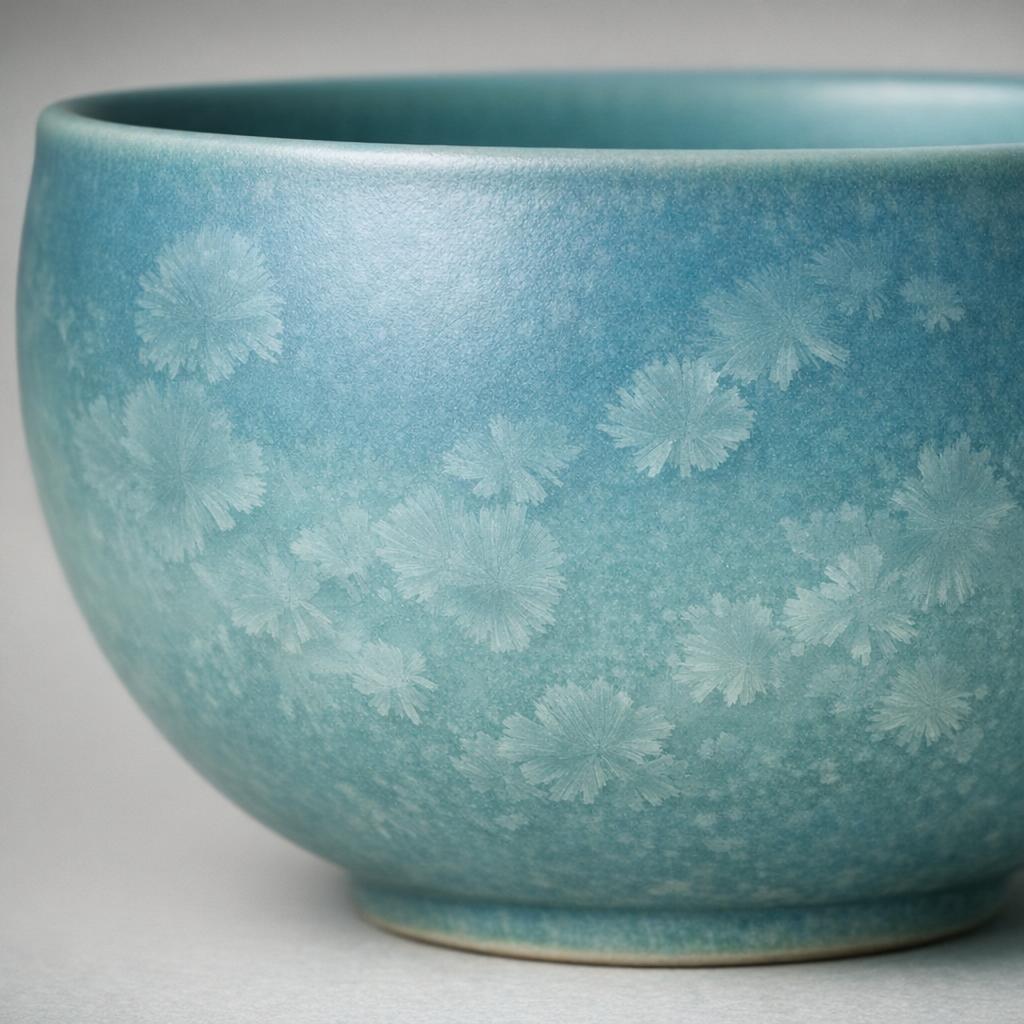
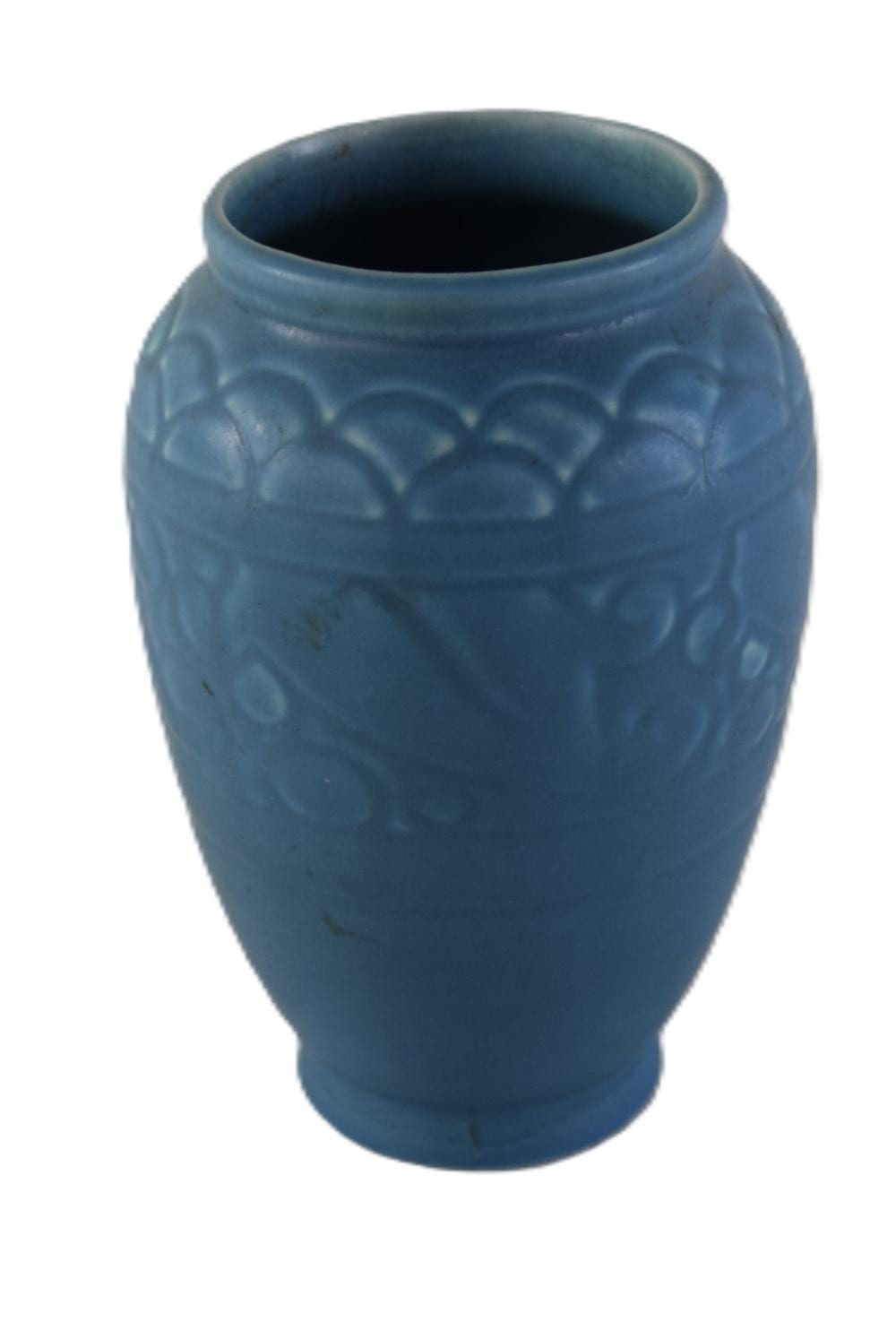
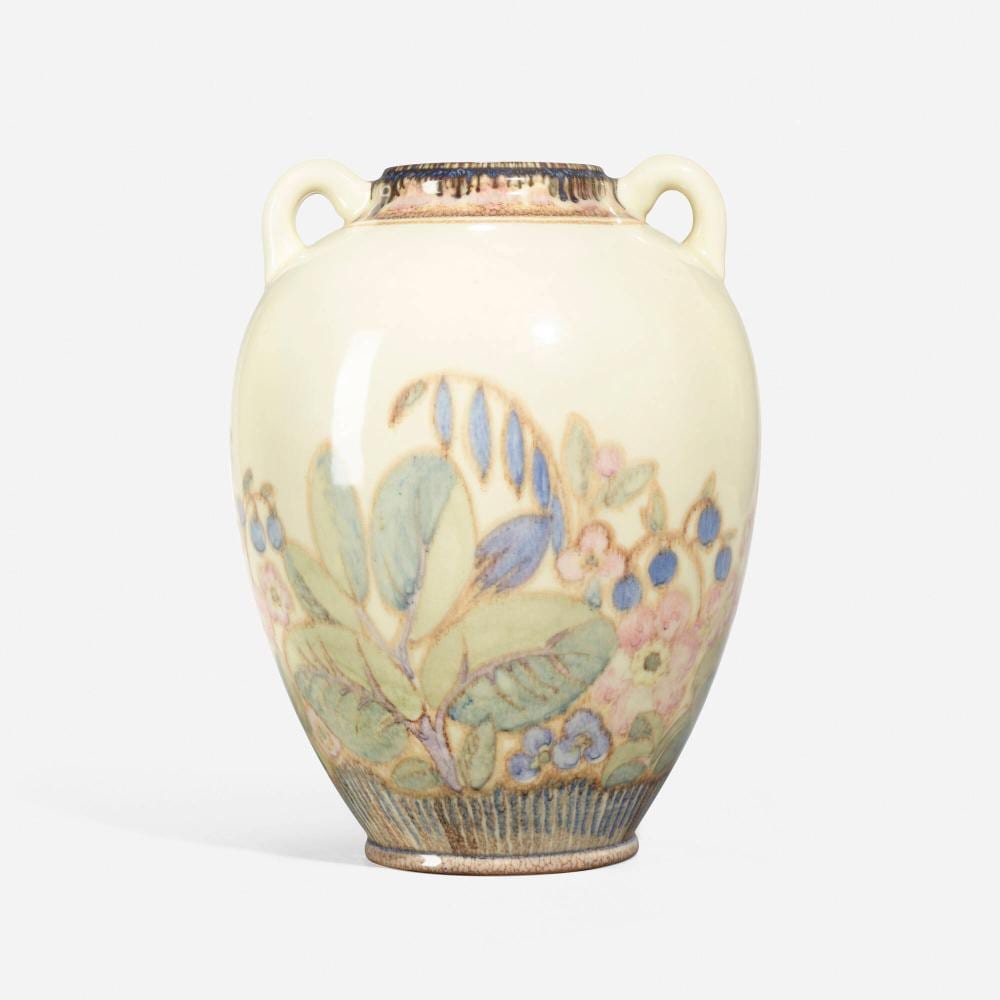
A matte, crystalline glaze developed by Rookwood's chemists in the 1890s. Iris pieces display distinctive blue-green tones with visible crystal patterns on the surface — a result of zinc crystallization during cooling. The matte finish contrasts sharply with the glossy Standard glaze. Iris pieces are highly collectible because production was limited to roughly 24 years.
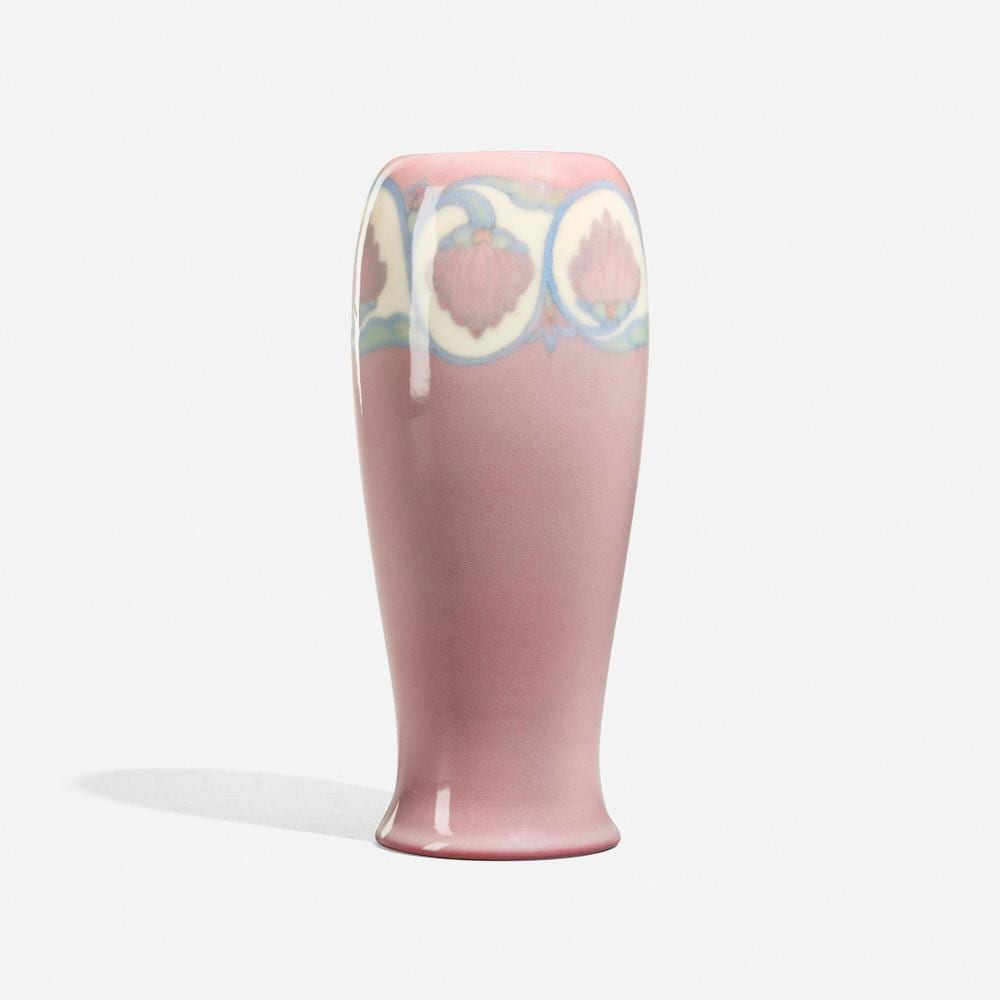
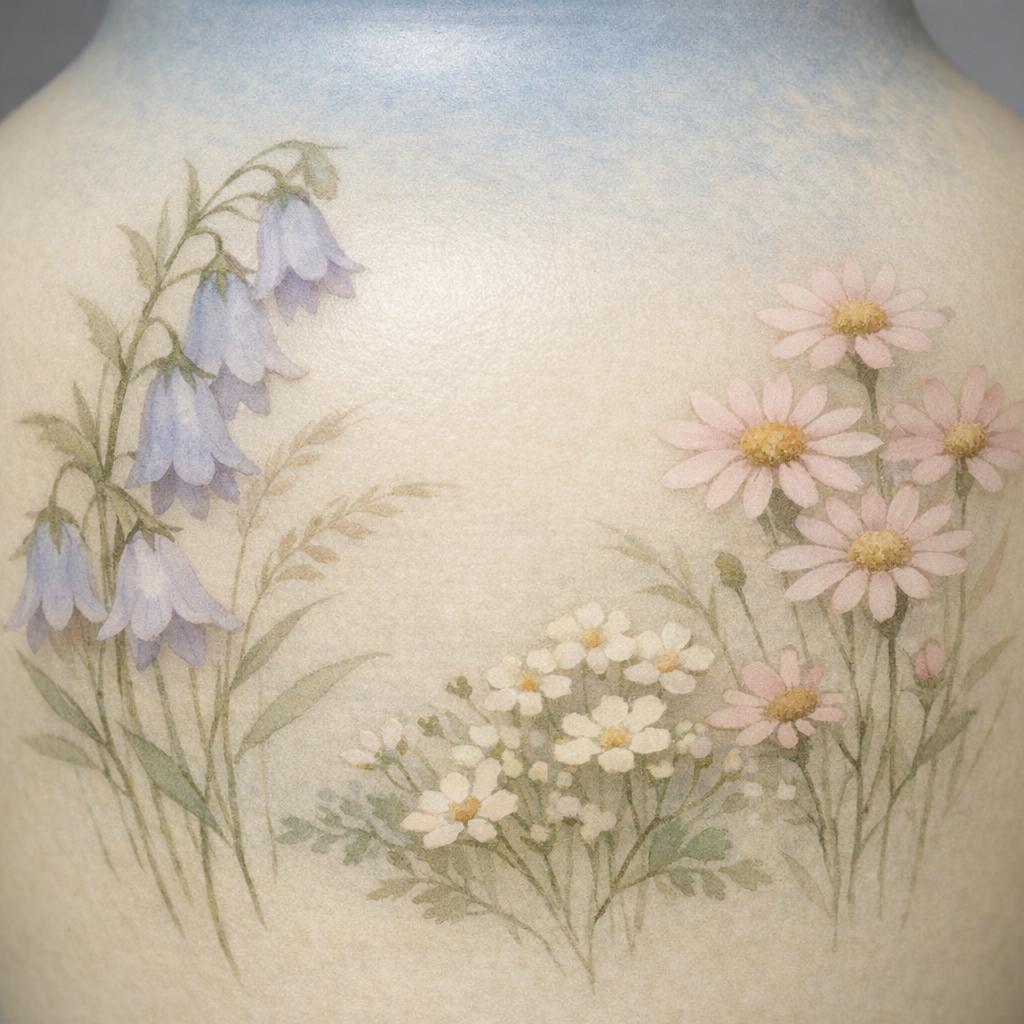
Vellum Glaze (1904–1960s)
Faience Glaze (1900–1935)
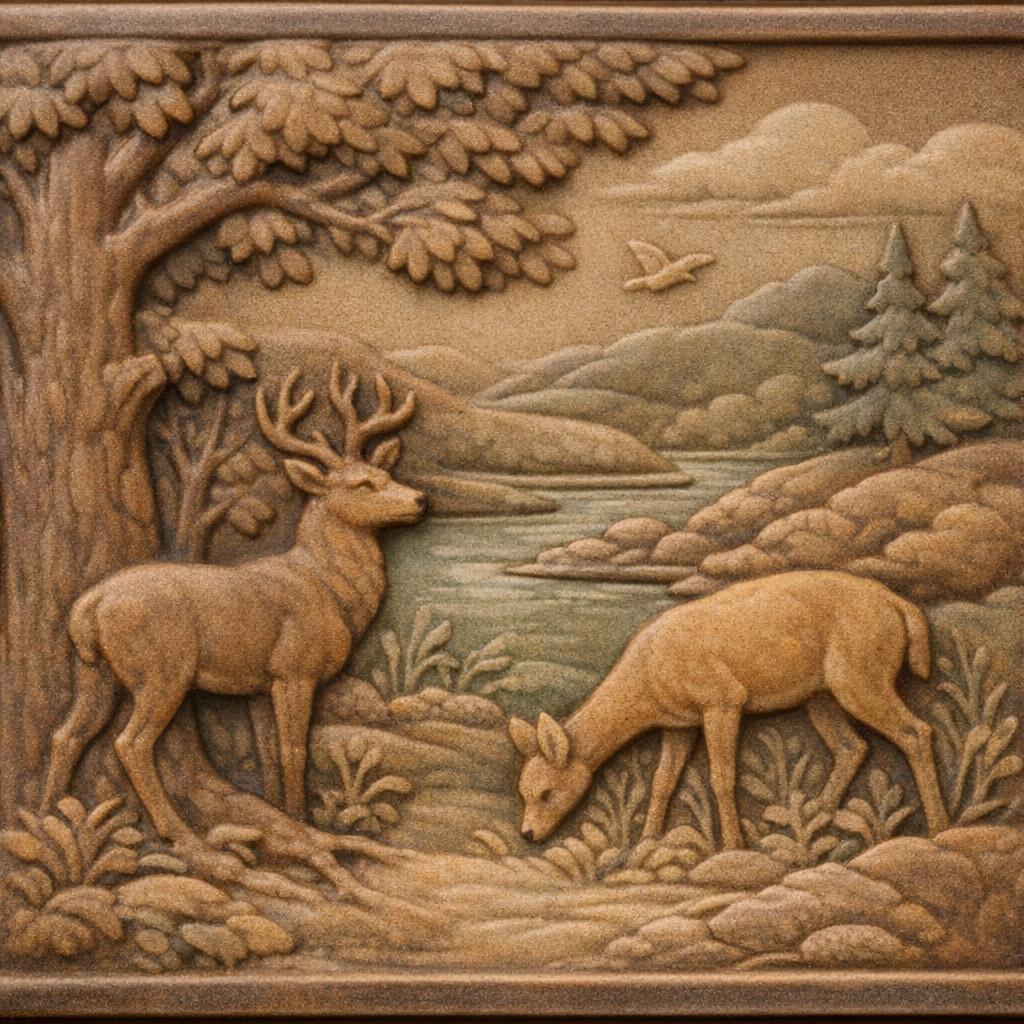
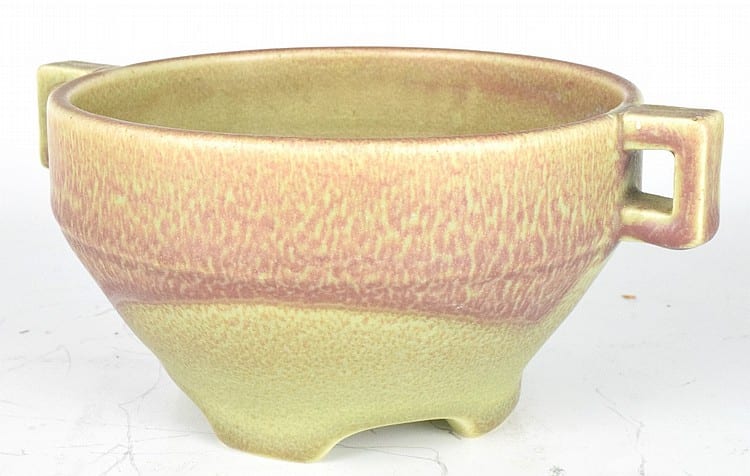
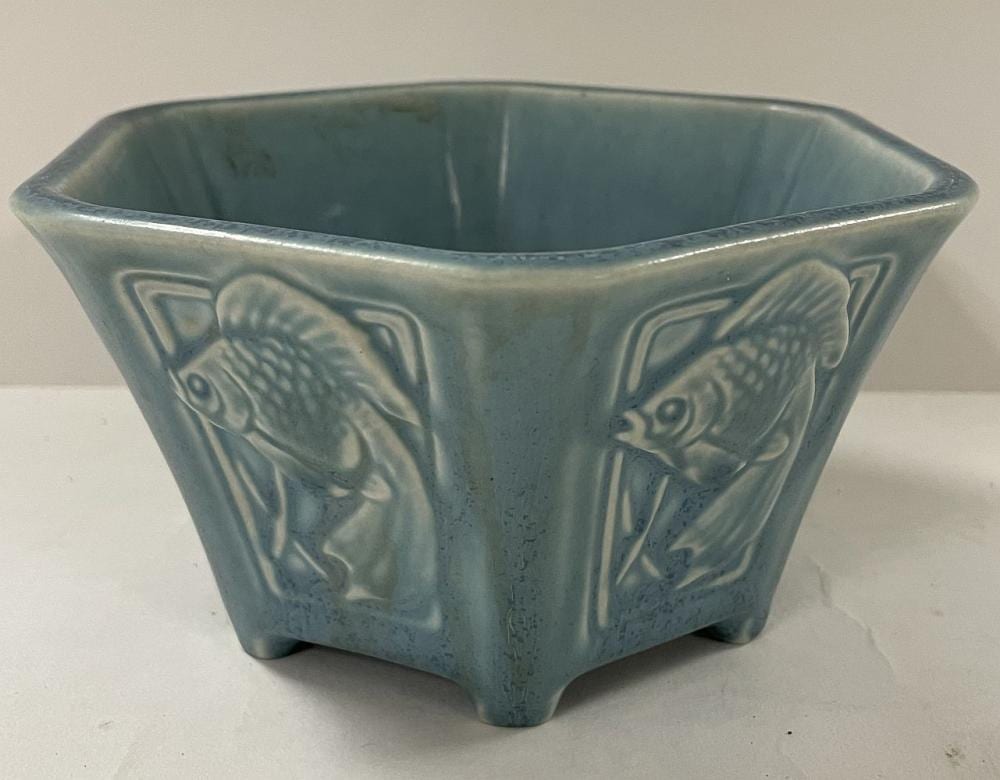
Opaque, matte surface with sculpted relief decoration — Faience pieces often depict landscapes, wildlife, or architectural scenes in bas-relief. The glaze subdues color in favor of texture and form, creating a sculptural quality. Faience tiles and plaques are particularly sought after by decorators and collectors.
Other notable glaze lines:
- Cameo (1925–1935): Carved through multiple layers of colored slip to create cameo-like relief. Rare and highly collectible.
- Sea Green (1900s–1930s): Pale, translucent green glaze with a soft, watery appearance. Often paired with aquatic motifs.
- Tiger Eye (1900–1910): Metallic, iridescent glaze inspired by Chinese sang de boeuf. Extremely rare — only about 1,000 pieces were produced.
Step 5: Check the shape number & size letter
Below the RP mark and date code, you will often find a shape number — a mold or catalog number that Rookwood used to track each distinct form. Some pieces also carry a size letter (A through F), where "A" denotes the largest pieces and "F" the smallest.
How to use the shape number:
- Cross-reference the number with the Rookwood Database to identify the exact form name, decorator, and production year.
- If the number matches a documented Rookwood shape, you have strong confirmation of authenticity.
- If no shape number is present, the piece may still be genuine — not all pieces were numbered, especially early production and special commissions.
The shape number is your bridge from identification to research. Once you have it, you can determine the original decorator, the glaze line, and whether your piece appears in any published catalogs or auction records.
Spotting reproductions & fakes
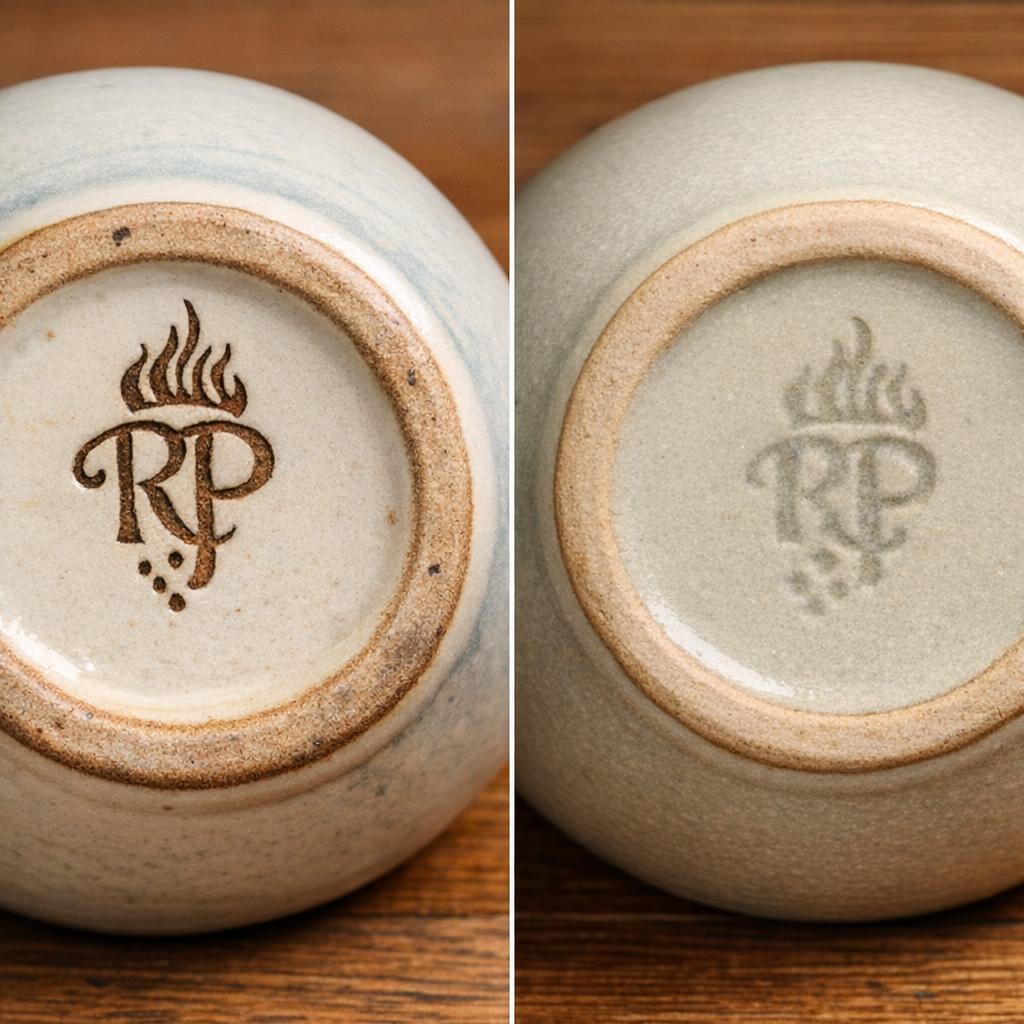
The market for Rookwood reproductions has grown alongside the brand's reputation. Here is how to protect yourself:
| Feature | Authentic Rookwood | Common Reproduction |
|---|---|---|
| RP mark | Hand-incised, crisp edges, slight irregularities | Machine-stamped, uniform depth, blurry edges |
| Flame marks | Consistent with the dating system (correct count for year) | Wrong number of flames, or flames added to a post-1900 piece |
| Glaze dripping | Natural, organic flow; varies from piece to piece | Too uniform or absent; sprayed-on appearance |
| Artist cipher | Matches a known decorator's documented cipher | Generic symbol not found in any reference |
| Clay body | Red or buff earthenware, typical of Cincinnati production | White or light-colored stoneware inconsistent with Rookwood |
| Weight & feel | Substantial, thick-walled, hand-finished | Lightweight, thin walls, machine-turned |
If you find a piece that ticks too many reproduction boxes, walk away or consult a specialist before buying. The Nicholson & Thomas reference book includes an excellent chapter on fakes and reproductions with photographic comparisons — worth owning if you collect Rookwood seriously.
What your identification means for value
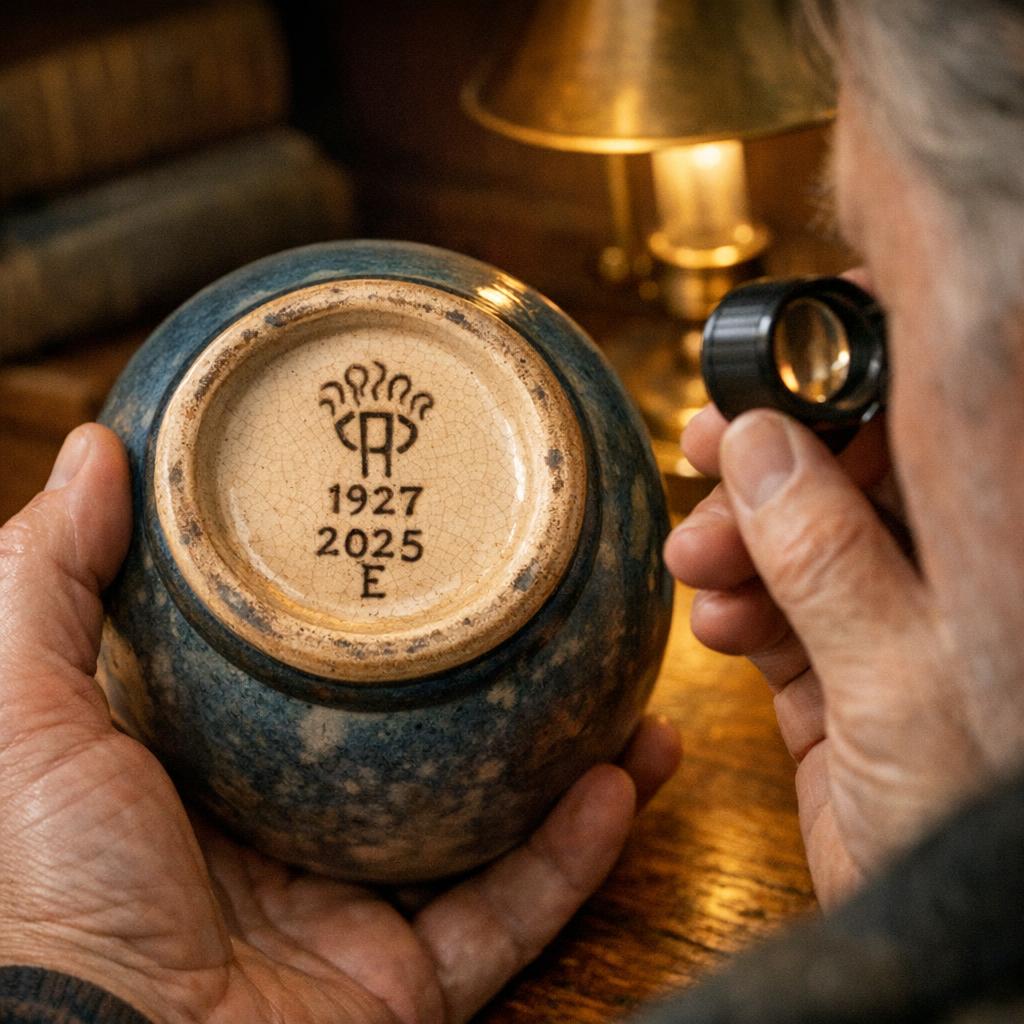
Identifying your piece correctly is the single most important step toward understanding its market value. Here is what the identification elements mean in dollar terms, based on recent auction results:
Condition matters enormously. Hairline cracks, glaze chips, and restoration work can reduce a piece's value by 50% or more. Conversely, a piece in mint condition with original box or provenance documentation can exceed typical auction ranges significantly.
When to get a professional appraisal
The checklist above will get you from mystery to confident identification. But there are moments when a professional, USPAP-compliant appraisal is the right next step:
- Estate settlement or probate: Courts and beneficiaries expect documented fair market value, not a guess based on eBay sold listings.
- Consignment or private sale: A professional appraisal gives you a realistic reserve price and negotiation floor. Without it, you risk underpricing a Shirayamadani vase by an order of magnitude.
- The identification is still unclear: If the mark is worn, the glaze is unusual, or you suspect the piece might be pre-1882 trial ware, a specialist's trained eye is worth the fee. Send photos and let an expert weigh in.
Start your appraisal — share your photos, provenance notes, and questions with a specialist. You will receive a written quote and next steps in under 24 hours.
Your at-a-glance identification checklist