Pressed Glass vs Cut Glass: Identification and Value Clues
Compare pressed glass and cut glass by documenting mold seams, sharpness, weight, ring, pattern detail, polishing marks, condition, maker clues, and provenance.

5 at-home tests to tell pressed glass from cut glass
You do not need a lab to separate pressed from cut glass. Follow this sequence — each test takes less than a minute — and the answer will become clear.
Test 1: Look for mold-seam lines
Hold the piece at eye level under bright, raking light (a desk lamp angled across the surface). Pressed glass often reveals faint vertical or horizontal seam lines where the mold halves met. These are most visible on the base, the foot, or the sides of bowls and compotes. Cut glass has no seams because the piece starts as a solid blank and is ground down.
Test 2: Check pattern sharpness under magnification
Use a 10× loupe or your phone's macro camera. Pressed-glass patterns look slightly rounded or "melted" at the edges because the molten glass cooled inside a mold. Cut-glass facets are crisp and geometric — each cut was ground individually on a rotating wheel. If the pattern looks like it was stamped rather than carved, you are likely looking at pressed glass.
Test 3: The ring test
Gently tap the rim with your fingernail or a wooden chopstick. Cut glass produces a long, clear, bell-like ring because of its thick lead-crystal composition and hand-polished surface. Pressed glass gives a shorter, duller "clink." This test works best on bowls, goblets, and vases — not on flat plates or already-damaged pieces.
Test 4: Compare weight
Pick up the piece and gauge the heft. Cut glass uses a thick blank (often lead crystal with 24–36% lead oxide) and loses material during grinding, but starts heavy. Pressed glass flows into thin-walled molds and is noticeably lighter. A cut-glass decanter will feel substantially denser than a pressed-glass equivalent of the same size.
Test 5: Check for pattern repetition
If you have two matching pieces (goblets from the same set, for example), compare them side by side. Pressed-glass pieces from the same mold are virtually identical. Cut-glass pieces show slight variations — no two hand-ground facets line up perfectly. This test is especially useful for stemware sets.
What actually drives value in glass collectibles
Knowing which type of glass you have is step one. The real price depends on five factors that auction houses and dealers evaluate every day.
1. Maker and pattern name
For cut glass, names like Hawkes, Sinclaire, and J. Hoare carry significant premiums. A signed Hawkes "Russian" pattern punch bowl can exceed $15,000 at auction. For pressed glass, Northwood carnival glass, early Sanctuary Glass Sandwich pieces, and rare patterns like "Dragon & Opposing Thistles" or "Peacock at the Fountain" routinely outperform common EAPG by 10–100×.
2. Condition
Chips, cracks, and flea-bite damage depress value dramatically. A cut-glass vase with a rim chip can lose 40–60% of its market value. For pressed glass, condition matters even more because the collector base is narrower — buyers want pristine examples. Look for "mint" or "near-mint" grading in any listing.
3. Material composition
Cut glass is almost always lead crystal (24–36% lead oxide), which gives it the signature ring, weight, and brilliance. Pressed glass ranges from flint glass (higher quality, lead-bearing) to soda-lime (common, less valuable). Colored pressed glass — especially carnival glass with iridescent finishes — commands a separate and often premium market.
4. Rarity and production era
American Brilliant Period cut glass (roughly 1876–1917) is the most sought-after era. Pieces made after 1917, when import duties and labor costs changed the industry, carry lower premiums. For pressed glass, the 1850–1910 window covers the most collectible EAPG patterns. Later reproductions (1920s onward) are worth a fraction of the originals.
5. Provenance and documentation
Original labels, maker marks, exhibition history, or a documented collection pedigree all add value. A cut-glass piece with a paper label from a known retailer (e.g., Tiffany & Co. or Gorham) can double its hammer price. For pressed glass, catalog references (e.g., Metz, Heacock, or Bill Edwards pattern guides) serve as the provenance anchor.
When pressed glass surprises: the exceptions that close the value gap
The rule of thumb — "cut glass is worth more" — holds 90% of the time. But collectors who know their EAPG catalogues have watched rare pressed-glass pieces outperform modest cut-glass items by a wide margin.
Market note: A Northwood "Black Amethyst Sunflower" compote in excellent amberina sold for over $10,000 at a 2024 specialty glass auction — more than many unsigned ABP cut-glass bowls that same season.
Key exceptions to watch for:
- Carnival glass with rare patterns — Northwood, Imperial, and Fenton iridescent pieces with documented patterns can reach $1,000–$10,000+.
- Early Sandwich glass (New England Glass Company / Boston & Sandwich, pre-1880) — historical significance drives premiums.
- Colored pressed glass in excellent condition — clear/flint glass is common; amberina, cobalt, or green examples are scarcer.
- Documented maker marks — any pressed piece bearing a verified maker stamp or pattern name that matches a standard reference jumps in value.
- Unusual forms — compotes, celery vases, and toothpick holders in rare patterns outperform common plates and tumblers.
What similar items actually sold for
To help ground this guide in real market activity, here are recent example auction comps from Appraisily’s internal database. These are educational comparables (not a guarantee of price for your specific item).
Shown USD range: USD 292-USD 475. Median of these 6 USD examples: USD 343.
| Image | Description | Auction house | Date | Lot | Reported price realized |
|---|---|---|---|---|---|
 |
LG LOT CUT PRESSED VINTAGE ANTIQUE GLASS | Kamelot Auctions | 2010-02-20 | 722 | USD 475 |
 |
English and American Cut and Pressed Glass | St Charles Gallery | 2010-01-24 | 1252 | USD 360 |
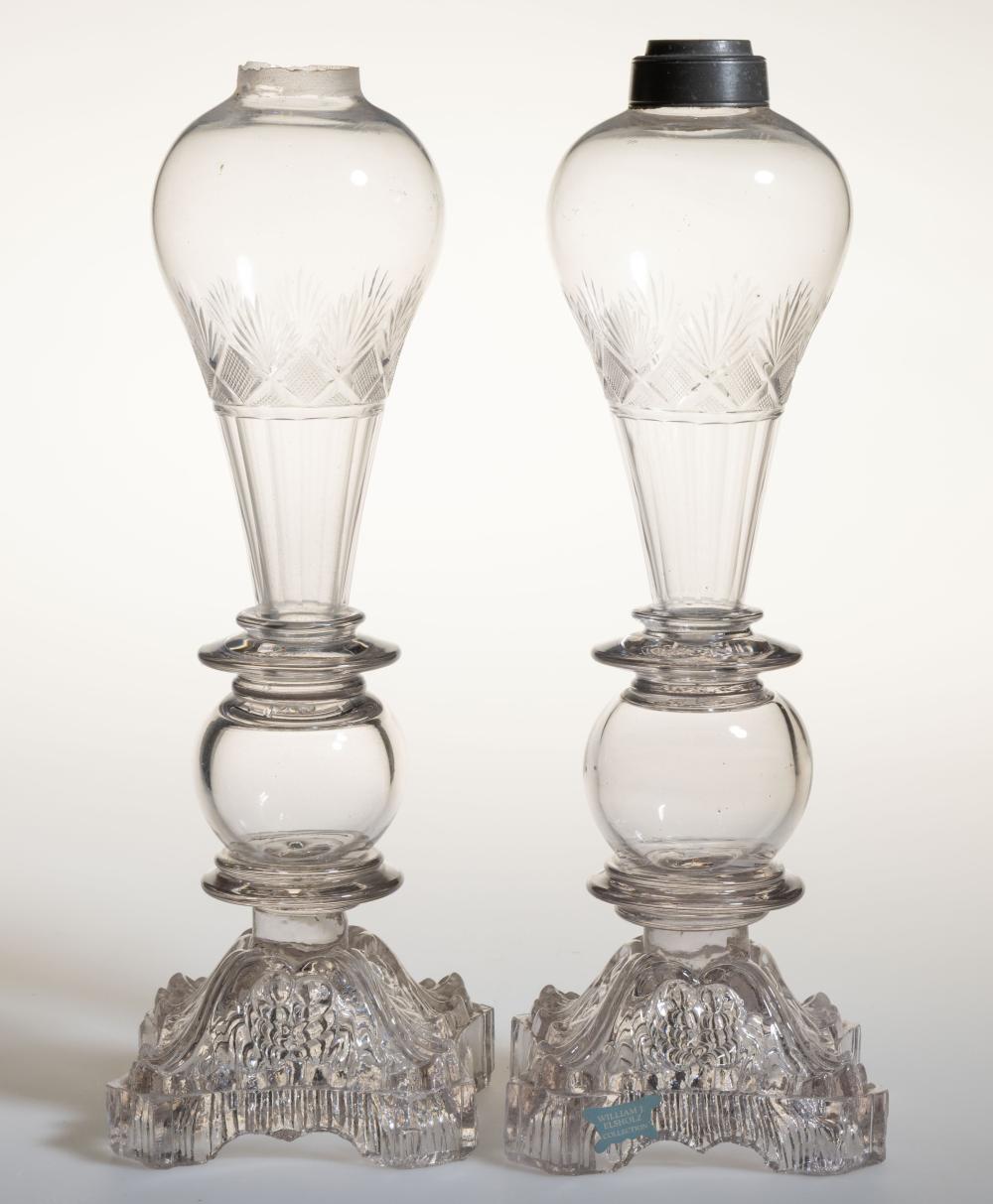 |
FREE-BLOWN, CUT, AND PRESSED GLASS WHALE OIL / FLUID PAIR OF STAND LAMPS | Jeffrey S. Evans & Associates | 2025-06-26 | 296 | USD 312 |
 |
FREE-BLOWN, CUT, AND PRESSED GLASS PAIR OF WHALE OIL / FLUID STAND LAMPS | Jeffrey S. Evans & Associates | 2025-06-26 | 305 | USD 335 |
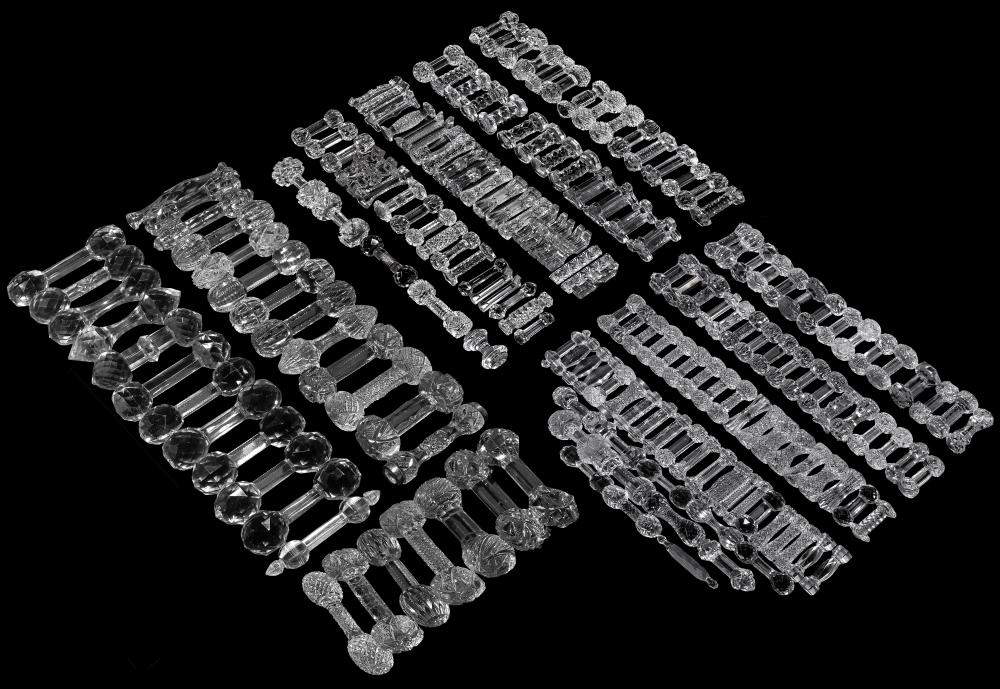 |
Cut and Pressed Glass Knife Rest Assortment | Leonard Auction | 2023-02-19 | 310 | USD 350 |
 |
SEVEN BRILLIANT CUT, CUT AND PRESSED GLASS TABLE ARTI | Frank Boos | 2005-06-16 | 371 | USD 292 |
Disclosure: prices are shown as reported by auction houses and are provided for appraisal context. Learn more in our editorial policy.
Expert review
Not sure whether your piece is pressed or cut glass? Send it to a specialist
Share photos, pattern notes, and any maker marks. We route your submission to the right glass specialist and return a written assessment with next steps — usually within 24 hours.
Secure intake. Routed to the right specialist. Checkout only if you decide to proceed.
Current market context (2025–2026)
The glass market remains active across both categories. American Glass Gallery continues to run dedicated EAPG sales several times per year, with rare patterns consistently meeting or exceeding estimates. LiveAuctioneers and Invaluable list hundreds of cut and pressed glass lots monthly, confirming sustained demand.
For cut glass, the ABP segment (1876–1917) remains the strongest. Signed pieces from Hawkes, Sinclaire, and J. Hoare regularly achieve four-figure results at major houses. Christie's and Sotheby's occasionally feature masterwork cut-glass lots that cross the $20,000–$50,000 threshold.
For pressed glass, the carnival-glass niche continues to produce surprises. A documented Northwood or Imperial piece in excellent condition with original iridescence can outperform a generic cut-glass bowl from the 1920s by a wide margin. The key differentiator is pattern identification — collectors who can name the pattern and cite a reference source have a decisive advantage.
Get a professional glass appraisal
Whether you inherited a cut-glass centerpiece or found a pressed-glass compote at an estate sale, a specialist can confirm the maker, pattern, and fair market value in writing — often within 24 hours.
- Written appraisal report for insurance, sale, or donation
- Maker and pattern identification from photos
- Current market value based on recent auction comps
From $59 · 24-hour turnaround · Secure & confidential
Search variations collectors ask
Readers often Google these questions — each one is answered in the guide above:
- How to tell pressed glass from cut glass? — Check for mold seams, pattern sharpness, weight, and the ring test.
- Is pressed glass worth anything? — Common pieces trade at $25–$300; rare EAPG patterns can reach $10,000+.
- What is American Brilliant cut glass worth? — Signed ABP pieces range from $1,000 to $100,000+ at auction.
- Does cut glass always cost more than pressed glass? — Nearly always, but rare carnival-glass exceptions exist.
- How to identify Northwood pressed glass? — Look for the N mark, iridescent finishes, and catalog patterns.
- What affects the value of antique glass? — Maker, pattern, condition, material, era, and provenance.
- Where to sell cut glass for the best price? — Specialty glass auctions, reputable dealers, and consignment houses.
- Can pressed glass be worth more than cut glass? — Rarely, but documented Northwood or Sandwich pieces can exceed generic cut glass.
Each question is answered in the valuation guide above.
Choose your next step
Use the path that matches the decision you need to make about the item.
Not sure it is worth appraising?
Start with a lower-friction screen to understand the likely category, evidence, and next step.
Upload photos for a free first lookWant proof before paying?
See how a signed report documents photos, comparable evidence, condition notes, and value conclusions.
View signed report sampleNeed a signed report?
Use this for insurance, estate, donation, resale, or documented value decisions.
Need documentation now? Start signed appraisalNeed local or specialist help?
Compare directory options when the work needs in-person review or a specialist near you.
Find local specialistsSee what the report looks like
Sample reports show how photos, comparable evidence, condition notes, and a value conclusion are documented.