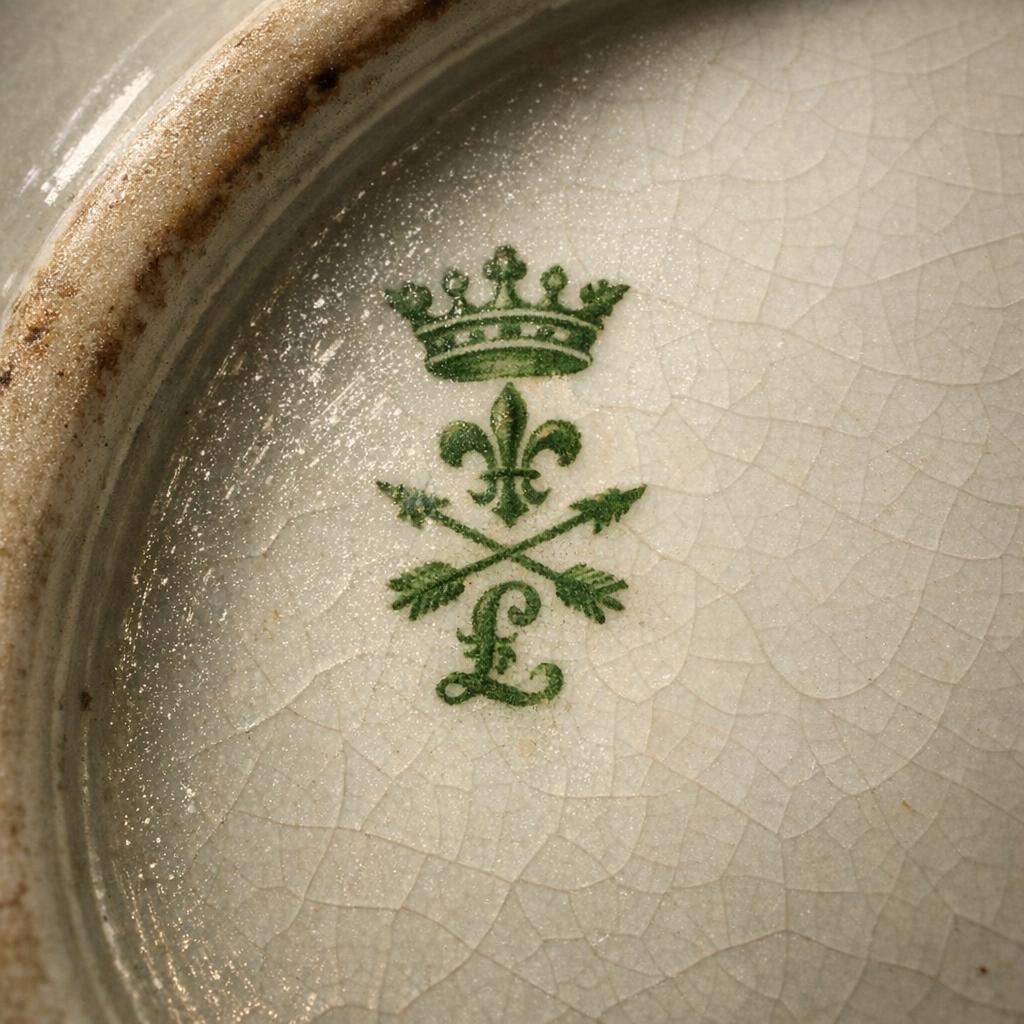
Limoges mark identification basics
Start by separating the green underglaze factory mark from overglaze decorator, importer, or retailer marks. Then compare the porcelain body, decoration quality, gilding, condition, and known date ranges before treating a mark as meaningful.
Why Limoges marks confuse so many collectors
Most people expect one simple “maker’s mark” on Limoges porcelain. In practice, you often get a layered trail: a factory blank mark, a decorator’s mark, and sometimes an exporter or retailer stamp. When those marks are read out of order, pieces get misidentified, overvalued, or dismissed too quickly.
This guide gives you a practical field workflow. You will learn what “Limoges” actually indicates, how to distinguish blank producers from decorating studios, and which country-of-origin clues help with dating. If you still feel uncertain after the checklist, the safest next move is to send full photos for a marks-first review before listing, buying, or insuring the piece.
Comparable sales (examples)
Recent public auction results show how strongly attribution quality changes realized prices. In this set, lots with complete mark context and desirable decoration generally outperform pieces sold with vague “Limoges” descriptions only.
| Thumbnail | House | Date | Lot | Realized | Title / attribution notes | Source |
|---|---|---|---|---|---|---|
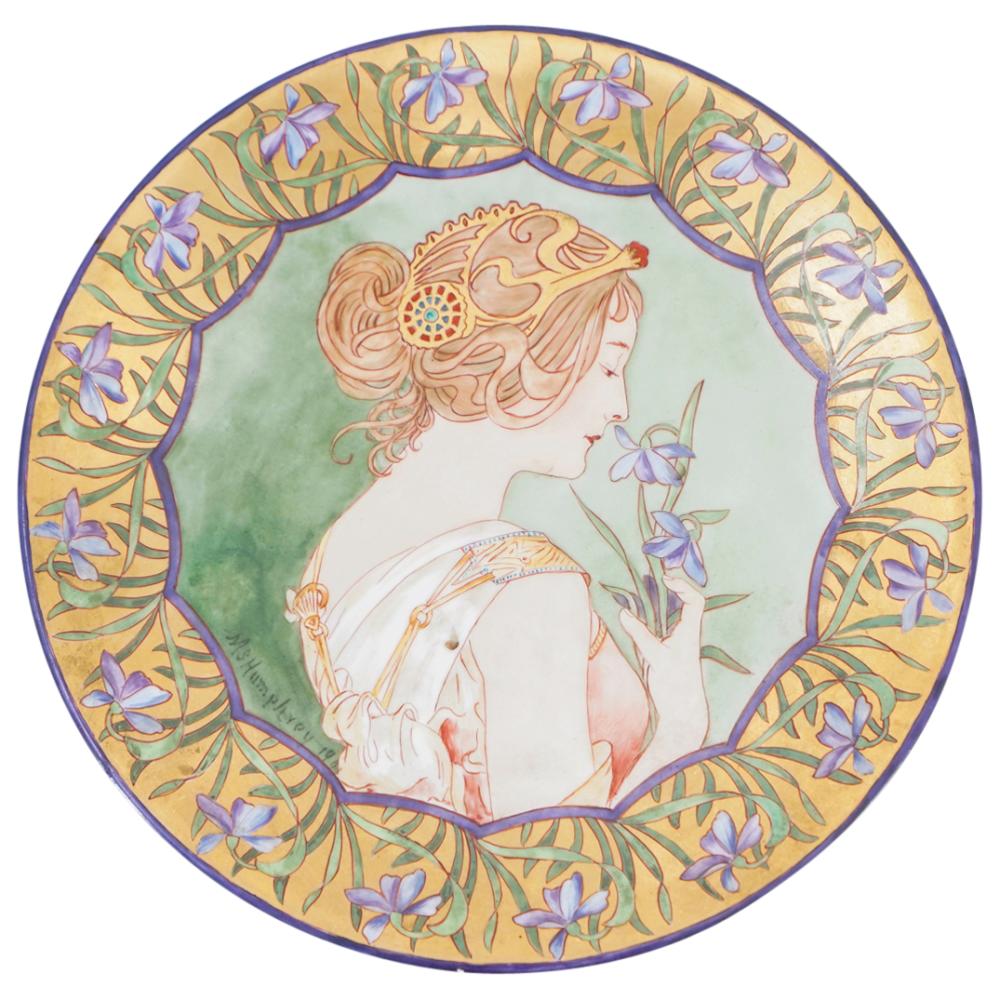 |
Akiba Galleries | 2024-12-17 | 482 | USD 275 | Art Nouveau Hand Painted Porcelain Limoges Plate | External lot |
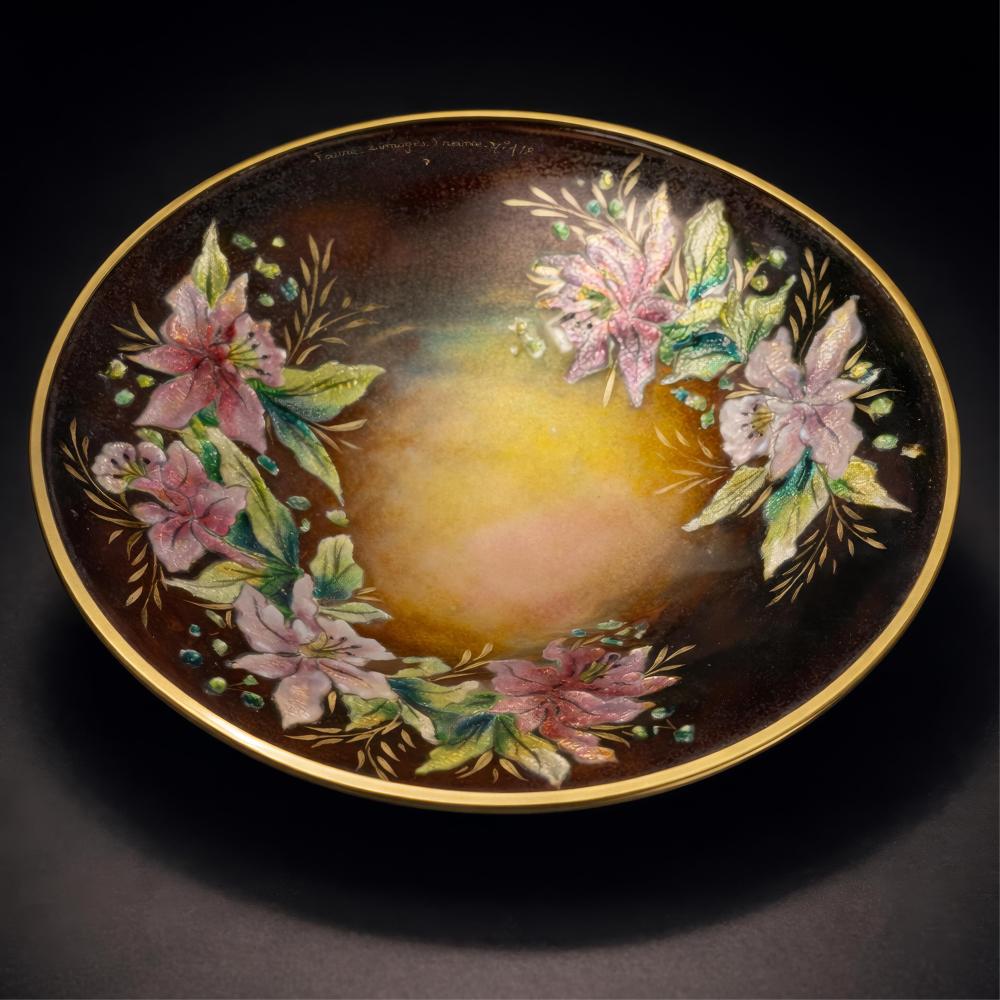 |
Collective Hudson, LLC | 2026-02-15 | 113 | USD 250 | Camille Faure Limoges Hand Painted Enamel on Copper Plate, Signed | External lot |
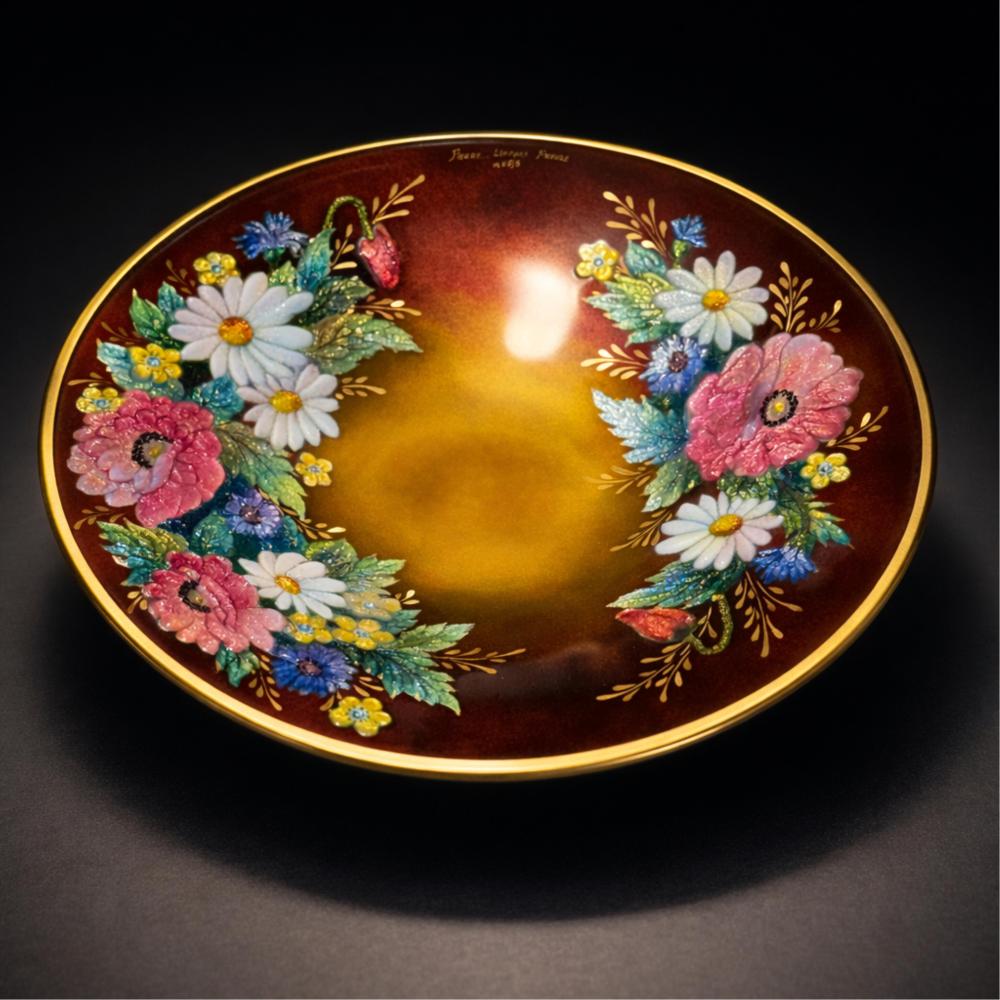 |
Collective Hudson, LLC | 2026-02-15 | 112 | USD 250 | Camille Faure Limoges Hand Painted Enamel on Copper Plate, Signed | External lot |
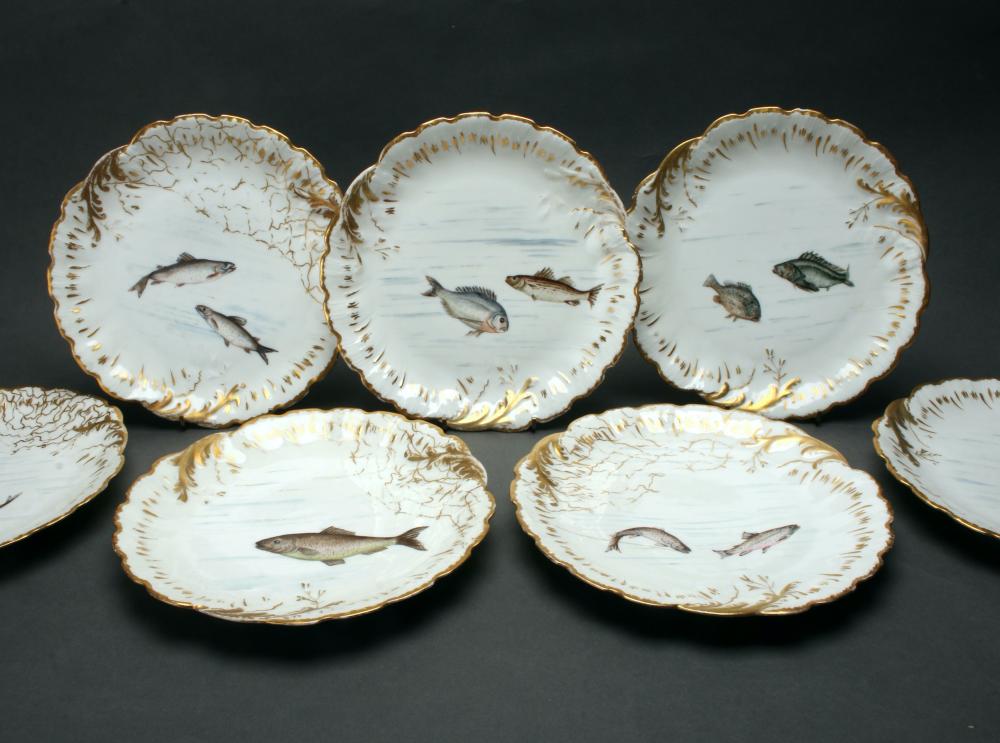 |
Converse Auctions | 2020-03-13 | 264 | USD 475 | M R LIMOGES HAND PAINTED FISH PLATES | External lot |
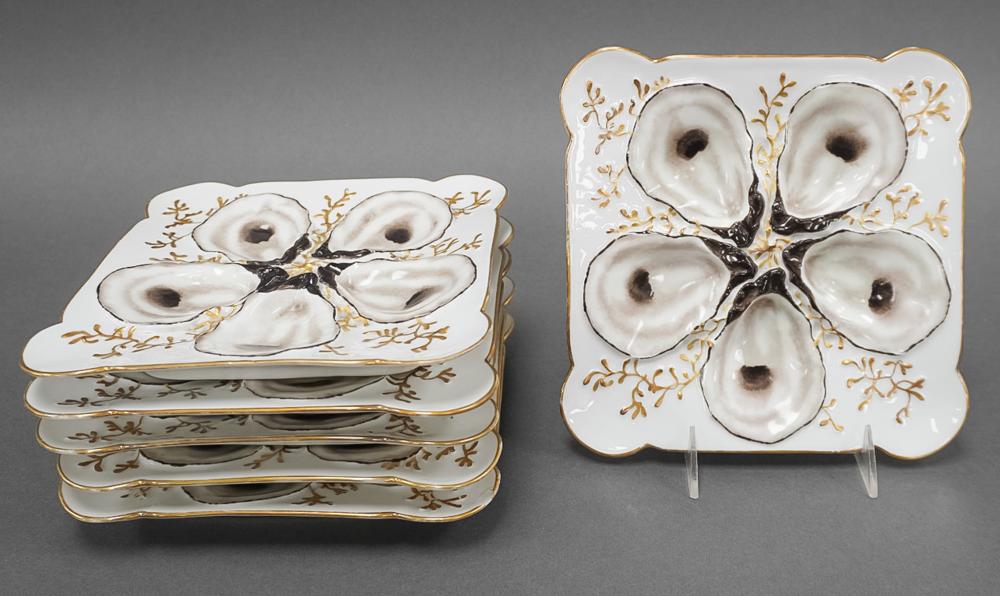 |
Weschler's | 2025-11-11 | 537 | USD 375 | Six Limoges Hand Painted Porcelain Square Oyster Plates, 8 1/4 x 8 1/4 in. (21 x 21 cm.) | Internal dataset |
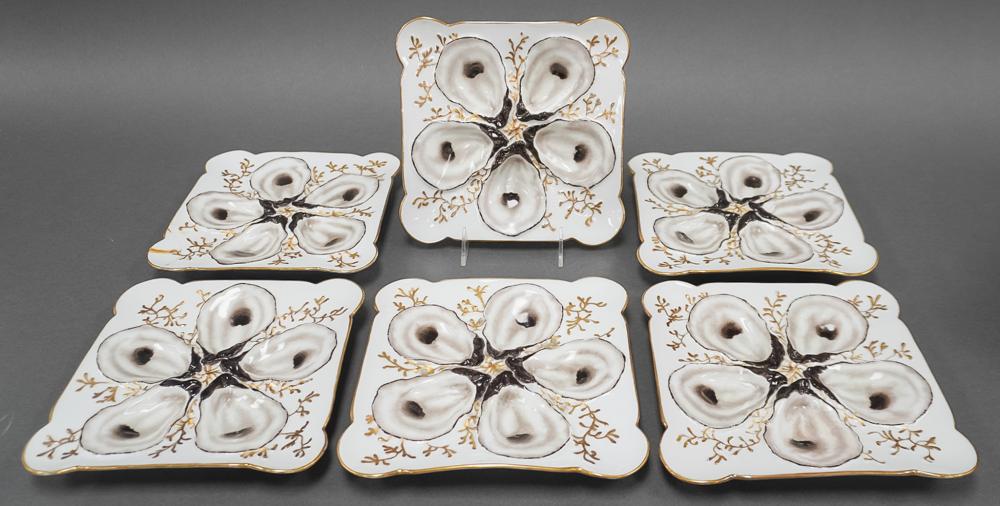 |
Weschler's | 2025-11-11 | 386 | USD 300 | Six Limoges Hand Painted Porcelain Square Oyster Plates, 8 1/4 x 8 1/4 in. (21 x 21 cm.) | Internal dataset |
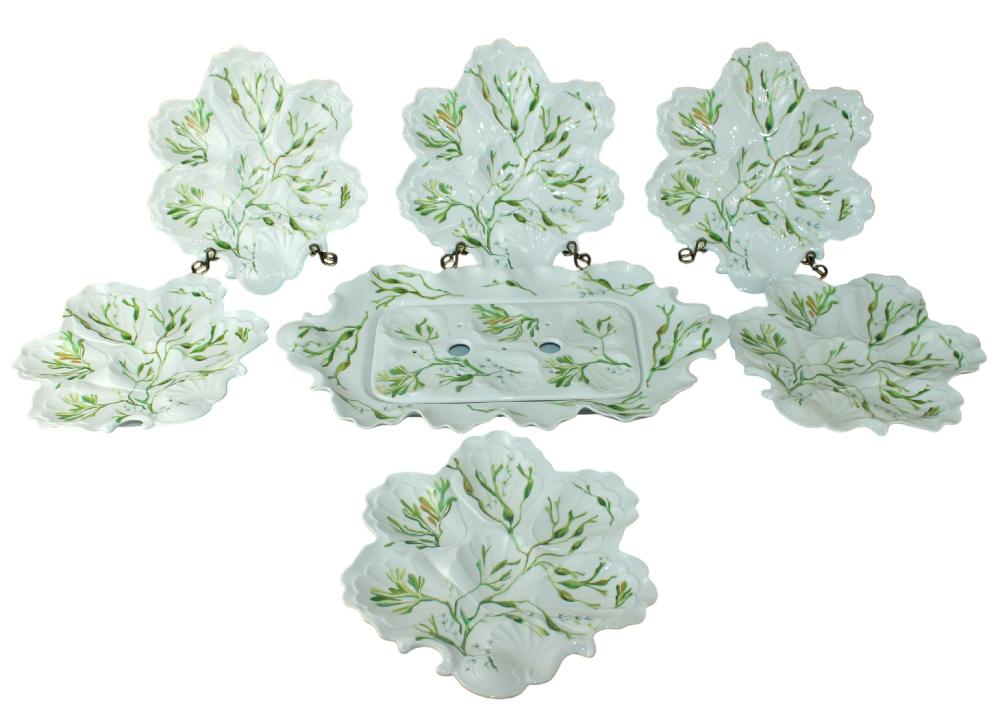 |
King Galleries | 2024-12-07 | 50 | USD 1,000 | Lot of 6 French Limoges hand painted oyster plates with platter | Internal dataset |
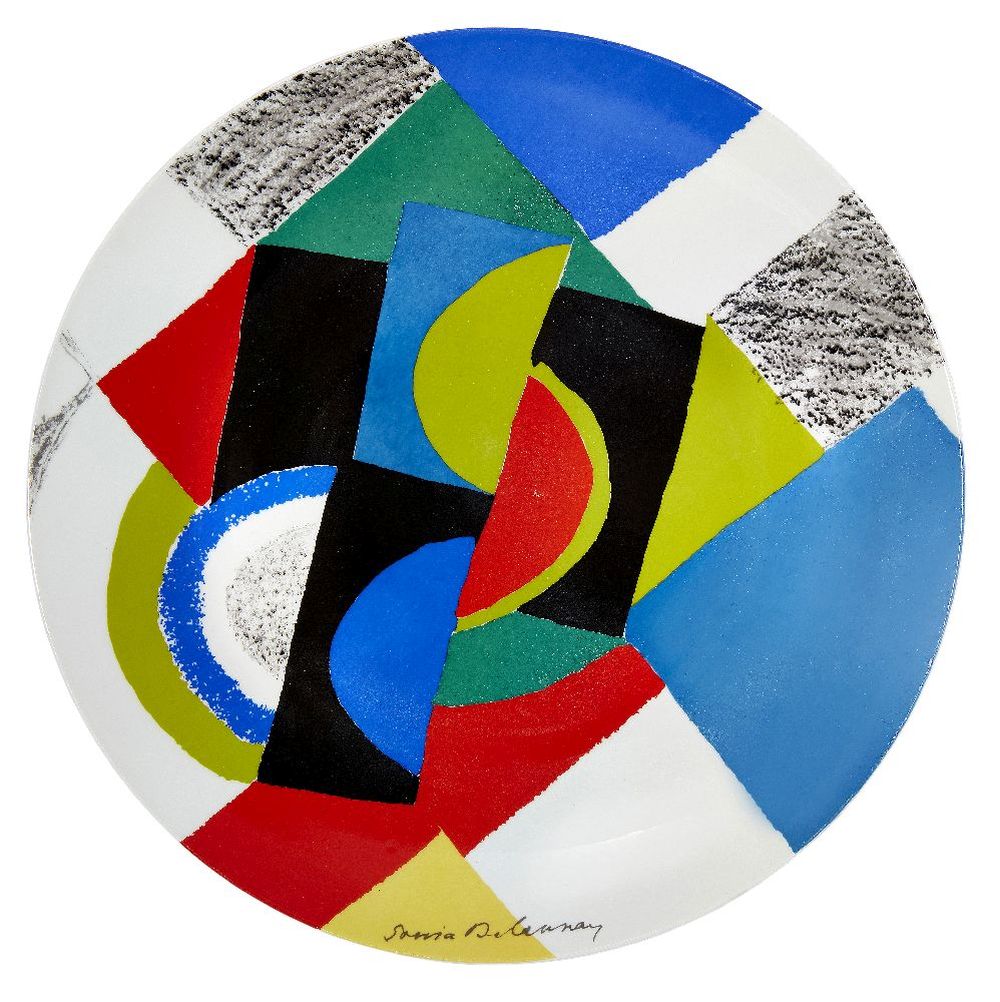 |
Roseberys | 2018-12-04 | 150 | GBP 320 | Sonia Delaunay for Artcurial, a large Limoges charger c.1980, marks to | Internal dataset |
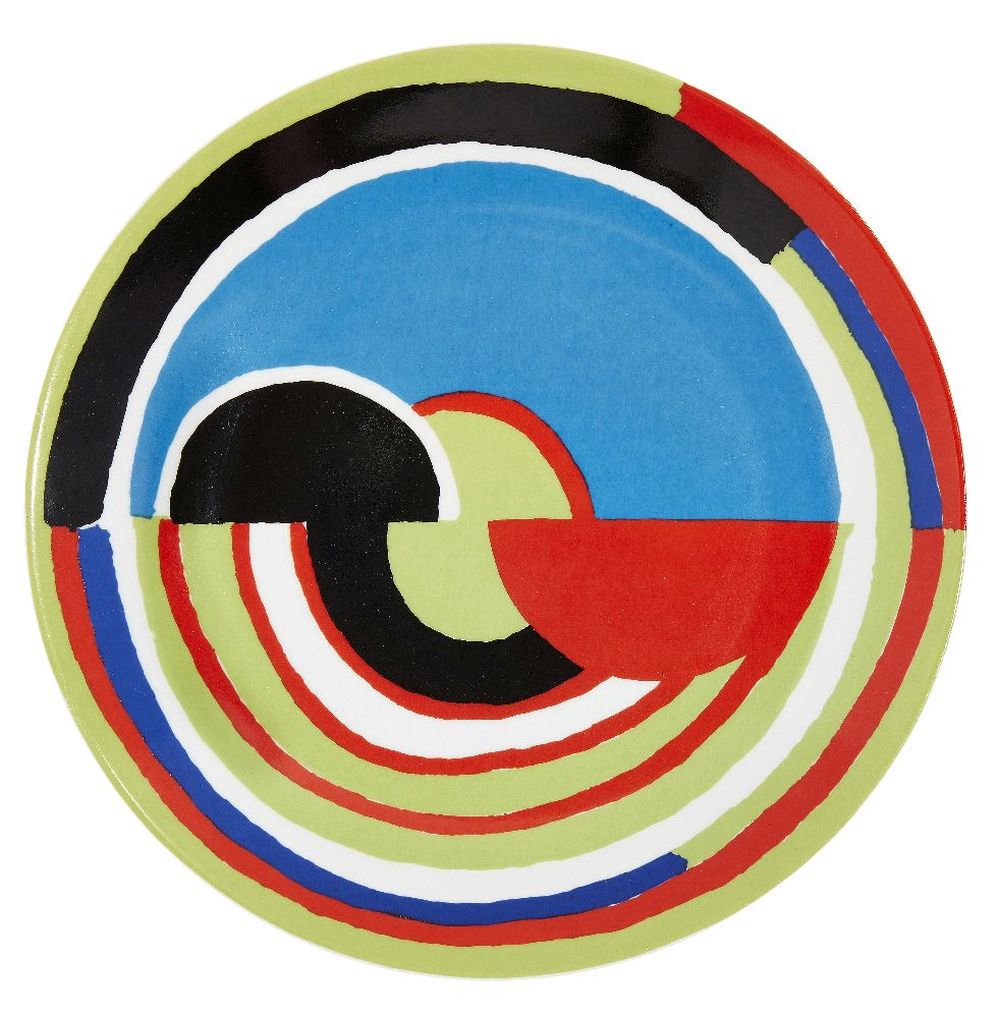 |
Roseberys | 2018-12-04 | 146 | GBP 250 | Sonia Delaunay for Artcurial, a Limoges charger c.1980, marks to base | Internal dataset |
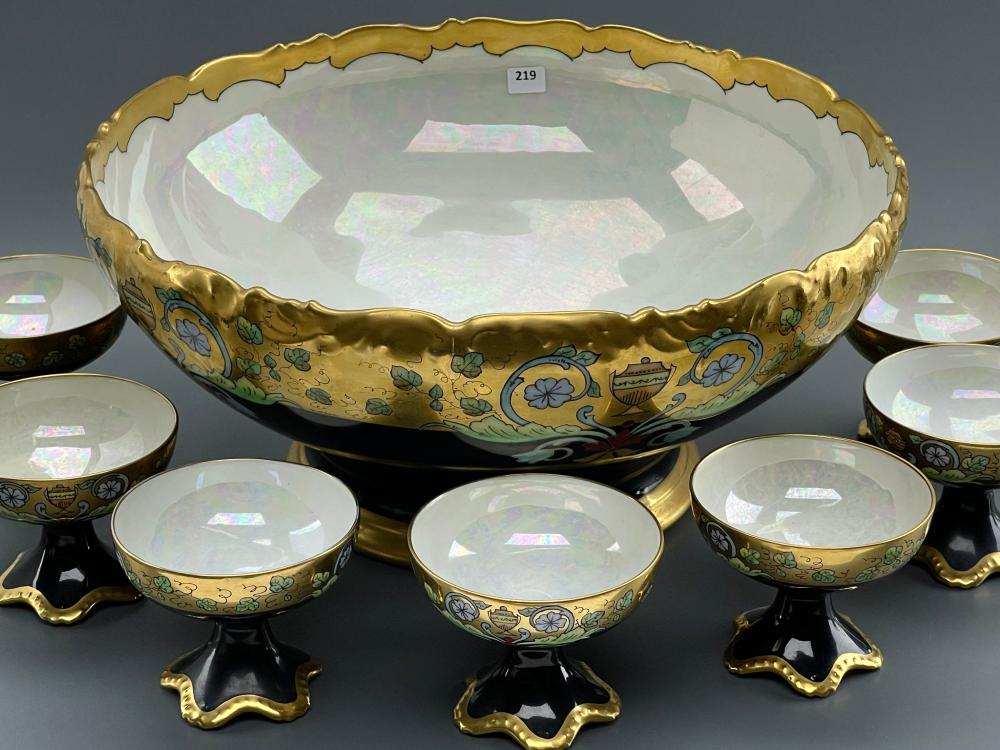 |
Vidi Vici Gallery | 2025-03-27 | 219 | USD 250 | Spectacular Tressemann & Vogt Limoges Art Nouveau Painted Porcelain Punch Bowl 7 Cups Set c 1910 T&V Limoges France Meticulously Hand Painte | External lot |
Three useful calibration points from this same table: King Galleries lot 50 reached USD 1,000 for a grouped oyster-plate set with stronger decorative appeal; Converse Auctions lot 264 realized USD 475 for hand-painted fish plates with clearer category identity; and Akiba Galleries lot 482 realized USD 275 for a single hand-painted plate. In other words, complete attribution and set composition can matter as much as the word “Limoges” itself.
Free first look
Still unsure what your Limoges piece really is?
Send clear base-mark photos plus one full view. We map blank maker vs decorator, flag authenticity risks, and recommend whether a full appraisal is worth doing now.
Secure photo review. Clear next steps. Checkout only if you decide to proceed.
Step-by-step: how to read a Limoges mark correctly
- Photograph the entire underside first. Start wide, then take a macro of each visible mark. A cropped close-up without context is the fastest way to misread mark layering.
- Separate underglaze marks from overglaze marks. Underglaze marks generally sit “inside” the glaze surface. Overglaze decorator marks usually appear on top and can show slight enamel texture.
- Identify the blank producer before the decorator. Limoges value language often starts with who made the porcelain blank. Decorator names and retailers come second.
- Record country wording exactly. “France,” “Made in France,” and bilingual export wording can narrow era windows when paired with style cues.
- Cross-check wear consistency. If the base has honest foot-ring wear but the stamp looks laser-clean and sharp, investigate further.
- Compare against known families, not one isolated logo image. Mark variants evolved by period and export channel, so attribution should use sets of examples.
This process sounds basic, but it prevents the two biggest mistakes we see in appraisal intake: assigning a decorator name as the porcelain maker, and assigning a date solely from one floating “Limoges France” stamp.
What “Limoges” actually means on porcelain
“Limoges” is primarily a place-linked production identity, not a single company trademark. Over time, many firms in and around Limoges produced blanks and decorated wares for different markets. That is why two pieces can both be “Limoges” yet have very different quality levels, collector demand, and resale outcomes.
For practical identification, think in layers:
- Geographic claim: the piece is associated with Limoges-region porcelain production or branding.
- Blank maker attribution: who fired the porcelain body.
- Decorator / studio attribution: who painted, gilded, or embellished the blank.
- Retail / export channel: importer and market wording that can influence date and audience.
The market recognizes this nuance. In the comparables above, grouped decorative sets and better-attributed lots materially outperformed generic descriptions, even when all were sold under “Limoges” terminology.
Blank makers vs decorators: the most important distinction
If you remember one concept, make it this: blank producers and decorators are often different entities. Collectors often inherit a beautiful painted piece, read only the decorator stamp, and assume that is the complete factory attribution. It rarely is.
How to tell which mark is which
- Blank maker marks are often cleaner and more standardized, usually underglaze or integrated with glaze surface.
- Decorator marks can include artist initials, hand-painted references, overglaze script, or workshop notations.
- Retailer/import marks may include city names or export-facing brand language not tied to the original kiln.
When clients send only a front view, we cannot make this distinction. When they send one underside macro plus one oblique-angle photo, attribution accuracy improves dramatically and avoids overconfident value assumptions.
Country-of-origin wording and date clues
Country wording matters, but only when read with construction and style details. Export-era pieces often include explicit country language, while some earlier or domestic-context wares may not. Later reproductions can also add convincing country wording, which is why this clue is not definitive by itself.
In the comps set, you can see how context changes price confidence: Weschler’s lot 537 reached USD 375 while lot 386 reached USD 300 for similar category wording; the stronger result likely reflects condition and market fit more than one isolated country phrase. Likewise, Roseberys lots 150 (GBP 320) and 146 (GBP 250) show how two close-period charger examples still diverge in realized price due to specifics beyond basic attribution language.
Authenticity red flags to watch before purchase
- Mark/body mismatch: a very crisp, modern-looking stamp paired with heavily worn glaze and base.
- Style/date mismatch: decorative style inconsistent with the implied era from the mark family.
- Uniform artificial wear: abrasion spread too evenly across high and low points.
- Transfer print sold as hand painting: repeated dot structures and perfectly repeatable edge transitions.
- Single-mark certainty: seller claims exact attribution from one “Limoges” wordmark only, with no underside set photos.
None of these signals alone proves forgery. But stacked together, they justify caution and a photo-based expert review before any high-confidence valuation decision.
Visual inspection gallery: mark and condition cues
The images below illustrate the exact cues appraisers request: mark layering, edge quality, transfer-versus-brush detail, and wear consistency.
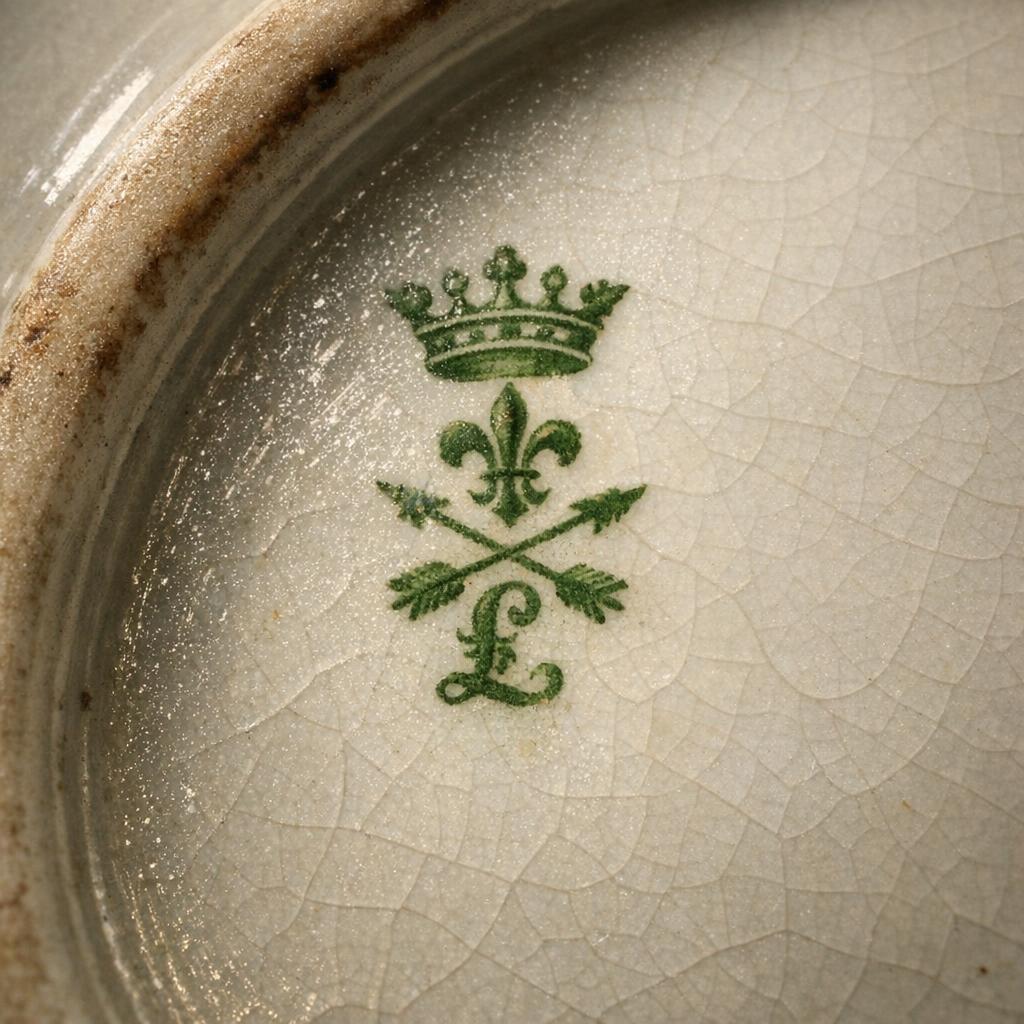
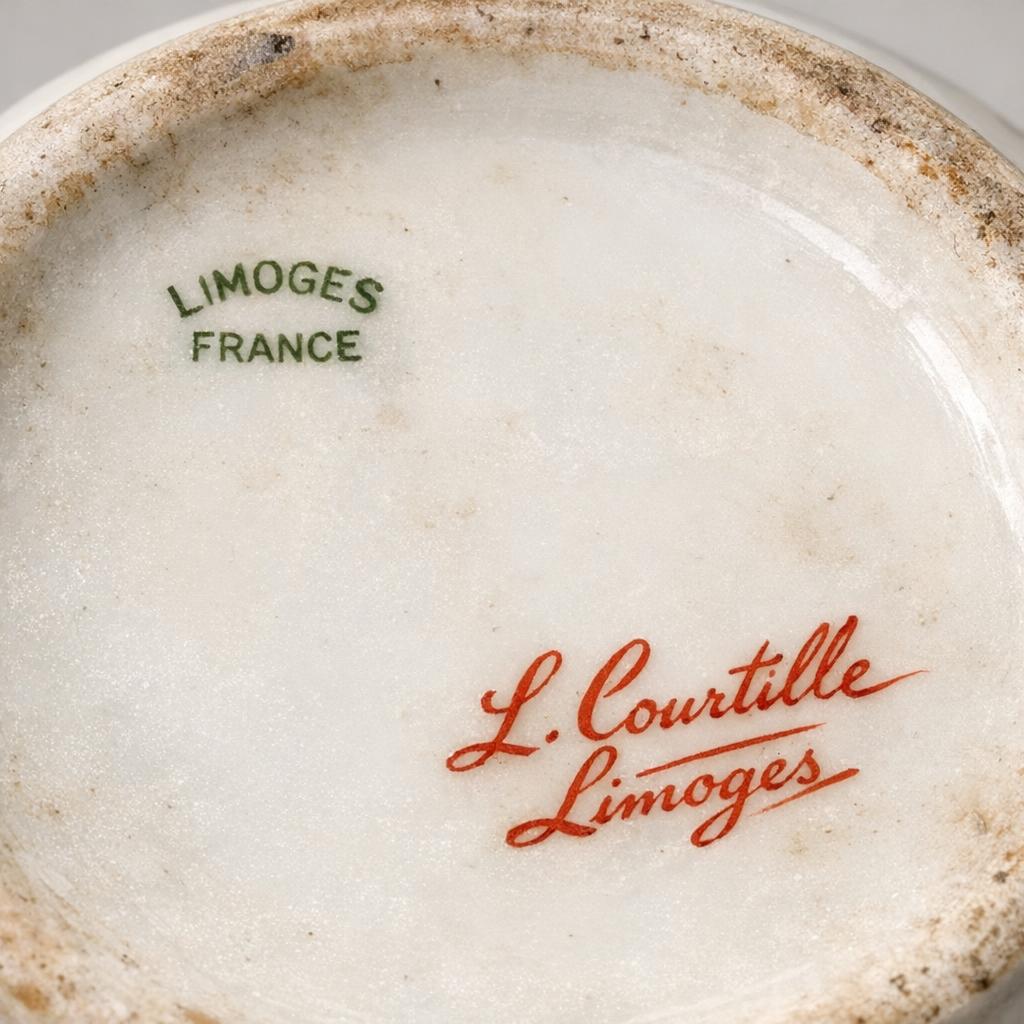
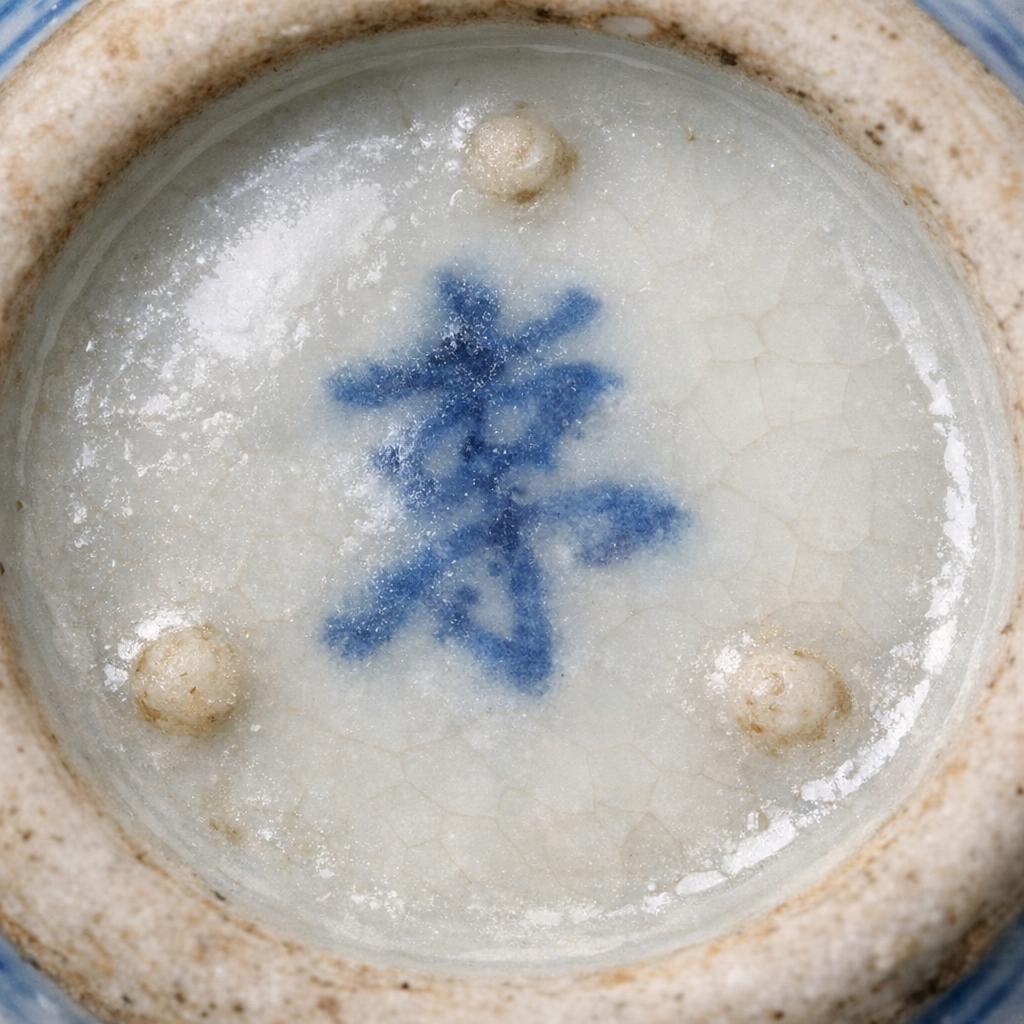
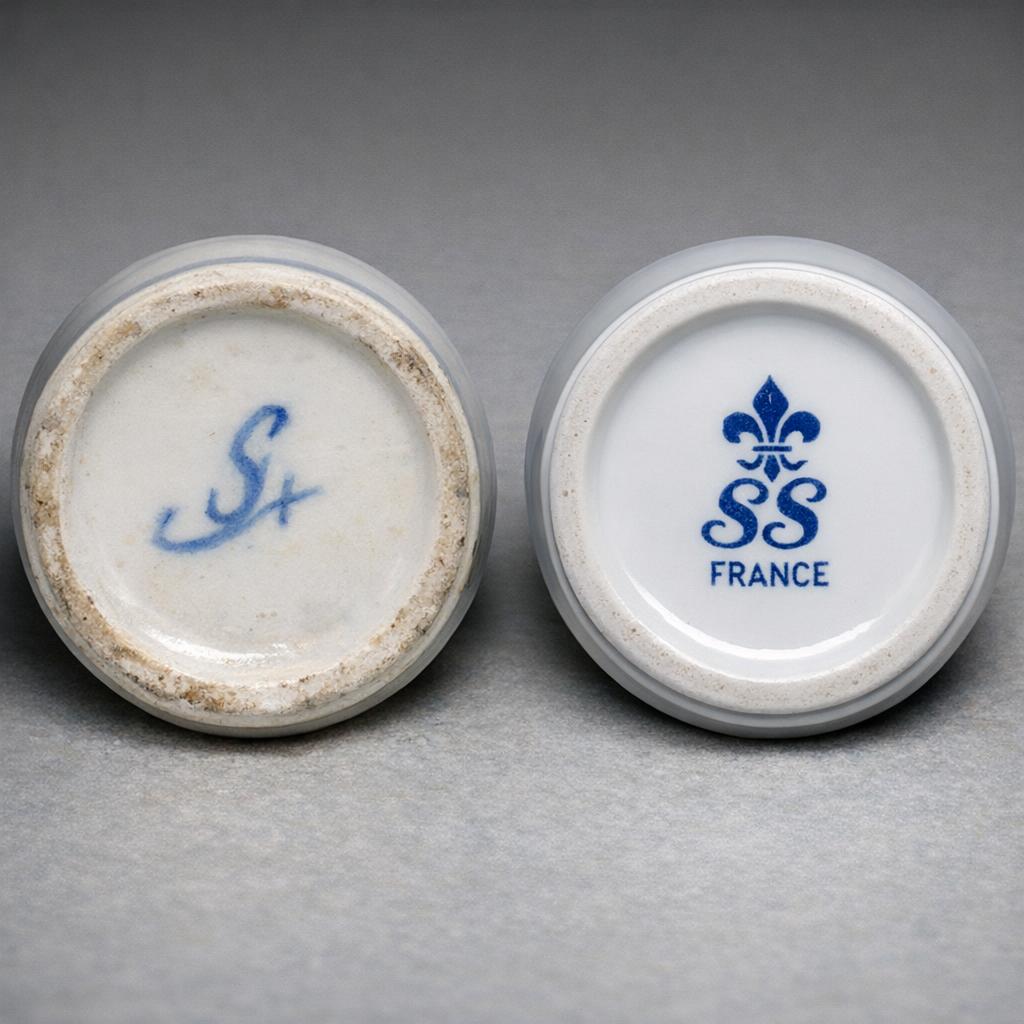
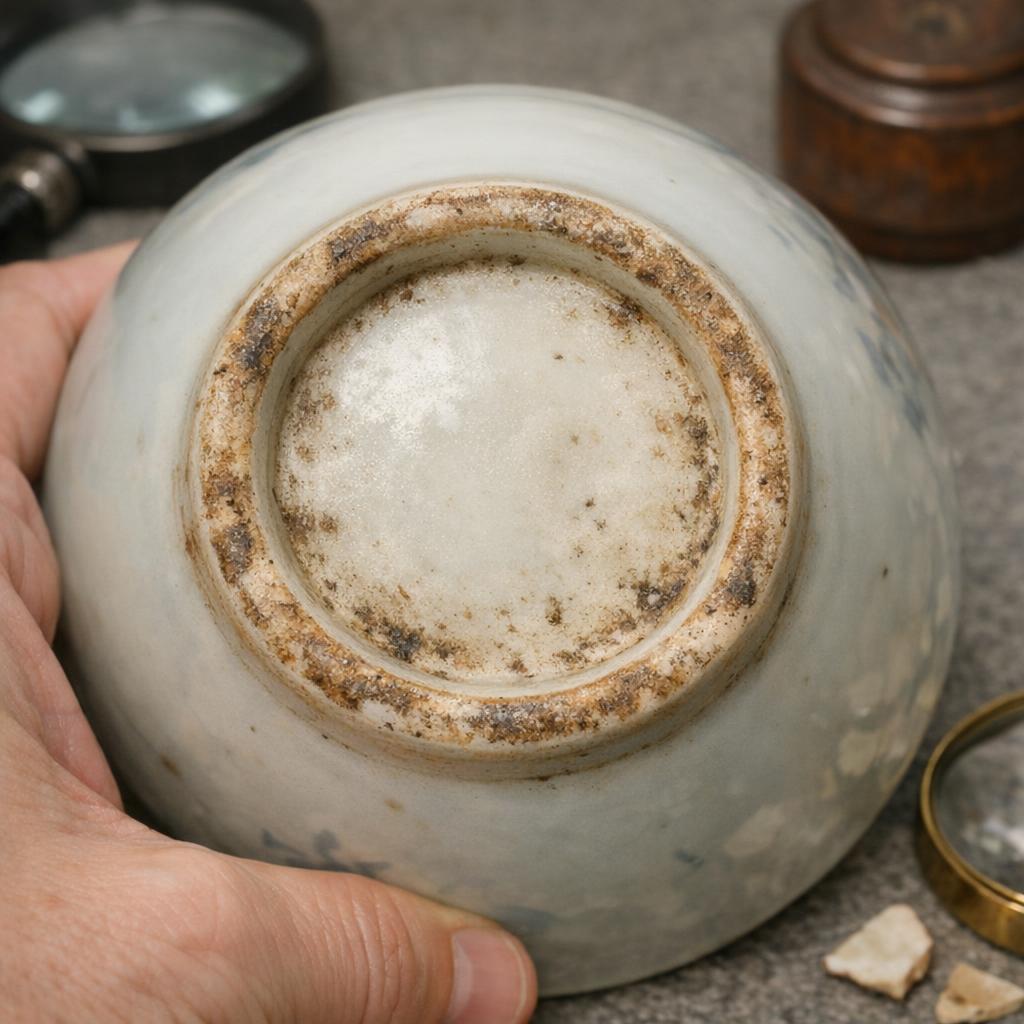
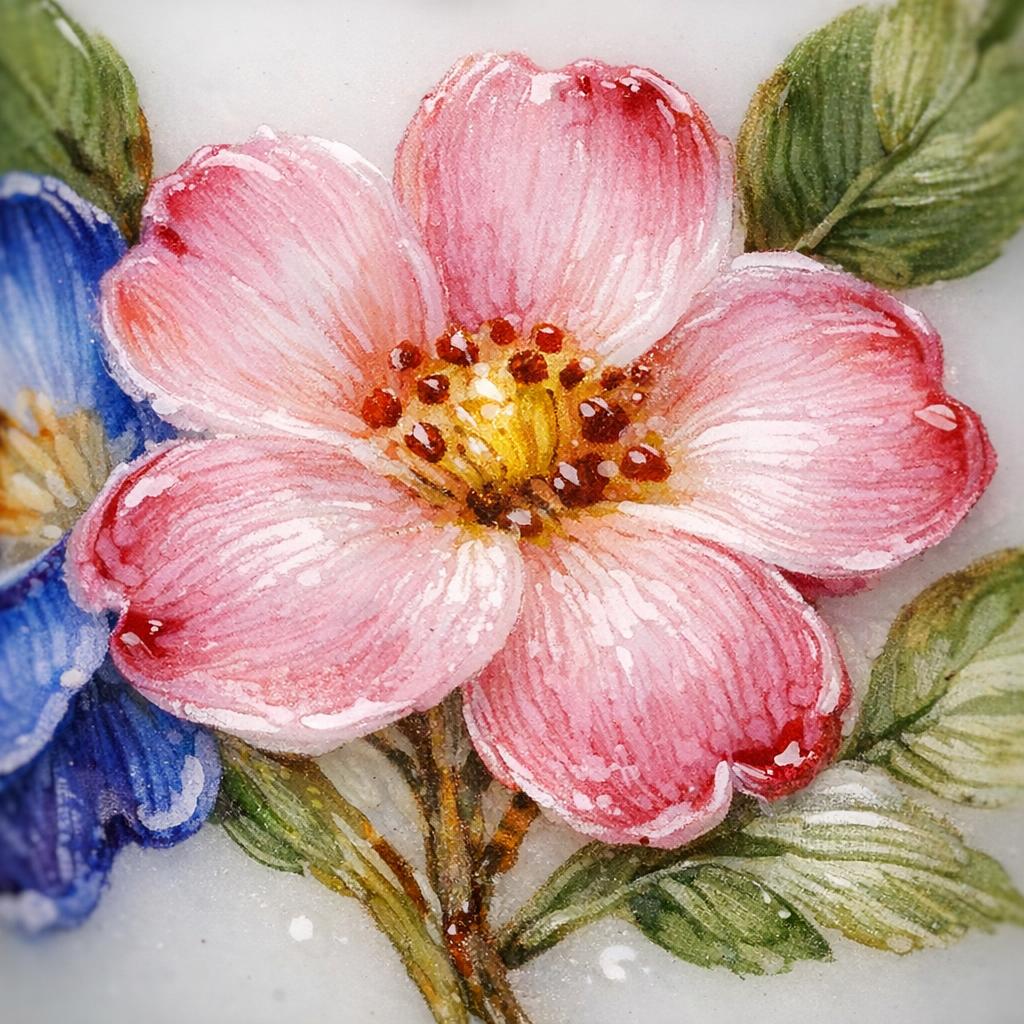
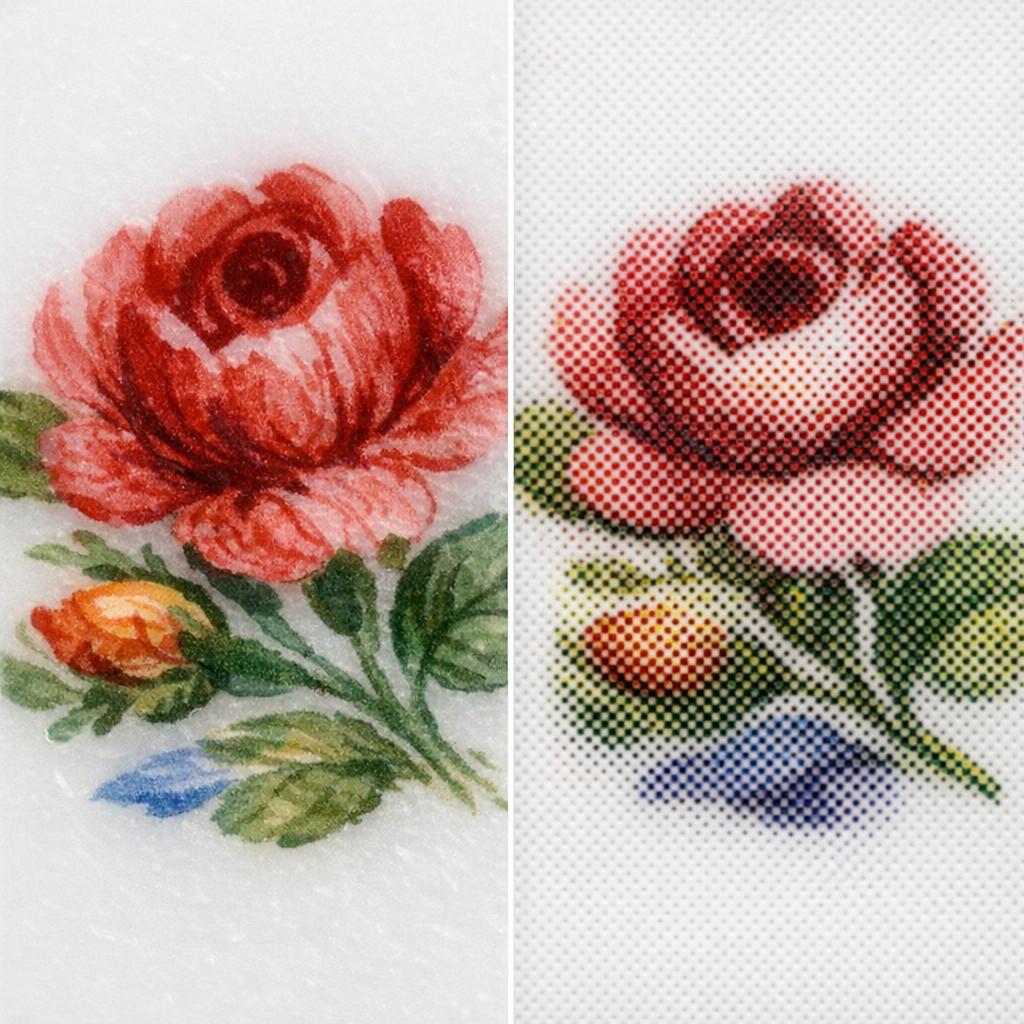
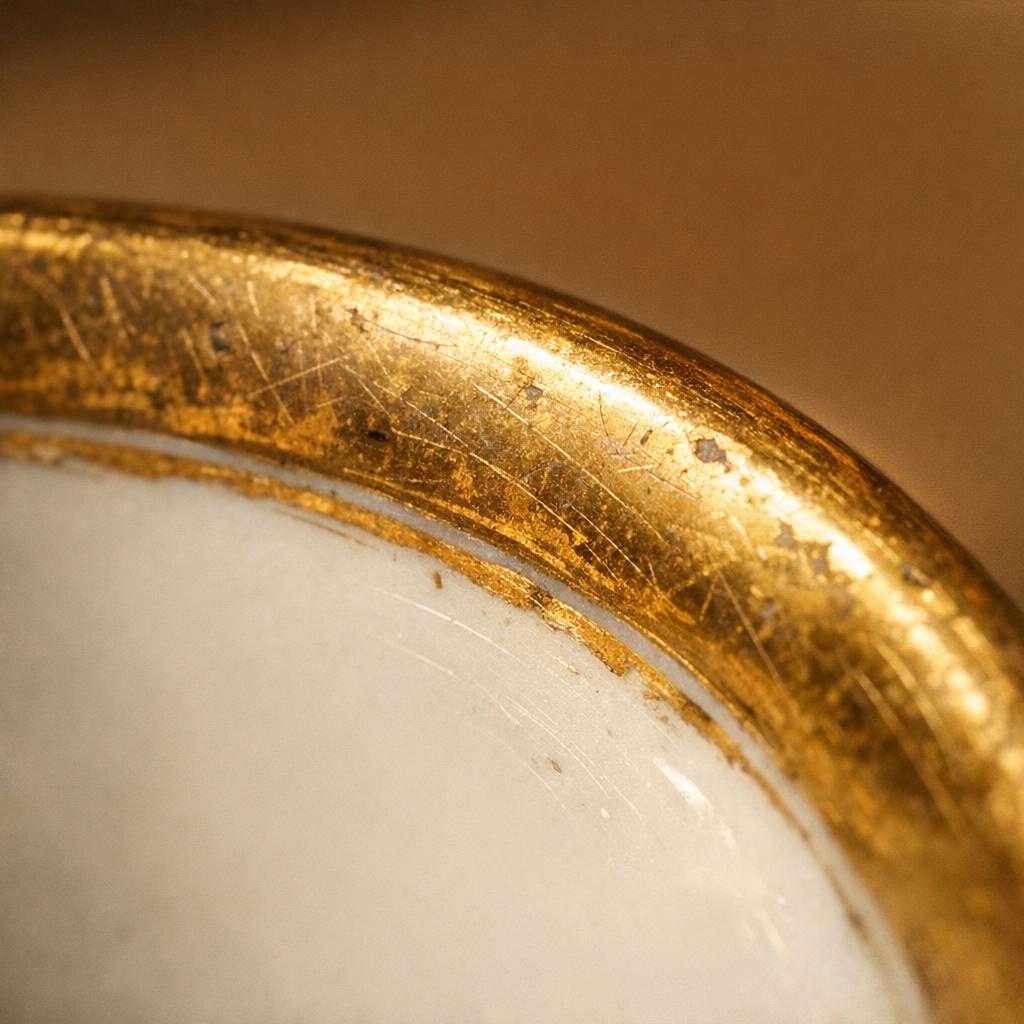
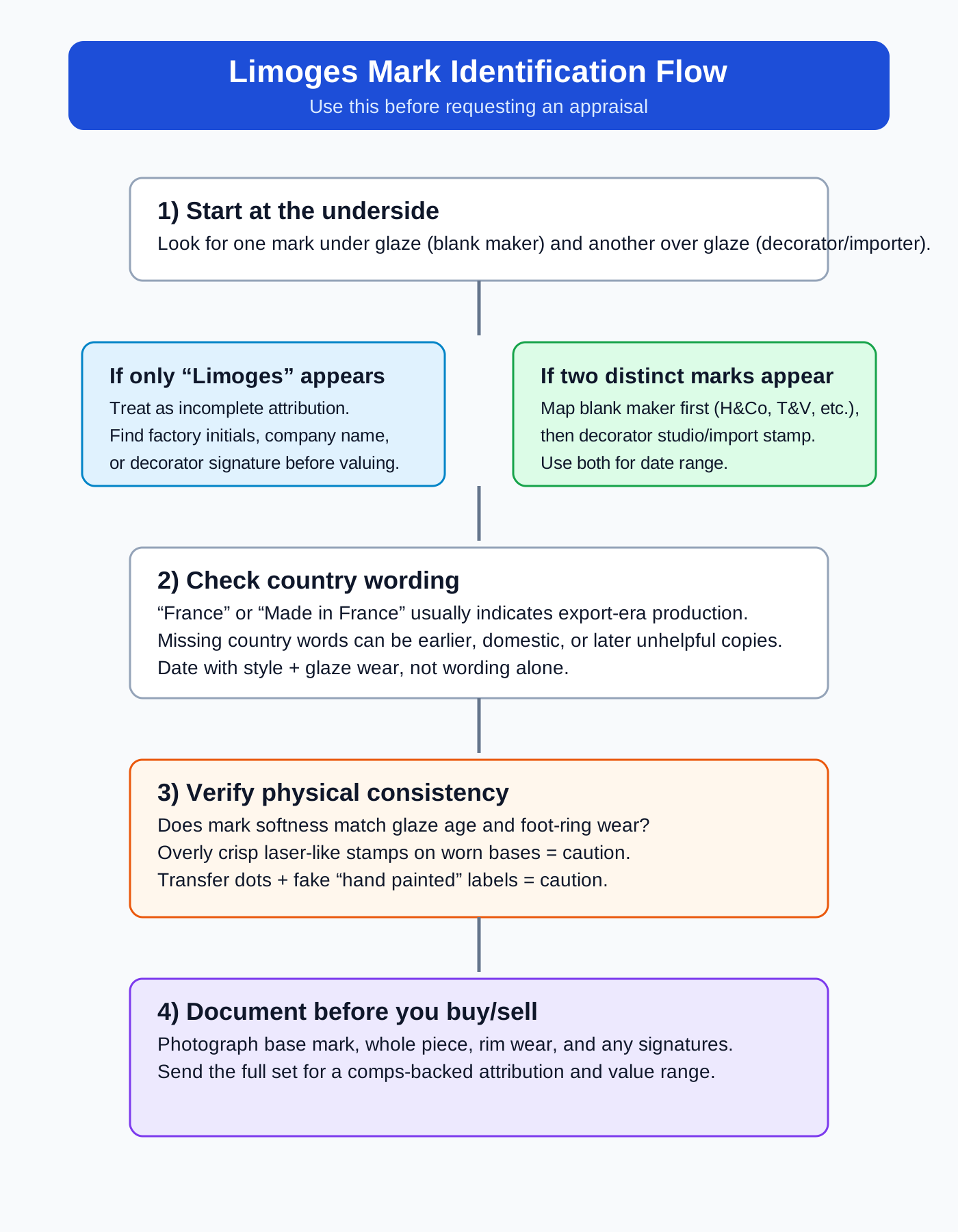
Photo checklist to send if identification is still unclear
When readers ask us to identify Limoges marks remotely, this four-photo set is usually enough for a first-pass attribution:
- Full front view (to assess decoration style and quality).
- Full underside view (to place every mark in context).
- Macro of each mark (factory, decorator, and any retailer wording).
- Close-up of foot ring and rim wear (to evaluate consistency with age).
If your piece has multiple marks and you are not sure how they relate, send photos before you list it. Correctly identifying blank maker versus decorator is often the difference between a routine listing and a stronger, better-supported sale outcome.
FAQ
Does every authentic Limoges piece have the same mark?
No. Multiple producers, decorators, and export channels used different marks over time, so variation is normal.
Can I date Limoges porcelain from one base stamp alone?
Only roughly. Reliable dating combines mark family, decoration style, body quality, and wear consistency.
What if my piece only says “Limoges France”?
Treat that as a starting point, not full attribution. You still need blank/decorator context to support value claims.
Is hand-painted Limoges always more valuable?
Not always. Value depends on condition, attribution strength, set completeness, subject demand, and sale venue.
Search variations collectors ask
Readers often Google:
- how to identify Limoges blank maker versus decorator marks
- what does Limoges France stamp mean on porcelain plate
- are all Limoges marks hand painted marks
- how to date Limoges porcelain by backstamp wording
- difference between Limoges mark and retailer import mark
- Limoges marks authenticity checklist for buyers
- how to tell hand painted Limoges from transfer print
- best photos to send for Limoges mark identification
Each variation maps to the mark-reading workflow and authenticity checks covered above.
References and data sources
- Appraisily internal auction results dataset (valuer-agent pull for keyword cluster: Limoges porcelain/marks), accessed April 2026.
- Comparable lots listed in the table above (house/date/lot/realized values retained for audit).
- Appraisily editorial standards and sourcing policy: /editorial-policy/.
Continue your valuation journey
Find the right local specialist
Compare antique and art appraisers by location and specialty in one directory.
Antique & art specialists
Browse the Antique & Art Appraisers Directory
Choose a local specialist when the assignment needs in-person inspection or a specific credential.
How We Research Valuation Data
Our appraisal guides are based on auction results, dealer pricing data, and professional appraiser insights. We may earn a commission when you use our free professional appraisal service. Learn about our editorial standards.
Note: We couldn’t find relevant auction comps in our database for this topic right now. If you’re valuing a specific item, try searching by maker/model/material and we’ll expand coverage over time.
What similar items actually sold for
To help ground this guide in real market activity, here are recent example auction comps from Appraisily’s internal database. These are educational comparables (not a guarantee of price for your specific item).
| Image | Description | Auction house | Date | Lot | Reported price realized |
|---|---|---|---|---|---|
| No relevant auction comps found for this topic right now. | |||||
Disclosure: prices are shown as reported by auction houses and are provided for appraisal context. Learn more in our editorial policy.
Choose your next step
Use the path that matches the decision you need to make about the item.
Not sure it is worth appraising?
Start with a lower-friction screen to understand the likely category, evidence, and next step.
Upload photos for a free first lookWant proof before paying?
See how a signed report documents photos, comparable evidence, condition notes, and value conclusions.
View signed report sampleNeed a signed report?
Use this for insurance, estate, donation, resale, or documented value decisions.
Need documentation now? Start signed appraisalNeed local or specialist help?
Compare directory options when the work needs in-person review or a specialist near you.
Find local specialistsSee what the report looks like
Sample reports show how photos, comparable evidence, condition notes, and a value conclusion are documented.
Upload photos of the mark, full object, decoration, rim, foot, and condition issues. We can help determine whether the mark supports age, maker, and appraisal value.
Need a Limoges mark checked against the actual porcelain?
Upload clear mark photos, full-piece views, and any provenance notes. We return a comps-backed identification summary and next-step valuation guidance.
- Marks-first identification before pricing decisions
- Comps-backed market context from recent public results
- Written report for insurance, estate, or sale planning
No obligation. Secure upload.