How to Identify Studio Pottery Marks and Handmade Clues: appraisal and value basics
How to Identify Studio Pottery Marks and Handmade Clues research should start with identification, condition, provenance, and recent comparable sales. Use this guide to compare the signals that matter before paying for a formal appraisal or deciding whether to sell.
Start with the base, not the signature
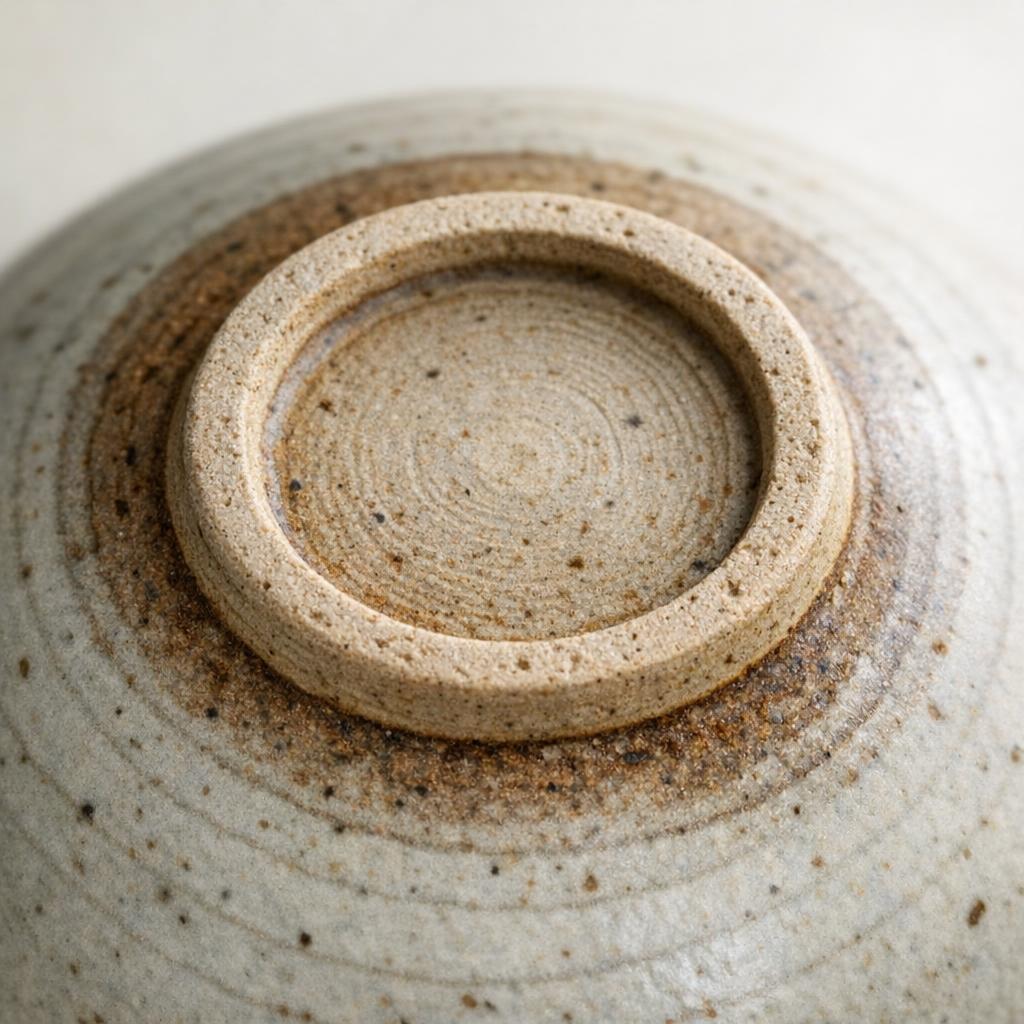
Studio pottery identification starts on the underside. A mark may help, but the most reliable clues are the foot ring, the throwing rhythm, the glaze behavior, and the exact place where the mark sits on the piece. Handmade pottery is often slightly imperfect in ways that a factory line does not easily copy.
That is why a glazed vase with no signature is not automatically ordinary, and a crisp stamp is not automatically authentic. A real studio piece often shows a chain of clues: a trimmed foot, subtle wheel lines, glaze that settles unevenly, and a mark applied where a potter would naturally sign or stamp after finishing the form.
A lot of identification mistakes come from treating decoration, retailer marks, and maker marks as if they all mean the same thing. They do not. A paper label can identify a sales channel, a penciled number can track a shape in the kiln, and a studio stamp can point to a workshop or decorator. The body of the pot still has to match the story the mark is telling.
- Check the foot ring first.
- Look for throwing marks or hand finishing.
- Use raking light to read the glaze surface.
- Confirm whether the mark is impressed, incised, painted, or labeled.
If you only have one photo, ask for the underside, the rim, and one raking-light surface shot. Those three views solve more identifications than a front-facing glamour image.
Studio pottery is a conversation between clay, tools, glaze, and hands.
Comparable sales (examples)
These auction results are educational comparables, not a price promise. They show how maker names, glaze character, shape, and documented studio marks influence the market for handmade pottery and related ceramics.
Shown USD range: USD 290-USD 720. Median of these 5 USD examples: USD 500.
| Thumbnail | Lot | Auction house | Date | Lot | Realized price | Why it helps |
|---|---|---|---|---|---|---|
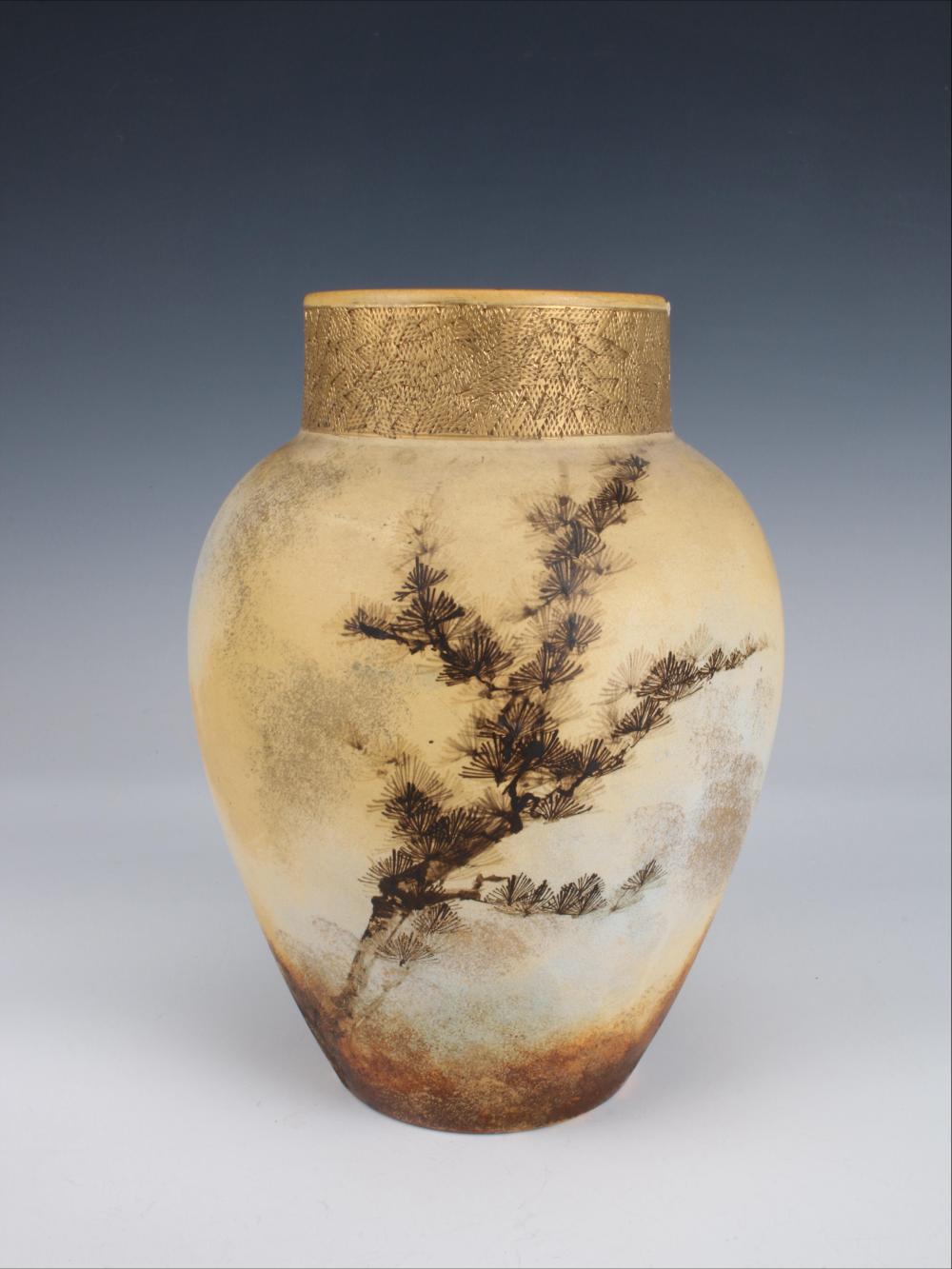 |
ROOKWOOD POTTERY CO. 1883 EARTHENWARE PINE TREE VASE | Converse Auctions | 2024-02-16 | 149 | USD 290 | Good example of a known studio name with a modest result when the form is familiar. |
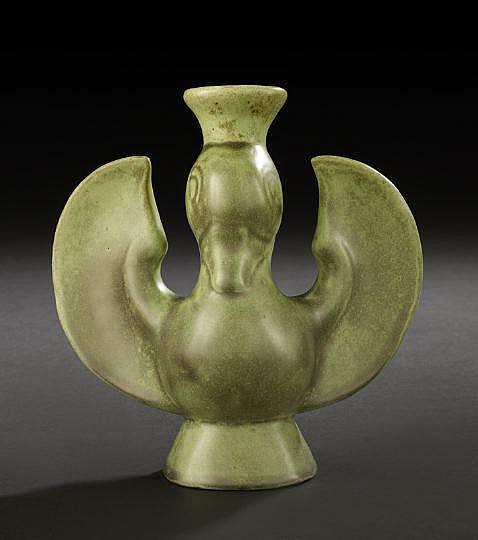 |
Rare Shearwater Pottery antique green-glazed | New Orleans Auction Galleries | 2009-04-05 | 939 | USD 720 | Shows how glaze character and a recognizable studio name can push a piece above simple decorative ware. |
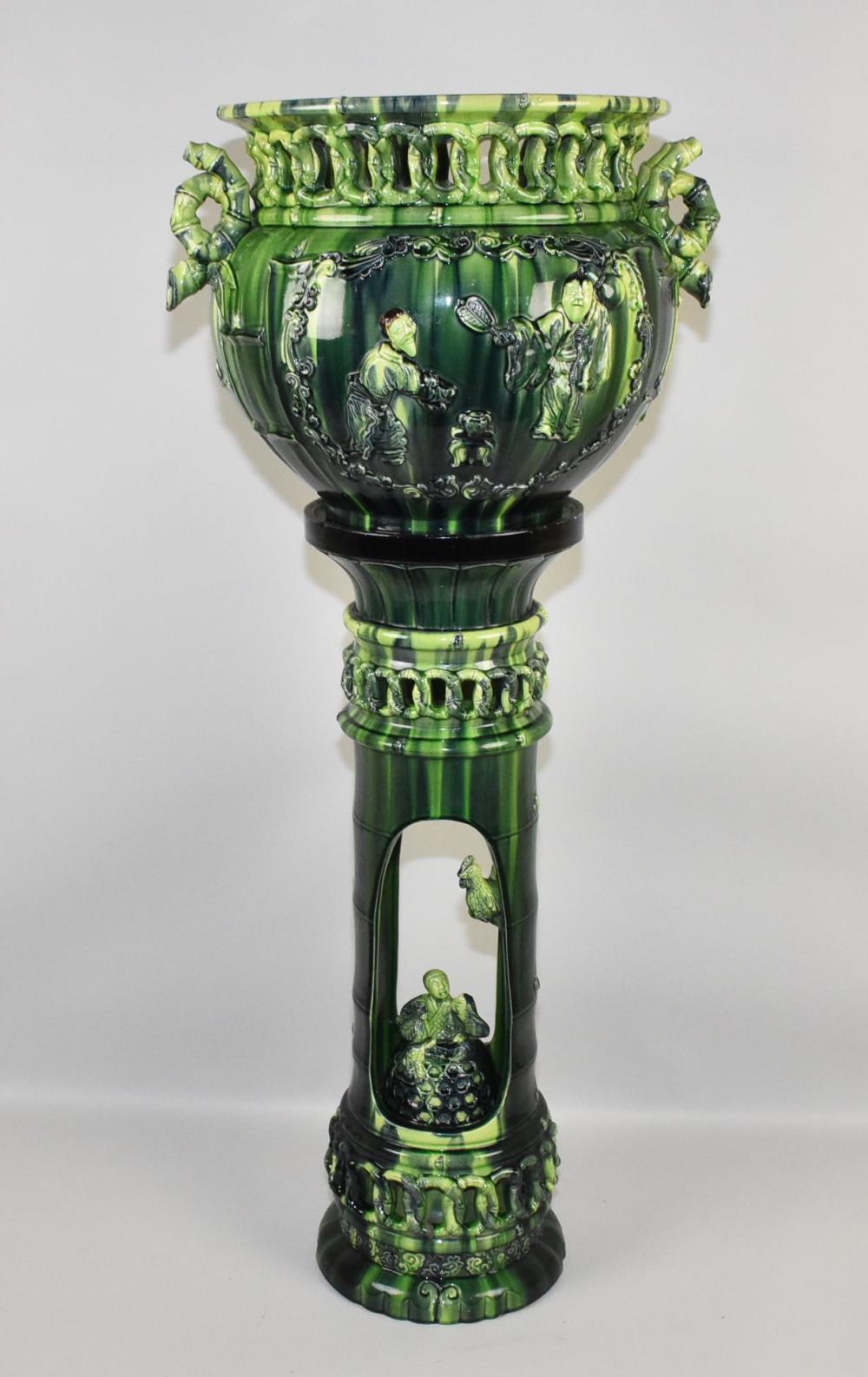 |
Antique pottery green slip glaze two-piece jardiniere | Dargate Auction Galleries | 2022-08-28 | 1041 | USD 500 | Useful for reading how glaze style and form matter even when the mark is generic or hard to read. |
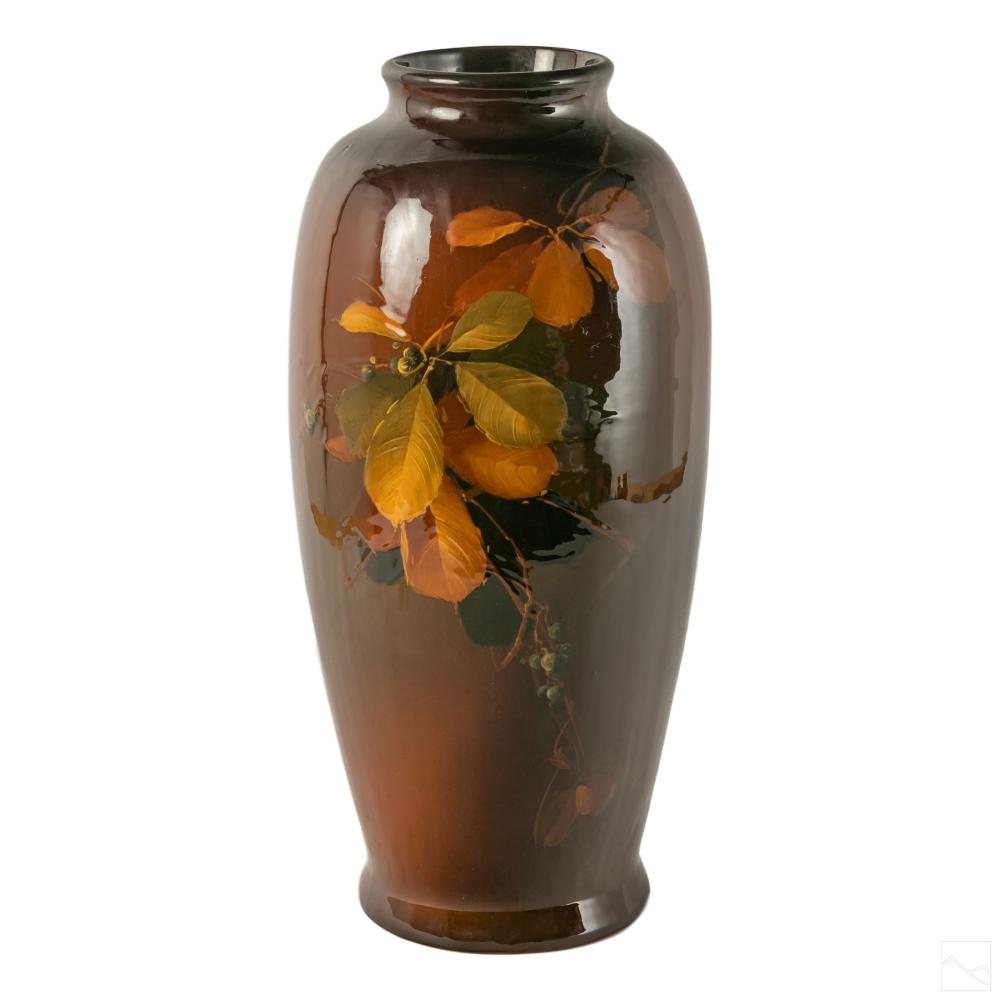 |
Mae Timberlake 19" antique blueberry pottery vase | Hill Auction Gallery | 2021-05-26 | 293 | USD 400 | Helpful for judging decorative studio pieces where the glaze and profile do most of the market work. |
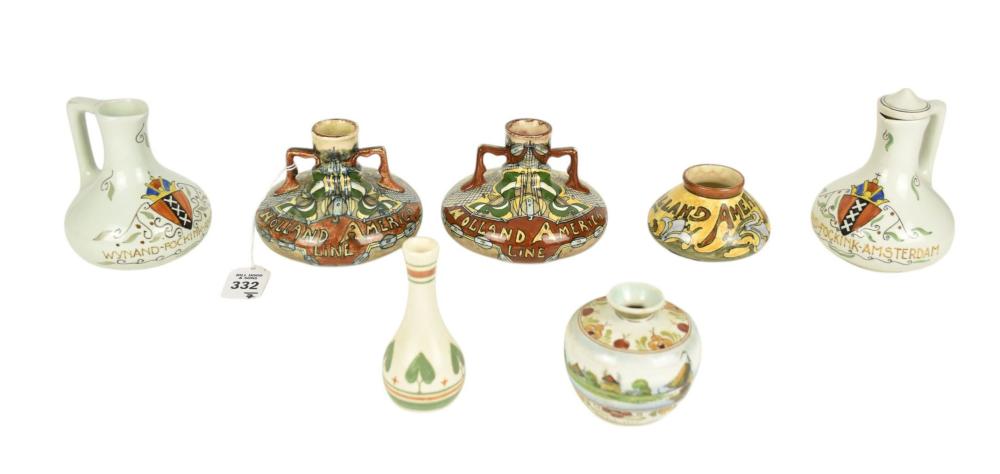 |
Grouping of antique Dutch pottery | Bill Hood & Sons Arts & Antiques Auctions | 2025-01-21 | 332 | USD 650 | Shows that grouped lots can still sell well when the marks and factory or studio names are readable. |
The range matters more than the exact number. A Rookwood pine tree vase at $290, a Shearwater green-glazed piece at $720, and a pair of Iznik dishes at $950 show three different value paths: known maker plus familiar form, recognizable studio character, and decorative or cultural demand. The $250 Roseville jardiniere also warns you not to overread a famous mark when condition or commonness keeps the result down. If you can explain why a piece sold where it did, you are already reading the mark like a specialist.
Free instant estimate
Not sure if your item is worth appraising? Let us take a look.
Upload a photo, tell us what you know, and get a free first read. If a full appraisal makes sense, we will say so.
Free. No card needed. Takes about two minutes.
What to inspect first on a suspected studio piece
Once you have the base photo, slow down and inspect the construction. Most studio potters leave clues in the way the clay was trimmed, how the walls were pulled, and how the glaze settles in the low points. Those clues survive when the mark is faint, misread, or missing.
Foot ring and trimming marks
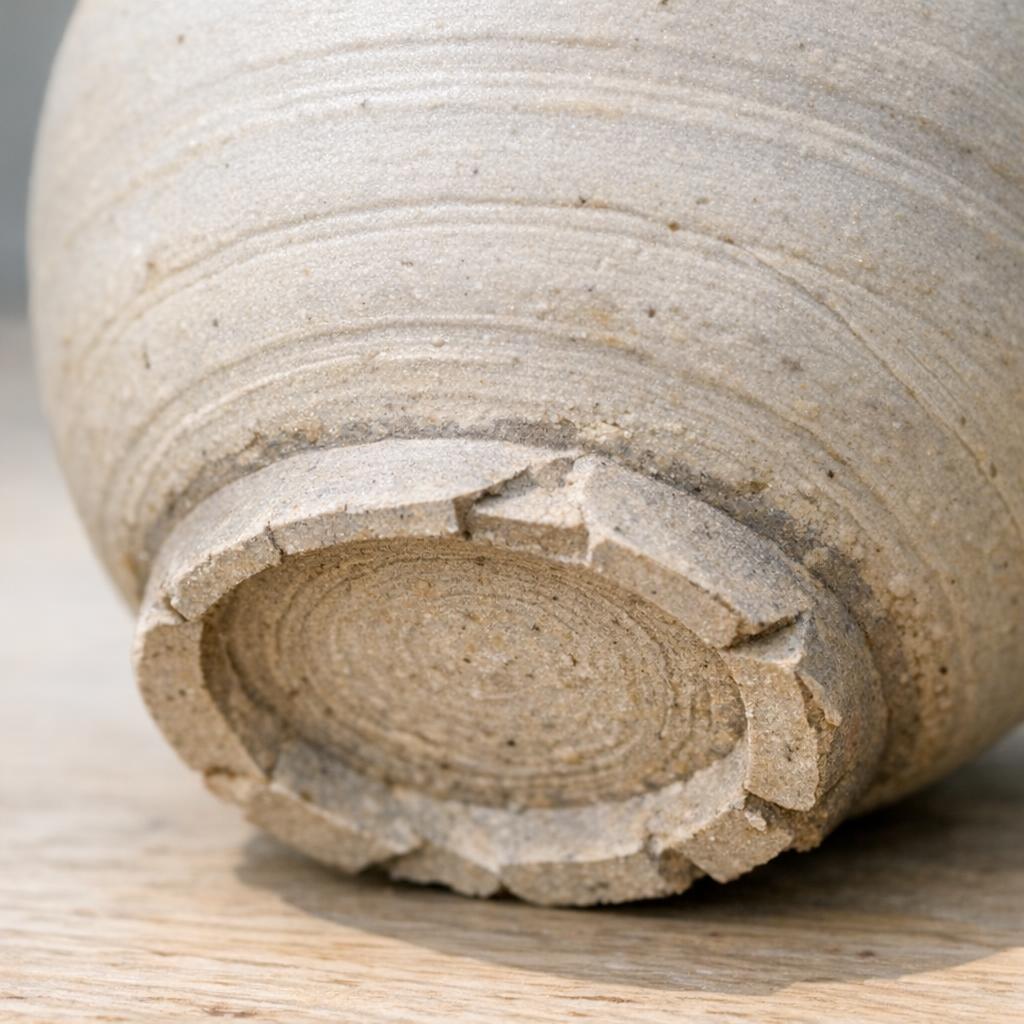
A handmade base usually shows some evidence of the trimming tool. Look for knife cuts, concentric scrape marks, or a slightly irregular foot that still feels purposeful. A foot ring that is too clean, too uniform, or too perfectly repeated across many examples can point toward factory production, while an uneven but intentional ring often points toward a studio workflow.
Throwing rings and wall rhythm
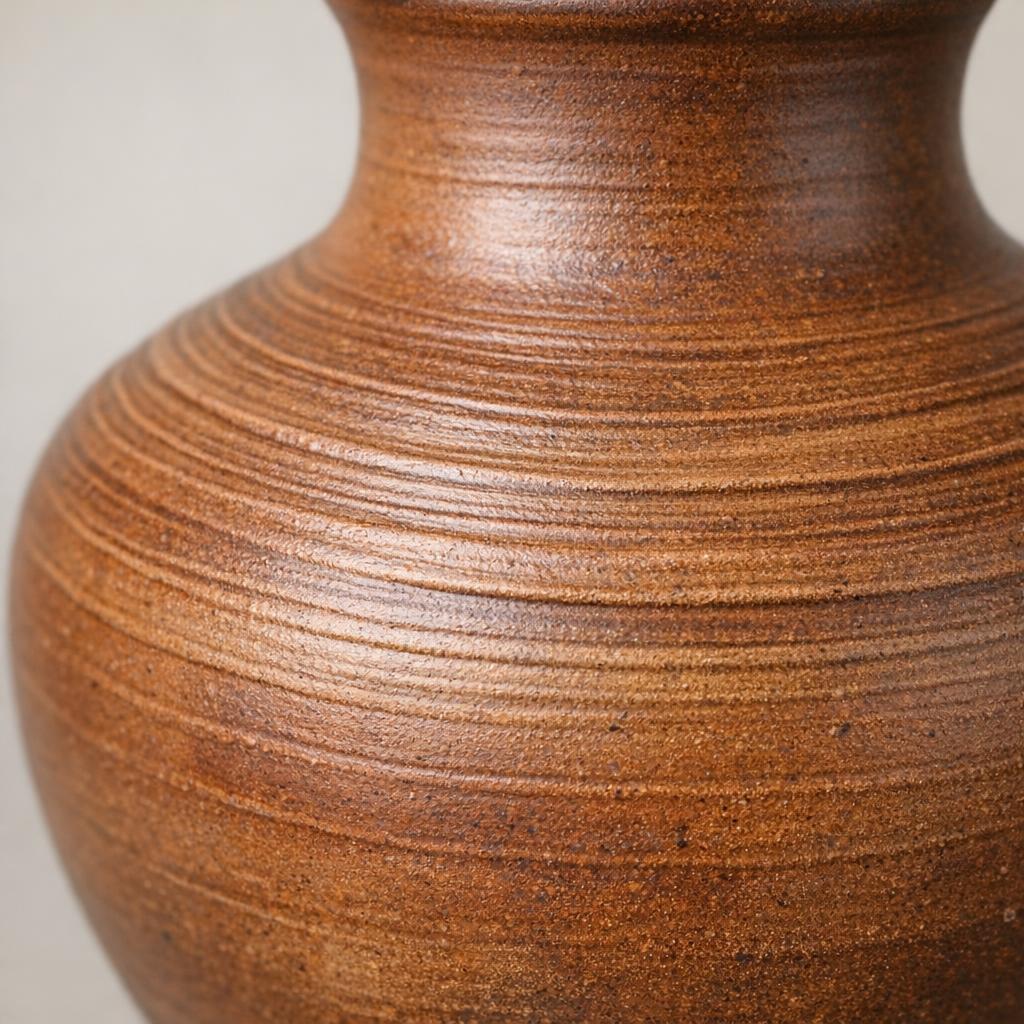
Wheel-thrown pottery often keeps faint circular rhythm in the body. You may see rings on the shoulder, a subtle taper in the wall thickness, or a line where the potter compressed and raised the clay. Do not treat every round form as handmade proof, but do treat it as a clue. Molds and slip-cast forms can imitate shape; they usually do not imitate the same layered wall feel.
Glaze variation and raking light
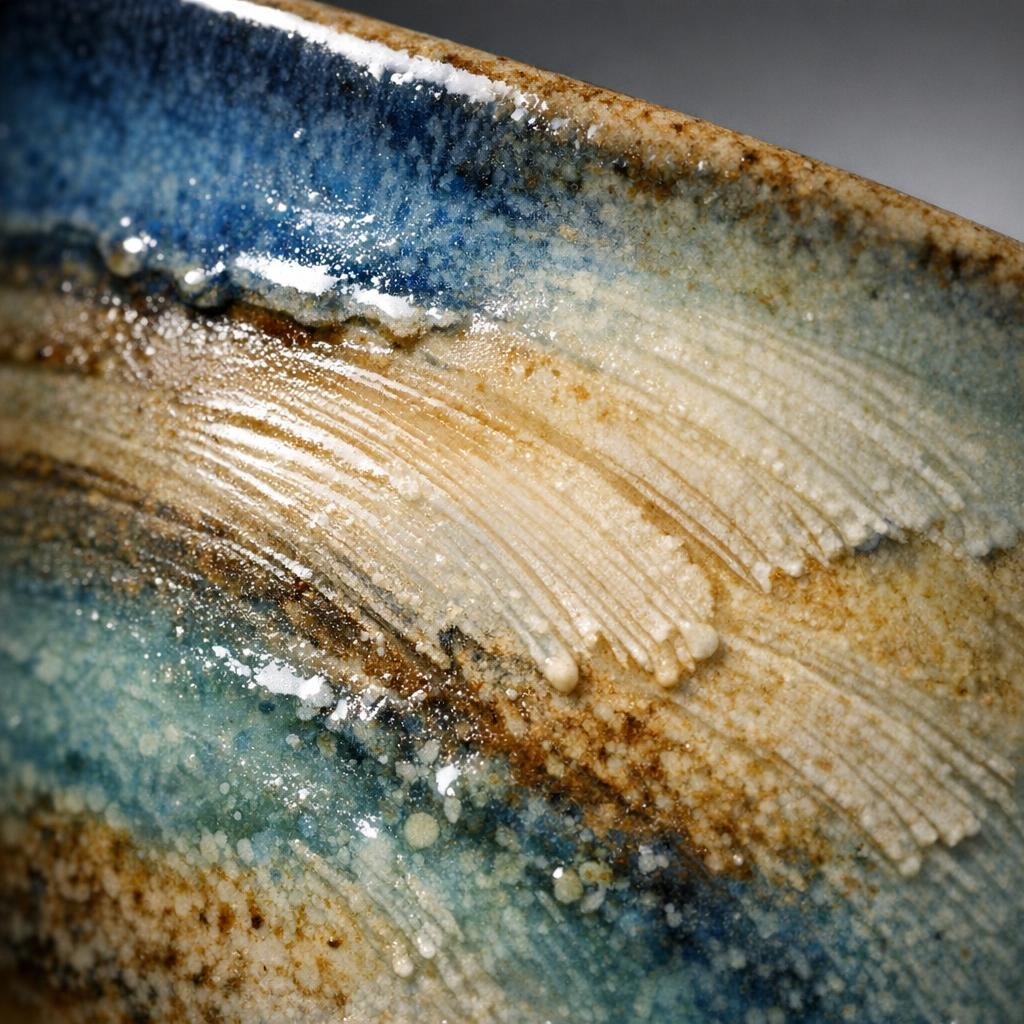
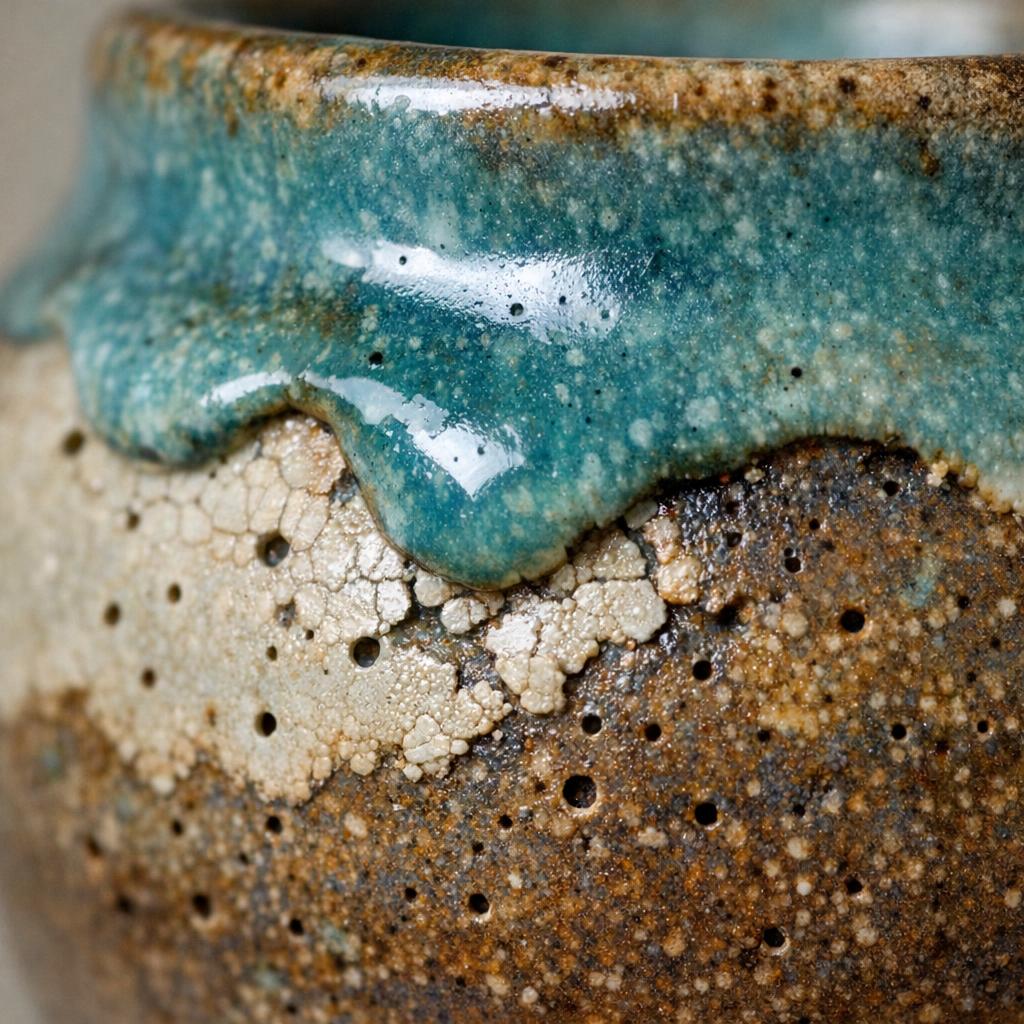
Glaze is one of the fastest ways to read hands-on making. Hold or photograph the piece in raking light so you can see whether the glaze pools in recesses, thins on edges, or shows brush direction. Pinholes, light crawl, streaking, and color shifts can all be firing clues. One flaw alone means little; a pattern of small surface decisions often means much more.
Signature placement and mark types
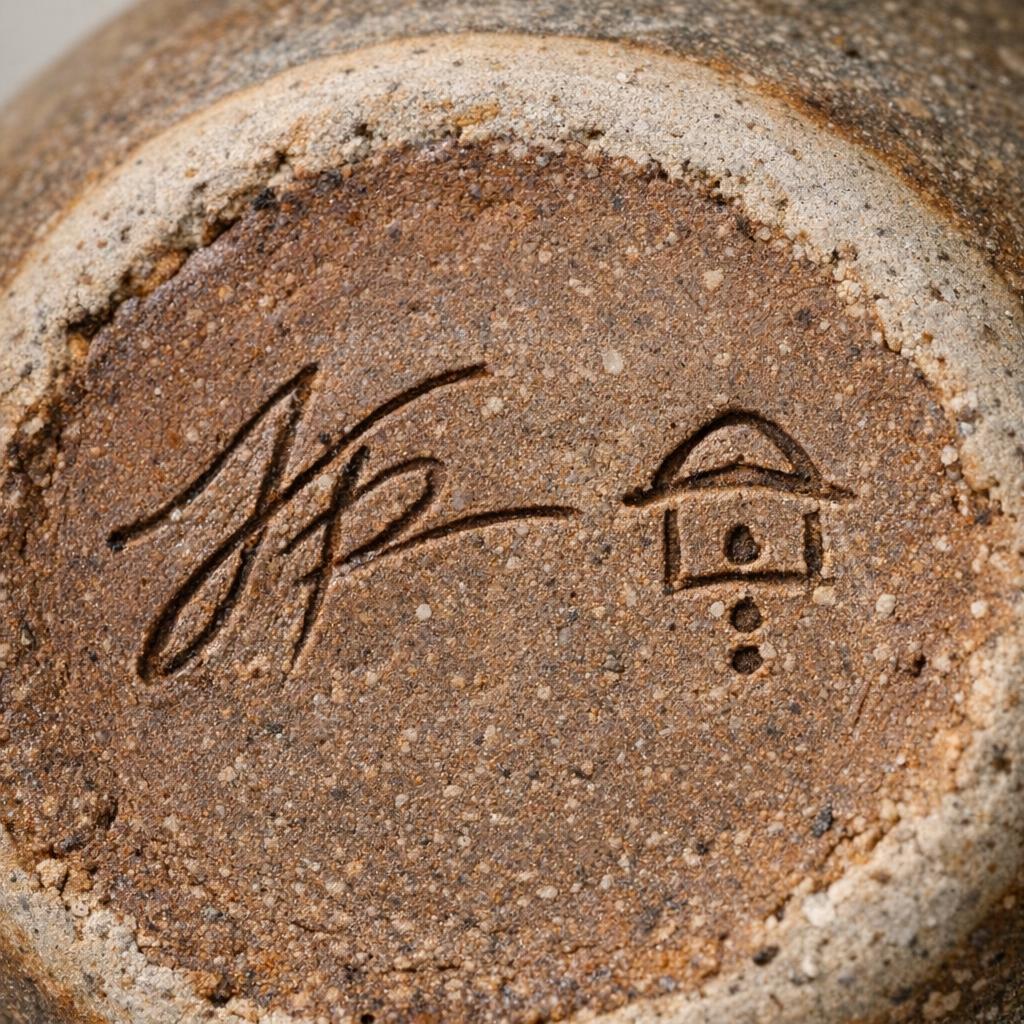
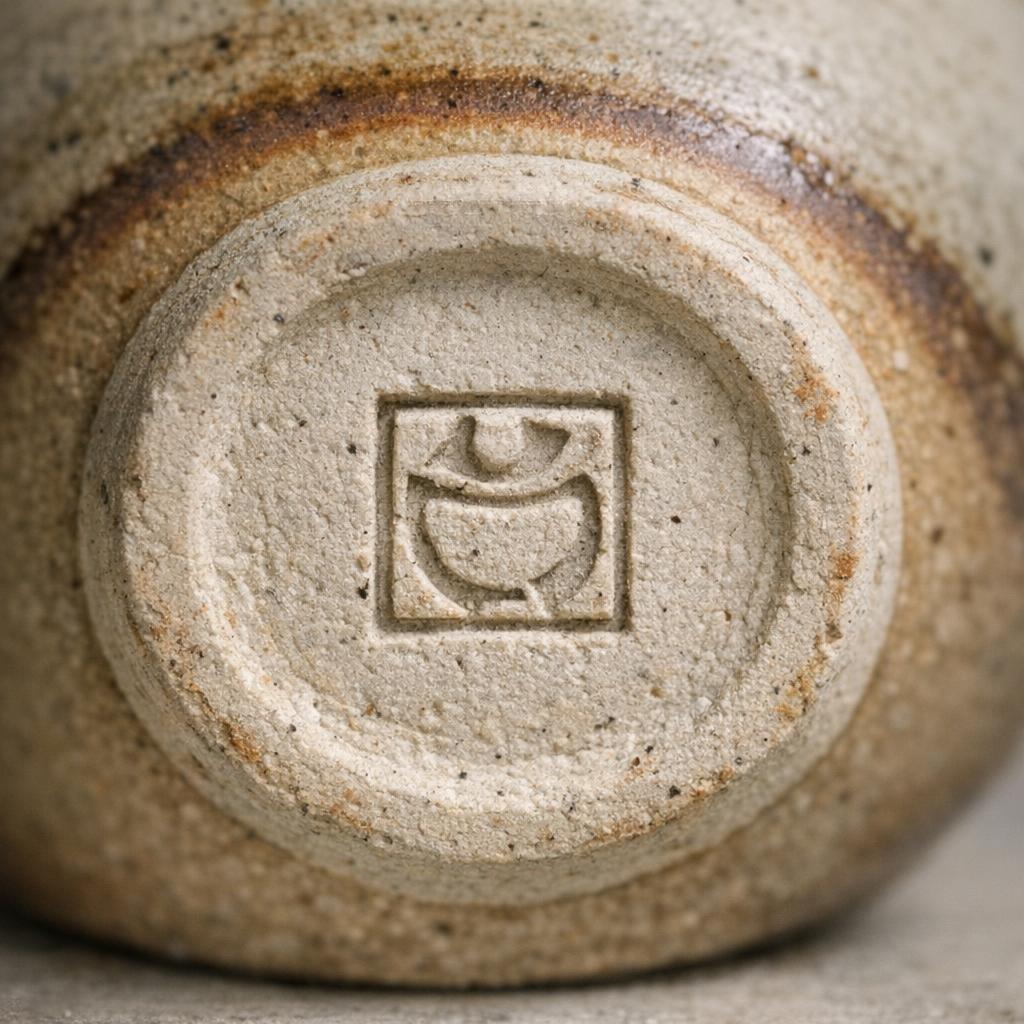
Marks often appear where a maker would naturally finish or sign the piece: on the base, by the foot ring, under a handle, or near the side of a form. An impressed stamp may identify a studio; an incised signature may identify the potter; a painted or underglaze mark may identify a decorator or workshop. If the mark sits awkwardly in a place that would be hard to sign after firing, ask whether it was added later.
When a mark looks official but still misleads
A mark is only one part of the puzzle. Studios sometimes used different stamps across decades, decorators used initials that were not the maker’s name, and later owners added labels or ink notes that look convincing until you compare the clay and glaze. A clear impression can also be misleading if it has been re-cut, overpainted, or copied from a known example.
The safest habit is to compare the mark with the object itself. Does the clay body feel hand-built? Does the glaze behave like a studio glaze rather than a sprayed factory finish? Does the form line up with what that maker is known to produce? If the answer is yes to all three, the mark is probably helping. If the mark says one thing and the pot says another, trust the pot.
That is why modest results can still be useful. The $320 cream-ware group, the $351 Acoma jar, and the $400 blueberry vase show that the market rewards honesty in the object as much as the stamp on the underside. A solid mark helps, but the body, glaze, and finish still do most of the speaking.
Condition can also blur the trail. Heavy cleaning can soften an incised line, old repairs can hide a foot ring, and later overpainting can make a hand-painted mark look fresher than the rest of the glaze. If a piece has been relined, reglazed, or heavily polished, take a second look at edges, cavities, and wear points before you draw a conclusion.
Photo gallery: what to photograph for identification
When a studio pottery piece is still uncertain, the fastest way to get a useful answer is to document the clues that survive on the object. These detail shots are the ones that help most.
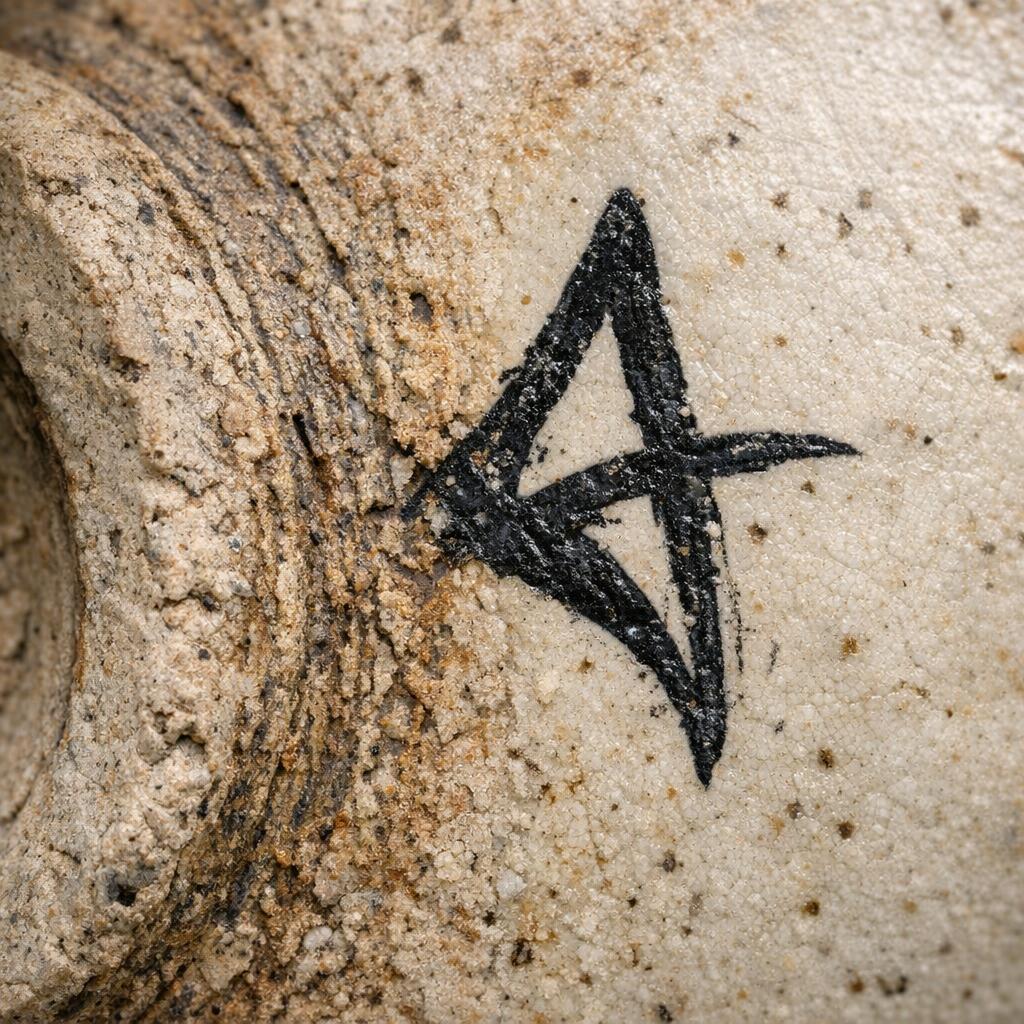
How to read the mark itself
Once the construction clues line up, the mark becomes more useful. The point is not to force every pottery mark into the same category. Some are studio marks, some are decorator marks, some are retailer labels, and some are later additions that only look official.
- Impressed or stamped marks: often used by studios, but they can be repeated across series, assistants, or later reissues. Check the depth and wear pattern.
- Incised signatures: usually cut into leather-hard clay or written after firing. Look for tool pressure and whether the mark belongs to the rest of the surface.
- Painted or oxide marks: may sit under or over the glaze. The brush direction, pigment fading, and glaze interaction should make sense for the maker.
- Paper labels and pencil notes: useful, but secondary. They are strongest when they align with the base, glaze, and known form of the studio.
A useful test is this: if you removed the mark entirely, would the piece still look like it belongs to that studio? If the answer is yes, the form and surface are doing the heavy lifting. If the answer is no, the mark may be the only clue you have, which means the identification is still tentative.
Also watch for edition numbers, glaze test notes, country marks, and decorator initials that look more specific than they are. A lower-case number or a small set of letters can be a production code rather than an artist’s name. In a studio setting, the most trustworthy interpretation usually comes from the whole cluster of clues rather than any single code.
Before you clean or scrub a suspected studio piece, photograph it first. Loose dirt, soot, and old shelf wear can hide the shape of a stamp or soften the edge of an incised line. A quick before-and-after record also protects you if you later need to compare the object with another example or share the piece with a specialist.
Long-tail search variations
- How do you identify a studio pottery mark?
- What does an impressed pottery stamp mean?
- How can you tell if a pottery base is handmade?
- Where do pottery signatures usually appear?
- Is a pottery vase still studio made without a mark?
- How do throwing rings show up on wheel-thrown pottery?
- What glaze clues suggest handmade pottery?
- How do you photograph pottery marks for an appraisal?
- What is the difference between a decorator mark and a maker mark?
These questions all point back to the same process: start on the base, compare the surface, and use the mark only after the object itself makes sense.
References and sourcing
Auction comps and price examples in this guide come from Appraisily’s internal auction results database and are provided for appraisal context only, not as a price guarantee. For sourcing and update standards, see Editorial policy.
For identification work, the most reliable order is still: base, body, glaze, then mark. If any one of those tells a different story, investigate before you label the piece.
How We Research Valuation Data
Our appraisal guides are based on auction results, dealer pricing data, and professional appraiser insights. We may earn a commission when you use our free professional appraisal service. Learn about our editorial standards.
Choose your next step
Use the path that matches the decision you need to make about the item.
Not sure it is worth appraising?
Start with a lower-friction screen to understand the likely category, evidence, and next step.
Upload photos for a free first lookWant proof before paying?
See how a signed report documents photos, comparable evidence, condition notes, and value conclusions.
View signed report sampleNeed a signed report?
Use this for insurance, estate, donation, resale, or documented value decisions.
Need documentation now? Start signed appraisalNeed local or specialist help?
Compare directory options when the work needs in-person review or a specialist near you.
Find local specialistsSee what the report looks like
Sample reports show how photos, comparable evidence, condition notes, and a value conclusion are documented.
Upload the full form, base mark, foot ring, clay body, glaze close-ups, rim, damage, labels, and any artist or gallery history.
Need studio pottery marks identified before selling?
If the studio pottery mark or handmade clue is still unclear, a photo-led appraisal is the fastest way to get a practical answer.
- Help identifying the maker, period, or workshop
- Clear next steps for selling, insuring, or documenting
- Written guidance from an expert who can read the base
No obligation. Secure upload.
Machine-readable summaries
Use these machine-friendly references for AI and crawler discovery of Appraisily content.
Ready to compare your piece?
Start a secure online appraisal
Upload the base, rim, and signature photos. We’ll help read the mark and the handmade clues.
Upload photos for a free first look View signed report sample