
How to Identify Pottery Marks
Identify pottery marks by maker, date code, country wording, clay body, glaze, form, condition, and reproduction clues before assuming value.
Found a pottery mark and want to know if it matters?
Upload photos. We identify the object, check real sales, and show the right appraisal path.
Start a pottery mark appraisalThe quick answer
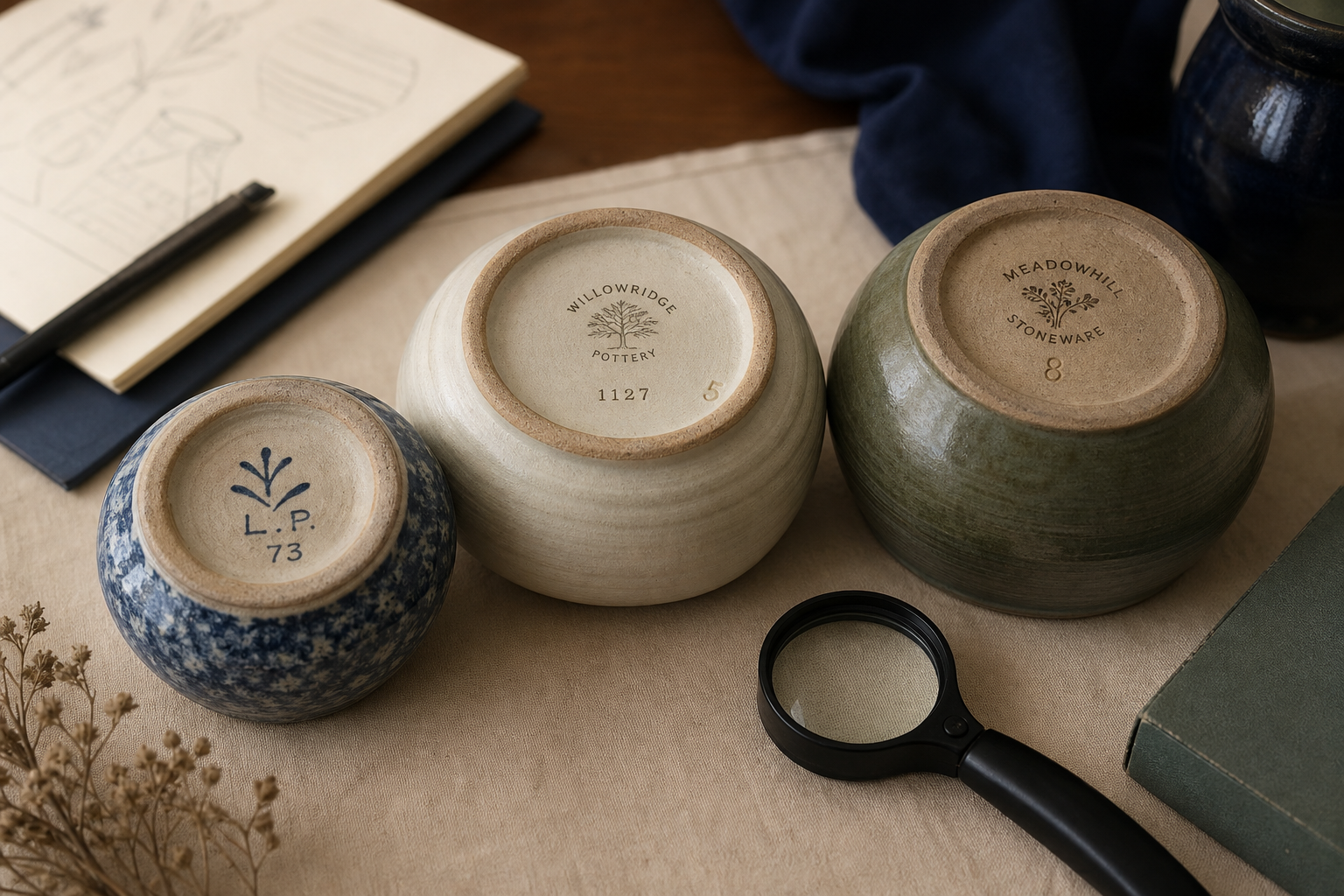
To identify a pottery mark, photograph the entire object and the base, then classify the mark before searching it: printed backstamp, impressed mark, handwritten initials, artist signature, country mark, pattern number, shape number, decorator code, or retailer label. A mark can point you toward the maker or period, but it is not proof by itself.
Many marks were reused, copied, revived, or added later. A convincing identification should match the clay body, glaze, decoration, foot rim, form, wear pattern, and comparable examples.
Pottery mark checklist
- Base photo: show the whole underside, not only the stamp.
- Mark type: printed, impressed, incised, painted, stamped, label, or paper remnant.
- Words and symbols: record exact spelling, initials, crowns, animals, factory devices, numbers, and country wording.
- Material: earthenware, stoneware, porcelain, bone china, faience, majolica, terracotta, or studio clay.
- Construction: molded, thrown, slip-cast, hand-built, tubelined, transfer-printed, hand-painted, or decorated over glaze.
- Wear: check whether wear fits the claimed age or looks artificially distressed.
- Condition: note chips, hairlines, restoration, overpaint, drilled bases, and replaced lids.
What the mark can tell you
A pottery mark may identify the factory, artist, decorator, retailer, pattern, shape, export destination, or approximate date. For example, country marks such as "England" or "Made in England" can help narrow export period, while studio pottery initials may point to an individual maker only when the clay, glaze, and form agree.
Numbers are easy to misread. A shape number is not the same as a date. A pattern number is not the same as a limited edition. An impressed mold number can look important while adding little value on its own.
Value drivers after identification
- Maker and line: important factories and studio potters can have wide price ranges across different forms and glazes.
- Form: large vases, rare shapes, chargers, sculptural pieces, and complete services can behave differently from common bowls or plates.
- Decoration: hand painting, desirable glaze, artist decoration, and strong subject matter can matter more than a common backstamp.
- Condition: cracks, restoration, staining, crazing, and missing lids can materially reduce market interest.
- Authenticity: copied marks, later reproductions, and revival pieces need extra caution.
- Provenance: receipts, labels, collection history, and old catalog entries can help, but they still need object-level support.
Recent auction evidence from Appraisily's database
The available database rows below are useful market evidence, not final appraisals. The public image assets for these recent records were not retrievable at publication time, so this article does not present them as photo comps. The records still show how attribution, maker language, material, and condition context appear in auction evidence.
Shown GBP range: GBP 400-GBP 550. Median of these 3 GBP examples: GBP 460.
| Category | Sale | Date | Lot | Realized | What it shows |
|---|---|---|---|---|---|
| Studio pottery | Lyon & Turnbull | May 1, 2026 | Janet Leach (American/British, 1918-1997) at Leach Pottery | GBP 460 | Named studio-pottery attribution can matter, but the object, mark, clay, and glaze still need to align. |
| Studio pottery | Lyon & Turnbull | May 1, 2026 | Attributed to Bernard Leach C.H., C.B.E. (British 1887-1979) at Leach Pottery | GBP 400 | "Attributed to" language is weaker than a confirmed maker, even when the name is important. |
| Studio pottery | Lyon & Turnbull | May 1, 2026 | Michael Cardew C.B.E. (British 1901-1983) at Winchcombe Pottery | GBP 550 | Workshop, maker, and pottery location can all be relevant evidence for marked ceramics. |
What auction evidence does not prove
A similar mark does not make your piece the same value. Condition, authenticity, size, medium, completeness, decoration quality, restoration, and demand can materially change value. Auction records are comparables to interpret, not price guarantees.
When to use the free screener
Use the free screener when you have a clear mark photo and want fast triage: likely maker, whether the object looks worth deeper research, and which appraisal path fits. It is best for sorting common pottery from pieces that may deserve paid review.
When to get a professional appraisal
Choose a professional appraisal if the pottery may be high value, has a confusing or important mark, is part of an estate, needs insurance or donation documentation, may be Chinese porcelain or important studio pottery, or has signs of restoration that affect market value. For IRS, insurance, estate, or donation use, see qualified appraisals.
Photo checklist
- Front, back, sides, top, and base.
- Close, sharp photo of every mark, number, paper label, and signature.
- One photo in natural light that shows true color.
- Close-ups of chips, cracks, crazing, repairs, drilled holes, and replaced parts.
- Measurements: height, width, diameter, and weight if possible.
- Any receipt, label, family note, box, or old appraisal.
FAQ
Can I identify pottery from the mark alone?
Sometimes, but it is risky. Confirm the mark against material, shape, glaze, decoration, construction, and wear.
What if the mark is only initials?
Initials can belong to a studio potter, decorator, owner, or later annotator. Photograph the whole base and compare the object style before assigning a maker.
Are impressed marks older than printed marks?
Not automatically. Both types appear across different periods and makers. The mark method is one clue, not a date by itself.
Do copied pottery marks exist?
Yes. Reproductions, revival pieces, and later decorated ceramics can carry marks that look convincing at first glance.
Free instant estimate
Not sure if your item is worth appraising? Let us take a look.
Upload a photo, tell us what you know, and get a free first read. If a full appraisal makes sense, we will say so.
Free. No card needed. Takes about two minutes.
Choose your next step
Use the path that matches the decision you need to make about the item.
Not sure it is worth appraising?
Start with a lower-friction screen to understand the likely category, evidence, and next step.
Upload photos for a free first lookWant proof before paying?
See how a signed report documents photos, comparable evidence, condition notes, and value conclusions.
View signed report sampleNeed a signed report?
Use this for insurance, estate, donation, resale, or documented value decisions.
Need documentation now? Start signed appraisalNeed local or specialist help?
Compare directory options when the work needs in-person review or a specialist near you.
Find local specialistsSee what the report looks like
Sample reports show how photos, comparable evidence, condition notes, and a value conclusion are documented.
Need a pottery mark identified before you price the piece?
Upload the base mark, full form, glaze, clay body, rim, foot, damage, and any labels or provenance notes.
Upload photos for a free first lookSee antique appraisal options