How to evaluate antiques and art before pricing
Start with identification, not price. A credible appraisal file records what the object is, how it was made, its condition, its provenance, the market it belongs to, and the value type needed for the decision.
Use this guide for paintings, prints, furniture, silver, ceramics, jewelry, watches, textiles, and mixed estate property. The categories differ, but the evaluation sequence is the same: identify, document, inspect, research, compare, and reconcile.
Free first read
Check the evidence before choosing a value
Upload full-object photos, details, measurements, marks, condition issues, labels, receipts, and the decision you need to make. The free screener can flag whether you need identification, comps, or a signed report.
Start with a free screener. Use a signed report when you need insurance, estate, donation, resale, or formal documentation.
How We Research Valuation Data
Our appraisal guides are based on auction results, dealer pricing data, and professional appraiser insights. We may earn a commission when you use our free screener. Learn about our editorial standards.
Identify what you have
Record category, maker or artist, subject, materials, construction, dimensions, date, marks, inscriptions, edition information, labels, and any uncertainties. For a painting, this includes support, frame, signature, and reverse. For silver, it includes full hallmark sequence, weight, dimensions, and repairs.
Document condition and risk
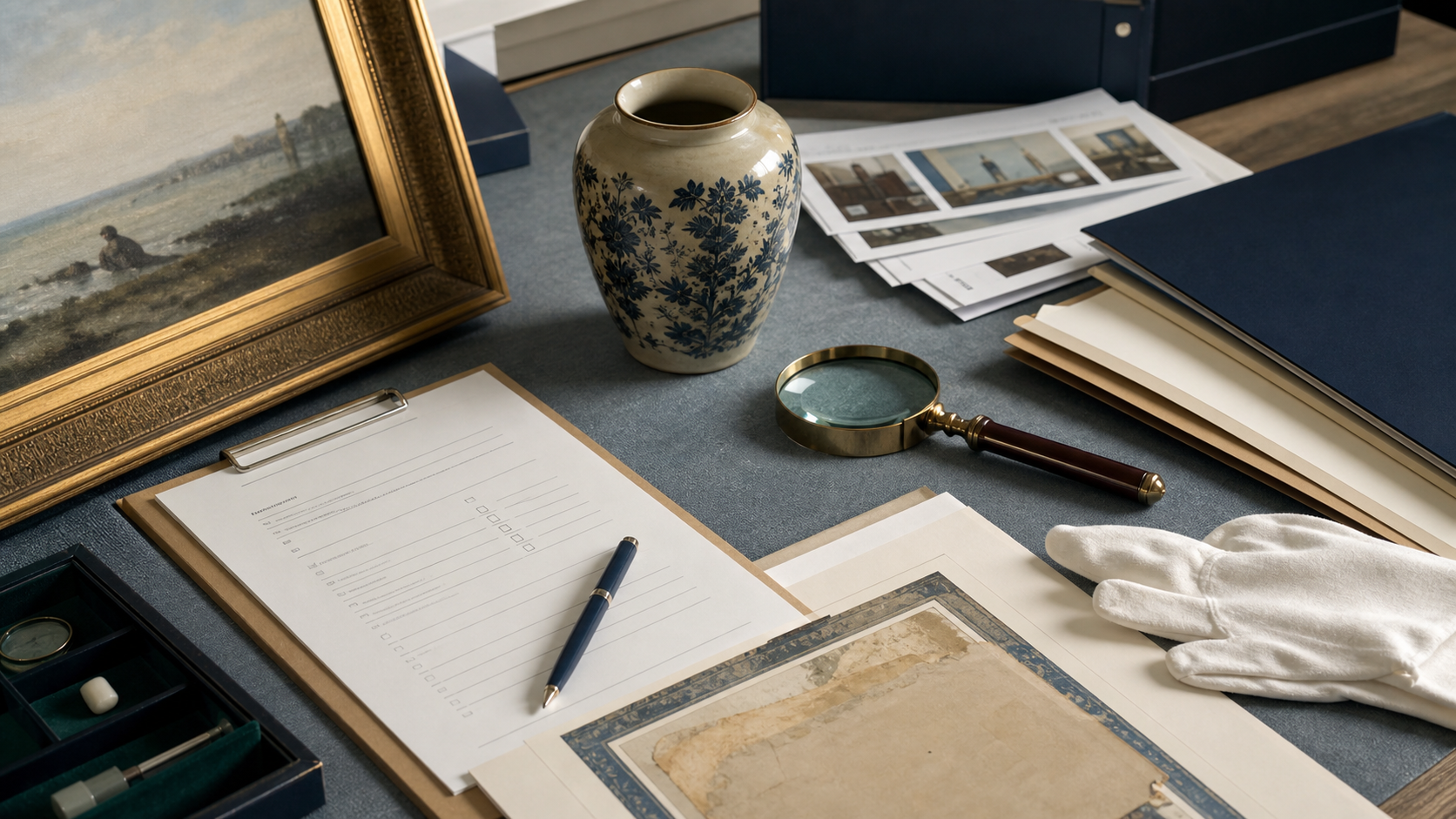
Condition changes value. Look for fading, foxing, cracks, chips, missing parts, replacements, relining, repairs, overcleaning, dry mounting, refinishing, regilding, and structural instability. State what was not inspected, especially if the object is framed, mounted, sealed, or only viewed from photos.
Check provenance and documents
Provenance can support attribution, legal title, and buyer confidence. Collect receipts, gallery labels, auction stickers, exhibition references, estate inventories, insurance schedules, appraisals, and old photographs. If the document cannot be tied to the object, treat it as unverified.
Note: We couldn’t find relevant auction comps in our database for this topic right now. If you’re valuing a specific item, try searching by maker/model/material and we’ll expand coverage over time.
What similar items actually sold for
To help ground this guide in real market activity, here are recent example auction comps from Appraisily’s internal database. These are educational comparables (not a guarantee of price for your specific item).
| Image | Description | Auction house | Date | Lot | Reported price realized |
|---|---|---|---|---|---|
| No relevant auction comps found for this topic right now. | |||||
Disclosure: prices are shown as reported by auction houses and are provided for appraisal context. Learn more in our editorial policy.
Choose comparable sales carefully
Strong comps match maker, date, object type, medium, size, condition, quality, subject, provenance, and venue. A retail listing, auction estimate, hammer price, and insurance replacement quote are different data types. Use the market that matches the assignment purpose.
Common evaluation mistakes
- Pricing from asking prices instead of sold results.
- Using comps before confirming size, medium, or condition.
- Ignoring restoration, missing parts, or replaced components.
- Assuming a label or signature is proof without corroboration.
- Mixing fair market value with replacement value.
- Failing to disclose uncertainty in attribution or provenance.
Search variations people ask
Collectors often search these evaluation questions:
- how to evaluate antiques and art
- antique appraisal guide condition provenance comps
- how to choose comparable sales for art appraisal
- fair market value vs replacement value antiques
- how condition affects antique value
- what documents help art appraisal
- how to prepare photos for online appraisal
- how to tell if an appraisal value is reliable
Each question maps to an evaluation step above.
References
Wrap-up
To evaluate antiques and art, slow down the pricing step. Identify the object, document condition, verify provenance where possible, select comparable sales from the right market, and state the value type and assumptions clearly.