How to appraise antiques and fine art: process basics
To appraise antiques and fine art, start with assignment purpose, identify the object, preserve provenance, evaluate authentication and condition, select comparable sales, then explain a value conclusion in the correct market.
Free first read
Check what kind of appraisal your item needs
Upload photos, marks, documents, dimensions, and intended use. The free screener can flag the likely category and whether a signed report is needed.
Start with a free screener. Use a signed report when you need insurance, estate, donation, resale, or formal documentation.
1. Clarify purpose, value type, and scope
Before inspecting price records, state the intended use, value definition, effective date, inspection method, assumptions, limitations, and intended users. Fair market value, retail replacement value, liquidation value, and resale estimates answer different questions.
2. Build a document file
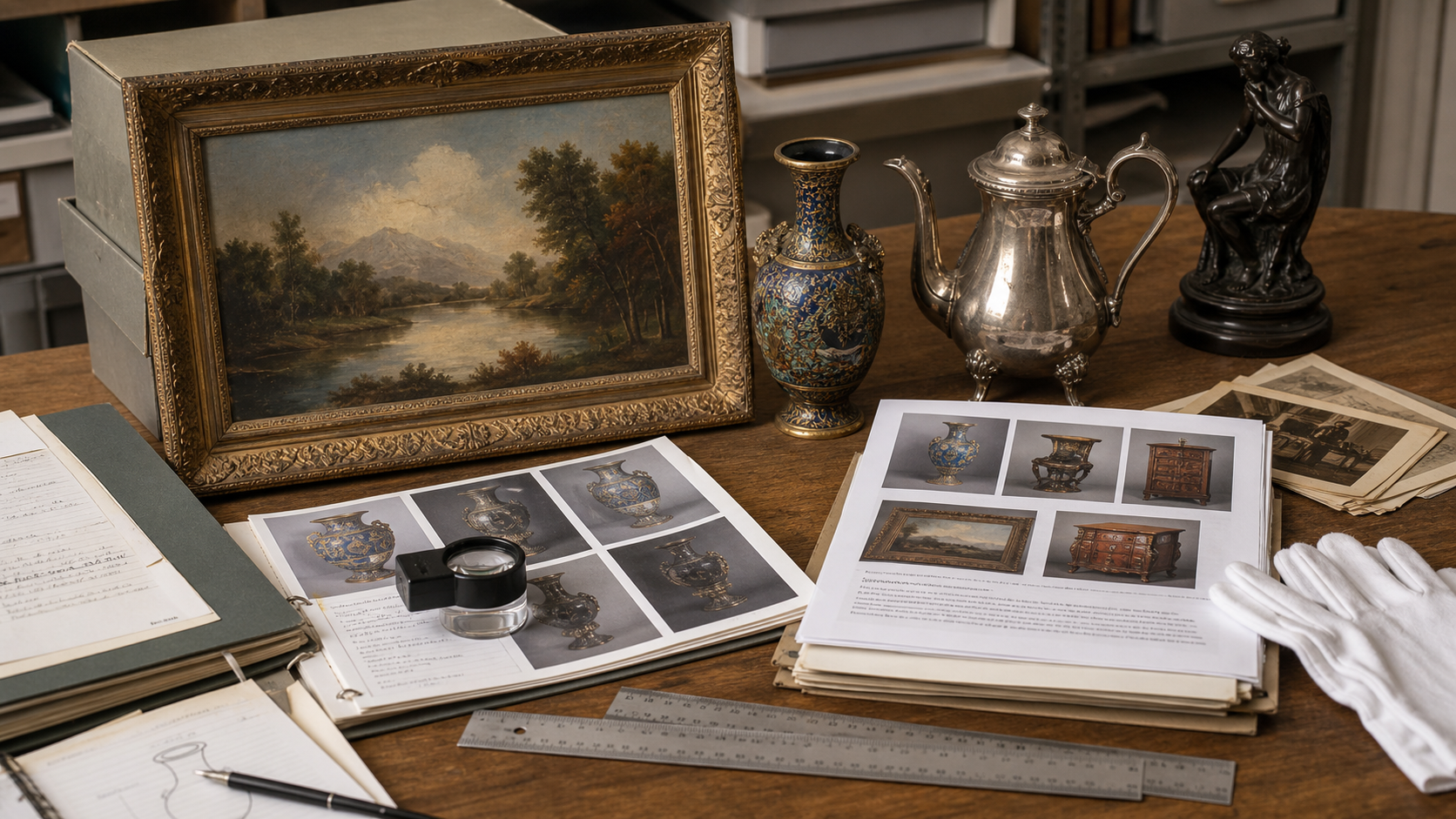
Gather invoices, bills of sale, prior appraisals, conservation reports, exhibition labels, catalogue references, family records, and photographs in situ. Separate verified provenance from reported history.
3. Evaluate authentication and dating
Compare signatures, marks, materials, construction, editioning, paper, foundry or assay marks, and technical details against known examples. Use UV, raking light, XRF, infrared, X-ray, dendrochronology, or other testing only when the result answers a value-bearing question.
Note: We couldn’t find relevant auction comps in our database for this topic right now. If you’re valuing a specific item, try searching by maker/model/material and we’ll expand coverage over time.
What similar items actually sold for
To help ground this guide in real market activity, here are recent example auction comps from Appraisily’s internal database. These are educational comparables (not a guarantee of price for your specific item).
| Image | Description | Auction house | Date | Lot | Reported price realized |
|---|---|---|---|---|---|
| No relevant auction comps found for this topic right now. | |||||
Disclosure: prices are shown as reported by auction houses and are provided for appraisal context. Learn more in our editorial policy.
4. Describe condition before adjusting value
Condition should be specific: structural repairs, losses, relining, overpaint, foxing, chips, overcleaning, replaced hardware, refinishing, and stability. State whether issues affect appearance, function, authenticity, marketability, or conservation risk.
5. Select and reconcile comparable sales
Use comparables that match artist or maker, attribution tier, medium, size, subject, period, condition, provenance, market venue, and sale date. Explain buyer premium, currency, rejected outliers, and the value range rather than hiding all reasoning in one number.
6. Write the report so it can be reviewed
Include scope, object description, condition, provenance, methodology, market analysis, assumptions, limiting conditions, photos, effective date, and value conclusion. Retain the workfile with notes and calculations.
FAQ
What is the first step when appraising antiques or fine art?
Define the intended use, value type, effective date, users, inspection limits, and assignment scope before researching price. The value purpose controls which market data is relevant.
Can auction prices be used for insurance appraisals?
Auction prices can provide context, but insurance replacement value usually requires relevant retail replacement evidence. Fair market value, resale estimates, and insurance values should not be mixed without explanation.
What if provenance is incomplete?
Document what is verified, identify gaps, and avoid overstating ownership history. Incomplete provenance can still be managed, but high-value art, antiquities, and restricted materials may need additional due diligence.
Search variations people ask
Collectors often search how to appraise antiques, how to appraise fine art, antique appraisal process, fine art appraisal checklist, comparable sales appraisal, and provenance in art appraisal.
References
Wrap-up
To appraise antiques and fine art well, define the assignment first, then build the evidence file. Identification, provenance, condition, authentication, market data, and report logic all need to line up.