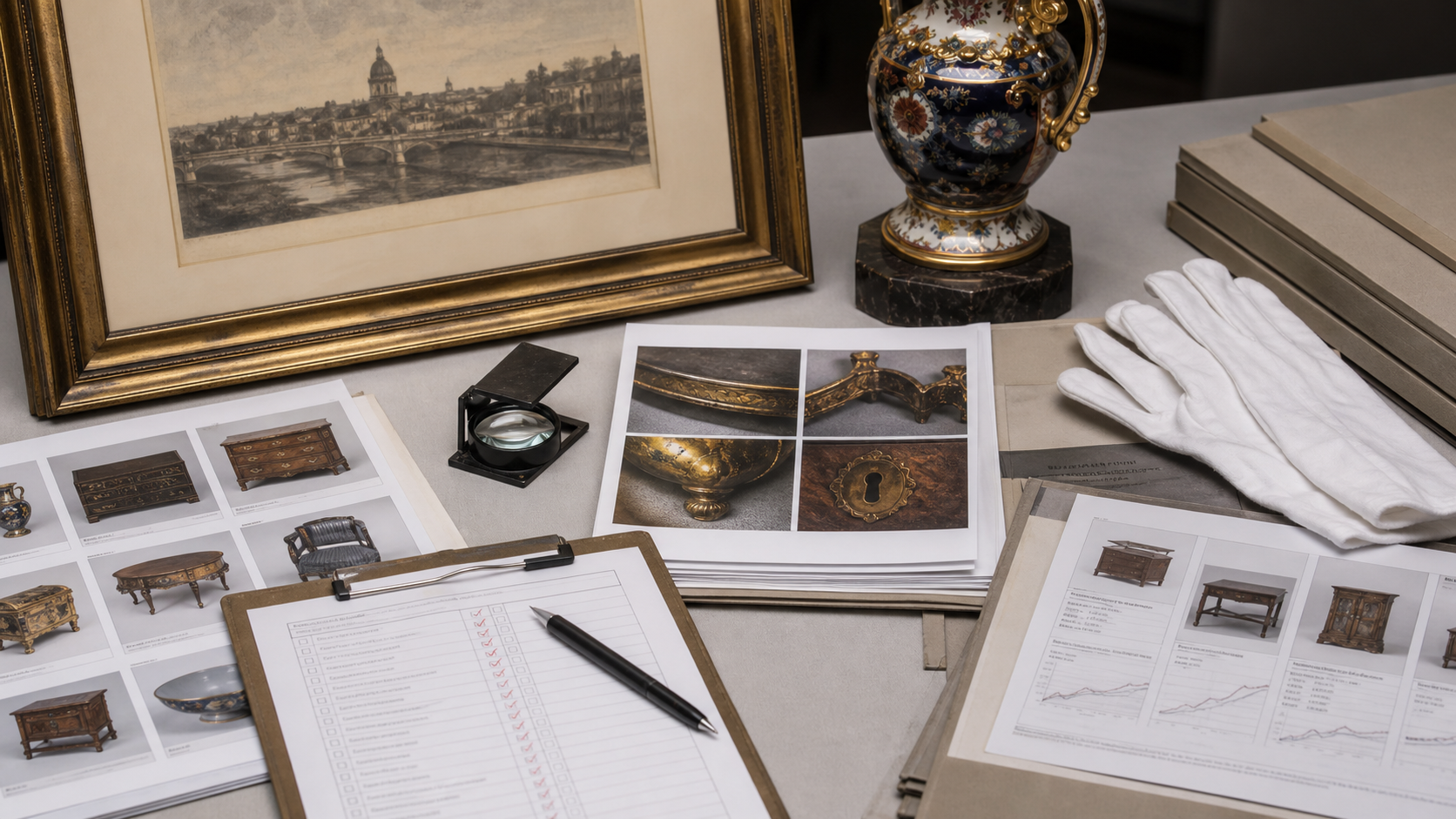
Antique appraisal documentation basics
Antique appraisal work starts with a clean record: identify the object, photograph it, describe materials and construction, record condition, preserve provenance, and then compare it with the market that actually trades similar items.
This guide is written for collectors, estate executors, insurers, and sellers who need a practical workflow before ordering a signed appraisal or deciding whether an object is ready for sale.
Define the value question first
Do not start with a price guess. Start with the intended use, because insurance replacement, fair market value, donation, estate, and resale questions can point to different market levels and different evidence.
- Intended use: insurance scheduling, estate planning, equitable distribution, donation, resale, or collection management.
- Effective date: the date the value opinion applies to, since markets change.
- Market level: regional auction, international auction, dealer retail, private sale, or replacement market.
- Value definition: fair market value, retail replacement value, orderly liquidation, or another stated definition.
The Appraisal Foundation's USPAP framework is built around clear scope, intended use, impartiality, and credible reporting. Even when you are doing preliminary research, those same habits keep the file defensible.
Document the object before researching prices
A strong appraisal file lets another specialist understand exactly what was inspected. Record the basic description first, then gather the evidence that supports or weakens attribution.
- Measure in a consistent format and note whether dimensions are sight, sheet, frame, cabinet, seat, or overall size.
- Photograph front, back, underside, interior, edges, labels, marks, repairs, losses, and any accessories.
- Describe materials and construction: wood species, joinery, metal type, casting seams, ceramic body, glass pontil, canvas, paper, textile, or mixed media.
- Transcribe marks exactly, including punctuation, partial numbers, illegible letters, stickers, old inventory codes, and later dealer labels.
- Separate original features from later repairs, replacements, refinishing, relining, repainting, regilding, or reupholstery.
For paintings and works on paper, keep frame and backing notes separate from the artwork itself. For furniture and decorative arts, do not remove hardware or labels just to make photography easier.
Build authentication as an evidence file
Authentication is rarely one fact. It is a pattern made from materials, construction, style, provenance, inscriptions, condition, and market history. Treat each point as evidence with a confidence level.
- By: strong evidence supports the named maker or artist.
- Attributed to: evidence points toward a maker, but a material uncertainty remains.
- Studio of, circle of, follower of, after: useful attribution tiers that can change the comparable set and value range.
- Unknown maker: often the right conclusion when the market buys by type, quality, period, and condition rather than name.
Use non-destructive examination first. Angled light, magnification, ultraviolet light, provenance research, and comparison with documented examples usually come before specialist testing such as XRF, pigment analysis, dendrochronology, radiocarbon dating, or thermoluminescence.
Map condition and conservation risk
Condition can move value more than age. A rare object with unstable repairs, aggressive cleaning, or missing original surfaces may sell below a more common example in honest condition.
- Identify structural issues: cracks, warping, loose joints, panel movement, canvas slack, tears, failed mounts, or insect damage.
- Identify surface issues: abrasions, stains, overcleaning, oxidation, varnish bloom, paint loss, overpaint, and color shift.
- Record restorations: replaced feet, new hardware, relining, filled ceramic chips, regilding, resoldering, repainting, or refinishing.
- Flag legal or saleability issues, including ivory, tortoiseshell, protected woods, cultural property, and export restrictions.
Do not clean, polish, restore, or reframe an object before documentation unless a conservator recommends it for stability. The pre-treatment record may be the best evidence of originality.
Note: We couldn’t find relevant auction comps in our database for this topic right now. If you’re valuing a specific item, try searching by maker/model/material and we’ll expand coverage over time.
What similar items actually sold for
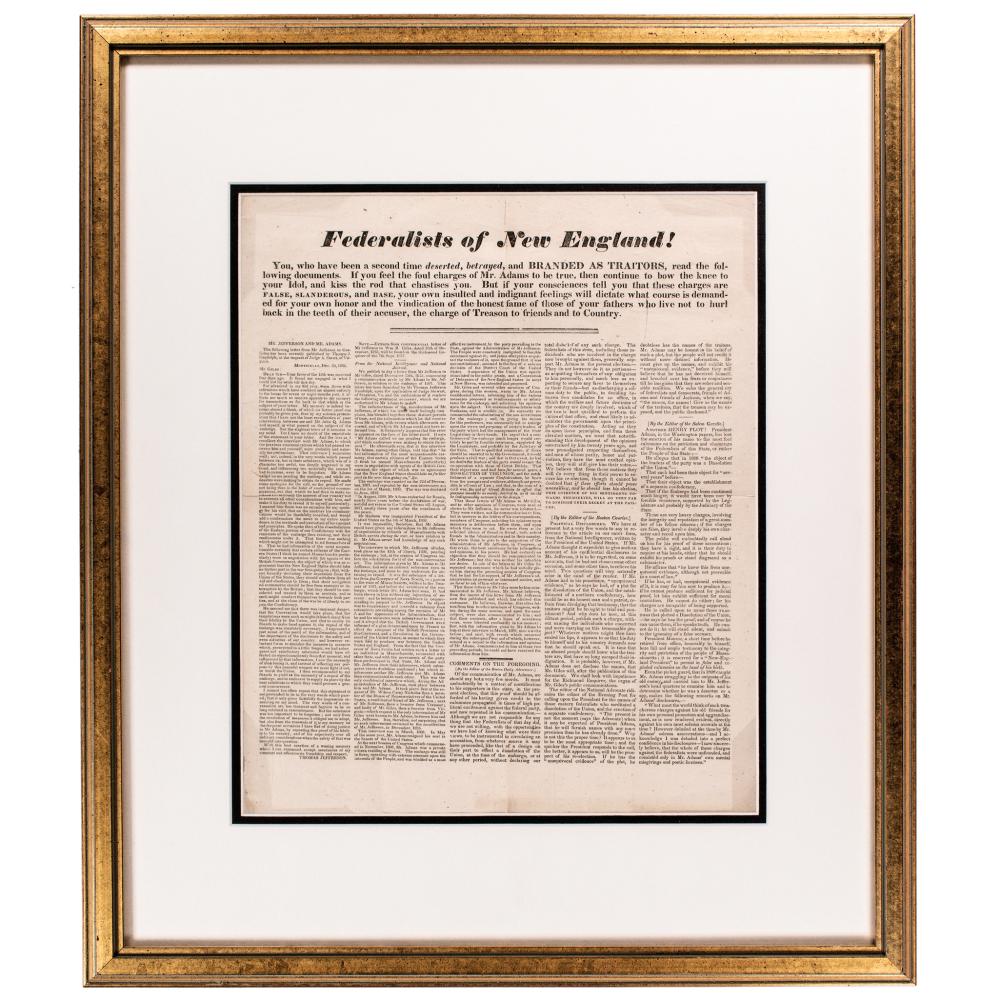
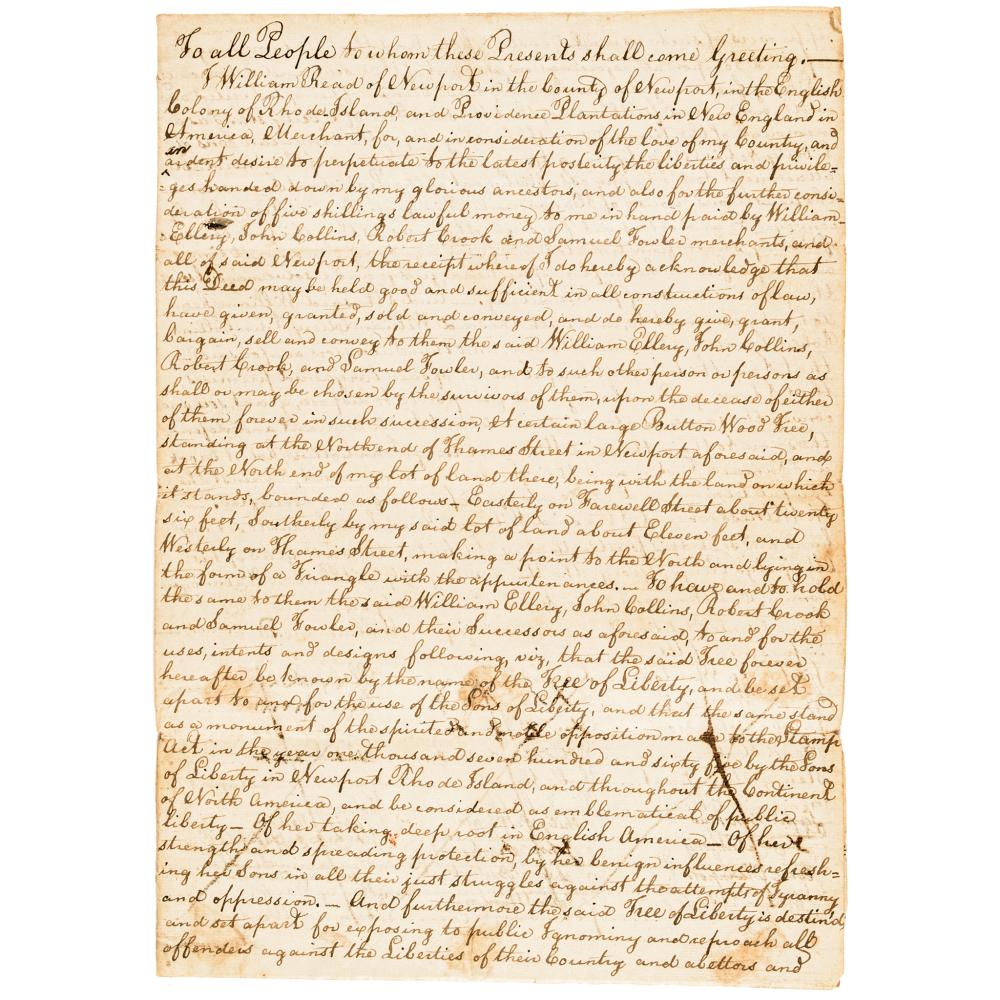
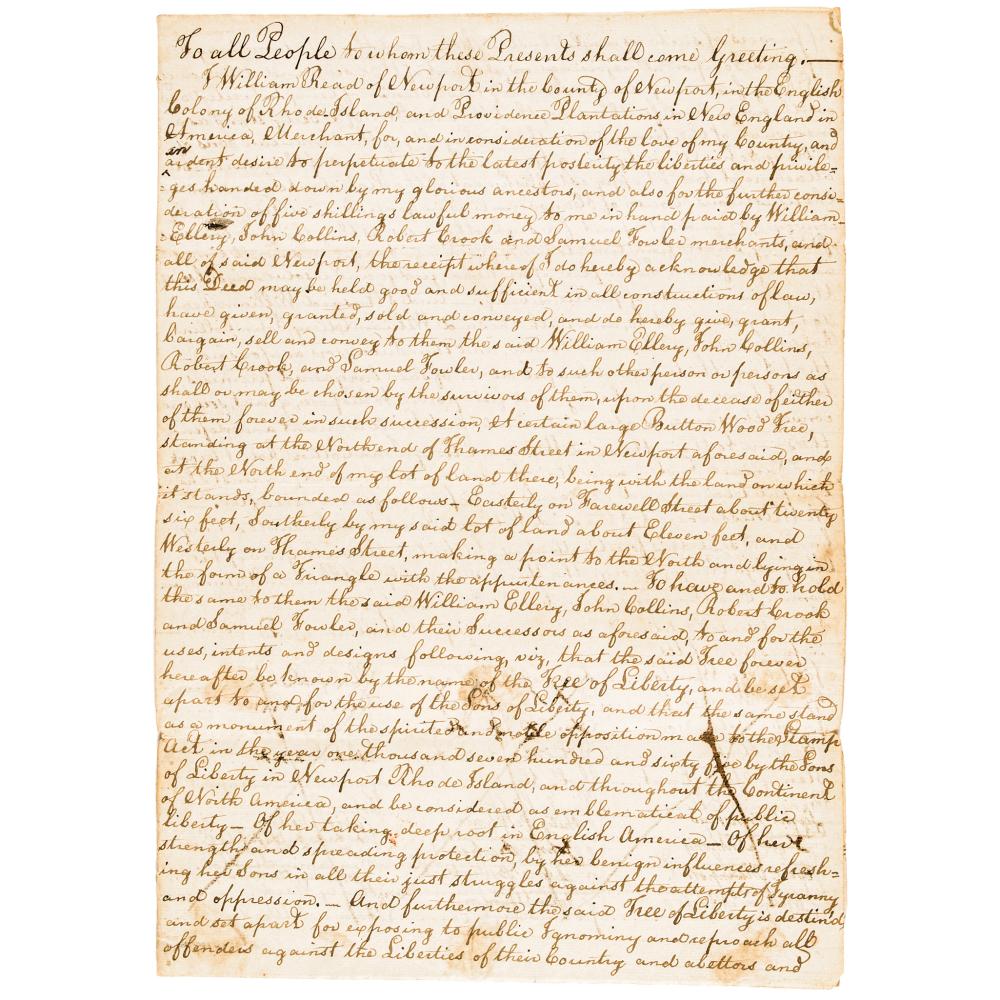
To help ground this guide in real market activity, here are recent example auction comps from Appraisily’s internal database. These matched sales are market context only, not an object estimate or identification, and they do not guarantee a price for your specific document authenticate value antiques.
Shown USD range: USD 450-USD 5,000. Median of these 4 USD examples: USD 3,600.
![[RE DI NAPOLI] - Das Lobgedicht auf Konig Robert von Anjou - Graz: Akademische Druck Verlagsanstalt, 2008. The Poem of Praise for Robert of Anjou, King of Naples between 1278 and 1343, is a valuable historical document preserved in the Au... sold by Il Ponte Auction House, lot 250 — auction record photograph](https://assets.appraisily.com/comps/auction-lots/186455540/thumb/h0611-l362134040.jpg)
How these auction records were verified
Each row retains its exact source URL, lot identity, retrieval time, access result, and immutable record hash. Inspect the public comparable provenance record.
Disclosure: prices are shown as reported by auction houses and are provided for appraisal context. Learn more in our editorial policy.
Select comparables that match the assignment
Comparable sales should be close enough that a buyer in the same market would weigh them against the subject object. A decorative object, painting, print, silver form, or furniture suite may need a different set of filters.
- Use realized sales when available, not only asking prices.
- Match maker, period, material, size, subject, condition, provenance strength, and venue level.
- Keep older sales only when they are the best matches, and explain the time adjustment or market change.
- Record buyer's premium treatment so prices are comparable.
- Keep rejected comparables in the workfile with a short reason: wrong size, restored, different market, uncertain attribution, or incomplete lot information.
For insurance replacement, dealer retail and replacement availability may matter more than auction hammer prices. For estate and resale work, realized auction data is usually the stronger starting point.
Turn your object file into a written appraisal
If you have photos, measurements, condition notes, or provenance records, an Appraisily specialist can turn them into a signed valuation report with comparable-market support.
Write the conclusion so it can be checked
A useful appraisal report does more than state a number. It describes the object, explains the evidence, identifies the market, lists assumptions, and shows how the best comparables support the value range.
- State the value definition, intended use, intended users, effective date, and market level.
- Use plain attribution language and explain confidence, contradictions, and limitations.
- Summarize condition in value terms, not just conservation terms.
- Show the strongest comparable sales and explain any adjustments.
- Disclose conflicts, contingent-fee issues, extraordinary assumptions, and tests not performed.
Keep the workfile after the report is issued. Photos, notes, correspondence, source pages, and excluded comparables are what make the conclusion reviewable later.
FAQ
How many comparable sales do I need?
Use at least three strong comparables when the market has enough data. For rare objects, fewer direct comparables may be acceptable if the report explains the evidence and supporting market anchors.
Should I restore an antique before appraisal?
Document it first. Cleaning, polishing, reframing, refinishing, and restoration can change both evidence and value. Ask a qualified conservator before making irreversible changes.
What if provenance is incomplete?
Incomplete provenance is common. Record the gaps, pursue reasonable leads, and state how the missing information affects attribution confidence and value.
Are dealer asking prices useful?
They can help with retail replacement and availability, but realized sales are usually stronger for fair market value. Note whether an asking price is current, reduced, or actually sold.
Reference links
Get a price-ready appraisal for your antique
Upload the object photos, measurements, marks, condition details, and any provenance records you already have. A specialist can review the file and prepare a report that connects the object to the right market evidence.