Antique marks and inventory numbers appraisal basics
Antique marks, labels, accession numbers, dealer stock codes, auction stickers, and frame-shop job numbers can all help an appraisal, but only when they are documented and tested against the object itself. A penciled code on a stretcher bar, a paper label on a frame back, or a stamped number under a ceramic base is evidence to preserve, not a value conclusion by itself.
This guide explains how to turn scattered marks into a useful appraisal workfile: photograph the mark in context, identify what type of code it might be, check whether it belongs to the object or a later frame/mount, corroborate it with material evidence, then decide whether it changes provenance, attribution, condition history, or market comps.
Free first read
Check the mark, label, and object evidence together
Upload the full object, close-ups of every mark or label, back/underside photos, measurements, and any receipts or prior appraisals. The free screener can flag whether the code looks like provenance evidence, an ordinary inventory number, or something unrelated to value.
Start with a free screener. Use a signed report when the mark affects resale, insurance, estate, donation, or formal documentation.
How We Research Valuation Data
Our appraisal guides are based on auction results, dealer pricing data, and professional appraiser insights. We may earn a commission when you use our free screener. Learn about our editorial standards.
Why marks and inventory numbers matter
Marks can connect an object to a dated event: a gallery sale, auction lot, museum accession, estate inventory, conservation treatment, shipping job, exhibition, or prior owner. When that connection is reliable, it can reduce identification risk and help select better market comps.
The mistake is treating every number as meaningful. A dealer stock number may be useful for tracing a sale, but it does not prove age. An auction barcode may confirm recent handling, but it does not prove authorship. A frame label may belong to a replacement frame rather than the artwork.
Common mark types to separate
- Maker's marks and hallmarks: primary evidence for silver, jewelry, ceramics, and some decorative arts.
- Signatures and monograms: artist or maker clues that still need material and market corroboration.
- Museum accession numbers: institutional control numbers tied to acquisition or collection records.
- Dealer or gallery stock codes: internal business identifiers, often on labels, invoices, or frame backs.
- Auction labels and lot numbers: sale-event evidence that can match an old catalog image or condition report.
- Conservator, framer, shipper, or photographer job numbers: handling records that may explain repairs, mounting, or old photos.
- Owner or estate tags: useful for chain-of-custody but often weaker than independent market records.
How to document a mark before appraisal
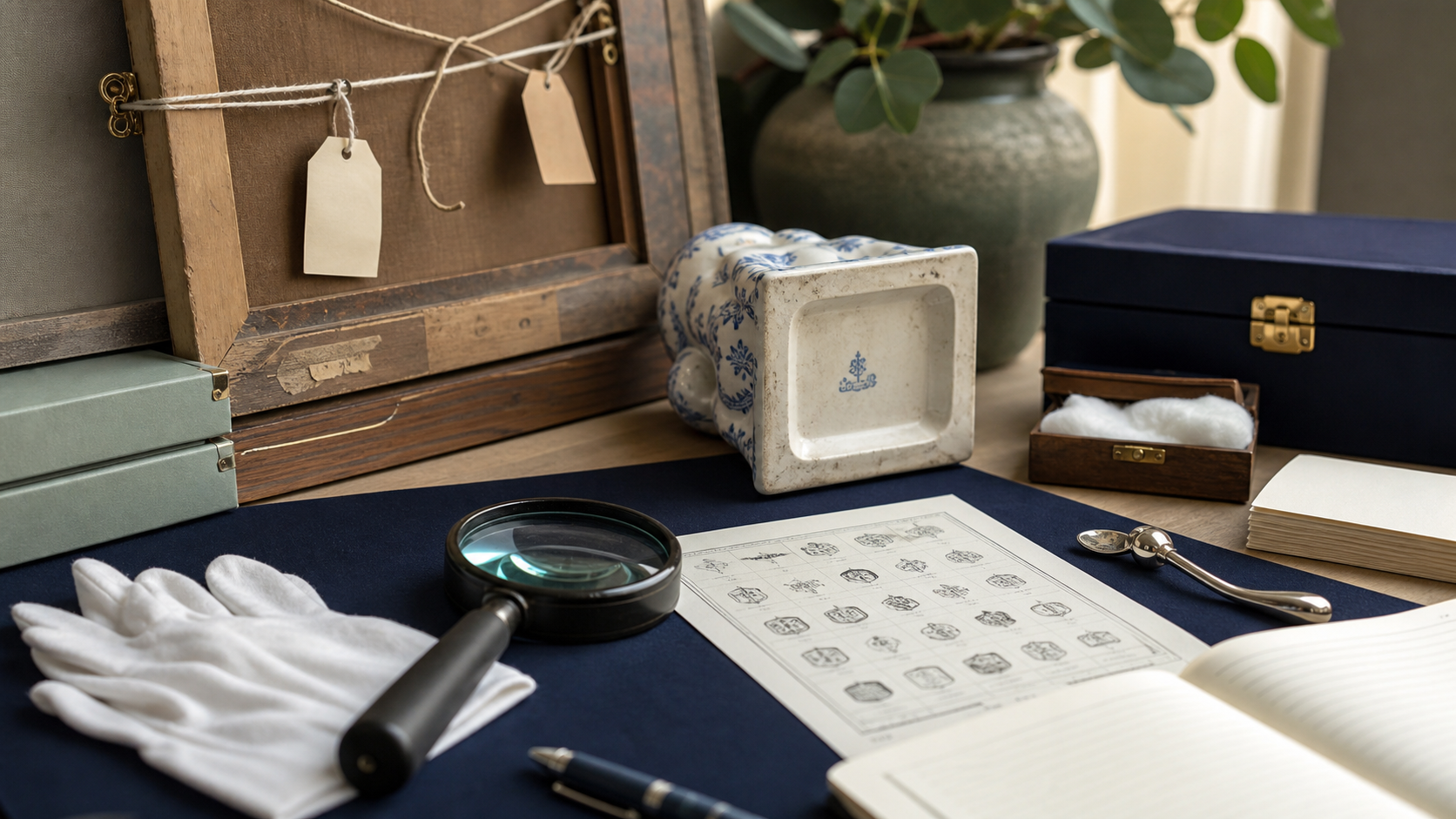
- Photograph the full object first, then the mark in place, then a sharp close-up.
- Include a ruler or scale when the mark is small.
- Record exact transcription, including spacing, punctuation, capitalization, and uncertain characters.
- Note whether the mark is on the object, a frame, a label, a mount, a base, or a removable tag.
- Photograph all related paperwork: invoices, appraisals, gallery labels, shipping tags, exhibition labels, and conservation notes.
- Do not clean, repaint, scrape, or remove old labels before documentation.
Note: We couldn’t find relevant auction comps in our database for this topic right now. If you’re valuing a specific item, try searching by maker/model/material and we’ll expand coverage over time.
What similar items actually sold for
To help ground this guide in real market activity, here are recent example auction comps from Appraisily’s internal database. These are educational comparables (not a guarantee of price for your specific item).
| Image | Description | Auction house | Date | Lot | Reported price realized |
|---|---|---|---|---|---|
| No relevant auction comps found for this topic right now. | |||||
Disclosure: prices are shown as reported by auction houses and are provided for appraisal context. Learn more in our editorial policy.
How marks affect value conclusions
Marks and labels matter most when they reduce uncertainty. A confirmed auction lot can prove the object being valued is the same object in a previous sale. A gallery label can support a provenance chain. A hallmark can identify maker and date. But weak, unmatched, or removable labels should be disclosed as observed evidence, not treated as proof.
In a written appraisal, the value conclusion should still reconcile comparable sales by maker, object type, date, size, condition, quality, provenance, and market level. The mark helps explain why a comp is relevant; it does not replace the comp analysis.
Red flags when reading antique marks
- A valuable name on a new-looking label with no supporting paper trail.
- A frame label that does not match the artwork's size, subject, or age.
- A barcode or printed sticker used as evidence of old provenance.
- Marks that sit on top of fresh varnish, paint, polish, or recently disturbed surfaces.
- Multiple labels that tell conflicting ownership or date stories.
- Registry, accession, or lot numbers that cannot be matched to external records.
Search variations people ask
Collectors often search these questions while decoding marks and labels:
- how to identify antique inventory numbers
- what does an accession number mean on art
- dealer stock number on painting value
- auction sticker on antique appraisal
- how to photograph hallmarks for appraisal
- do gallery labels increase painting value
- should I remove old labels from antiques
- how provenance affects antique value
Each question maps to the documentation and valuation guidance above.
References
Wrap-up
Antique marks and inventory numbers are most valuable when they connect physical evidence to records: catalogs, invoices, accession files, conservation notes, or prior sale images. Preserve the evidence, document it clearly, and let it support the appraisal analysis without overstating what the mark can prove.