An After Frederick Goodall R a 1822 1904 Original Painting From Circa 19th Century: appraisal and value basics
An After Frederick Goodall R a 1822 1904 Original Painting From Circa 19th Century research should start with identification, condition, provenance, and item-specific market evidence. Use this guide to compare the signals that matter before paying for a formal appraisal or deciding whether to sell.
After Frederick Goodall 19th-Century Painting Value Guide
Collectors and appraisers often encounter paintings described as “after Frederick Goodall, R.A. (1822–1904).” The phrase can be puzzling, especially when the work is clearly an original hand-painted canvas and appears to date from the nineteenth century. This guide explains what “after” signifies in cataloging, how to evaluate period copies of Goodall’s compositions, and which technical and market factors matter when appraising such works.
Frederick Goodall, R.A. (1822–1904): Context for Appraisers
Frederick Goodall was a prominent Victorian painter, widely admired for evocative Orientalist and biblical scenes as well as earlier English rural subjects. Born into an artistic family (his father, Edward Goodall, was a noted engraver), he exhibited at the Royal Academy from his teens. He became an Associate of the Royal Academy (A.R.A.) in 1852 and a full Royal Academician (R.A.) in 1863. The R.A. post-nominal, when appended to a signature, can help with dating and attribution context.
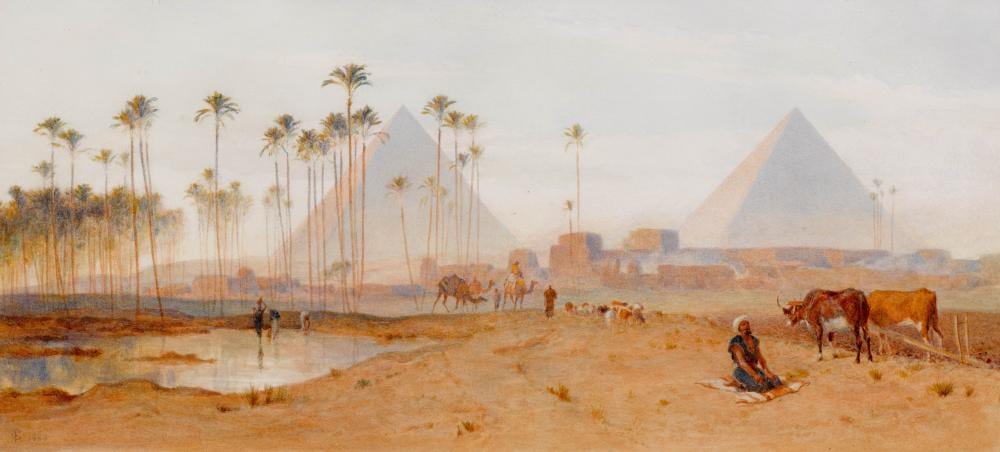
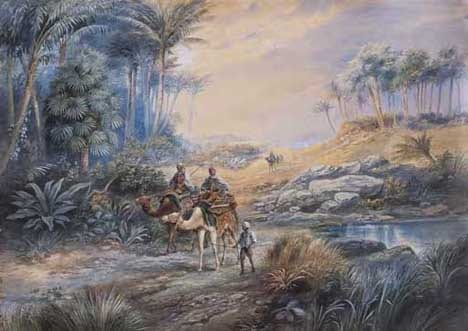
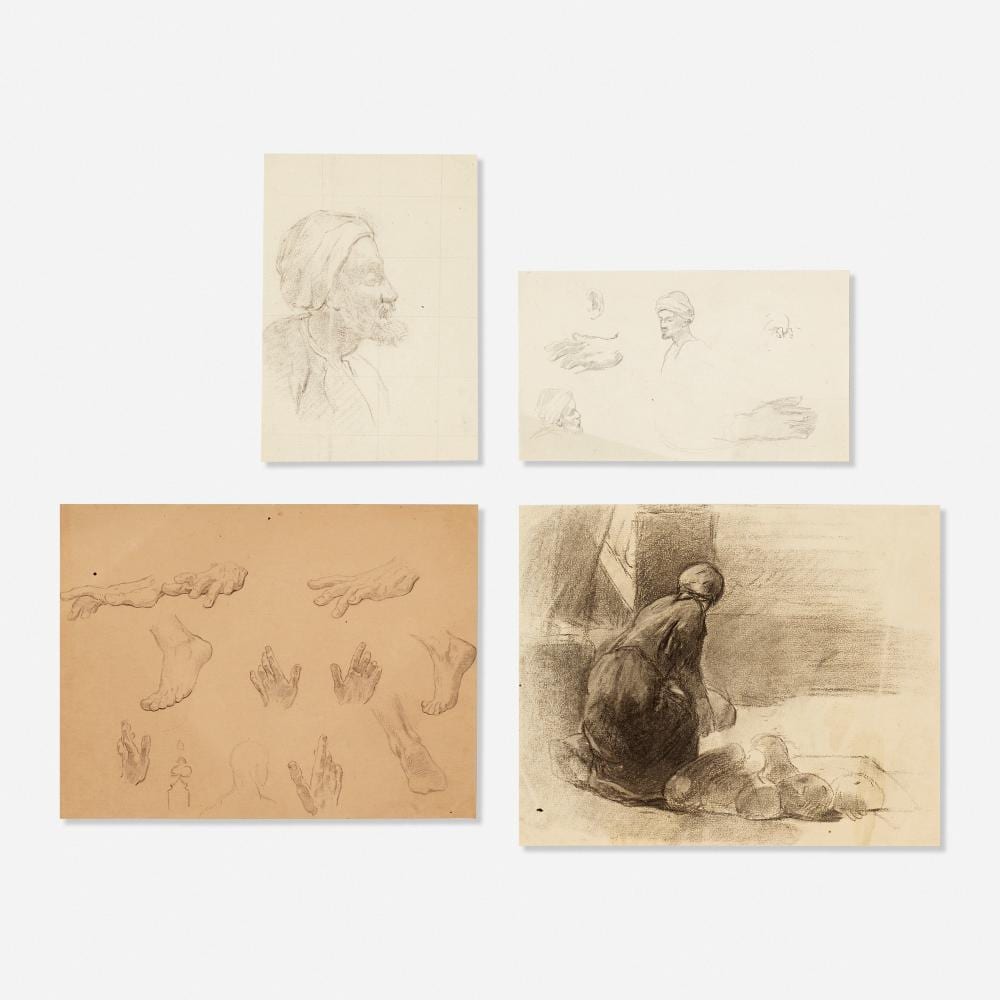
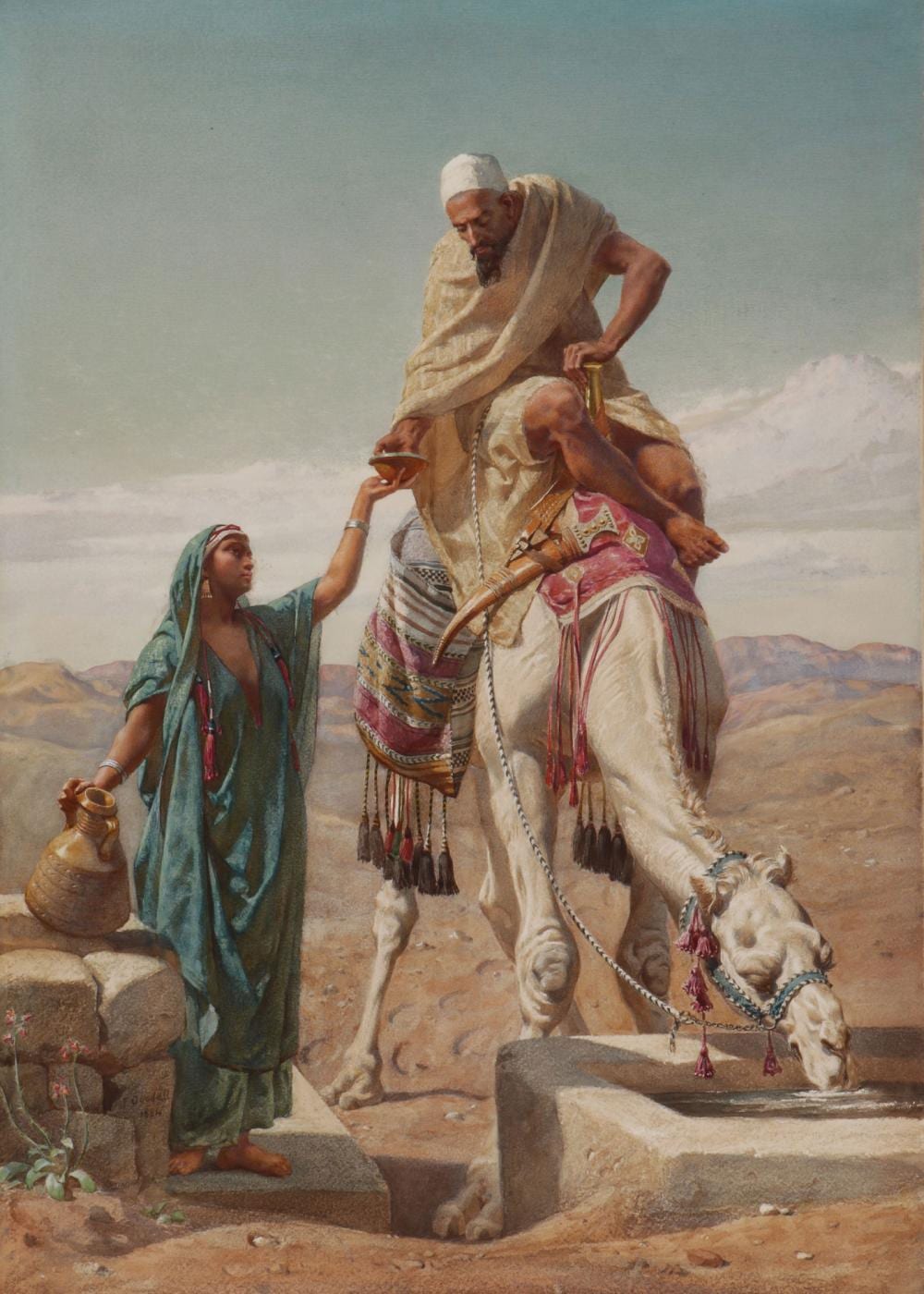
Key to Goodall’s fame were his travels to Egypt, first in 1858 and again in the 1870s. He immersed himself in local life, sketching Bedouin, fellahin at wells, camel trains, palm groves, and desert light. These studies informed polished studio canvases characterized by warm tonal harmonies, luminous glazing, and attentive ethnographic detail in costume, tack, and architecture. His works were reproduced widely as engravings and later photogravures, which, in turn, spurred demand for painted copies.
Because Goodall’s compositions circulated in print and were popular in the Victorian home, his imagery—camels at an oasis, water carriers, dusk prayers by a river—is among the most copied Orientalist subject matter of the late nineteenth century. This legacy is essential context when appraising a painting described as “after Goodall.”
“After Frederick Goodall”: What the Label Really Implies
In art-market language, “after” has a specific, neutral meaning. It does not automatically imply forgery; instead, it indicates the work is a copy of a known composition by the named artist, executed by another hand. For appraisers, understanding the hierarchy of attribution terms is vital:
- By Frederick Goodall: Accepted as an autograph work by Goodall.
- Attributed to Frederick Goodall: Likely by the artist, but with some uncertainty.
- Studio of Frederick Goodall: By a pupil or assistant in the artist’s studio, probably during his lifetime.
- Circle of Frederick Goodall: By a contemporary or near-contemporary follower influenced by the artist.
- School of Victorian/Orientalist, Frederick Goodall: Regional or stylistic affinity; often broader and less specific.
- After Frederick Goodall: A copy of a specific composition by Goodall, executed by another artist, which may be contemporaneous (nineteenth century) or later.
- In the manner of Frederick Goodall: In the style of the artist, typically later, not a direct copy of a known composition.
For valuation, a period “after Goodall” painting can still be desirable, especially if it demonstrates high technical quality and nineteenth-century materials. However, it will be positioned below autograph Goodall works and typically below “studio of” or strong “circle of” pieces. Accurate use of “after” protects buyers, sellers, and insurers from misattribution.
Dating a 19th-Century Example: Materials and Methods
If you’re presented with “an after Frederick Goodall R.A. 1822–1904 original painting from circa nineteenth century,” your core task is confirming the period origin, not authorship by Goodall. Several technical markers help.
Support and ground:
- Canvas: Nineteenth-century British canvases were often hand- or power-loom linen or cotton duck, commercially primed with a pale oil ground. Look for an even, chalky off-white ground beneath paint layers where losses reveal the substrate.
- Panel: Less common for Goodall imagery but possible; nineteenth-century panels may be single board or joined, often with hand-planed backs. Evidence of later cradling suggests conservation history.
Stretcher and fasteners:
- Keyed stretchers with mortise-and-tenon joints and wooden corner keys are consistent with nineteenth-century practice. Machine-made stretchers appear by mid-late century but still use keys.
- Tacks or nails: Hand-cut nails give early cues; wire nails become common later. The presence of staples generally indicates twentieth-century mounting.
- Bevels on stretcher bars reduce canvas contact; sharp square edges are a later cost-saving feature.
Maker’s stamps and labels:
- British suppliers such as Winsor & Newton, Reeves, and Charles Roberson & Co. often stamped canvas or stretchers. The address on a supplier stamp is date-sensitive; certain Piccadilly or Oxford Street addresses correspond to particular decades.
- Dealer or exhibition labels on the frame or verso can anchor date ranges and provenance.
Pigments and binders:
- Common nineteenth-century pigments include chrome yellow, vermilion, Prussian blue, emerald green, and synthetic ultramarine (post-1828). Zinc white emerged in the 1830s; titanium white is mostly post-1920. Detecting titanium white strongly suggests a later copy or overpaint.
- Natural resin varnishes (mastic, copal) were standard. Under UV light, old resin varnish often fluoresces greenish; modern synthetic coatings tend to show a different response.
Craquelure and film behavior:
- Age-consistent craquelure is typically modest and follows stretcher bar edges or drying patterns. Exaggerated “alligatoring” may signal problematic mediums (e.g., megilp) or harsh environmental cycles.
- Reticulation or wrinkling confined to darks can indicate historic bituminous passages. While some Victorian works show this, uniform modern craquelure imprinting can be artificial.
Image-source clues:
- Size correspondence with known print plate sizes suggests a copy taken from an engraving rather than from life or a studio cartoon.
- Reversed composition (left-right flip) is a hallmark of copying from a print without reversing the model image.
- Edges and contours: Skilled copyists can miss Goodall’s hallmark transitions—softly fused glazes around fabric and skin tones; weak copies leave hard outlines.
Scientific testing:
- Inexpensive spot tests (by a conservator) can identify titanium white or modern pigments.
- Infrared reflectography may reveal underdrawing habits; copyists often have minimal underdrawing apart from contour tracing.
Together, these markers can support a nineteenth-century date for an “after” painting. No single indicator is definitive; build a case from multiple, consistent signs.
Signatures, Subjects, and Stylistic Diagnostics
Signatures and inscriptions:
- Goodall signed variously as “F. Goodall,” “Frederick Goodall,” and “F. Goodall R.A.” The R.A. suffix appears after 1863; its presence on a composition first exhibited earlier can still be legitimate if he signed or reworked a later version. However, copyists frequently add “R.A.” to bolster appeal.
- Inspect signature integration: Under magnification, a period signature will sit within the final paint film, not on a later varnish. A signature that floats above a cracked varnish layer or fluoresces differently under UV may be later.
- Verso notes such as “After F. Goodall” are candid and useful; framers sometimes add “after” on a title slip in the frame’s sight edge.
Subjects and compositional hallmarks:
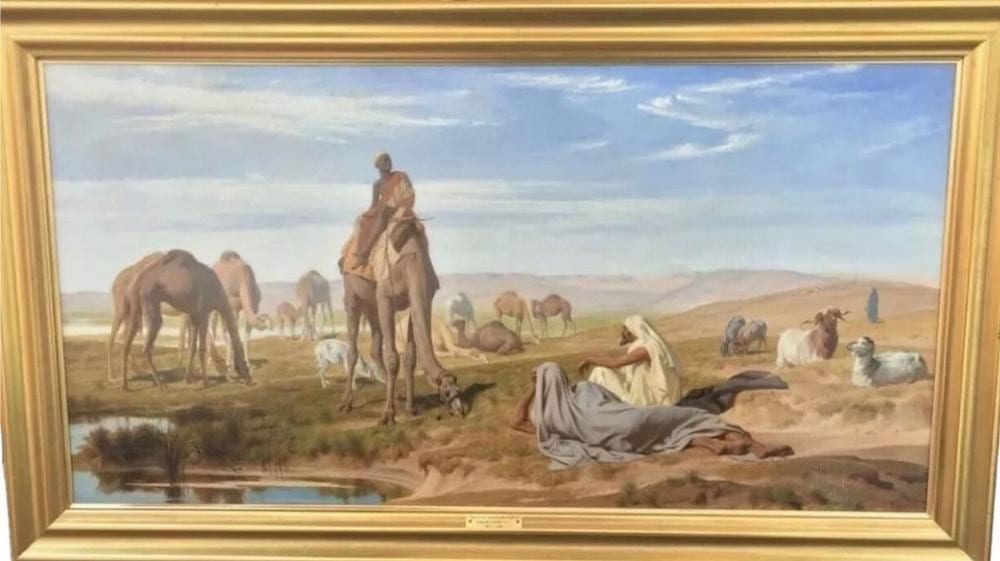
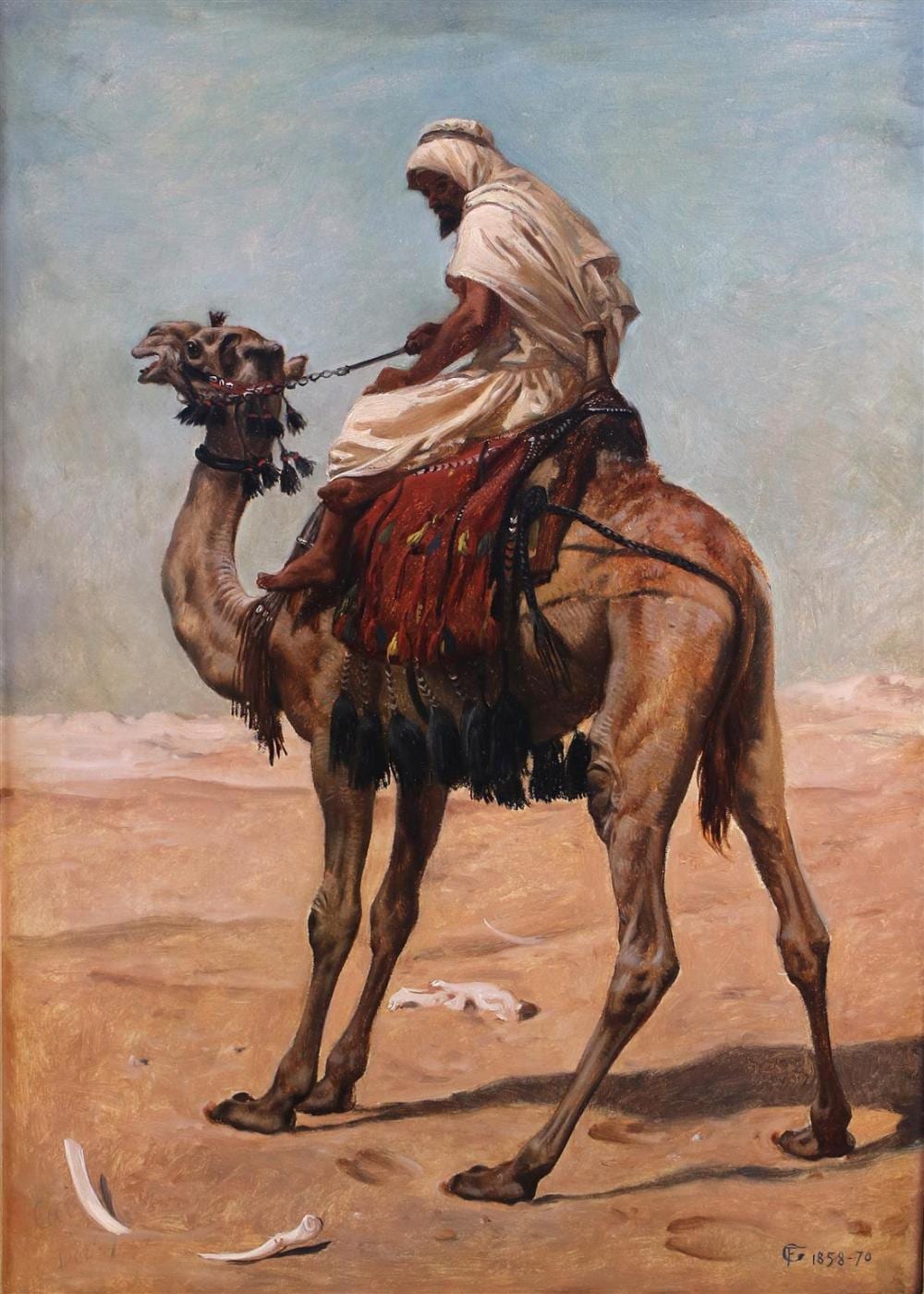
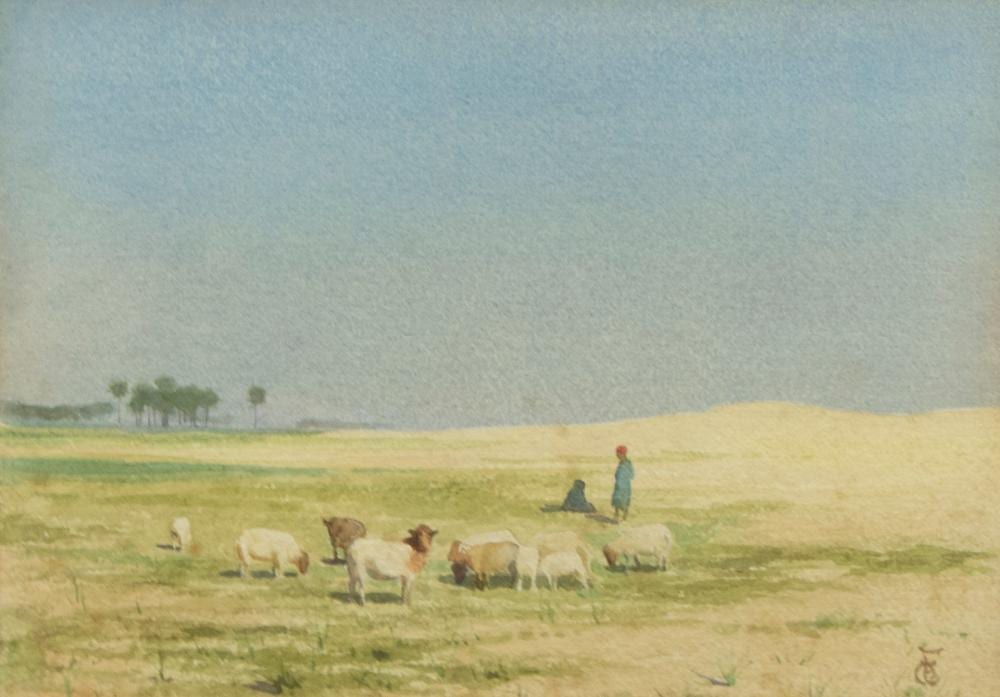
- Egyptian desert and Nile-edge scenes: camels kneeling at watering places, figures in flowing galabiyyas, palm clusters, minarets on the horizon, evening prayer groupings under golden light.
- Biblical narratives set in Near Eastern settings, treated with ethnographic detail (utensils, architecture, textiles).
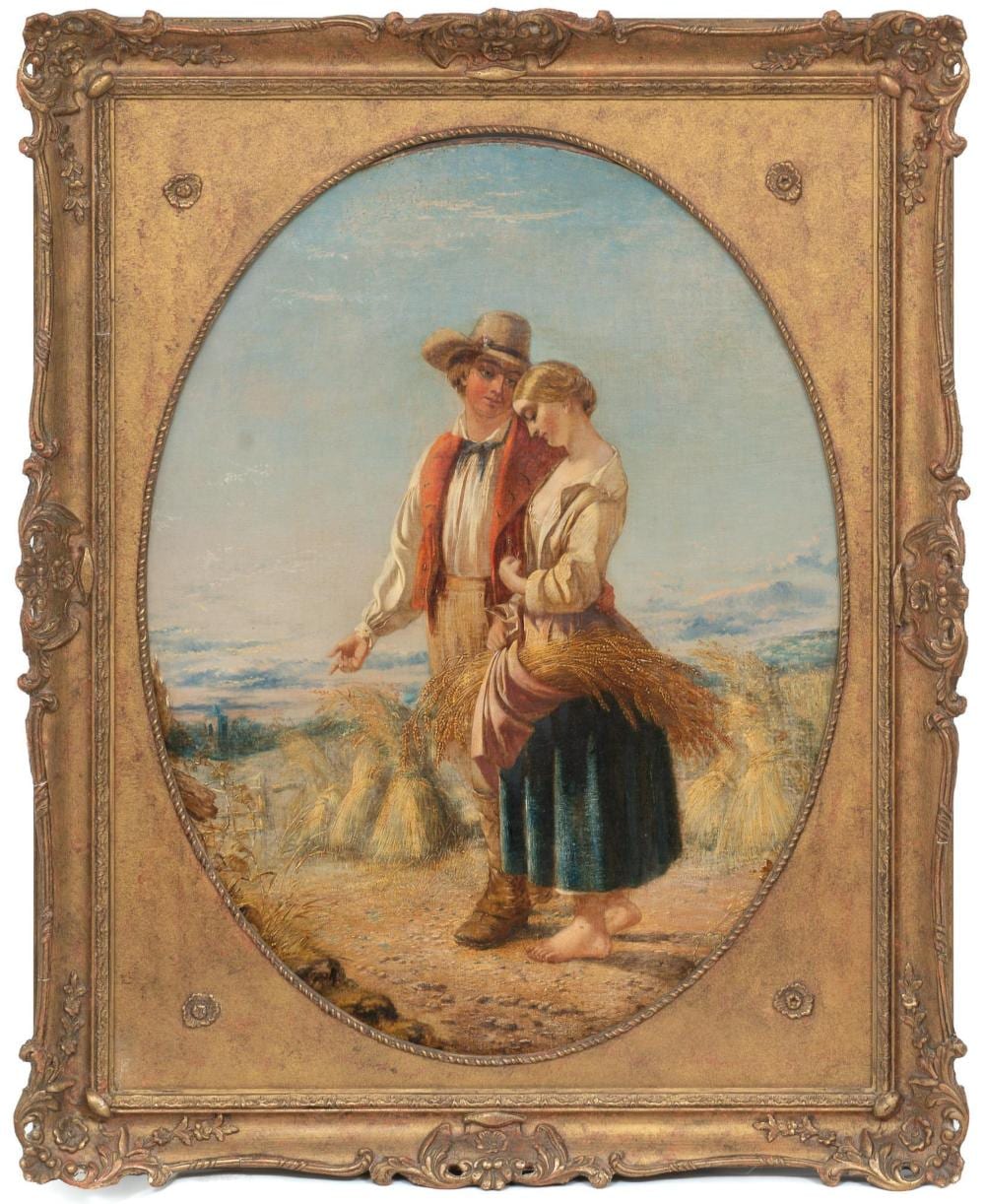
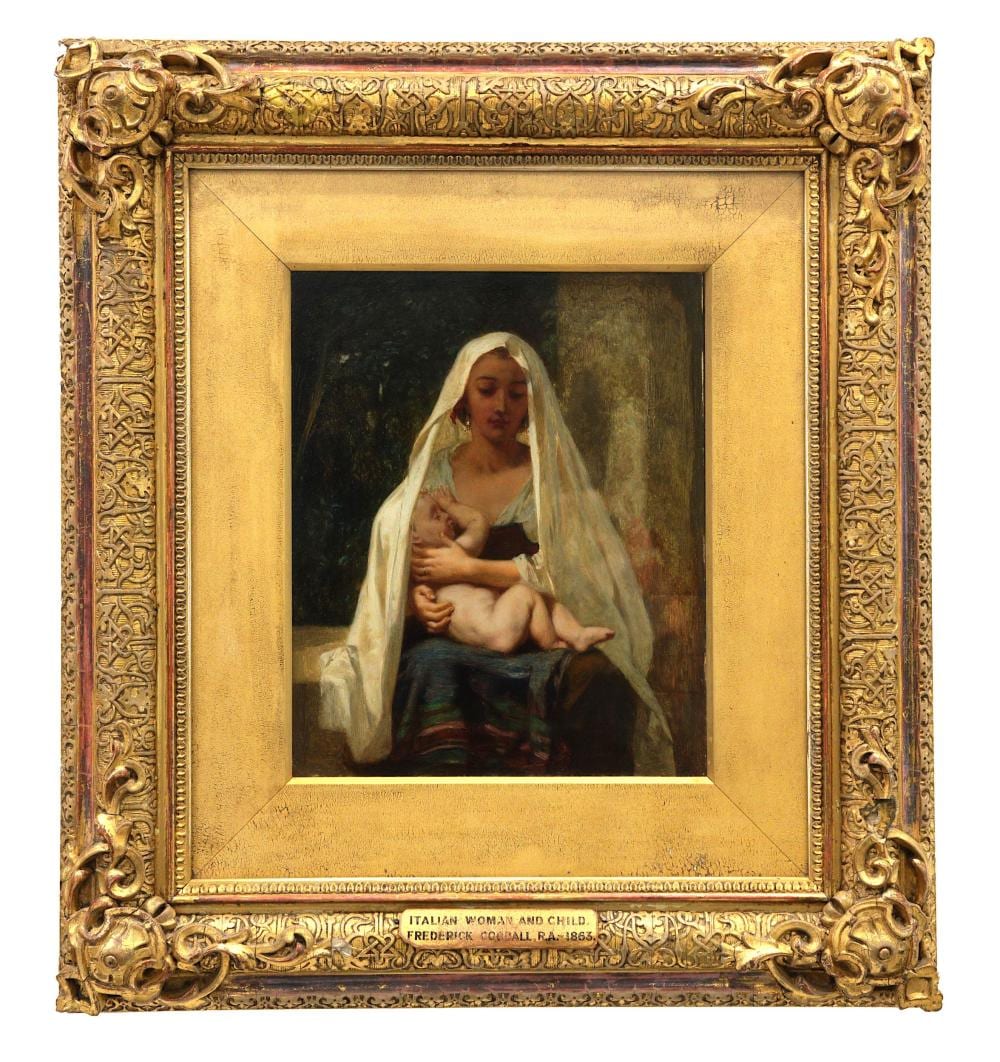
- Earlier pastoral English scenes—less commonly copied for the “after Goodall” market but do appear.
Brushwork and glazing:
- Goodall’s better works layer thin glazes to modulate heat and shadow, with carefully modeled faces and hands. Fine passages in animal anatomy (camel knees, necks, and tack) are a good comparison point: weak copies stiffen these forms.
- Sky gradations: subtle tonal dovetailing, not abrupt bands; sand and dust glow, rather than flat ochre fields.
Comparative research:
- Identify the source composition by searching image databases, print catalogues, or RA exhibition lists. If your painting matches a known Goodall subject closely—including figure count, posture, and accoutrements—it is likely a copy. Mirror reversals, cropped edges, or hybridized elements are common in “after” works.
Frames and presentation:
- Original Victorian gilt composition frames—Watts or similar patterns—can be contemporaneous indicators. Frame-maker labels (e.g., Regent Street, Oxford Street addresses) further refine dating.
The sum of these diagnostics helps distinguish a nineteenth-century copy from a later decorative imitation and clarifies whether “after” is an appropriate, responsible attribution.
Condition, Conservation, and Market Position
Typical condition issues:
- Discolored natural resin varnishes (yellowing/browning) that suppress blues and cools. Cleaning can revive chroma but carries risk if original glazes are thin.
- Lining history: Glue-paste or wax-resin linings signal earlier conservation. Modern polyester sailcloth linings or BEVA-type adhesives are later.
- Mechanical damages: edge wear at stretcher, minor tears at tacking margins, cupping over knots in the canvas. Consolidation and local retouching are expected in nineteenth-century canvases.
Impact on value:
- Quality trumps age. A high-skill nineteenth-century copy “after Goodall,” in stable condition with attractive subject matter (e.g., camels at a well at sunset), can outperform a weak, overcleaned autograph work in some mid-market contexts—but generally, autograph Goodalls set the benchmark.
- Size matters: larger, decoratively scaled works command more in retail contexts; smaller cabinet pictures fare better when finish and detail are jewel-like.
- Provenance premiums: early exhibition labels, traceable ownership, or period titles enhance credibility and desirability even for “after” works.
Ethical description:
- Use transparent cataloging: “British School, late 19th century, after Frederick Goodall R.A., oil on canvas.” If the composition can be tied to a known Goodall title, include it as “after Frederick Goodall’s [Title],” maintaining the “after” qualifier.
Insurance and replacement:
- Insure at fair market value for a period copy, not at autograph levels. Condition reports and photographs of recto/verso should accompany the policy file.
Conservation guidance:
- Before cleaning, commission a UV/solvent sensitivity test to assess glaze vulnerability. Many Victorian glazes are solvent-sensitive; over-cleaning flattens the scene and erodes value.
Practical Checklist: Appraising an “After Frederick Goodall” 19th-Century Painting
Identify the composition:
- Compare the image to known Goodall subjects; note any reversals or size matches to print plate dimensions.
Examine materials:
- Check for keyed stretcher, tacks (not staples), and supplier stamps. Photograph any labels.
Screen the palette:
- Ask a conservator to test for titanium white or modern pigments; their presence suggests later origin or retouching.
Assess the signature:
- Confirm that “F. Goodall” or “F. Goodall R.A.” is integrated into the paint film, not floating on varnish. Note script style and placement.
Inspect the surface under UV:
- Map retouch and overpaint; observe varnish fluorescence typical of age. Extensive modern overpaint complicates dating and reduces value.
Evaluate brushwork quality:
- Look closely at anatomy (hands, faces, camel joints), fabric transitions, and skies for finesse commensurate with period copies.
Check the verso:
- Record stretcher construction, tacking margins, lining history, and inscriptions such as “after F. Goodall.”
Frame and presentation:
- Document period frame and framer labels; they can support a nineteenth-century context.
Gather provenance:
- Compile ownership history, receipts, and any exhibition or dealer labels. Even partial chains help.
Position in the market:
- Establish value relative to autograph Goodalls, studio/circle works, and other quality period copies with similar subjects and sizes.
FAQ
Q: Does “after Frederick Goodall” mean the painting is a fake? A: No. “After” is a standard cataloging term for a copy of a known composition by another hand. Many nineteenth-century copies were made for legitimate decorative and educational purposes.
Q: If the painting is nineteenth century and signed “F. Goodall R.A.,” could it still be by someone else? A: Yes. Copyists sometimes added signatures, including “R.A.” A signature alone is insufficient; weigh integration of the signature, materials, brushwork, and provenance. A qualified specialist should provide the final attribution.
Q: Are period copies after Goodall collectible? A: Yes. High-quality nineteenth-century copies with desirable subjects (camels, oasis, evening light) and good condition are sought in the decorative and middle markets. They remain more affordable than autograph Goodalls.
Q: Will professional cleaning increase the value? A: Sensitive, well-judged conservation can improve appearance and salability, but aggressive cleaning can strip glazes and depress value. Always test solvents first and work with a conservator experienced in Victorian oils.
Q: How should I title and insure such a work? A: Use transparent wording: “British School, late 19th century, after Frederick Goodall R.A., oil on canvas.” Insure at a value appropriate to a period copy, supported by a current condition report and market evidence of similar “after” works.
By applying precise attribution language, material analysis, and market context, you can confidently evaluate an “after Frederick Goodall R.A.” painting from the nineteenth century—recognizing its place in Victorian visual culture and positioning it responsibly in today’s market.