Victor Vasarely Dyss Limited Edition Print: appraisal and value basics
Victor Vasarely Dyss Limited Edition Print research should start with identification, condition, provenance, and item-specific market evidence. Use this guide to compare the signals that matter before paying for a formal appraisal or deciding whether to sell.
Victor Vasarely Dyss print checklist
Victor Vasarely’s limited edition prints sit at the core of postwar Op Art collecting. Among them, “Dyss” is a sought-after geometric composition that embodies his modular color logic and optical vibration. For appraisers and collectors, correctly identifying the medium, edition, and state of preservation is essential. This guide outlines how to document originality a Dyss print, distinguish it from posters, evaluate condition, and understand current market expectations.
What “Dyss” Typically Is (and Isn’t)
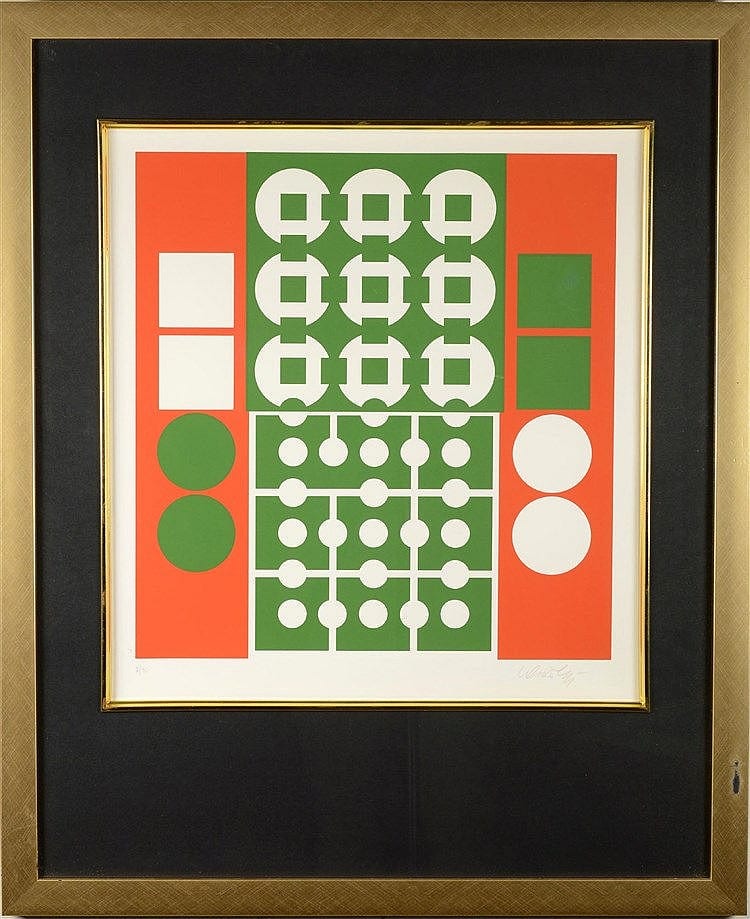
- Medium: Dyss most commonly appears as a limited edition color serigraph (screenprint) on wove paper. While lithographs exist in Vasarely’s oeuvre, Dyss is most often encountered as a screenprint. Open-edition offset posters after Dyss also circulate and should not be confused with limited editions.
- Period: Works in this idiom are generally mid- to late-20th century, frequently 1960s–1970s for comparable Vasarely screenprints. Use documented edition notes rather than assuming a year.
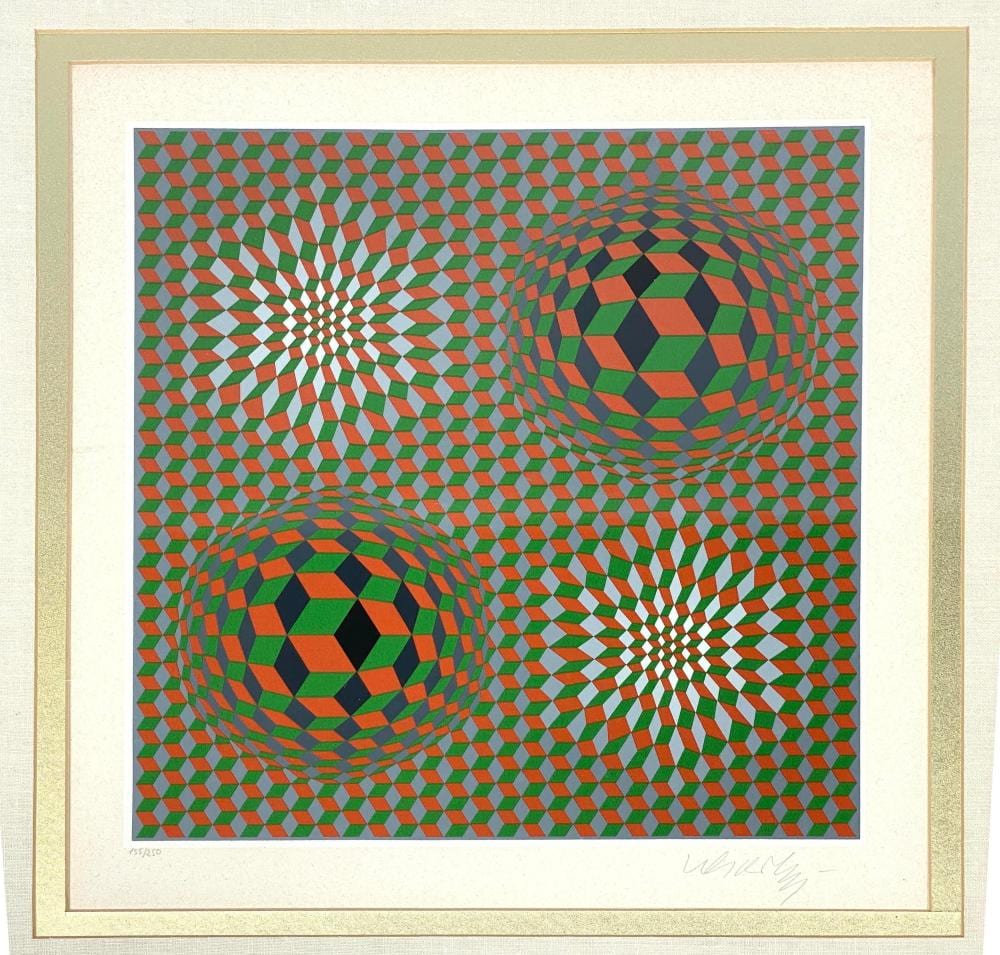
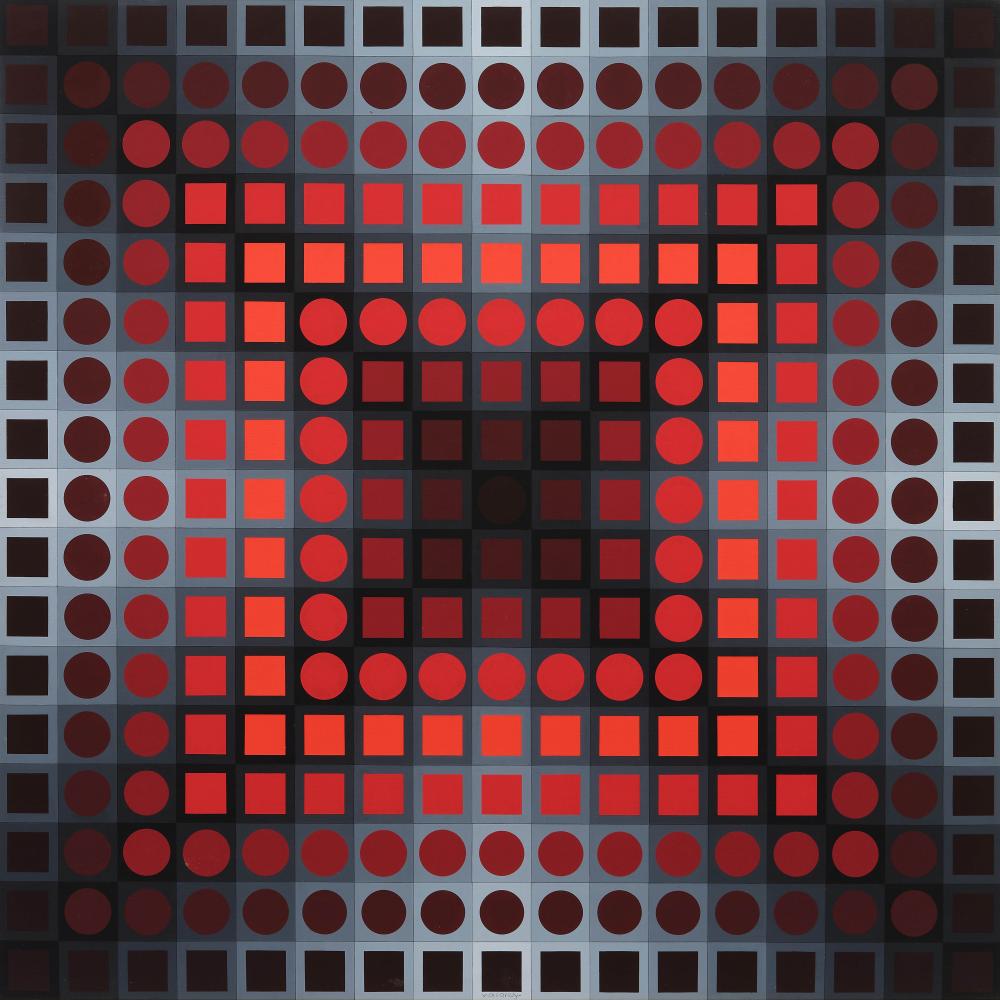
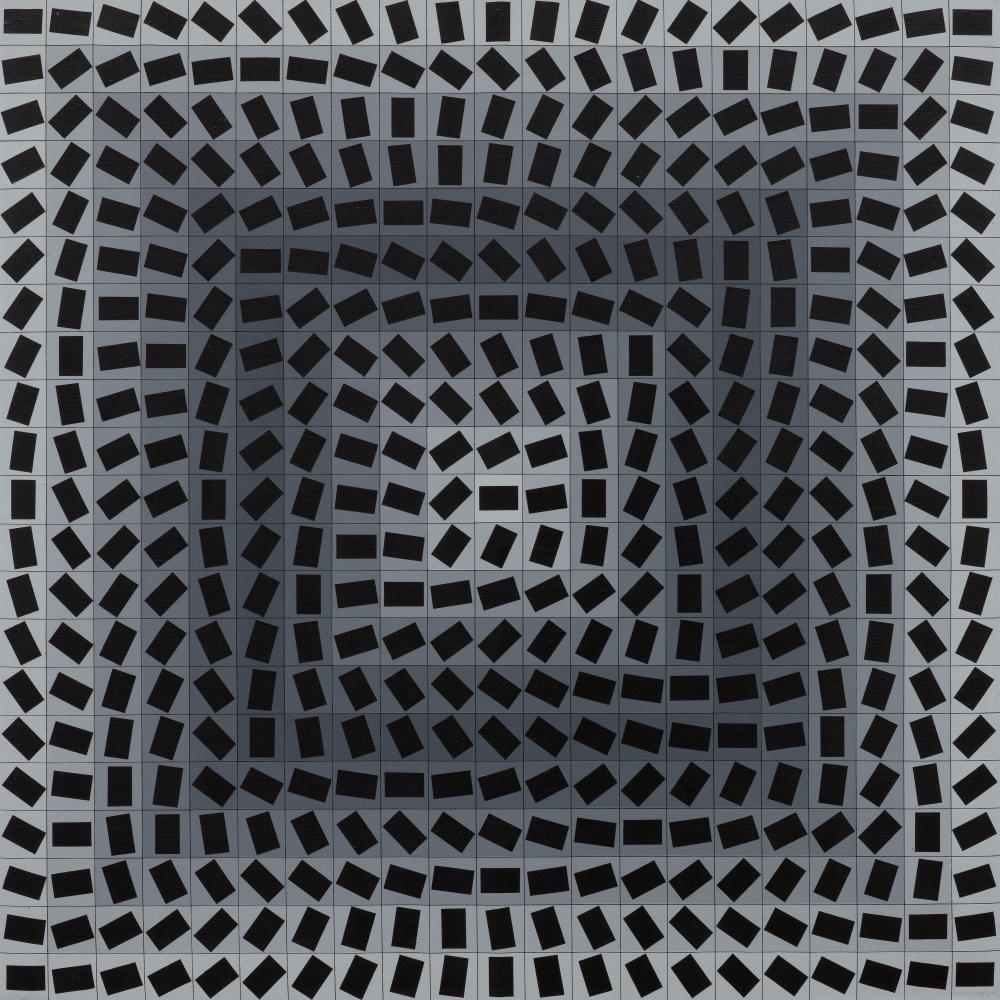
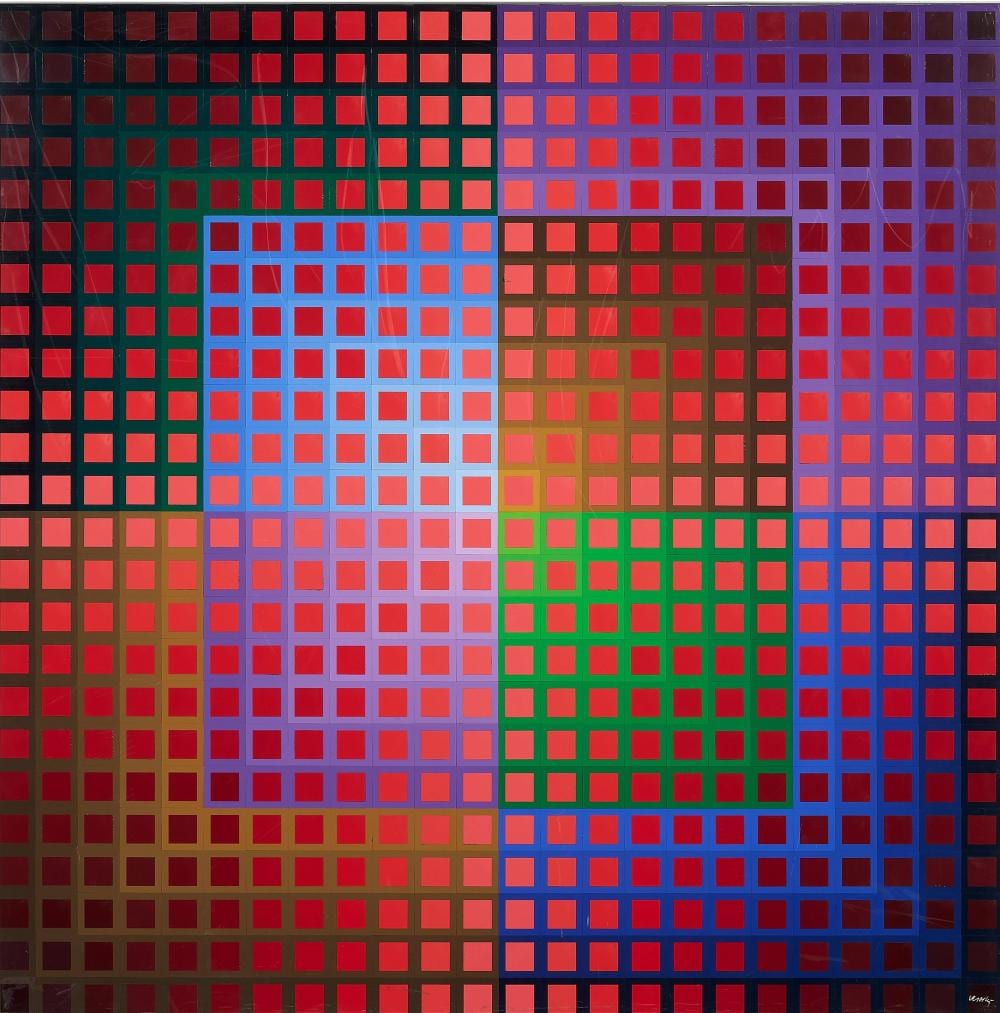
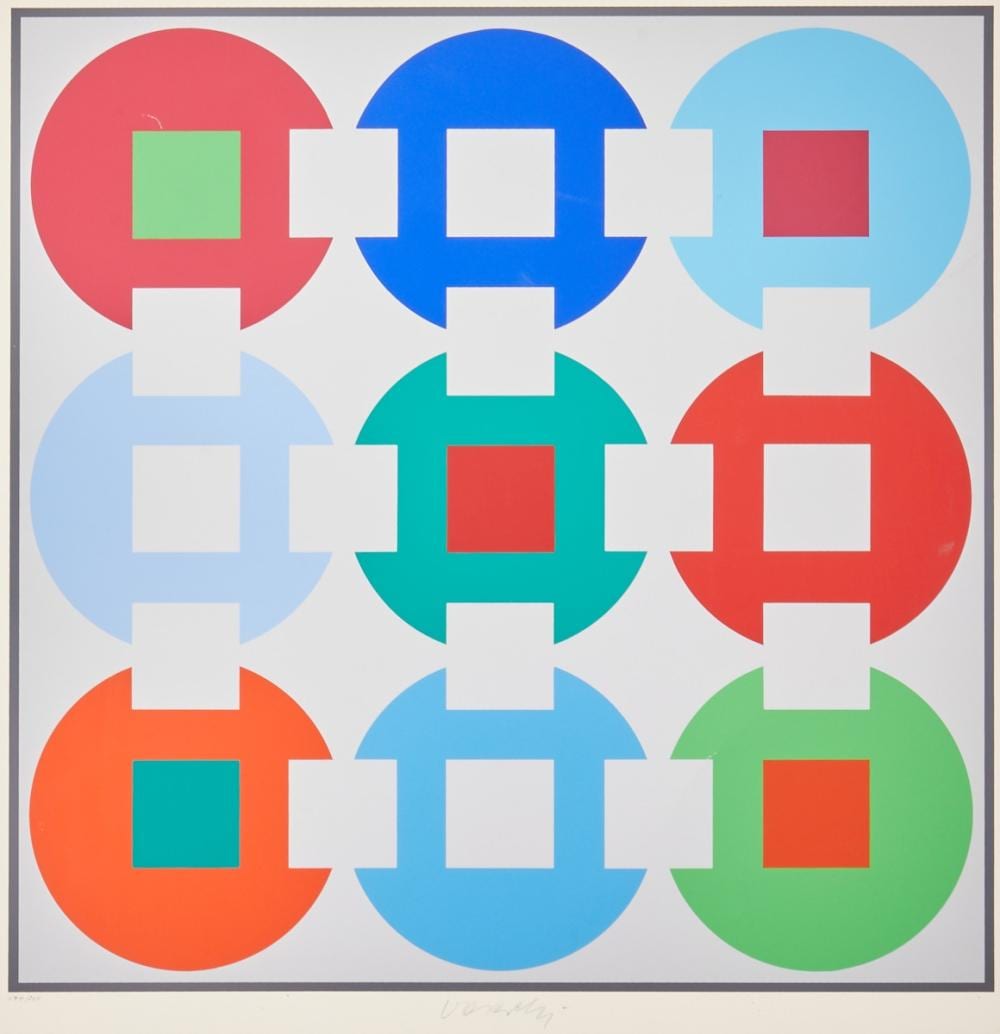
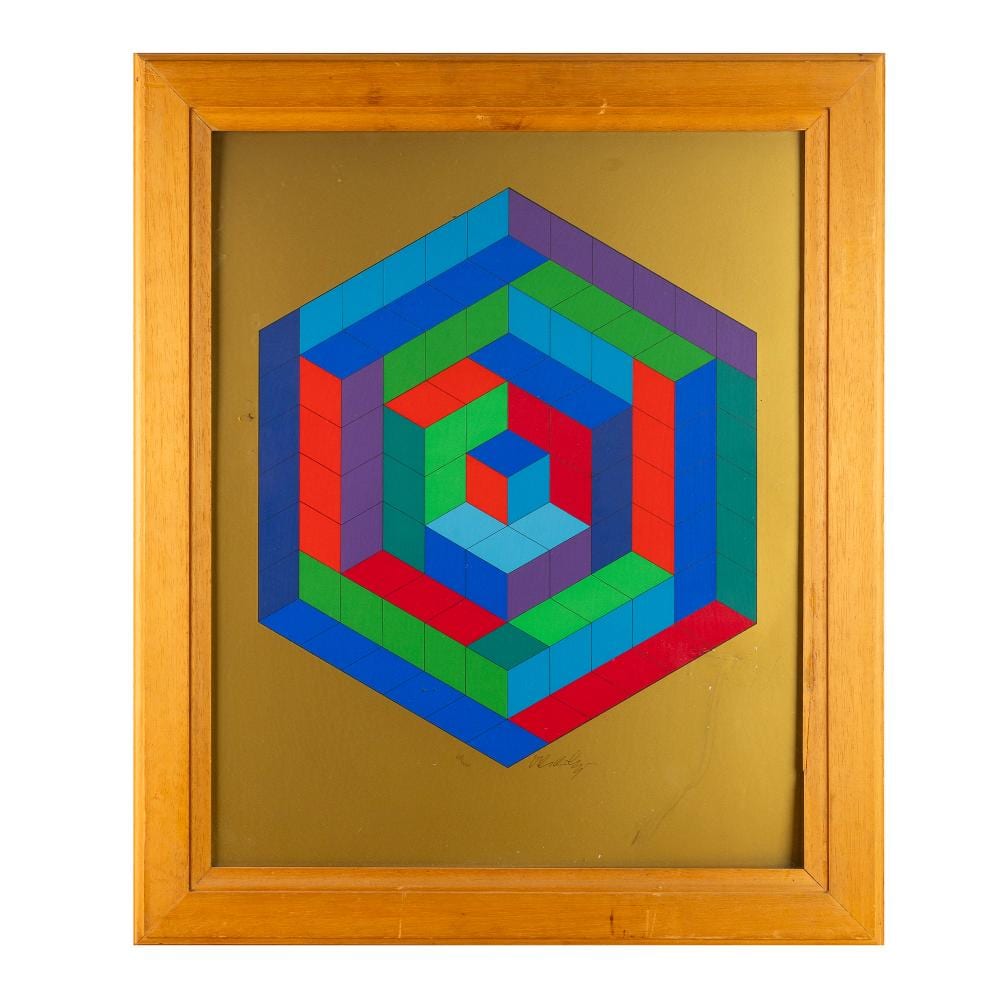
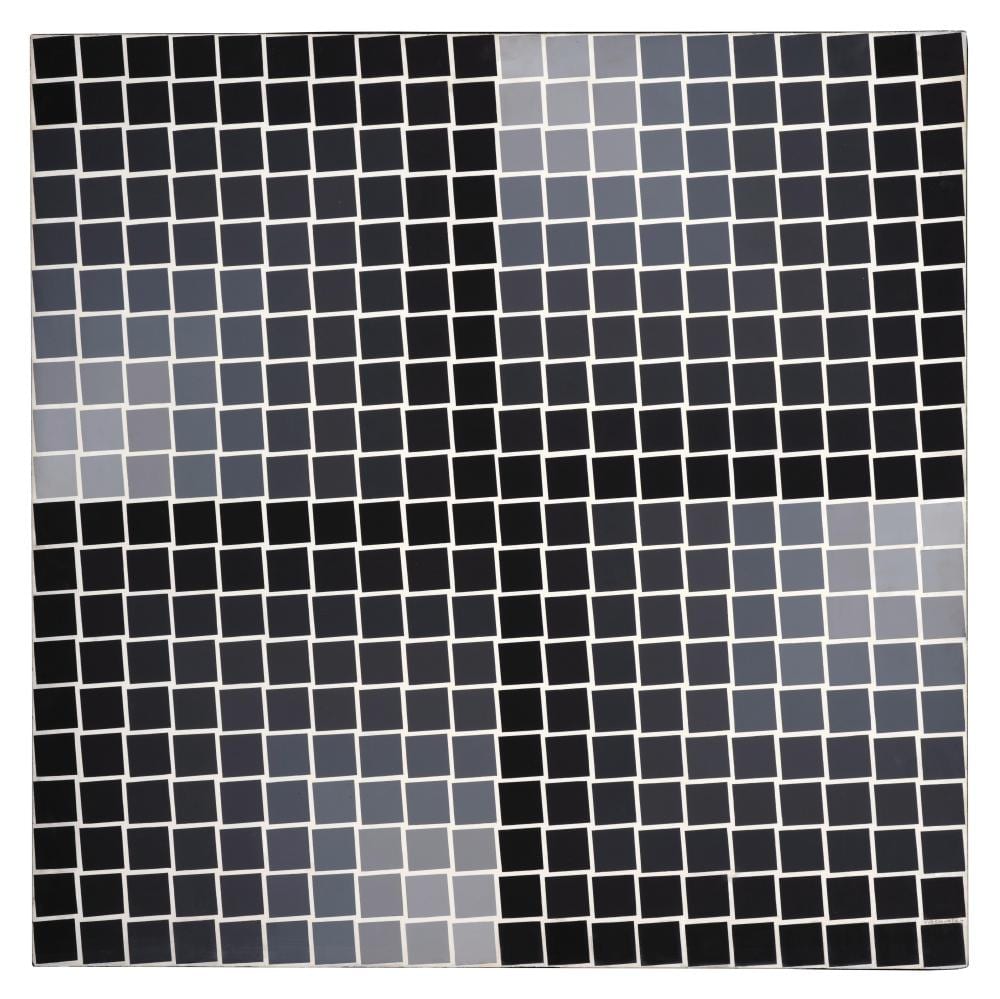
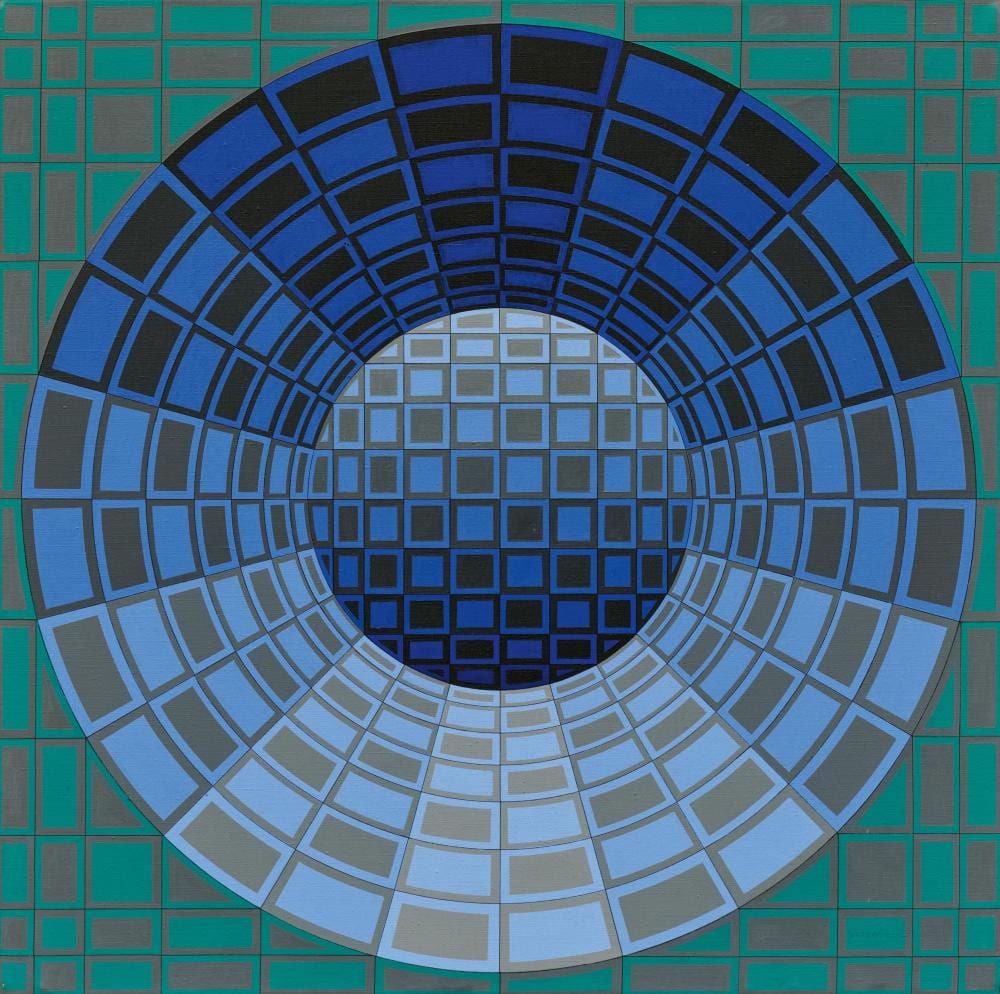
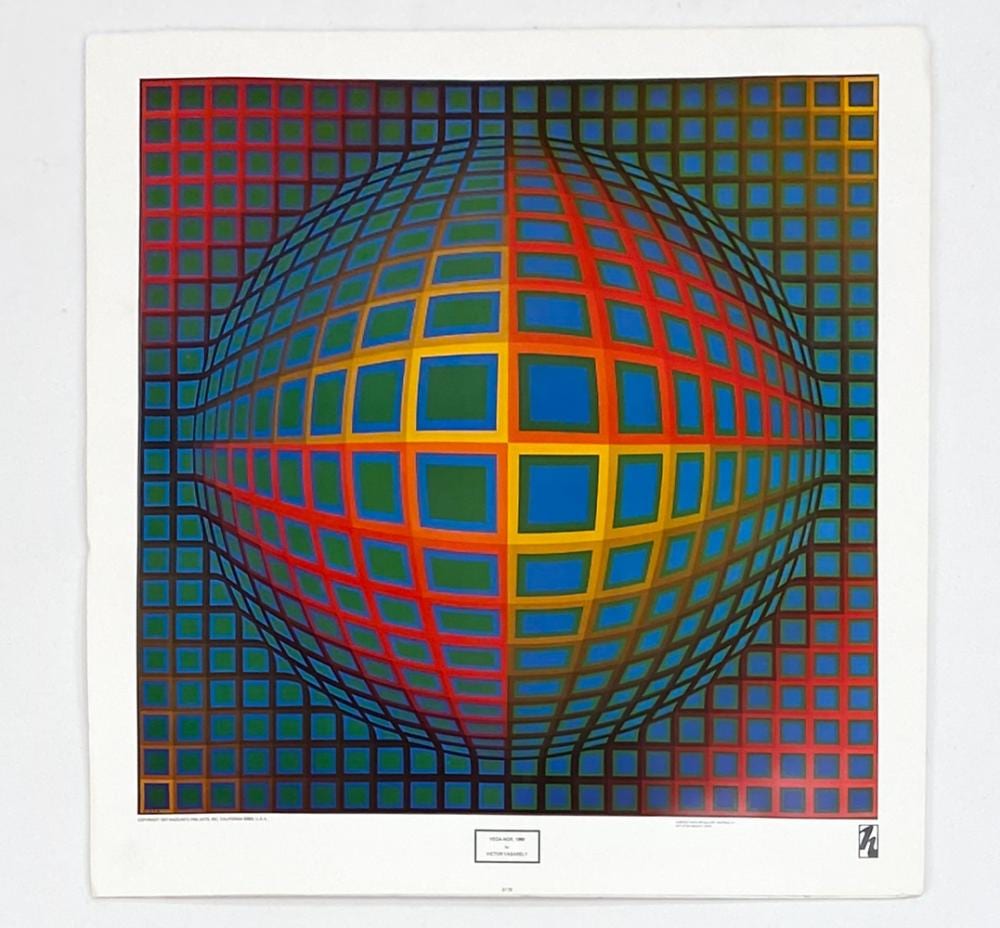
- Imagery: Expect a rigorous grid or modular geometry, with calibrated color progressions producing depth or bulge/warp illusions characteristic of Vasarely’s optical vocabulary. Colorways can vary slightly across proofs.
- Scale: Many Vasarely serigraphs from this period are square-format sheets; image sizes often around 50–65 cm within slightly larger sheets. Measure your example—do not rely on memory or frame size.
Key distinction: A true limited edition Dyss is hand-signed and hand-numbered in pencil on the margin. A poster will often have a printed signature within the image and no genuine pencil notations.
Materials, Editions, and Markings to Expect
- Paper: Quality wove, often with watermarks like BFK RIVES or ARCHES. The sheet is usually substantial; deckle edges may be present on one or more sides if the sheet is untrimmed.
- Inks: Serigraph inks lay as uniform, flat layers with crisp edges and no rosette (dot) pattern. Under magnification, edges are sharp and colors appear solid, not composed of dots.
- Signature: Pencil “Vasarely” typically lower right margin. Signature pressure leaves slight graphite sheen; it is not glossy like printed ink. Signatures vary slightly by hand.
- Numbering: Lower left in pencil as Arabic numerals, e.g., 123/250. You may also see:
- EA or E.A. (Épreuve d’Artiste / Artist’s Proof)
- HC or H.C. (Hors Commerce)
- AP (Artist’s Proof, English notation)
- PP (Printer’s Proof)
- TP or E.T. (Trial Proof)
- Title: Some sheets are pencil-titled “Dyss” on the lower margin or annotated on the verso; others rely on the publisher’s documentation without a pencil title on the sheet.
- Stamps and imprints: Look for a blindstamp from the publisher or printer; Vasarely worked with reputable Parisian workshops and publishers. A discrete dry stamp in the margin is a positive indicator. Absence of a blindstamp is not conclusive, but a spurious or printed “stamp” in the image area is a red flag.
- Publisher labels: Older frames may carry a gallery label (e.g., a modernist gallery known for kinetic/Op Art). Keep labels, invoices, or catalogue references with the work.
Authenticating a Dyss Print
- Magnification test
- Serigraph: Solid fields; no four-color rosette or dot matrix. Overlaps between colors can show minute ridges or layering.
- Offset poster: Dot pattern is visible under 10x loupe, especially in gradients.
- Pencil verification
- Signature and numbering should be in true pencil. Under oblique light, graphite has a soft sheen and subtle indentation. Printed signatures are flat and sit within the ink layer of the image.
- Paper and watermark
- Backlight to locate watermarks such as BFK RIVES or ARCHES. Quality thickness should be consistent; poster stock is often thinner and brighter white with optical brighteners.
- Margins and edges
- Limited editions retain generous margins; posters are commonly full-bleed or have narrow margins. Beware of trimmed posters masquerading as “full-sheet” prints.
- Provenance and literature
- Cross-check against a catalogue of Vasarely’s graphic works (e.g., Marcel Joray’s multi-volume catalogue raisonné of the prints). Match composition, colorway, edition size, and any documented printer or publisher.
- Ultraviolet (UV) inspection
- UV can help reveal later added “signatures” in different media, inpainting, or paper whitening. Genuine pencil signatures typically remain neutral under UV.
- Comparative measurements
- Confirm sheet and image dimensions against a known reference. Discrepancies can indicate a poster format or trimming.
If uncertainty remains, consult a specialist in postwar prints or a paper conservator for a technical workup.
Condition Issues and Their Impact on Value
Condition is a major driver for postwar prints. Common issues on Vasarely serigraphs include:
- Light staining and mat burn: Brown halos at former mat windows. Light overall toning from sun exposure. Expect a value impact that grows with severity.
- Fading/shifts: Some pigments can fade; compare protected margins to exposed areas. Uneven color reduces desirability and can impair the optical effect.
- Handling creases and ripples: Diagonal or edge creases, paper cockling from humidity, or waviness under the image. Pronounced creasing can reduce value substantially.
- Abrasion and scuffing: Serigraph inks can scuff; look for burnishing or ink loss at high spots.
- Staining/foxing: Small brown spots (foxing), tape stains, or adhesive ghosts on verso. Old pressure-sensitive tapes can migrate and stain the sheet.
- Trimming: Loss of full margins is significant on limited editions. Trimming into or near the signature/number can reduce value dramatically.
- Backing and mounts: Dry-mounting (heat-set tissue) or aggressive adhesives are difficult to reverse and typically lower value.
Professional conservation can address some issues (surface cleaning, deacidification, tape removal, washing), but not all. Always weigh projected treatment outcomes against market value.
Market and Pricing Benchmarks
While every example is unique, these are the patterns that separate stronger Vasarely results from weaker ones. Compare recent sold results for prints of the same type, size, and composition before pricing:
- Signed, numbered serigraphs (good condition, typical square format): the core of the market at auction and dealer retail, with strong compositions and colors achieving higher.
- Scarcer or larger formats, desirable colorways, or top-tier optical compositions: well above typical signed serigraphs in favorable circumstances.
- Posters and open-edition offset prints (even on nice paper, even “plate-signed”): far below hand-signed serigraphs, occasionally higher if vintage and well-preserved.
- Condition penalties: Trimming into margins or significant discoloration can reduce the achievable price sharply relative to a clean example.
Market dynamics vary by region and timing. Fresh-to-market provenance, intact margins, crisp color, and alignment with iconic Vasarely optics tend to yield superior results.
Preservation, Framing, and Insurance
- Mounting: Use archival Japanese paper hinges and wheat/rice starch paste; avoid pressure-sensitive tapes. Float-mount to display full margins and prevent mat burn.
- Glazing: UV-filtering acrylic or glass at a minimum; consider museum-grade glazing in bright rooms.
- Matting: pure cotton rag or lignin-free, buffered boards. Keep a spacer between print and glazing to prevent adhesion.
- Environment: 18–22°C (64–72°F), moderate RH, stable, with no sudden swings. Avoid direct sunlight and heat sources.
- Storage: Flat, in archival folders within solander boxes. Interleave with unbuffered tissue if pigments are sensitive.
- Insurance: Document dimensions, edition, signature, and condition with high-resolution images of both recto and verso. Keep invoices and any literature references.
Quick Appraisal Checklist
- Confirm medium: solid serigraph ink fields under a 10x loupe; no rosette dots.
- Check pencil signature and numbering on the margin; verify graphite sheen and indentation.
- Note paper type and watermark; measure sheet and image to the millimeter.
- Look for publisher/printer blindstamps or credible gallery labels.
- Inspect for toning, mat burn, creases, scuffs, foxing, and evidence of trimming.
- Compare color vibrancy across protected vs exposed areas.
- Cross-reference with a recognized catalogue of Vasarely’s graphic works.
- Photograph recto/verso, margins, signature, numbering, and any stamps.
- If in doubt, seek a specialist opinion before purchase, sale, or conservation.
Frequently Asked Questions
Q: Is Dyss a serigraph or a lithograph? A: Dyss is most commonly encountered as a color serigraph (screenprint) in limited edition. However, offset posters after Dyss also exist. Use magnification to distinguish solid serigraph ink from offset dot patterns.
Q: Where should the signature and edition appear? A: Typically in pencil on the lower margin: signature at lower right, edition number at lower left (e.g., 123/250). A “signature” printed within the image is not a hand signature.
Q: How much is a Dyss limited edition print worth? A: Hand-signed, numbered serigraphs in good condition are worth far more than posters and open editions, and stronger examples, larger formats, or highly desirable colorways bring the best results. Check recent sold results for the same print. Condition, provenance, and market timing are decisive.
Q: Do artist’s proofs (EA/AP) have a premium? A: Yes, modestly. Artist’s proofs and printer’s proofs can command a slight premium due to scarcity, assuming condition and color are comparable to the numbered edition.
Q: My print is framed. Should I open it? A: If you are appraising or preparing to sell, it is advisable—carefully—to inspect the sheet out of the frame (ideally by a professional) to confirm margins, watermarks, stamps, and to assess hidden condition issues like mat burn or tape stains.
By combining technical examination, literature cross-referencing, and a disciplined condition review, you can confidently identify and value a Victor Vasarely Dyss limited edition print and distinguish it from the many reproductions and posters that share its striking geometry.