Unlocking the Worth of Timeless Elegance the True Value of Antique Apothecary Cabinets: appraisal and value basics
Unlocking the Worth of Timeless Elegance the True Value of Antique Apothecary Cabinets research should start with identification, condition, provenance, and item-specific market evidence. Use this guide to compare the signals that matter before paying for a formal appraisal or deciding whether to sell.
Antique apothecary cabinet appraisal checklist
Antique apothecary cabinets—once the working heart of pharmacies, dispensaries, and mercantile counters—captivate collectors with their grid of drawers, tactile hardware, and honest wear. For appraisers and enthusiasts, these case pieces offer a rich puzzle: materials, construction, regional traditions, and professional use all leave traces that translate into value. This guide clarifies how to assess originality, weigh condition, understand market tiers, and make sound decisions about conservation, logistics, and resale.
What Defines an Apothecary Cabinet?
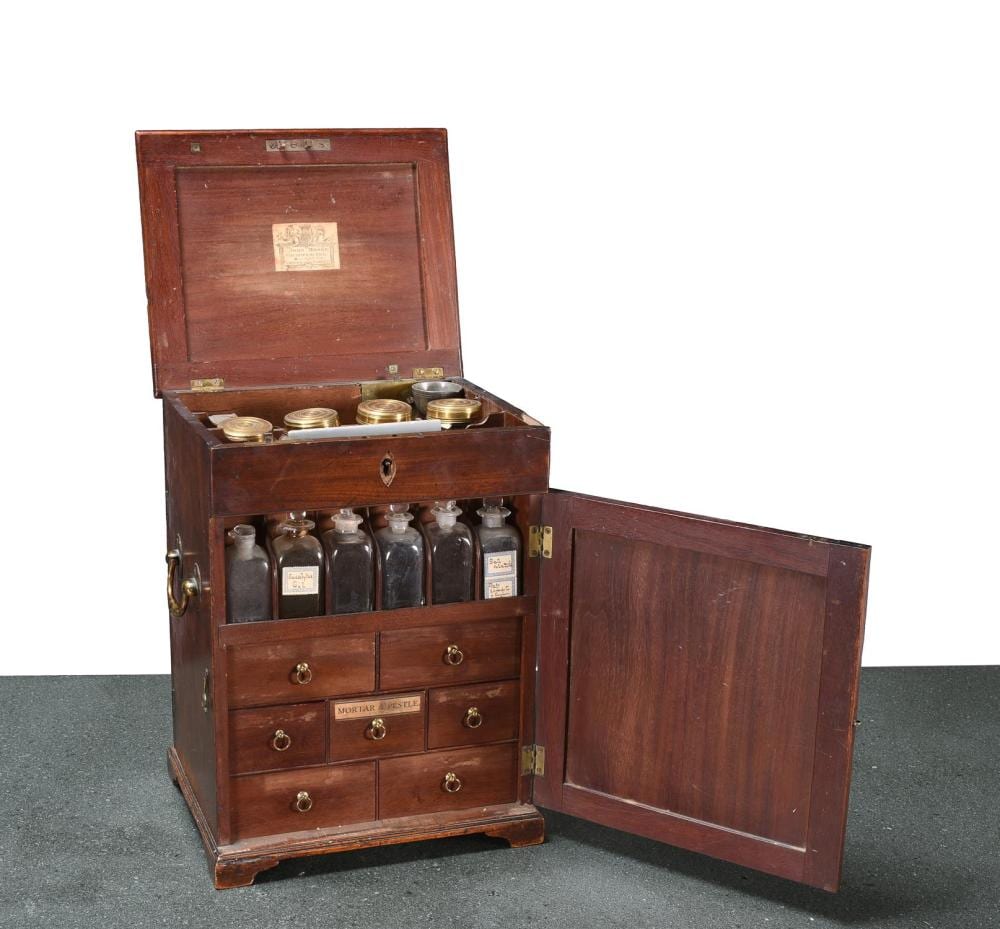
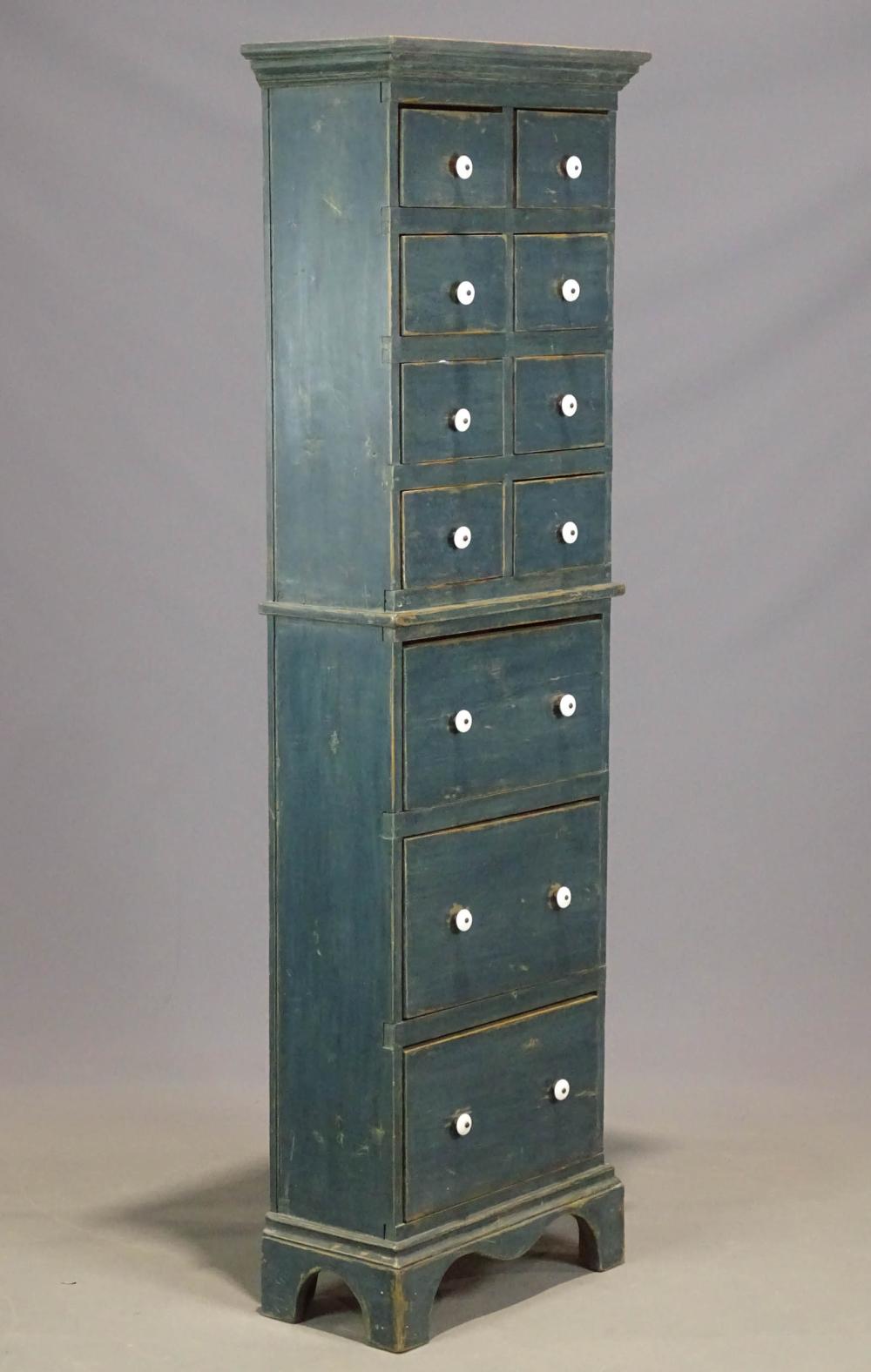
Apothecary cabinets were purpose-built storage systems for chemists, pharmacists, general stores, and sometimes dentists or natural history departments. Their defining traits help separate them from card catalogs, watchmaker chests, or modern reproductions.
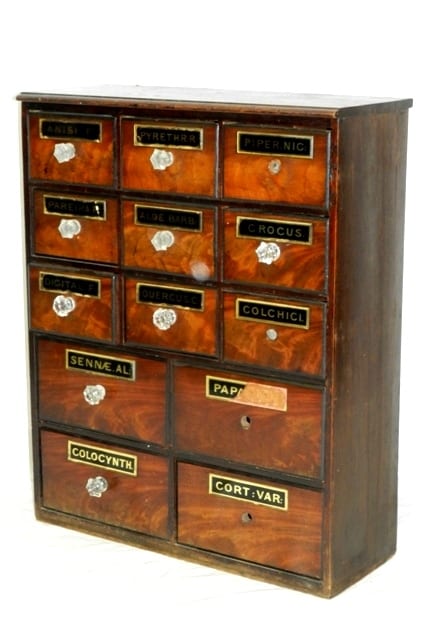
- Function-first design: Dense banks of small to medium drawers for tinctures, botanicals, pigments, and tools. Many include paper or porcelain labels, card frames, or hand-lettered fronts.
- Sturdy casework: Thick carcasses, frame-and-panel sides, and practical worktops, often chamfered or molded for durability in commercial settings.
- Hardware made to be used: Brass or iron bin pulls, porcelain knobs, and inset card holders; locks on select drawers; occasional sliding tills or interior dividers.
- Regional character:
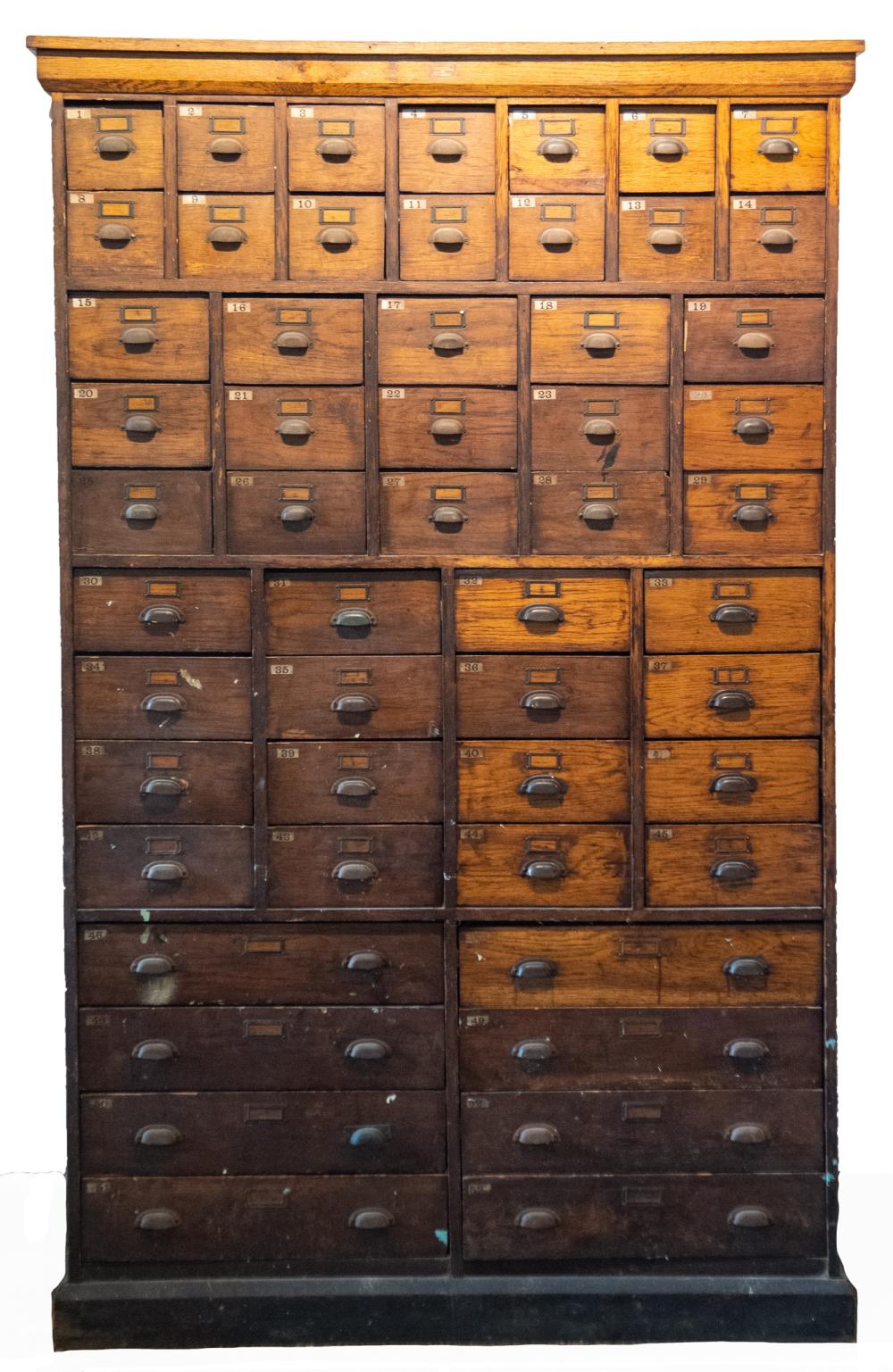
- American and British examples (c. 1830–1910): oak, pine, walnut, or mahogany; hand-cut dovetails early on, transitioning to machine-cut; cast brass cup pulls and stamped card frames.
- French and Central European (c. 1860–1920): walnut, oak, or fruitwoods; refined joinery; gilt-bronze or patinated hardware; enameled labels.
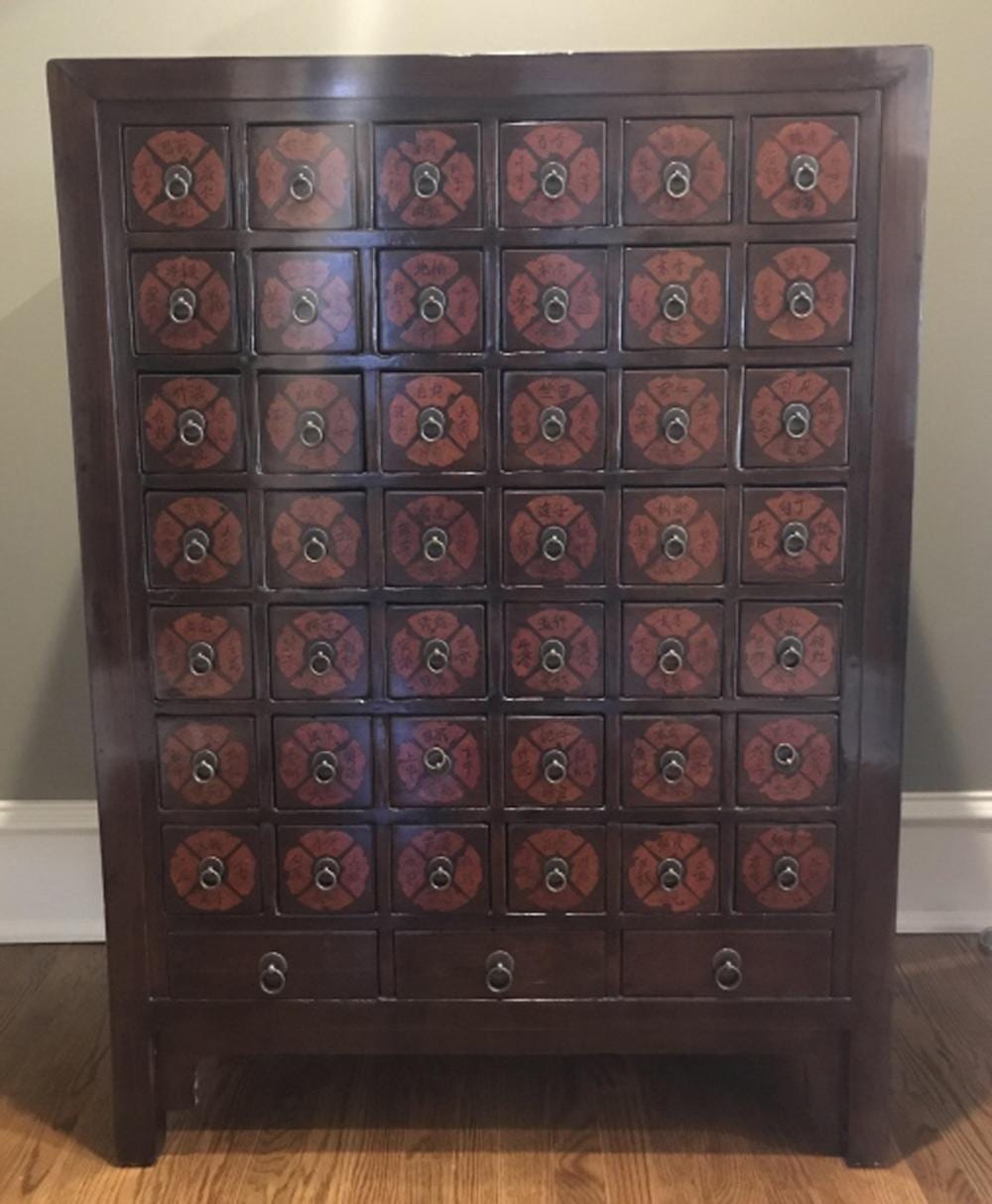
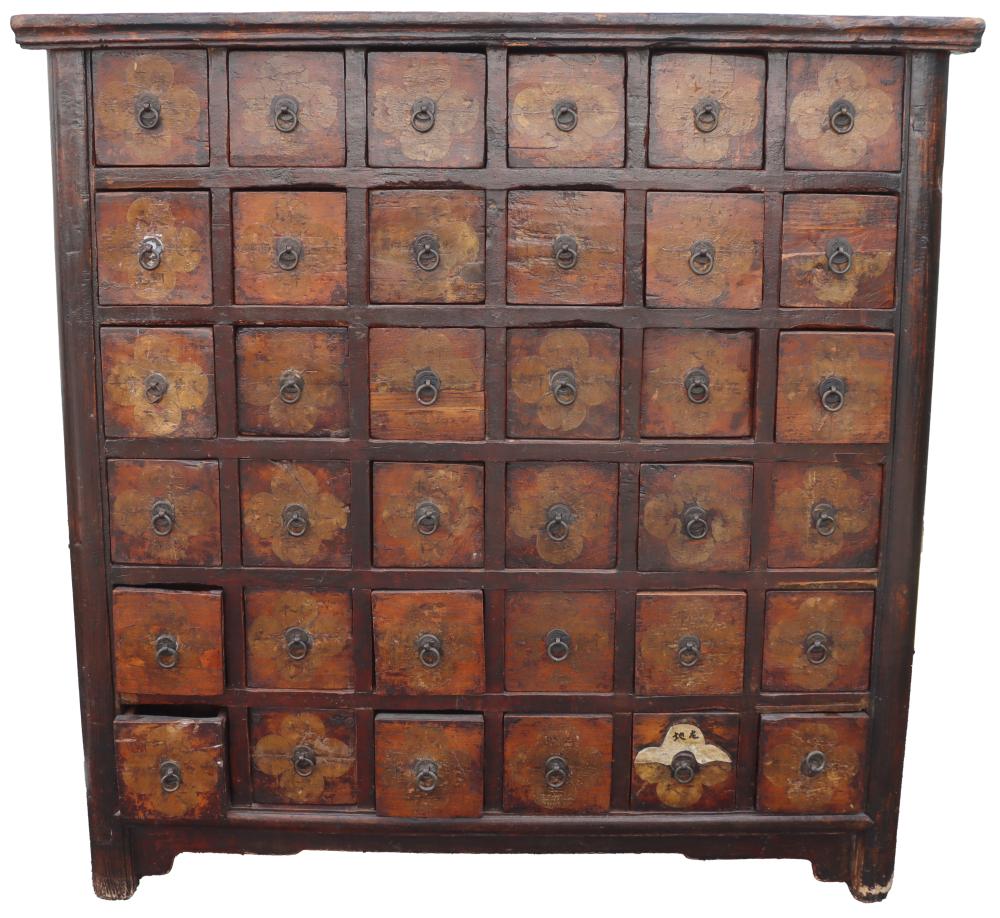
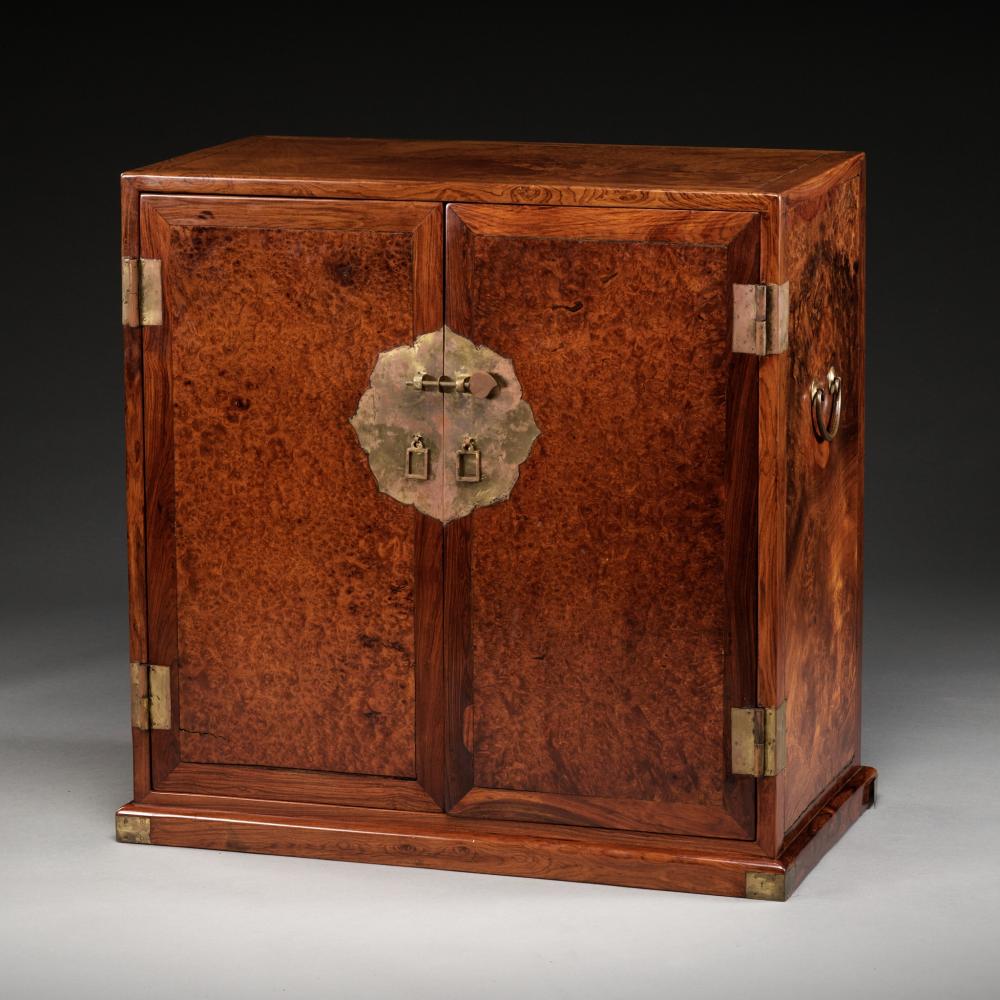
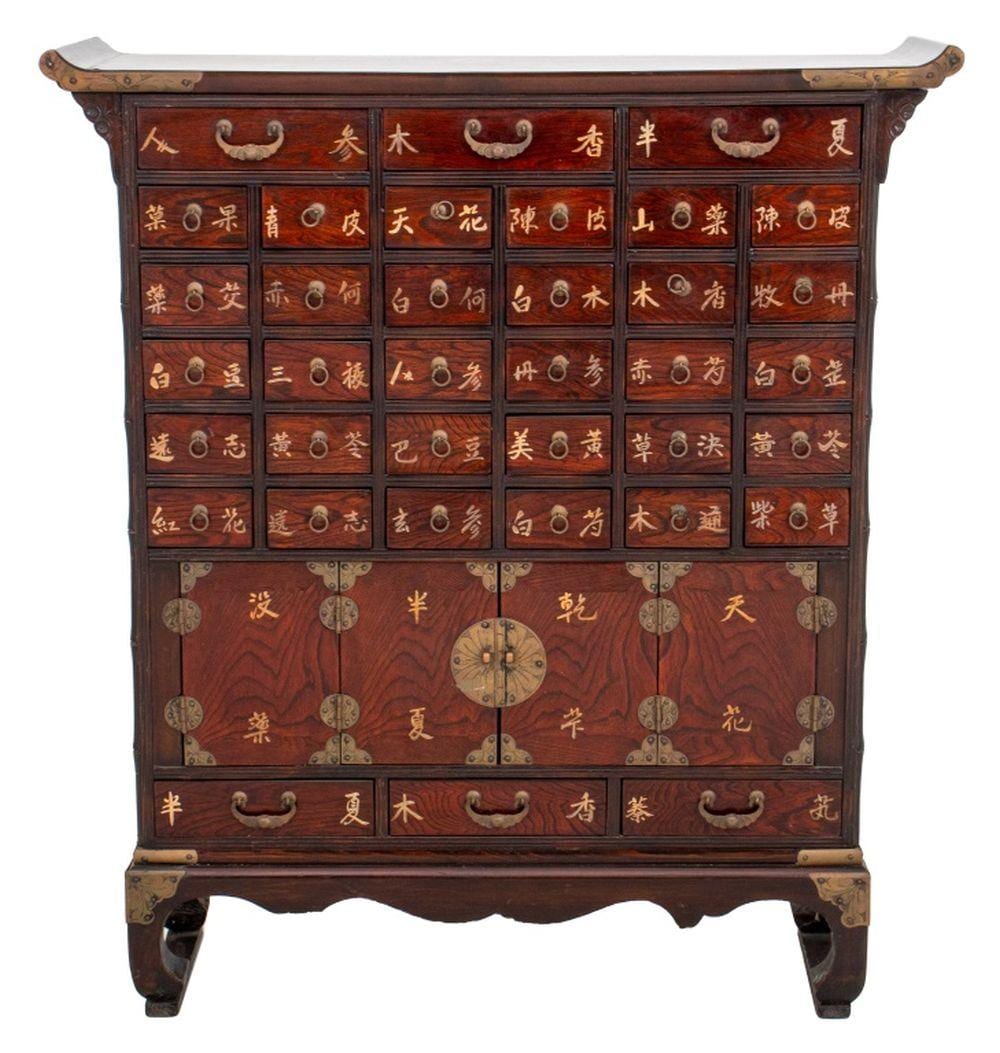
- East Asian medicine chests: Chinese zhongyao gui with dozens of labeled drawers, often in elm or jumu; Japanese kusuri-dansu with asymmetric drawer grids and distinctive iron strapwork.
- Professional provenance: Surviving labels, trade cards, maker plaques, or ghosted signage (“Druggist,” “Chemist,” “Droguerie”) are strong indicators of original purpose.
While some card catalogs and haberdashery cabinets mimic the look, a true apothecary cabinet typically shows evidence of chemical storage—staining, odor traces, or partitions sized for jars—and heavy use near a working counter.
The Value Drivers Collectors and Appraisers Weigh
Understanding what moves the needle allows faster, more confident appraisal. Key drivers tend to be cumulative: the more favorable boxes ticked, the higher the tier.
Age and period correctness
- Pre-1860s: Higher appeal; hand-cut dovetails, hand-planed boards, and cut nails are consistent with earlier making.
- 1860–1910: Still desirable; machine cuts and standardized hardware become common; many pharmacy counters and specimen cases date here.
- Post-1920: Often factory-made; value depends on design quality and scale.
Origin, maker, and rarity
- Labeled cabinets by known shopfitters or medical suppliers command premiums.
- Regional rarities (e.g., intact Japanese kusuri-dansu with original script labels) are highly collectible.
Scale and drawer count
- Small desktop chests (8–30 drawers): Popular for home display; strong per-drawer pricing.
- Mid-size counters (40–100 drawers): Versatile in interiors, therefore high demand.
- Monumental banks (>100 drawers, multi-bay): Scarcer and visually dramatic; logistics are tougher but premiums can be significant if original and modular.
Materials and craftsmanship
- Woods: Fine-grained walnut and mahogany often outrank softwoods; in Asia, jumu and northern elm are prized.
- Joinery: Tight dovetails, well-fit runners, chamfered drawer bottoms, and matched grain raise quality.
- Hardware: Original bin pulls, porcelain knobs, and brass card frames add originality. Missing or mismatched hardware lowers value.
Condition and completeness
- Desirable: Stable case, original finish or well-aged shellac, uniform drawer interiors, intact labels, and period hardware.
- Acceptable: Minor shrinkage cracks, gentle re-gluing, light veneer repairs, and reversible conservation.
- Value-negative: Over-sanding, polyurethane refinish, extensive veneer replacement, new faces, replaced entire hardware sets, added casters, or modern backs.
Patina and surface
- Even wear, oxidized shellac, and inked or penciled drawer notes exude originality and boost desirability.
- Thick, glossy modern varnish or colored stain that obscures grain tends to depress price.
Functional integrity
- Drawers should run smoothly, runners should not be chewed, and carcass should be square. A counter that can safely bear weight without racking is more salable.
Provenance and documentation
- Bills of sale from a decommissioned chemist, photographs in-situ, or municipal records that tie the cabinet to a known business are powerful value multipliers.
Sensible adaptations
- Carefully fitted glass tops or removable liners can be acceptable. Plumbing cutouts, sink inserts, and lowered plinths typically hurt value. Lighting additions must be reversible.
Risk factors that suppress value include chemical damage, deep solvent burns, odor that won’t dissipate, worm or termite activity, and mold. These can often be mitigated, but costs must be weighed against market value.
Attribution review and Dating in the Details
Genuine apothecary cabinets tell their story through tool marks, fasteners, and layout logic. A methodical inspection keeps attributions tight.
Tool and machine marks
- Pre-1860 boards often show straight pit-saw marks; later circular-saw arcs are common.
- Hand-planed surfaces exhibit slight undulations and tear-out in difficult grain.
- Machine-cut dovetails (uniform tails/pins) generally postdate the 1860s; hand-cut dovetails vary in size.
Fasteners and hardware
- Cut nails with rectangular shanks and rose heads are early; round wire nails dominate later examples.
- Screws with off-center slots and tapered shanks suggest age; uniform Phillips screws are later replacements.
- Brass bin pulls: cast pieces with crisp edges and uneven backs are older than thin, stamped reproductions. Check oxidation and screw hole wear.
Drawer construction
- Solid secondary woods (poplar, pine) with chamfered bottoms that slide into grooves are period-correct.
- Half-blind dovetails at the front, through dovetails at the back are typical of quality drawers.
- Interior paper linings, spice dividers, and residue rings from bottles corroborate use.
Labels and script
- Hand-lettered Latin pharmaceutical nomenclature, French “Tinct.” abbreviations, or kanji/hanzi ingredient names align with regional origin.
- Aging tells: varnish ghosting around card frames, sun-fade lines, and differential oxidation behind label plaques.
Case architecture
- Many monumental banks were built in modular bays for transport; internal bolts and tongue-and-groove joints between sections are a good sign.
- Backboards: wide, original boards with square nails and vent gaps suggest purpose-built trade furniture.
Finish analysis
- Shellac (alcohol-soluble) dominates 19th-century finishes. A discreet alcohol test on an inconspicuous area can help; consider hiring a conservator for formal reports.
Red flags for reproductions
- Identical drawer fronts cut from thin veneer with faux wormholes; chemically “antiqued” hardware with uniform pitting; inconsistent wear patterns; metric-only dimensions on ostensibly 19th-century Western pieces.
Document your observations with macro photos of dovetails, backboards, hardware backs, and labels. For high-value cabinets, a written condition and materials report supports appraisal and insurance.
Market Benchmarks and Trends in 2025
Prices fluctuate by region, quality, and season, but the tiers below are fairly stable. They assume honest age and reasonable condition; compare recent sold examples of the same size and type before pricing.
Small desktop and table-top chests (8–30 drawers)
- Typical: the most accessible tier, and the easiest to sell.
- Exceptional (labeled, rare wood, original labels): sell well above typical examples.
Mid-size counters and wall cabinets (40–100 drawers)
- Typical: above small chests, with drawer count, condition and original fittings setting the level.
- Exceptional (documented provenance, superior craftsmanship): sell well above typical examples.
Monumental multi-bay banks (>100 drawers)
- Typical: the highest-value tier, though size limits the pool of buyers.
- Top-tier (early, intact, signed, modular with provenance): the strongest prices in this market, depending on venue and logistics
East Asian medicine cabinets
- Small to mid-size: priced on wood, condition and the completeness of the labels.
- Large, fine wood, original script labels: sell well above small and mid-size examples
Specialist cabinets (dentist/specimen/watchmaker hybrids)
- Highly variable; strong demand for elegant glass-front uppers and intact interior fittings. Fine examples can sell well above ordinary cabinets of the same size.
Where you sell affects outcome:
- Auction: Faster exposure and transparent market evidence; fees and reserve strategy matter.
- Dealer/retail: Higher asking prices but longer holding periods; curated restoration can be rewarded.
- Private/online: Strong for small to mid-size pieces; buyer confidence hinges on photography, measurements, and shipping solutions.
Three trend notes:
- Decor versatility keeps mid-size cabinets liquid; they fit kitchens, studios, and retail.
- Collector premiums follow originality; sympathetically conserved beats heavily refinished.
- Logistics-sensitive buyers favor modular banks; document how a piece breaks down.
Quick Appraisal Checklist
Use this concise checklist to structure a field evaluation in under 20 minutes.
- Confirm purpose: drawer grid, dividers, residue rings, labels, or card frames consistent with apothecary use.
- Note dimensions and modularity: width, height, depth; does it separate into bays for transport?
- Inspect joinery: hand vs machine dovetails; drawer bottoms in grooves; case backboards’ nails/screws.
- Examine hardware: cast vs stamped pulls; originality; screw types; missing or mismatched pieces.
- Assess finish: shellac sheen and oxidation vs modern varnish; evidence of over-sanding or stain overlays.
- Check condition: racking, splits, veneer lifts, worm activity, chemical burns, odors, mold.
- Count and test drawers: smooth travel, intact runners, consistent secondary wood; note any replacements.
- Capture provenance: maker’s plaques, shop labels, ghost signage, archival photos, prior bills of sale.
- Evaluate rarity and appeal: wood species, regional style, scale, intact labeling, and overall design coherence.
- Estimate tiered value: map to size/quality ranges; adjust for condition, originality, and provenance.
- Plan conservation: reversible cleaning, wax, minor glue repairs; avoid invasive refinishing.
- Consider logistics: door clearances, stairways, weight, whether it breaks down, and shipping quotes.
FAQ
Q: How much does refinishing affect value? A: Heavy sanding and modern glossy finishes can cut value significantly by erasing patina and tool marks. Light cleaning, spot repairs, and a conservative shellac or wax refresh—documented and reversible—are generally acceptable and sometimes value-neutral or positive.
Q: Are replaced pulls a dealbreaker? A: Not always. A few period-appropriate replacements have modest impact. Full hardware swaps, visible new screw holes, or modern reproduction sets lower value. Save any original hardware; provenance of parts helps.
Q: How can I tell if drawers are original to the case? A: Check for consistent secondary wood, matching dovetail style and spacing, uniform wear on runners, and alignment of label frames or ghosting. Replacement drawers often differ subtly in wood color, tool marks, or nail/screw types.
Q: What hazards should I check before bringing one home? A: Look for active woodworm (fresh frass), mold, persistent chemical odors, and lead-based paint. If present, consult a conservator; treat pests before moving indoors and handle surfaces with gloves until assessed.
Q: Does converting a cabinet into a kitchen island hurt value? A: Permanent alterations—cutouts for sinks, shortened bases, or modern stone-topped laminations—typically reduce collector value. If you must adapt, do so reversibly and retain all removed parts to preserve resale potential.
By combining careful observation with knowledge of construction, provenance, and current market behavior, you can confidently unlock the worth of these timeless, hardworking cabinets—and preserve their integrity for the next generation of stewards.