Unlocking the Worth of the Past a Collectors Guide to Antique Stoneware Butter Churn Values: appraisal and value basics
Unlocking the Worth of the Past a Collectors Guide to Antique Stoneware Butter Churn Values research should start with identification, condition, provenance, and item-specific market evidence. Use this guide to compare the signals that matter before paying for a formal appraisal or deciding whether to sell.
Antique stoneware butter churn appraisal checklist
Antique stoneware butter churns sit at the intersection of American folk art and utilitarian craft. Their salt-glazed skins, cobalt flowers and birds, and honest workaday forms make them display-friendly collectibles with a market that rewards knowledge. This guide explains what affects antique stoneware butter churn values—how to identify makers and regions, judge condition, understand size and decoration, and navigate today’s pricing—with practical steps for appraisal, care, and selling.
Understanding Stoneware Butter Churns: Form, Function, and Timeline
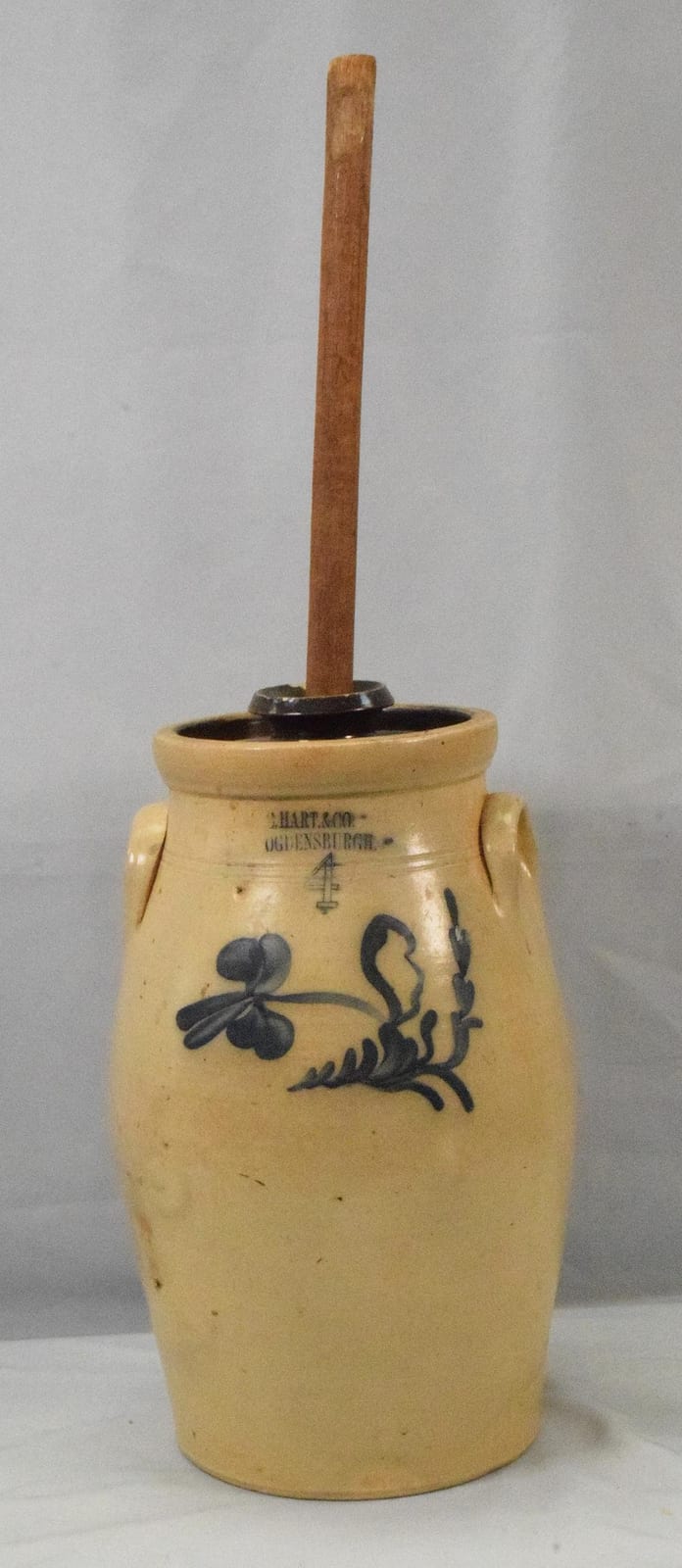
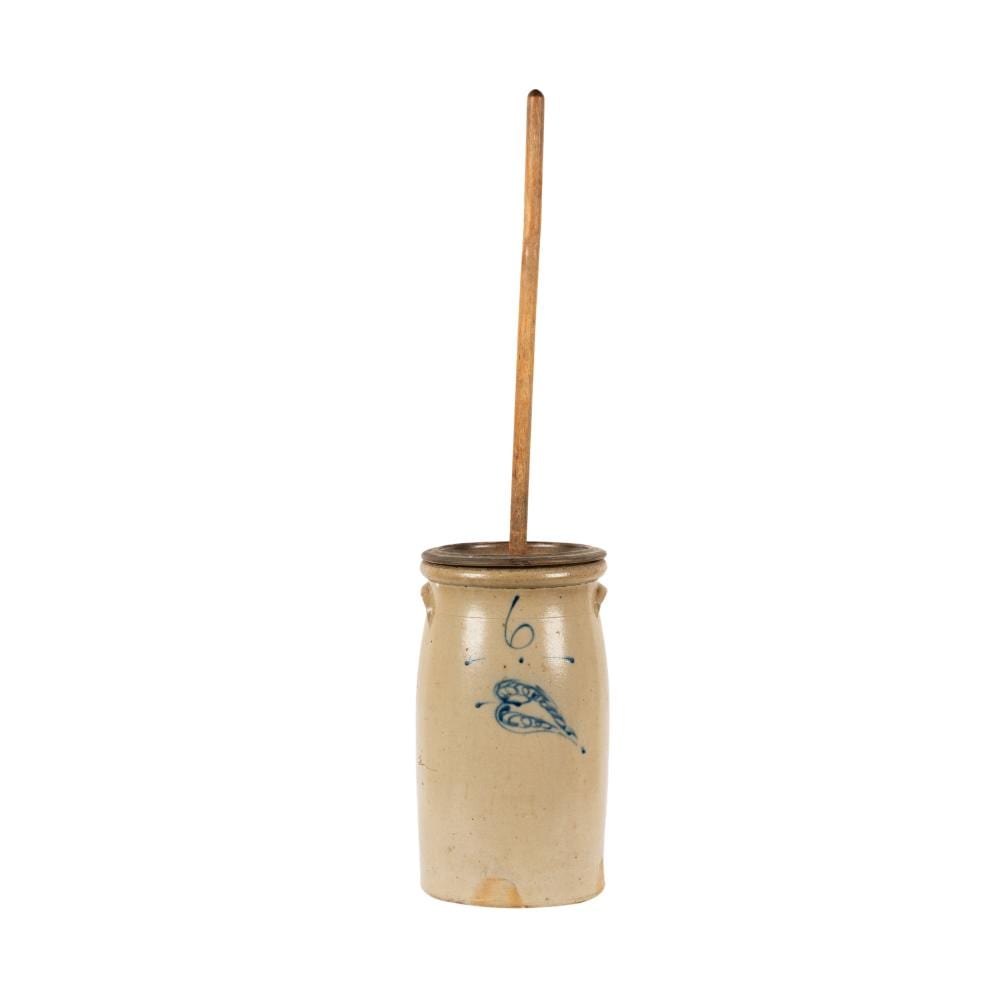
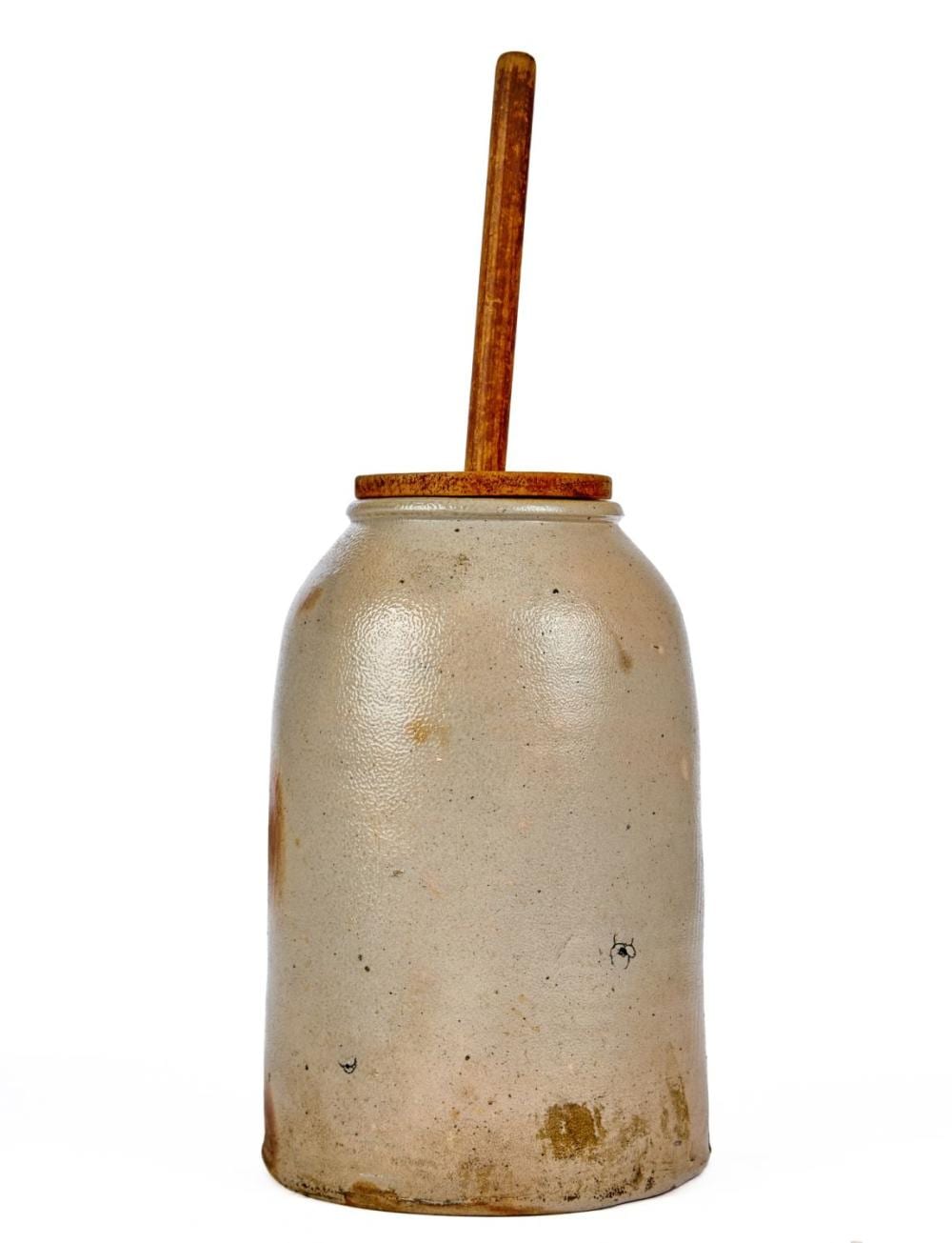
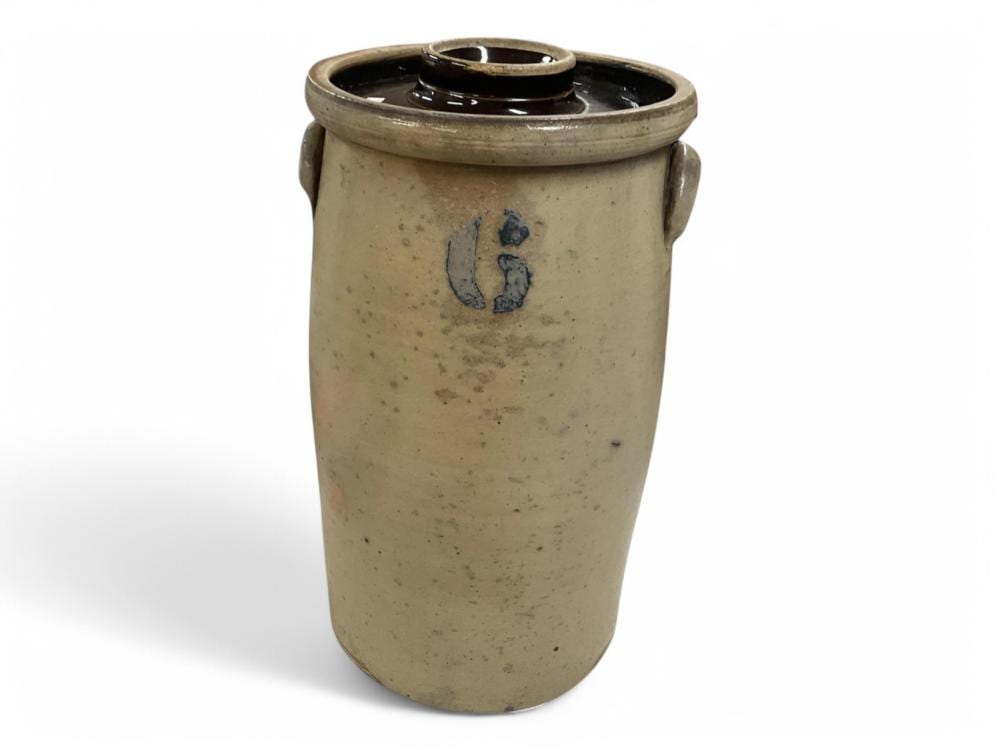
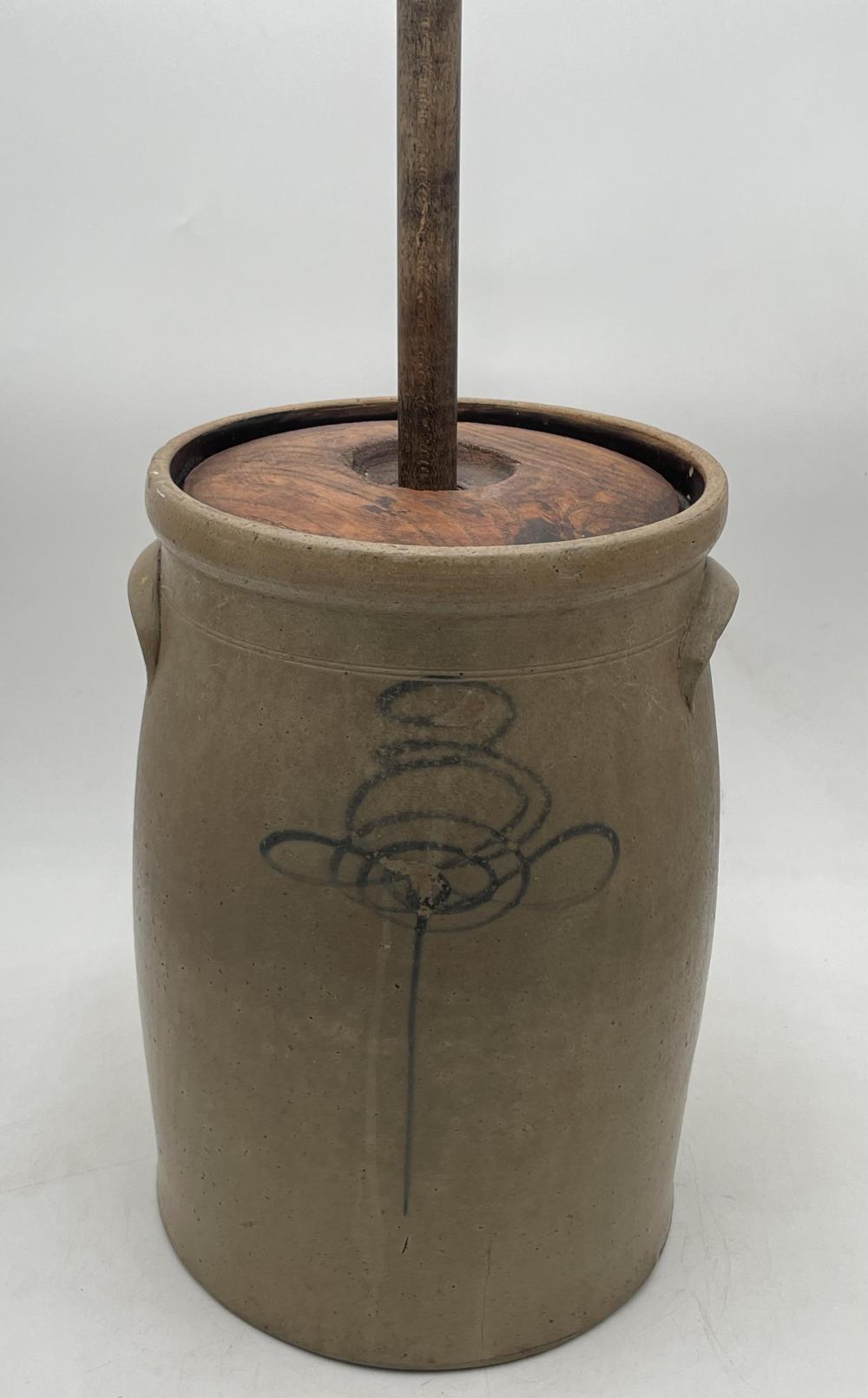
- What they are: Cylindrical or slightly ovoid salt-glazed stoneware vessels, typically with lug or strap handles, capacity numerals (1–10+ gallons), and a wooden lid and dasher (plunger) used to churn cream into butter. The lid often has a central hole and “churn cap” to center the dasher.
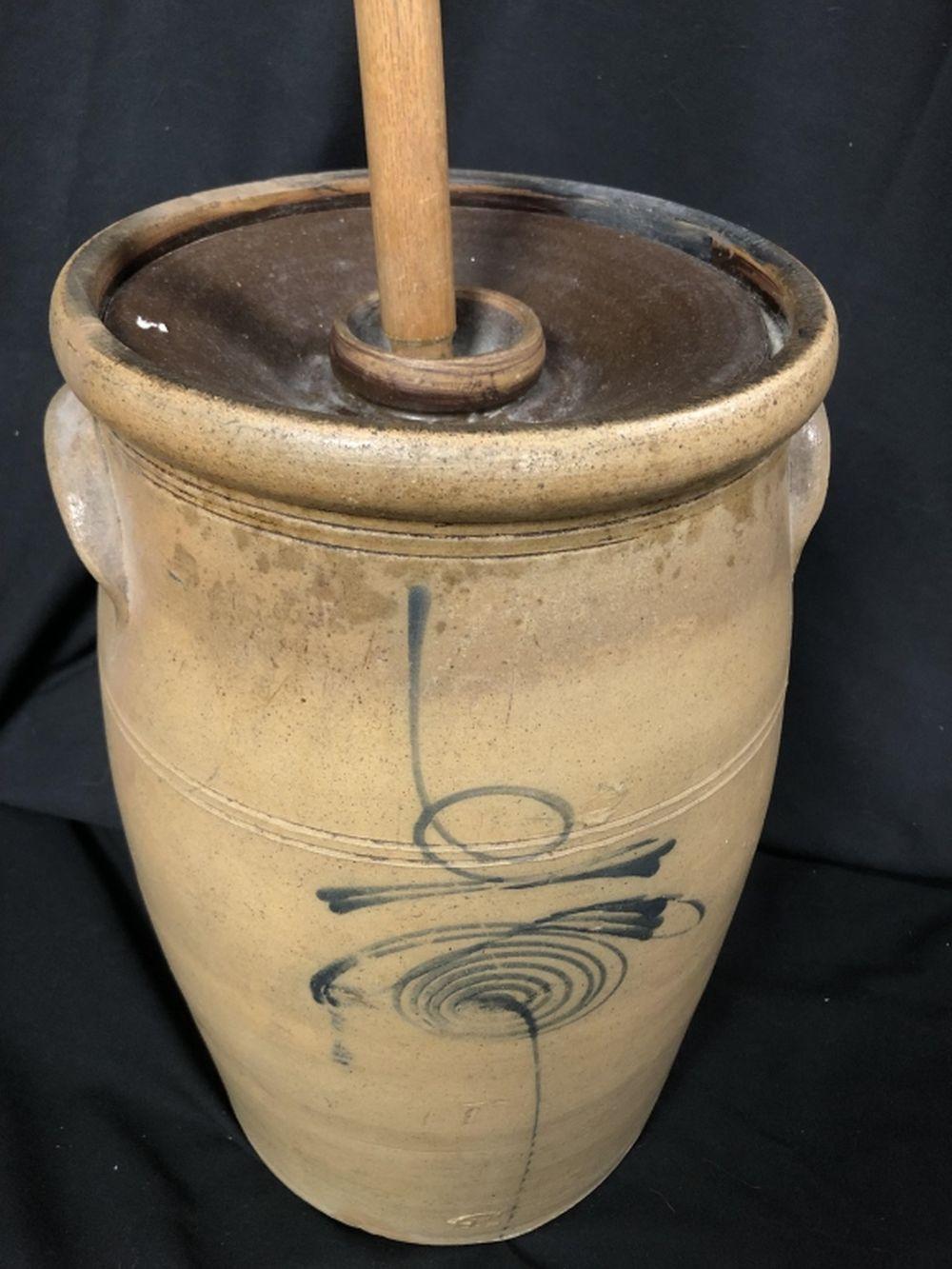
- Construction: Thrown on the wheel in stacked sections for larger sizes, with applied handles. Salt glazing, fired in a wood or coal kiln, yields a pebbly “orange peel” surface. Cobalt oxide was brushed or slip-trailed before firing to add decoration and capacity marks.
- Date range: Most blue-decorated churns date circa 1840–1890 in the Northeast and Mid-Atlantic. Alkaline-glazed Southern examples overlap in the same century. Stenciled and printed logos and the famous Red Wing “wing” mark appear mostly late 19th to early 20th century.
- Components: Original stoneware churns rarely retain the original wooden lid and dasher; surviving wooden parts add appeal but are seldom decisive for top-tier values unless the stoneware vessel itself is of quality.
What Drives Value: The Six Big Variables
- Maker and Region
- Named Northeast and Mid-Atlantic potteries are most sought-after when paired with strong decoration and condition. Collectors recognize:
- White’s Utica (Utica, NY)
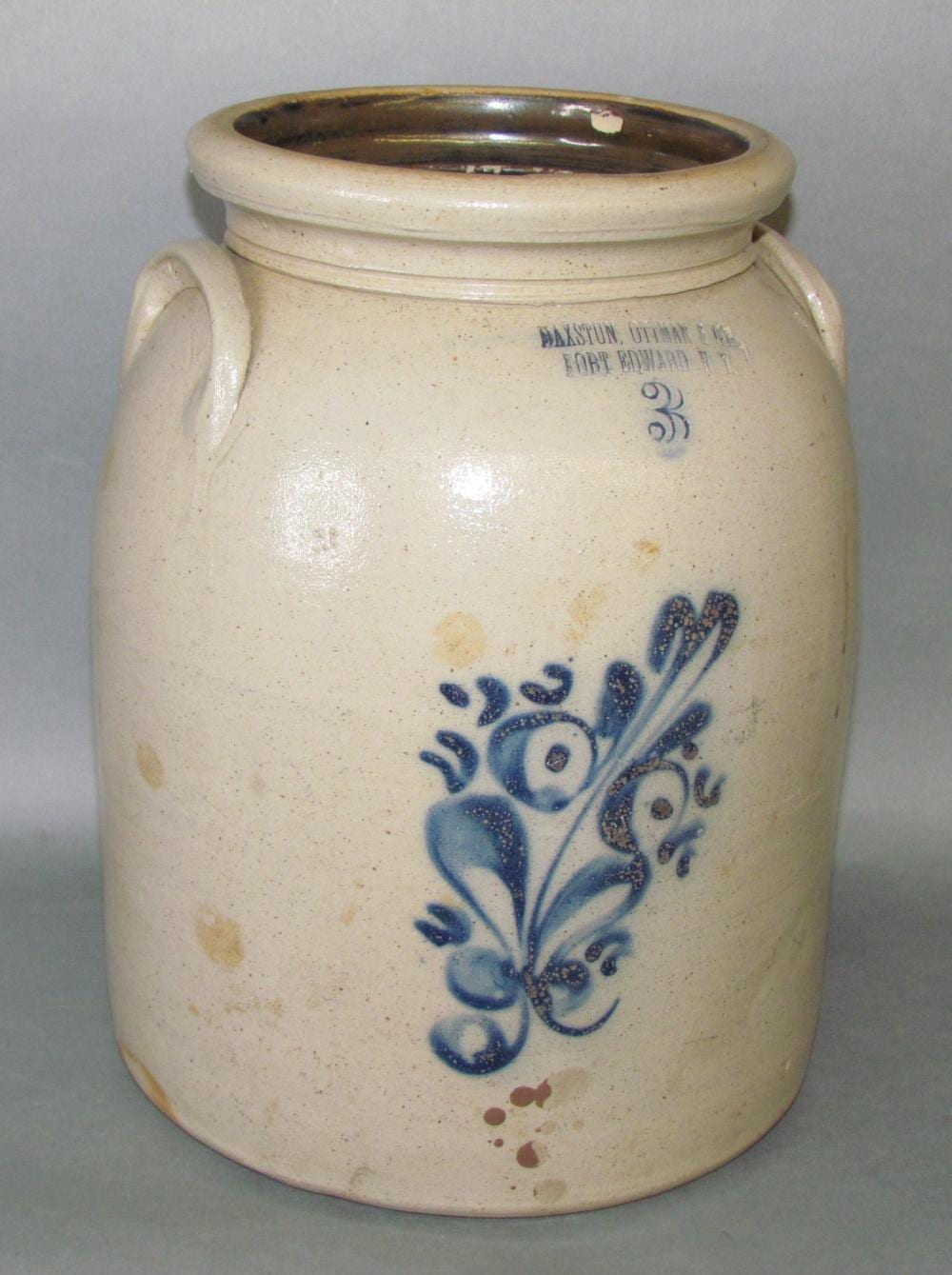
- Fort Edward Stoneware Co. (Fort Edward, NY)
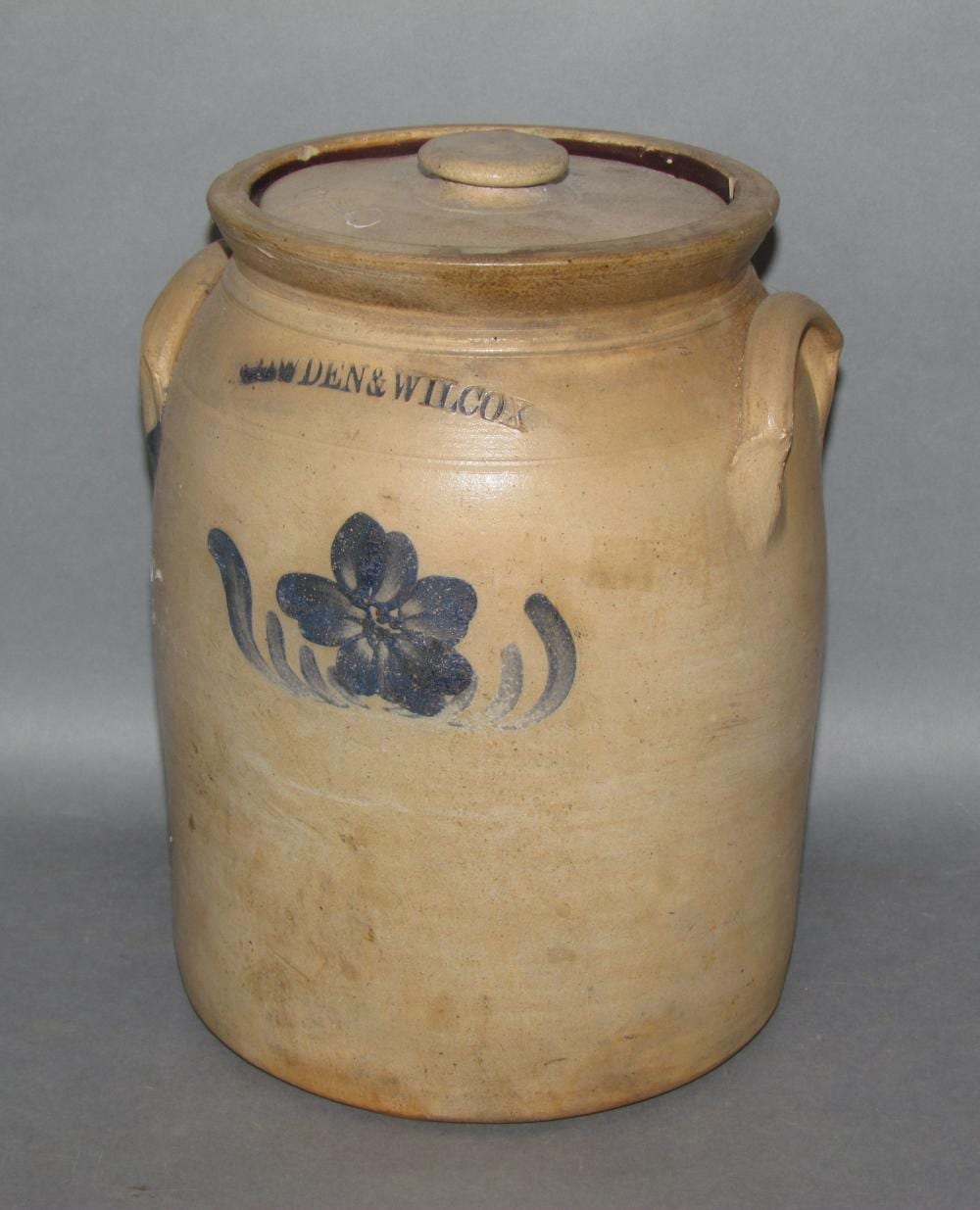
- Cowden & Wilcox (Harrisburg, PA)
- J. & E. Norton and E. & L. P. Norton (Bennington, VT)
- T. Harrington (Lyons, NY)
- West Troy Pottery (West Troy/Albany, NY)
- Remmey family (Philadelphia/Baltimore) and Crolius family (New York) for earlier New York traditions
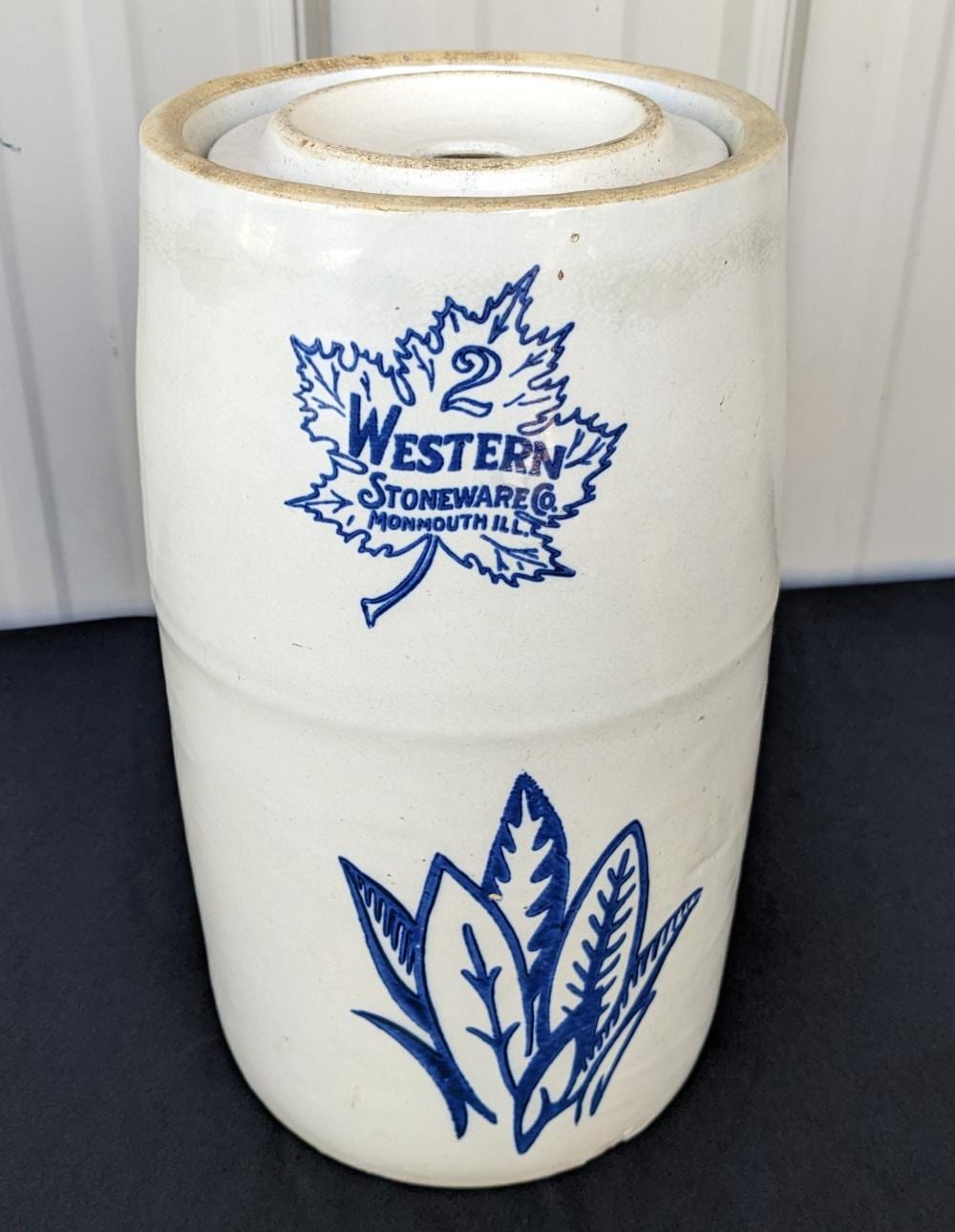
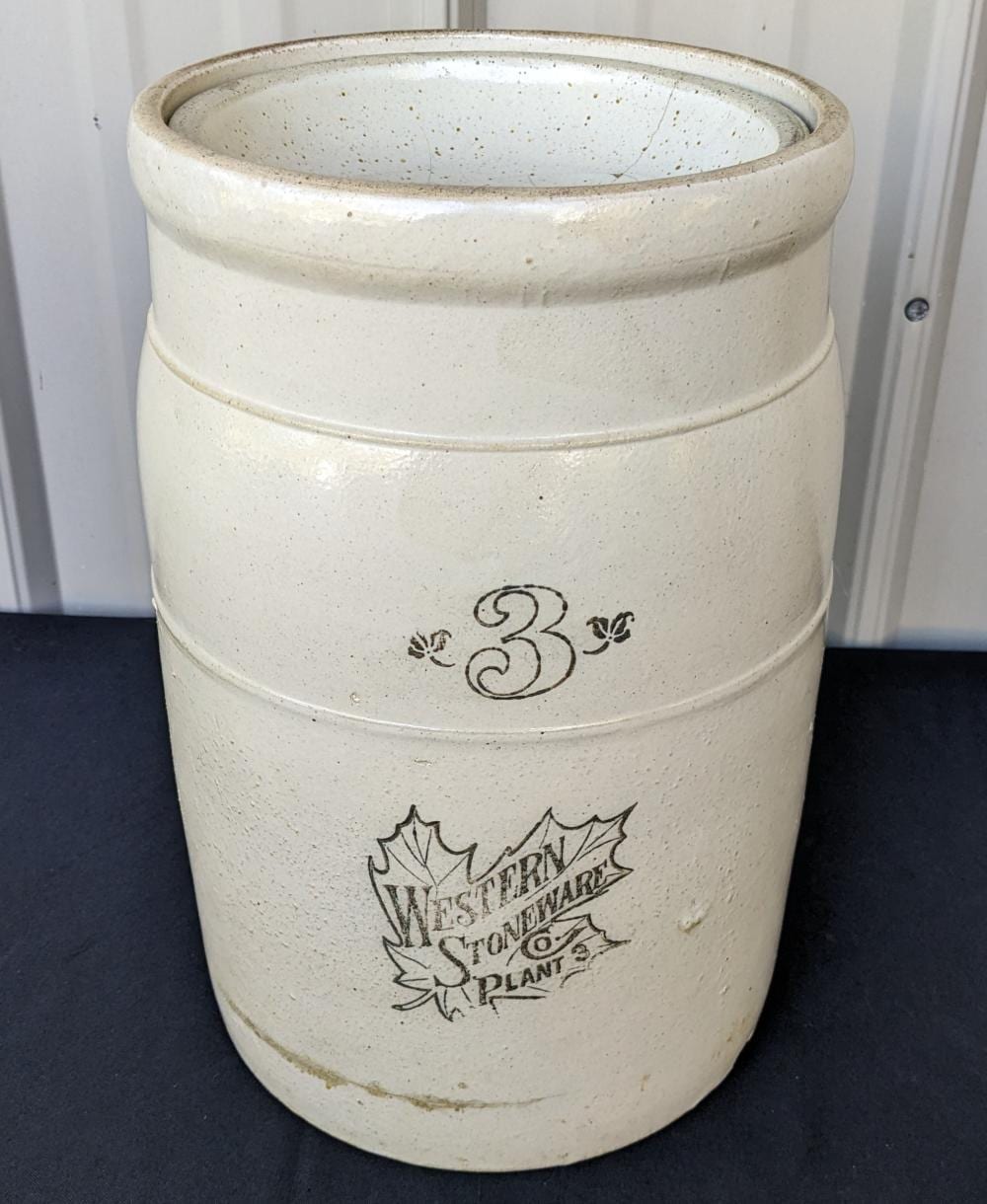
- Later Midwestern makers include Red Wing (Red Wing, MN) and Western Stoneware (Monmouth, IL). Advertising and printed/stenciled designs are common here.
- Southern alkaline-glazed churns (Edgefield District, SC; Catawba Valley, NC; Georgia) can be valuable—especially with recognizable hands or inscriptions—but figural cobalt decoration is rare in the Deep South.
- Decoration
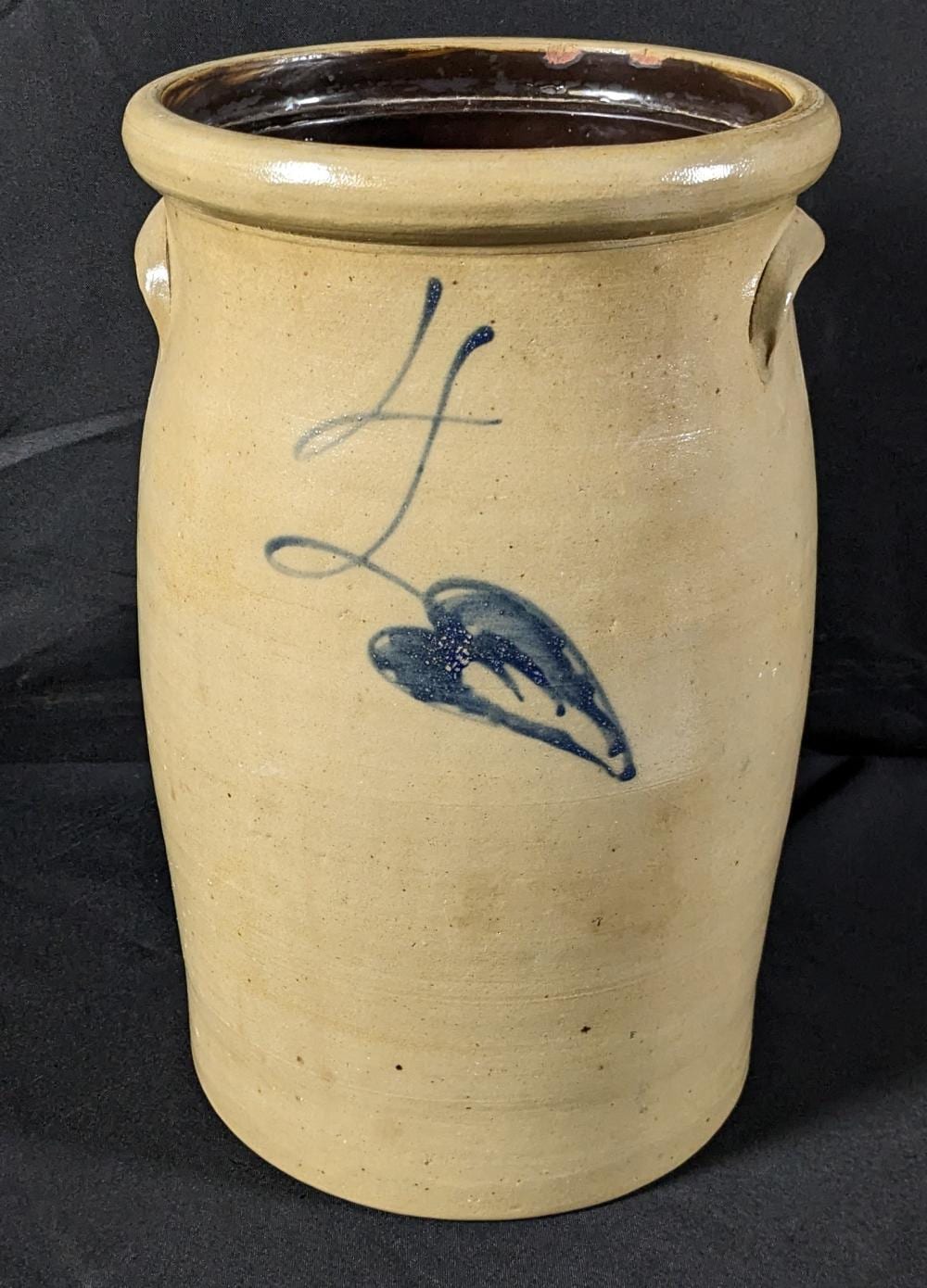
- None/minimal: Plain capacity mark only; utilitarian, steady but modest demand.
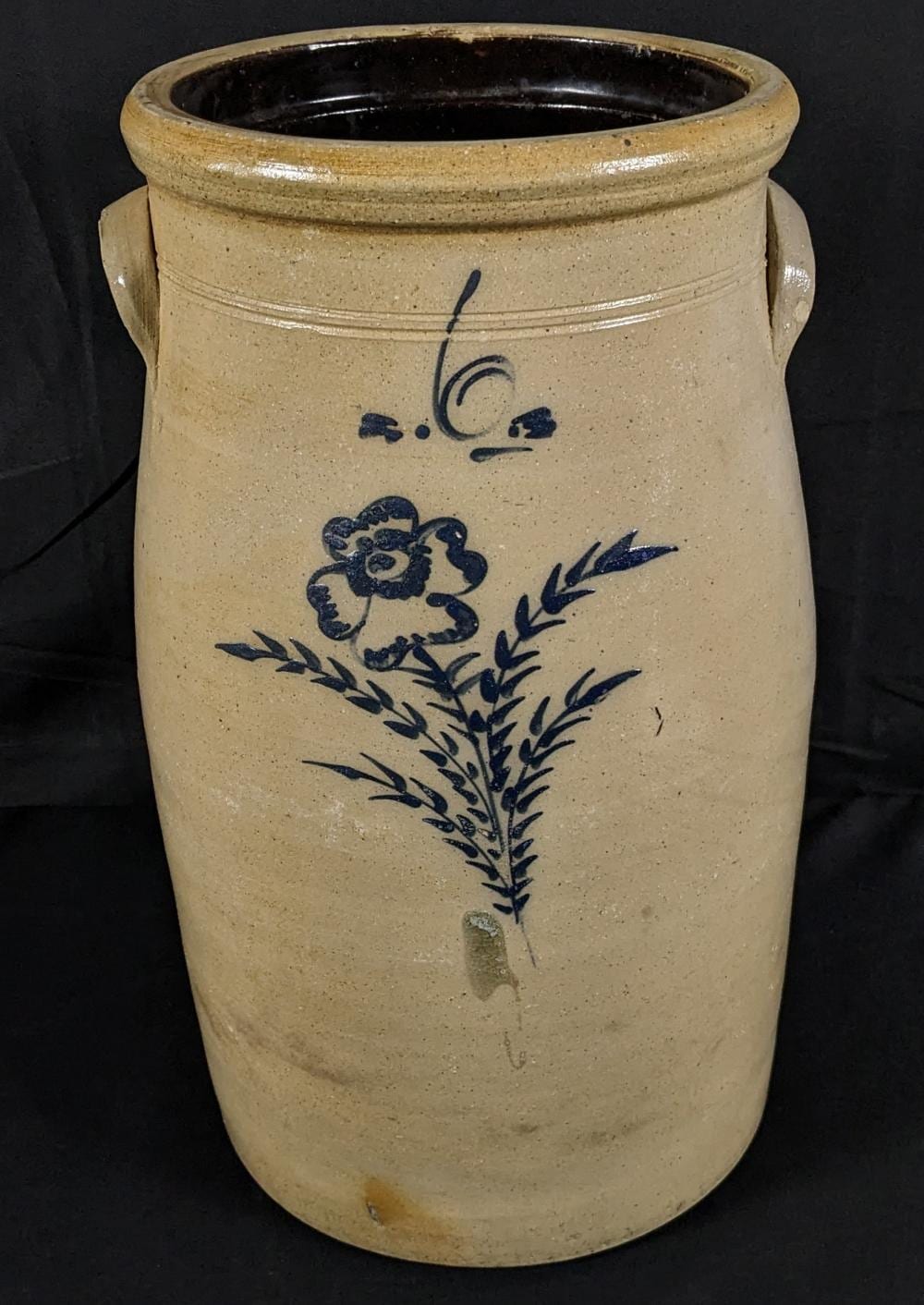
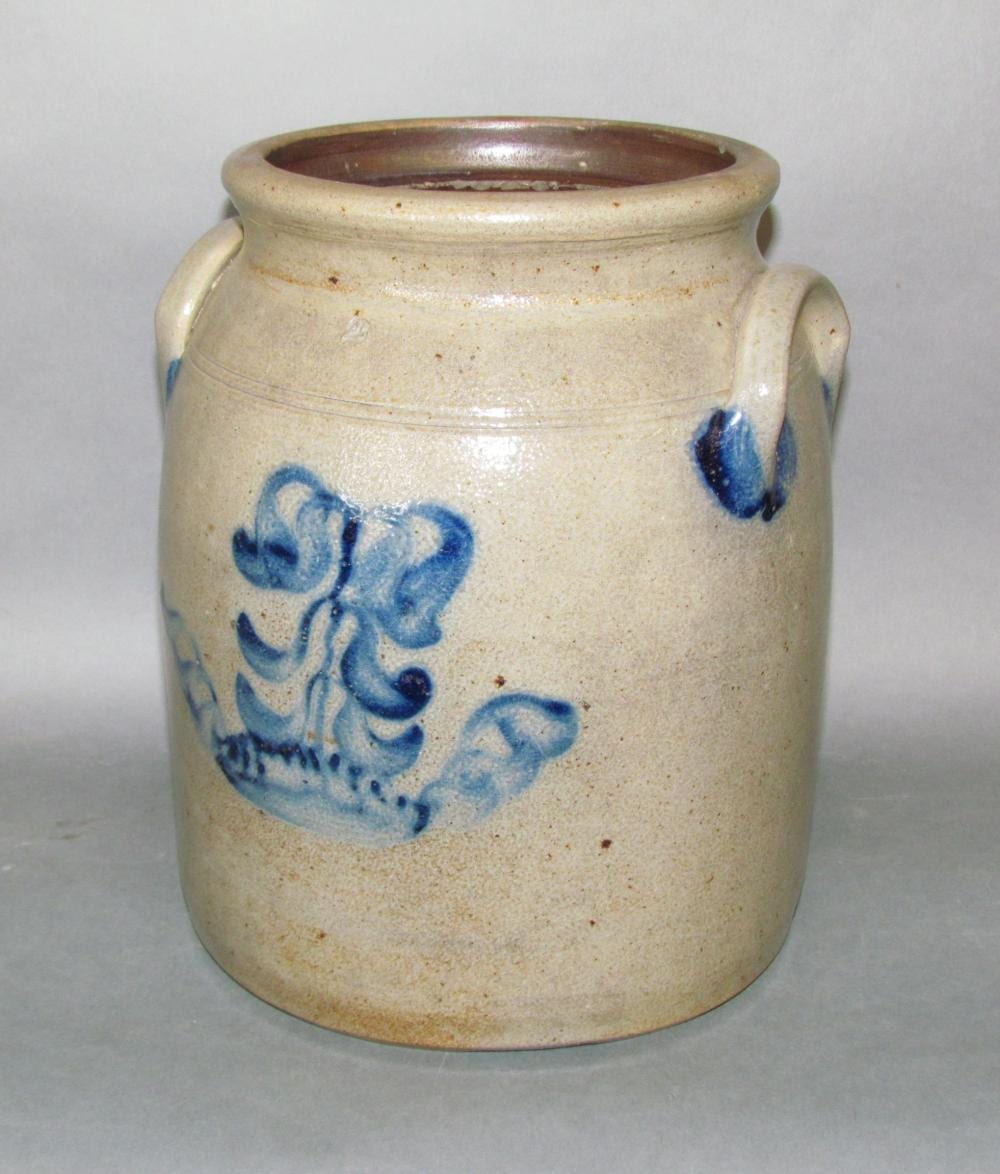
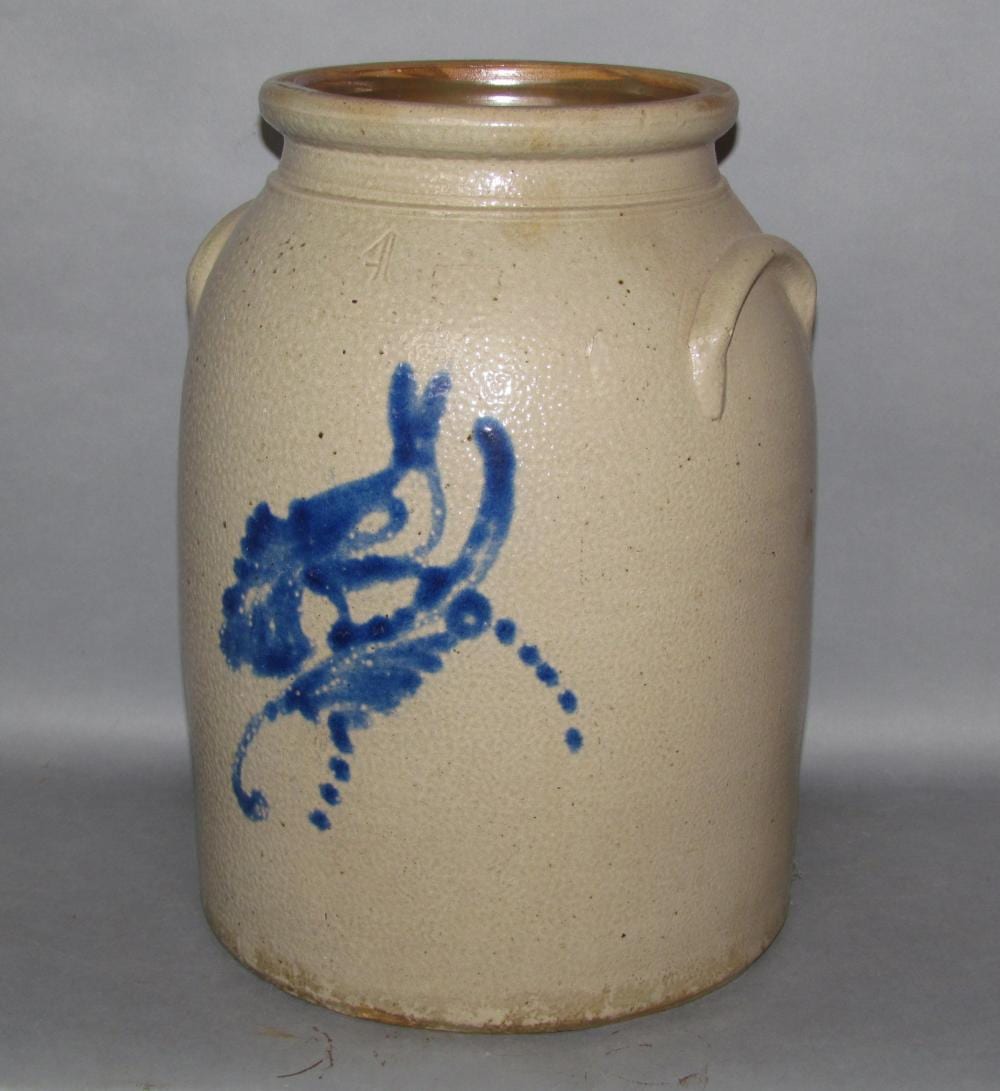
- Floral and foliate: Curled vines, tulips, or rosettes in cobalt; attractive and collectible.
- Figural: Birds on branches, deer, dogs, fish, people, or elaborate presentation pieces; these command a premium, especially in large scale or with dynamic brushwork.
- Advertising/stencils: Creameries, grocers, dairies, or local businesses add commercial history; more prized when graphic and intact.
- Capacity (Size)
- Common sizes are 2–6 gallons; 4–6 gallons offer good display presence and are widely collected.
- Large churns (8–12+ gallons) are scarce and can be more valuable, but shipping and condition risks rise with size; unwieldy pieces can underperform unless the decoration/maker is exceptional.
- Very small (1–2 gal) churns are charming and displayable; if decorated by a desirable maker, they punch above their weight.
- Condition
- Stoneware is condition sensitive. Watch for:
- Hairlines (visible cracks, often radiating or vertical)
- Rim chips and flakes (especially where a lid sat)
- Base chips, spider lines, spalling, or glaze exfoliation
- Handle losses or reattachments
- In-painting or overglaze restoration that alters the decoration
- A tight, short hairline might reduce value modestly; long or multiple hairlines, rim losses, and heavy restoration can halve or worse. Mint or near-mint examples bring top dollar.
- Markings and Documentation
- Impressed maker stamps (“COWDEN & WILCOX / HARRISBURG, PA”, “WHITES UTICA”, “FORT EDWARD, N.Y.”) and hand-incised or impressed capacity numerals increase confidence and value.
- Provenance (old collection labels, bills of sale, auction tags) helps at the higher end.
- Market Context
- Regions matter: Northeast sales for cobalt-decorated stoneware remain strong; Midwestern markets support Red Wing and advertising stoneware. Online demand adds reach but brings high shipping and breakage risk.
- Trend watch: Fresh-to-market, boldly decorated, signed, and clean examples outperform; plain utilitarian churns track more with decor trends and price sensitivity.
Price Ranges and Examples: What Are Antique Stoneware Butter Churns Worth?
Note: The tiers below reflect how common North American retail and auction outcomes compare. Local demand, condition, and timing can move prices above or below, so check recent sold results for a similar churn before pricing.
- Plain, unmarked salt-glazed churns (2–6 gal), honest wear, no major cracks:
- The most common and least expensive group.
- With minor tight hairlines or rim flakes: lower again.
- Decorated but unmarked churns (floral sprigs, simple foliate):
- A step above plain churns, depending on scale and quality of the cobalt
- Figural cobalt-decorated churns (birds, deer, animals), unmarked or generically marked:
- Well above floral examples if the drawing is large, centered, and bold; more if exceptional
- Named Northeast/Mid-Atlantic makers with strong decoration:
- Cowden & Wilcox, White’s Utica, Fort Edward, Norton:
- Clean floral examples: a named maker adds a premium over unmarked churns
- Large-scale or standout figural work: among the strongest results in the field
- Cowden & Wilcox, White’s Utica, Fort Edward, Norton:
- Early New York school (Crolius/Remmey) and scarce Southern attributions:
- Case-by-case; if documented and in good condition, can exceed the tiers above significantly
- Red Wing and other late-period stenciled/printed churns (often 2–8+ gal):
- Common logos and plain examples: modest
- Crisp large-wing logos, excellent glaze, and desirable sizes: noticeably more
- With scarce advertising or unusual forms: higher, depending on rarity and condition
- Extra-large sizes (10–12+ gal), any maker:
- Premium for rarity if structurally sound; otherwise, shipping and condition risks suppress prices. Expect a bump over similar 4–6 gal examples for equivalent decoration and maker, but this varies widely.
Value levers within those tiers:
- Symmetry matters: a centrally placed, well-rendered cobalt bird on a 6-gallon churn is more desirable than a small off-center sprig.
- Contrast and cobalt saturation raise appeal; washed-out decoration underperforms.
- Crisp maker stamps and legible capacity numerals add confidence.
- Original wooden lid/dasher: modest bump, mainly for display completeness; the vessel drives the value.
Identifying Makers and Regions: Clues That Pay Off
Marks and Stamps
- Impressed stamps are usually in an oval or block: “J & E NORTON / BENNINGTON, VT”, “WHITES UTICA”, “FORT EDWARD STONEWARE CO”, “COWDEN & WILCOX / HARRISBURG, PA”, “WEST TROY POTTERY”.
- Capacity numerals can be incised by hand, brushed in cobalt, or impressed. Hand-incised numbers often have personality and can align with a shop’s habits.
Decoration and Hand
- White’s Utica and Fort Edward: bold florals, birds, and sometimes whimsical animals; deep blue cobalt and lively brushwork.
- Cowden & Wilcox: strong foliate and bird motifs; Harrisburg stamps are common; churns sometimes carry large, centralized designs.
- Norton (Bennington): a spectrum from restrained foliate to expressive animals; often well-executed birds and deer.
- Lyons/West Troy/Albany circle: foliate sprays and birds; churn proportions and handle forms offer hints.
- Red Wing: creamy buff body with zinc or Albany slip interior; printed or stamped wing/logo; late Victorian to early 20th century look.
- Southern alkaline: olive to brown-green ash glaze, drippy runs, and sandier clay; cobalt decoration uncommon; incised names rare but prized when present.
Form, Clay, and Glaze
- Salt-glazed Northeast/Mid-Atlantic: gray to buff body, “orange peel” surface, cobalt that sits slightly raised above the glaze.
- Alkaline-glazed Southern: glassy, runny glazes, often with kiln drips; different palette and surface feel from salt glaze.
Spotting Repairs, Damage, and Reproductions
Common Damage
- Hairlines: Examine under strong light; look inside and out. Hairlines often emanate from rims, handles, or base.
- Fleabites vs chips: Small flakes along the rim are common; larger chips or losses notably impact price.
- Spidering/crazing: Some is typical; extensive spidering associated with impact can indicate structural issues.
- Handle stresses: Check both terminals for cracks and amateur glue jobs.
Repairs and Restoration
- Overpaint: Cobalt that bleeds onto uncracked glaze may signal touch-ups. Matte areas or color mismatches betray repainting.
- Epoxy and fills: Feel for temperature and texture differences; run a fingernail along the rim. UV light can reveal newer resins and overpaint.
- Sound test: A clean ring versus a dull thud can sometimes indicate internal cracks, though this is not definitive.
Reproductions and Decor Pieces
- Mold seams: Many modern decor churns are cast or slip-molded; documented churns show wheel-thrown turning lines inside.
- Artificial aging: Uniform brown “grime,” painted-on cobalt, or acid-etched “patina” are red flags.
- Wrong weight/feel: Genuine stoneware feels dense; light, chalky bodies suggest modern copies.
- Incorrect typography: Modern fonts in advertising stencils and anachronistic logos on “antique” forms are a giveaway.
Buying, Selling, and Care: Practical Guidance
Buying Tips
- Prioritize condition, then decoration, then maker. A spectacular figural drawing in sharp condition from a good regional shop beats a lesser example with a big-name stamp and issues.
- Always ask for measurements (height and maximum diameter), weight, and high-resolution photos of the decoration, stamp, rim, base, and handles.
- Factor shipping risk: double-boxing with ample cushioning is essential. Oversize churns are expensive to move and more prone to damage.
Selling Tips
- Photograph in diffuse daylight on a neutral background.
- Include close-ups of any stamp, the decoration, the rim and base, capacity mark, and any flaws.
- Provide precise dimensions, a condition report, and honest notes on repairs—buyers pay for transparency.
- For top-tier pieces, consider regional specialty auctions; they bring knowledgeable bidders who pay for rarity and condition.
Care and Storage
- Cleaning: Use distilled water, a soft brush, and mild neutral soap only. Avoid bleach, acids, and aggressive abrasives; they can burn or etch salt glaze and cobalt.
- Stain reduction: For iron stains, consult a conservator before using poultices or peroxide; missteps can damage decoration.
- Handling: Support from the base with two hands; never lift by the handles.
- Environment: Stable temperature and humidity; avoid direct heating/cooling vents and rapid temperature swings.
- Display: Use felt pads under the base to prevent scratches and stress points.
A Quick, Practical Checklist
- Identify form: wheel-thrown body, salt or alkaline glaze, correct churn proportions and handle type.
- Look for marks: maker stamp and capacity numerals; photograph them.
- Assess decoration: none, floral, figural, or advertising; note scale, placement, and cobalt saturation.
- Measure size: confirm gallons by height and girth; record exact measurements.
- Inspect condition: rims, base, handles, interior; check for hairlines, chips, spalls, and old repairs.
- Judge region/maker fit: do clay, glaze, and drawing style align with the purported pottery and period.
- Estimate value: place it in the appropriate range considering maker, decoration, size, and condition.
- Plan logistics: decide on professional packing or local pickup; weigh shipping cost vs. market reach.
FAQ: Antique Stoneware Butter Churn Values
Q: How do I quickly tell if my churn is older salt-glazed stoneware or a later decor piece? A: Check for wheel-thrown turning lines inside, a pebbly salt-glaze “orange peel” surface, appropriate weight, and hand-incised or impressed capacity numerals. Mold seams, overly even surfaces, or painted-on faux cobalt suggest a reproduction.
Q: Does the original wooden lid and dasher significantly increase value? A: They help presentation and can add a modest premium, but the vessel’s maker, decoration, size, and condition drive value. A great churn without its wooden parts can outprice a mediocre one with them.
Q: Is a large size always more valuable? A: Not always. Large churns are rarer but harder to ship and more prone to damage; they need strong decoration and good condition to outperform sought-after mid-sizes (4–6 gal). Condition issues on large pieces are more value-destructive.
Q: What flaws hurt value the most? A: Long or multiple hairlines, rim and handle losses, heavy overpaint/restoration, and base cracks. Minor rim flakes and small tight hairlines are common and less damaging to value.
Q: Can I use an antique churn for food? A: It’s best kept as a display antique. Historic glazes and unknown cleaning chemicals make food use inadvisable; use modern equipment for churning and enjoy the stoneware as decor and history.
By focusing on maker, decoration, condition, and accurate identification, you can confidently assess antique stoneware butter churn values, buy and sell wisely, and care for pieces that connect today’s shelves with 19th-century kitchens.