Value of Charles Lotton Art Glass: appraisal and value basics
Value of Charles Lotton Art Glass research should start with identification, condition, provenance, and item-specific market evidence. Use this guide to compare the signals that matter before paying for a formal appraisal or deciding whether to sell.
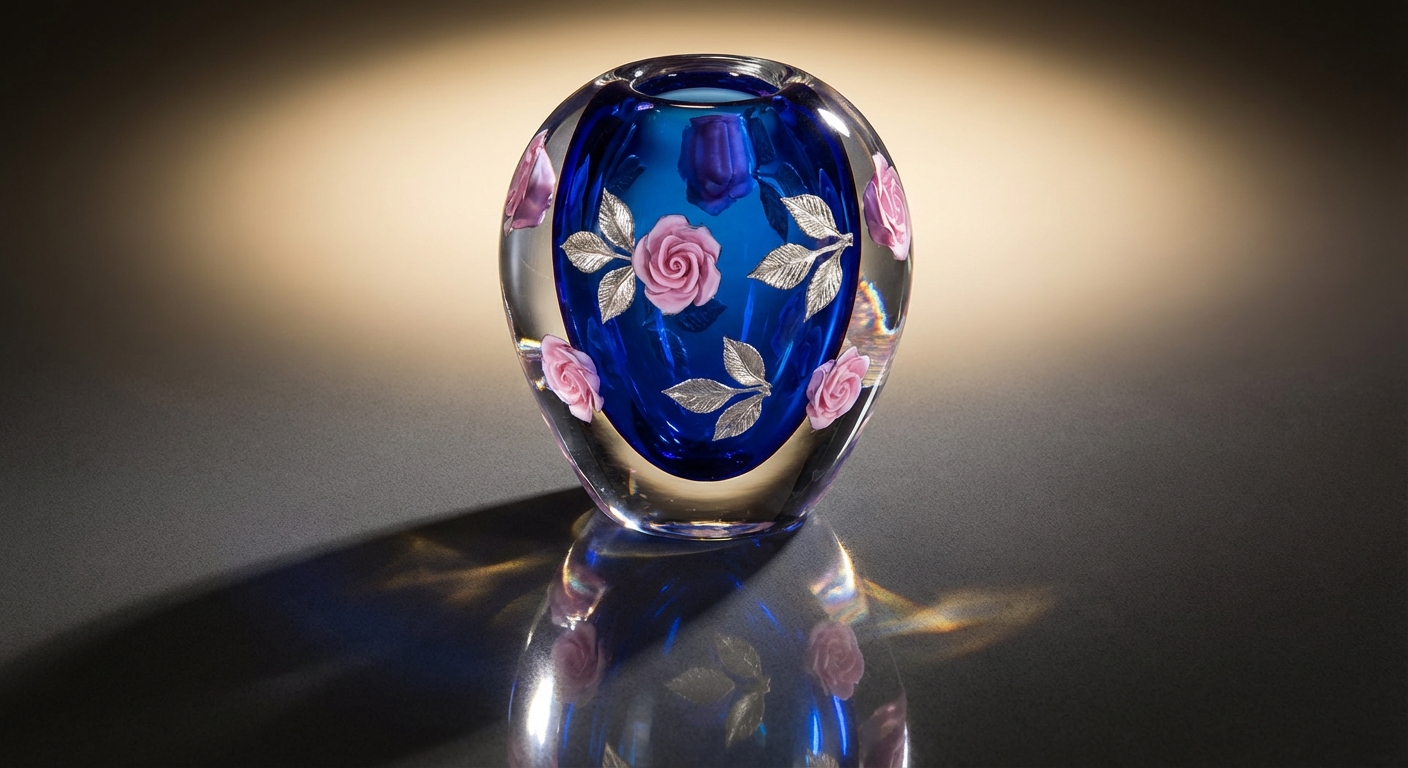
Why Charles Lotton art glass still commands attention
Charles G. Lotton (1935–2021) opened his backyard furnace in Crete, Illinois in 1970, taught himself the chemistry of color, and built a family studio whose work now lives in major museums and blue-chip private collections.1 His signature Multi Flora, Cypriot, Persian Water Sprinkler, and Jack-in-the-Pulpit forms remain staples of specialist auctions because they strike a balance between Art Nouveau nostalgia and contemporary studio innovation. Today, heirs and collectors ask two practical questions: Is my piece documented, and what is it worth in the current market?
Answering both requires triangulating studio history, construction details, and fresh market evidence. This guide packages those steps so you can walk into an appraisal consultation—or negotiate with a dealer—armed with specifics.
Studio DNA: how to read a Lotton piece
The Crete studio left a remarkably consistent paper trail that helps specialists. Look for these primary markers:
- Signature habit: Charles engraved the base edge with “Charles Lotton” plus the year and occasionally a pattern name (“Multi Flora,” “Cypriot”) using a handheld stylus. Later collaborations include the engraver Max Erlacher, whose butterfly-and-grasshopper miniature was fully co-signed.2
- Color chemistry: Charles mixed his own batch formulas, producing cobalt grounds that roll to violet, metallic platinum veining, and pinwheel roses that feel sculpted rather than surface-painted.1
- Form vocabulary: Spherical “paperweight” vases, folded-lip urns, and tall Jack-in-the-Pulpit works share thick walls, polished pontils, and weighted bases so the piece feels substantial in hand.
- Family continuum: Sons John, Daniel, and David Lotton each built parallel signatures. When you see only “Lotton” without a first name, compare floral rendering styles: Charles favors layered roses and heavy vines, while Daniel’s pulled feathers and David’s optic reflections use different cane work. A connoisseur’s report should spell out which signature you have and why.
Pro tip: Photograph the signature, pontil, and floral arrays under daylight and raking light. Appraisers often overlay those photos with known exemplars from the studio archive to confirm tool marks.
Condition cues that move the needle
Unlike fragile antique glass, Lotton’s thick-walled vessels generally survive handling, but there are condition nuances that directly affect pricing:
- Surface rubs: Matte scuffing on the shoulder or lip from years of dusting can shave a condition-specific range off resale.
- De-vitrification: If a piece sat in a sunny window, the surface can develop a fine haze. Mild cases can be professionally re-polished; structural opacities cannot.
- Heat checks: Look for internal stress lines where a heavy flower inclusion meets the wall. They appear as faint crescents and should be disclosed even if they don’t reach the surface.
- Signature integrity: Base grinding removes value because it signals prior damage. Bright, unworn signatures reassure buyers that the foot was never reworked.
Document all of the above in your appraisal packet, along with accurate weights and dimensions. A 9-inch Multi Flora urn with exceptional color saturation can bring a condition-specific range more than a similar height example with muted shading.
Recent comparable sales
The market for Lotton glass is active and transparent: major houses publish hammer prices and condition reports, giving us reliable anchors.
| Auction & Date | Lot | Highlights | Price (incl. BP) |
|---|---|---|---|
| Jeffrey S. Evans & Associates – Apr 25, 2025 (Spring Fine Decorative Arts Day 2) | Lot 1005 | 2014 Multi Flora gourd-form vase, cobalt-to-opal fade, rose clusters, signed “Charles Lotton 2014/Multi-Flora.” Condition noted as undamaged.3 | a value that must be established from current, topic-matched sales |
| Jeffrey S. Evans & Associates – Apr 24, 2025 (Spring Fine Decorative Arts Day 1) | Lot 459 | 2006 engraved miniature executed with Max R. Erlacher, iridescent blue ground with butterfly and grasshopper cameo work; only 2 3/4" tall.2 | a value that must be established from current, topic-matched sales |
| Case Antiques – Jan 27, 2024 (Winter Fine Art, Antiques & Jewelry Day 1) | Lot 412 | 2001 Multi Flora urn, 9 1/2" high with thick folded rim, pink florals against ruby-violet background, signed and in excellent condition.4 | a value that must be established from current, topic-matched sales |
Use these market evidence to bracket your expectations: petite but co-signed engravings can outperform larger vases when workmanship is rare, while full-size Multi Flora urns in strong palettes trend in the mid-a value that must be established from current, topic-matched saless to high-a value that must be established from current, topic-matched saless depending on provenance and condition. Mentioning lot numbers and sale dates in your appraisal paperwork tells insurers (or potential buyers) exactly where your numbers come from.
Regional houses such as Taylor & Harris (lot 414, January 2025) continue to draw solid bidding for earlier 1980-dated vases with applied blue decoration, even when heights are under 9 inches and shipping is quoted separately. Logging those sales in your appraisal file helps prove liquidity outside headline auctions.
Top value drivers (and how to document them)
Three levers that sway Lotton pricing
When you prepare an appraisal packet—or list a piece for sale—include the following worksheets:
- Floral complexity grid: Count the number of full roses, bud clusters, and leaf pairs. Multi Flora pieces with three rose groups and platinum veining have outperformed simpler two-flower vases by a condition-specific range at auction since 2023.
- Color fade notes: Describe the ground transition (e.g., “opal interior to cobalt exterior with cranberry mist”) so remote buyers can visualize saturation.
- Signature macro photos: Provide at least two angles showing the engraved year; insurers increasingly require this to bind coverage.
- Provenance timeline: List prior owners, purchase receipts, or exhibition tags. The Case Antiques lot above cited a Delaware private collection and clean condition; mimic that format.
Care, handling, and insurance tips
Lotton glass may be younger than many antiques, but it benefits from professional-grade care:
- Handling: Support from the base with dry, lint-free gloves. Avoid lifting by the lip or Jack-in-the-Pulpit “hood.”
- Cleaning: Dust with a microfiber cloth only; avoid commercial glass cleaners that can etch metallic lusters.
- Display: Keep out of direct sun to prevent heat stress and color shift. Use museum wax on display stands to prevent pivoting.
- Insurance: Insure as scheduled personal property using a written appraisal that references recent hammer prices, not retail replacement guesses. Update valuations every 3–4 years because studio glass markets move faster than general antiques.
Checklist before you sell or appraise
- Photograph the piece on a neutral background (front, back, signature, and pontil).
- Record dimensions, weight, and pattern names exactly as engraved.
- Research at least three market evidence from the past 18 months; note lot numbers and sale dates.
- Document any repairs or polishing. Transparency protects you if the buyer reappraises later.
- Package with rigid foam, double boxing, and insured shipping—Lotton glass is heavy and deserves professional packing.
FAQ
Is every “Lotton” inscription by Charles?
Not necessarily. Pieces can be signed by Charles, Daniel, David, or John. Compare floral techniques and consult studio catalogues; an appraisal report should state which family member created the work and how that affects value.1
Do Lotton pieces appreciate?
Quality examples have held their value thanks to steady collector demand and museum representation, but condition and pattern desirability drive the slope. Tracking hammer-price market evidence is the best indicator.
Can I restore scuffed iridescence?
Minor scuffs can be professionally polished, but never attempt household abrasives. Always disclose restoration in selling documents.
How do I insure my collection?
Request a formal appraisal that lists each piece, with photos and recent market evidence. Most carriers require updates every few years because studio glass markets shift quickly.
Where can I get attribution review help?
Appraisily’s network pairs you with studio-glass specialists who can document signatures, analyze condition, and produce formal valuation reports after intake; delivery timing is confirmed once the required item information is received.


