
Start with visible clues, not seller promises
People usually ask this at the right time: how can I tell at a glance if a piece of art glass is a genuine piece or a high-quality reproduction? The honest answer is that there is no single tell. Your job is to stack evidence in layers. The upside is great: if you check the same seven clues every time, weak clues get exposed quickly and confidence rises before checkout.
A lot of mistakes happen because buyers assume “older-looking equals older-glass.” That rule feels sensible and often fails. Makers have reproduced historic patterns for decades. Some modern studios intentionally mimic older tool marks, color bloom, and even imperfect handwork. The difference is usually in the micro-details: how those marks form, what they are attached to, and whether the paper trail survives each stage of provenance.
The first signal is your price context. Appraisily’s internal auction data for decorative arts and print-related lots in this niche shows broad realized ranges: some entries sit near USD 350, while stronger cataloged pieces and signed works can clear USD 3,500+. That spread itself tells you the first rule: appearance alone is not enough. Provenance, maker identity, and condition usually explain the jump, not just the glass itself.
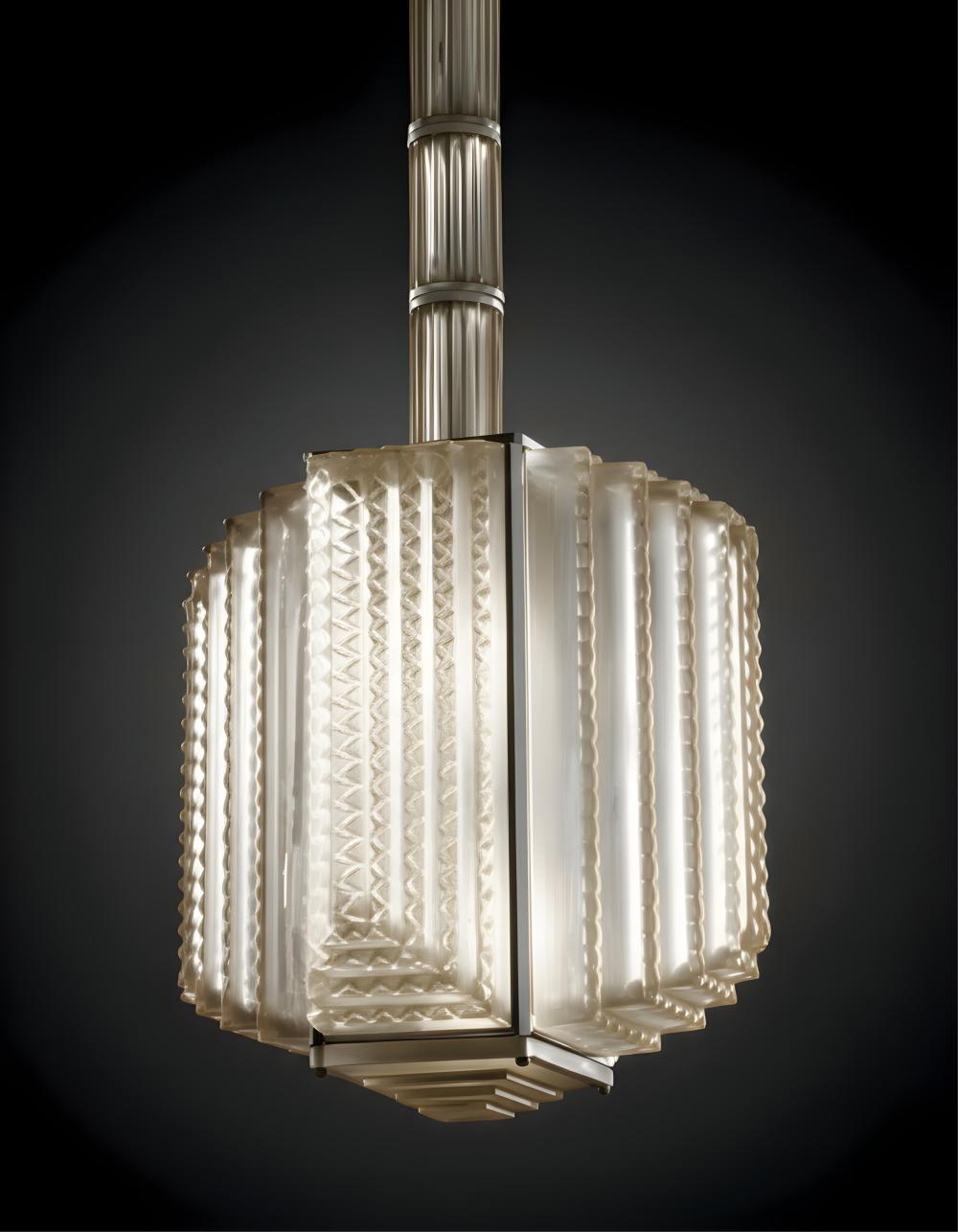
How to scan an art glass object in five passes
Before you ask a seller for more photos, you can do a quick scan in five passes. Do these in order each time you evaluate a piece.
1) Build baseline physical clues
- Weight and density: Real pressed and blown glass from earlier periods is often inconsistent by batch. Extremely uniform weight and a very modern smoothness can be normal for studio reproductions.
- Glass edge behavior: Original high-end objects often show micro-brittle transitions and age-adjusted fracture tendencies, while reproductions may show cleaner, newer edge fracture geometry.
- Finish structure: Compare the surface at the rim and at the base; later repaints, touch-ups, or re-gilding are often visible under raking light.
2) Read marks as systems, not symbols
Marks are strongest when interpreted as a system:
- Maker signatures, factory labels, and ink styles should align with the supposed production period.
- Signatures that look digitally even or perfectly centered across many pieces are a warning flag in older categories.
- Ink that appears to sit on top of waxy overcoats, rather than embedded in craquelure zones, deserves extra scrutiny.
3) Compare wear geometry and repair quality
Use “micro-distribution” logic: genuine wear tends to follow handling patterns, display orientation, and object stress points. Machine-like repeat wear, especially identical scratch paths across separate features, often signals replica production or aggressive restoration. That does not automatically mean fake, but it changes expected value and risk.
In practice, this means you are looking for inconsistencies between how the damage looks and how the piece was supposedly used. If the underside has heavy wear but interior surfaces are pristine in a piece allegedly inherited from decades of display, either the narrative needs proof or the provenance has a gap.
A practical buyer scenario
A buyer found a mid-century studio vase in estate furniture and was told it was “rare studio glass.” The piece had strong colors, an elegant base line, and a handwritten note with a familiar name. At first glance it looked expensive.
What changed the outcome was process: we compared the object against three layers of evidence. First, physical pass: one base rim had a uniform tool line inconsistent with the rest of the piece. Second, provenance pass: the written note had no contact trail, no appraisal history, and no exhibition record. Third, market pass: nearby comparable lots with similar motifs sold across a broad band because only one had clear maker attribution. The result was a cautious bid decision, not a panic call.
That scenario matters because it shows this is not about “gut instinct.” It is about evidence stacking and avoiding emotional overpayment when the object’s story is thin.
Free instant estimate
Not sure if your piece is real glass or later production? Let us review it.
Upload details, photos, and what matters to you. Get a free first read. If it is worth a full appraisal, we will say so.
Free. No card needed. Takes about two minutes.
Judge originality by matching multiple identity clues
The most accurate way to tell art glass from reproductions is to connect evidence into a single chain. If one clue points one way and four point the opposite direction, trust the majority with supporting documentation.
Maker mark and signature logic
Do not rely on a single stamp. A signature can be copied, aged, even altered. Check whether mark fonts, paper stock, and ink chemistry match known period patterns for that studio or maker lineage.
Paper and box provenance
If the seller supplies documents, look for paper type, typography, and date consistency before you ask for proof. In high-stakes categories, we often see one of three outcomes:
- Consistent: docs reference the same studio, same title, and same object traits.
- Compatible but vague: likely valuable, but confidence depends on independent specialist review.
- Contradictory: labels, sales text, and physical details do not align.
Contradictions should lower offered confidence substantially, even when the visual quality is excellent.
Use condition logic that reproductions rarely pass
Condition is where buyers often either overpay or make great value decisions. For art glass, prioritize:
- Patina behavior: Genuine long-life patina forms in gradients and can localize around edges and wear points.
- Repair profile: A true historical object may have old repairs, but the repair language should match techniques and adhesives from the era claimed.
- Internal structural clues: Inclusions, bubbles, and seam patterns can reveal blowing method and era.
- Base signature ecosystem: Base marks should make sense in relation to maker and object category.
A useful mental model is to treat every claim in the listing as a hypothesis. Then test the hypothesis by asking one proof-heavy question per clue. If at least two hypotheses weaken under your test, pause and request specialist review before purchase.
Use market proof as your final sanity check
When you can compare against real market outcomes, emotional overpayment risk drops. Appraisal-relevant evidence in the database shows that decorative works with stronger attribution and documented history can command materially higher outcomes than visually similar but undocumented pieces.
In plain terms:
- A comparable lot with weak documentation can trade near baseline auction levels.
- Another with clear maker context can move materially higher even if both look similar in photos.
- One-off condition issues can quickly push a piece into a discount range regardless of aesthetics.
That is why an object with attractive surface and uncertain provenance is not automatically a bad buy. It is, however, a “review-first” object that should only move forward with stronger evidence.
Your 90-second buyer checklist
Use this as a final decision filter right before payment:
- Is the maker claim repeated in all documentation, or does it shift by phrasing?
- Do photos show one plausible wear pattern or multiple inconsistent styles?
- Can you verify repairs and base marks from a third source?
- Does a conservative market evidence range justify the ask?
- Have you captured at least three close macro-level photos and one proofing photo of the base?
Failing two of these questions is usually a signal to pause and escalate to specialist review before checkout. If you pass all five, you still need a specialist if the value gap is large, but you have a stronger starting position.
When in doubt, treat it as a “learn and verify” object, not a “buy now” object. A free screener review is often enough to avoid regret and can be done quickly from your phone.
Search variations
- how to spot real art glass vs reproduction
- how to tell studio glass from modern reproductions
- is art glass with signatures less likely fake
- cheap art glass reproductions with signs of age
- how much can fake art glass sell for
- art glass appraisal before buying online
- art glass maker marks and base signatures
- what proves art glass value before I pay
- how to verify glass provenance photos
These questions map to the same comparison framework: identify object type, verify production consistency signals, then test value through documentation and market market evidence.