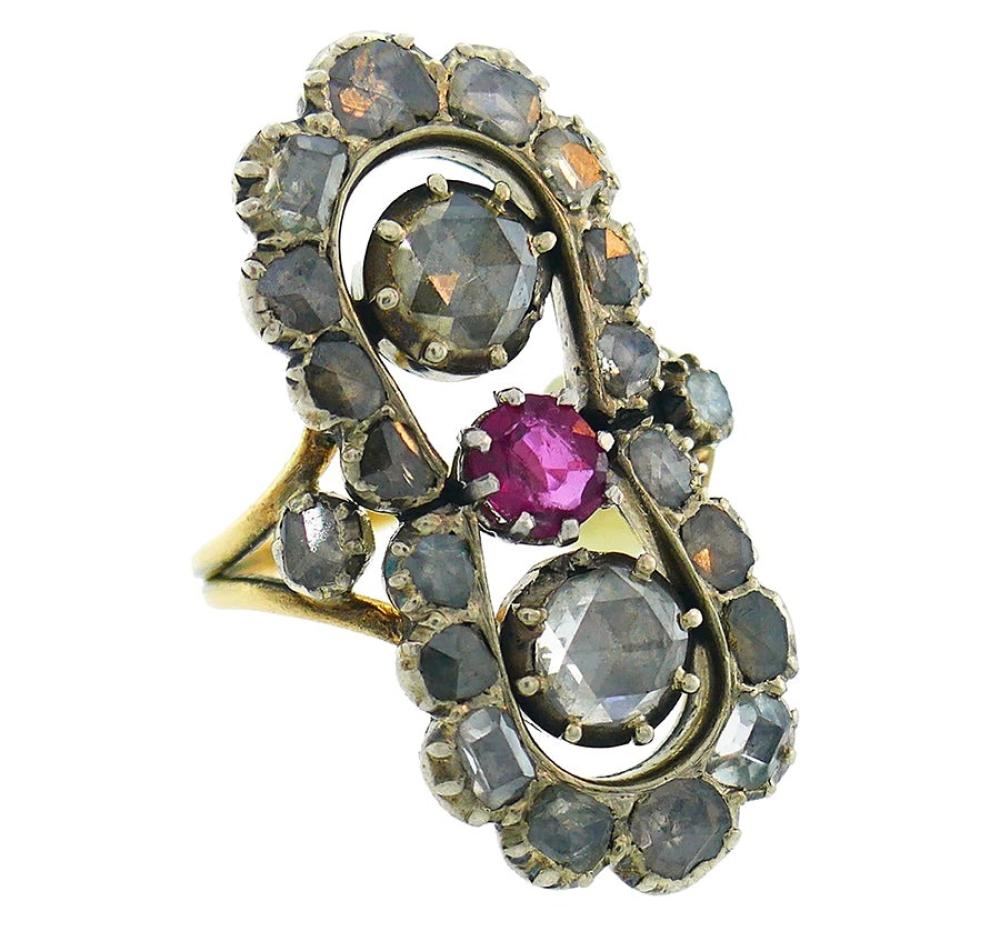
Estate Jewelry vs Reproductions How to Tell the Difference Before You Pay Too Much: appraisal and value basics
Estate Jewelry vs Reproductions How to Tell the Difference Before You Pay Too Much research should start with identification, condition, provenance, and recent comparable sales. Use this guide to compare the signals that matter before paying for a formal appraisal or deciding whether to sell.
Why this confusion costs more than you think
The question “Estate jewelry or reproduction?” sounds like identification, but the answer usually becomes a financial decision. In practice, that line determines whether you are buying a collectible asset, a decorative heirloom, or a decorative reproduction that should be priced as retail-style jewelry.
If you buy before verifying evidence, your downside is usually not just overpaying. The same uncertainty also lowers trust in resale, insurance, and inheritance documentation. That is why the comparison must be treated as a pre-purchase valuation problem first, not only a style question.
Estate jewelry and reproductions: first principles
Estate jewelry means a used item that has history in private hands, trade, or estate circulation. Reproduction means a later-made item designed to look historic or period-correct, often with modern manufacturing or restoration choices.
The best way to test the boundary is not a single cue. Your judgment should be cross-validated across five axes:
- Marking credibility: hallmarks, maker marks, assay symbols, and internal consistency.
- Tooling behavior: how the piece was cast, stamped, soldered, set, and polished.
- Material signature: density, wear, finishing, and patina versus engineered sheen.
- Gem behavior: stone profile, settings, and cut consistency with claimed era.
- Paper trail: provenance, seller documentation, and transfer history.
Three non-negotiable checks before you click “Buy”
Run this quick filter while the item is still an idea, not an invoice:
- Ask for clear front, back, and clasp macro photos first: a readable hallmark line and internal structure are mandatory.
- Ask how the piece came to market: estate source, consignment store, online reseller, or mixed catalog source each carries different risk.
- Request a valuation intent: are you buying to wear, insure, donate, sell, or auction? The intent changes how much risk you tolerate.
If any one of these is weak, your next stop is a clarifying appraisal step, not the payment button.
Estate vs reproduction: direct comparison
Use this matrix to decide if the item behaves like age or like a modern re-creation.
| Evidence axis | Estate-like signal | Reproduction-like signal | Value implication |
|---|---|---|---|
| Hallmarks and maker marks | Marks show era-appropriate typography, depth, location, and repeatable provenance context. | Marks are generic, too crisp, repeated uniformly across unrelated locations, or visibly misregistered. | Trust-adjusted value is reduced until provenance and professional review restore confidence. |
| Finish and patina | Wear is irregular in wear points: pin holes, clasp stress lines, natural oxidation variations. | Surface appears uniformly polished or chemically “new,” even when claiming age. | Uniform shine often signals recast or heavy restoration; buyers usually discount without repair details. |
| Metal behavior | Gold and silver feel and react predictably under ordinary touch and age-expected edge wear. | Very even solder color and modern joins with modern threading style. | Mixed signals push pricing below comparable documented estate examples. |
| Stone and setting style | Gem settings align with period tooling; slight asymmetry is common and normal. | Machine-perfect repetitive setting precision or recent repolish that erases original seat geometry. | Buyers often value authentic wear context and documented setting era over pure visual beauty. |
| Provenance | Clear ownership, repair history, or sale channel documentation exists. | Vague story, one-line listing, and no chain-of-custody details. | Provenance uncertainty usually lowers insurance and bidding confidence. |
Two-step intake
Need help classifying a specific item?
If the distinction affects sale, insurance, or estate planning, share photos and context now. We will route you to the right specialist workflow.
Secure intake. Routed to the right specialist. Checkout only if you decide to proceed.
How the distinction changes value
In practical terms, this is where money moves: the same outward look can support two different valuation stories. A piece with clear provenance and evidence can still be modest in absolute dollars, but it often trades at a stronger realized price because lenders, insurers, and consignments can verify it quickly.
By contrast, a visually similar but weakly documented reproduction often performs as a category-reduced item. Buyers will discount it until marks, materials, and sourcing all align. The result can be the same “nice-looking” appearance with a lower and slower market acceptance.
Appraisily’s internal auction context repeatedly reinforces three patterns:
- Pattern One: documented estate pieces with consistent marks tend to command confidence across channels; uncertainty drops quickly.
- Pattern Two: restoration-heavy or repolished items are not automatically low value, but they usually require stronger proof to hold comparable bids.
- Pattern Three: strong provenance usually improves liquidity even in lower-priced categories because liquidation and insurance decisions are easier.
These patterns matter because appraisal intent is not uniform. If you are insuring, the appraisal format is different from sell-now liquidation. Misclassification can cause a wrong strategy and an expensive reroute later.
Where reproductions hide in modern channels
- Online listings: clean photos and broad descriptions can mask replacement mounts, modern chains, and recent resets. Treat uniform shine as a warning when provenance is thin.
- Estate sales and auctions: lots often contain mixed pieces; provenance can be partially preserved, but mixed evidence requires lot-level caution.
- Social marketplaces: lower friction can increase false certainty. A seller can call a piece “vintage” with no validation and no correction mechanism.
- Family inheritances: emotional urgency can short-circuit verification. Keep your own record photos and get a specialist opinion before any sale commitments.
A value-aware decision path
Use this as a practical route before paying or committing to listing:
- Choose the use first: wear, resale, insurance, donation, tax valuation.
- Match to required certainty: insurance and tax usually require higher proof confidence than informal gifting.
- Escalate if signals disagree: if marks and wear conflict, do not decide on visual charm alone.
- Request a specialist review when: high-value stone content, disputed age claim, or no reliable provenance exists.
This sequence avoids common mistakes, especially the belief that “no obvious fake signs” equals authentic and high value.
Top mistakes that make people overpay
- Equating brand nostalgia with authenticity: style language is often copied well; provenance is the harder proof.
- Relying on one photo: no macro, no reverse shot, no clasp close-up means an incomplete decision set.
- Ignoring restoration: restored pieces can still be excellent, but restoration changes treatment and pricing assumptions.
- Accepting partial marks as full proof: a readable mark is one signal, not a verdict.
- Confusing wear with age: wear can be simulated or recently induced. Tooling continuity and historical context still matter.
- Paying before valuation intent: buyer intent (wear versus resale) changes price tolerance.
Note: We found 9 relevant comps in our database for this topic right now. We’ll continue to expand coverage over time.
What similar items actually sold for
To help ground this guide in real market activity, here are recent example auction comps from Appraisily’s internal database. These are educational comparables (not a guarantee of price for your specific item).
Disclosure: prices are shown as reported by auction houses and are provided for appraisal context. Learn more in our editorial policy.
References
- Global hallmark and appraisal standards are interpreted through Appraisily’s valuation process and market comparables.
- For expert educational standards, see Editorial policy.
- Public methodology guidance from gemology and valuation institutions is used as secondary support context where applicable.
Search variations collectors ask
Readers frequently ask these before sending item photos to a specialist:
- How to tell estate jewelry from a reproduction in 10 minutes?
- How do marks and hallmarks prove authenticity?
- Can polished silver look like vintage too easily?
- What is a dangerous sign before buying online jewelry?
- How much does resale drop on unknown provenance pieces?
- Why does a reproduction still be worth less than estate?
- What photo angles do jewelers ask for first?
- Should I insure an uncertain vintage jewelry piece?
- Can heavy restoration still keep value?
- How to decide if an item is an estate buy or replica?
These query patterns align with practical checks for proof quality, not styling preference.
Need a specialist appraisal before you buy, insure, or resell?
Get a documented review built around authenticity clues, value context, and the right appraisal path for your piece.
- Photo-based review of hallmarks, wear, and construction details
- Guidance on whether the piece reads as estate, reproduction, or later assembly
- Clear next step for insurance, resale, or formal appraisal needs
Secure intake · No obligation · Specialist review path
![Estate Jewelry vs Reproductions How to Tell the Difference Before You Pay Too Much example: Auction comp thumbnail for [JAMES B. A. 'JIMMY]': (1915-2008) British Squadron Leader with the Royal Air Force. A Prisoner of War from 1940-45, James made numerous efforts to escape from various POW and Concentration Camps, most famously from Stalag Luft III in March 1944 as part of the 'Great Escape'. A very large archive of letters, some documents, greetings cards, a few photographs, printed copies of emails etc., being correspondence written to Jimmy James (and in some cases his wife, Madge, too) by a very wide and extensive range of individuals including family, friends, colleagues, World War II enthusiasts, autograph collectors, school children and other members of the public etc., from all over Europe and the rest of the world including Canada, America and Australia, mainly dating from the 1990s - 2000s although also including some earlier correspondence from the late 1940s onwards, a quantity of the letters annotated by James with a brief note as to the nature and date of his reply, many of the letters making reference to the Great Escape and James's other World War II activities and comrades, a few extracts including 'Now I met the man [Patrick Leigh Fermor, a prominent member of the Cretan resistance during World War II] seven years ago in Greece. I wrote to him beforehand
.and he invited us both to visit and we had an interesting hour or two there
..It was a pleasant reunion. I lent him my copy of your book ''Moonless'' [Night] and he said he was very impressed by your account
..', 'I wanted to ask if you would be willing to do an interview
..My own personal favourite film of all time is The Great Escape and, of course, this is probably Steve McQueen's most famous film. I thought it would be really interesting to interview you about the differences between the film and the ''real thing'' - although as you said to me - most of them are obvious! Ideally I would like to watch the film with you and record your comments
', 'I am a big fan of the movie, Great Escape. Steve McQueen has always been one of my favorite actors. I think the movie does a great job of displaying the will and determination of the men who wanted to escape and return to fight again. The consequences in real life for many of the escapees was death. The Nazis were never very sympathetic. It is too bad that more of you could not have made it. The effort though was inspiring', 'I was wondering what is your opinion of the 1963 ''The Great Escape'' film? How accurate do you feel the film was and did you have a great deal of input with the actors and directors during the filming of the movie?', 'When I was twelve my father introduced me to the Great Escape. The first time I read Paul Brickhill's book I was old enough to understand that what you and your fellow prisoners did was extraordinary, but as time went by and I read the book over and over again, I came to understand that what you did was not only extraordinary, but was a miracle buried under thirty feet of sand. The story of the Great Escape has taught me a sort of courage that is growing more and more rare every day. It was the sort of bravery that allowed you to finish digging your tunnel in Sachsenhausen even though you knew of the deaths of the fifty. I wanted to tell you that I am thankful
..I just thought you should know that sixty years later a teenage girl knows that the twenty-fourth of March is not just her birthday; it is a day when seventy-six men crawled out of a hole in the ground in triumph over their captors and showed the whole world what wonders men can work with bed boards, tin cans, and human ingenuity', 'Do you recall much about the relationship between Wings Day and Roger Bushell? They obviously worked closely together on escape activities, but did they spend much time socializing with one another? I get the impression that they really would not have chosen to be friends if circumstances had not thrown them together
..' , '
.the first half of the book [Moonless Night] was like reading about one big (International Autograph Auctions, Lot 332)](https://assets.appraisily.com/articles/estate-jewelry-vs-reproductions-how-to-tell-the-difference-before-you-pay-too-much/auctions/auction-international-autograph-auctions-332.jpg)