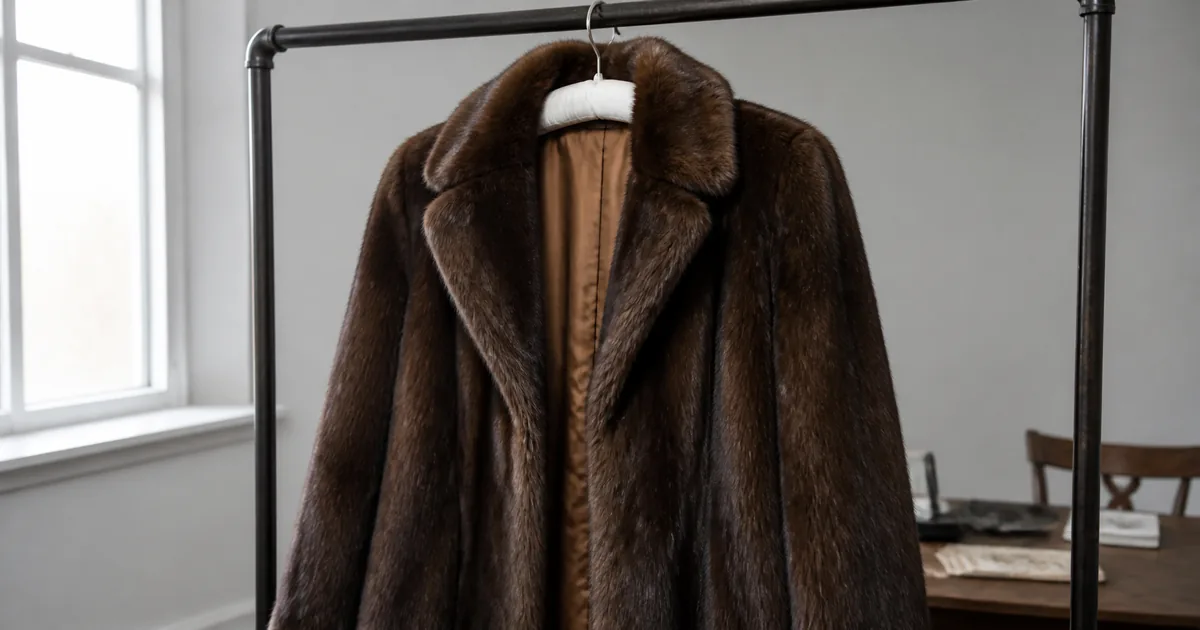
What mink coats actually sell for
Length, color, and whether the coat is a full-length or three-quarter garment move the number more than the word mink.
Full length, worn. A full-length brown mink coat from Zinman Furs, with some wear at a pocket edge, sold for $80.
Stoles. A dark brown mink stole labelled Edward-Lowell, Beverly Hills, sold for $125.
Typical full-length coat. A full-length mink coat retailed by Phil's Furs, with a silk lining, sold for $200.
Jackets. A lady's vintage brown mink jacket with a portrait collar sold for $225.
Named pelts. A full-length Blackglama mink coat sold through Bloomingdale's, with light wear, sold for $425.
High-value outlier. A hip-length Louis Féraud coat in red sheared mink, retailed by Saks Fifth Avenue, sold for $1,200.
Record the label, length, lining, dryness, odor, and bald spots before treating any one sale as your coat.
In this comprehensive guide, we’ll explore the factors that determine mink coat values, provide current price ranges across different categories, and offer expert advice on how to appraise, care for, and potentially sell your fur garment.
Current Mink Coat Value Ranges
Mink Coat Value Guide: Fur Type, Label, Condition and Resale (2024)
Current market values for different types of mink coats
The current resale market for mink coats has seen significant changes over the past decade. While new mink coats can still command premium prices, especially from high-end manufacturers, the secondary market has experienced decreased demand due to changing attitudes toward animal fur and fashion trends.
Key Factors That Determine Mink Coat Value
Age and Style
The era when your mink coat was produced significantly impacts its value:
Condition
Condition is perhaps the most critical factor in determining a mink coat’s worth:
Mink Coat Condition Assessment
Check applicable conditions to estimate your mink coat's quality level
- Fur is soft and shiny with no significant shedding
- No dryness, cracking or brittleness in the leather backing
- Lining is intact without tears or significant wear
- No odors (smoke, mildew, or musty smells)
- No tears, missing sections, or bald patches
- Original closures (buttons, hooks) intact and functional
- No discoloration or sun fading
- Professionally stored and maintained
Fur Quality and Type
Not all mink is created equal. The quality, color, and type of mink fur significantly impact value:
- Female mink pelts are generally more valuable than male pelts due to their softer, finer fur.
- Ranch mink (farm-raised) typically has more consistent coloration and quality than wild mink.
- Natural colored mink (mahogany, dark ranch, black) usually commands higher prices than dyed varieties.
- Pelts with visible markings or inconsistent coloration are less valuable.
According to Shopifur, winter mink skins are generally more valuable than summer skins because they’re thicker and plusher, directly affecting a coat’s price.
Construction and Design
The craftsmanship involved in creating a mink coat significantly affects its value:
- Number of pelts used - More pelts generally mean higher value
- Seam construction - Invisible seams indicate higher quality
- Special design elements - Patterns in the fur, unique cuffs, collars or hoods
- Additional luxury materials - Silk linings, leather trim, or other premium accents
Brand and Provenance
Designer brands and known furriers command premium prices:
- High-end fashion house brands (Fendi, Gucci, etc.) can be worth 3-5 times more than unbranded pieces
- Well-known fur specialists (Blackglama, Sakowitz, etc.) also increase value
- Documented history or provenance (especially if celebrity-owned) can significantly boost value
Market Factors
External factors affecting mink coat values include:
- Changing fashion trends - Vintage styles experience fluctuating popularity
- Ethical considerations - Growing anti-fur sentiment has reduced demand in some markets
- Seasonal timing - Winter sales typically fetch higher prices
- Geographic location - Demand varies by climate and cultural factors
How to Determine Your Mink Coat's Value
Professional Appraisal
The most accurate valuation will come from a professional fur appraiser:
- Contact a reputable furrier or fur department in high-end department stores
- Bring documentation of purchase if available
- Request detailed information about factors affecting the valuation
Online Marketplaces
Researching comparable items on marketplaces can provide value insights:
- Check completed listings on eBay’s Vintage Mink Coat section to see actual selling prices
- Review luxury consignment sites like The RealReal or Vestiaire Collective
- Compare similar items by style, condition, and size
Consignment Evaluation
Fur specialty consignment shops can provide free evaluations:
- Locate fur specialty stores in your area
- Request a consignment evaluation (typically free)
- Get their assessment of resale value and marketability
- Compare with other valuation methods for accuracy
Image reference removed; use object photos and documented condition details for appraisal.
Vintage Mink Coat Values by Era
Mink Coat Values by Era
As the timeline indicates, the value of a mink coat is strongly tied to both its era and how well it has been maintained over time. Styles from the 1950s-1960s often fetch the highest prices among vintage pieces due to their classic styling and quality construction, assuming they’re in excellent condition.
Full-Length Vintage Mink Coats: Dating and Wear Checks
A full-length vintage mink coat uses far more pelts than a jacket or stole, so it is worth checking how it was built, roughly when it was made, and where it has worn before you compare it with any sale.
How to date a vintage mink coat
- Fur content label: the federal Fur Products Labeling Act, passed in 1951, required furs sold in the United States to be labeled with the animal name, the country of origin, and whether the fur was dyed or otherwise colored. A coat with that kind of label was almost certainly made after the early 1950s. A missing label proves nothing, since labels were often cut out or lost when a coat was relined.
- Furrier or store label: a furrier's name, a department-store fur salon, or a city on the label can often be traced to the years the business operated.
- Cut: wide swing backs, shawl collars and wide or three-quarter sleeves are typical of the 1950s and early 1960s; oversized shoulders and very full sleeves point to the 1980s.
- Lining and closures: an embroidered monogram, a hand-stitched lining, and hook-and-eye closures are common on older coats. A newer lining means the coat has been serviced, which is worth stating in a listing.
Where full-length coats wear first
Many full-length mink coats are made with a technique called letting out, in which each pelt is cut into narrow diagonal strips and sewn back together to make it longer and narrower. That produces the long vertical lines you can see in the fur. The many seams also mean dried leather can split along them. Check the cuffs, pocket edges, front edges, collar, underarms, and the back of the hem and seat, where the coat rubs when the wearer sits. Part the fur in those places and look for thin or bald patches and open seams. Gently pull the lining away at an opening and see whether the leather is still soft or has become stiff and papery.
Fur coats often surface in an estate with other vintage evening wear. If yours came with an old evening bag, our antique beaded purse guide covers the frame, beadwork and lining checks for those pieces.
Selling Your Mink Coat: Options and Expectations
Consignment Shops
Pros:
- Professional handling and marketing
- Access to knowledgeable buyers
- No upfront costs
Cons:
- Commission fees typically range from 30-50%
- May take months to sell
- Limited control over pricing
Typical Return: 50-70% of appraised resale value
Online Marketplaces
Pros:
- Wider audience reach
- More control over pricing
- Lower fees than consignment
Cons:
- Requires self-management of listings and inquiries
- Shipping logistics can be challenging
- May attract lowball offers
Typical Return: 60-80% of market value if priced competitively
Platforms to consider include:
- eBay
- Etsy (for vintage pieces)
- Poshmark
- Facebook Marketplace (for local sales)
Fur Buyers and Dealers
Pros:
- Quick, immediate sales
- No marketing or waiting required
- Expertise in valuation
Cons:
- Typically offer 30-40% of retail value
- Limited negotiation power
- May only be interested in higher-quality pieces
Typical Return: 30-50% of appraised value
A resale assessment should record the label, lining, seams, fur condition, size, odor, and storage history.
Alternative Options for Unwanted Mink Coats
Repurposing
Many furriers offer services to transform older mink coats into:
- Jackets or vests
- Pillows or throws
- Stuffed animals
- Accessories like hats, mittens, or trims
Donation
Several organizations accept fur donations:
- Theater costume departments
- Film production companies
- Native American organizations (some use donated furs for ceremonial purposes)
- Wildlife rehabilitation centers (use furs to comfort orphaned animals)
According to a Reddit thread, local theater groups and schools are often grateful for fur donations for their costume departments when the resale value is limited.
Storage and Preservation
If you wish to keep the coat for sentimental reasons or future value:
- Store in a cool, dry environment (ideally professional fur storage)
- Keep away from direct sunlight and heat sources
- Use a breathable cloth garment bag, never plastic
- Consider professional cleaning and conditioning every 2-3 years
Identifying a Real Mink Coat
Visual Inspection
Real mink fur has several distinctive characteristics:
- Soft, dense underfur with longer guard hairs
- Natural sheen and luster (not artificial shine)
- Slightly varied coloration (even dyed mink isn’t perfectly uniform)
- Supple, lightweight feel despite warmth
Physical Tests
These simple tests can help identify genuine mink:
- Blow Test: Blow gently on the fur - real mink parts easily, showing the soft underfur
- Burn Test (on a hidden area): Synthetic fur melts, while real fur singes and smells like burning hair
- Pin Test: Push a pin through the backing - real fur has a leather backing, not woven fabric
Label Inspection
Look for:
- “SAGA Mink” or other fur industry certifications
- Country of origin (Denmark and Finland are known for high-quality mink)
- Specific terminology like “natural ranch mink” or “female skins”
Understanding whether your coat is genuine mink is the crucial first step in determining its potential value.
Maintaining Your Mink Coat's Value
Professional Storage
- Temperature-controlled environments prevent drying and deterioration
- Professional facilities also protect against moths and pests
Cleaning and Conditioning
- Conditioning treatments restore oils and prevent drying
- Recommended every 1-2 years depending on wear frequency
Proper Handling
- Avoid perfumes, hairsprays and other chemicals near fur
- Don’t wear shoulder bags that can cause friction on the fur
- Allow fur to dry naturally if exposed to rain or snow
- Use wide-shouldered hangers designed specifically for furs
Repairs
- Address small issues before they become major problems
- Common issues include torn linings, loose hooks, or small tears
Proper maintenance not only preserves your investment but can significantly affect resale value when the time comes to sell.
External Resources
eFurs: How Much Is a Real Mink Coat?
Detailed information about mink coat pricing factors and current market values for various styles and lengths.
FurSource: Sculptured Mink Coats Collection
Browse current retail pricing for new mink coats and jackets to understand the contemporary market.
eBay: Vintage Mink Coat Marketplace
Access to current listings and recently sold vintage mink coats to gauge the secondary market.
Reddit: What to Do With Inherited Mink
Community discussion about options for inherited mink coats including donation suggestions.
Ever So Scrumptious: Selling Grandma's Vintage Fur
Practical guide to understanding vintage fur values and options for selling inherited pieces.
1stDibs: How to Find Out How Much My Fur Coat Is Worth
Expert insights on fur valuation from a premium marketplace for luxury and vintage items.
Conclusion
For those looking to sell, setting realistic expectations based on current market conditions is essential. The days of recovering the full purchase price of a fur coat have largely passed, but well-maintained, quality pieces—especially those from notable designers or in timeless styles—can still command respectable prices.
Whether you’re inheriting a family heirloom, considering a purchase, or looking to sell, understanding these valuation factors will help you make informed decisions about your mink coat’s worth in today’s evolving market.
What similar items actually sold for
Real auction sales of items like your mink coat. Open a sale to see the original listing.
Shown USD range: USD 20-USD 1,250. Median of these 78 USD examples: USD 200.


How these auction records were verified
These sales are market context, not an object estimate.
Each row retains its exact source URL, lot identity, retrieval time, access result, and immutable record hash. Live source access was blocked; the exact record matched Appraisily's immutable pipeline provenance. Inspect the public comparable provenance record.
Common Questions About Mink Coat Values
How do you value a mink coat?
- Age and style - Newer coats or vintage pieces in classic styles typically command higher prices
- Condition - Excellent condition can multiply value compared to damaged pieces
- Fur quality - The type, density, and quality of the mink pelts used
- Brand and maker - Designer or renowned furrier pieces are worth more
- Size and length - Full-length coats generally command higher prices than jackets
- Special features - Unique design elements, unusual colors, or premium details
Is mink fur valuable?
- High-quality mink has exceptional softness and warmth with relatively light weight
- The dense underfur and guard hairs create natural luster and durability
- Different grades of mink pelts exist, with premium pelts commanding higher prices
- Winter mink skins are more valuable than summer skins due to thickness and plushness
- Natural coloration varieties (including "black" or "mahogany" mink) can affect value
What can I do with my grandma's old mink coat?
- Keep and wear it - Many people still appreciate the warmth and luxury of vintage fur
- Sell it - Through consignment shops, fur buyers, online marketplaces, or auction sites
- Repurpose it - Have it redesigned into a more contemporary style, or transformed into pillows, throws, or smaller accessories
- Donate it - To theater groups, film production companies, wildlife rehabilitation centers, or museums
- Store it properly - If keeping it for sentimental reasons or future value
How much is a vintage mink coat from the 1950s worth?
Factors that can increase the value of a 1950s mink coat include:
- Excellent condition with minimal wear and proper storage
- High-quality, matched pelts with even coloration
- Interesting or unusual design elements
- Original documentation or provenance
- Designer label or prestigious furrier
How much is a brand new mink coat worth today?
Premium features that can significantly increase the price include:
- Full-length design using many matched pelts
- Female mink (softer and more luxurious than male)
- Black, mahogany, or other desirable natural colors
- Special design elements like patterns or sheared techniques
- Designer labels like Fendi, Gucci, or Zac Posen
How can I tell how old my mink coat is?
What does let-out mean on a mink coat?
Get an appraisal
Upload photos and details for your mink coat so an Appraisily reviewers can review the object-aware value signals.
- Object-aware written report
- Delivered within 24 hours of receiving your photos
- Fixed, upfront pricing
Secure upload. Written report options available.
Find a local antique or art appraiser
Same report as above
Get my coat report — $59
One coat · Signed PDF · Photo-based review
Get my coat report — $59 View signed report sample