
Otto Dix drawing: appraisal and value basics
Otto Dix drawing research should start with attribution, signature, paper, medium, condition, provenance, exhibition history, and item-specific market evidence. Use this guide to compare the signals that matter before paying for a formal appraisal or deciding whether to sell.
Many WordPress-era appraisals we migrate start with the same sentence: “Bought this years ago. No information.” That’s normal for works on paper—drawings change hands privately, get framed, and the paperwork gets separated.
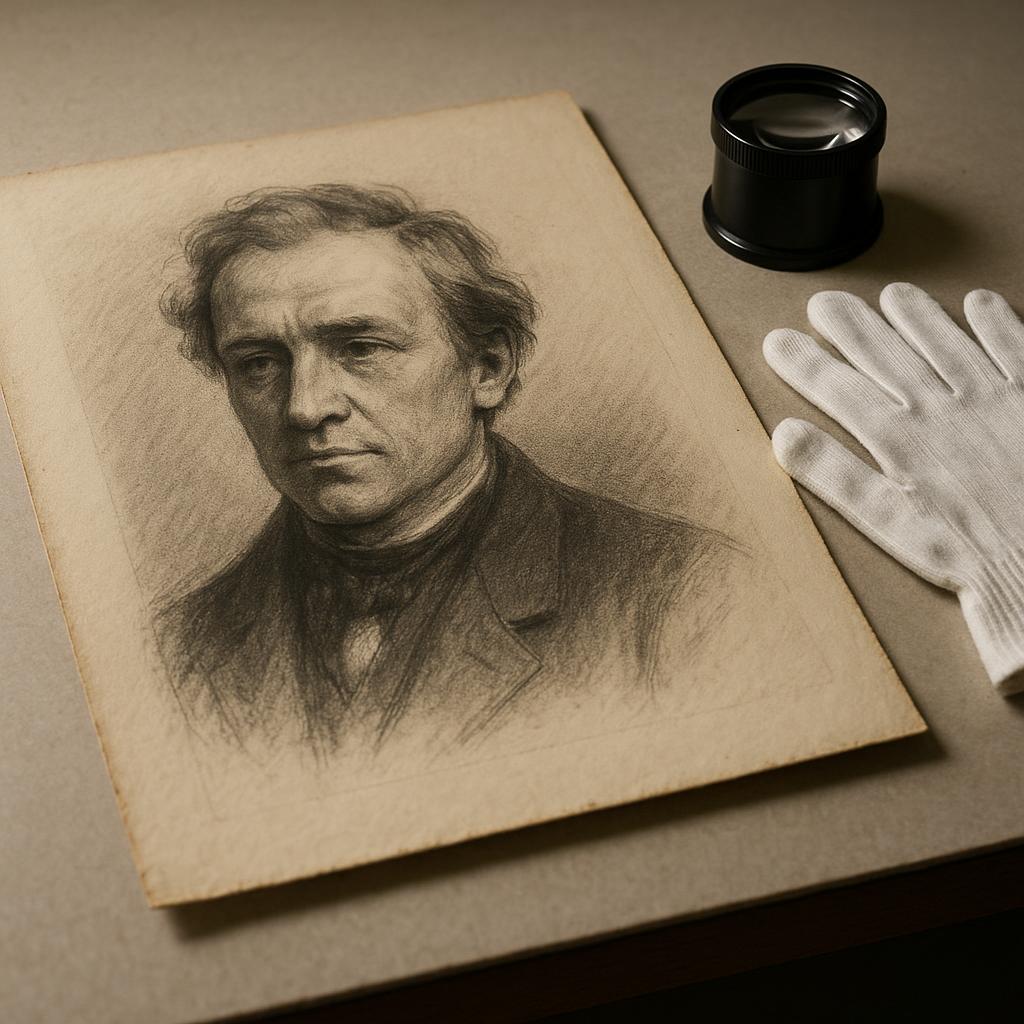
If your work is a drawing attributed to Otto Dix (German, 1891–1969), treat the project in two phases: (1) document the object (materials, age, alterations) and (2) document the authorship (is it really Dix, his circle, a later copy, or a misread signature?). You can do phase 1 at home. Phase 2 usually requires a specialist.
Free first read
Check attribution risk before pricing
Upload the full front and back, signature/date closeups, paper edges, labels, and provenance notes. Start with a free screener read so we can separate documented, attributed, and after-Dix value paths.
Private upload. A signed report is optional after the initial screen.
How We Research Valuation Data
Our appraisal guides are based on auction results, dealer pricing data, and professional appraiser insights. We may earn a commission when you use our free professional appraisal service . Learn about our editorial standards .
Who was Otto Dix, and why attributions are tricky
Otto Dix is best known for his sharply observed portraits and his uncompromising images of World War I and Weimar-era society. Like many major modern artists, he produced drawings throughout his life: preparatory sketches, studies, portraits, and independent works on paper.
The problem for owners is that “Dix” is a short, easy-to-forge signature—and many early-20th-century German drawings share a similar visual language (Expressionism, Neue Sachlichkeit, and academic figure study traditions). That’s why reputable sellers separate claims into clear tiers:
- “Otto Dix” (documented): strong provenance and/or specialist confirmation.
- “Attributed to Otto Dix”: plausible but not fully proven; evidence still being assembled.
- “Circle of / follower of / manner of”: close stylistic relationship, but not presented as Dix himself.
- “After Otto Dix”: later copy or reproduction based on a Dix composition.
What to photograph and measure before you do anything else
The fastest way to get a serious answer is to send an organized photo set. If the drawing is framed, don’t unframe it yet unless you already know how to handle works on paper safely.
- Full front: square-on, even light, high resolution.
- Full back: backing board, labels, framer stamps, handwritten notes.
- Signature/date close-ups: 2–3 angles, including a raking-light shot to show the medium sitting on the paper.
- Paper edges: corners and margins; look for trimming and toning.
- Measurements: image size and sheet size (if visible), in inches and cm.
Add a one-paragraph history: where it was purchased, roughly when, and whether any documents (letters, gallery receipts, old frames) came with it. Even “bought at an estate sale in the 1990s” is useful.
Attribution review checklist (what specialists look for)
1) Signature & date: consistent, but not decisive
Owners often ask: “It’s signed ‘DIX 1912’—does that prove it?” Unfortunately, no. A signature is one data point. What matters is whether the signature behaves like the medium in the drawing (same pencil/charcoal, same aging patterns, no suspiciously fresh ink on an otherwise aged sheet).
Common red flags:
- Signature placed in an oddly empty corner, not integrated into the composition.
- Signature looks printed or traced (uniform pressure, no starts/stops).
- Date written in a different medium (e.g., ink date on a charcoal drawing) without a clear reason.
2) Paper and watermark: the silent witness
Paper tells you whether the object could plausibly be early 20th century. A conservator or specialist may look for watermarks, chain lines, and paper fiber characteristics. You can help by photographing the sheet against a bright light source (without heat) to reveal watermark shapes.
If you see modern optical-brightener “glow” under UV or very bright, uniform white paper with no toning in a supposed 1912 drawing, that’s a reason to slow down and get a paper opinion.
3) Medium and technique: does it match what the drawing is trying to be?
Otto Dix drawings can include pencil, charcoal, ink, and mixed techniques. The key is internal consistency: pressure changes, erasures, smudging, and working lines should make sense for an artist drawing from life.
- Charcoal: expect smudge and fixative patterns; look for intentional tonal modeling.
- Pencil: look for subtle line variation and believable construction lines.
- Ink: watch for later ink additions or “enhancement” by a different hand.
4) Provenance: even partial history helps
“Provenance” doesn’t need to start with a famous gallery. A believable chain can be simple: a German family, a post-war collector, a known dealer, an estate. Framer labels, exhibition stickers, and old inventory numbers are worth photographing.
If the only story is “a friend said it was Dix,” plan on selling it as attributed unless you can build documentation.
5) Condition: foxing, mat burn, and restoration affect pricing
Works on paper are sensitive. Value is reduced by major stains, water damage, tears, heavy mat burn, and trimming. Even when authorship is strong, condition affects what auction houses will accept.
Avoid “DIY cleaning.” If the work has mold odor, active foxing, or stuck backing, consult a paper conservator—improper attempts can create irreversible losses.
How to think about value: attributed vs. documented
The original WordPress note associated with this topic suggested a single value range on the assumption the work is an original drawing by Dix. In the real market, value depends first on the attribution level. A documented Otto Dix work on paper can reach the mid-four to low-five figures; an unverified signed drawing should be priced much more cautiously until a specialist has reviewed the evidence.
- Unverified or decorative attribution: do not borrow documented Dix prices. Treat as a research object until paper, signature, medium, and provenance are reviewed.
- Attributed to Otto Dix: pricing reflects uncertainty and depends on whether an auction house will stand behind the wording.
- Documented Otto Dix: auction access and value expand substantially, especially for strong dates, subjects, medium, and provenance.
The safest approach is to get an attribution opinion first before you anchor a number publicly. Overstating authorship is the fastest way to trigger returns, platform takedowns, and reputational damage.
Auction comps by attribution level
The comps below are not a shortcut to authenticate your drawing. They show why the attribution tier must be stated clearly: documented Dix drawings on paper, Dix prints, and broadly signed or attributed works live in different markets.
| Photo | Sale | Date | Lot | Realized | Notes | Source |
|---|---|---|---|---|---|---|
| Image unavailable | Setdart Auction House, Otto Dix, Portrait of Ursus, 1927, pencil and sanguine drawing on paper, signed and dated | Jan 25, 2023 | 56 | EUR 4,600 | Documented drawing comp; relevant only if authorship evidence is strong. | Appraisily auction dataset |
| Image unavailable | Il Ponte Auction House, Otto Dix, Madchenportrat, 1932, mixed media on paper with provenance and exhibition history | Nov 26, 2024 | 42 | EUR 7,500 | Documented work-on-paper comp with provenance; not a benchmark for unsigned or weakly attributed drawings. | Invaluable |
| Image unavailable | Gilden's Art Gallery, Otto Dix hand-signed gouache painting, 1908 German Expressionism | May 26, 2020 | 12222 | $22,000 | High attribution and medium claim; use only as evidence of upside when documentation is unusually strong. | Appraisily auction dataset |
| Image unavailable | Auctionata Paddle8, Otto Dix, Alter Mann mit Kind, lithograph, 1960 | Jul 26, 2016 | 58 | EUR 688 | Dix print-market context, not a drawing comp. | Appraisily auction dataset |
| Image unavailable | Henry's Auktionshaus, Otto Dix, one dead, lithograph | Dec 5, 2015 | 6495 | EUR 290 | Lower print-market comp; illustrates why medium matters. | Appraisily auction dataset |
If your object is still only “signed Dix” with no provenance, these figures are not direct values. They are the market context an appraiser uses after deciding whether the object can be compared to documented works, attributed works, or prints/reproductions.
Want the attribution tier checked first?
Upload the signature, paper, back labels, full image, and provenance notes. The free screener can flag whether this belongs on a documented, attributed, or after-Dix path before you pay for a written report.
Upload photos for a free first lookHow to sell an attributed Otto Dix drawing (without getting burned)
Choose the selling route based on what you can prove. Here’s a practical decision tree:
- Strong paperwork or expert confirmation: approach a major auction house or a specialist dealer in German modernism.
- Promising object, limited paperwork: consider a mid-tier auction house that will list as “attributed to” with proper photography.
- Little documentation, decorative appeal: sell as “attributed” through reputable platforms, but price for uncertainty and disclose what you do and don’t know.
If you list online, avoid definitive language unless you have documentation. “Signed Otto Dix” is a factual statement. “By Otto Dix” is a claim of authorship.
A safe listing template (copy/paste)
Try something like: “Charcoal drawing attributed to Otto Dix (1891–1969), signed ‘Dix’ and dated ‘1912’ lower right (see photos). Sheet size approx. __. Provenance: purchased __; no additional paperwork. Sold as attributed; no COA.”
Insurance, estates, and donations: when you need a written report
If the purpose is insurance, estate valuation, or a donation, you typically need a written appraisal that explains the logic and clearly states the attribution level. That report should describe condition, medium, measurements, and comparable market context appropriate to the claim.
Search variations collectors ask
Readers often Google these questions when researching Otto Dix drawings:
- how to tell if an Otto Dix drawing is documented
- Otto Dix signature examples and common forgeries
- what does attributed to Otto Dix mean in an auction listing
- how to check watermark on a 1910s drawing
- how to value a charcoal portrait drawing signed Dix
- best auction house for German expressionist drawings
- does reframing reduce value of works on paper
- how to ship a framed drawing safely for appraisal
Each question is answered in the documentation, attribution review, and selling sections above.
References
- Tate: Otto Dix (artist overview)
- MoMA: Otto Dix (artist page)
- American Institute for Conservation (finding conservators)
Wrap-up
With an attributed Otto Dix drawing, the goal isn’t to “prove it” from a signature alone—it’s to build a clear, evidence-based package: strong photos, paper and medium observations, and whatever provenance you can assemble. Once you have that, you can choose the right selling channel and price the work honestly.