
Original Jarts value checklist
Before valuing original Jarts, document the box, brand, metal-tipped darts, fins, target rings, instructions, warning labels, completeness, color set, era clues, condition, storage wear, and legal sale context. Compare adjacent collectible guides for old toy value, antique toys value, vintage toys vs reproductions, and free toy appraisal.
Introduction to Original Jarts
Original Jarts, also known as lawn darts, have transformed from a popular outdoor game into highly sought-after collectibles. These controversial items—banned in the United States since 1988—have developed a strong following among collectors, with complete sets in good condition commanding impressive prices in today’s market.
Before their ban, Jarts were a fixture of backyard entertainment across America. The distinctive metal-tipped darts, designed to be thrown at circular plastic targets placed on the ground, provided hours of outdoor fun. However, following multiple serious injuries and tragic deaths of children, the Consumer Product Safety Commission (CPSC) banned their sale in December 1988, forever changing the trajectory of these once-commonplace toys.
Today, original Jarts sets occupy an unusual position in the collectibles market as both nostalgic memorabilia and prohibited items, creating unique challenges and opportunities for collectors and sellers alike.
The History of Jarts Lawn Darts
The Jarts story began in the 1950s when several manufacturers took the concept of bar darts outdoors. The game’s popularity peaked in the 1960s and 1970s as families across America embraced the simple yet competitive lawn game. The original Jarts featured weighted metal tips, plastic fins for stabilization, and plastic ring targets for scoring.
Early sets were primarily manufactured by Regent Sports Corporation under the brand name “Jarts,” which eventually became the generic term for all lawn darts. Other manufacturers included The Empire Company and Hasbro, though Regent’s version remained the most recognizable and sought-after by collectors today.
Jarts History Timeline
- 1950s
Early Development
Lawn darts evolve from traditional bar darts into outdoor game format.
- 1960s
Mass Market Production
Regent Sports Corporation popularizes the Jarts brand, which becomes synonymous with lawn darts.
- 1970s
Peak Popularity
Lawn darts become a common fixture in American backyards and at family gatherings.
- 1988
CPSC Ban
Following injuries and fatalities, the Consumer Product Safety Commission bans the sale of all lawn darts in the United States.
- 1990s-Present
Collectible Status
Original Jarts sets transition to collectible status, with values steadily increasing as supply remains fixed.
The 1988 ban on lawn darts marked a significant turning point. The CPSC not only prohibited the sale of new lawn darts but also urged Americans to destroy existing sets. This destruction of inventory, combined with the natural attrition of used games over decades, has created scarcity that drives today’s collectible market.
Identifying Original Jarts
Authenticating original Jarts requires attention to several key features that distinguish genuine vintage sets from modern replicas or similar lawn games.
Original Manufacturers
The most collectible and valuable Jarts were produced by:
- Regent Sports Corporation - The original and most recognizable Jarts brand
- The Empire Company - Produced similar lawn darts under various names
- Hasbro - Made limited versions of lawn darts in the 1970s
Key Identification Features
Authentic Original Jarts Checklist
Look for these features when identifying genuine vintage Jarts:
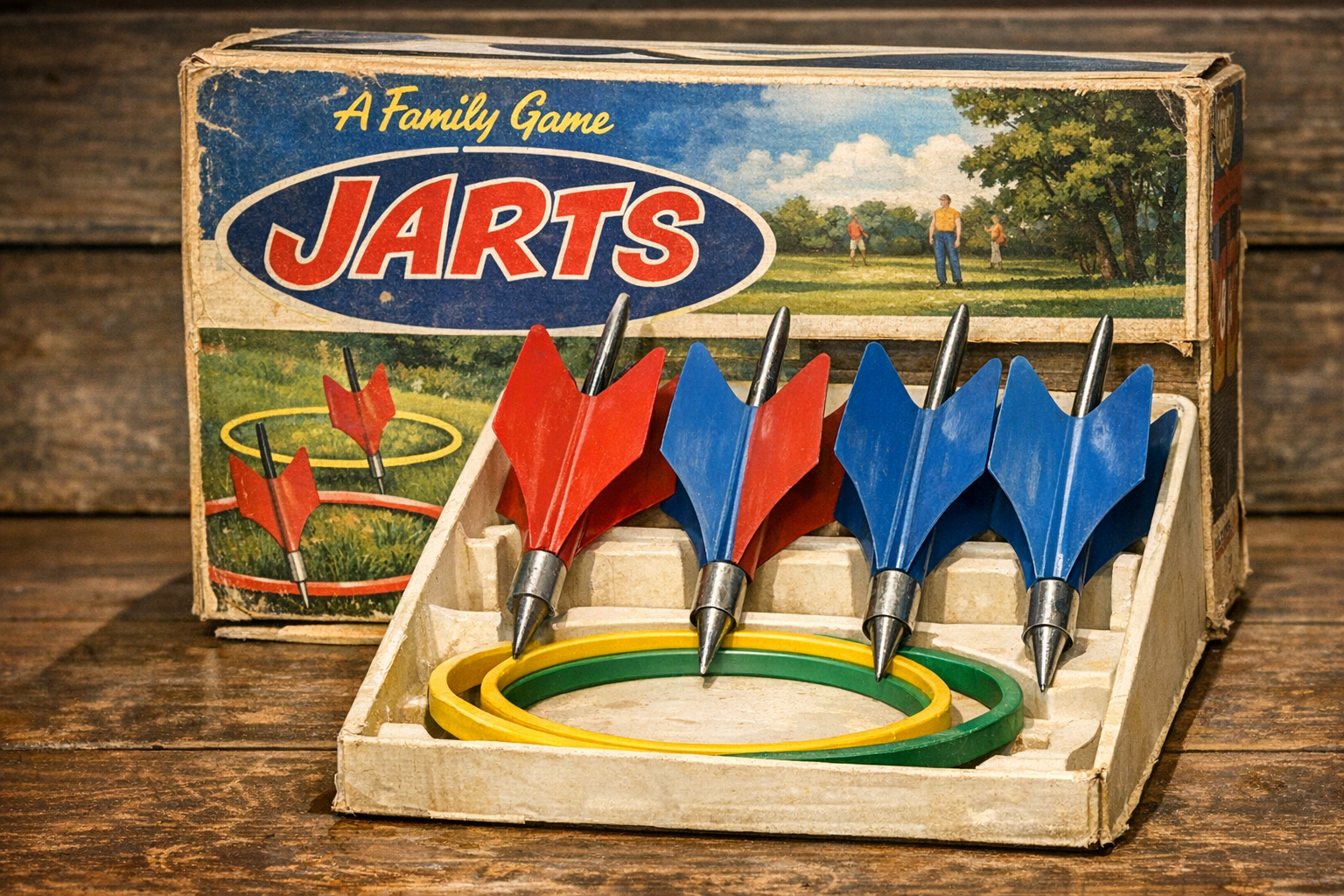
- Heavy metal tips with substantial weight
- Plastic fins in bright colors (typically yellow, red, blue, or green)
- Original packaging with 'Jarts' branding
- Plastic ring targets in matching colors to the darts
- Manufacturing date before 1988
- No safety modifications to the metal tips
The packaging is particularly important for authentication and value. Original Regent Jarts typically came in cardboard boxes with illustrated graphics showing families playing the game. The box often included the distinctive Jarts logo and safety instructions. Complete sets with original packaging in good condition command significantly higher prices than loose darts or incomplete sets.
It’s worth noting that after the 1988 ban, some manufacturers produced “safe” versions with blunt tips that comply with current regulations. These modern versions have minimal collectible value compared to the original metal-tipped darts.
Current Market Values of Original Jarts
The value of original Jarts has steadily increased over the years as fewer complete sets remain in circulation. Several factors significantly impact the market value:
Completeness
Sets containing all original components command premium prices. A complete set typically includes:
- 4 Jarts (2 in each of 2 colors)
- 2 plastic target rings
- Original score sheets (if applicable)
- Original instruction manual
- Original box or storage container
Condition
The condition of both the Jarts themselves and their packaging significantly affects value:
Jarts Value by Condition
Average market prices based on condition (as of 2023)
Recent Auction Results
Recent sales provide valuable insight into the current market:
| Category | Price | Notes |
|---|---|---|
| Mint in Box (MIB) | $200-$300 | Unused with perfect packaging |
| Excellent with Box | $150-$250 | Minor wear but complete with good box |
| Good Condition Complete Set | $100-$175 | Used but all components present |
| Incomplete Set | $50-$80 | Missing components but with original darts |
| Original Box Only | $40-$190 | Empty original packaging |
Brand and Rarity Impact
Certain versions of original Jarts carry higher values due to rarity:
- Regent Jarts from the 1960s and early 1970s are typically the most valuable
- Limited edition color combinations can command 20-30% premiums
- Pre-1970 sets with original safety instructions are particularly sought after
- Factory-sealed sets are extremely rare and can fetch $300+
It’s important to note that market values continue to evolve, with overall trends showing steady appreciation as these banned items become increasingly scarce.
Legal Considerations for Buying and Selling
The legal status of original Jarts creates unique challenges for collectors and sellers. The 1988 ban by the Consumer Product Safety Commission specifically prohibited the sale of lawn darts in the United States. This ban remains in effect today and has important implications:
Current Legal Status
- Original metal-tipped Jarts are banned from sale in the United States
- The ban applies to both new manufacture and resale of existing sets
- Merely owning original Jarts is not illegal, but selling them is prohibited
- The ban specifically targets lawn darts with metal tips that can cause puncture wounds
Selling Challenges
Many online platforms strictly enforce the ban:
- eBay explicitly prohibits the sale of lawn darts
- Amazon and Etsy have similar restrictions
- Facebook Marketplace and Craigslist typically remove listings
- Auction houses have varying policies but may sell them as “collectibles not for use”
Alternative Selling Approaches
Some collectors have found legal ways to navigate these restrictions:
- Selling as collectibles with explicit “not for use” disclaimers
- Private sales through collector networks and forums
- Selling components separately (though this may still violate regulations)
- In-person sales at antique shows or flea markets
- Auction houses that specialize in vintage items
Legal Collection Options
For those interested in collecting Jarts without legal concerns:
- Focus on modern safety-compliant versions with soft tips
- Collect Jarts memorabilia such as advertisements or packaging
- Look for vintage lawn games from the same era that aren’t banned
- Consider international versions where regulations may differ
It’s important to note that this article provides general information, not legal advice. Regulations may vary by jurisdiction and can change over time.
Caring for Vintage Jarts
Whether you’re a collector or have inherited an original set of Jarts, proper care can help maintain their condition and value over time.
Storage Recommendations
To preserve your vintage Jarts:
- Store in a climate-controlled environment to prevent rust on metal tips
- Keep away from direct sunlight to prevent fading of plastic components
- Use original packaging when possible or acid-free archival containers
- Store flat rather than vertically to prevent warping of box or components
- Keep components separated with acid-free tissue to prevent color transfer
Maintenance Tips
For sets that show signs of age:
- Metal tips - Remove light rust using a mild metal polish and soft cloth; severe rust may require professional restoration
- Plastic fins - Clean with mild soap and water only; avoid harsh chemicals
- Target rings - Gentle cleaning with diluted dish soap; avoid bending or flexing
- Boxes - Archival tape can repair minor tears; avoid adhesives that may cause discoloration
Display Considerations
For collectors who wish to display their Jarts:
- UV-protected display cases prevent color fading and damage
- Shadow boxes allow for artistic arrangement while protecting components
- Rotating displays prevent uneven fading from light exposure
- Documentation displayed alongside the set adds historical context and interest
Documentation and Provenance
Maintaining or establishing provenance can enhance value:
- Original receipts or proof of purchase
- Period photographs showing the Jarts in use
- Manufacturer correspondence or warranty information
- Previous owner history, especially for notable or celebrity provenance
Proper care not only preserves historical artifacts but ensures these controversial items remain in collectible condition for future generations of enthusiasts.
Common Questions About Original Jarts Value
Can you legally sell original lawn Jarts?
Can Jarts be sold on eBay?
Are lawn Jarts legal to own?
What year did lawn Jarts come out?
What is the value of a complete set of original Jarts in good condition?
How can I tell if my Jarts are original vintage models?
Conclusion: The Future of Original Jarts as Collectibles
The collectible market for original Jarts sits at an interesting intersection of nostalgia, prohibition, and scarcity—factors that typically drive long-term appreciation in collectibles markets. Several trends suggest the future direction for Jarts values:
Appreciation Potential
All indications point to continued value growth for original Jarts:
- Fixed supply: The 1988 ban ensures no new authentic sets will ever enter the market
- Ongoing attrition: Each year, sets are damaged, discarded, or broken up
- Nostalgic appeal: As generations age, demand for childhood memorabilia increases
- Cultural significance: Their banned status adds historical and conversational value
These factors suggest that well-preserved sets will likely continue to appreciate in value, particularly those with complete components and original packaging.
Collection Strategies
For those interested in collecting Jarts as an investment or hobby:
- Focus on condition and completeness when acquiring sets
- Document provenance whenever possible
- Consider alternative collectibles like advertisements, packaging, or safety-compliant versions
- Network with fellow collectors to locate private sale opportunities
- Research legal compliance in your jurisdiction before buying or selling
The Cultural Legacy
Beyond their monetary value, original Jarts represent an important chapter in American cultural history:
- Consumer safety evolution: Their ban marked a significant shift in toy safety regulations
- Recreational history: They exemplify mid-century outdoor entertainment
- Design classic: Their simple yet effective design remains instantly recognizable
- Regulatory landmark: The ban process became a template for future product safety actions
As we move further from the era when Jarts were commonplace in American backyards, their status as cultural artifacts only strengthens their position as collectibles worth preserving and documenting.
While the controversial nature of these banned items creates challenges for collectors, it simultaneously ensures their ongoing appeal and scarcity—the very factors that drive their increasing value in today’s collectibles market.
External Resources for Jarts Collectors
CPSC Ban Information
Official Consumer Product Safety Commission documentation about the lawn darts ban and safety concerns.
LiveAuctioneers Jarts Listings
Track recent auction prices and sales data for vintage Jarts sets.
Reddit Nostalgia Community
Discussion forum where collectors share information about vintage Jarts values and identification.
Lawn Darts History
Comprehensive history of lawn darts including the development, ban, and cultural impact.
eBay Prohibited Items Policy
Official eBay policy explaining restrictions on selling banned items including original Jarts.
Auction Ninja Jarts Listings
Example of how auction houses handle the sale of original Jarts as collectible items.
Note: We couldn’t find relevant auction comps in our database for this topic right now. If you’re valuing a specific item, try searching by maker/model/material and we’ll expand coverage over time.
What similar items actually sold for
To help ground this guide in real market activity, here are recent example auction comps from Appraisily’s internal database. These are educational comparables (not a guarantee of price for your specific item).
| Image | Description | Auction house | Date | Lot | Reported price realized |
|---|---|---|---|---|---|
| No relevant auction comps found for this topic right now. | |||||
Disclosure: prices are shown as reported by auction houses and are provided for appraisal context. Learn more in our editorial policy.
Free instant estimate
Not sure if your item is worth appraising? Let us take a look.
Upload a photo, tell us what you know, and get a free first read. If a full appraisal makes sense, we will say so.
Free. No card needed. Takes about two minutes.
Choose your next step
Use the path that matches the decision you need to make about the item.
Not sure it is worth appraising?
Start with a lower-friction screen to understand the likely category, evidence, and next step.
Upload photos for a free first lookWant proof before paying?
See how a signed report documents photos, comparable evidence, condition notes, and value conclusions.
View signed report sampleNeed a signed report?
Use this for insurance, estate, donation, resale, or documented value decisions.
Need documentation now? Start signed appraisalNeed local or specialist help?
Compare directory options when the work needs in-person review or a specialist near you.
Find local art specialistsSee what the report looks like
Sample reports show how photos, comparable evidence, condition notes, and a value conclusion are documented.
Get these Jarts appraised
Upload photos of the box, darts, fins, rings, instructions, warning labels, completeness, condition issues, era clues, storage wear, and any sale or ownership context.
- Expert report with photos and comps
- Fast turnaround
- Fixed, upfront pricing
No obligation. Secure upload.
Continue your valuation journey
Find the right local specialist
Compare antique and art appraisers by location and specialty in one directory.
Antique & art specialists
Browse the Antique & Art Appraisers Directory
Choose a local specialist when the assignment needs in-person inspection or a specific credential.
Machine-readable summaries
Use these machine-friendly references for AI and crawler discovery of Appraisily content.
Ready for pricing guidance?
Start a secure online appraisal
Upload images and details. Certified specialists respond within 24 hours.
Upload photos for a free first look View signed report sample