
Start with this five-minute Satsuma check
Use this Satsuma pottery check before you treat crackle or a red crest as proof.
- Look at the body. Traditional Satsuma is generally a light-bodied earthenware or stoneware, not bright, glassy white export porcelain. Check the unglazed foot for a cream, buff, or pale clay body.
- Inspect the crackle. Look for a fine network within the glaze, especially across quiet cream areas. Crackle supports the identification, but it is not unique to Satsuma.
- Magnify the decoration. Evaluate line control, faces and hands, repeated borders, enamel placement, and gilding. Quality matters more than busyness.
- Turn it over. Photograph the entire base, foot rim, exposed paste, wear, labels, and any repairs. The underside often resolves questions the front cannot.
- Read the mark last. Separate a crest, place or ware name, studio or artist name, and words meaning “made by” or “painted by.” Then ask whether that reading fits the object.
Fast conclusion: if only the crackle and a generic red symbol fit, keep the identification provisional. If all five layers agree, the object deserves closer maker, date, and market research.
A cream-colored Japanese vase covered in tiny crackle, enamel scenes, and gold can be a compelling piece of Satsuma ware. It can also be a later Satsuma-style export made to deliver the same first impression. The useful question is not “Does it have crackle?” but “Do the body, glaze, decoration, base, and mark tell one consistent story?” Read the mark with the same discipline as Japanese pottery mark identification, and keep Satsuma vase clues from collapsing every cream crackled object into one ware. If the object is fine white porcelain with underglaze blue rather than a cream crackled body, start with Hirado porcelain identification.
This guide gives you a sequence you can use at home without pretending that one symbol proves authenticity. Work from the ceramic itself toward the inscription. A painted mark is a lead, not a certificate.

Move it under side light: what good crackle can tell you
Satsuma crackle is easiest to study in undecorated cream reserves. Tilt the object beneath a soft lamp and move it slowly. A fine, connected network should become visible across the glazed surface. The lines may read as pale honey, tan, or gray depending on the glaze, age, accumulated dirt, and photography.
Do not convert that observation into a date. Deliberate crazing appears on later ceramics too, and genuine historical pieces do not all show crackle with the same scale or contrast. Strong identification comes from continuity: does the network behave plausibly around curves and beneath overglaze decoration, and does it sit on a body consistent with the rest of the piece?
Three crackle checks that are useful
- Scale: compare fine and coarse areas across the same object rather than expecting perfectly uniform cells.
- Depth: use raking light to see whether the network belongs to the glaze instead of looking like a printed surface pattern.
- Context: compare the crackle at the shoulder, body, and base; one dramatic patch is weaker evidence than a coherent surface.
Use a loupe on the decoration, not just the gold
Later nineteenth-century Satsuma made for export can be richly painted, but dense decoration alone does not establish quality or age. Under 5× to 10× magnification, follow one contour from start to finish. Look for deliberate line weight, clean boundaries between enamels, controlled repeated patterns, and gold that supports the composition instead of hiding weak drawing.
Faces and hands are revealing because a careless painter cannot disguise them with pattern. In geometric work, compare repeated diamonds, scrolls, or borders around the circumference. Small variations are expected in hand work; abrupt slips, muddy overlaps, and mechanically identical motifs tell a different story.

Flip it over: let the foot and paste challenge the story
The base is not simply a place to find a signature. It shows how the object was finished, which clay body is exposed, where genuine handling occurs, whether a foot has been ground or repainted, and whether an old label belongs to a museum, dealer, collector, or later owner.
Use a clean towel and support the widest part of the object while turning it. Photograph the base straight on, then take a close view of the foot rim and one oblique view that shows depth. Avoid holding a heavy vase by its neck or handles.
A useful surprise appears in the documented water jar below: the base is unmarked. That does not make the museum attribution uncertain. It shows why “no signature means not Satsuma” is an unsafe rule.

Read the mark as a sentence, not a logo
Turn a base inscription so its columns are upright and photograph it without glare. A Satsuma-related mark can combine several kinds of information:
Crest or emblem
The cross within a circle is associated with the Shimazu clan. On export wares it became a widely used Satsuma signifier, so its presence does not prove a clan commission, a kiln, or a date.
Place or ware wording
Characters may identify Satsuma or Satsuma ware. That identifies what the workshop claimed; it still needs agreement from the body and decoration.
Studio, artist, or decorator
A name may refer to a workshop, painter, decorator, retailer, or producer. Museum records sometimes distinguish where the body was made from where it was decorated.
Production wording
Suffixes can describe “made by,” “manufactured by,” or “painted by.” Do not guess them from a blurred photo; one stroke can change the reading.
Country wording is context. “Dai Nippon,” “Nippon,” “Japan,” or English-language wording may help frame export history, but wording conventions overlap and were copied. Use them to test a proposed date, not to manufacture one.
If the mark is printed with English marketing language, treat that as evidence of an export or later commercial context. It does not by itself tell you whether the object is hand-painted, old, or valuable.
Do not mistake export style for the whole Satsuma tradition
The gold-and-enamel look familiar to many collectors is only part of the story. The Met describes the eighteenth-century koro below as Satsuma earthenware with a transparent, slightly yellowish crackled glaze. Its molded, reticulated form is restrained and largely undecorated. The contrast matters: an object can be Satsuma without crowded figural scenes, and a crowded scene can imitate Satsuma without sharing its body or workmanship.

Take the photo set that makes identification possible
- Full profile: one straight-on image of the complete object against a plain background.
- Second side: rotate 180 degrees so no panel or signature is missed.
- Crackle detail: fill the frame with one cream reserve under side light.
- Decoration detail: include a face, hand, border, or repeated motif in sharp focus.
- Full base: photograph the entire underside square to the camera.
- Mark close-up: add a second image that preserves every stroke without glare.
- Condition: show rim chips, hairlines, regilding, drilled holes, repairs, and fitted mounts.
A coin can mislead when photographed at an angle; a ruler in the same plane as the object is better. Record height, widest dimension, and weight separately.
Use a confidence grid before naming a maker or date
| Evidence layer | Supports the claim | Weakens the claim |
|---|---|---|
| Body | Pale earthenware or stoneware body consistent at the foot | Bright vitreous porcelain when the claim requires traditional Satsuma body |
| Glaze | Fine crackle behaving coherently over curves and quiet reserves | Surface pattern that appears printed, isolated, or unrelated to the glaze |
| Decoration | Controlled drawing, enamel boundaries, repeated borders, and integrated gold | Muddy overlaps, weak anatomy, or gilding used to conceal drawing |
| Base | Paste, foot, wear, and finish agree with the proposed type and age | Fresh grinding, repainted foot, concealed drilling, or contradictory body |
| Mark | Legible components fit the workshop, object, and period | Generic crest or wording treated as proof despite conflicts elsewhere |
Check exact sales only after you know what you are comparing
Size, maker, painting quality, subject, form, condition, and attribution can move similar-looking Satsuma pieces into very different parts of the market. A Kinkozan-signed vase should not be compared casually with an unsigned decorative vase, and mixed currencies should not be collapsed into one range.
Use the exact table that follows to compare title, house, date, lot and reported price as one record. Those results belong to those objects and sales, not to every vase carrying a similar-looking mark.
What similar items actually sold for
To help ground this guide in real market activity, here are recent example auction comps from Appraisily’s internal database. These matched sales are market context only, not an object estimate or identification, and they do not guarantee a price for your specific Satsuma pottery.
Shown USD range: USD 30-USD 325. Median of these 7 USD examples: USD 150.
| Comparable | What sold | Auction house | Date | Lot | Source-reported amount |
|---|---|---|---|---|---|
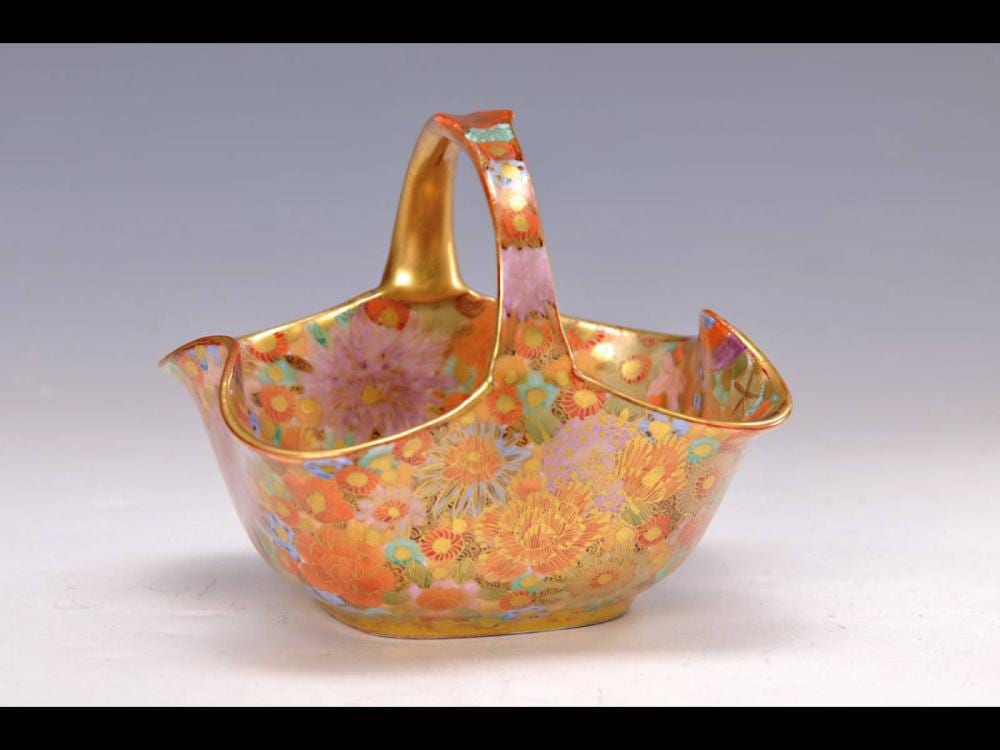 |
handle bowl, Satsuma Japan, around 1900, stoneware | Henry's Auktionshaus | 2020-08-29 | 5018 | EUR 150 (buyer’s-premium treatment unknown) |
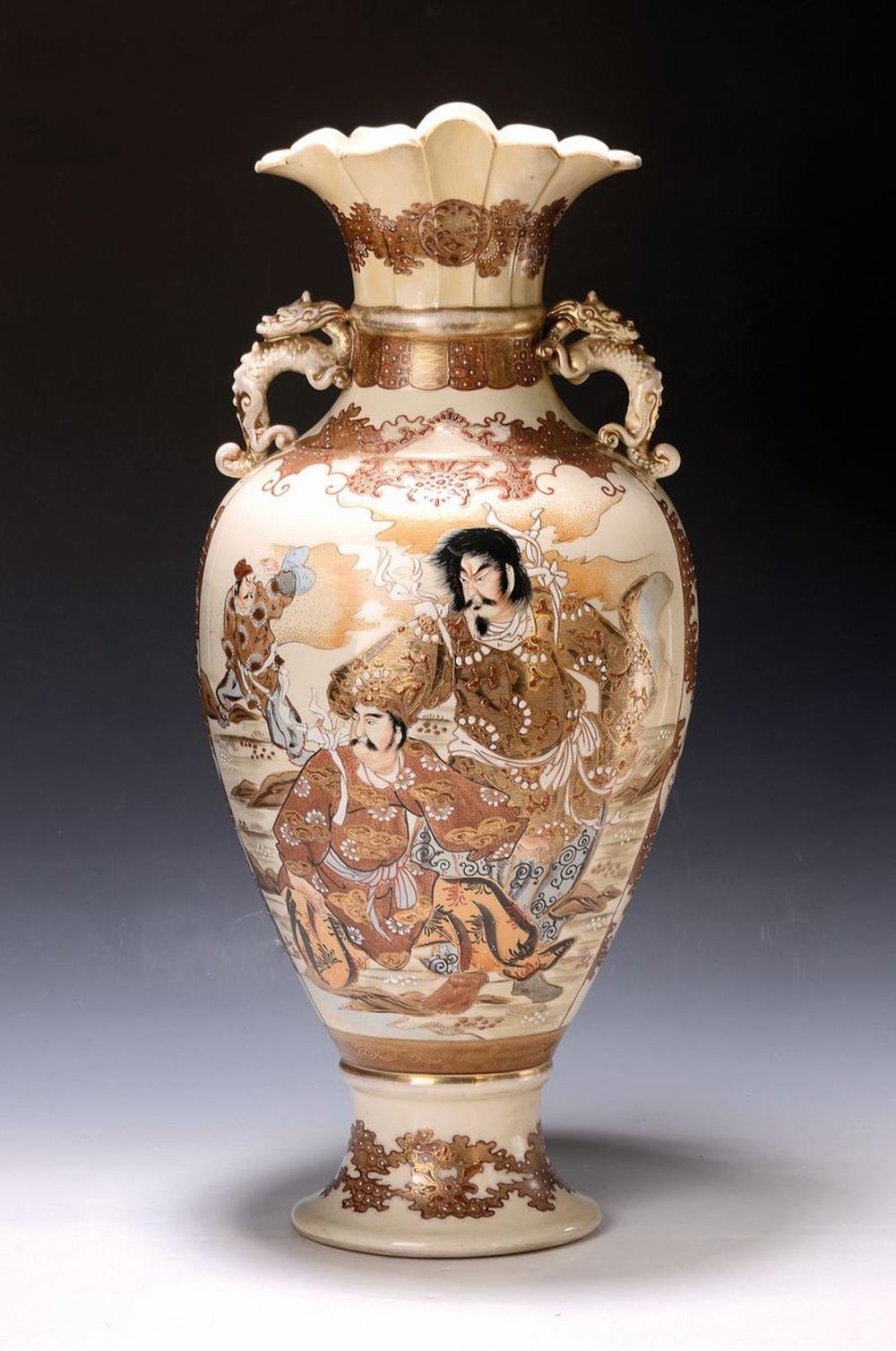 |
Large floor vase, Japan, Satsuma, around 1910,earthenware | Henry's Auktionshaus | 2022-06-25 | 5414 | EUR 310 (buyer’s-premium treatment unknown) |
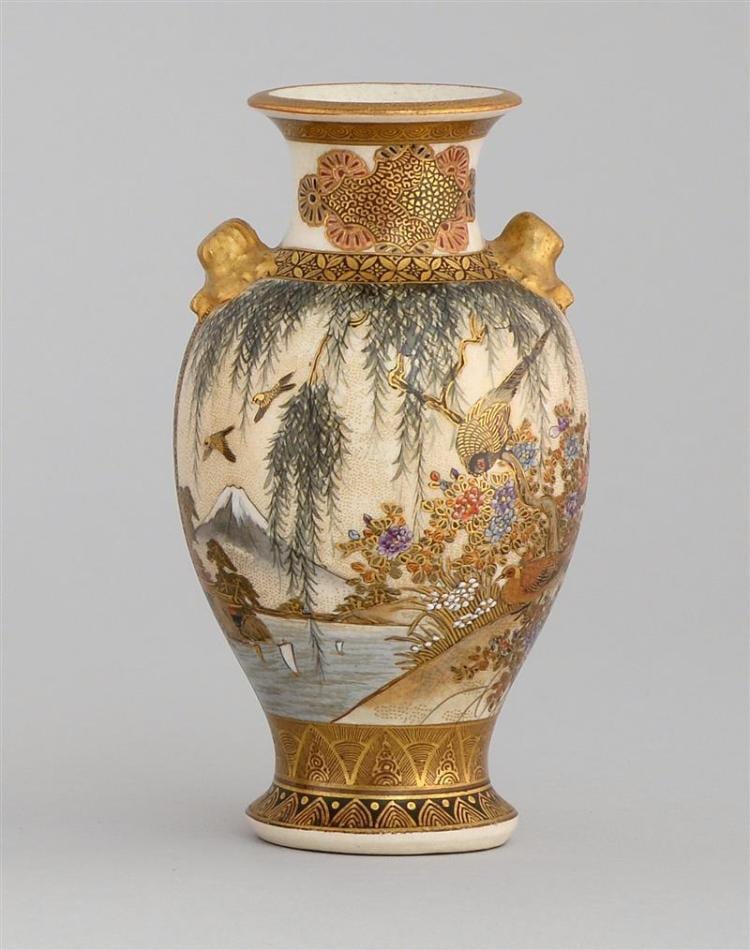 |
SATSUMA POTTERY VASE In baluster form with gilt-decorated handles. Finely decorated with cartouches of birds, Mt. Fuji, flowers, tre... | Eldred's | 2015-08-25 | 108 | USD 300 (buyer’s-premium treatment unknown) |
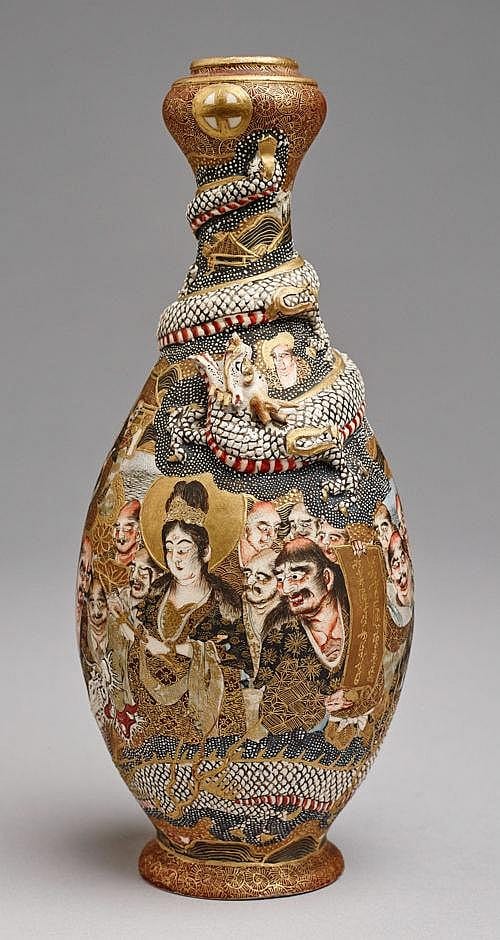 |
MEIZAN: SATSUMA VASE WITH SAINTS AND DRAGONS | Galerie Zacke | 2015-01-30 | 169 | EUR 220 (buyer’s-premium treatment unknown) |
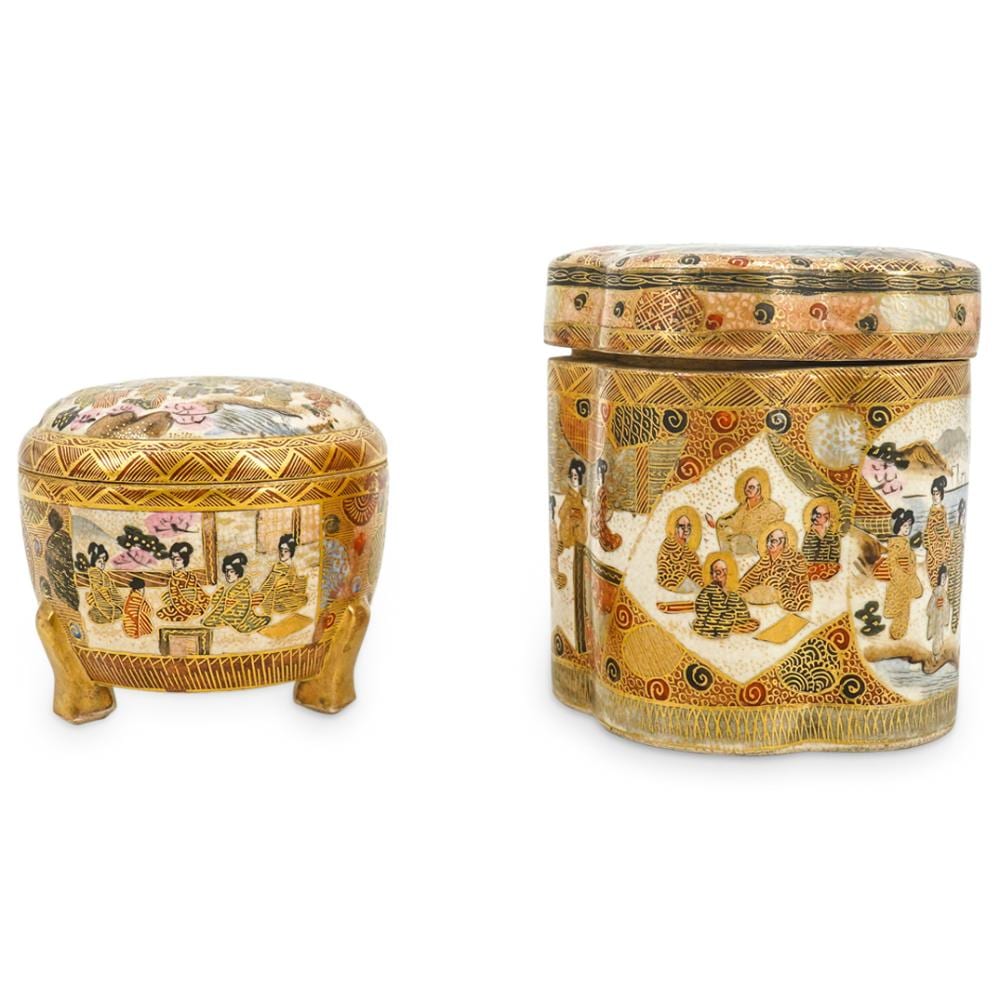 |
(2 Pc) Japanese Satsuma Porcelain Jars | Akiba Galleries | 2023-02-28 | 379 | USD 150 (buyer’s-premium treatment unknown) |
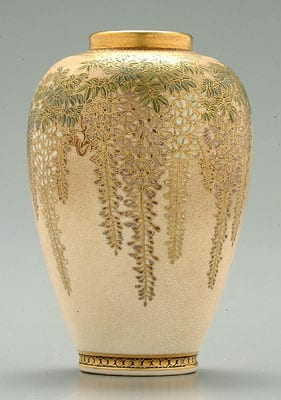 |
Finely decorated Satsuma vase | Brunk Auctions | 2004-07-17 | 852 | USD 325 (buyer’s-premium treatment unknown) |
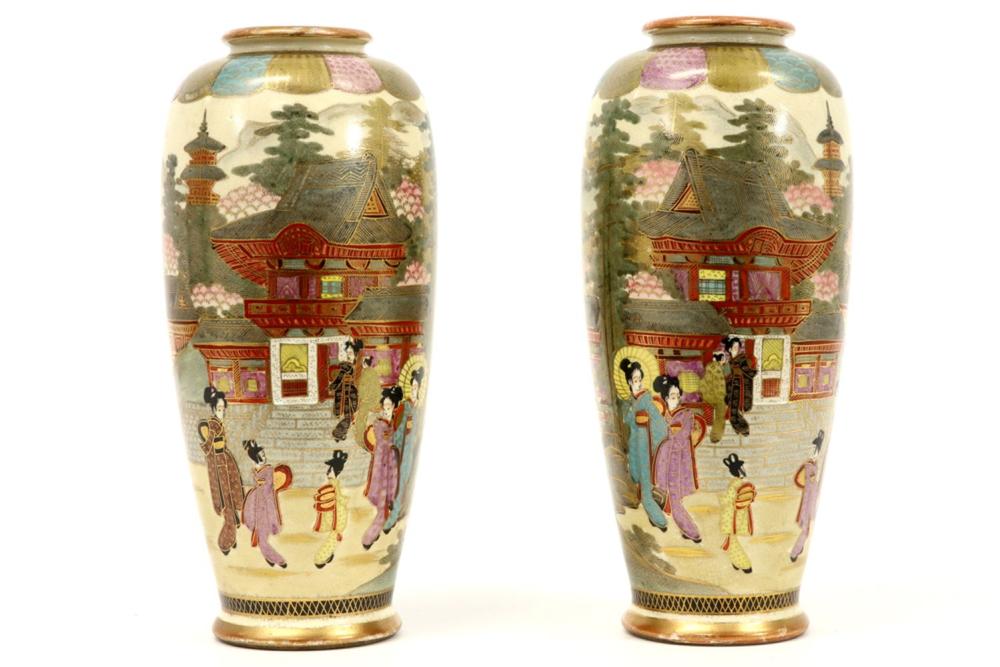 |
pair of Japanese vases in Satsuma ceramic with a t… | DVC | 2022-12-17 | 776 | EUR 120 (buyer’s-premium treatment unknown) |
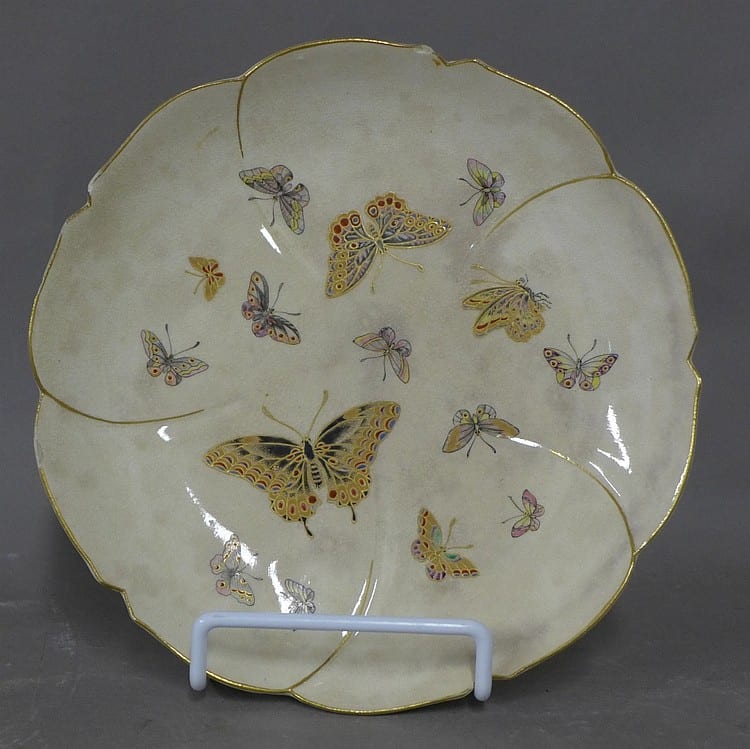 |
Japanese Satsuma Plate | Sterling Associates, Inc. | 2015-01-21 | 15 | USD 300 (buyer’s-premium treatment unknown) |
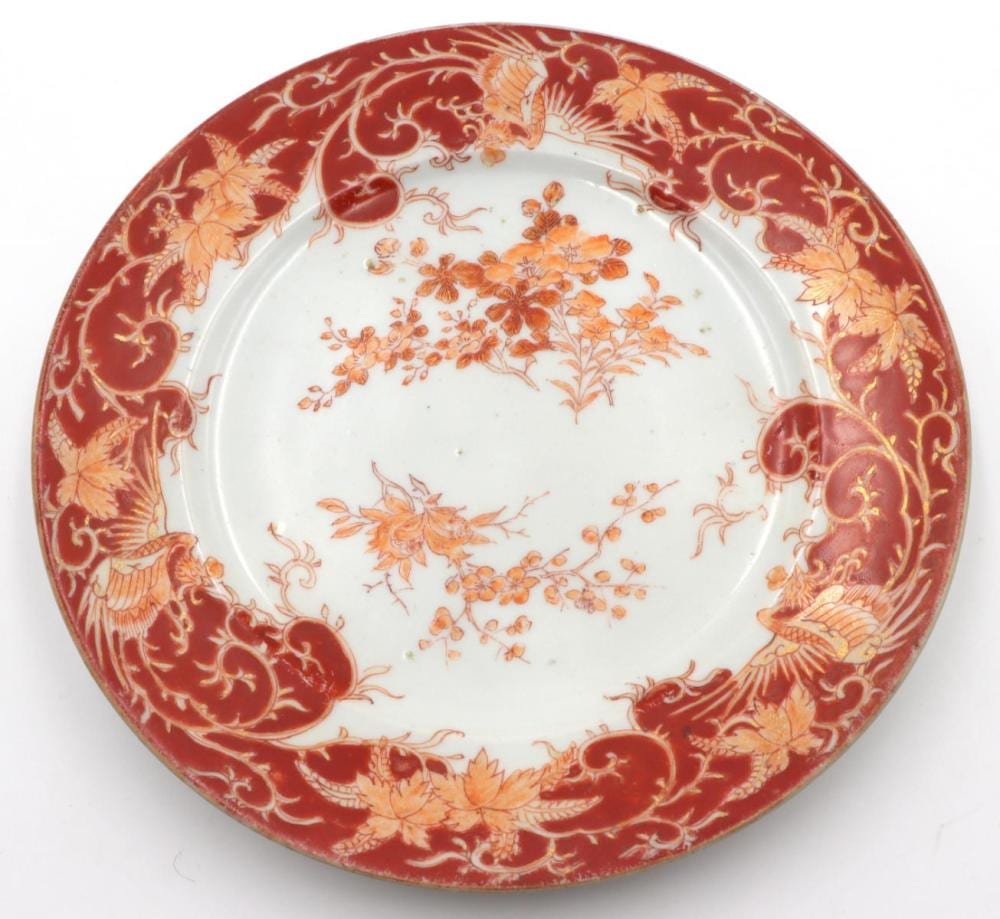 |
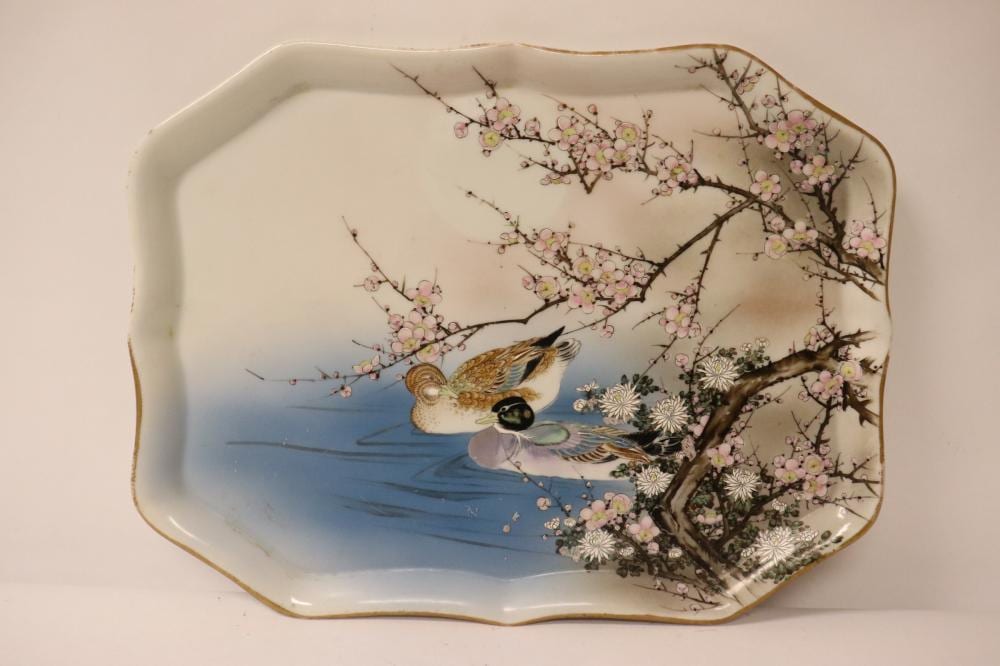
Japanese Satsuma Hand Painted Plate | Antiques & Art International | 2020-08-24 | 243 | USD 100 (buyer’s-premium treatment unknown) |
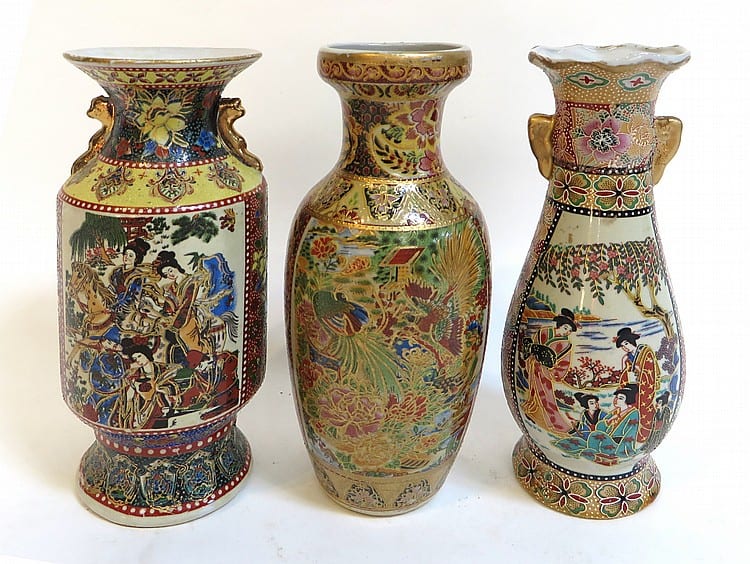 |
Japanese Satsuma Earthenware Vases | Converse Auctions | 2015-07-31 | 441 | USD 40 (buyer’s-premium treatment unknown) |
 |
Japanese 19th/20th century satsuma plate | International Auction Gallery | 2020-08-03 | 285 | USD 30 (buyer’s-premium treatment unknown) |
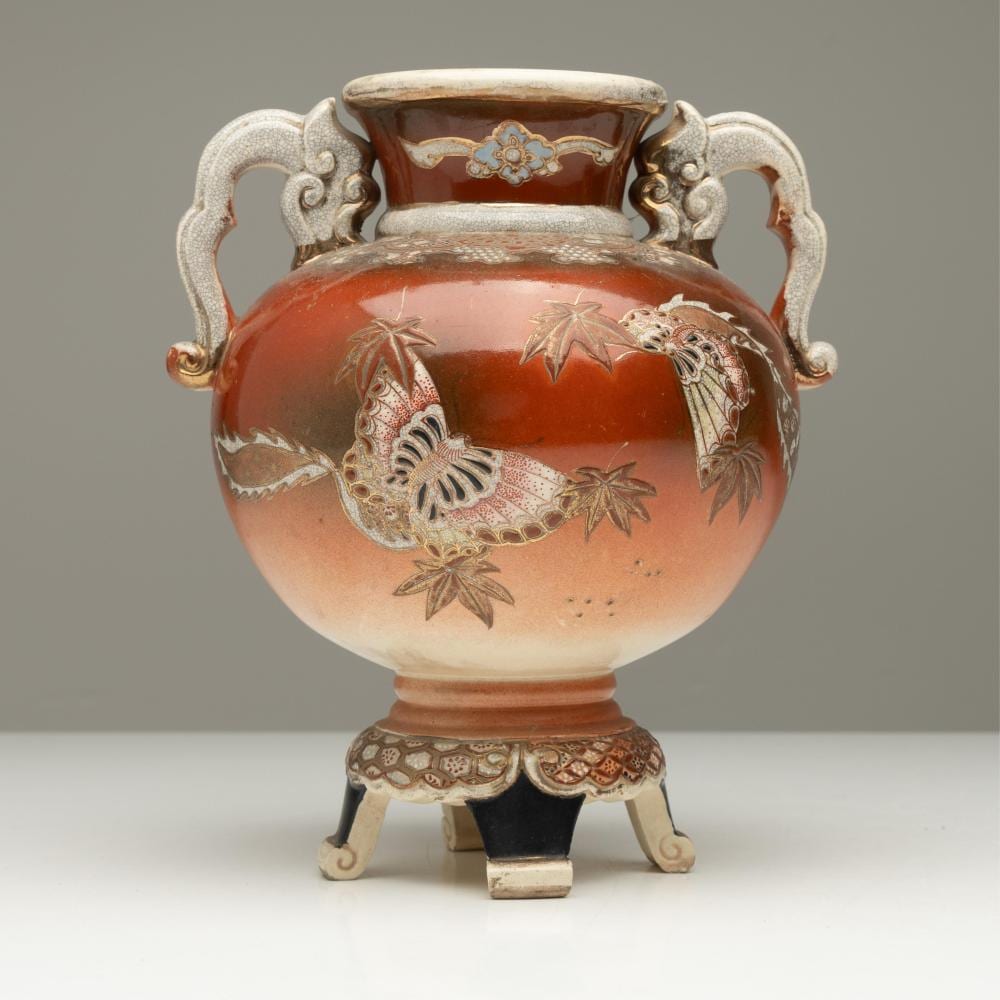 |
A Japanese Satsuma twin handled vase (H:28cm) | Lawsons | 2025-11-13 | 452 | AUD 35 (buyer’s-premium treatment unknown) |
How these auction records were verified
Each row retains its exact source URL, lot identity, retrieval time, access result, and immutable record hash. Inspect the public comparable provenance record.
Disclosure: prices are shown as reported by auction houses and are provided for appraisal context. Learn more in our editorial policy.
Stop and get a second read when the evidence conflicts
Ask for specialist help when a mark is important to value but unreadable, when the foot appears altered, when a metal mount hides the base, when a pair has mismatched marks, or when restoration crosses decorated panels. A strong opinion may require the object in hand, ultraviolet examination, comparison with published signatures, or a condition report.
A typical estate-sale puzzle is a small cream vase cataloged only as “Japanese.” The crackle and gold invite a Satsuma label, but the useful progress comes from a straight-on base photo, a paste view at the foot, and a sharp face or border detail. Those images can move the object from a decorative resemblance to a testable attribution.
Questions collectors ask about Satsuma identification
Does all authentic Satsuma pottery have a mark?
No. Documented museum pieces can be unmarked. A mark can add information, but its absence does not remove an object from the Satsuma tradition.
Does the cross inside a circle prove a piece is antique Satsuma?
No. The Shimazu-associated crest became a common Satsuma signifier, especially on export wares. Evaluate it with the body, glaze, decoration, and base.
Is wide crackle always a sign of a fake?
No single crackle scale proves or disproves age. Study how the network behaves across the piece and whether the rest of the construction supports the attribution.
Can “Made in Japan” appear on Meiji Satsuma?
Country wording needs careful dating and can conflict with a Meiji claim. Treat it as one clue and verify the exact wording, application method, and object context before reaching a conclusion.
What photo matters most for a remote identification?
The full base is often the most informative missing image, but it should be paired with the full object, a crackle detail, and a decoration detail.
Related Satsuma pottery identification searches
- How can I tell if a Satsuma vase is antique?
- What does fine crackle look like on genuine Satsuma pottery?
- Does antique Satsuma always have a maker's mark?
- What does the cross-in-circle mark mean on Japanese pottery?
- How do I photograph a Satsuma mark for identification?
- Can an unmarked vase still be authentic Satsuma ware?
- How is early Satsuma different from Meiji export Satsuma?
- Which Satsuma decoration details suggest better workmanship?
References and image sources
- The Metropolitan Museum of Art: Water Jar (Mizusashi) with Geometric Patterns, ca. mid-19th century, object 23.225.350a, b.
- The Metropolitan Museum of Art: Incense Burner (koro) and Cover, 18th century, object 19.14.2a–c.
- The British Museum: Yabu Meizan workshop teapot and lid, 1880–1908.
- Cleveland Museum of Art: Jar, Satsuma Ware, early to mid-1800s.
- Satsuma Database: clues on dating Satsuma wares.
- Gotheborg.com: Japanese Satsuma pottery marks, used as a comparative marks reference.
Object descriptions and dates follow the cited collection records. Museum images reproduced here are identified by their institutions as Public Domain/Open Access. Auction prices are reported results for the exact lots shown and are not current retail appraisals.