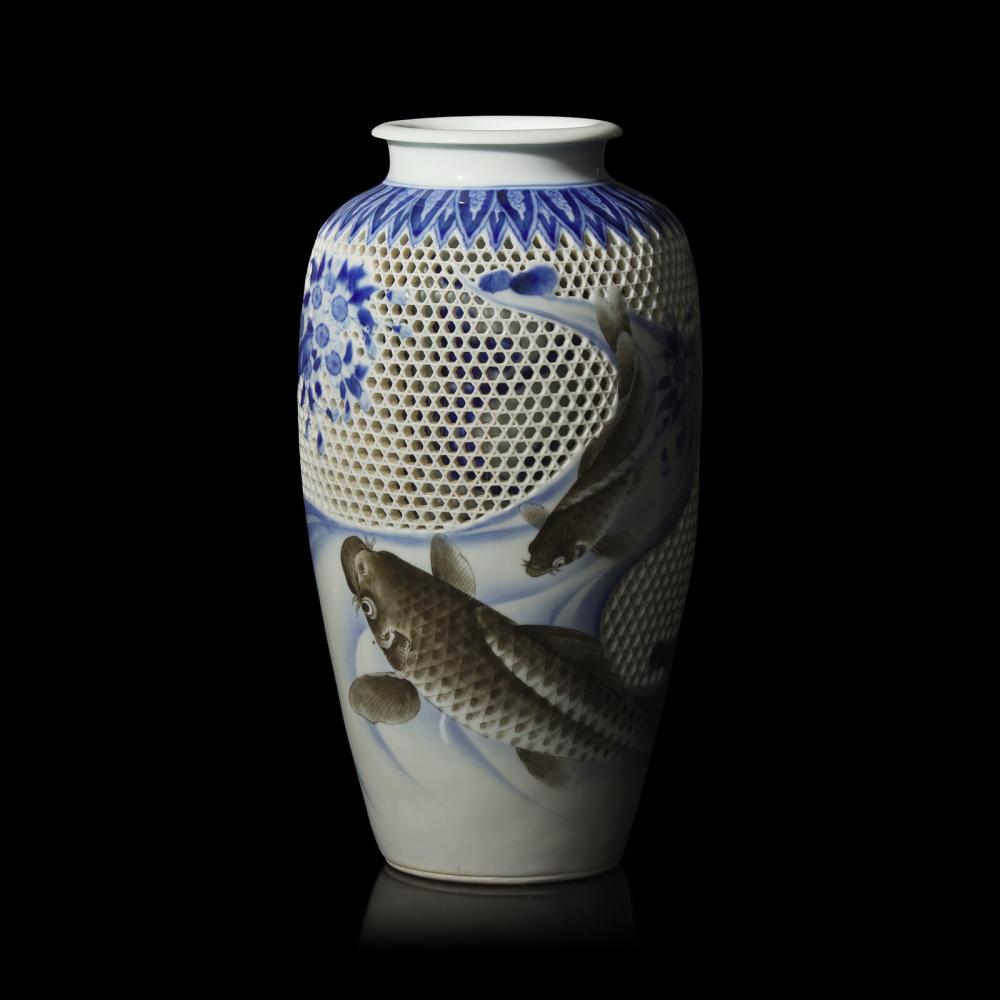
Start with this seven-point Hirado check
Use this Hirado porcelain check before you treat a blue mark as a kiln name.
- Photograph the whole object. Record height, width and whether it belongs to a pair or set.
- Turn it over. Capture the complete underside, not only the characters.
- Find exposed body. Look at the unglazed foot, a firing spur or an existing chip—never make a new scratch.
- Trace the blue. Check whether cobalt appears beneath a continuous clear glaze and whether brush density varies naturally.
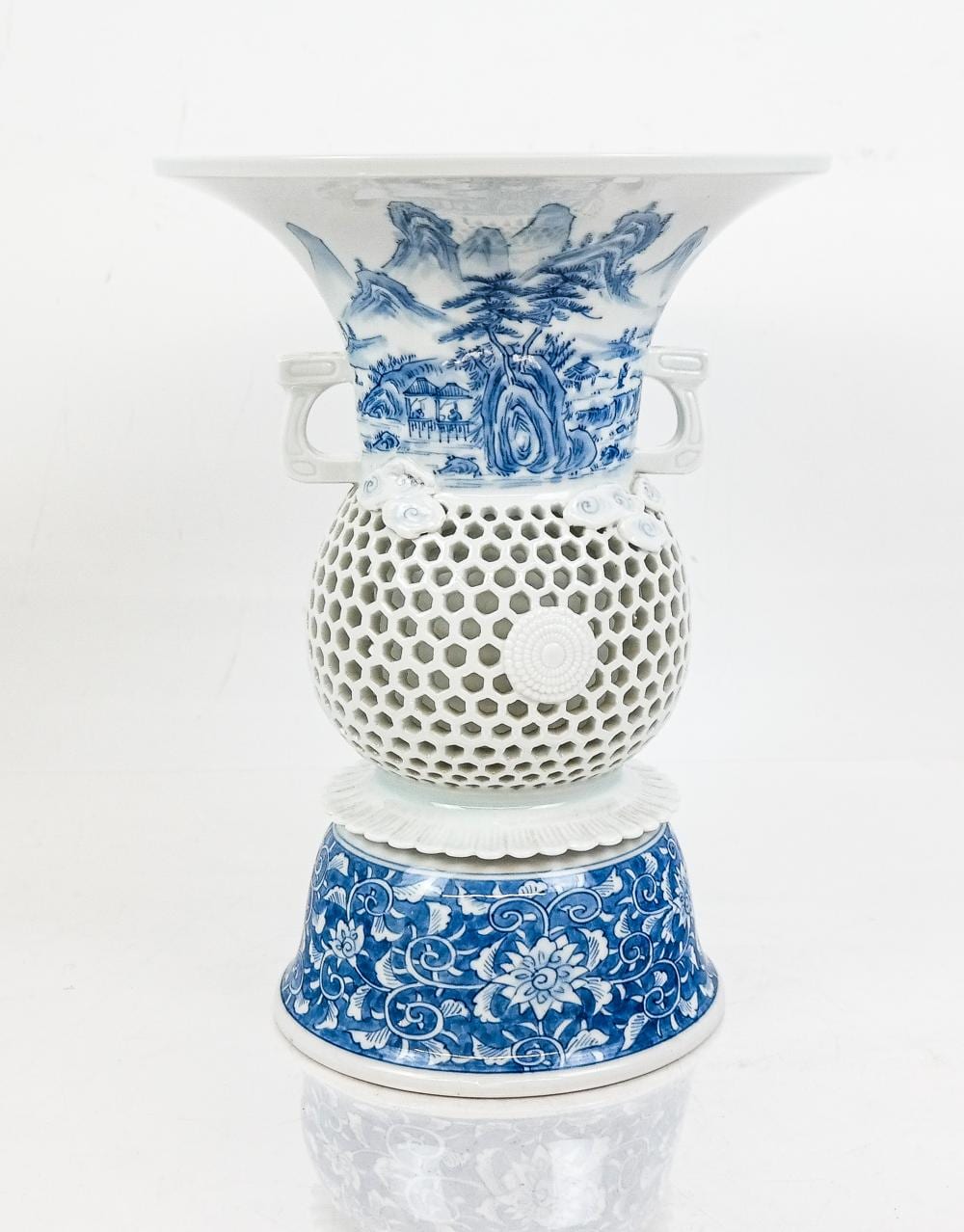
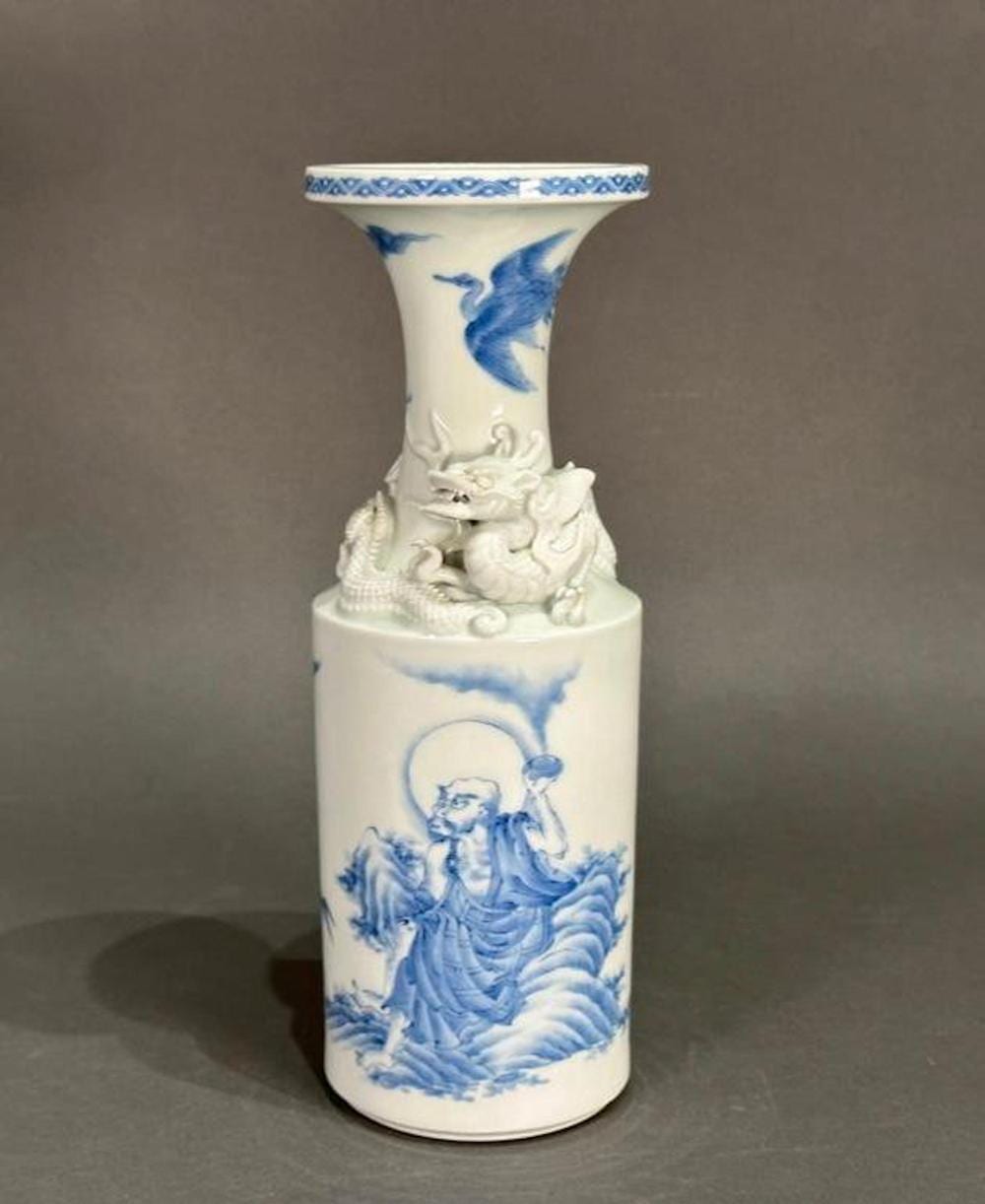
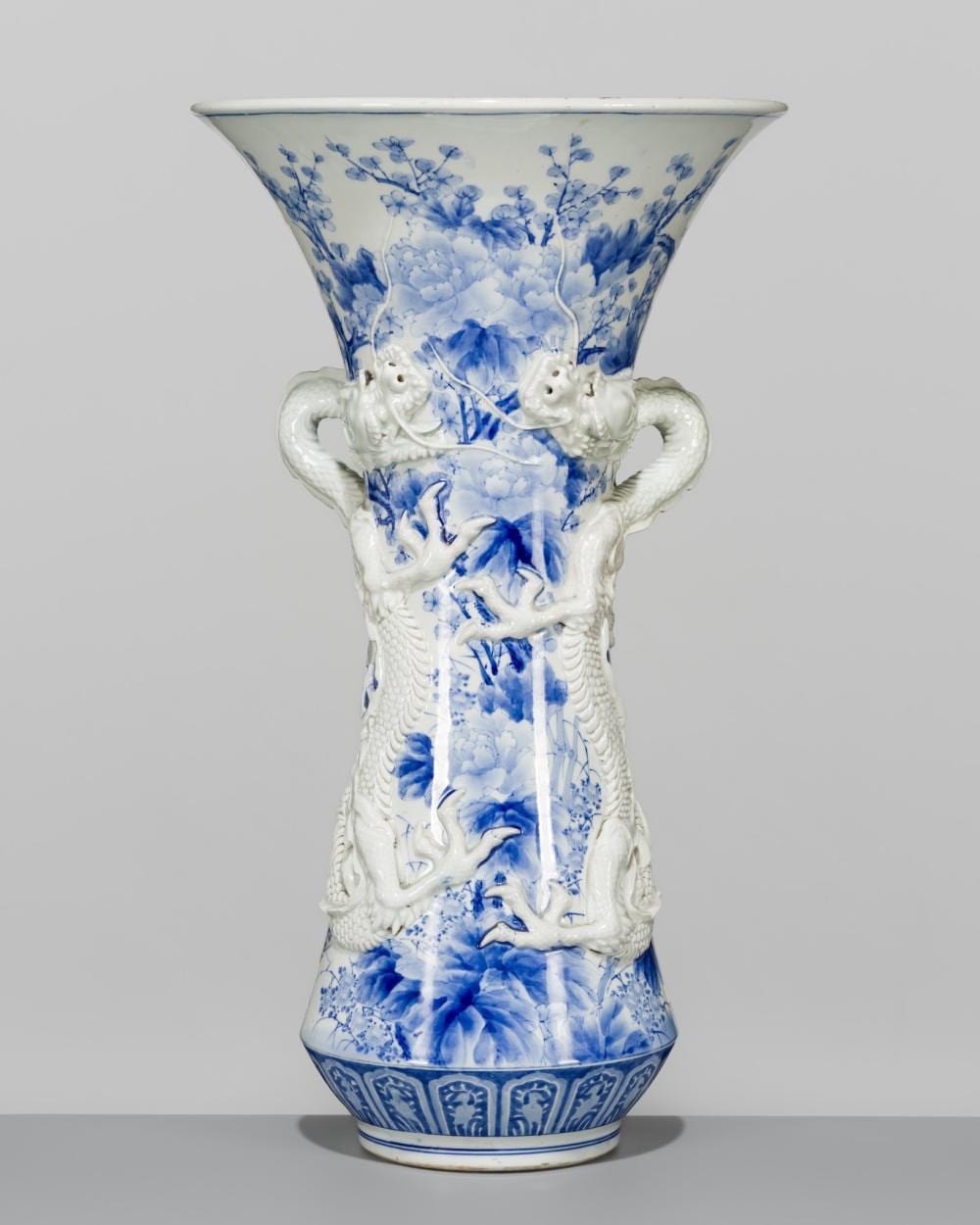
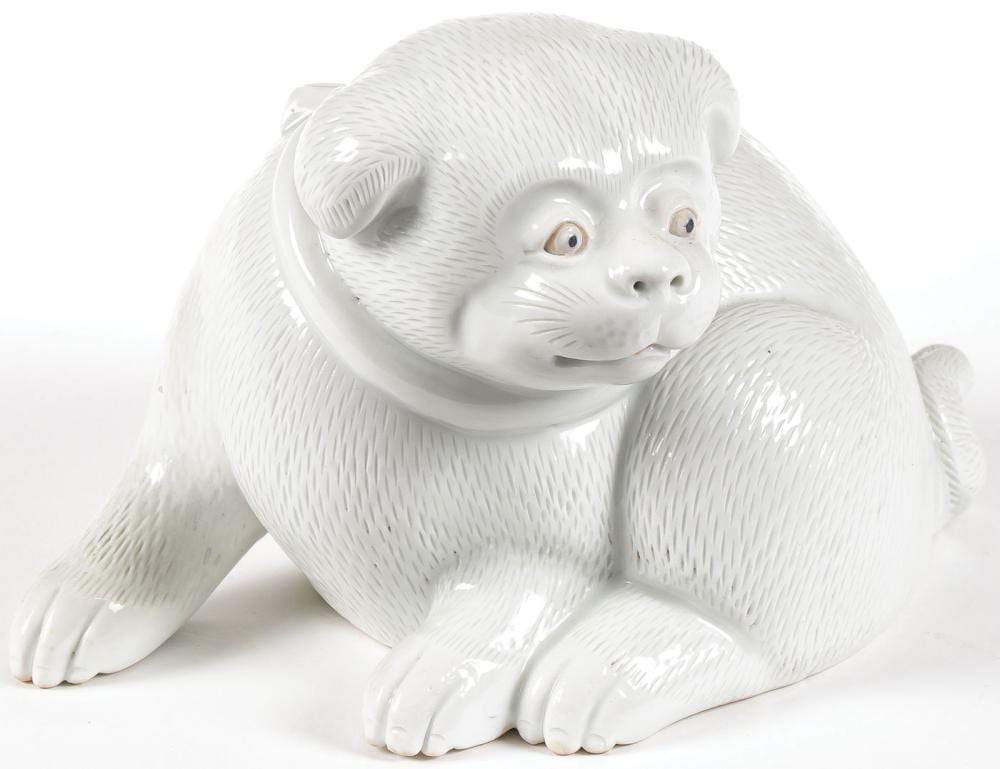
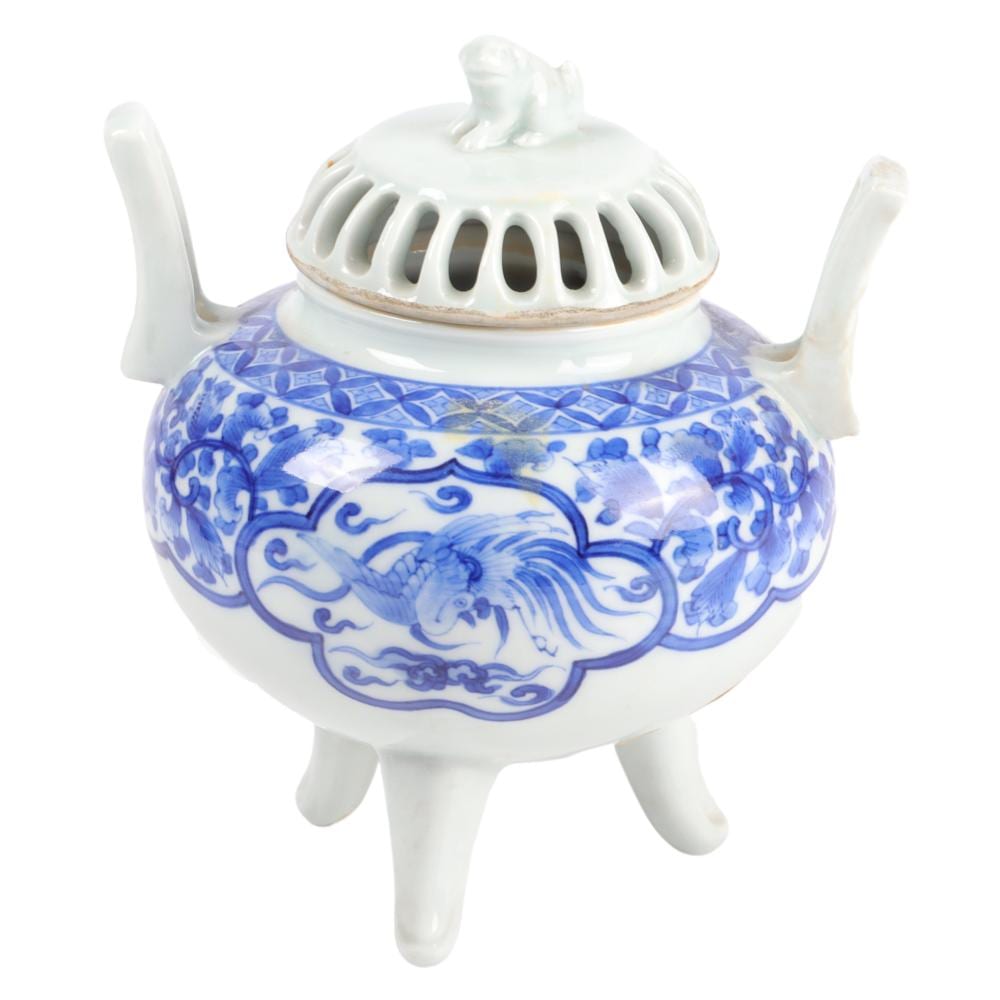
- Inspect modeling. Note relief, reticulation, molded handles, crisp carving and thinly worked edges.
- Read the mark as evidence. Record its color, position, border, application method and every visible stroke before translating it.
- Record condition separately. Repairs, rim chips, drilling and later mounts affect value even when the attribution is right.
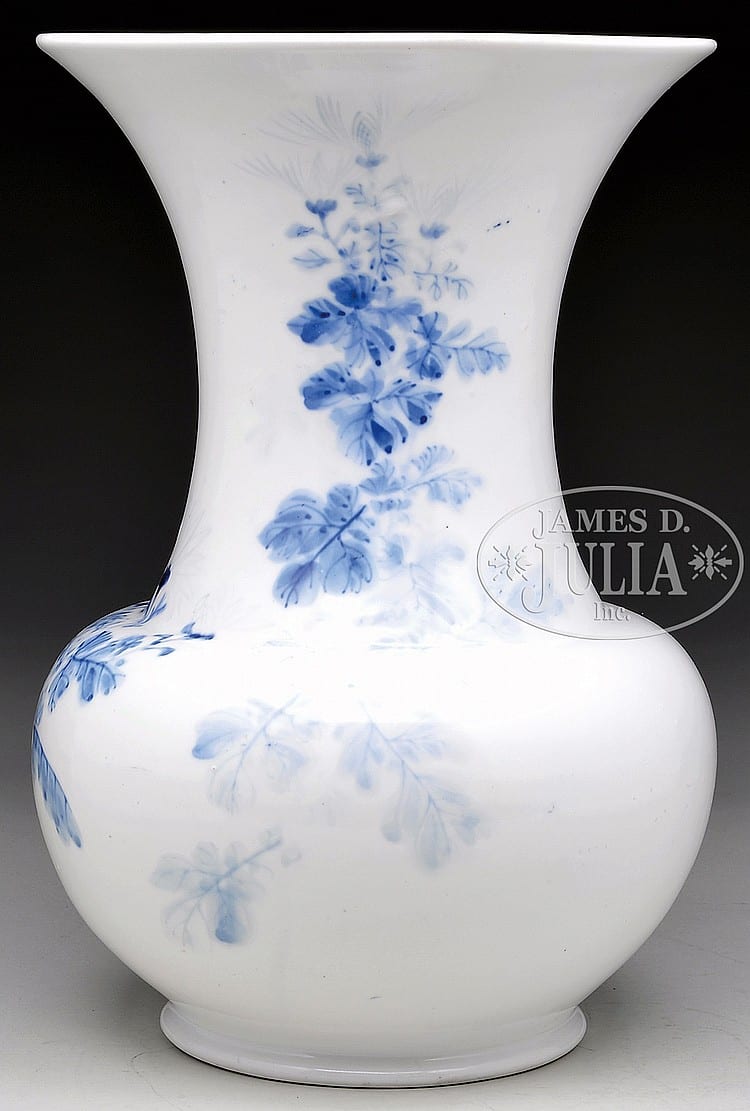
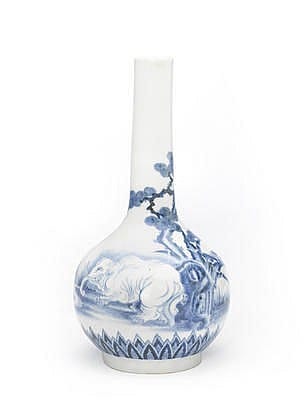
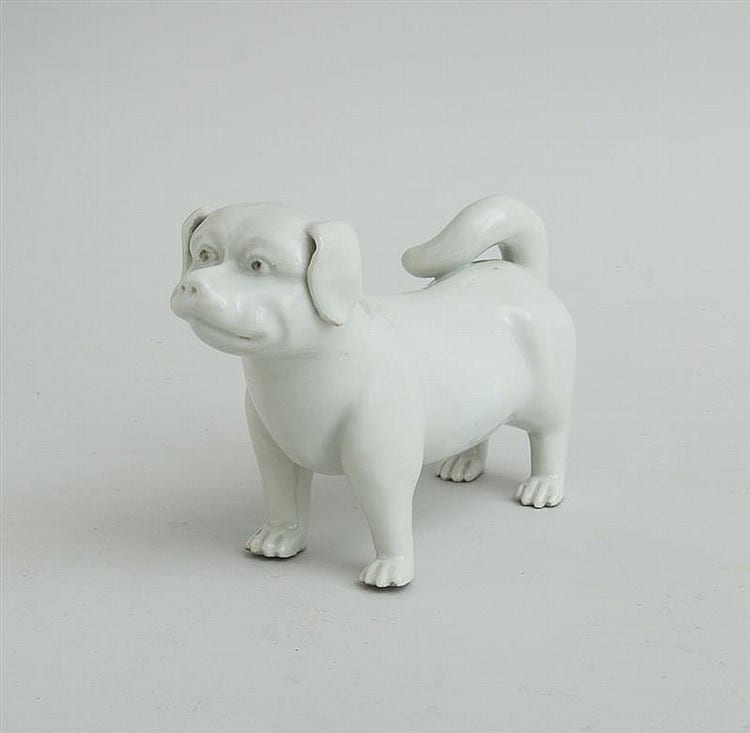
The museum examples below show why the full sequence matters. They are attributed records, not a universal pattern sheet.
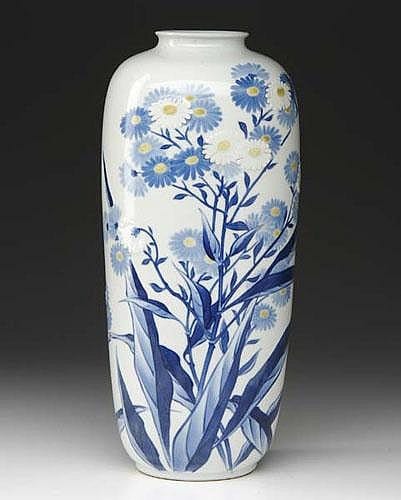
A finely painted blue-and-white vase or dish can have the quiet precision collectors associate with Hirado: a pale porcelain body, controlled cobalt and enough empty space for the modeling to breathe. The exciting part is that these clues are visible. The difficult part is that none of them—including a blue mark—works alone.
Start by separating three things that search descriptions often run together. Paste is the fired porcelain body. Underglaze blue is cobalt decoration applied before a clear glaze and final firing. A mark is an inscription, symbol, stamp or incision whose application and wording must fit the rest of the object. Use the same reading method as Japanese porcelain mark identification, then compare sibling kiln clues on Nabeshima porcelain so generic blue-and-white is not mistaken for Hirado.
Look at the whole form before the mark

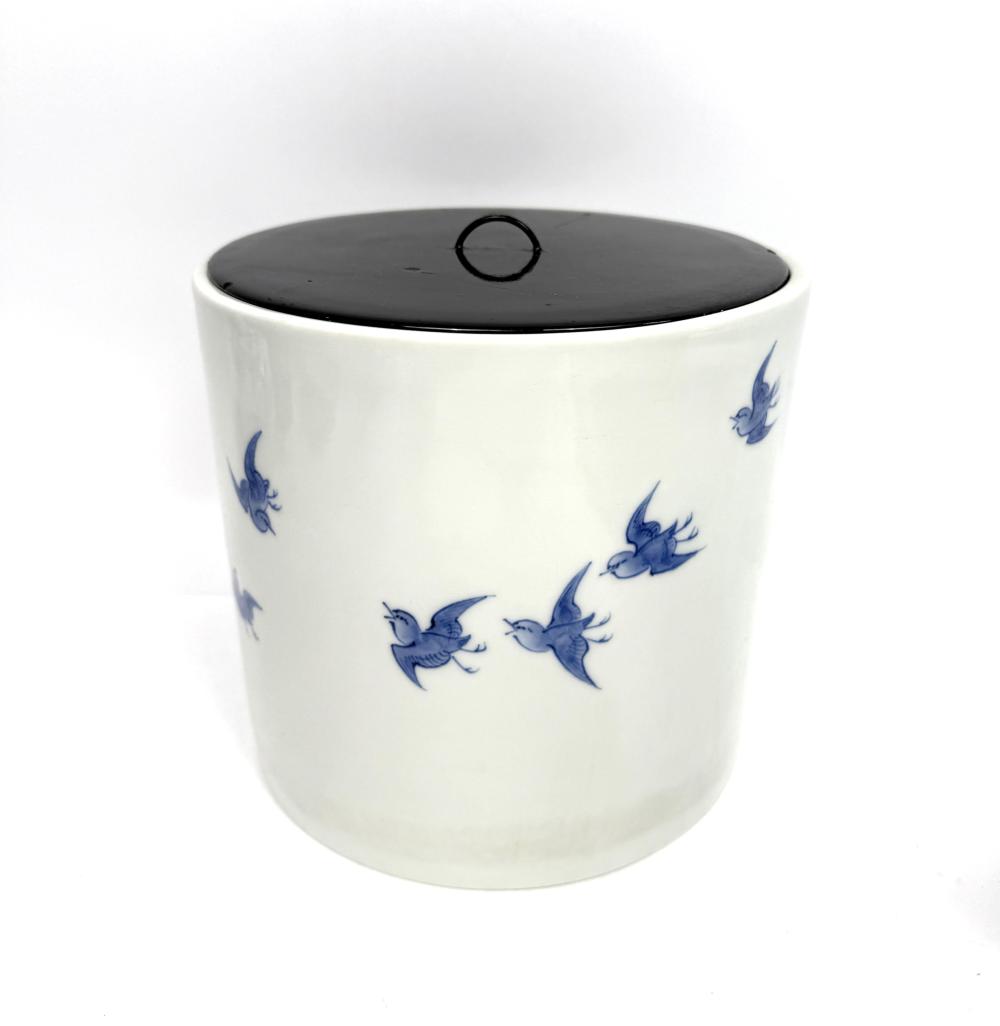
This jar demonstrates a useful Hirado cluster: a fine pale ground, blue placed with restraint, and form carrying as much visual weight as painting. Do not turn those features into a formula. Hirado production spans different periods, object types and markets; later export pieces can be more elaborate, and white modeled wares may have little or no blue.
Compare decoration, underside and profile as one object


Check the paste at the foot—not through a new scratch
In ceramics, paste means the body from which the object was formed. The Metropolitan Museum’s collection publication describes Mikawachi’s clay as particularly fine, white and plastic enough for accomplished modeling, relief and piercing. LACMA likewise connects Hirado/Mikawachi work with whiteness and a strong, workable body.
Use that information as a comparison, not a home chemistry test. Under neutral daylight, inspect an existing unglazed area. A plausible fine Hirado body should not look like coarse earthenware. It may appear pale and closely textured. Thin areas may transmit some light, but thickness, glaze and restoration can change the result. A bright-white body alone does not establish age or kiln.
What the foot can tell you
- Body color and texture: compare exposed paste with museum examples, allowing for kiln variation and surface dirt.
- Glaze termination: look for a coherent line where clear glaze ends at the foot, not fresh grinding meant to imitate age.
- Construction: assess how the foot is cut or formed and whether it fits the object’s shape and balance.
- Later intervention: note drilled bases, lamp fittings, adhesive, overpainting and filled chips before discussing value.
Read the blue through the clear glaze
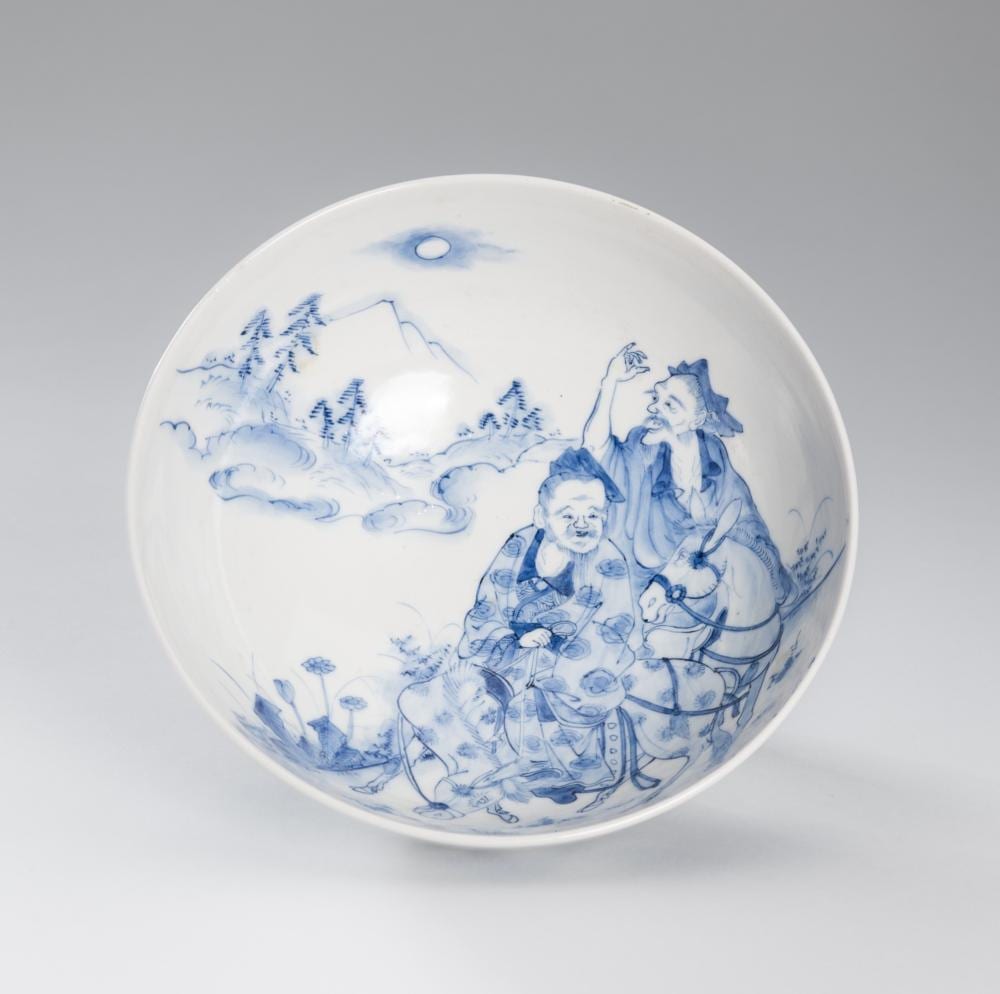
Underglaze cobalt sits on the body beneath a transparent glaze. Under magnification, the clear surface should continue over the painted area. The color may soften or diffuse slightly during firing. A Met Hirado dish record specifically describes a soft, even cobalt tone as characteristic of Mikawachi ware; the water jar and dish above also show that “soft” does not mean weak or careless.
Follow a single line from dark to light. Hand painting can show changes in brush load, overlapping strokes and small variations at turns. Printed decoration may repeat with mechanical uniformity or reveal a screen or transfer pattern. Neither observation dates an object by itself: nineteenth-century and later Hirado production used varied techniques, and modern hand painting remains possible.
Stronger fit
- Cobalt is visibly beneath a continuous clear glaze.
- Tonal changes support deliberate brushwork or wash.
- Painting follows the form and agrees with the modeling quality.
Reason to pause
- Blue sits on top of the glaze and shows surface wear inconsistent with an underglaze claim.
- Identical dots, edges or repeats suggest a later print while the seller claims early hand painting.
- The blue, body and form point to different production stories.
Photograph the mark, then test whether it belongs
A blue mark beneath the glaze proves only that a blue mark was applied before the clear glaze—not that the piece is Hirado. Marks may identify a place, workshop, maker, decorator, exporter, auspicious phrase or country of origin. They can also be copied. Earlier attributed Hirado can be unmarked, as the dish underside above demonstrates.
- Shoot it straight on. Fill the frame, keep all edges visible and take a second image showing where the mark sits on the base.
- Identify application. Decide whether it is painted beneath the glaze, painted or printed above it, impressed, incised or molded.
- Copy the layout before translating. Record rows, columns, borders, seals and stroke order. Do not rotate the image until you retain the original orientation.
- Compare exact characters and structure. Similar-looking characters are not interchangeable. A partial reading is better than a confident invention.
- Ask whether the object agrees. A plausible Hirado inscription on a coarse, mismatched body is a contradiction that needs expert review.
Late Edo and Meiji Hirado can carry workshop or maker inscriptions, and export-era wording can help establish a broad period. It should still be checked against body, decoration, technique and form. If the mark is the only Hirado-like feature, keep the attribution provisional.
Build an evidence stack, not a one-clue verdict
| Clue | What supports Hirado | What it cannot prove |
|---|---|---|
| Paste | Fine, pale porcelain body coherent with careful working | Age, kiln or authenticity by color alone |
| Blue | Cobalt beneath clear glaze; soft-to-even tone and controlled variation | That every blue-and-white Japanese object is Hirado |
| Form | Refined modeling, relief, piercing or balanced thin work where appropriate | That elaborate molding is necessarily early |
| Foot | Body, glaze line and construction agree with the object | A precise date without comparative study |
| Mark | Application, wording and layout match a documented workshop or period | Authenticity when the object contradicts it |
| Provenance | Old labels, invoices or collection history connect to the same object | Truth if records are generic or recently assembled |
Rule out the nearest blue-and-white lookalikes
Blue-and-white Japanese porcelain is a broad field. Arita and Imari production can overlap in cobalt palette and Chinese-derived motifs. Seto and Fukagawa wares can also be confused with unmarked Hirado, while later wares made for export may borrow Hirado forms or be described commercially as “Hirado style.” Chinese blue-and-white adds another layer of comparison. Cream crackled earthenware with gold and enamel is a different problem; use the antique Satsuma pottery guide instead of forcing a Hirado label.
Do not decide by color alone. Compare the form’s intended use, body, foot, design grammar, mark language, manufacturing technique and documented parallels. “Japanese,” “Hirado style” and “Hirado ware” are different claims. An auction listing using the word style is not equivalent to a firm kiln attribution.
Take these photos before asking for an identification
- Whole object, straight on, with a ruler or dimensions in the note
- Opposite side and both profiles
- Complete underside in sharp, neutral light
- Mark close-up, straight on, plus one raking-light image
- Foot rim and glaze line
- Close detail of cobalt brushwork or printed pattern
- Any chip, crack, staple, fill, overpaint, drill hole or mount
- Old label, box, receipt or collection note shown separately
Avoid filters, wetting the base or tracing a mark with chalk. Those actions can hide color and surface information. If a character is faint, change the light angle rather than adding pigment.
See why exact attribution changes the market conversation
Recent and historical results do not produce one “Hirado price.” Form, size, date, condition, decoration, provenance and confidence in the catalog attribution all matter. Currency matters too.
These are distinct lots, not a valuation range for an unidentified object. Use the exact table that follows to compare title, house, date, lot and reported price as one record.
Questions collectors ask about Hirado porcelain
Is all antique Hirado porcelain marked?
No. The museum-attributed dish shown above has no maker mark in its base center. A blank base neither proves nor disproves Hirado; the object still needs coherent body, decoration, form and provenance evidence.
Is Hirado porcelain paste blue?
No. “Paste” is the porcelain body, usually discussed as fine and white in Hirado references. The blue is cobalt decoration. When it is underglaze blue, the pigment lies beneath a transparent glaze.
Does translucency prove Hirado?
No. Translucency can support a porcelain identification, but it changes with thickness and does not establish a specific kiln. Use it with the foot, glaze, painting, form and mark.
Can I date Hirado from a four-character blue mark?
Not safely from character count alone. Photograph the complete base, determine how the mark was applied, transcribe the exact characters and compare the whole object with dated records.
What if the seller calls it “Hirado style”?
Treat “style” as a visual comparison, not a production-place attribution. Ask what evidence supports the description and whether the cataloger identified a period, maker or workshop.
When photographs are not enough
Use an in-person ceramics specialist when the mark remains ambiguous, the object has restoration that affects attribution, or you need documentation for insurance, sale or an estate.
Find an antiques specialistSources and image credits
- The Metropolitan Museum of Art: Freshwater Jar with the Seven Sages—Hirado ware, second half of the 18th century; image used under The Met Open Access CC0 policy.
- The Metropolitan Museum of Art: Dish with Rafts, Bamboo Hats, and Tokugawa Family Crest—Hirado ware, ca. 1680–1720; three views used under The Met Open Access CC0 policy.
- The Metropolitan Museum of Art: Hirado dish with quail—collection note on soft, even Mikawachi cobalt.
- Japanese Art from the Gerry Collection, The Metropolitan Museum of Art—Hirado/Mikawachi clay, modeling and underglaze-blue context.
- LACMA: Pair of Lanterns with Landscapes, Cranes, and Raised Dragons—institutional notes on Hirado/Mikawachi material and technique.
- British Museum: Hirado ware collection term—Hirado/Mikawachi production terminology.
Related Hirado porcelain identification searches
- How do I identify an unmarked Hirado porcelain vase?
- What does antique Hirado porcelain paste look like?
- Are Hirado porcelain marks always underglaze blue?
- How can I tell Hirado from Arita blue-and-white?
- What does a Mikawachi mark mean on Japanese porcelain?
- Can Meiji Hirado porcelain be unmarked?
- How do I photograph a Japanese porcelain base mark?
- What makes a Hirado porcelain dragon vase valuable?