
How to identify old vases
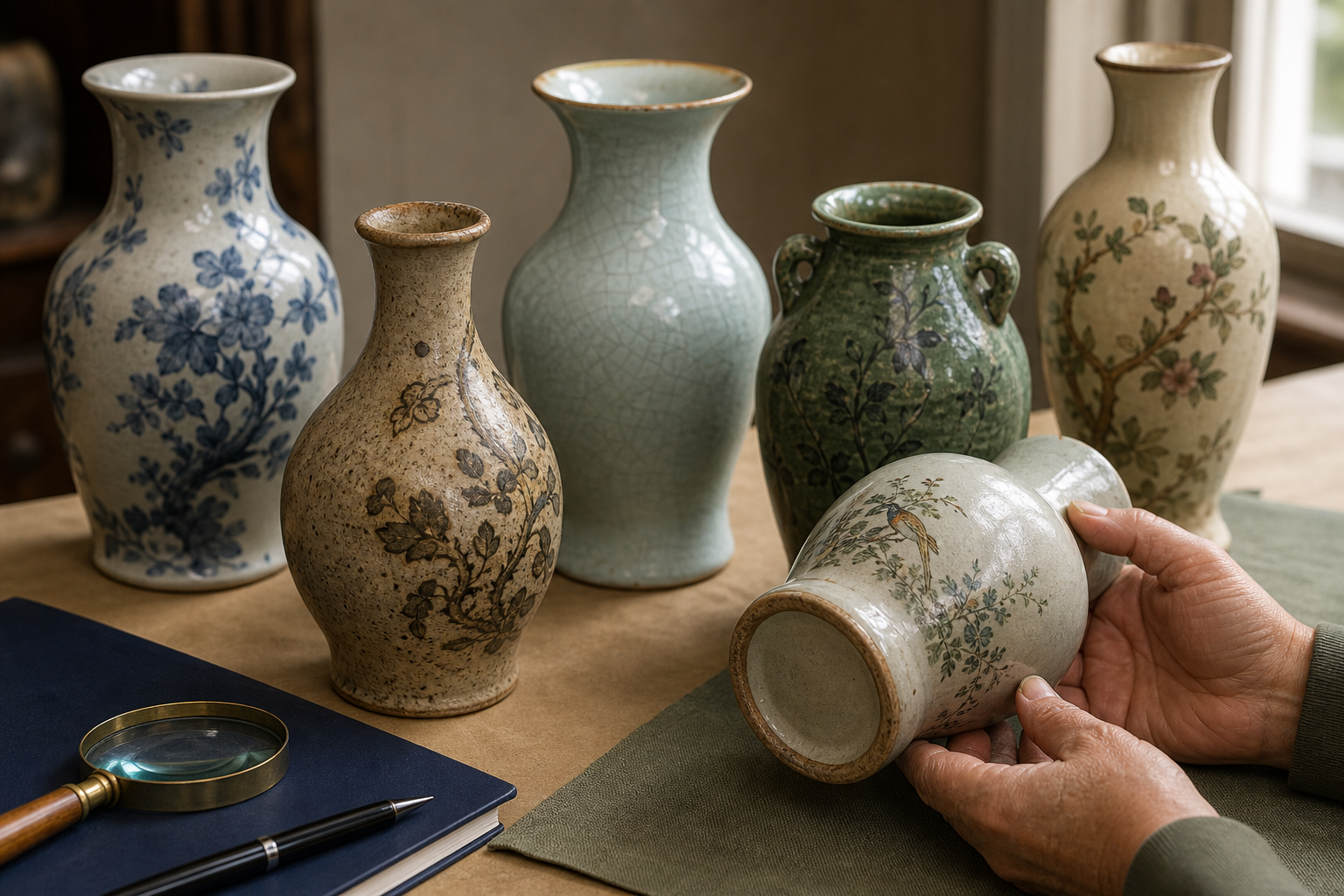
Identify old vases by examining the base, mark, glaze, form, foot ring, decoration, material, condition, and whether the vase is ceramic, porcelain, pottery, glass, or a lamp conversion.
Found an old item and want to know if it matters?
Upload photos. We identify the object, check real sales, and show the right appraisal path.
Upload photos for a free first lookStart an appraisalStart with one clear answer
To identify an old vase, inspect the base first, then the material, glaze, decoration, foot ring, form, rim, and condition. The same word vase covers porcelain, pottery, studio ceramics, Satsuma, Roseville, Chinese export, European porcelain, and later decorative ware.
Recent auction examples show old vases ranging from modest studio pottery to higher-performing antique French porcelain. The identification category determines the comparable market.
Quick identification checklist
- Photograph the full vase, base, foot ring, rim, interior, handles, decoration, glaze, mark, and any drilled holes.
- Measure height and widest diameter, and show chips, hairlines, staining, repairs, cracks, and lamp fittings.
- Separate porcelain, pottery, stoneware, earthenware, Satsuma, Roseville, Chinese porcelain, European porcelain, glass, and lamp vases.
Key value and identity drivers
- Material and origin: porcelain, art pottery, studio pottery, and export porcelain sell into different markets.
- Form and decoration: pairs, large scale, hand painting, relief, gilt mounts, and strong glaze can help.
- Condition and alteration: drilled bases, lamp conversion, rim chips, repairs, and staining can change value.
Note: We couldn’t find enough auction records that directly match How to identify old vases to publish a defensible price table. If you are valuing a specific item, include its maker, model, material, photos, and condition so the search can be narrowed.
What similar items actually sold for
The current auction search does not contain at least three clean, directly matched sales for How to identify old vases yet. If you’re valuing a specific item, use the free estimate flow so the search can be narrowed by maker, material, photos, and condition.
| Image | Description | Auction house | Date | Lot | Reported price realized |
|---|---|---|---|---|---|
| No relevant auction comps found for this topic right now. | |||||
Disclosure: prices are shown as reported by auction houses and are provided for appraisal context. Learn more in our editorial policy.
Condition and authenticity cautions
Watch for drilled bases, lamp conversions, fake marks, later decoration, overpaint, replaced mounts, and repaired rims. These details can materially change both identity and value.
When to use the free screener
Use the free screener when you need a first-pass identity, pattern, mark, or category read before deciding whether the object deserves a paid appraisal. It is especially useful when you have clear photos but do not yet know what the piece is.
When to get a professional appraisal
Use a professional appraisal when the piece may be valuable, when you need a signed report for insurance, estate, donation, sale, or dispute use, or when authenticity, restoration, or provenance changes the answer.
Photo checklist
- Full object or full set, front, back, base, side profile, interior, and scale reference.
- Close-ups of marks, pattern names, artist signatures, impressed numbers, labels, lids, handles, rims, feet, and damage.
- Any boxes, receipts, certificates, family notes, past appraisal paperwork, or auction/dealer labels.
Related guides
Pottery and porcelain guides, Free ceramic appraisal online, How to identify pottery marks, Pottery marks identification guide, Value of old vases, Hand-painted porcelain vase clues.
FAQ
How do I tell what kind of old vase I have?
Start with material, base, mark, glaze, decoration, shape, and condition, then compare to the correct category.
Does a drilled vase still have value?
Sometimes, but drilling or lamp conversion often reduces value and must be disclosed.
What vase photos should I upload?
Send full object, base, mark, rim, interior, side profile, decoration, damage, and measurements.
Free instant estimate
Not sure if your vase is worth appraising? Let us take a look.
Upload a photo, tell us what you know, and get a free first read. If a full appraisal makes sense, we will say so.
Free. No card needed. Takes about two minutes.
Choose your next step
Use the path that matches the decision you need to make about the item.
Not sure it is worth appraising?
Start with a lower-friction screen to understand the likely category, evidence, and next step.
Upload photos for a free first lookWant proof before paying?
See how a signed report documents photos, comparable evidence, condition notes, and value conclusions.
View signed report sampleNeed a signed report?
Use this for insurance, estate, donation, resale, or documented value decisions.
Need documentation now? Start signed appraisalNeed local or specialist help?
Compare directory options when the work needs in-person review or a specialist near you.
Find local specialistsSee what the report looks like
Sample reports show how photos, comparable evidence, condition notes, and a value conclusion are documented.
Need a clearer answer before you sell, insure, or keep it?
Upload photos. Appraisily identifies the item, checks real sales, and shows whether a screener result or professional report is the right next step.
Upload photos for a free first lookStart a professional appraisalSee a sample report