Satsuma Porcelain Vase: appraisal and value basics
Satsuma Porcelain Vase research should start with identification, condition, provenance, and recent comparable sales. Use this guide to compare the signals that matter before paying for a formal appraisal or deciding whether to sell.
Satsuma porcelain vase appraisal checklist
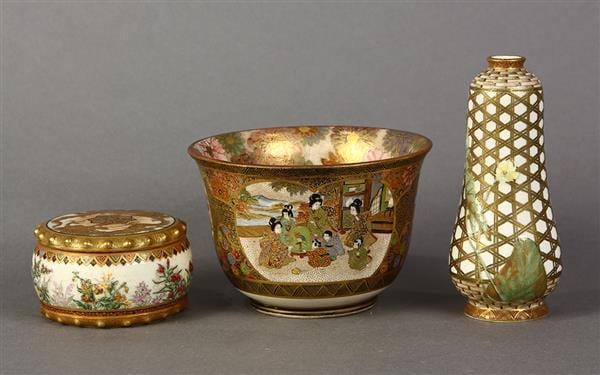
Satsuma “porcelain” vases fascinate collectors with their ivory crackle glazes, dense gilding, and intricate figural scenes. Yet the first truth about a Satsuma porcelain vase is that it isn’t porcelain at all. True Satsuma ware is a fine-grained earthenware. Understanding that distinction—and the history, marks, and stylistic clues—will help you identify genuine examples, distinguish quality tiers, and make informed appraisal decisions.
Below is a focused guide for enthusiasts and appraisers looking to assess Satsuma vases confidently.
What Is Satsuma “Porcelain”?
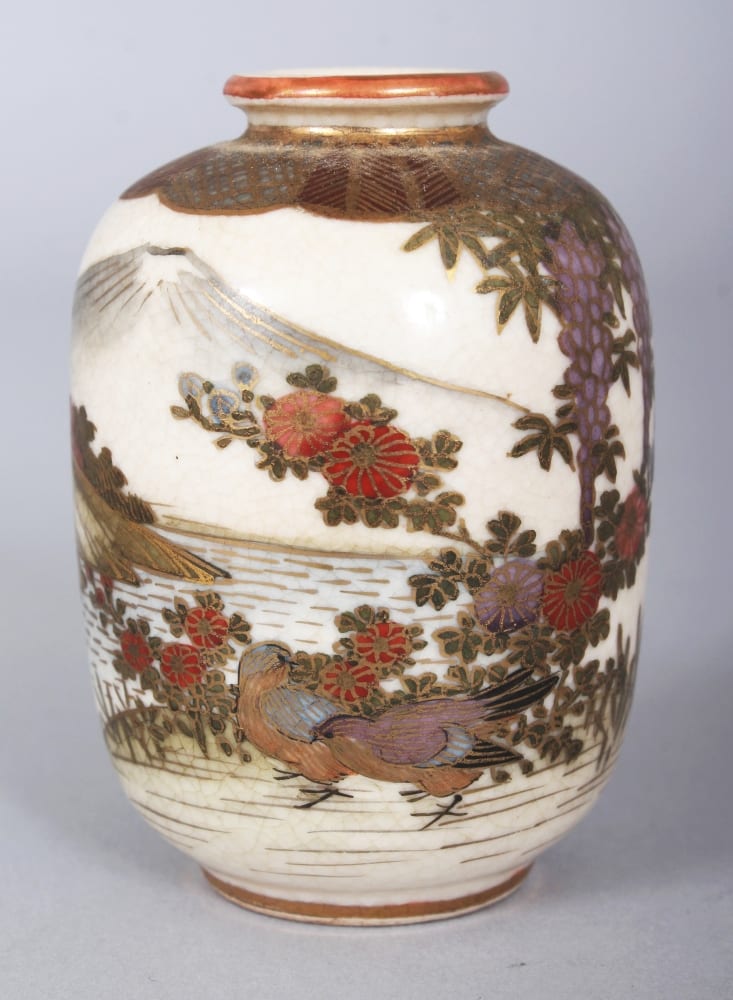
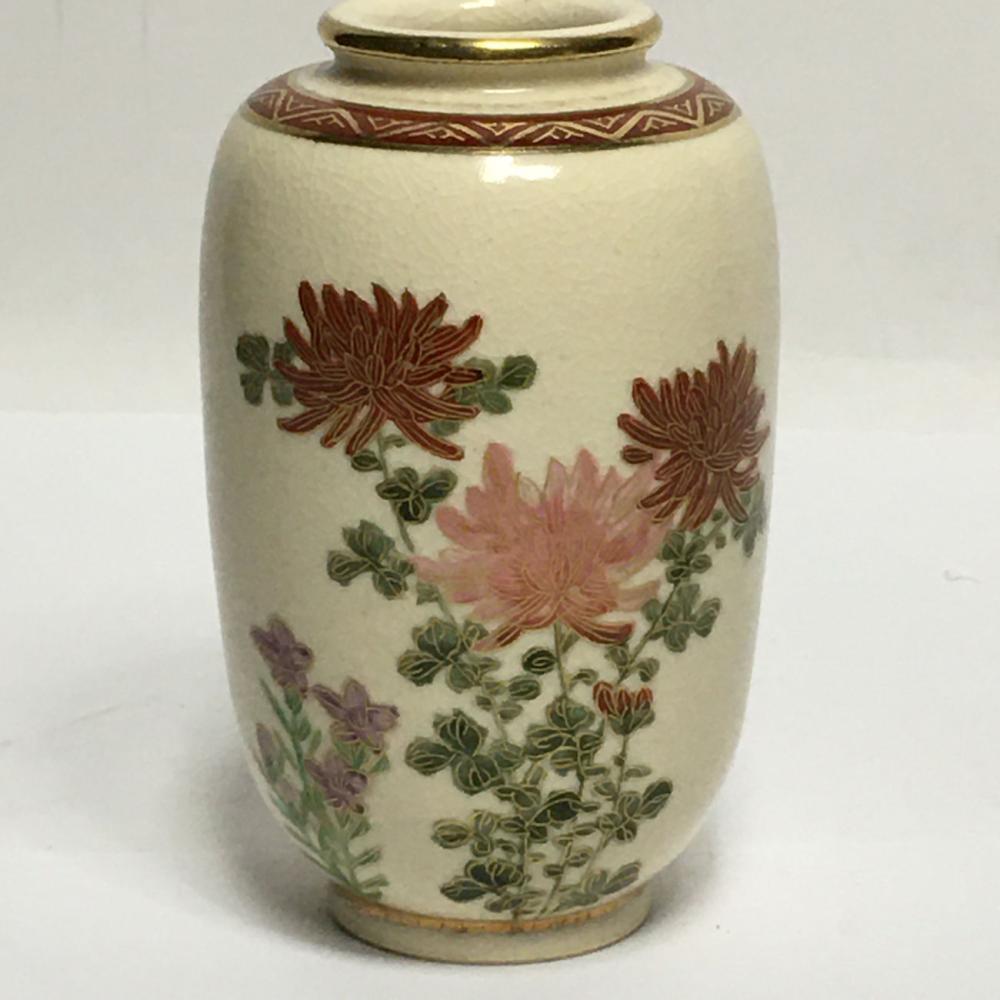
- Material: Despite the common phrase “Satsuma porcelain,” authentic Satsuma is earthenware, not porcelain. The body is opaque and typically ivory-to-cream in tone with a tight network of crackle (crazing) under a clear glaze.
- Translucency test: Hold the piece to strong light. Porcelain transmits a glow; Satsuma earthenware will not.
- Sound test: A gentle tap on porcelain yields a clear, bell-like ring. Satsuma’s earthenware body sounds softer and more muted.
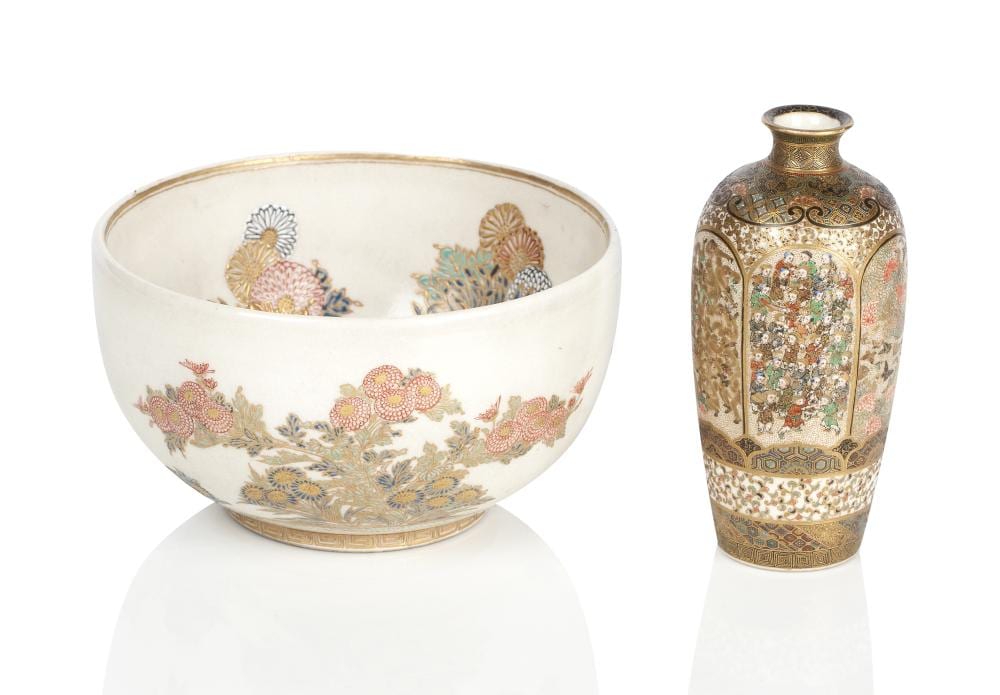
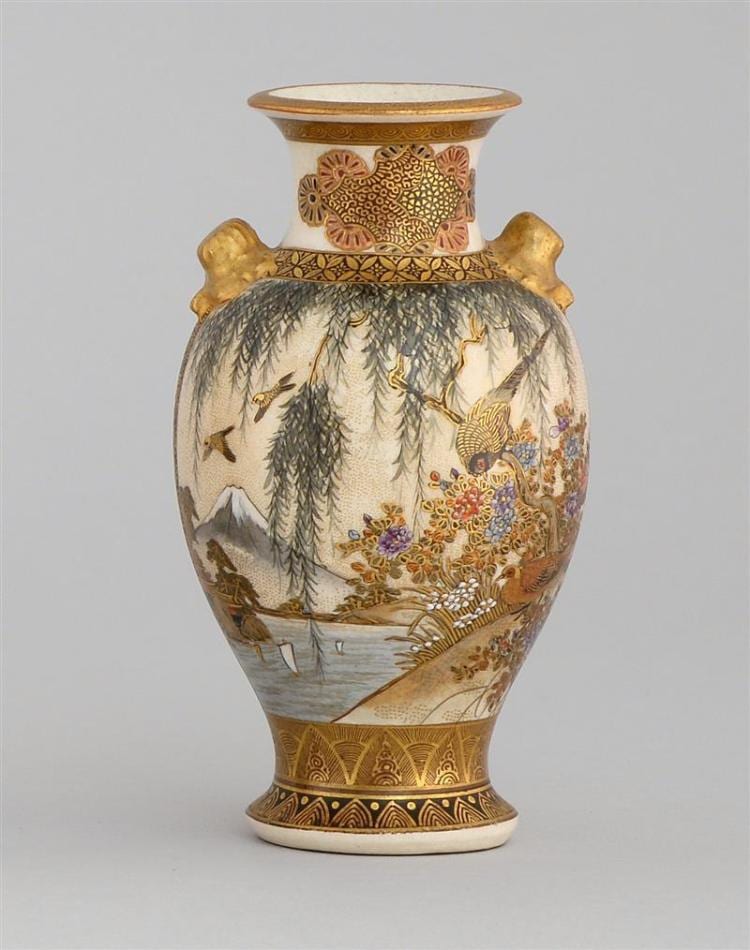
- Surface: Satsuma decorations sit on top of the glaze in enamel and gold; the finest pieces feature extraordinarily fine linework and controlled use of empty space, not just gilded density.
The term “Satsuma” originated from the Satsuma domain (modern Kagoshima) in southern Japan. Early wares were made locally; later, most export “Satsuma-style” pieces were produced in Kyoto and other centers adopting the Satsuma aesthetic.
A Brief History and Styles
- Early Satsuma (17th–early 19th century):
- Kuro Satsuma: Early forms often had darker bodies and simpler glazes, made for domestic use and the tea ceremony.
- Shiro Satsuma: The refined cream-bodied earthenware associated with court taste appears later, prized for its subtle crackle and restraint.
- Meiji Golden Age (1868–1912):
- The export boom. Workshops in Kyoto, Awata, and Osaka produced the majority of richly enameled, gilded vases for Western markets.
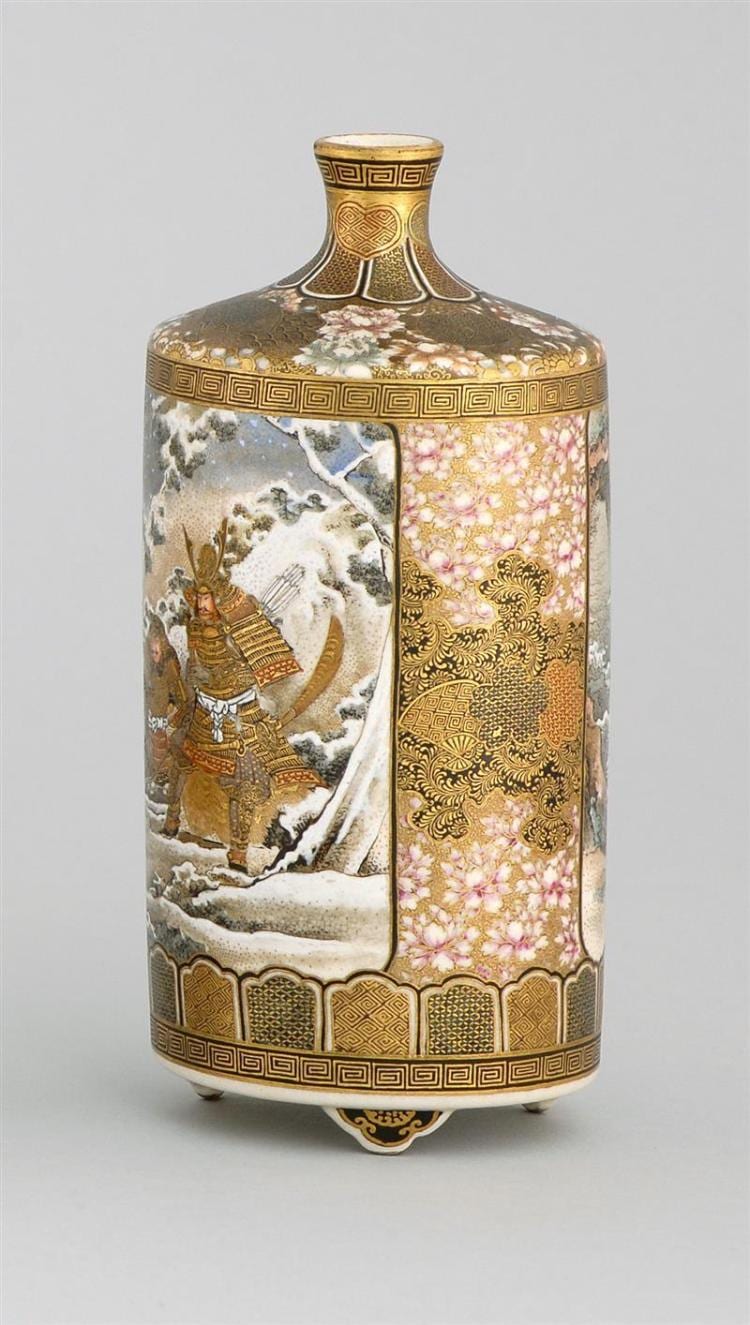
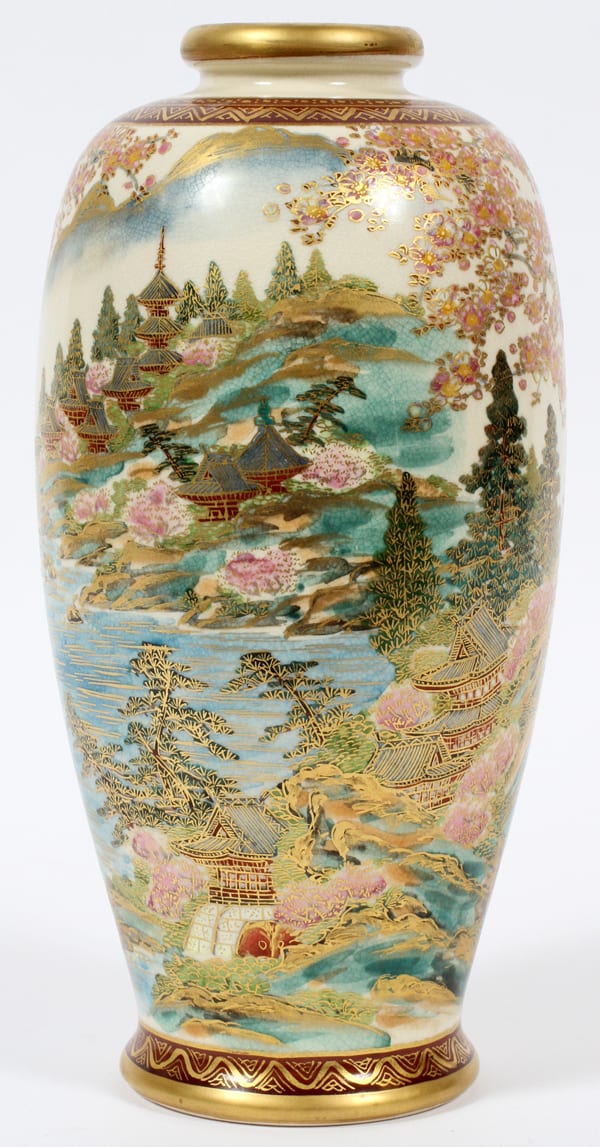
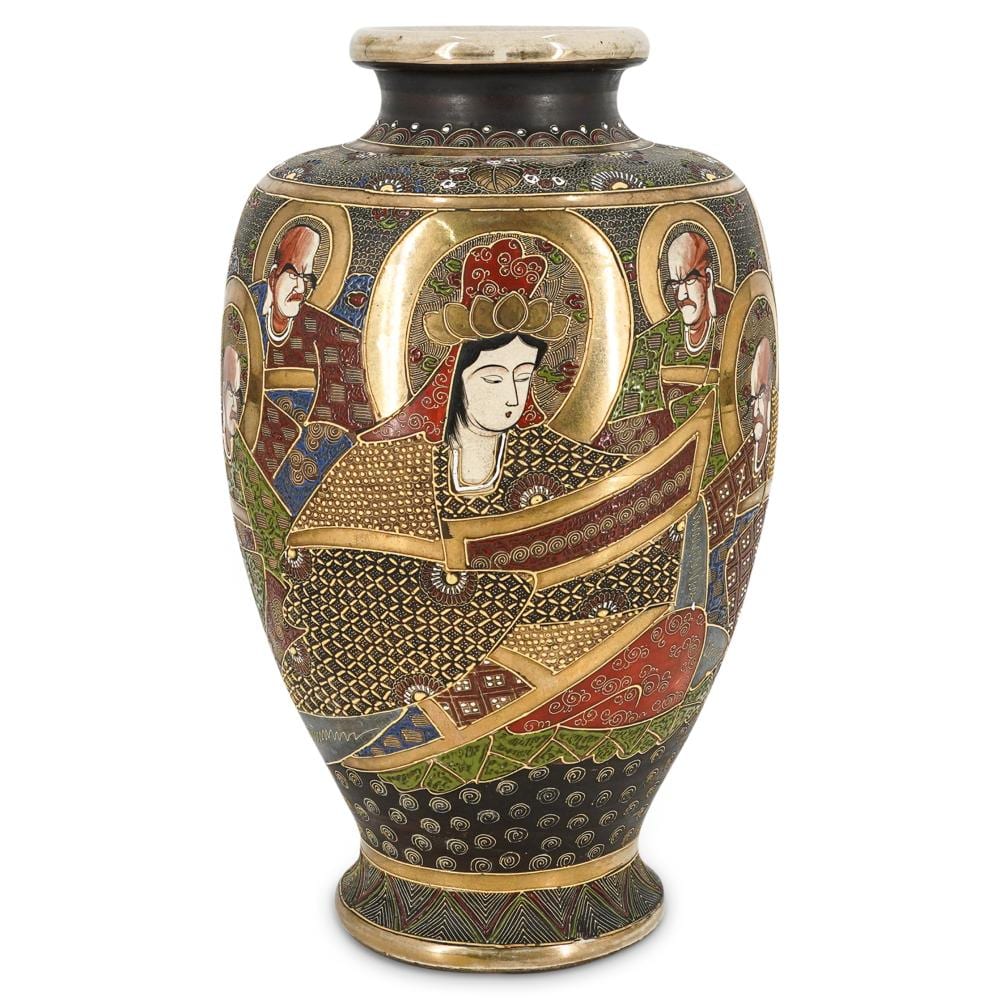
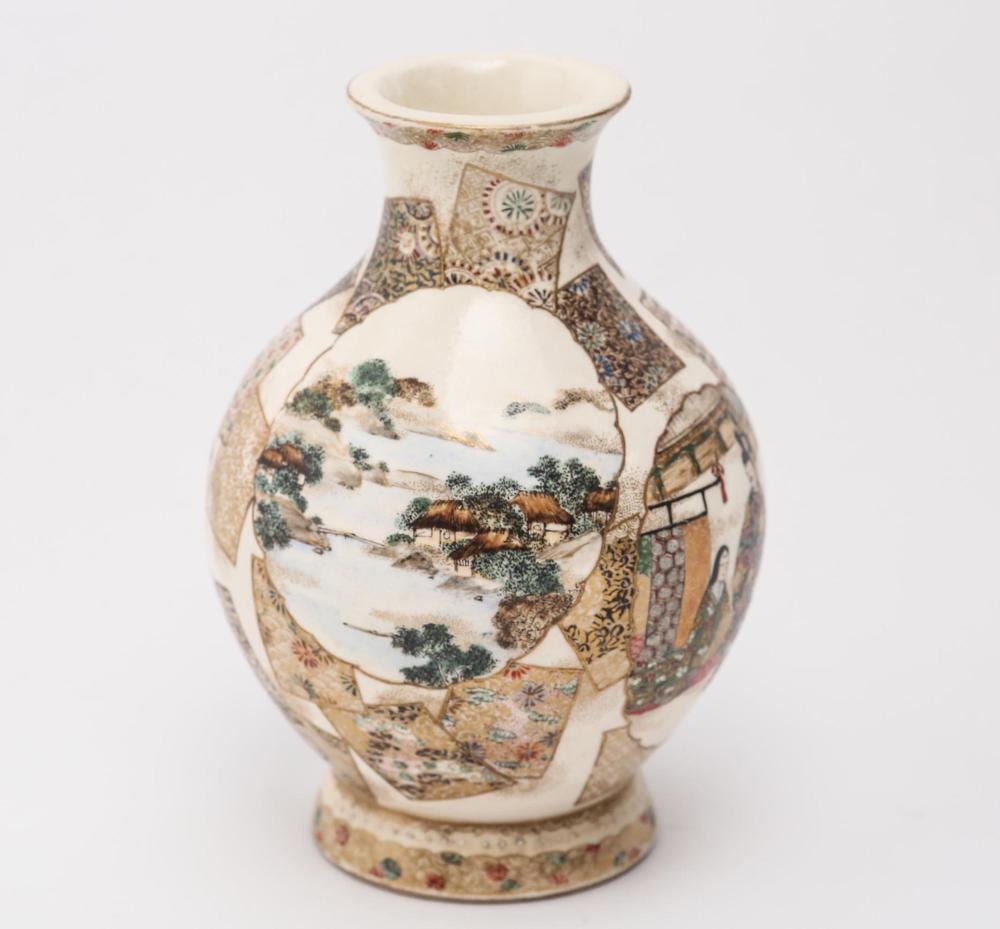
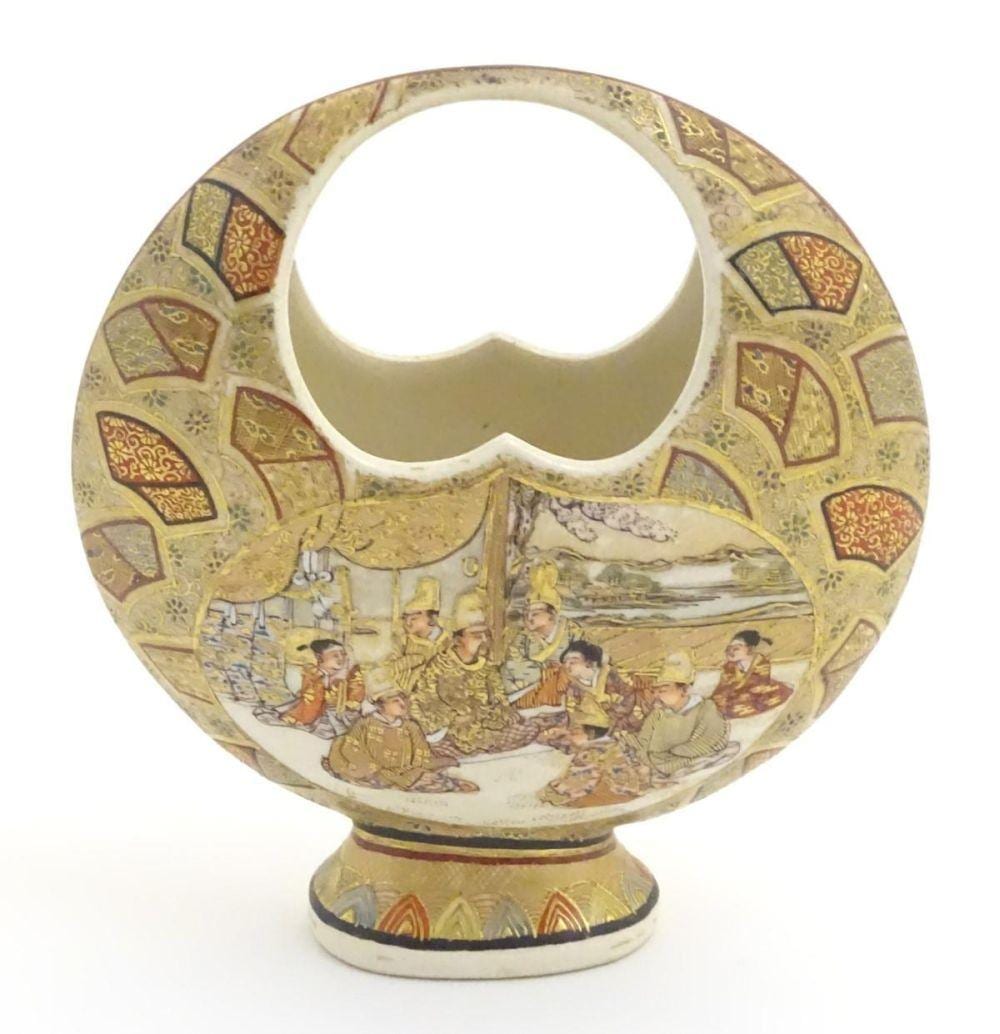
- Typical motifs: Courtly bijin (beauties), scholars, processional scenes, Buddhist and Shinto deities, the Seven Lucky Gods, landscapes, butterflies, and millefleur (thousand flowers).
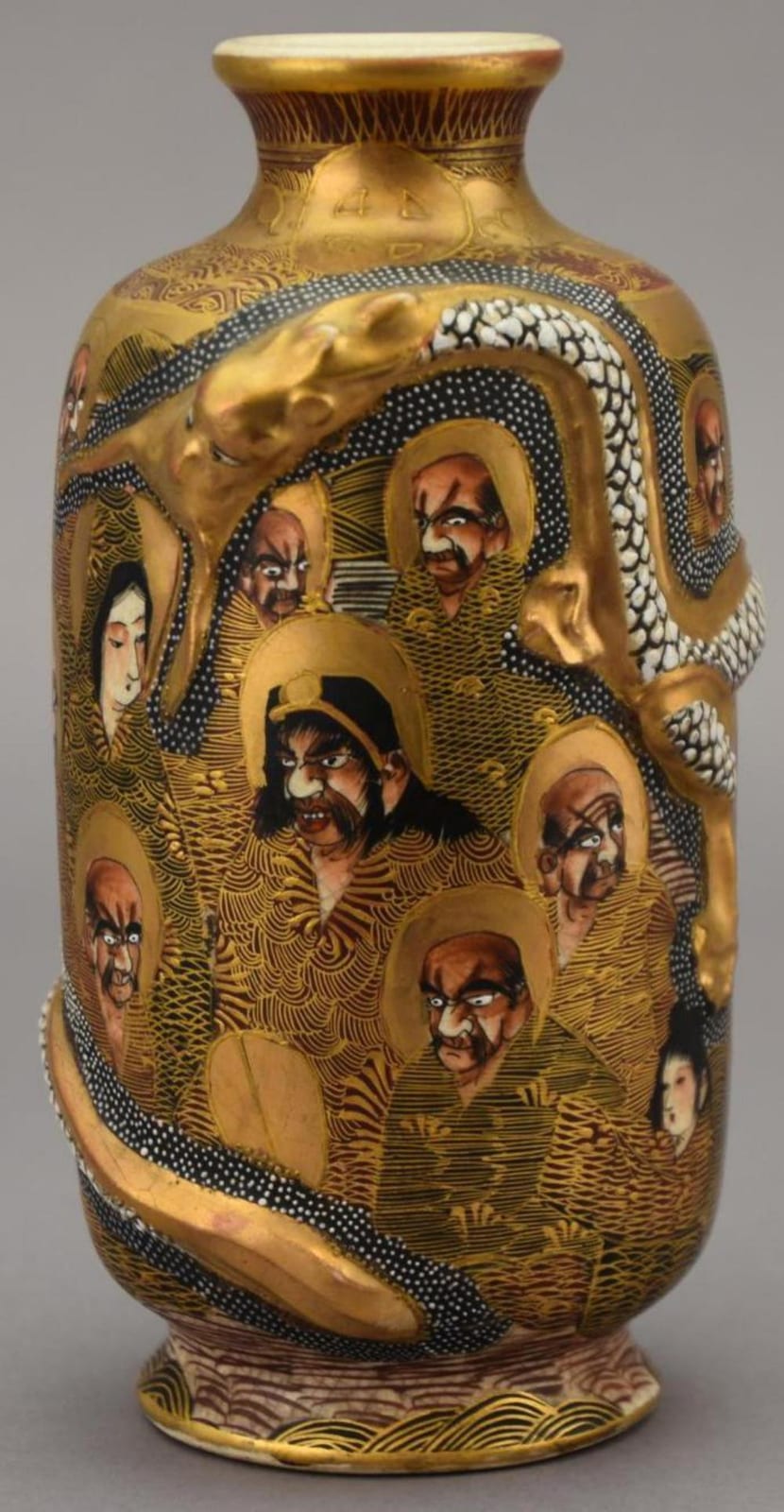
- Techniques: Overglaze enamels with extensive gilt; moriage (raised slip or enamel) for texture; micro-fine line painting.
- Forms: Baluster vases, bottle vases, moon flasks, shouldered vases with stylized dragon or scroll handles; matched pairs were common for mantel or sideboard display.
- Taishō to Early Shōwa (1912–1930s):
- Continued production with a shift toward mass-market tourist ware. Decoration quality varies widely, and the enamel/gold can be heavier and less refined.
- Export marks such as “Japan” or “Made in Japan” appear more frequently to satisfy tariff laws.
Elite studios and artists:
- Kyoto powerhouses: Kinkozan, Seikozan, Ryozan (often associated with the Yasuda Company).
- Celebrated painters: Yabu Meizan (Osaka), noted for minute, jewel-like scenes; Ryozan and Kinkozan workshops produced both high- and mid-tier pieces under studio marks.
- Top-tier studio pieces emphasize clean negative space, balanced composition, and microscopic brushwork—qualities that strongly influence value.
How to Identify a Satsuma Vase
Use a stepwise examination:
Body and glaze
- Color: Warm cream or ivory body with a fine, even crackle under a clear glaze.
- Crazing: Normal and expected. On quality pieces the crackle is fine and organic, not mechanical-looking or overly uniform.
- Weight: Earthenware feels “softer” and less glassy than porcelain; it will not be translucent.
Decoration
- Look closely at lines: Fine hand-painting shows confident, tapering strokes; eyelashes, hair strands, brocade, and pattern repeats should be crisp and varied.
- Gold: Quality pieces use gold sparingly but precisely, often outlining or highlighting. Mass-market pieces may be flooded with gilt to mask weak drawing.
- Palette: Traditional Satsuma tends toward soft iron reds, greens, blues, and purples with gilding. Some workshops used deeper cobalt and aubergine accents.
Relief and texture
- Moriage: Raised enamel or slip can outline kimono patterns or clouds. Check for intact raised dots and lines; heavy loss suggests wear or low-quality application.
Form and proportions
- Balanced symmetry: High-end vases maintain elegant proportions; rims, necks, and handles are crisp and well-fitted.
- Pairs: Matched pairs with mirrored scenes and consistent height command premiums.
Base and foot
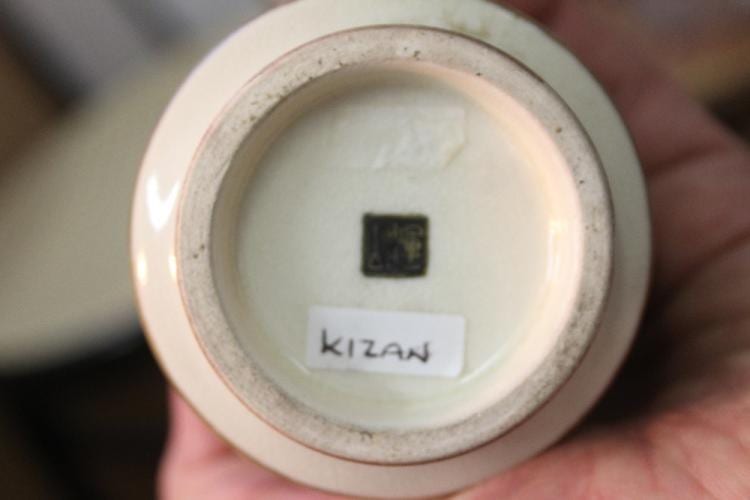
- Foot ring: Often unglazed or lightly glazed with visible, very fine-grained clay.
- Base color: Should harmonize with the ivory tone, not stark white. A bright white, glassy base suggests porcelain or a later reproduction.
Interior look
- The inside often shows the same ivory tone and subtle crackle; if the interior is bright white and translucent, reconsider the attribution.
Condition checks
- Hairlines: Fine cracks through the body, distinct from glaze crazing.
- Rim and foot chips: Common damage that affects value.
- Overpainting and restorations: Use a UV torch to detect modern paints and filled areas.
Comparative review
- Compare with known examples from reputable collections or catalogues. Note the fineness of faces, hands, textile patterns, and spacing of motifs.
Marks, Signatures, and the Shimazu Mon
Marks help but do not guarantee authenticity or quality. Many Meiji and later pieces bear workshop marks, patriotic inscriptions, and crests. Read them as clues, not final proof.
The Shimazu mon:
- A circle enclosing a cross is the crest of the Shimazu clan, rulers of the Satsuma domain. It often appears above or near the signature cartouche on Meiji-period pieces.
- Presence of the mon alone does not mean the piece was made in Satsuma; Kyoto workshops used it liberally to signal the “Satsuma” style.
Kanji and cartouches:
- “Satsuma” (薩摩) may appear, sometimes with “Dai Nippon” (大日本), a phrase frequently used in the late 19th century.
- Studio/artist names: Kinkozan, Ryozan, Seikozan, Yabu Meizan, and others. High-end studio marks are often painted in gold or iron-red within an oval, square, or shield-like cartouche.
Export and dating marks:
- “Nippon” (1891–1921): Applied for export to comply with U.S. tariff law. Less common on Satsuma than on porcelain, but it appears.
- “Japan” or “Made in Japan” (1921 onward): Typical of Taishō and Shōwa export ware.
- “Occupied Japan” (circa 1947–1952): Rare for Satsuma style; if present, it indicates a postwar piece.
Red flags:
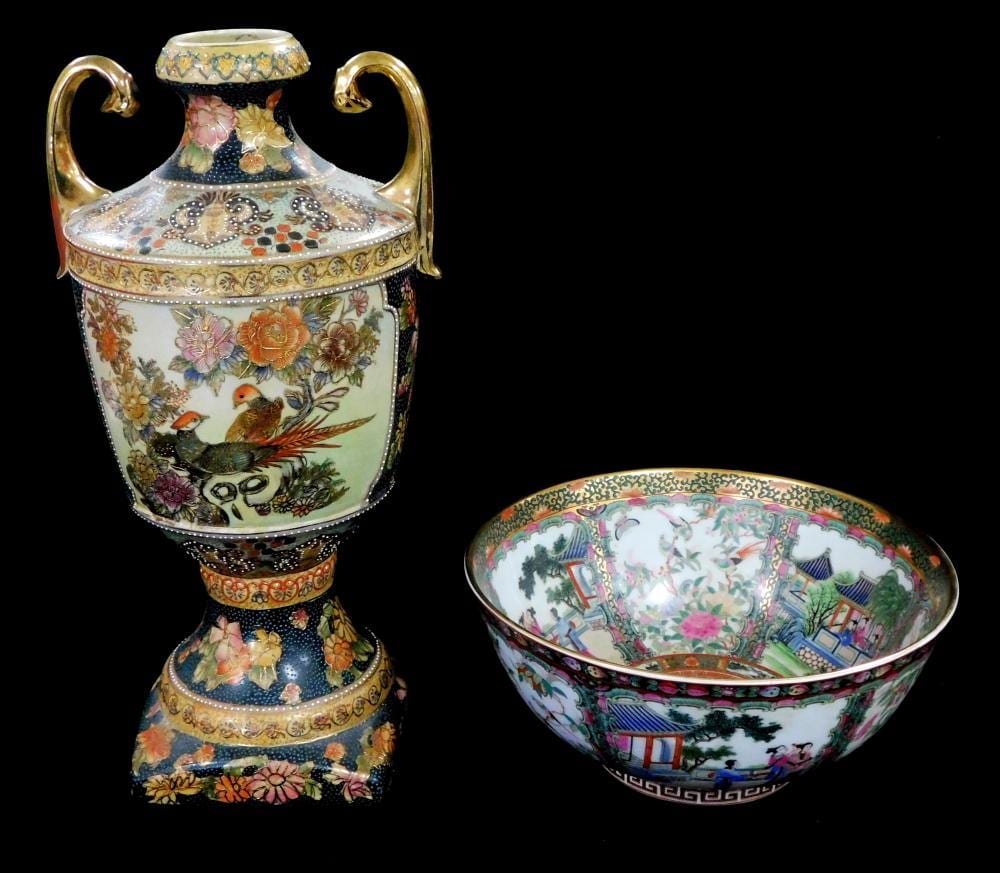
- “Royal Satsuma,” crown logos, or “Hand Painted Royal Satsuma” are 20th-century tourist/reproduction marks and not Meiji elite studio products.
- Printed or transfer-applied marks and decorations (dot patterns too regular, halftone “dots” under magnification) indicate later or low-grade pieces.
Remember: marks were copied extensively. Always weigh the quality of the painting and materials more heavily than the mark.
Appraisal Factors and Market Values
Value hinges on craftsmanship, authorship, subject, scale, condition, and market demand. Consider the following:
Craftsmanship
- Line quality: The single best indicator. The finest vases show razor-fine, confident brushwork and lifelike faces with expressive eyes and fingers.
- Composition: High-level artists leave breathing room, avoid visual overload, and balance color and gold.
- Gilding: Delicate, precise gilding wears slowly; sloppy, thick gilding flakes and looks brassy.
Authorship and studio
- Named masters command strong premiums. Small but superbly painted vases by Yabu Meizan or top Kyoto studios can achieve high four to five figures, sometimes more.
- Mid-tier studio pieces (Kinkozan/Ryozan workshop production) vary widely, from several hundred to low four figures depending on quality and subject.
Subject matter
- Desirable: Court scenes, bijin in elaborate kimono, scholars, deities, and millefleur grounds with butterflies.
- Less desirable: Generic or repetitive patterns, heavy gilding over weak draftsmanship.
Size and pairs
- Matched pairs and tall, well-proportioned vases bring premiums. Monumental floor vases (24–30 inches) can be valuable if the painting holds up at scale.
Condition
- Typical stable glaze crackle does not harm value. Body cracks, rim chips, heavy gilt loss, or crude restorations do.
- Professional, reversible conservation is acceptable; overpaint and color-matched fills that spill onto original decoration reduce value.
Market ranges (broad, indicative)
- Tourist/export, late quality: roughly $50–$300 per vase.
- Good workshop pieces with fine painting: $300–$1,500.
- Superior studio quality, strong subjects: $1,500–$10,000.
- Top master-level work: can surpass $10,000, sometimes significantly.
- Always validate with recent comparables and a specialist opinion; provenance can lift results.
Quick tips for comparables:
- Match subject, scale, and painting density rather than mark alone.
- Evaluate the weakest details (hands, faces, intricate textiles); weak execution there caps value.
Quick Appraisal Checklist
- Confirm earthenware: opaque body, fine crackle, no translucency.
- Inspect painting under magnification: crisp lines, varied strokes, lifelike faces.
- Check gilding: delicate, controlled application over robust design, not a cover-up.
- Evaluate composition: purposeful spacing, balanced motifs, not merely crowded.
- Examine base and foot: ivory tone, fine-grained clay, not bright white porcelain.
- Review marks: look for painted cartouches, Shimazu mon; treat marks as supporting evidence.
- Date clues: “Dai Nippon” (late 19th c.), “Nippon” (1891–1921), “Made in Japan” (1921+).
- Condition scan: hairlines, chips, overpaint under UV, gilt/moriage loss.
- Consider form and pairs: symmetry, well-fitted handles, matched sets.
- Document: measure height/diameter, photograph marks and the most detailed panels.
FAQ
Q: Is crazing a defect on a Satsuma vase? A: No. Fine, even crackle is inherent to Satsuma’s glaze and expected. Structural cracks through the body, however, are defects that lower value.
Q: How can I tell Satsuma from Kutani or Imari? A: Satsuma is an ivory-bodied earthenware with fine crackle and heavy overglaze gilding. Kutani and Imari are typically porcelain (translucent), with a white body and different palette/technique. A translucency test and body color are quick differentiators.
Q: Are pieces marked “Royal Satsuma” authentic? A: They are Satsuma-style, 20th-century tourist/reproduction wares. The mark is not used on Meiji-period elite studio pieces and usually indicates lower quality and value.
Q: Can I clean the gold decoration? A: Gilding is fragile. Dust with a soft, dry brush or microfiber. Avoid abrasive cloths, chemicals, or soaking. For grime or old restorations, consult a conservator; never use metal polishes.
Q: Do signatures guarantee high value? A: No. Marks were copied widely. Value rests on painting quality, composition, subject, condition, and verified authorship. Use the signature as one clue among many and corroborate with skilled connoisseurship or expert appraisal.
By focusing on the material, painting finesse, and intelligent reading of marks and condition, you’ll quickly separate true, collectible Satsuma vases from later or lower-grade imitations—and appraise them with greater confidence.