Value an antique 20 gallon crock by documenting maker mark, capacity, glaze, cobalt decoration, handles, rim, cracks, chips, repairs, and demand.
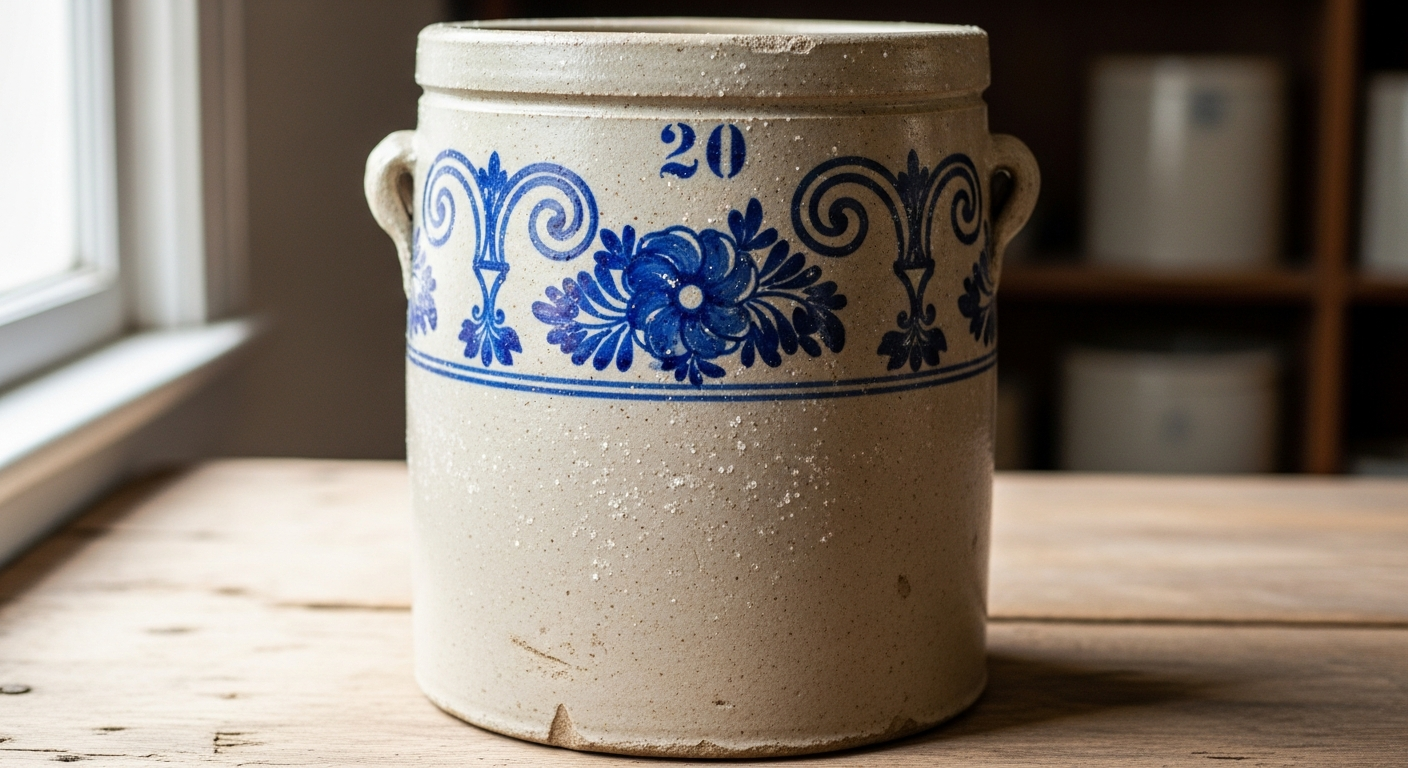
Antique 20 gallon crock value reference with maker mark, capacity, glaze, cobalt decoration, handles, rim, cracks, chips, repairs, and demand. Reference image; item-specific appraisal depends on submitted photos and documentation.Contextual appraisal image for documenting antique stoneware; not a specific 20 gallon crock or comparable sale.
Antique 20 gallon crock value starts with identity and condition. Record maker marks, capacity marks, cobalt decoration, clay body, handles, dimensions, region, and any cracks or repairs.
Large crocks can be desirable but difficult to ship and display, so practical condition and local buyer demand should be weighed alongside age and decoration.
Marks and decoration shape demand
Stamped maker names, capacity numbers, cobalt designs, and regional clues help place the crock in a market context. Photograph marks straight-on and in detail.
Size is not enough
A 20 gallon capacity can attract attention, but cracks, rim chips, handle damage, staining, and drilled holes can reduce appeal. Note whether damage is structural or cosmetic.
Use market context carefully
Comparable examples should match capacity, maker, decoration, condition, and selling venue. Smaller or heavily restored crocks are weak substitutes for valuation.
No public market evidence are asserted here. Treat any value conclusion for antique 20 gallon crock value as evidence-dependent until the object, condition, provenance, and market context are reviewed.
Get a documented appraisal path
Upload clear photos and background details so Appraisily can review identity, condition, and market context before you rely on a value.
Note: We couldn’t find relevant auction comps in our database for this topic right now. If you’re valuing a specific item, try searching by maker/model/material and we’ll expand coverage over time.
What similar items actually sold for
To help ground this guide in real market activity, here are recent example auction comps from Appraisily’s internal database. These matched sales are market context only, not an object estimate or identification, and they do not guarantee a price for your specific factors that affect antique 20 gallon crock value.
Shown USD range: USD 1,200-USD 4,200. Median of these 3 USD examples: USD 1,300.
Source-reported amounts. Buyer’s-premium treatment is stated in each row when known; otherwise it is unknown. Native currencies are not normalized.
Each row retains its exact source URL, lot identity, retrieval time, access result, and immutable record hash. Inspect the public comparable provenance record.
Disclosure: prices are shown as reported by auction houses and are provided for appraisal context. Learn more in our editorial policy.
Free instant estimate
Not sure if your item is worth appraising? Let us take a look.
Upload a photo, tell us what you know, and get a free first read. If a full appraisal makes sense, we will say so.
Free. No card needed. Takes about two minutes.
Choose your next step
Use the path that matches the decision you need to make about the item.
Not sure it is worth appraising?
Start with a lower-friction screen to understand the likely category, evidence, and next step.

![[1775] A Concise Historical Account... sold by Grant Zahajko Auctions, LLC, lot 34 — auction record photograph](https://assets.appraisily.com/comps/auction-lots/190264565/thumb/h20360-l377769724.jpg)
![[TORNEI] - LODI, Giacinto - Amore prigioniero in Delo. Torneo fatto da' signori Academici Torbidi in Bologna li 20 di marzo 1628. Bologna: eredi di Vittorio Benacci, [1628, ma ca. 1629 o 1630]. A curious account of the tournament held on ... sold by Il Ponte Auction House, lot 43 — auction record photograph](https://assets.appraisily.com/comps/auction-lots/194762772/thumb/h0611-l396316732.jpg)