20 gallon crock value: the quick answer
A 20 gallon crock's value depends first on maker, decoration, condition, and whether the body really carries a period 20-gallon capacity mark. Sound Red Wing, Western Stoneware, Monmouth, RRP, Cowden & Wilcox, Whites Utica, or other identified stoneware usually has stronger demand than an unmarked utility crock. Freehand cobalt, advertising, a correct lid, clean handles, and documented provenance can lift value; long cracks, rim loss, base damage, overpaint, poor photos, and difficult shipping usually pull it down.
Free. No card needed. Photo upload takes about two minutes.
For a useful first estimate, photograph the full crock, the "20" mark, maker stamp, decoration, rim, handles, base, interior, any lid, and every crack or repair. Then compare only against recent sales with the same maker, size, decoration level, and condition instead of using generic crock prices.
20 Gallon Crock Value Factors Guide
Antique 20-gallon crocks are workhorse survivors from the 19th and early 20th centuries-big, heavy, and surprisingly nuanced in how they are judged and priced. Whether you are evaluating a basement find or debating a purchase at auction, understanding the variables behind 20 gallon crock value will keep you from overpaying and help you recognize exceptional pieces.
Below you will find how to identify a true 20-gallon crock, the value drivers that matter most, realistic condition issues, and a practical inspection checklist for photos, maker marks, age clues, size, and shipping.
How to Identify a True 20-Gallon Crock
- Capacity vs. mark: Most large crocks are stamped or painted "20" on the body. That number is the nominal capacity, not proof by itself. Actual volume can vary by several quarts depending on wall thickness, shoulder shape, and how the rim is formed.
- Typical dimensions and weight: Expect roughly 20-23 inches tall and 18-20 inches across at the mouth, weighing 60-85 pounds empty. Heavier walls can indicate durable utilitarian wares from Midwestern makers, but weight alone does not prove age.
- Common forms:
- Straight-sided storage crocks are the most common 20-gallon examples.
- Tapered churns in this size exist but are scarcer, so maker and condition matter even more.
- Lids were optional; a stoneware lid correctly sized for a 20-gallon mouth should be checked for glaze match, wear, and fit.
- Glaze and interior:
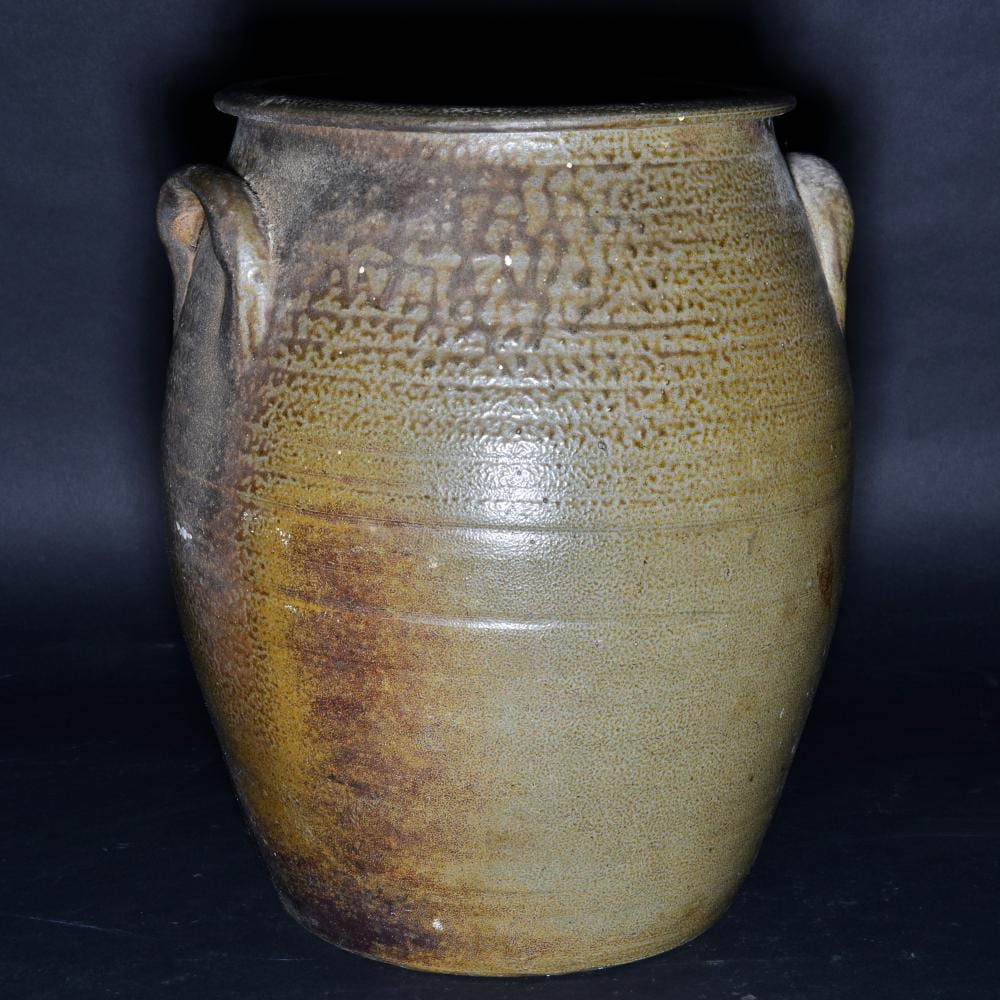
- Salt-glaze with orange-peel texture and Albany-slip brown interiors is common on many 19th-century Northeastern and Mid-Atlantic wares.
- Later Midwestern production often has smoother glaze, stenciled marks, standardized capacity numerals, and a more factory-made look.
- Maker's marks and regions:
- Northeast/Mid-Atlantic makers can include Cowden & Wilcox, Haxstun & Co., N. Clark & Co., Whites Utica, E.S. & B., and Hamilton & Jones. These are often strongest when paired with freehand cobalt decoration and sound condition.
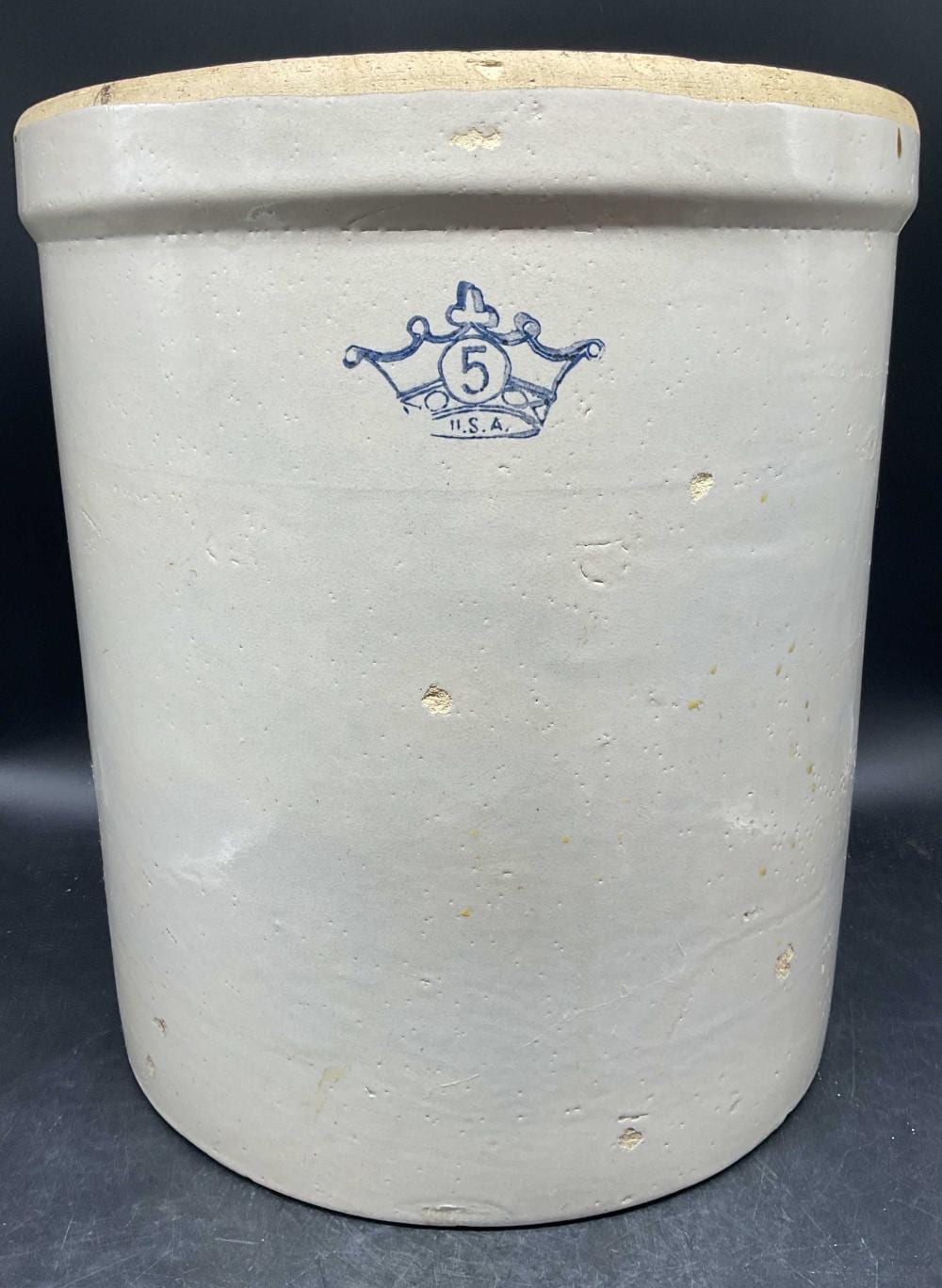
- Midwest makers can include Red Wing, Western Stoneware, Monmouth, and Robinson Ransbottom/RRP Co. Logo style, stamp clarity, and body shape help narrow the period.
- Numerals and stamps:
- Early, hand-brushed "20" numerals and freehand cobalt motifs can suggest pre-1900 work, but they still need to agree with clay body, glaze, wear, and construction.
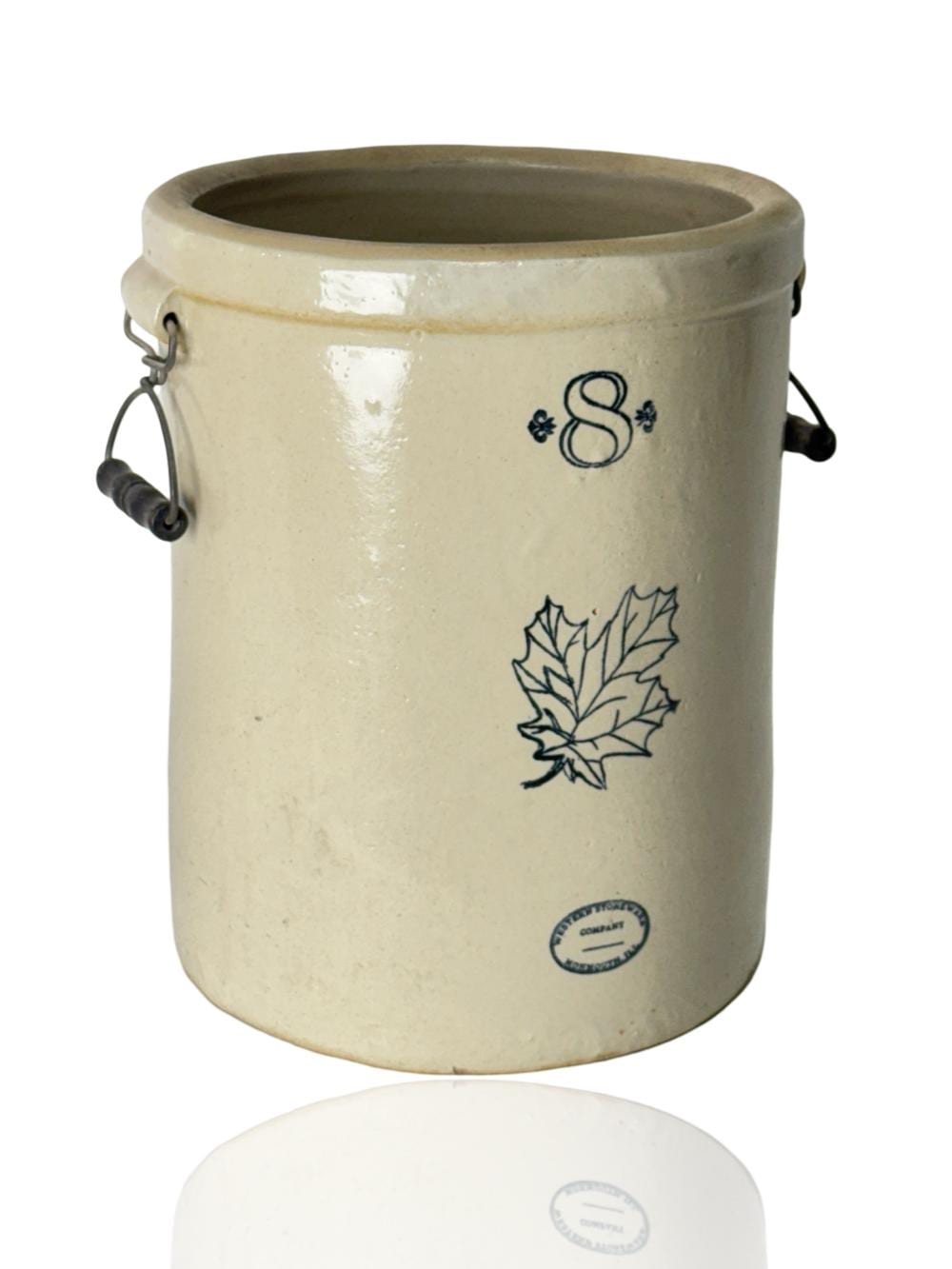
- Later companies used stencils or transfer marks. Red Wing wing logos, birch leaf marks, and Western's maple leaf are key identification features.
Tip: If you cannot water-test capacity because hairlines may worsen when soaked, estimate volume from interior measurements and note that a tapered crock will only be approximate.
Photo and Condition Checklist for a 20-Gallon Crock Appraisal
- Full profile: photograph the front, back, both sides, and a scale reference so size and form are clear.
- Capacity mark: take a straight-on closeup of the "20" stamp or brushed numeral, including nearby glaze and wear.
- Maker mark: capture impressed, stamped, stenciled, or logo marks in natural light; add side lighting if the mark is shallow.
- Decoration: photograph cobalt motifs, advertising, names, numbers, and any secondary decoration separately from the full-body view.
- Condition: show rim chips, body hairlines, through cracks, salt pops, staining, spidering, base flakes, handle repairs, and interior wear.
- Restoration clues: include UV/blacklight photos if available, plus closeups of overspray, filled chips, mismatched glaze, or repainted decoration.
- Lid and accessories: photograph the lid from top, underside, and side, then show how it fits the crock mouth.
- Shipping reality: note whether local pickup is likely, because freight risk and packing cost can materially affect net value for a 20-gallon size.
15 Factors That Drive a 20-Gallon Crock's Value
Maker and mark: Identifiable makers increase confidence and price. Red Wing, Western Stoneware, Monmouth, and RRP are dependable; earlier decorated makers like Cowden & Wilcox or Whites Utica can command higher premiums when authentic and sound.
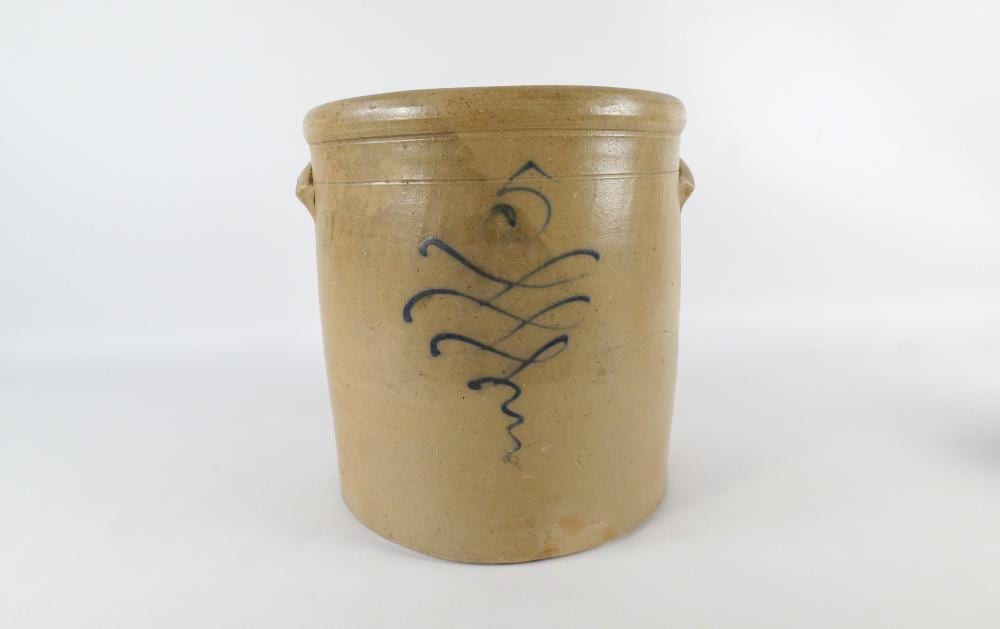
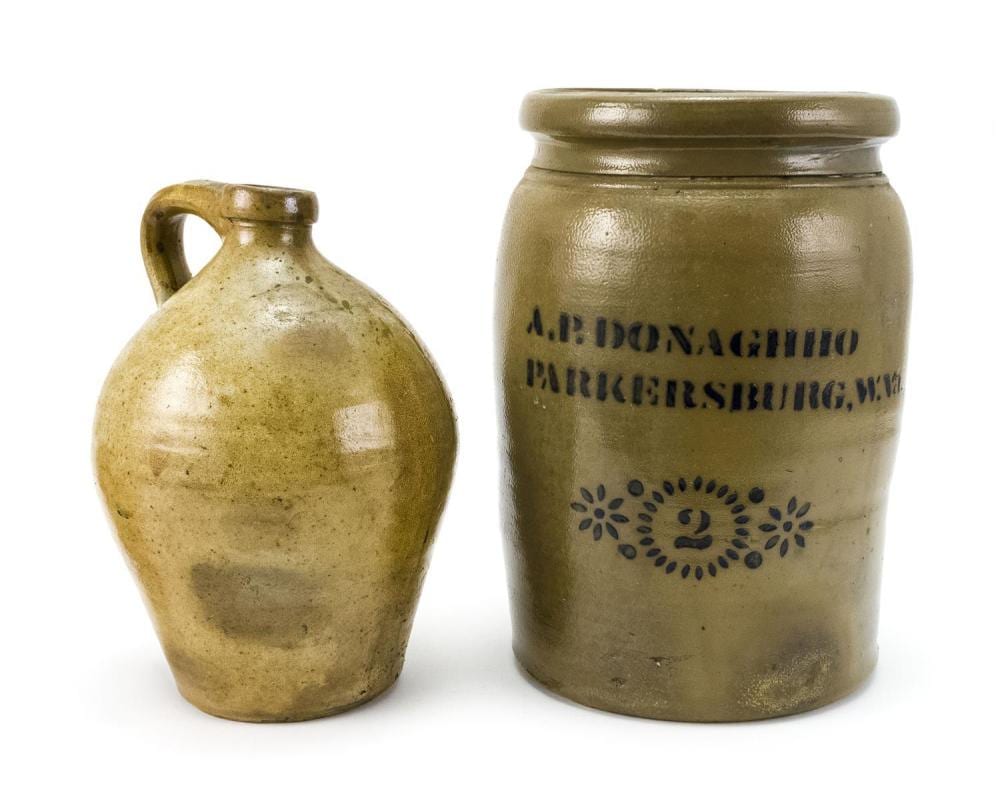
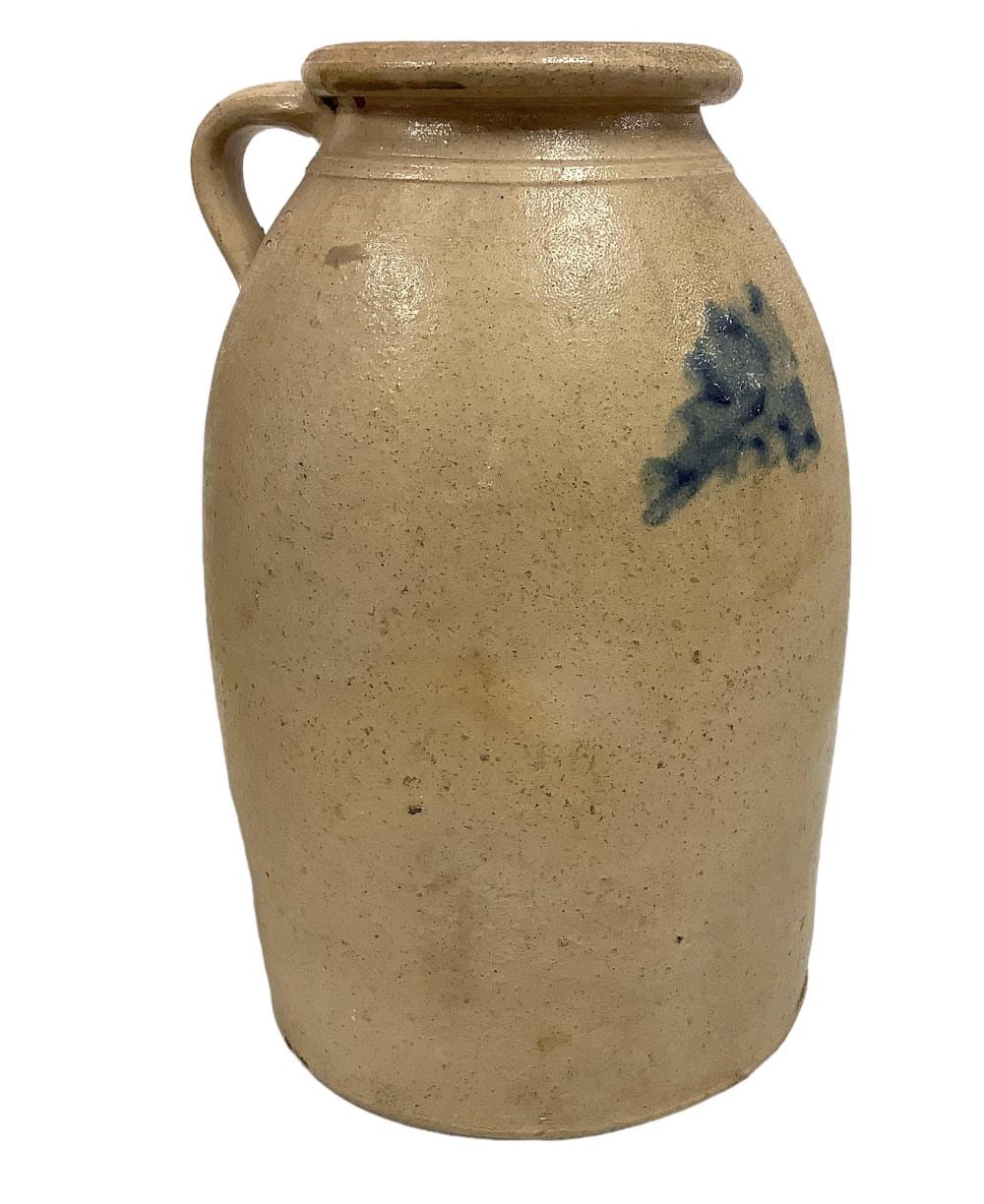
Decoration level: Freehand cobalt birds, florals, animals, urns, or elaborate foliate designs are major value drivers, especially when crisp and well placed. Stenciled advertising can also add interest. Plain-bodied crocks usually trail decorated pieces.
Size rarity with decoration: Large, 20-gallon crocks with strong freehand decoration are notably scarcer than many smaller 3-8 gallon counterparts. Scarcity helps only when condition is still acceptable.
Condition: Hairlines, body cracks, rim chips, base flakes, and salt pops all reduce value. Structural cracks that travel through the wall are far more serious than superficial glaze lines.
Restoration or overpaint: Professional restorations can stabilize pieces but usually lower value to experienced buyers. Amateur overpainting that obscures damage lowers trust and price.
Form and functionality: 20-gallon churn forms are less common and can bring premiums. Straight-sided storage crocks are standard and price according to maker, decoration, and condition.
Handles and lugs: Intact lug handles or robust pulled handles increase usability and desirability. Missing, cracked, or reattached lugs reduce value.
Lids, spigots, and accessories: A correctly fitted stoneware lid, original spigot or bung hardware on dispensing forms, or matching inserts can improve desirability when the wear and glaze are consistent.
Color and glaze quality: Rich, even salt-glaze, appealing drips, and strong Albany slip interiors read well. Severe warpage or heavy kiln kisses are detractors unless paired with exceptional decoration.
Advertising and provenance: Stenciled merchant or dairy advertising boosts value, especially for known regional businesses. Documented provenance or a clean chain of ownership helps at higher price levels.
Market region: Northeast auctions and specialty stoneware sales typically reward early, decorated pieces. Midwestern markets are strong for Red Wing, Western Stoneware, and RRP. Local pickup matters for 20-gallon sizes.
Seasonal demand and timing: Fall estate auction season and pre-holiday sales can produce stronger results. Listing during peak garden or porch decor seasons can help utilitarian crocks.
Photogenic appeal: For online sales, clear photos of decoration, numerals, maker marks, rim, handles, base, and scale have a real impact on realized price.
Shipping feasibility: Because a 20-gallon crock is expensive and risky to ship, many buyers prefer local pickup. Safe freight or blanket-wrap delivery can expand the buyer pool, but costs must be considered.
Originality and age: Crisp, artificially aged decoration on a bulky, mold-made body is a red flag. Genuine wear patterns, bottom scuffing, rim use, oxidized interior, appropriate marks, and glaze consistency all matter.
How to Think About Price Ranges
Actual prices vary by region, venue, maker, and condition. Use these categories as comparison buckets rather than universal price promises:
Unmarked or generic utilitarian, plain-bodied examples:
- Compare against other plain 20-gallon stoneware sold locally or at estate auctions.
- Clean condition, sound handles, and an honest capacity mark matter more than age alone.
Robinson Ransbottom, Monmouth, Western Stoneware, and similar utilitarian makers:
- Typical stenciled maple leaf or simple marks should be compared to same-maker sales.
- Advertising, strong logo clarity, and a correct lid can improve demand.
Red Wing 20-gallon examples:
- Wing logo, birch leaf, churn forms, and stamp clarity should be matched to comparable Red Wing sales.
- Condition around handles, rim, and base is especially important because collectors inspect these areas closely.
Early Northeastern or Mid-Atlantic makers with freehand cobalt:
- Sound examples with strong birds, florals, animals, urns, or foliate motifs should be compared to specialty stoneware auction results.
- Significant cracks can move even a decorated 20-gallon crock into a lower condition category.
Correct stoneware lid with a 20-gallon body:
- Assess fit, glaze match, wear, and whether the lid is period-correct for the crock. A mismatched lid is less persuasive than a naturally paired one.
Local-only pickup and high shipping costs can cap what a buyer will pay. Conversely, a rare decorated piece may still justify professional packing or freight when condition and attribution are strong.
Condition and Restoration Realities
Condition is where many 20-gallon crocks win or lose value. Use consistent, transparent grading, and expect informed buyers to ask for closeups and UV inspection results.
Hairlines vs. cracks:
- Hairlines: tight, single-plane lines in the glaze or body that may be stable but still reduce buyer confidence.
- Structural cracks: long, open, traveling, or through-wall cracks can substantially reduce value depending on rarity and display appeal.
Chips and flakes:
- Rim chips are more visible and more consequential than small underside flakes.
- Base flakes matter most when they affect stability, reveal repair, or show in display photos.
Surface issues:
- Salt pops and pinholes are common on utilitarian wares; heavy staining or mineral lines should be disclosed clearly.
- Deep iron staining may be permanent and should be factored into comparisons.
Restoration detection:
- UV/blacklight can reveal overpaint and some fillers around rims, handles, and decoration.
- A tap test can suggest structural integrity, but do not stress a known hairline or fragile repair.
- A careful solvent swab in a discreet area can reveal modern overpaint; avoid aggressive cleaning.
Acceptable wear:
- Bottom scuffing, small glaze abrasions, and light use marks are normal and often preferable to heavy restoration.
Safety note: Avoid soaking crocks with hairlines; water can widen cracks or draw stains to the surface.
Practical Checklist for Appraising a 20-Gallon Crock
- Confirm size: Look for a clear "20" stamp or brush mark; verify rough capacity from dimensions when safe.
- Identify maker: Check for impressed, stamped, or stenciled marks such as Red Wing, Western Stoneware, RRP, Cowden & Wilcox, or Whites Utica.
- Assess decoration: Note freehand cobalt motifs, stenciled marks, advertising, and whether decoration appears under or over the glaze.
- Inspect condition:
- Rim: chips, flakes, repairs, staining
- Body: hairlines, through cracks, salt pops, spidering
- Base: flakes, star cracks, scuffing, stability
- Handles/lugs: intact, cracked, missing, or reattached
- Check for restoration: Use UV light if possible; look for color mismatches, overspray edges, filled chips, or repainted cobalt.
- Evaluate glaze: Texture, evenness, sheen, interior slip, and whether firing flaws are ordinary or severe.
- Examine accessories: Original stoneware lid or hardware present? Does it fit, match, and show similar wear?
- Consider logistics: Feasibility of local pickup vs. freight, packaging requirements, insurance, and buyer location.
- Compare market evidence: Match maker, decoration level, size, condition, and region to recent sales instead of broad antique crock averages.
- Decide strategy: If selling, choose venue and timing based on rarity, fragility, shipping options, and whether the piece needs specialist stoneware buyers.
FAQ
Q: What is a 20 gallon crock worth? A: A 20 gallon crock is worth more when the maker is identifiable, the body is sound, the "20" capacity mark is period-consistent, the decoration or advertising is desirable, and photos clearly document condition. Use same-maker, same-size, same-condition sales as the benchmark rather than generic crock listings.
Q: How can I safely clean a 20-gallon crock without harming value? A: Start with lukewarm water and a soft cloth or sponge. Use a small amount of pH-neutral soap for grime. Avoid soaking if hairlines are present. Do not use abrasive pads, bleach, or strong acids. For mineral staining, try a gentle poultice with baking soda; avoid anything that etches the glaze.
Q: Do reproduction 20-gallon crocks exist, and how do I spot them? A: Yes. Red flags include overly uniform, glossy glazes; mold seam lines; suspiciously crisp “antique-style” cobalt that sits on top of the glaze; modern fonts; and pristine interiors with no base wear. Genuine age shows bottom scuffing, period-appropriate marks, and glaze character consistent with salt-glaze firing.
Q: How much does shipping affect value on a 20-gallon crock? A: A lot. Expect a value that must be established from current, topic-matched sales+ for professional packing and freight in the U.S. High shipping costs limit the buyer pool. Local pickup or regional delivery often yields better net results for utilitarian examples; rarer decorated pieces may justify freight.
Q: Does a lid make a big difference in price? A: Yes, especially if it’s a correct, original stoneware lid that fits. Add a value that must be established from current, topic-matched sales+, sometimes more if the set is marked and matches well in glaze and wear.
Q: Are 20-gallon decorated crocks more valuable than smaller decorated sizes? A: Often yes due to scarcity, but condition is tougher at this size—more stress and fewer survivors. A heavily cracked 20-gallon with decoration can still sell below a sound 8–10 gallon with similar decoration. Balance rarity against condition.
Final thought: A 20-gallon crock’s value rests on maker, decoration, and condition—tempered by the realities of shipping and display. Use the checklist, photograph honestly, and compare like-for-like. With the right combination of mark, motif, and integrity, a big crock can command big respect—and price.