Antique Crocks Value: appraisal and value basics
Antique Crocks Value research should start with identification, condition, provenance, and item-specific market evidence. Use this guide to compare the signals that matter before paying for a formal appraisal or deciding whether to sell.
In the world of antique collectibles, few items combine practicality, history, and artistry as beautifully as antique stoneware crocks. Once essential household items for food preservation, these durable vessels have become highly sought-after collectibles with values ranging from several hundred to hundreds of thousands of dollars.
Whether you’ve inherited an old crock, discovered one at a flea market, or are actively building a collection, understanding what drives the value of these timeless artifacts is essential. This comprehensive guide explores everything you need to know about antique crock values, identification techniques, and collecting strategies.
What Are Antique Crocks?
Crocks came in various sizes, typically measured in gallons, ranging from small 1-gallon vessels to massive 30-gallon containers. Their utilitarian nature made them common in most American households, used for:
- Preserving vegetables through pickling and fermentation
- Storing butter, lard, and other fats
- Curing and storing meats
- Fermenting liquids like beer and cider
- Housing dry goods like flour and sugar
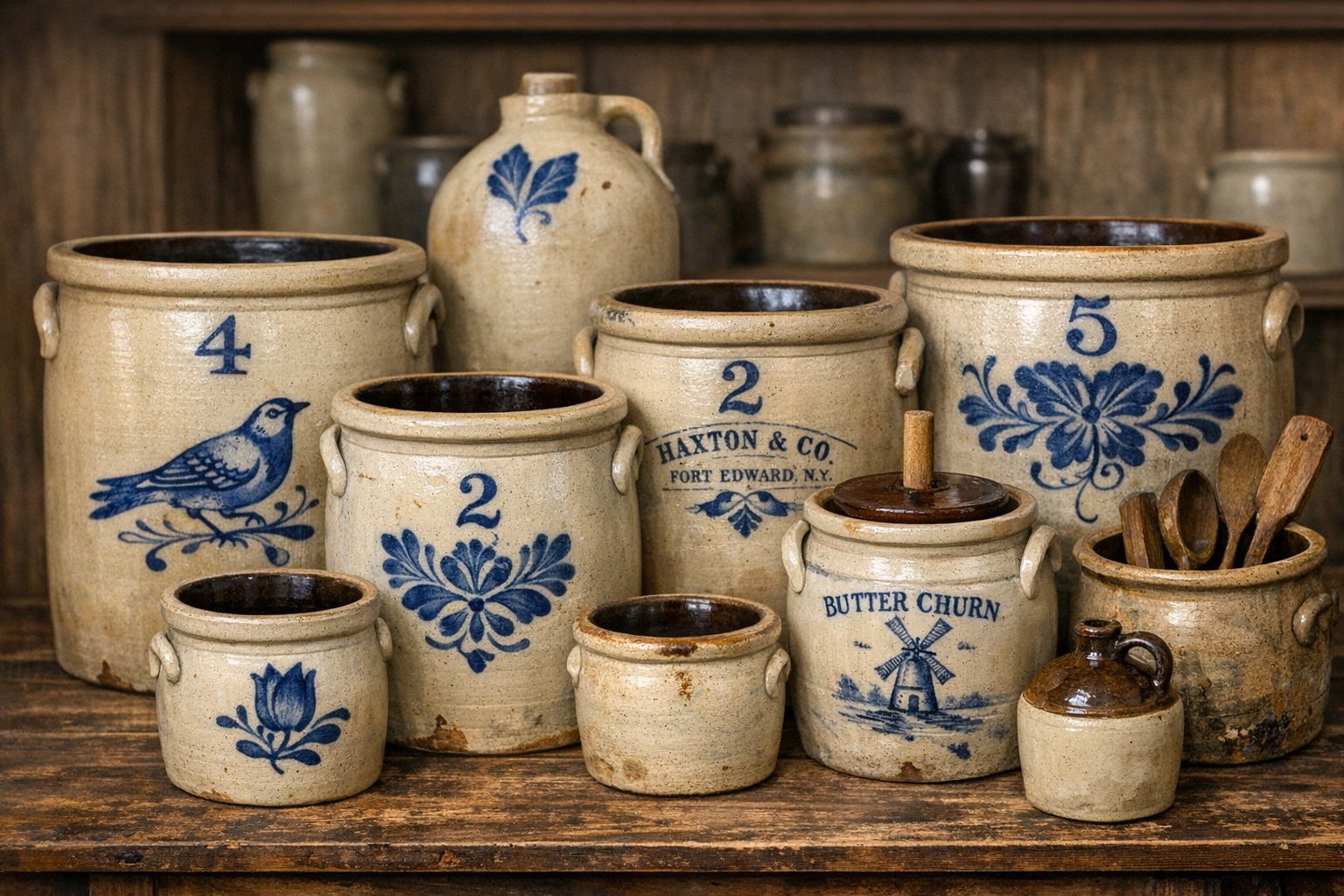
The most distinctive crocks feature cobalt blue decorations - hand-painted flowers, birds, scenes, or simple maker’s marks that have become highly collectible today. These decorative elements weren’t just artistic flourishes; they often served as branding for specific pottery companies.
Value Ranges for Antique Crocks
Antique Crock Value Ranges
General market value ranges based on type and condition
According to appraisal sources, the full value range for antique stoneware crocks spans from a value that must be established from current, topic-matched sales for common examples to upwards of a value that must be established from current, topic-matched sales for the rarest and most exceptional pieces. As reported by True Legacy Homes, the most valuable antique crocks typically feature unique decorative elements, exceptional craftsmanship, and clear provenance.
Key Value Factors
Age: Pre-Civil War crocks (pre-1860s) generally command higher prices
Decoration: Elaborate cobalt blue designs can increase value by a condition-specific range
Condition: Mint condition can double or triple a crock’s value compared to damaged examples
Rarity: Unusual sizes, regional pottery marks, or unique decorations drive premium prices
Provenance: Documented history can significantly boost collectible appeal and price
| Category | Price | Notes |
|---|---|---|
| Basic Unmarked Crocks (1900-1940) | a value that must be established from current, topic-matched sales | Common sizes without decoration |
| Standard Marked Crocks (1875-1925) | a value that must be established from current, topic-matched sales | With maker's mark, good condition |
| Blue-Decorated Crocks (1850-1900) | a value that must be established from current, topic-matched sales | With cobalt decorations, excellent condition |
| Rare Early Crocks (pre-1850) | a value that must be established from current, topic-matched sales | Unusual forms, exceptional artwork |
| Museum-Quality Examples | a value that must be established from current, topic-matched sales+ | Historical significance, pristine condition |
</tbody> </table>
How to Identify Valuable Antique Crocks
According to The Spruce Crafts, these are the primary features to look for when identifying valuable antique crocks:
Valuable Crock Identification Checklist
Look for these characteristics when evaluating an antique crock
- Shiny, glass-like surface with occasional bumps (salt particles)
- Hand-painted decorations (particularly in cobalt blue)
- Decorations applied beneath the glaze (not on top)
- Hand-drawn or stenciled numbers indicating capacity
- Maker's mark or pottery company signature
- Signs of handmade construction (slight asymmetry)
- Period-appropriate base (unglazed, rough texture)
- Natural aging and wear consistent with documented use
Identifying Maker’s Marks
Maker’s marks are crucial for attribution review and valuation. Major American pottery companies that produced valuable antique crocks include:
- Red Wing (Minnesota)
- Bennington (Vermont)
- Norton (Massachusetts)
- Cowden & Wilcox (Pennsylvania)
- Western Stoneware (Illinois/Missouri)
- Robinson Ransbottom (Ohio)
- Louisville Stoneware (Kentucky)
Many of these companies marked their crocks with distinctive logos, names, or emblems, usually stamped or hand-painted in cobalt blue. The mark’s style and placement can help date the piece and determine its origin.
Evolution of American Stoneware Crocks
- 1700s
Early American Stoneware
Early American potters began producing salt-glazed stoneware, primarily unmarked. These rare early pieces command premium prices when documented.
- 1800-1850
Golden Age of American Stoneware
The first half of the 19th century saw elaborate hand-decorated pieces with folk art motifs. Some of the most valuable crocks come from this period.
- 1850-1900
Industrial Revolution Impact
Larger pottery companies emerged, standardizing production while maintaining hand-decoration. Company marks became more common and consistent.
- 1900-1940
Late Period Stoneware
Machine-made production increased, with less handwork and simpler designs. Crocks from this era are more common and generally less valuable.
Factors Affecting Antique Crock Values
1. Age and Originality
Older crocks typically command higher prices, with pre-Civil War examples being particularly valuable. According to experienced appraisers:
- Pre-1800 crocks are extremely rare and often museum-quality
- 1800-1860 pieces are highly collectible and valuable
- 1860-1900 items represent the peak of commercial production
- 1900-1940 crocks are more common and generally less valuable
Originality verification requires expertise, as reproductions are common in the market. Genuine antique crocks exhibit specific period-appropriate construction techniques, materials, and aging patterns that reproductions cannot perfectly mimic.
2. Decoration and Artistic Merit
The most valuable crocks feature hand-painted cobalt blue decorations, with price increases correlating directly to decoration quality and complexity:
- Elaborate scenes depicting animals, people, or landscapes command premium prices
- Distinctive floral patterns can increase value significantly
- Folk art motifs with regional significance attract specialized collectors
- Unusual or rare decorative elements can make otherwise ordinary crocks extremely valuable
3. Condition Assessment
Condition dramatically affects value, with perfect or near-perfect examples commanding the highest prices. According to LoveToKnow, common condition issues include:
- Cracks: Severely reduce value (up to a category-dependent amount decrease)
- Chips: Minor chips may lower value by a condition-specific range
- Repairs: Professionally repaired pieces typically sell for a condition-specific range less than pristine examples
- Glaze wear: Slight wear may be acceptable, while significant loss reduces value
- Staining: Interior stains from original use may be acceptable; exterior stains generally reduce value
Collectors should carefully inspect potential purchases for damage, with special attention to hairline cracks that may be difficult to detect.
4. Size and Form
Size affects value, though not always predictably:
- Small crocks (1-2 gallons) are abundant but may be valuable with exceptional decoration
- Mid-size crocks (3-5 gallons) often represent the best value combination
- Large crocks (10+ gallons) command premium prices due to rarity and impressive display potential
- Unusual sizes or forms can be particularly collectible
Specialized forms like butter churns, water coolers, or jugs may command higher prices than standard crocks of similar age and condition.
5. Regional Variations and Rarity
Regional pottery traditions created distinctive variations that collectors prize:
- New England stoneware often features refined decoration and craftsmanship
- Pennsylvania German pottery showcases distinctive motifs and techniques
- Southern stoneware exhibits regional clay characteristics and design elements
- Midwestern pottery companies like Red Wing developed recognizable house styles
Rarity within specific regional traditions can dramatically increase a crock’s value to specialized collectors and museums.
Where to Buy and Sell Antique Crocks
For Buyers
Antique crocks can be found through various channels, each with distinct advantages:
Specialized Auctions: Auction houses like Crocker Farm focus exclusively on antique stoneware, offering documented pieces with provenance. This is ideal for serious collectors seeking investment-quality items.
Online Marketplaces: Platforms like eBay and Etsy offer extensive selections across all price points, though buyer caution is essential regarding originality.
Antique Shops and Shows: Physical antique stores and specialized shows provide opportunities to inspect pieces personally before purchase.
Estate Sales and Rural Auctions: Often yield discoveries at reasonable prices, especially in regions with strong pottery traditions.
High-End Dealers: Platforms like 1stDibs and Chairish curate documented pieces for collectors willing to pay premium prices for verification.
For Sellers
When selling antique crocks, consider these options based on your piece’s value and your goals:
Specialized Auction Houses: Best for rare, valuable crocks that would attract serious collectors. These venues provide attribution review and reach the right audience but charge significant commissions.
Online Marketplaces: Offer wide exposure but require strong documentation and photographs to achieve optimal prices.
Direct to Dealers: Provides immediate payment but typically at a condition-specific range of retail value.
Consignment Shops: Balance convenience with reasonable returns for mid-range pieces.
Local Collectors’ Groups: Can connect sellers directly with interested buyers, particularly for regionally significant pieces.
Before selling, consider professional appraisal for valuable pieces. Documentation of provenance, history, and attribution review significantly increases marketability and value.
Tips for Collecting Antique Crocks
1. Develop a Collecting Focus
Successful collectors often specialize rather than accumulating random pieces:
- Regional Focus: Collect from a specific pottery region or state
- Maker Focus: Concentrate on a particular company or potter
- Decorative Theme: Seek crocks with specific motifs (birds, flowers, etc.)
- Size Specialization: Build a collection showcasing the range of sizes
- Functional Types: Focus on specialized forms like butter churns or water coolers
Specialization allows collectors to develop deeper expertise and create more cohesive, meaningful collections.
2. Education and Attribution review
Knowledge is your most valuable tool in avoiding reproductions and overpriced pieces:
- Study reference books and catalog archives from major pottery companies
- Attend museum exhibitions featuring notable stoneware collections
- Join collector organizations that offer attribution review resources
- Develop relationships with reputable dealers and auction specialists
- Handle as many documented pieces as possible to develop tactile recognition
The investment in education typically pays dividends in better acquisitions and avoided mistakes.
3. Condition Considerations
Develop clear standards for condition based on your collecting goals:
- Museum-quality collectors should insist on near-perfect condition
- Decorative collectors might accept minor flaws in visually impressive pieces
- Budget-conscious collectors can find value in pieces with acceptable damage
- Consider whether restoration is appropriate for specific pieces
Document the condition of each acquisition with detailed photographs for insurance and future reference.
4. Storage and Display
Proper handling, storage, and display preserve both the condition and value of your collection:
- Display crocks away from direct sunlight to prevent fading
- Use stable, appropriate-sized shelving that can support significant weight
- Handle pieces by their body rather than handles, which may be structurally compromised
- Consider temperature and humidity control for valuable collections
- Insure significant collections with appropriate documentation
5. Investment Perspective
If collecting partly for investment, focus on these characteristics:
- Exceptional examples from known potters or companies
- Pieces with documented provenance and history
- Items with outstanding artistic merit beyond utilitarian value
- Rare forms or unusually large pieces
- Collections with thematic coherence that might appeal to museums or serious collectors
While most collectors acquire pieces for aesthetic and historical appreciation, understanding market trends can inform wise acquisitions.
External Resources for Antique Crock Collectors
The Spruce Crafts: Antique Stoneware Identification Guide
Comprehensive guide to identifying and valuing antique stoneware jugs and crocks with detailed information on markings, glazes, and price factors.
LoveToKnow: Guide to Antique Crocks
Expert information on stoneware crock identification, valuation, and collector guidance with illustrations of valuable examples.
True Legacy Homes: Antique Crocks Price Guide
Detailed stoneware price guide with valuation factors, historical context, and pricing examples across different types of antique crocks.
Chairish: Antique & Vintage Crocks Marketplace
Curated marketplace featuring documented antique crocks for sale with detailed descriptions and professional photography.
eBay: Vintage Antique Crocks Collection
Extensive marketplace featuring thousands of antique crocks across all price points with auction and buy-it-now options.
1stDibs: Premium Antique Crocks
High-end marketplace featuring museum-quality antique crocks with attribution review and detailed provenance information.
Common Questions About Antique Crocks
How do I know if my crock is valuable?
- Age: Pre-1900 crocks generally have higher value
- Maker’s mark: Identified pottery companies increase value
- Decoration: Hand-painted cobalt blue designs significantly enhance worth
- Condition: Absence of cracks, chips, or repairs is crucial
- Size and rarity: Unusual sizes or regional pieces command premiums
What is the most valuable type of antique crock?
- Pre-Civil War production (before 1860)
- Elaborate, well-executed cobalt blue hand-decorated scenes
- Documented provenance from significant historical contexts
- Exceptional condition with no repairs or damage
- Rare forms, unusual sizes, or pieces from renowned potters
How can I tell how old my antique crock is?
- Manufacturing technique: Hand-thrown pieces (pre-1880s) often show slight asymmetry
- Glaze appearance: Earlier salt-glazed pieces have distinctive "orange peel" textures
- Decoration style: Decorative techniques evolved over time
- Maker’s marks: Company marks changed throughout their production periods
- Capacity marks: Numbering styles and placement evolved chronologically
- Clay color: Visible on unglazed portions, clay composition changed over time
Are crocks with blue decoration more valuable?
- Quality and intricacy of the decoration
- Rarity of the decorative motif
- Artistic merit of the design
- Historical or regional significance of the imagery
- Overall condition and preservation of the blue coloration
What were antique crocks originally used for?
- Food preservation: Pickling vegetables, fermenting cabbage for sauerkraut
- Dairy storage: Keeping butter, milk, and cream in cool areas
- Meat preservation: Storing salt-cured meats and rendering lard
- Beverage production: Fermenting beer, cider, and vinegar
- Dry goods storage: Housing flour, sugar, salt, and other staples
- Seasonal food storage: Preserving fruits, eggs, and root crops
How do I properly clean an antique crock?
- Start with warm water and a soft cloth for basic cleaning
- Avoid harsh chemicals, bleaches, or abrasive cleaners
- For stubborn interior stains, try a mixture of water and baking soda
- Never soak glazed stoneware for extended periods
- Allow to air dry completely before storage or display
- Apply mineral oil sparingly to unglazed portions if they appear excessively dry
Where is the best place to sell valuable antique crocks?
- Specialized stoneware auctions (like Crocker Farm) for museum-quality pieces
- High-end antique dealers for exceptional examples
- Online platforms like 1stDibs or Chairish for documented valuable pieces
- General auctions with strong advertising for good mid-range examples
- Direct sales to collectors through collector organizations for regional pieces
How can I tell if my crock is a reproduction?
- Weight: Documented pieces are typically heavier than reproductions
- Base texture: Genuine antique bases show appropriate wear patterns
- Glaze quality: Documented salt-glazed surfaces have distinctive "orange peel" texture
- Interior finish: Many reproductions have too-perfect interiors
- Aging patterns: Artificial aging in reproductions often appears uniform
- Manufacturing marks: Modern production leaves different marks than hand-thrown pieces
- Clay composition: Antique clay bodies differ from modern materials
Conclusion: The Enduring Value of Antique Crocks
Antique stoneware crocks represent a perfect intersection of American history, folk art, and practical craftsmanship. Their enduring appeal to collectors stems from their documented connection to everyday life in previous centuries, combined with the artistic expressions of their makers.
For collectors, the value of these pieces extends beyond mere monetary consideration. Each crock tells a story of American manufacturing, regional cultural differences, and household practices of our ancestors. Their sturdy construction has allowed them to survive where more delicate items perished, providing tangible connections to our shared past.
Whether you’re a serious collector focusing on museum-quality pieces or simply appreciate the rustic charm these vessels bring to home décor, understanding the factors that determine antique crock values helps ensure informed decisions about purchasing, selling, or preserving these distinctive American artifacts.
As interest in documented, handcrafted items continues to grow, antique crocks remain compelling tangible investments that combine aesthetic appeal, historical significance, and potential financial appreciation—truly timeless vessels of both practical and cultural value.
What similar items actually sold for
To help ground this guide in real market activity, here are recent example auction comps from Appraisily’s internal database. These are educational comparables (not a guarantee of price for your specific item).
Shown USD range: USD 250-USD 1,000. Median of these 6 USD examples: USD 363.
| Image | Description | Auction house | Date | Lot | Reported price realized |
|---|---|---|---|---|---|
 |
SIX ANTIQUE SALT GLAZED STONEWARE CROCKS & JUGS | Auctions Neapolitan | 2024-04-17 | 6 | USD 375 |
 |
TWO ANTIQUE STONEWARE CROCKS, CHICKENS. | William Smith Auctions | 2023-08-02 | 108 | USD 550 |
 |
3 pc ANTIQUE STONEWARE CROCKS & JUGS | Charleston Estate Auctions | 2022-02-27 | 170 | USD 260 |
 |
TWO ANTIQUE STONEWARE CROCKS, OTTMAN & OTHER. | William Smith Auctions | 2025-04-30 | 92 | USD 1,000 |
| 2 Antique stoneware crocks with cobalt floral decorations, including a 4 gallon New York Stoneware Co. Fort Edwards, NY and a 3 gallon Haxstun & Co, Fort Edwards, NY. Heights 11.5 and 10.5 in | Tremont Auctions | 2025-09-07 | 174 | USD 250 | |
| Antique Blue-Painted Stoneware Crocks (5) | Keystone Auctions LLC | 2025-08-07 | 373 | USD 350 |
Disclosure: prices are shown as reported by auction houses and are provided for appraisal context. Learn more in our editorial policy.
Free instant estimate
Not sure if your item is worth appraising? Let us take a look.
Upload a photo, tell us what you know, and get a free first read. If a full appraisal makes sense, we will say so.
Free. No card needed. Takes about two minutes.
Choose your next step
Use the path that matches the decision you need to make about the item.
Not sure it is worth appraising?
Start with a lower-friction screen to understand the likely category, evidence, and next step.
Upload photos for a free first lookWant proof before paying?
See how a signed report documents photos, comparable evidence, condition notes, and value conclusions.
View signed report sampleNeed a signed report?
Use this for insurance, estate, donation, resale, or documented value decisions.
Need documentation now? Start signed appraisalNeed local or specialist help?
Compare directory options when the work needs in-person review or a specialist near you.
Find local specialistsSee what the report looks like
Sample reports show how photos, comparable evidence, condition notes, and a value conclusion are documented.
Get an antique crock appraised
Upload photos of the crock, maker marks, decoration, glaze, handles, size, cracks, chips, repairs, and provenance notes.
- Expert report with photos and market context
- Fast turnaround
- Fixed, upfront pricing
No obligation. Secure upload.
Continue your valuation journey
Find the right local specialist
Compare antique and art appraisers by location and specialty in one directory.
Antique & art specialists
Browse the Antique & Art Appraisers Directory
Choose a local specialist when the assignment needs in-person inspection or a specific credential.
Machine-readable summaries
Use these machine-friendly references for AI and crawler discovery of Appraisily content.
Ready for pricing guidance?
Start a secure online appraisal
Upload images and details. Certified specialists respond within 24 hours.
Upload photos for a free first look View signed report sample