Does this find belong on the list?
This list is for someone clearing a house or shopping an estate table who is holding a painting, glass, silver, jewelry, watch, rug, lamp, bronze, pottery, chair, papers, or a one-off decorative object, and needs to know whether it belongs in a specialist sale or a mixed household lot.
The strongest tells are visible from a photo:
- A readable signature, maker mark, line name, or designer label on the object.
- A complete form: tea service, shade with its base, chair with ottoman, counted flatware.
- Original parts: dial, movement, shade, hardware, or upholstery that still belong together.
- Paperwork that is the asset: signed letters, journals, labels, and stone certificates.
- Handmade structure you can see: knots on a rug reverse, pontil on glass, foundry or bonded-bronze texture.
A maker mark is a lead, not proof.
Completeness, original pairing, and a documented name are what change the number.
Read the painting as inventory, not wall filler
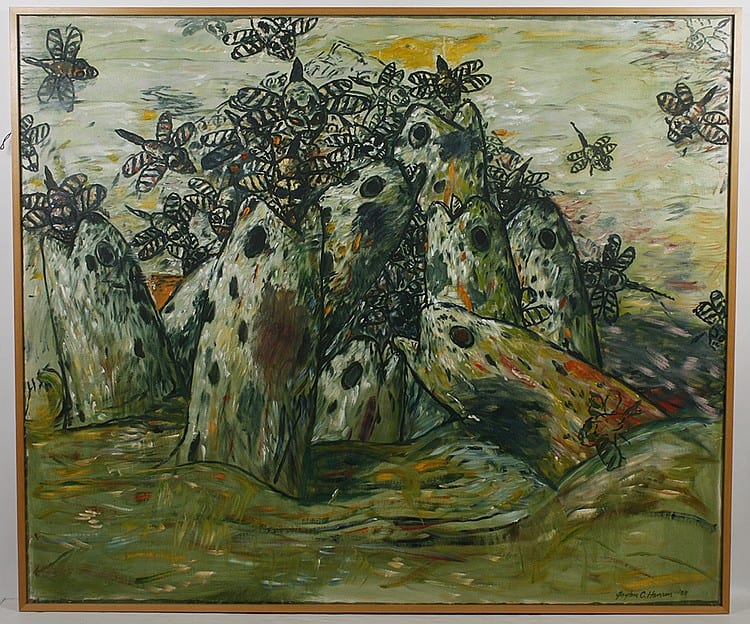
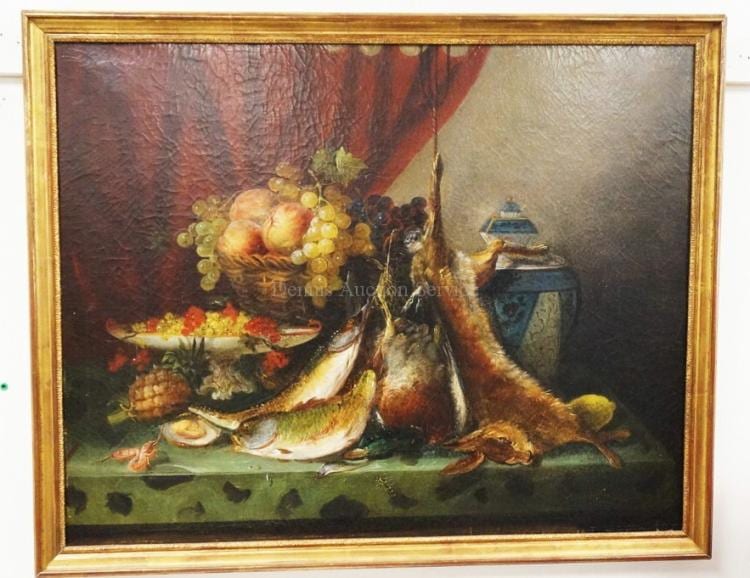
1) Signed paintings and original works on paper.
Look at the lower right, the verso, and the frame for a readable name, exhibition label, or gallery sticker.
A school label such as “in the manner of” is not the same object as a documented artist.
Check first: Photograph the signature and any verso labels before the frame is taken apart.
Separate studio glass from drinking glass
2) Art glass and iridescent studio glass.
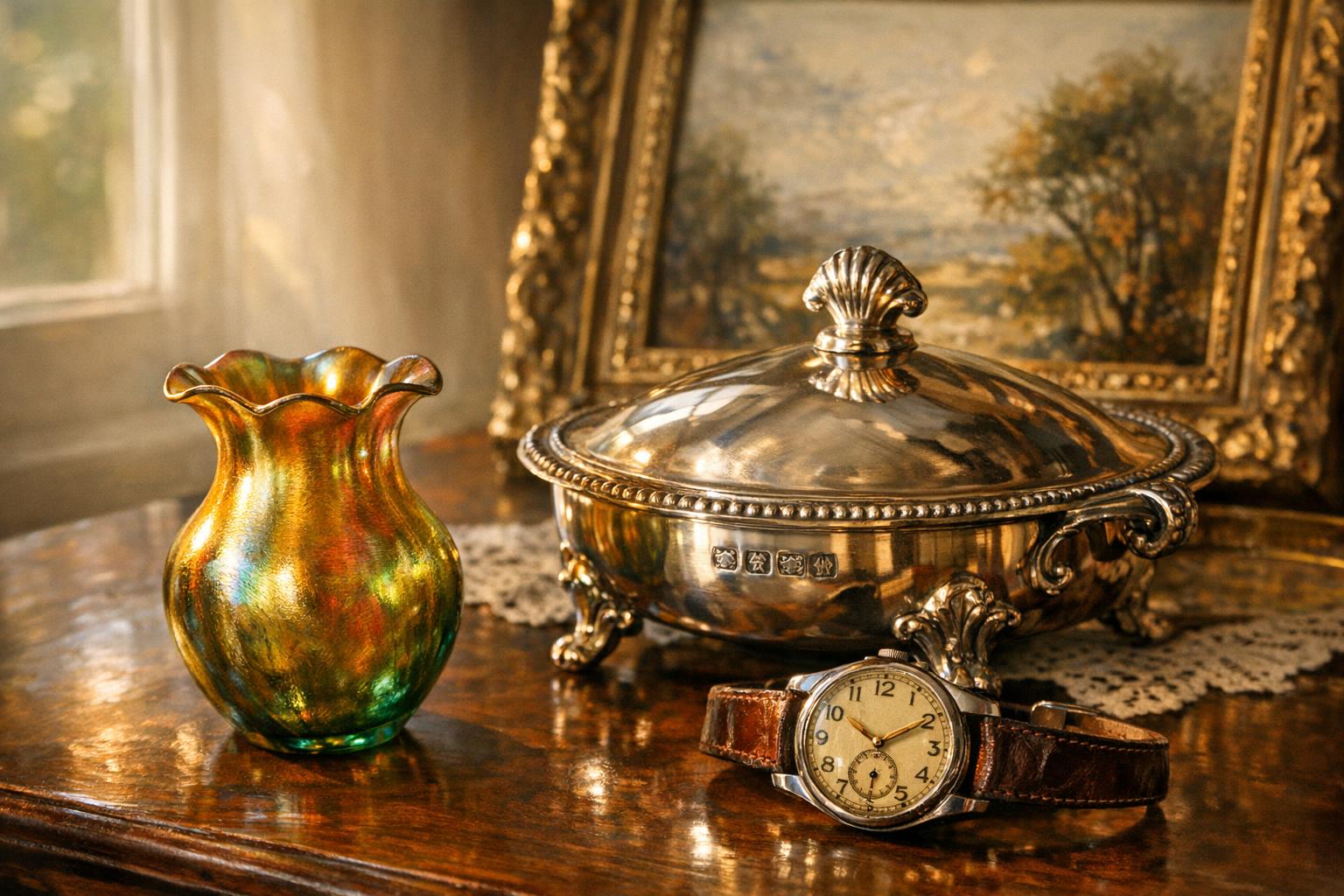
Turn the foot and look for Tiffany Favrile, Steuben Aurene, or a pontil signature.
Decorated surfaces and unusual colorways are collector glass; unmarked tumblers are household lots.
Check first: Read the pontil or acid stamp under the foot before the vase goes in the kitchen-glass box.
Silver through folk pictures: the rest of the list
3) Sterling silver and named silver makers.
Read the maker mark, the pattern name, and whether the hollowware still makes a service.
Melt weight is the floor; named maker plus a complete set is the market.
Check first: Count pots, lids, and matching spoons in one pattern; a missing teapot is a different lot than a complete service.
4) Estate jewelry with gold, platinum, or maker marks.
Hallmarks inside the shank, old cuts, signed mountings, and stated stone weights matter more than a gold-price guess.
A ring sold with its carat figures is jewelry inventory; the same gold without a stone story is scrap logic.
Check first: Photograph hallmarks inside the shank together with any stone certificate; a mark without a stone story is not a finished jewelry lot.
5) Vintage watches with brand value and original parts.
Brand, reference, and whether the dial, case, and movement still belong together change the number more than a recognizable logo.
A Rolex Air-King 5500 with original parts is not the same object as a refinished case with mixed parts.
Check first: Match the case, dial, and movement numbers before anyone polishes the case.
6) Handmade Persian and tribal rugs.
Age, weave quality, room size, palette, and the damage profile set the number.
A handmade Heriz is priced as a woven object; machine backing is decorative remnant money.
Check first: Fold a corner and look at the knots on the reverse; machine backing is why a rug stays in the remnant pile.
7) Handel, Tiffany, and art glass lamps.
Read the shade signature and the base mark as one lighting form.
An original pairing can change the number by thousands; a later shade on a Handel base is a parts lot.
Check first: Photograph the shade signature and the base mark in the same set so a later shade is not hiding a parts lot.
8) Signed bronze sculpture.
Signature, foundry, edition number, and whether the surface is original or later cleaned all move resale.
Foundry bronze and bonded bronze are different metals, even when both carry a name and an edition.
Check first: Read the signature and edition on the base, then look for a foundry mark versus bonded-bronze texture.
9) Roseville and named American art pottery.
Shape number, line name, glaze, and chips separate collector pottery from a shelf piece.
Ferella is a named Roseville line; unnamed ceramic with the same color is not.
Check first: Turn the piece and record the line name and shape number; unnamed chips drop it to shelf pottery.
10) Mid-century modern lounge chairs and designer seating.
Maker labels, originality, and upholstery history set the ceiling.
A Herman Miller Eames lounge chair is not the same market as unlabeled “Eames style” seating.
Check first: Find the Herman Miller or designer label under the seat; unlabeled “style of” copies are a different market.
11) Provenanced historical documents and ephemera.
For letters, journals, and archives, the paperwork is the asset.
A signed name, addressee, and archive context beat decorative quality of the binding.
Check first: Photograph every signed page and any envelope or letterhead before the papers are unbound or flattened.
12) Reverse-painted glass, folk art, and unusual decorative objects.
One-off pieces are easy to dismiss. Technique, age, and subject still need a pause.
Reverse-painted glass is a specialist surface; an unsigned folk picture can sit in the same mixed box and still belong on this list.
Check first: Look through the glass for reverse-painted technique versus a print applied to the surface.
Appraisily examples
This reviewed object did not fit a card above. It still shows why a readable name and a documented artist are not the same as a school label.
Typical estate-sale table
A typical estate-sale table prices a Favrile vase with drinking glasses and a signed bronze with garden ornaments.
Check the pontil and the edition number. If those line up, both finds belong on this list.
FAQ: estate-sale appraisal screening
Which estate sale items are most worth appraising before you sell them?
Signed art, maker-marked silver, period jewelry, brand-name vintage watches, handmade rugs, art glass, quality lighting, signed bronzes, named pottery, designer seating, and provenanced historical material are the first categories to isolate.
Should I clean or repair estate sale finds before an appraisal?
Usually no. Cleaning silver, polishing bronze, rewiring lamps, trimming rugs, or refinishing furniture can erase evidence and depress value.
What photos should I take before selling an estate item?
Take a full-item shot, a back or underside view, a signature or maker-mark close-up, and clear photos of damage or repairs.
Do auction results confirm what my item is worth?
No. They are context only. Venue, timing, buyer competition, provenance, and condition all change the realized price.
When does provenance matter more than condition?
Historical letters, archives, manuscripts, and signed memorabilia often derive most of their value from documentation rather than decorative quality.
References
- Auction records cited above: Pacific Galleries, James D. Julia, Butterscotch Auction Gallery LLC, New Orleans Auction Galleries, Austin Auction Gallery, Bonhams, Berner's Auction Gallery, Toomey & Co. Auctioneers, Schultz Auctioneers, Bill Hood & Sons Arts & Antiques Auctions, Burchard Galleries Inc, Leonard Joel, Freeman’s | Hindman, and Market Auctions.
- Appraisily editorial policy and sourcing standards: /editorial-policy/.
- Identification starting points still useful for these categories: GIA 4Cs, Corning Museum of Glass, NAWCC, and The Metropolitan Museum of Art.