Keith Haring original artwork value guide: appraisal and market basics
Keith Haring Original Artwork Appraisal Guide research should start with identification, condition, provenance, and item-specific market evidence. Use this guide to compare the signals that matter before paying for a formal appraisal or deciding whether to sell.
Keith Haring artwork appraisal notes
Keith Haring’s bold lines and jubilant pictograms—radiant babies, barking dogs, dancers—make his work instantly recognizable. For collectors and appraisers, however, recognizing what truly qualifies as “an original artwork by Keith Haring,” separating it from editions and merchandise, and understanding value drivers takes more than name recognition. This guide outlines what counts as original, how to vet originality, the documents that matter, conservation issues you’ll encounter, and the market dynamics shaping value.
What Qualifies as an “Original” Haring?
Haring’s output falls into three broad categories, each with very different implications for originality, value, and conservation.
One-of-a-kind works (unique originals)
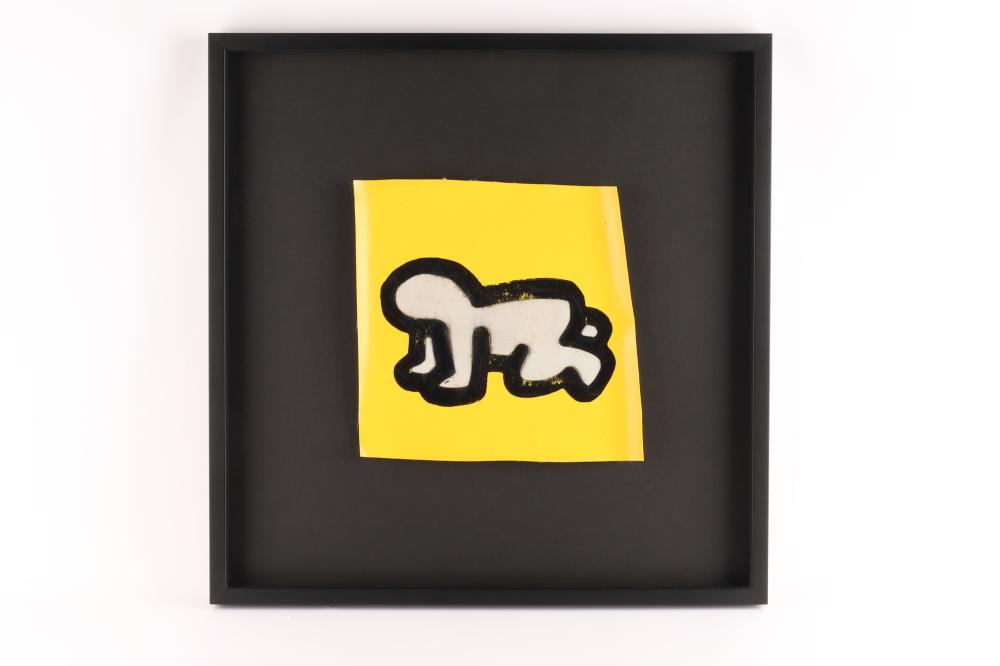
- Paintings on canvas or panel, frequently acrylic (often with fluorescent pigments), sometimes with enamel.
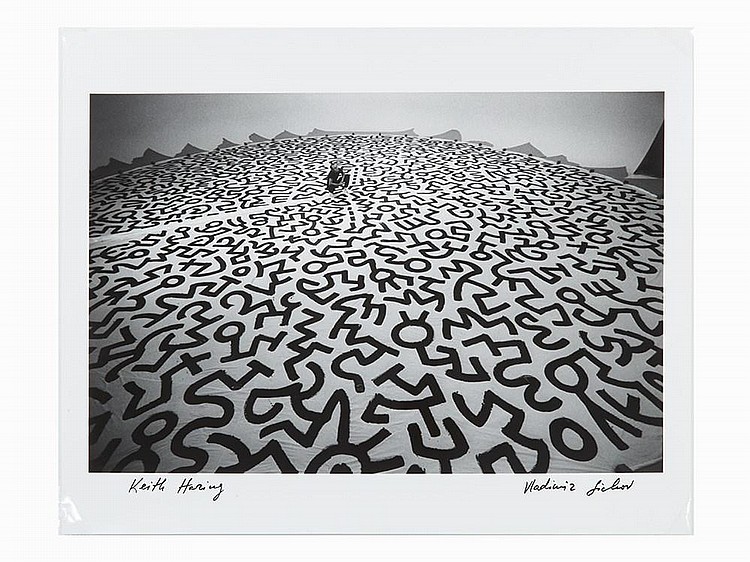
- Large-format tarpaulins and vinyls painted with brush and roller.
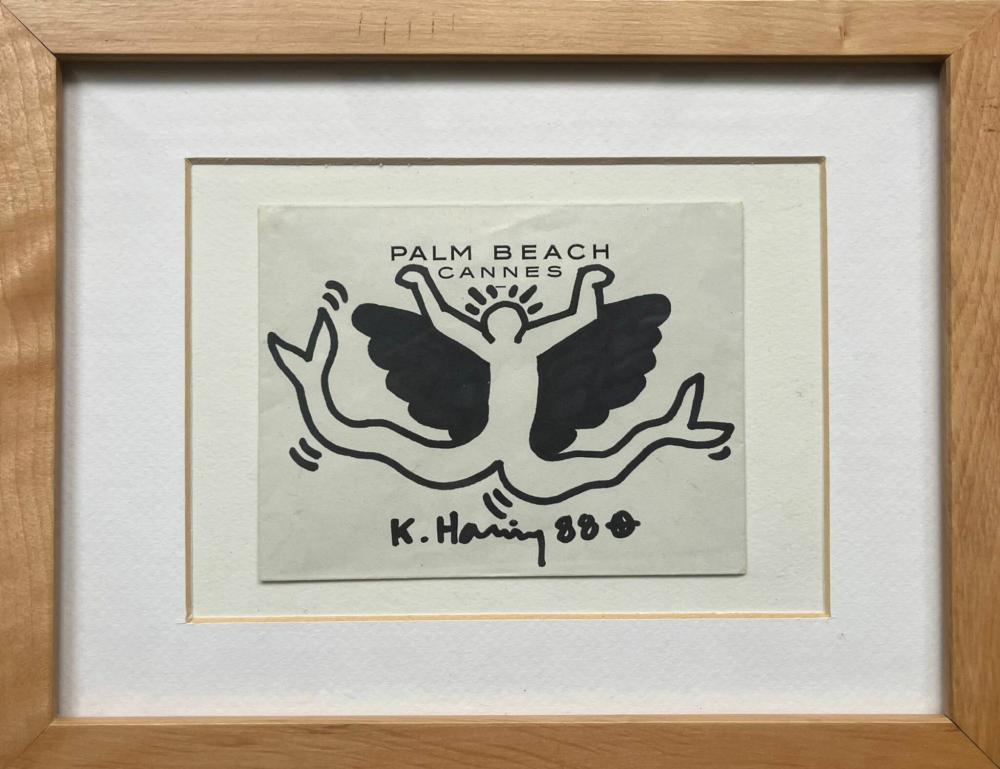
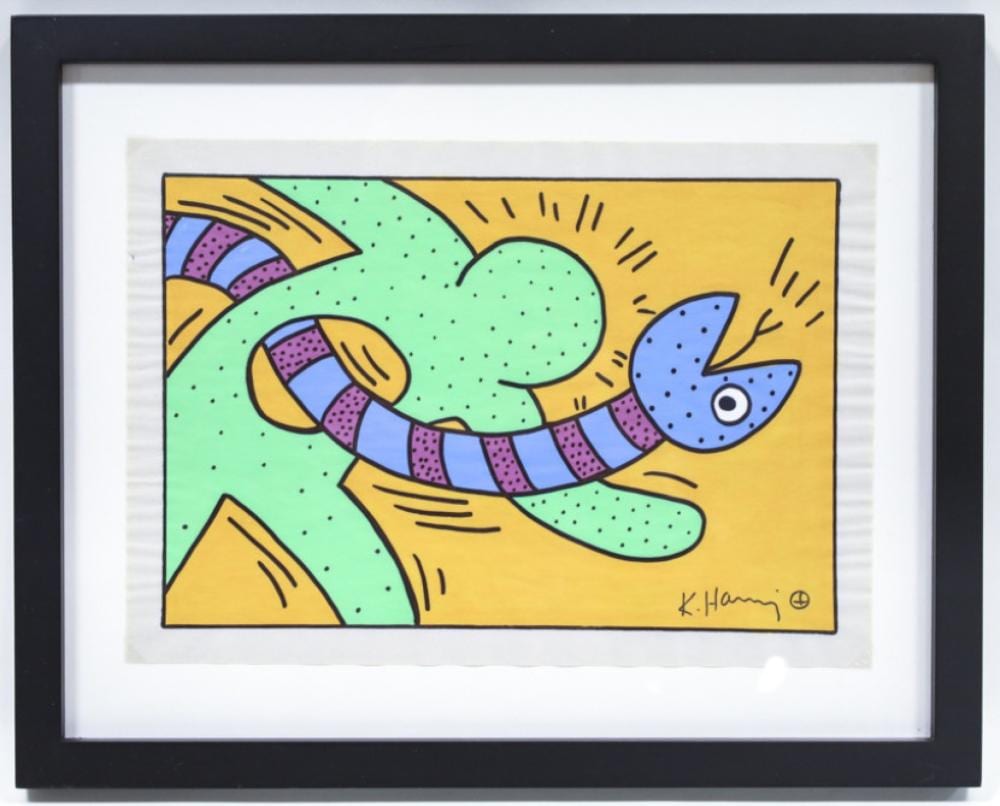
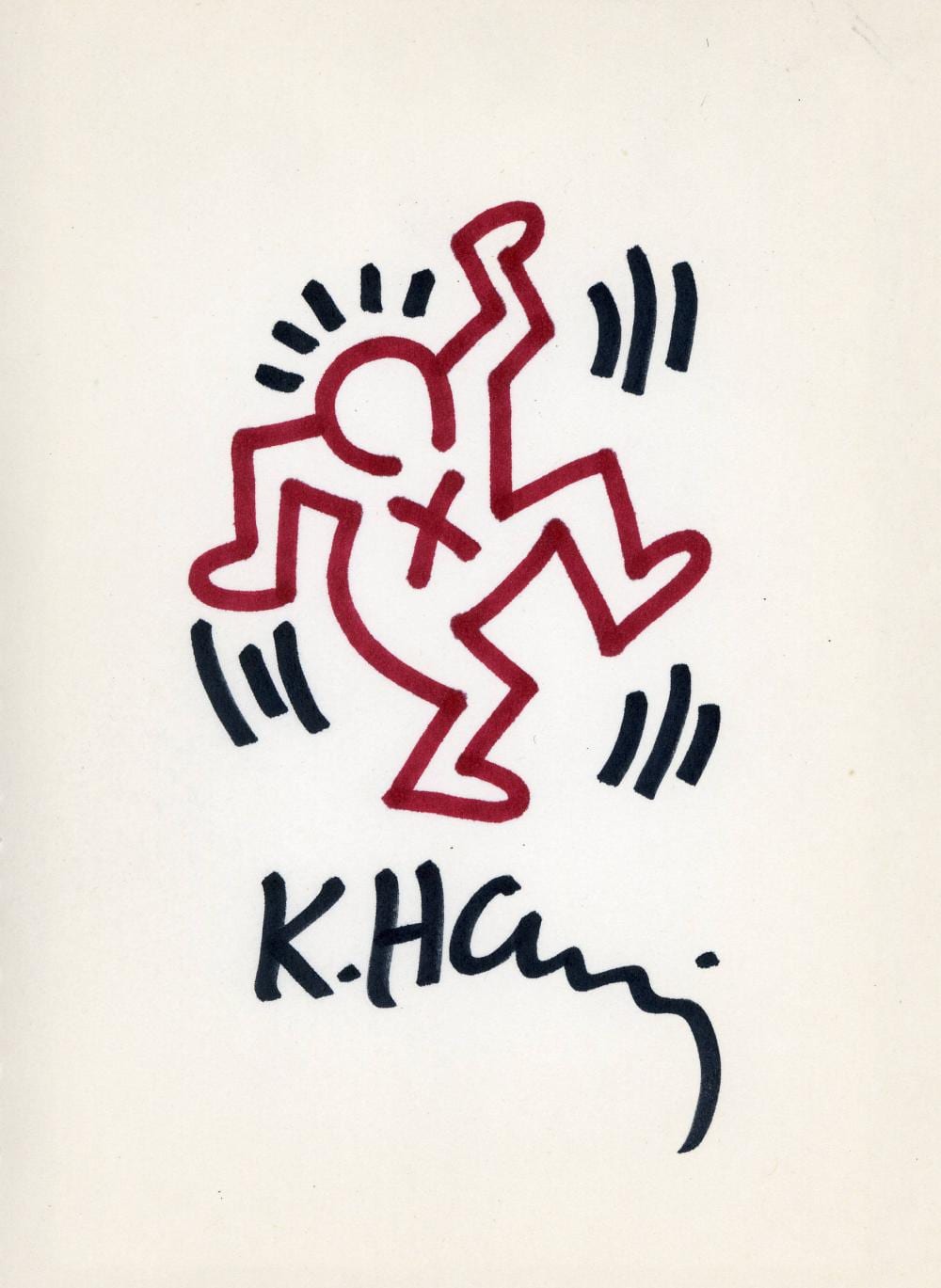
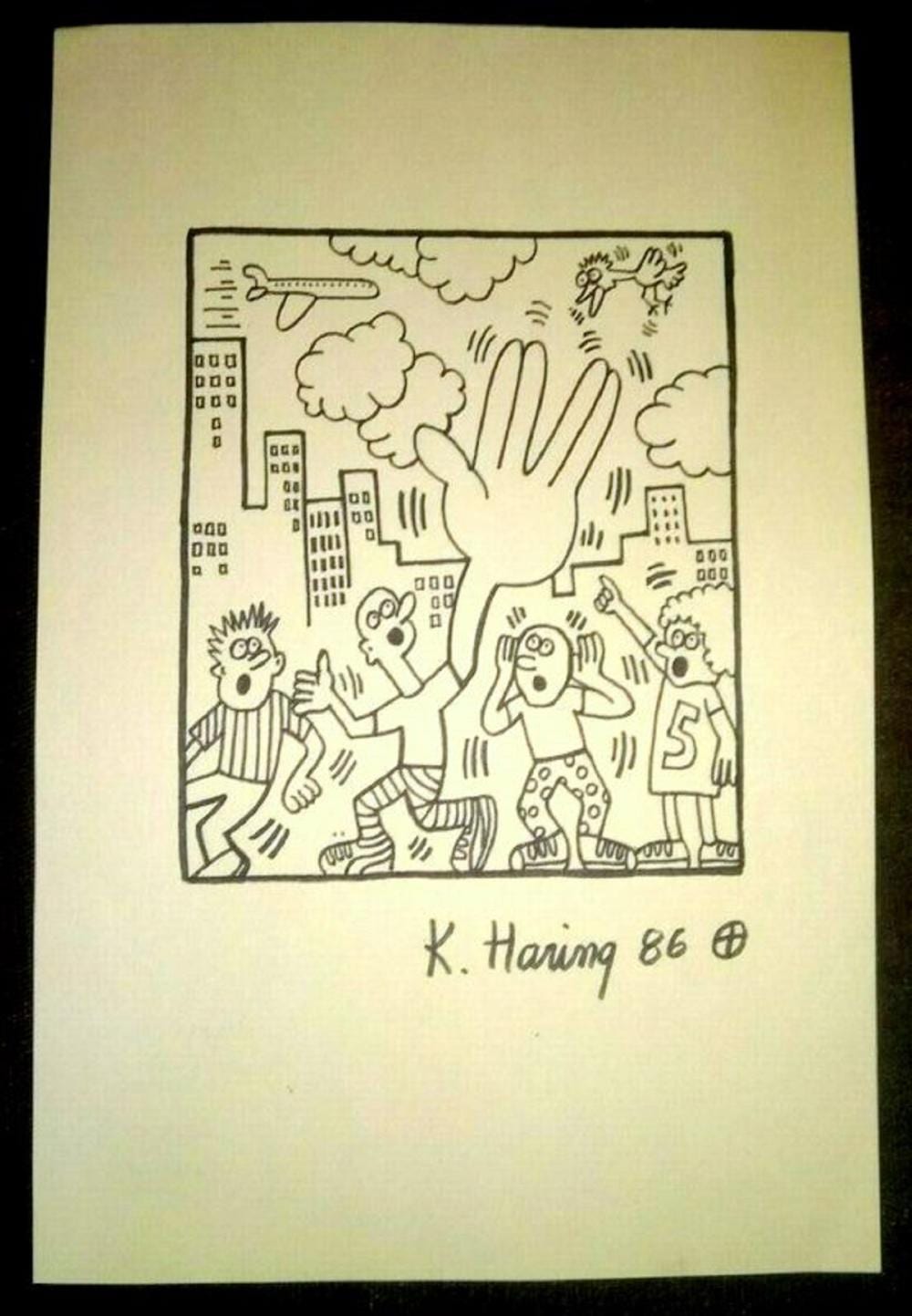
- Works on paper (ink, Sumi, acrylic, felt-tip), from quick studies to resolved drawings.
- Subway drawings (chalk on matte black paper affixed to subway advertising panels), originally ephemeral and almost always unsigned on site.
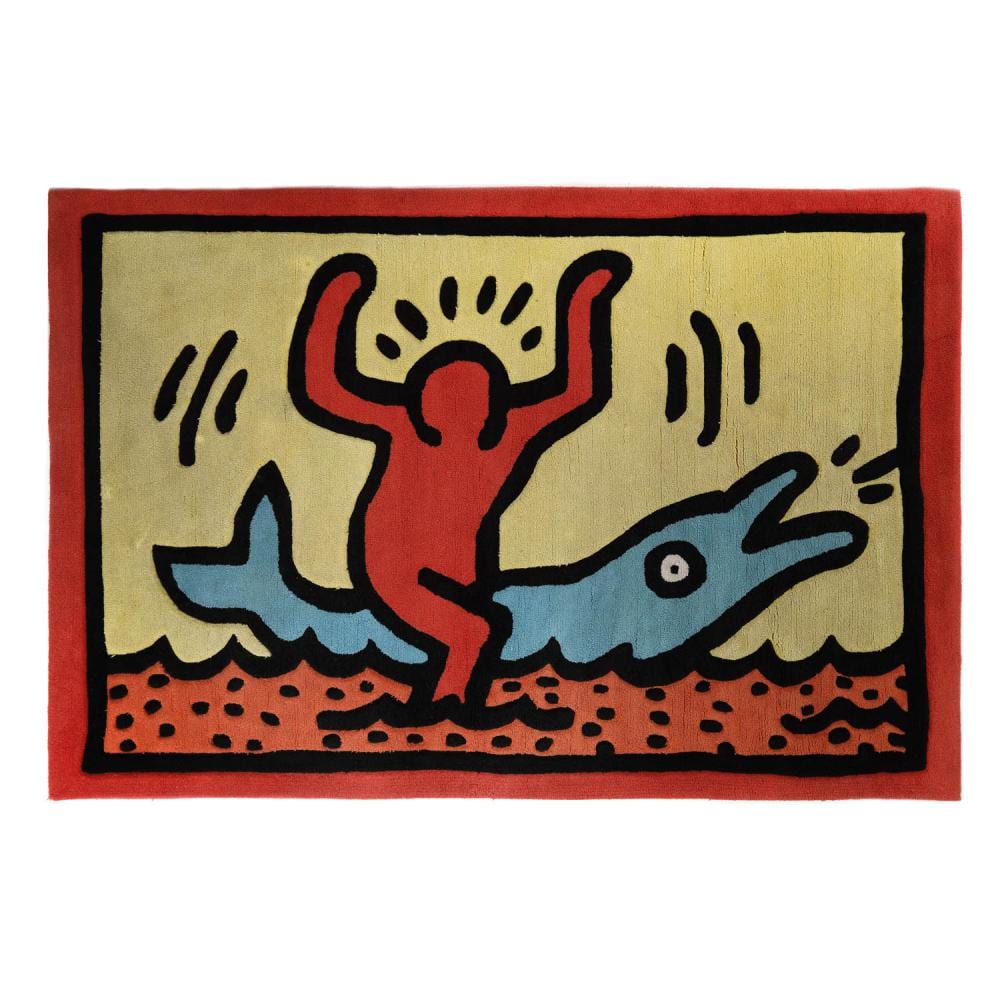
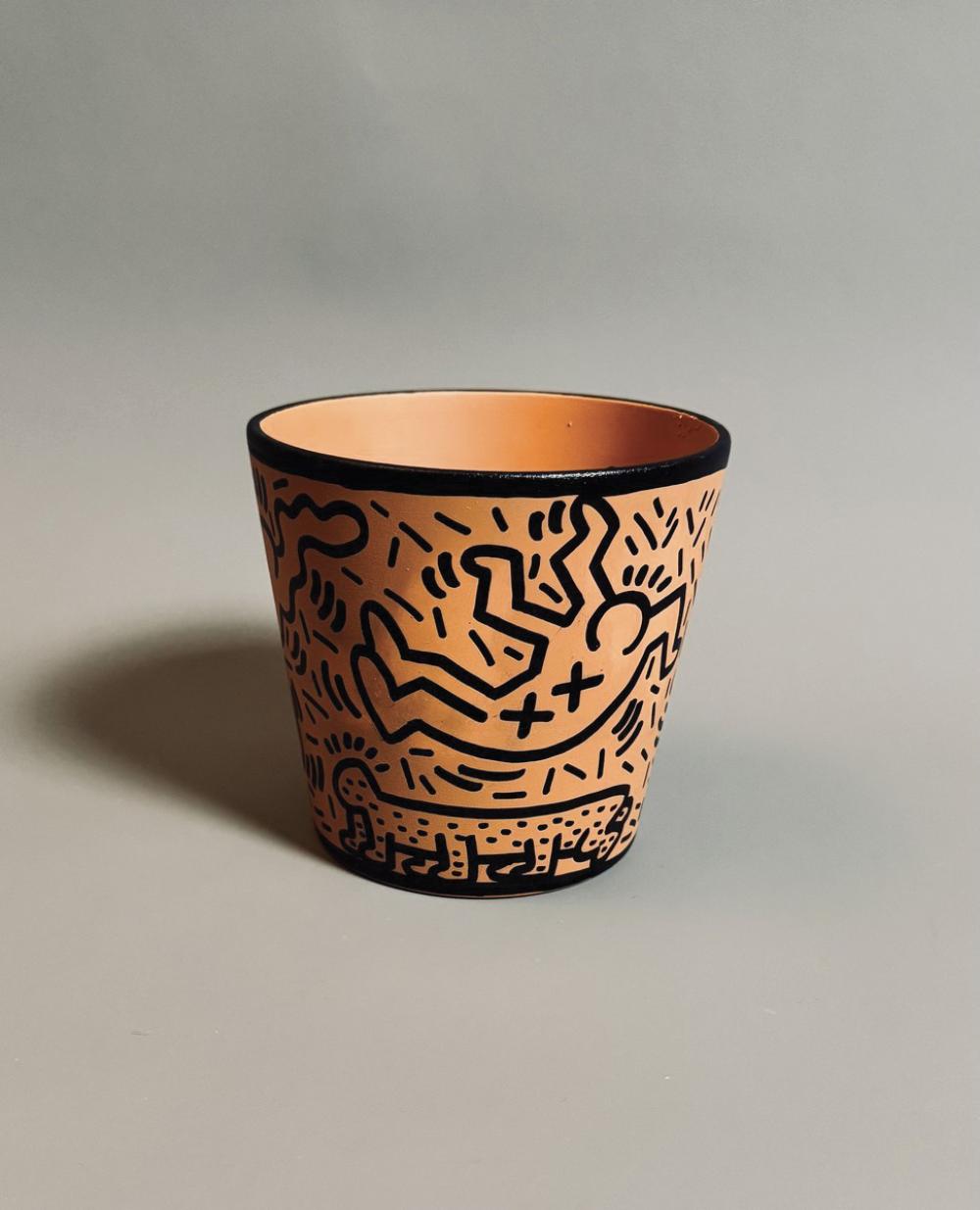
- Painted objects and sculptures (e.g., painted metal, found objects, reliefs), sometimes unique, sometimes produced in small series.
Fine-art editions (limited multiples)
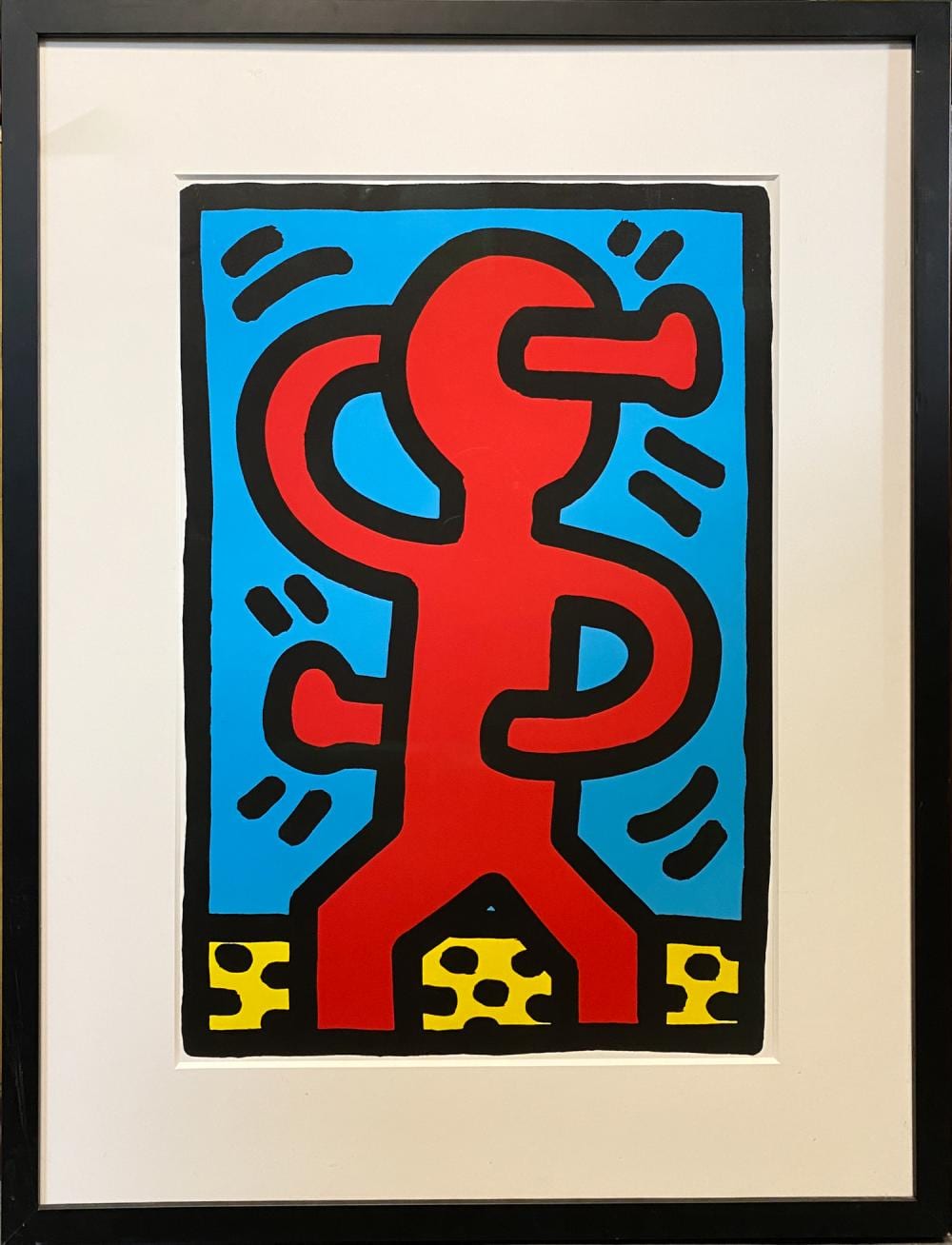
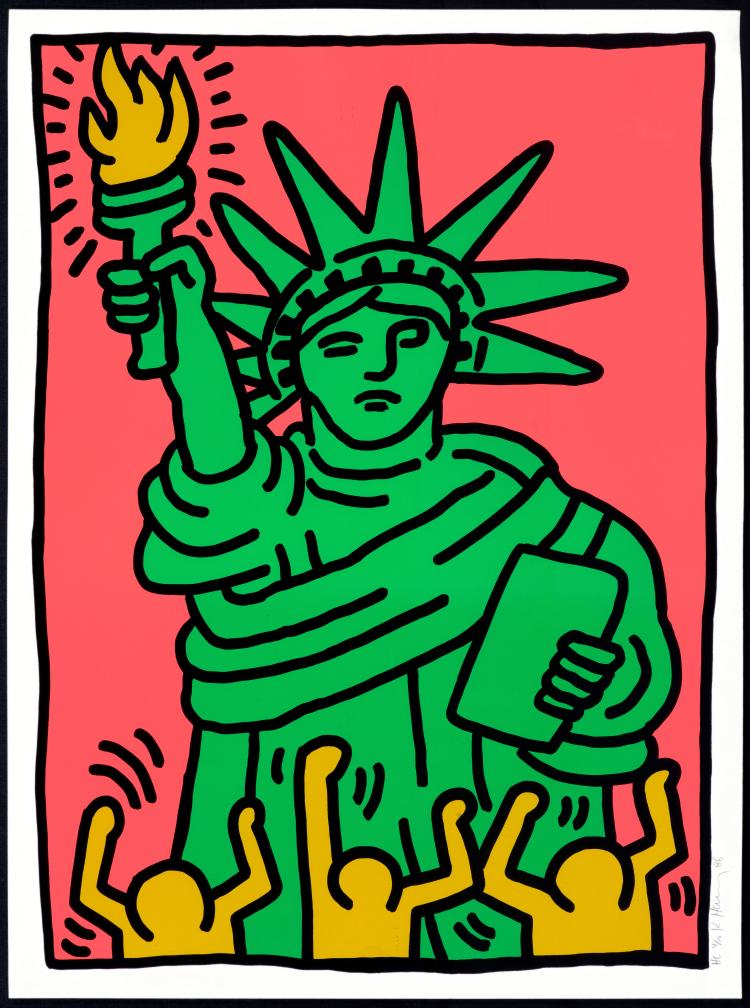
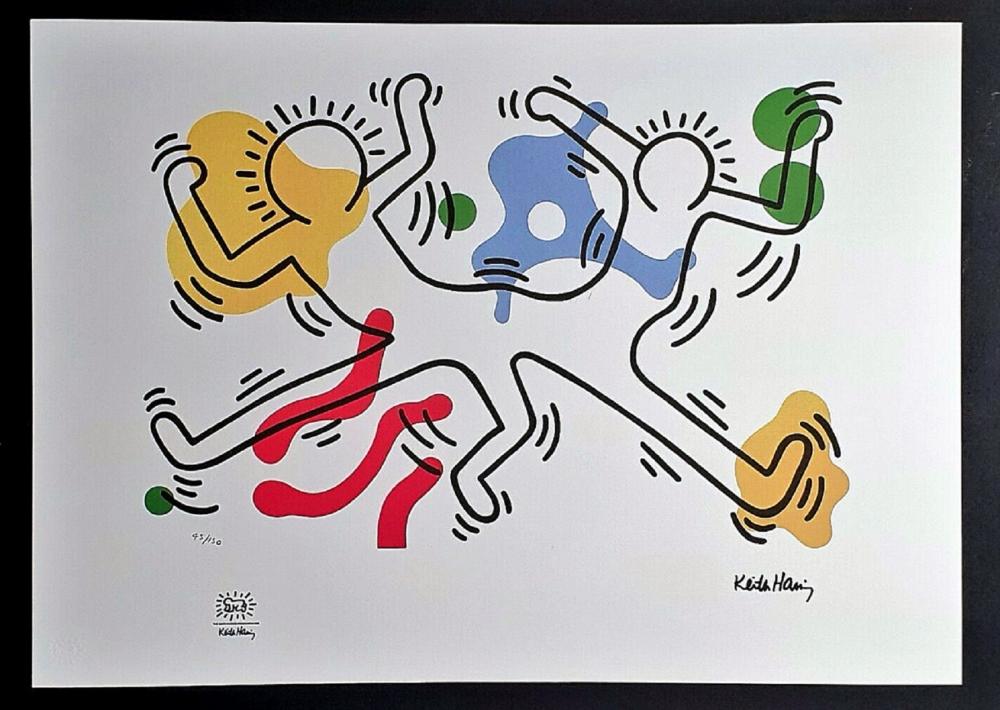
- Silkscreen prints (serigraphs) and, less frequently, lithographs or embossments, published in numbered editions.
- Editioned sculptures or reliefs in small numbered runs.
- These are original artworks in the sense of artist-approved multiples, but they are not unique.
Posters and merchandise (non-editioned or mass-produced)
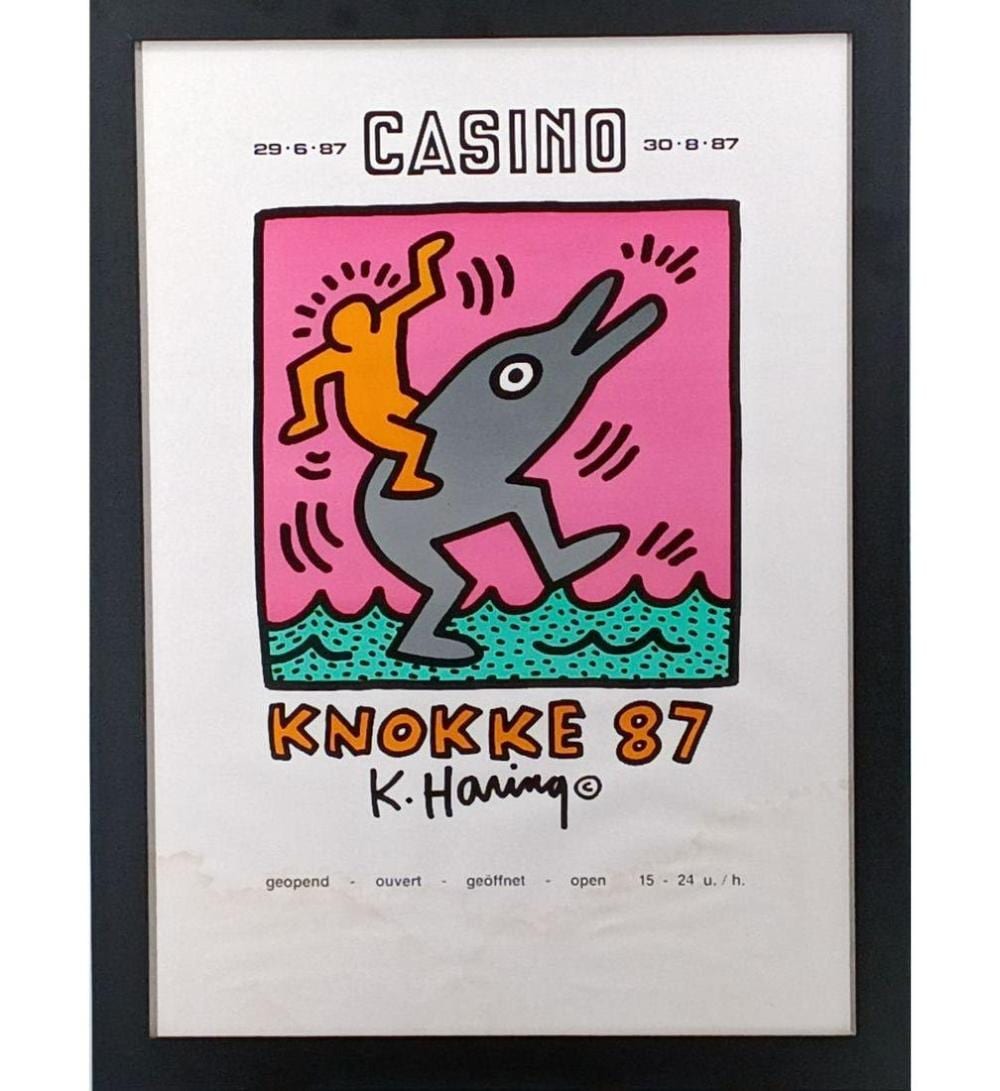
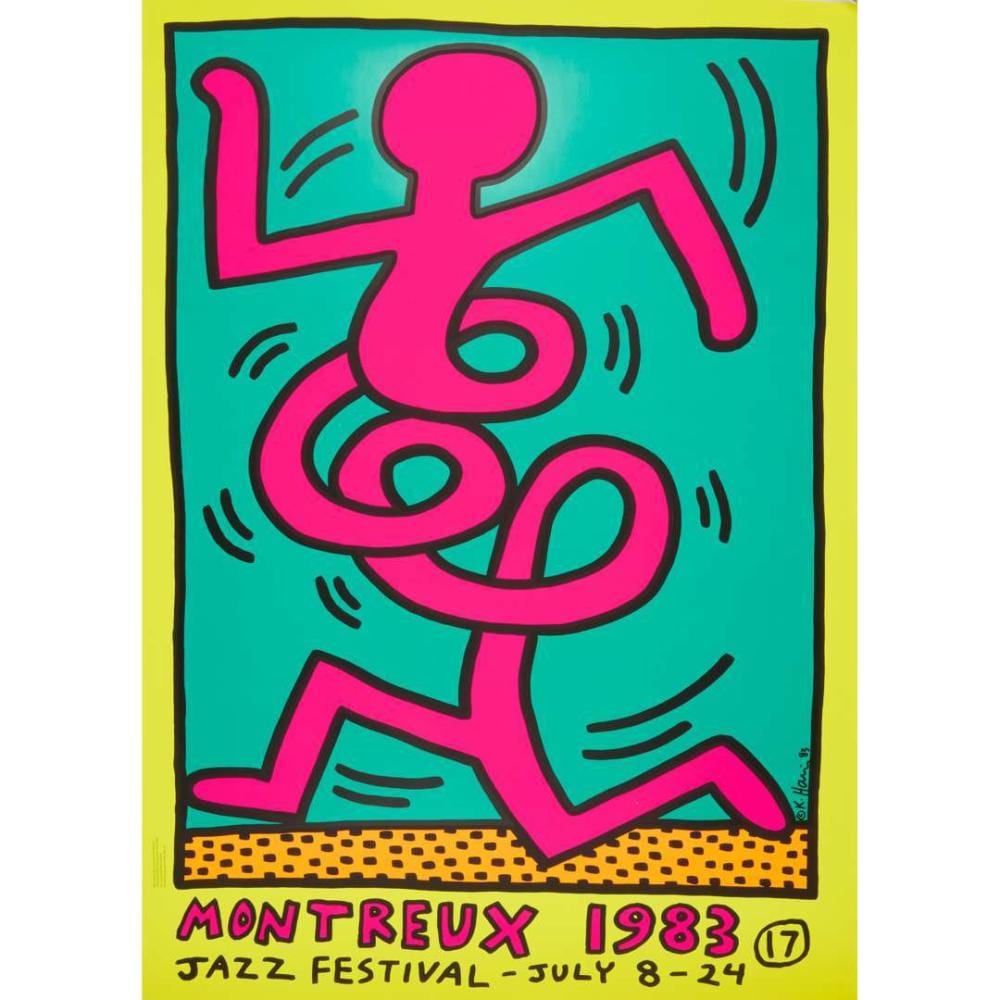
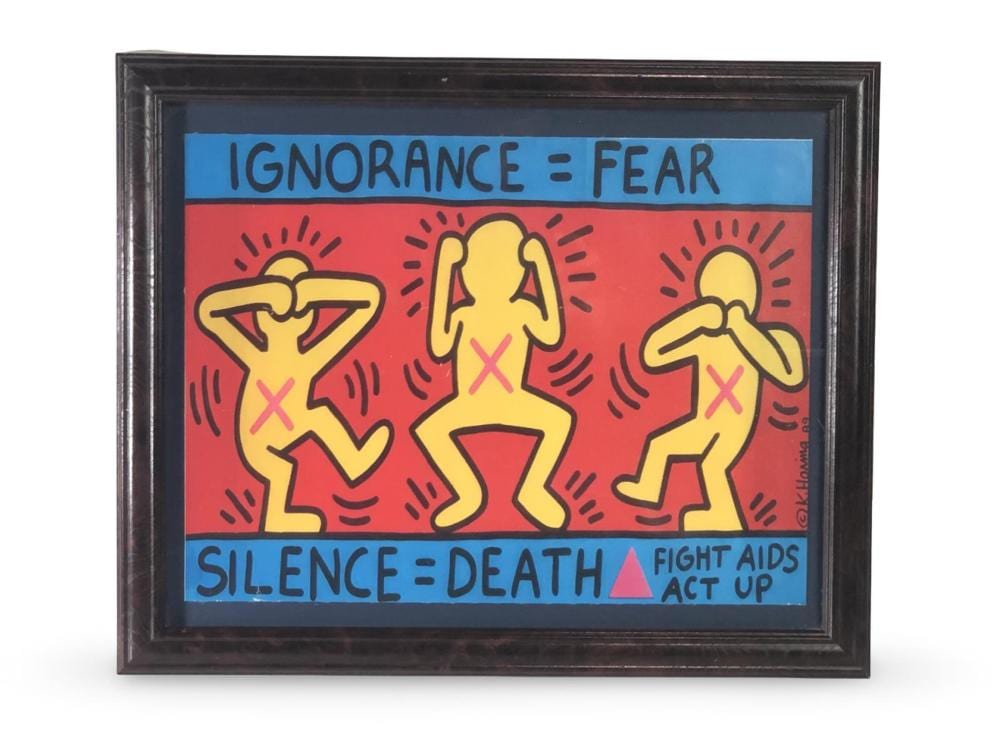
- Pop Shop items (posters, T‑shirts, buttons) and promotional posters.
- Offset prints with an image of Haring’s signature “in the plate.”
- These are documented licensed products, not fine-art editions, and typically have modest value.
If you are appraising or acquiring a Haring, start by placing the work in the correct bucket. Mistaking a high-quality offset poster for a signed edition—or a forged chalk drawing for a subway original—remains the most common and costly error.
Originals, Editions, and Pop Shop: How to Tell the Difference
The physical evidence offers the first and best clues. Train your eye to read materials, edges, margins, inscriptions, and build.
Unique paintings and tarpaulins
- Support: Stretched canvas, linen, panel, or industrial tarpaulin/vinyl with grommets. Tarps often show handling marks, creases, minor paint skips over texture.
- Paint: Acrylic (including day‑glo pigments), sometimes enamel. You’ll often see confident, single-pass lines with little reworking.
- Inscriptions: Signature and date may appear on front or reverse; titles are less common. Some works carry motifs or dedications on the back.
Works on paper
- Support: Wove or laid paper of varied weights; earlier quick drawings may be on sketch paper. Margins typically intact; deckle edges possible.
- Medium: Sumi ink, marker, paint, or mixed media. Line is fluid; crossing lines maintain rhythm without hesitation.
Subway drawings
- Support: Matte black paper sheets used to cover expired adverts; typically large, irregularly cut, with staple or adhesive remnants, sometimes scoring from removal.
- Medium: Chalk, most commonly white, applied rapidly. Powdery residues are normal; heavy fixative or uniform sheen can be a red flag.
- Signatures: Rare on-site. Bold, late-added autograph signatures on subway panels are suspect. Ironclad provenance is crucial here.
Fine-art prints (serigraphs, etc.)
- Paper: Substantial, often rag paper with full margins; may have a printer’s or publisher’s chop or blind stamp.
- Inscriptions: Pencil signature “Keith Haring” and date in the lower margin; edition fraction (e.g., 123/200). Consistency with known edition sizes and titling is essential.
- Ink: Saturated, flat color layers typical of screenprint; small registration irregularities can be documented.
Posters and Pop Shop items
- Printing: Offset lithography on lighter stock; image-area signature is printed, not pencil-applied.
- No edition number or margin signature. A printed copyright line and publisher credit are common.
When in doubt, compare the object to known, documented examples of the same type and period. Small typographic differences on posters, margin measurements on editions, and the paper surface on subway works reveal much to the trained eye.
Signatures, Dates, and Iconography: Reading the Work
Haring’s visual language is consistent yet flexible. Knowing what is typical helps you spot anomalies.
Signature conventions
- On paintings and drawings: “Keith Haring” in block letters, sometimes “K. Haring,” often with year. Signatures may appear on the reverse. Not every drawing is signed.
- On prints: Pencil signature and edition numbering in the lower margin are standard for fine-art editions. Avoid prints “signed” in marker on the image surface without a matching edition number.
- On subway drawings: Typically unsigned. A conspicuous, neat signature on a panel purportedly removed from the subway is a major warning sign.
Dates
- Year is typically four digits (e.g., 1983). Cross-check stylistic maturity: dense, energetic line-work and certain motifs cluster in early 1980s; later works can be bolder with broader fields of color.
Motifs and their implications
- High-demand subjects include radiant babies, barking dogs, dancing figures, UFOs, and pyramids. Scenes involving social themes (AIDS activism, anti-apartheid) can be both culturally and market significant.
- Motifs alone do not prove originality; they are frequently copied in fakes.
Inscriptions and dedications
- Haring sometimes dedicated works to friends or events. Genuine dedications usually align with known relationships, exhibitions, or charitable projects from that year.
Because Haring’s line looks deceptively simple, forgers often mimic icons without capturing cadence. Documented line is unhesitating and rhythmically consistent; hesitant, over-traced, or “hairy” outlines are red flags.
Provenance and Documentation That Matter
Documentation is vital, especially for subway drawings and early works-on-paper where signatures are sparse.
Strong provenance indicators
- Gallery invoices or labels from recognized venues that represented or exhibited Haring during his lifetime.
- Early exhibition catalogues or checklists listing the work’s title, size, and year.
- Dated photographs of the artwork in situ, ideally contemporaneous with creation or early ownership.
- Publication in a recognized monograph or catalogue.
- For editions, a publisher’s documentation, printer’s notes, or inclusion in a catalogue of editions with matching details.
Weaker or risky documentation
- Generic “certificates or expert opinions” unconnected to a recognized source.
- Vague origin stories, especially for subway drawings (“gift from an anonymous subway worker”).
- Recently produced appraisals that do not cite primary comparisons or fail to analyze crucial physical features.
The Keith Haring Foundation
- The Foundation maintains resources on the artist’s work but does not operate a public attribution review service today. Do not expect new attributions to be certified by the Foundation.
- When necessary, consult established auction houses, vetted dealers, and scholars familiar with Haring’s oeuvre for opinions, and insist on written condition reports and comparative analysis.
Chain-of-title clarity often determines whether a work is sellable at the top end of the market, especially for 1980–1985 material and any purported subway piece.
Condition and Conservation Risks
Haring’s materials are direct and high-key—but not always durable. Condition affects both value and long-term stability.
Fluorescent paints
- Day‑glo pigments are light-sensitive and can lose intensity with UV exposure. Fading can flatten contrasts and shift the palette.
- Display with UV-filtering glazing and controlled light levels; avoid sunlit rooms.
Tarpaulins and vinyls
- Thick, flexible supports can crease or crack paint at folds and along grommets. Edge wear and minor cracking are common.
- Proper mounting that supports the full surface reduces stress. Unrolling in warm, stable conditions minimizes micro-cracking.
Works on paper
- Susceptible to lightburn and acidic mat contamination. Haring’s felt-tip inks can bleed or discolor.
- Frame with UV-filter acrylic, acid-free mounts, and non-invasive hinges (Japanese paper, wheat starch paste).
Subway drawings
- Chalk remains friable. Over-sprayed fixative alters the surface and can trap dust, producing an unnatural sheen.
- Enclose with spacers under glazing to prevent abrasion. Avoid attempts to “refresh” the chalk.
Prints
- Look for handling creases, scuffs, abrasions to flat color fields, and margin trimming. Printer’s creases and minor registration shifts can be period-consistent; heavy restoration or inpainting should be disclosed.
Condition issues that seem “too perfect for age” can be as suspicious as heavy wear. Always reconcile condition with the work’s purported history and environment.
Market and Valuation Drivers
Haring’s market is global and liquid, but prices vary widely by type, size, and date.
Medium and uniqueness
- Unique paintings and large tarpaulins command the highest prices, often in the multi-million range for major works.
- Unique works on paper span a broad range, from mid-five figures to seven figures, depending on size, subject, and date.
- Fine-art editions range from low four figures for lesser-known prints to six figures for sought-after portfolios or iconic images.
- Posters and Pop Shop items typically reside in the three to low four figures unless extremely rare or with exceptional historical relevance.
Date and subject
- Early 1981–1985 material is highly prized, aligned with Haring’s subway and downtown periods. Iconic subjects (radiant baby, barking dog) carry a premium.
- Works tied to notable exhibitions, collaborations, or social advocacy can be particularly desirable.
Scale and presence
- Scale magnifies demand. Large, immersive surfaces express Haring’s graphic energy and anchor serious collections.
Condition and originality
- Untouched, well-documented works in stable condition fetch the strongest prices. Over-cleaning, color loss, or heavy restoration depresses value.
- For subway drawings, legality and provenance determine whether top-tier venues will handle the work at all.
Legal and ethical considerations
- The removal and sale of some subway panels have legal and ethical complexities. Clear, early documentation and transparent acquisition stories are essential for marketability.
As always, valuations should be grounded in recent, directly market evidence, adjusted for condition, size, and subject—no single “price per inch” rule applies.
Red Flags and Common Pitfalls
Subway drawings
- Neat, centered signatures on the front; uniform, glossy fixative; “poster board” rather than matte black poster paper; pristine edges lacking staple or adhesive artifacts.
- Vague origin tales and newly minted “COAs.”
Prints
- “Signed” posters without pencil numbering; edition fractions inconsistent with known editions; trimmed margins eliminating printer’s chops; suspiciously fresh ink on decades-old paper.
Paintings and drawings
- Hesitant or overworked line; inconsistent dating or backdating; motifs copied from famous images but scaled awkwardly; incongruent materials (e.g., house paint with modern additives fluorescing oddly under UV).
Paperwork
- Certificates from unknown entities; appraisals that omit condition details and comparative market data; provenance that begins only recently.
If multiple red flags accumulate, walk away or insist on a rigorous, independent review before proceeding.
Practical Checklist: Vetting a Haring
- Identify the type: unique, fine-art edition, or poster/merchandise.
- Inspect materials: support, paint/ink, paper quality, margins, chops, grommets.
- Verify inscriptions: pencil signature and edition numbers for prints; plausible dating for unique works; be wary of signed subway panels.
- Cross-check dimensions and edition size with documented examples.
- Review provenance: look for early invoices, labels, photos, exhibition history.
- Obtain a condition report from a conservation-aware specialist.
- Compare to published and auctioned benchmarks of similar date, subject, and size.
- Factor legal/ethical issues for subway works.
- If doubts remain, seek independent opinions from established auction houses or recognized scholars.
- Document your findings and keep high-resolution images of front, back, edges, and details.
FAQ
Q: Does the Keith Haring Foundation document artworks? A: No. The Foundation does not operate a public attribution review service today. For due diligence, combine physical examination, provenance analysis, and opinions from established auction houses or scholars experienced with Haring.
Q: Are Pop Shop posters considered original artworks? A: They are documented, licensed Haring products but not unique artworks or fine-art editions. They’re typically offset-printed, have a printed signature within the image, and carry modest market values compared to signed, numbered screenprints or unique works.
Q: How can I tell a screenprint from a poster? A: Look for pencil signature and edition number in the margin, heavier rag paper, possible printer’s or publisher’s blind stamp, and the layered, satin surface of screen ink. Posters lack pencil inscriptions and are printed via offset on lighter stock.
Q: Are subway drawings legal to buy and sell? A: Many were removed without authorization, creating legal and ethical complications. Only consider examples with clear, early provenance and be aware that some venues avoid handling them altogether. Strong documentation is essential for value and marketability.
Q: What affects value the most in a Haring? A: Uniqueness (painting vs print), date (early 1980s prime), size, iconic subject matter, condition, and provenance. Works with documented exhibition history and clean chain-of-title consistently outperform.