Unlocking the Worth Discover the Hidden Value of Your Antique Butter Churn Crock: appraisal and value basics
Unlocking the Worth Discover the Hidden Value of Your Antique Butter Churn Crock research should start with identification, condition, provenance, and item-specific market evidence. Use this guide to compare the signals that matter before paying for a formal appraisal or deciding whether to sell.
Antique butter churn crock appraisal checklist
Antique butter churn crocks sit at the intersection of folk art and utilitarian pottery. They tell a story of regional kilns, immigrant craftspeople, and the daily labor of dairy work—while also commanding serious prices when the right combination of decoration, condition, and provenance comes together. If you’ve inherited one from a farmhouse, picked one up at a country auction, or spotted one at a flea market, this guide will help you identify what you have, gauge its originality, and estimate a realistic value.
Whether your piece is a simple salt-glazed utility churn or a cobalt-decorated, signed example from a noted 19th-century kiln, understanding the details will let you price, negotiate, or insure it with confidence.
What Makes a Butter Churn Crock Antique and Desirable
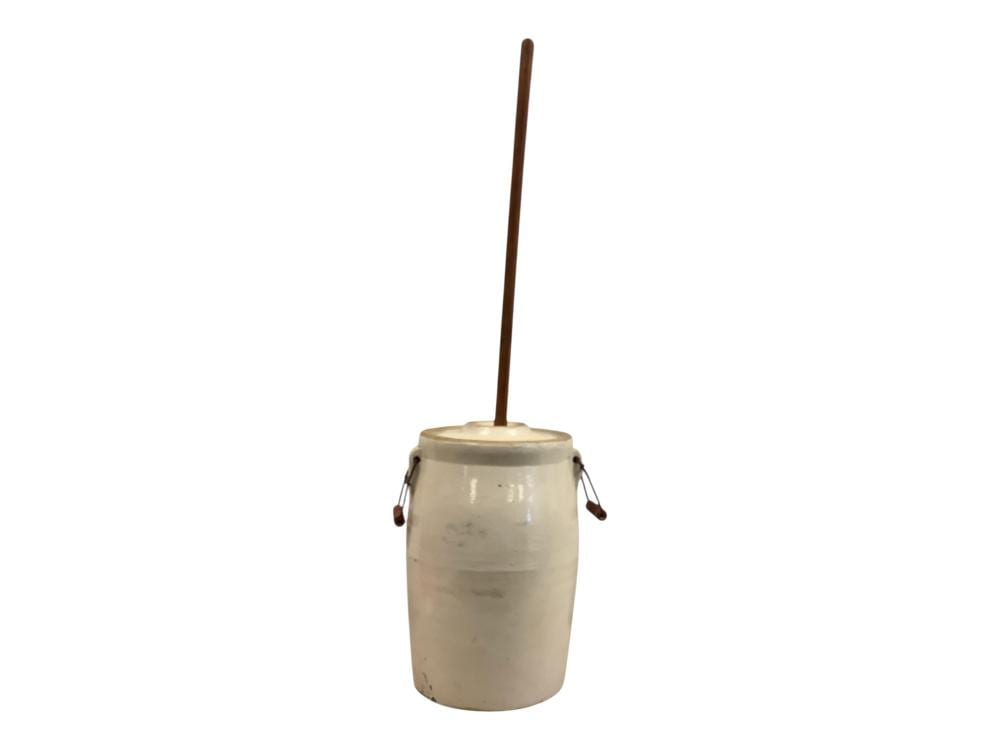
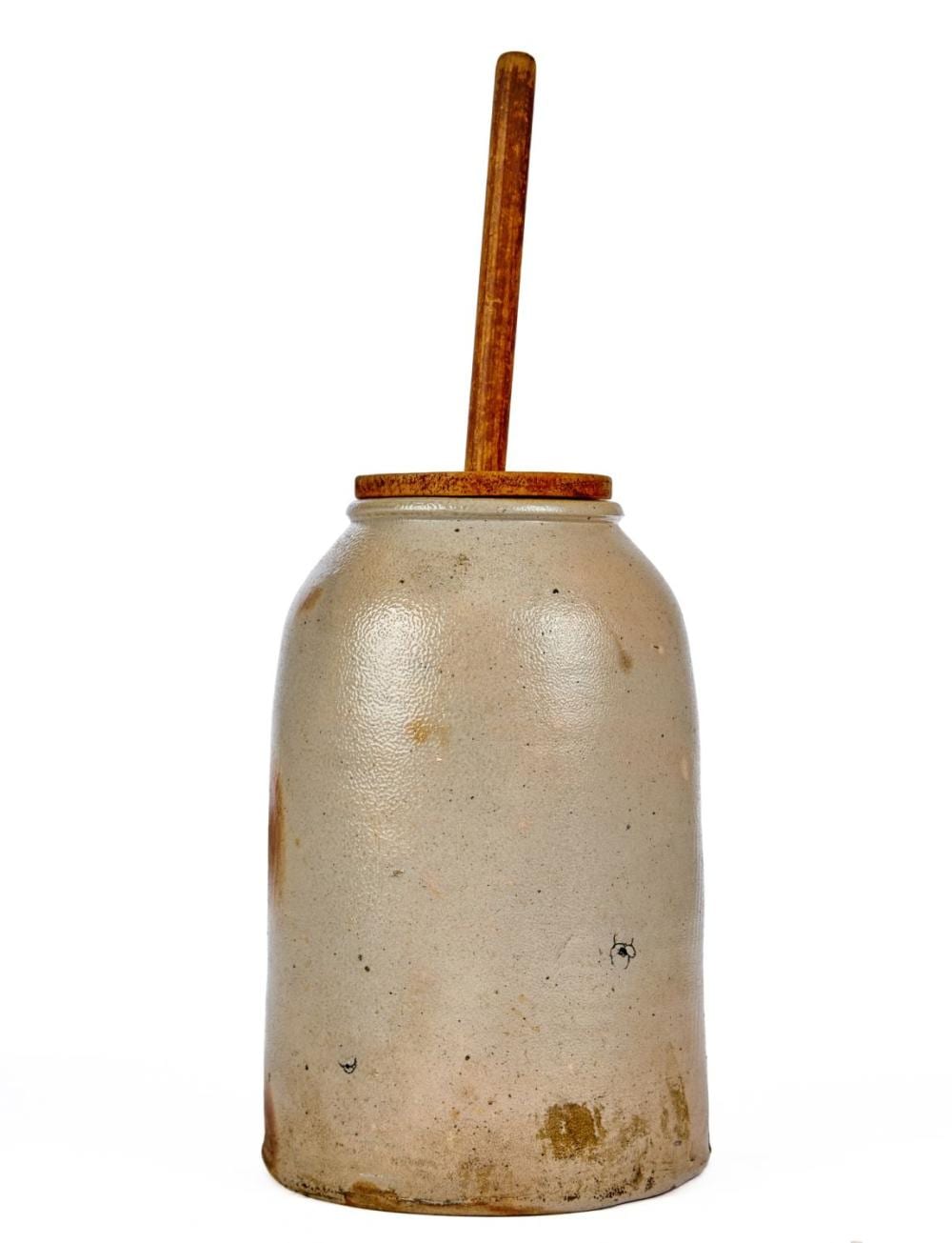
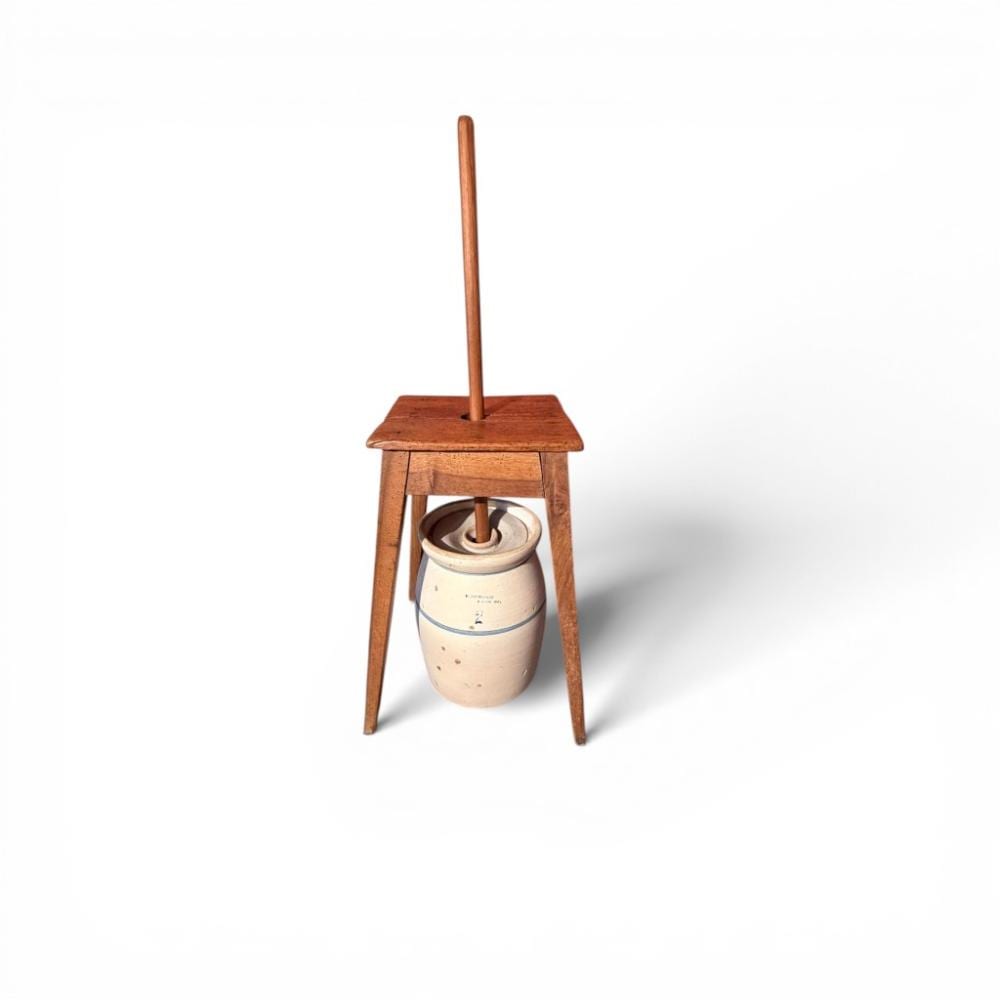
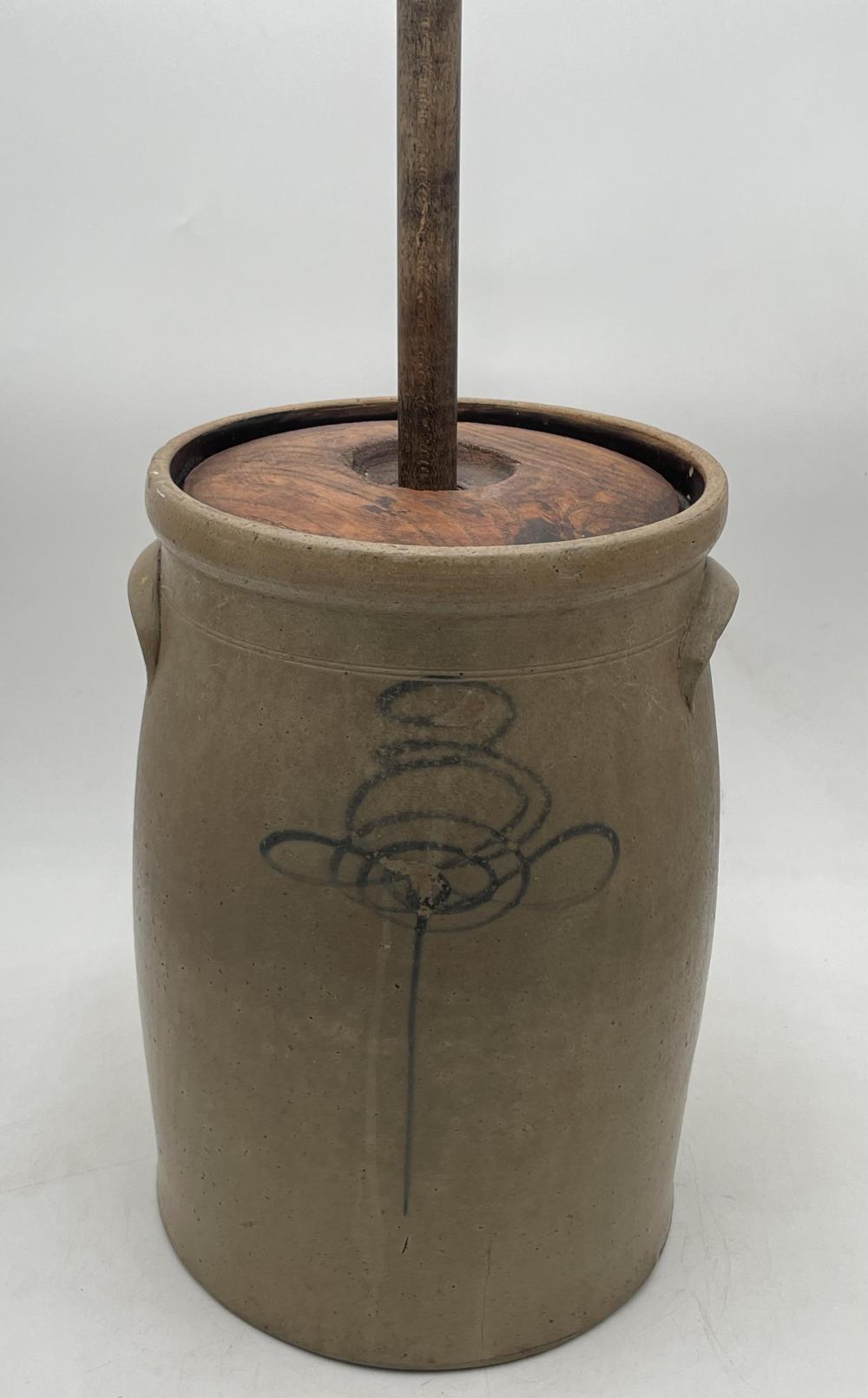
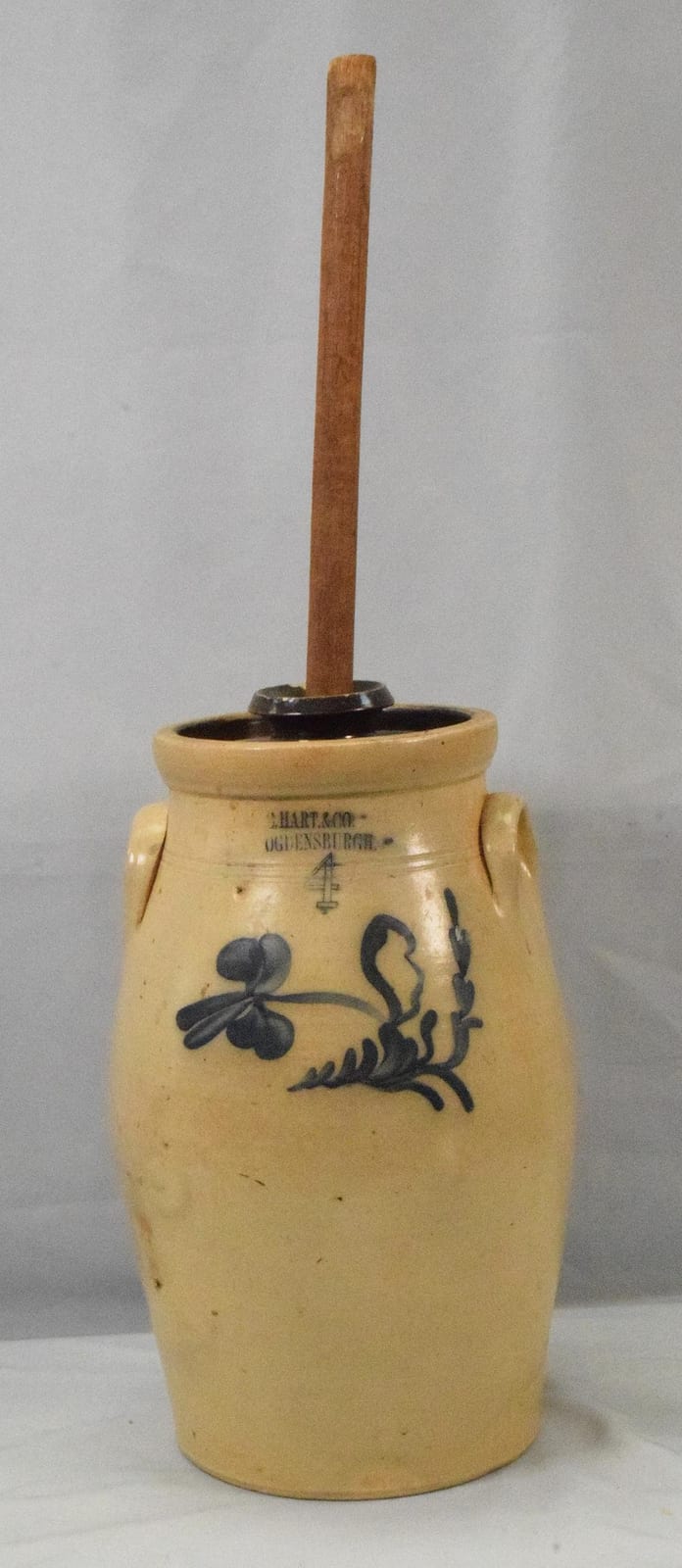
“Antique” in stoneware generally refers to pieces produced before 1920, and many classic butter churn crocks date from roughly 1850–1915. While households also used glass and wooden churns, the term “butter churn crock” typically means a tall, cylindrical ceramic vessel—often salt-glazed stoneware—with a small central hole in a lid for the wooden dasher. Key features include:
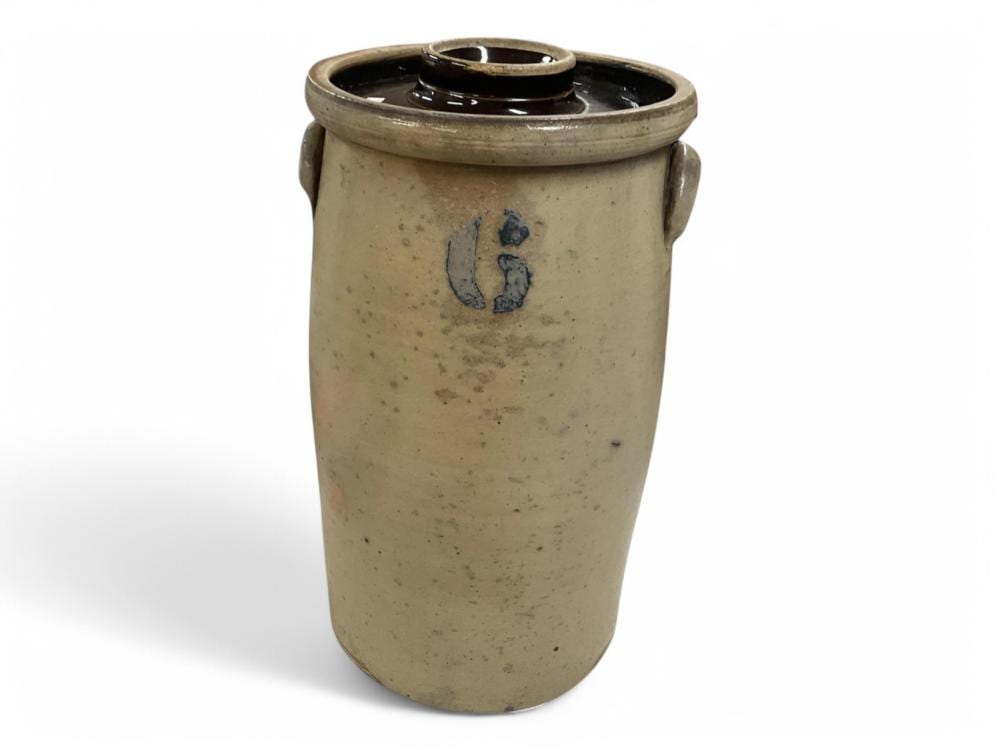
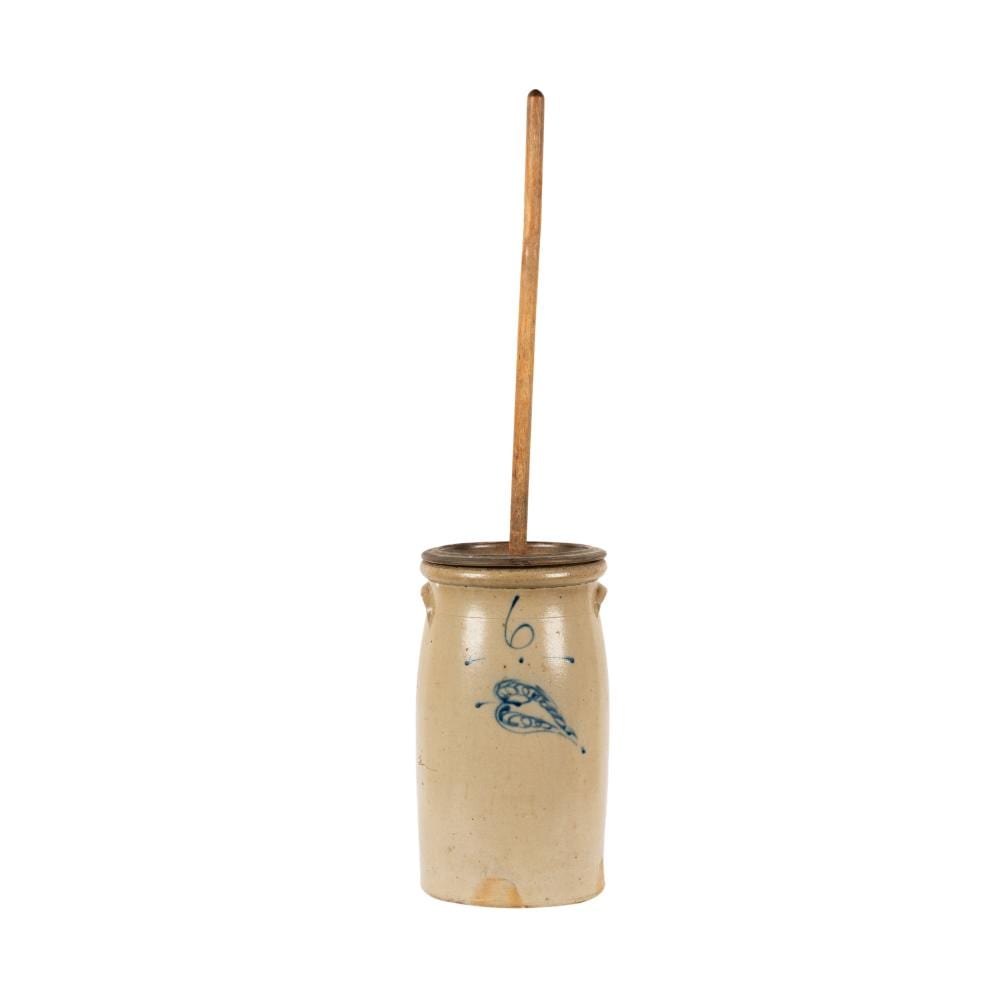
- Form and capacity: Common sizes range from 2 to 8 gallons, with 3, 4, and 6 most often seen. Capacity is frequently stamped or brushed on the shoulder. Larger (8–10 gallon) churns exist but are harder to handle and display.
- Material and glaze: Northeastern and Midwestern churns are usually salt-glazed on the exterior (a slightly orange-peel texture) with an Albany slip (chocolate-brown) interior. Southern churns often carry alkaline glazes (green-to-brown, glassy “runs”).
- Handles and rim: Lug or ear handles are typical; some have wire bails later in the period. The rim should be strong enough to support a fitted lid.
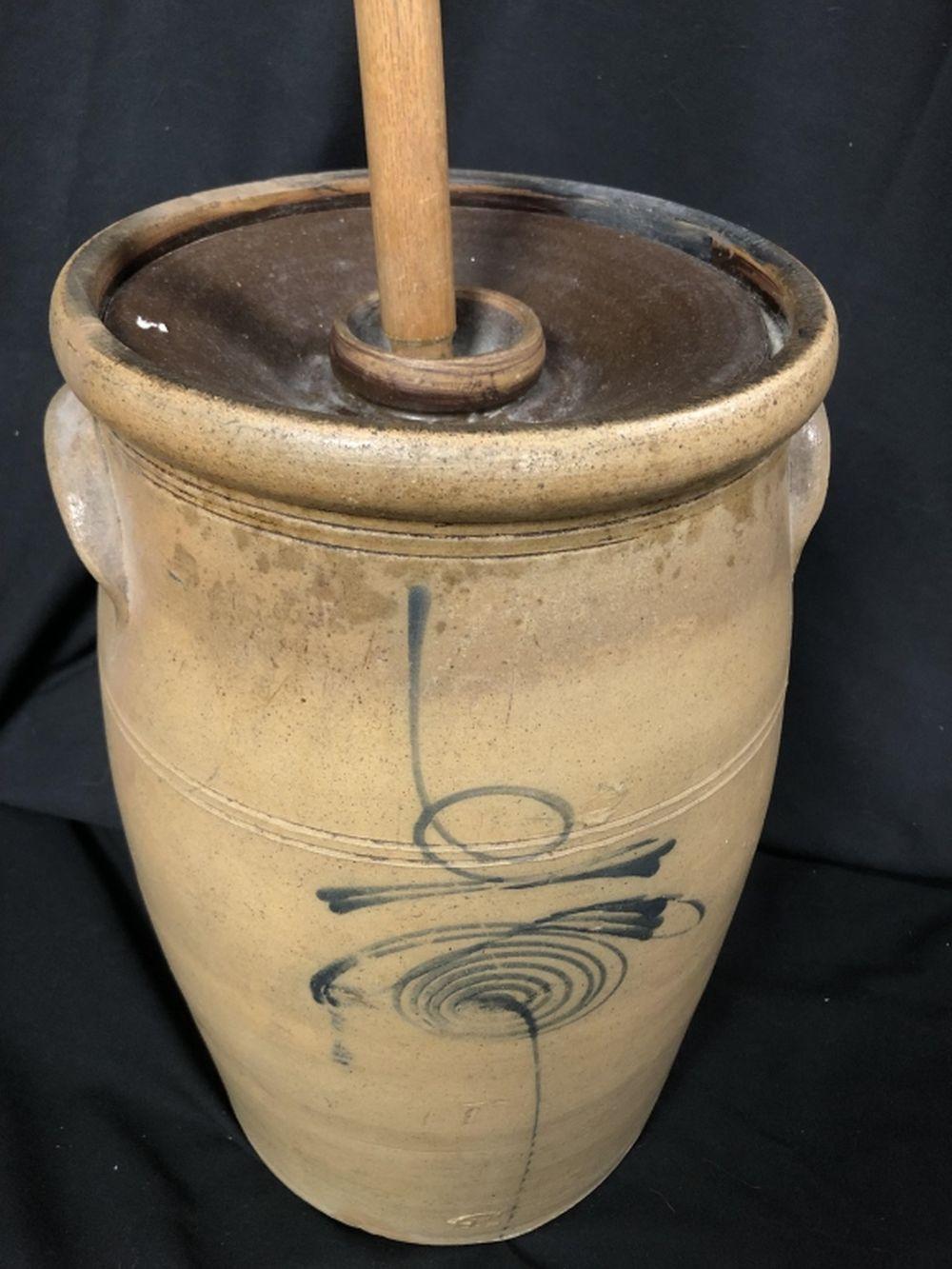
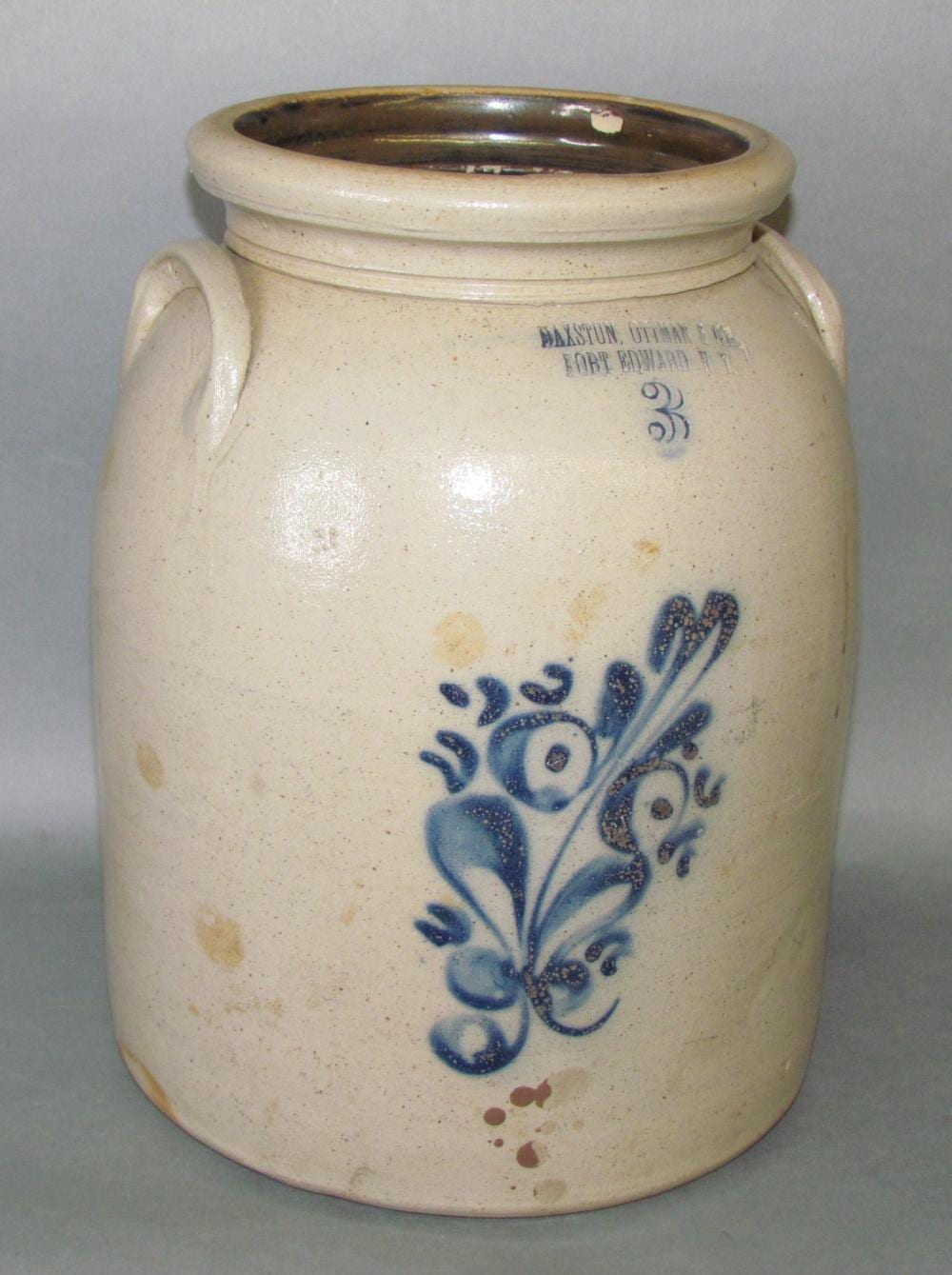
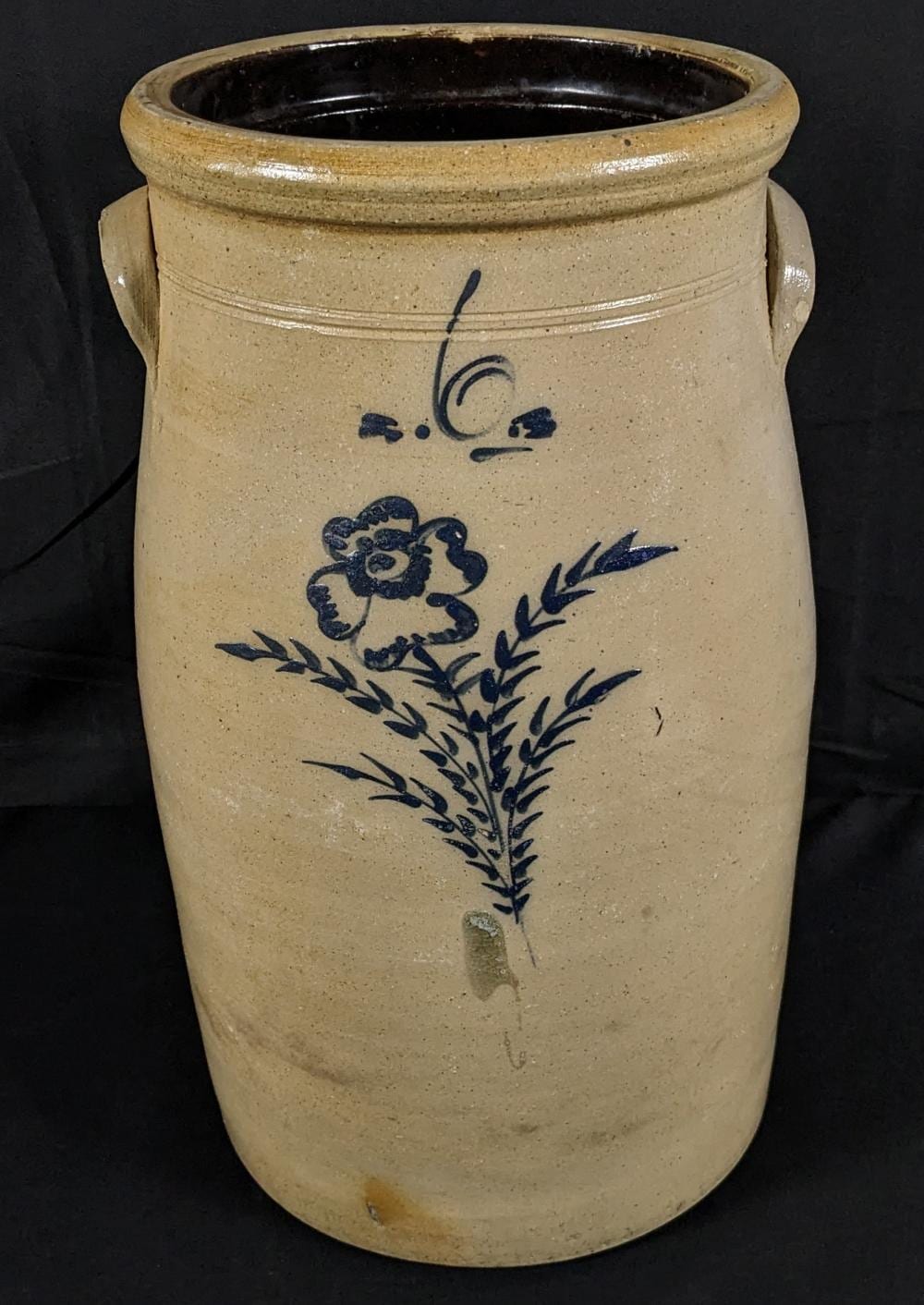
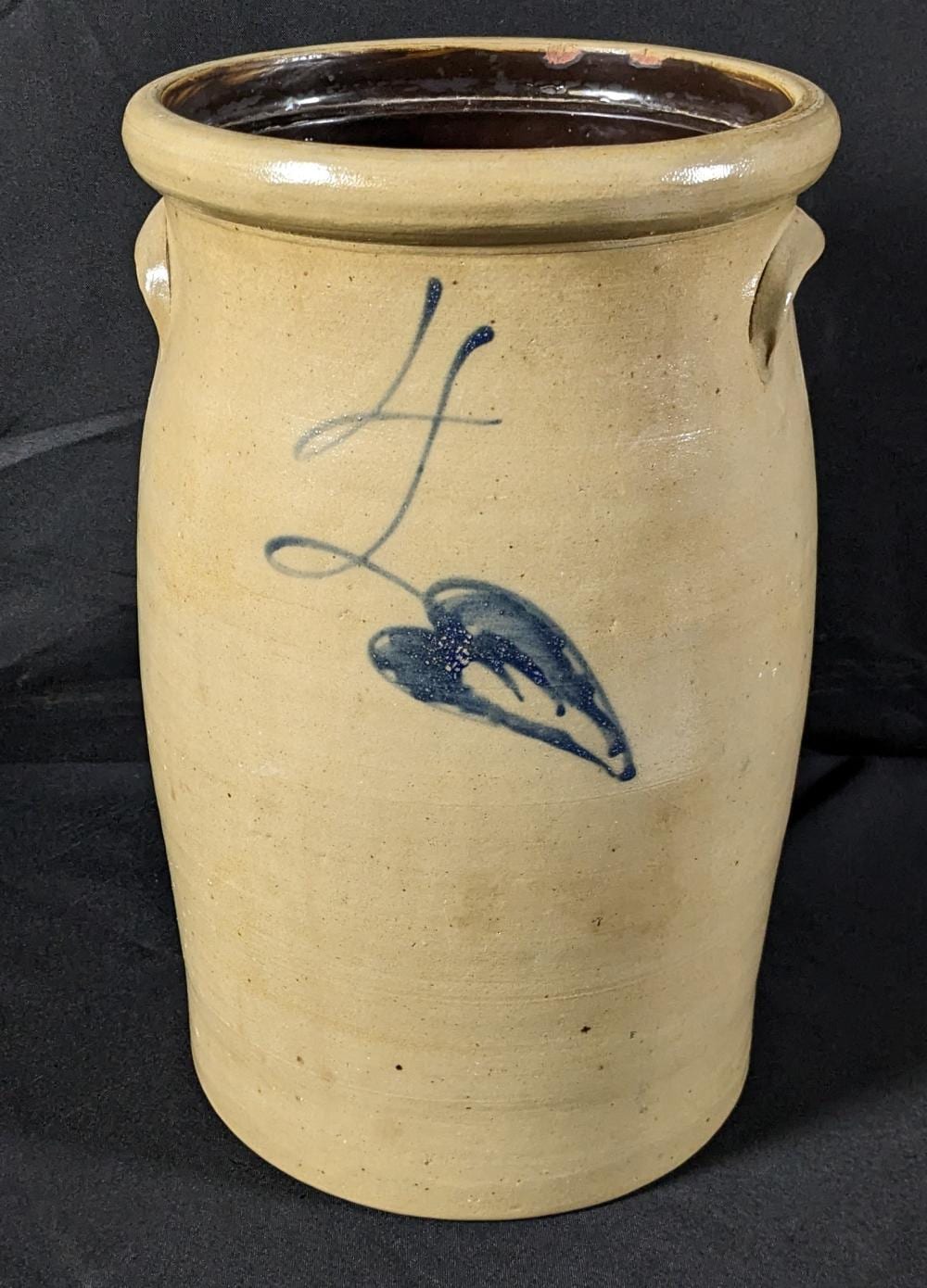
- Decoration: Freehand cobalt blue florals, birds, hearts, and folk motifs significantly enhance desirability. Stenciled designs and merchant advertising also attract collectors.
Desirability hinges on a combination of age, region, maker, decoration, completeness (original lid and dasher), and, of course, condition.
Identify Type, Maker, and Region
Attribution drives value. Learning to read the clay, glaze, decoration, and marks will get you close to the when-and-where your churn was made.
- Northeastern (New York, Pennsylvania, Vermont)
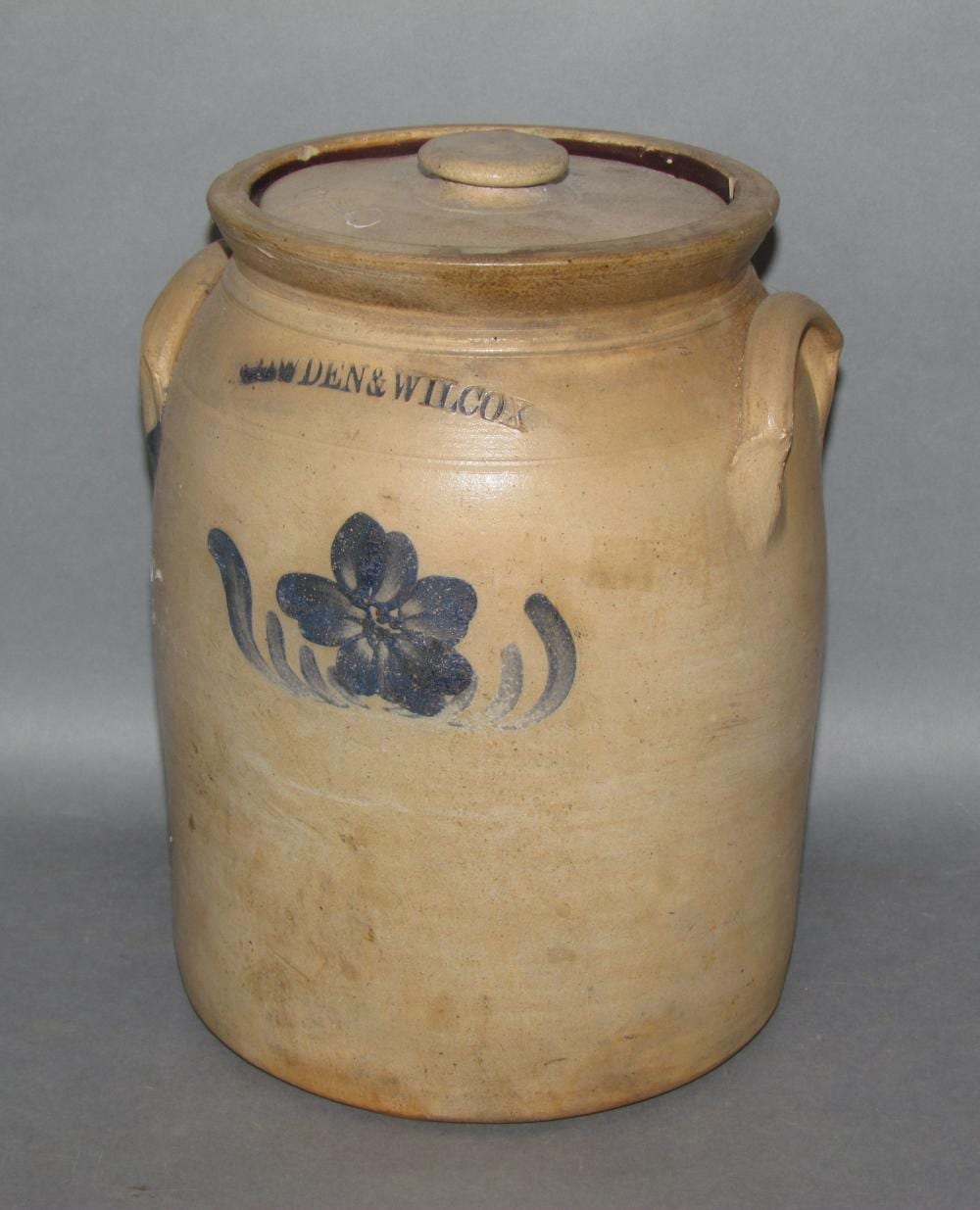
- Makers: White’s Utica (NY); Fort Edward (NY); Cowden & Wilcox, Harrisburg (PA); E. & L. P. Norton, Bennington (VT).
- Traits: Light gray salt-glaze with bold underglaze cobalt, Albany slip interior, crisp impressed maker’s stamps. Popular motifs include birds on branches, tulips, and stylized flowers. High collector demand.
- Midwestern (Minnesota, Illinois, Ohio)
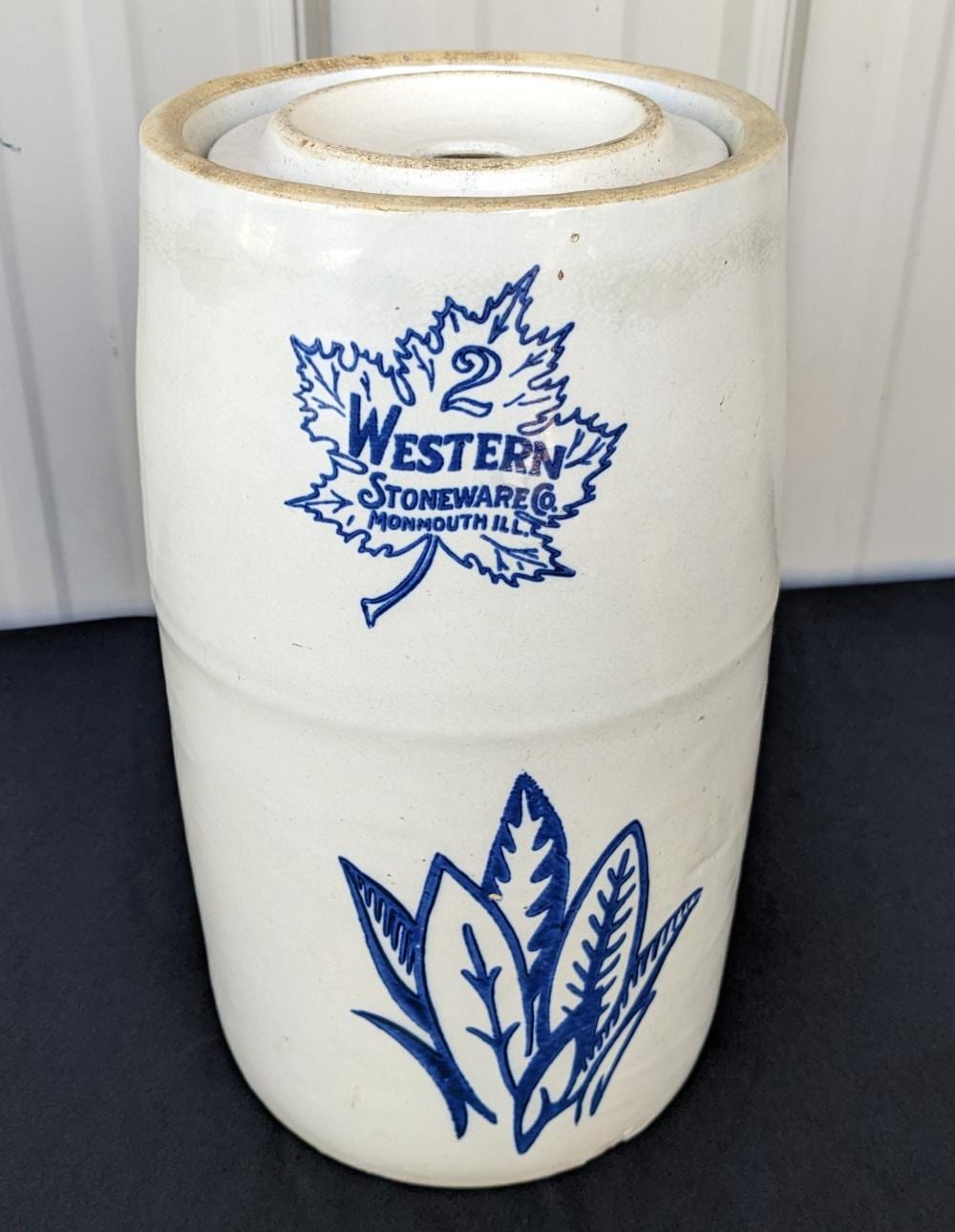
- Makers: Red Wing/Red Wing Union Stoneware (MN); Western Stoneware and Monmouth (IL); Robinson Ransbottom (OH, “blue crown” mark is later/20th c.).
- Traits: Larger production runs; decoration ranges from simple capacity numerals to stenciled leaves or “wing” logos. Generally more common, but clean, large, and logoed churns can still bring strong prices.
- Southern (South Carolina, Georgia, North Carolina)
- Makers: Edgefield District potteries (SC) and other regional alkaline-glaze kilns.
- Traits: Alkaline (ash-lime) glazes with greenish runs, more rustic clay bodies. Signed Southern stoneware is scarce; correct attributions can be valuable.
Key identifiers to document:
- Capacity mark: A brushed “4” or impressed “6” near the shoulder.
- Maker’s stamp: Often an oval or straight-line impression (“WHITE’S UTICA,” “FORT EDWARD N.Y.”).
- Advertisements: Stenciled merchant or dairy names add interest.
- Decoration technique: Freehand cobalt applied prior to salting (under the glaze) versus modern cold-painted decoration.
- Interior: Albany slip (brown) suggests Northeast/Midwest; alkaline glaze suggests Southern origin.
Note: Not every churn is marked. Unmarked pieces require evaluating form, clay, glaze, and decoration style to infer region and date.
Condition, Completeness, and Originality: How They Move the Needle
Condition is the single largest price lever. The difference between a tight hairline and a full structural crack can be hundreds of dollars.
Look closely for:
- Hairlines vs. cracks: Hairlines are fine, short, surface-reaching lines; cracks travel through the body and often sound “dead” when tapped. A single hairline might reduce value modestly; a long or multiple crack scenario can halve the value or worse.
- Chips and rim losses: Small “flea bites” and foot rim flakes are common; large rim or base chips matter more, especially around the lid opening.
- Glaze issues: Salt-glaze pinholes and kiln “kisses” (contact marks) are in-the-making and less harmful than later glaze loss or spalling. Cobalt skips or smearing can be original.
- Staining and mineral deposits: Often cleanable; heavy oil or barn grime can mask hairlines—investigate rather than aggressively scrub.
- Repairs: Re-glued sections, filled chips, and painted-in cobalt are common. UV/blacklight can reveal overpaint; acetone dab on a cotton swab may pick up modern touch-up. Cloudy, glassy fills near breaks also indicate restoration.
- Completeness: Original lid and dasher raise value. Many churns lost their lids; replacements are frequent. A period-correct lid with the proper hole size and fit is still better than none. Originality matters, so note if the lid wood, knob, and hole show matching age and wear.
Indicative impact on value:
- Undecorated 4–6 gallon churn, no lid/dasher, clean, no cracks: baseline value.
- Add original lid and dasher: a meaningful increase.
- Bold, well-executed cobalt decoration: often a large increase, depending on maker and motif.
- Hairline or minor chip: a small to moderate reduction, depending on visibility.
- Major crack, heavy repair, or replaced sections: a large reduction.
Valuation Framework: From Market Evidence to Selling Venue
Use a systematic approach to arrive at a realistic price range for your antique butter churn crock.
- Document and measure
- Height, maximum diameter, and capacity (the stamped number and actual water volume to the shoulder if safe to test).
- High-resolution photos of front, back, sides, handles, interior, base, maker’s marks, decoration details, and any flaws.
- Record provenance: family history, purchase receipt, exhibition loan, or previous appraisal.
- Identify maker/region and quality tier
- Ranked rough tiers: signed/decorated Northeast; decorated but unmarked Northeast-style; Southern alkaline-glazed with known attribution; Midwestern branded/stenciled; undecorated utilitarian.
- Research market evidence
- Focus on recent, realized prices for the same maker, motif, size, and condition tier. Note whether sales were at a regional auction, specialist stoneware sale, dealer retail, or peer-to-peer marketplace.
- Adjust for condition and completeness. A similar churn with a major crack is not an equal comparable.
- Consider selling venue and timing
- Specialist auction: Broad reach for top-tier cobalt-decorated or Southern pieces; seller’s fees apply.
- Regional/local auction: Good for clean utilitarian churns; results vary with local interest.
- Dealer retail: Higher ask prices but net to seller may be similar after margins.
- Private sale: No fees, but requires buyer trust and documentation.
- Shipping risk and cost: Large, heavy churns are fragile. Double-boxing, foam, and insurance are essential, but risk shrinks buyer pools and can clip price expectations.
- Set a range, not a single number
- Establish a conservative “trade” value and an optimistic “retail” ask. Be prepared to justify the spread with market evidence and condition notes.
General guidance on how churns compare (actual results vary by maker, decoration, size, and venue):
- Undecorated 3–6 gallon, clean, no lid: the most common and least expensive.
- Midwestern branded/stenciled (e.g., Western Stoneware, Red Wing wing logo), nice condition: a step up from undecorated churns; add a premium for large sizes or exceptional logos.
- Northeast cobalt-decorated (birds, strong florals), signed, 3–6 gallon: well above plain and stenciled churns; scarce motifs, large birds, or renowned kilns sell higher still.
- Southern alkaline-glazed with credible kiln attribution: strongly collected; prices rise further with proven provenance or maker.
- Museum-level or inscribed examples: far beyond typical ranges; seek a specialist appraisal.
Originality and Red Flags: Reproductions, Marriages, and Misattributions
The market includes reproductions and “marriages” (non-original parts combined to look complete). Guard against common pitfalls:
- Cold-painted cobalt: True 19th-century cobalt sits beneath the salt-glaze sheen. If blue pigment wipes or dissolves with a lightly dampened swab, be suspicious.
- Artificial aging: Uniform brown staining, sandpapered edges, or “worm tracks” can be faux patina. Natural wear is irregular and aligns with contact points (handles, rim, base).
- Newly drilled lids: Some ordinary storage crocks receive modern lids with a central hole to impersonate churns. Check whether the rim shows wear from a churn lid and if interior wear aligns with a dasher shaft.
- Incorrect proportions: True churns are taller and narrower than open storage crocks of the same gallon mark. Oversized lids or poor fit point to assembled pieces.
- Marks that don’t match: A “WHITE’S UTICA” stamp next to a glaze and clay body inconsistent with Utica output is a warning. Fonts, punctuation, and oval cartouche shapes should be compared against known examples.
- Blue crown marks: Popular but typically 20th-century Ohio wares; collectible, but not 19th-century “antiques.” Value accordingly.
When in doubt, weigh the totality of evidence—form, body, glaze, decoration, marks, and wear—rather than relying on a single feature.
Care, Conservation, and Ethical Use
Proper care preserves value and reduces future restoration costs.
- Cleaning: Start with distilled water and a few drops of mild dish soap. Use soft cloths and a soft nylon brush for crevices. Avoid abrasives and harsh chemicals; they can dull the glaze or lift overpaint, affecting both integrity and value.
- Mineral deposits: Soften with damp compresses; avoid prolonged soaking that can creep into hairlines. White vinegar diluted 1:4 can help, but test a small area first and rinse thoroughly.
- Wood parts: Do not soak the lid or dasher. Wipe with a barely damp cloth, dry promptly, and avoid modern glossy finishes. A microcrystalline wax on wood knobs can protect without creating a shiny, anachronistic look.
- Display: Support weight evenly; use felt pads. Keep out of direct sunlight and away from heat registers. Avoid stacking heavy crocks.
- Restoration: For valuable pieces, use reversible, museum-grade adhesives and document all work. Overpainting decorations to “brighten” cobalt is frowned upon and will be penalized by advanced collectors.
- Food safety: Do not use antique stoneware for food preparation or storage; historic glazes may contain lead or other contaminants.
Quick Appraisal Checklist
- Identify capacity, form, and proportions; confirm it’s a churn, not a storage crock with an added lid.
- Photograph marks, decoration, interior, base, and all flaws in bright, diffuse light.
- Note glaze type: salt-glaze with Albany slip interior (Northeast/Midwest) or alkaline glaze (Southern).
- Evaluate decoration: underglaze cobalt vs. any post-factory paint; quality and subject matter.
- Check condition: hairlines, cracks, chips, repairs; tap test for a clear ring vs. a dull thud.
- Verify completeness: original or period-correct lid and dasher; fit and wear should match.
- Research market evidence by maker, motif, size, condition, and selling venue within the last few years.
- Set a selling strategy: venue, packing plan, and an evidence-backed price range.
FAQ
Q: How can I tell if the cobalt decoration on my butter churn crock is original? A: Original cobalt is applied before salting and sits under the glaze. It should not smear with gentle cleaning. Look for a continuous salt-glaze sheen over the blue, natural brushwork with tapering strokes, and age-consistent crazing. Cold-painted blue on top of the glaze, uniform brightness, or pigment that lifts with a damp swab suggests later enhancement.
Q: Does a missing lid or dasher ruin the value? A: Not necessarily. Many churns lost their lids and dashers; collectors still value clean, undamaged crocks. A period-correct lid and dasher can add meaningfully to value, but poorly matched or modern replacements add little. Rarity and decoration often outweigh completeness.
Q: Are all Red Wing butter churn crocks valuable? A: Red Wing is widely collected, and clean examples with clear wing logos or stenciled designs perform well. However, plain, later pieces in common sizes bring modest sums compared with earlier, boldly decorated northeastern churns. Condition, size, and logo strength are key.
Q: What’s the best way to ship a heavy churn safely? A: Double-box with at least 2–3 inches of foam or bubble wrap around the crock, pad the interior to prevent lid movement, protect handles, and use a second box with additional cushioning. Insure the package and photograph the packing steps. For very valuable pieces, consider a professional art shipper or local pickup only.
Q: Should I restore a cracked churn before selling? A: For typical utilitarian churns, repairs rarely pay for themselves. For high-end, decorated, or attributed pieces, discreet, reversible restoration by a qualified conservator can stabilize the artifact and improve appearance. Always disclose restoration; undisclosed repairs undermine value and trust.
With a careful eye for form, glaze, decoration, and condition—and a disciplined approach to comparables—you can unlock the true worth of your antique butter churn crock and navigate the market like a pro.