Unlocking the Value of the Past Discover How Much Your Antique Iron Could Be Worth Today: appraisal and value basics
Unlocking the Value of the Past Discover How Much Your Antique Iron Could Be Worth Today research should start with identification, condition, provenance, and item-specific market evidence. Use this guide to compare the signals that matter before paying for a formal appraisal or deciding whether to sell.
Antique iron value checklist
Antique irons are compact time capsules: built to last, easy to display, and surprisingly rich in variations that affect value. Whether you found a heavy “sad iron” in a family trunk or inherited a shiny brass coal iron with a dragon-head finial, there’s a clear path to estimating what it might bring on today’s market. This guide covers the major types, price drivers, realistic value ranges, documentation, safe care, and smart selling steps—so you can make informed decisions with confidence.
A quick tour of antique irons: forms, fuels, and timelines
Understanding what you have is half the battle. Most collectible irons fall into these broad categories:
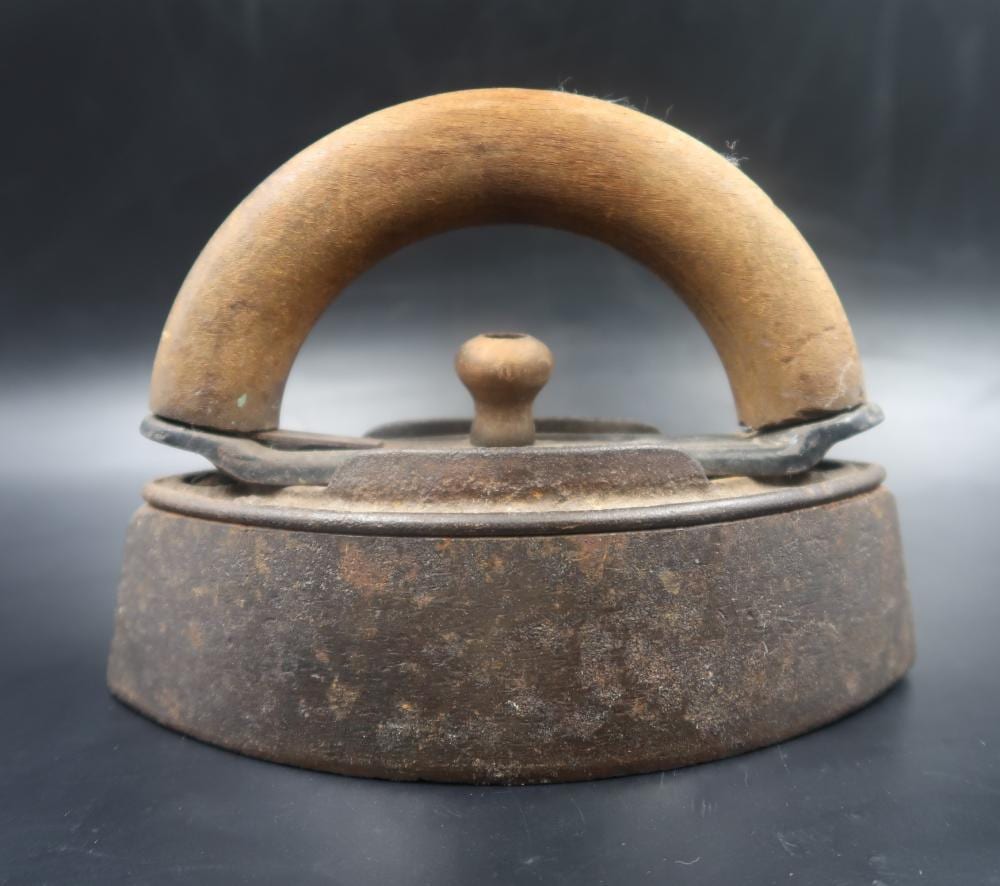
Flat irons (sad irons), 18th–late 19th century
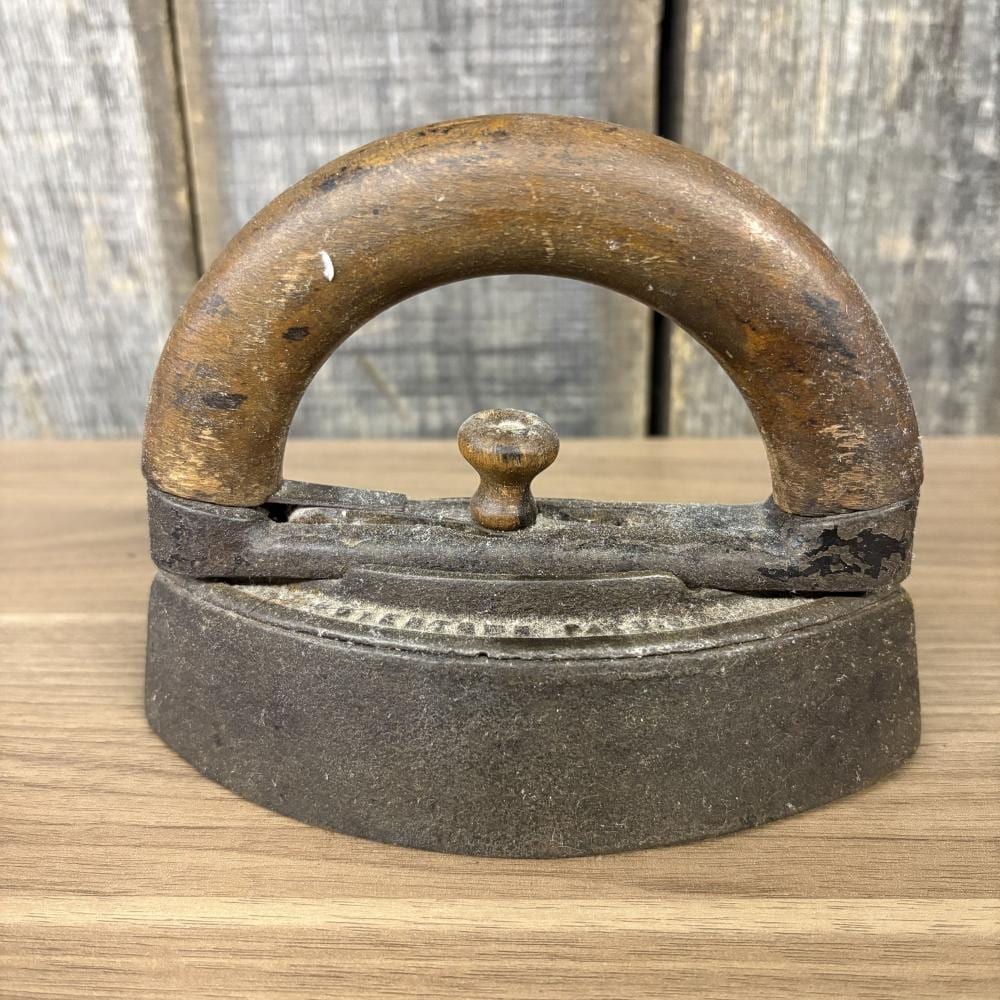
- Solid cast iron blocks heated on a stove or in a hearth. “Sad” means solid/heavy. Early examples can be hand-forged; later ones are cast with crisp foundry marks.
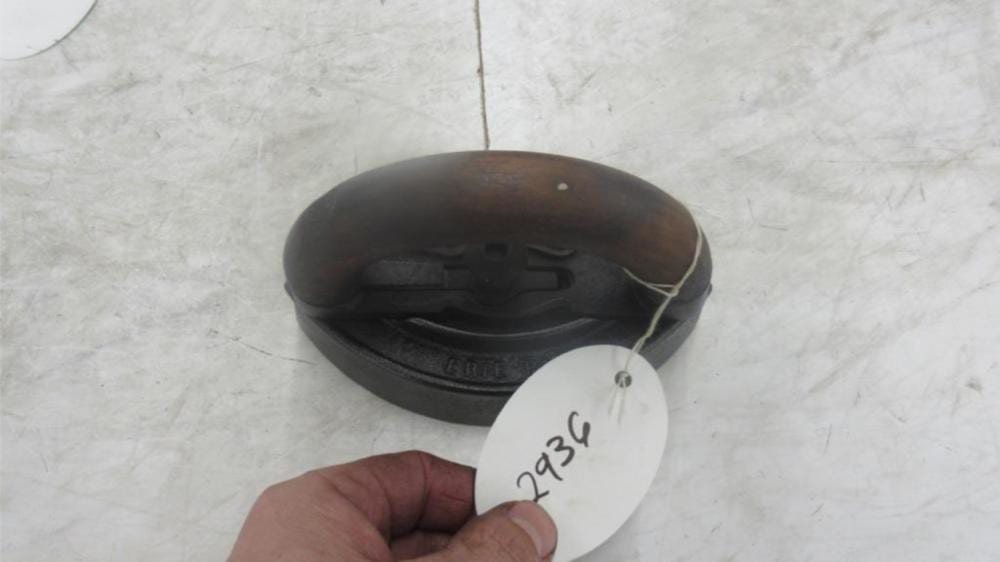
- Cold-handle variants (late 19th c.), notably the “Mrs. Potts’ Cold Handle Sad Iron” design (patented 1871), used detachable wooden handles to reduce burned fingers. Sets often included multiple bases, a single handle, and a trivet.
Box and slug irons, 18th–19th century
- Box irons contain a hollow body into which a heated “slug” or iron core is inserted to keep the sole hot longer.
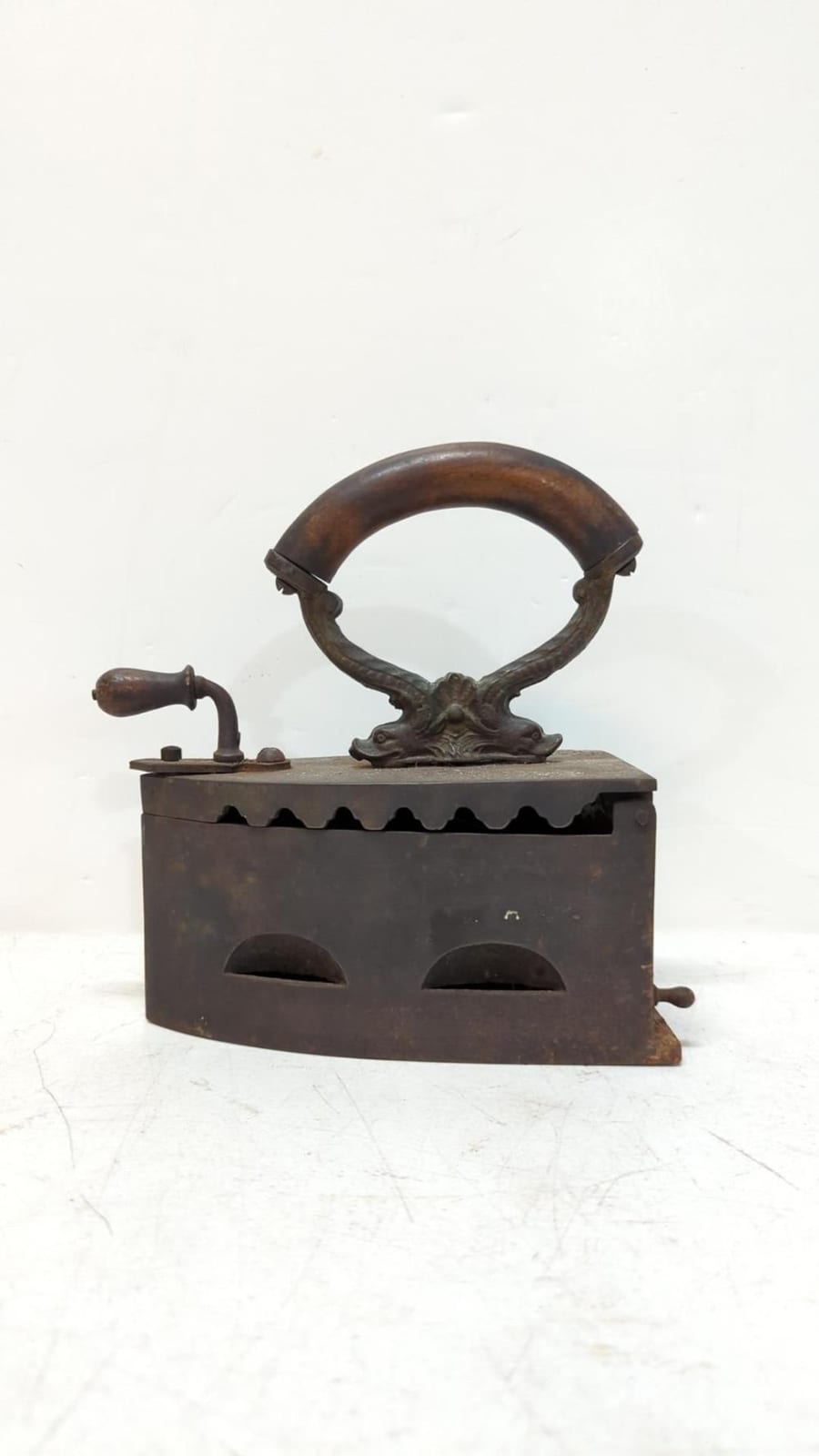
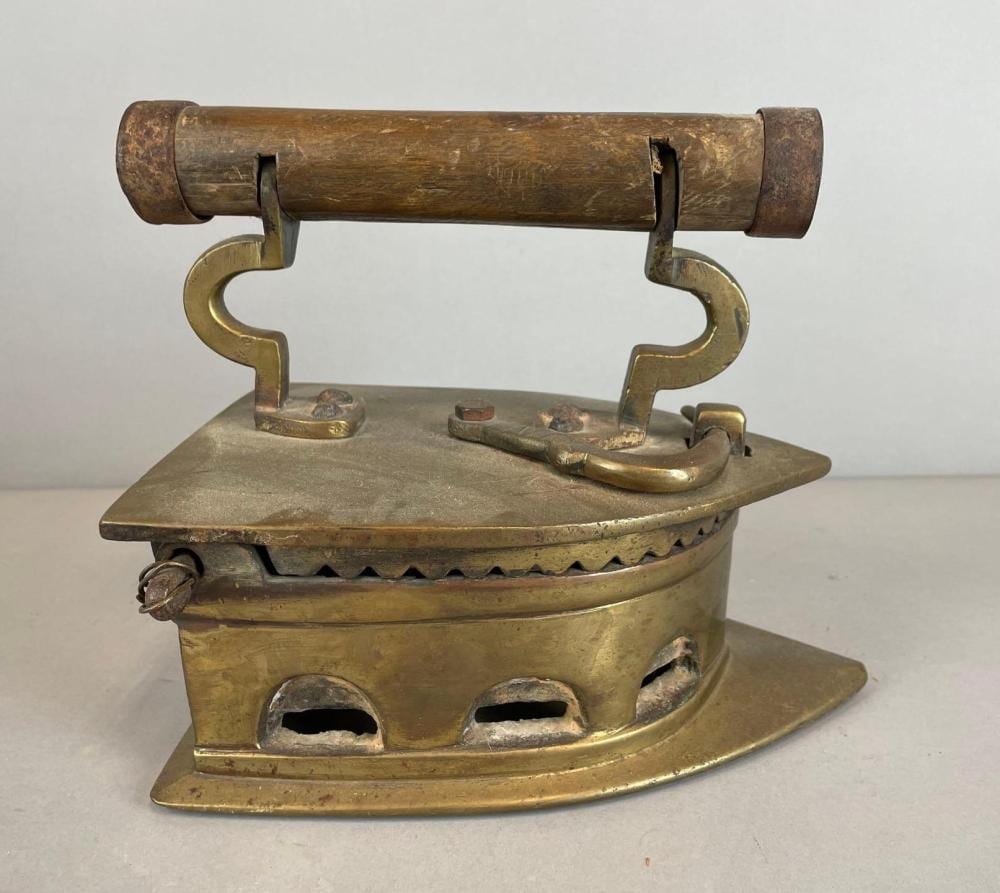
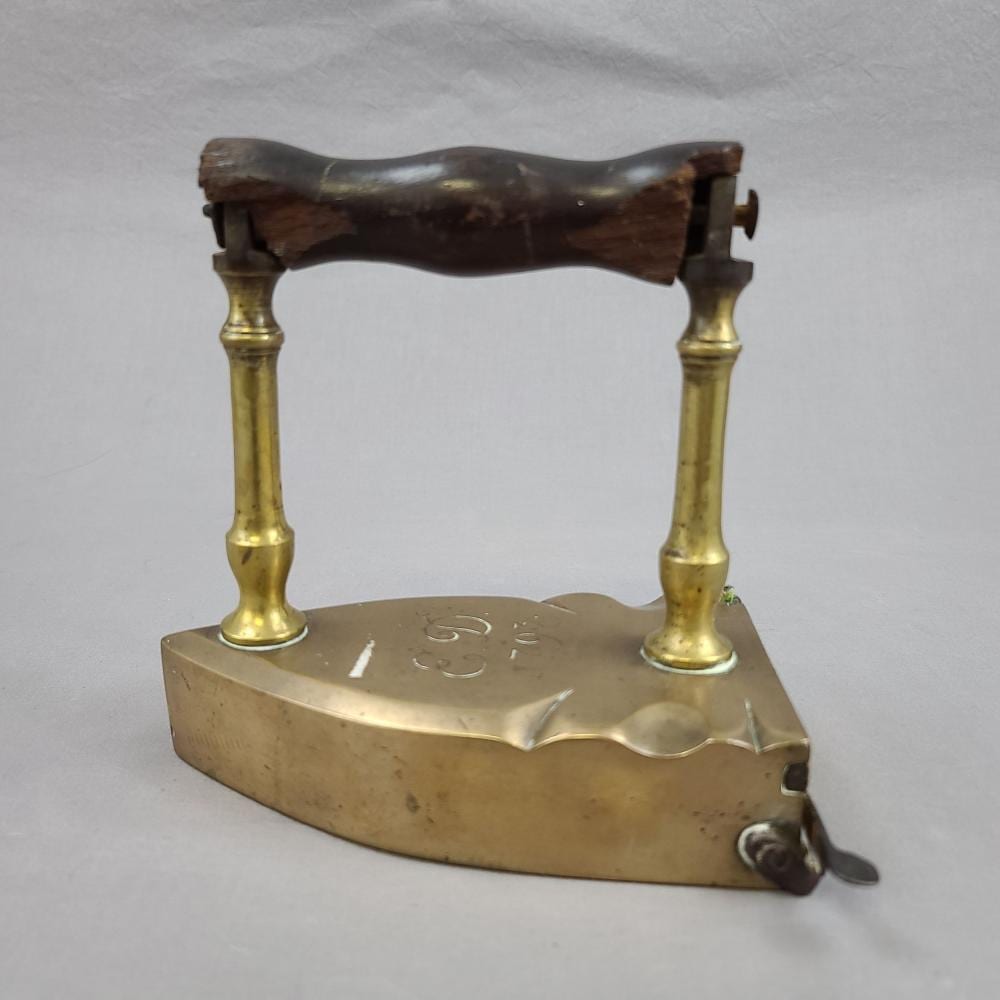
- Charcoal irons are similar hollow bodies but burn charcoal inside; look for vent holes and a hinged lid. Common in Europe, Asia, and Africa well into the 20th century; many feature ornate brass bodies and zoomorphic latches.
Fuel irons (alcohol, gasoline, kerosene), c. 1890s–1930s
- With small tanks and burners, these portable irons promised consistent heat. You’ll see makers such as Coleman and other stove/lantern brands. Good examples retain burner components, caps, and heat diffusers.
Early electric irons, c. 1905–1930s
- Pioneered in the early 1900s, with widespread adoption by the 1910s–1920s. Look for brands such as Hotpoint, General Electric, Westinghouse, and Landers, Frary & Clark (“Universal”). Art Deco chromed models with bakelite handles are collectible display pieces.
Tailor’s “goose” irons and specialty forms
- Heavier, elongated irons used by tailors (the curved handle resembles a goose neck). Specialty pieces include goffering irons for ruffles and miniature toy irons/salesman samples.
Knowing which family your iron belongs to sets expectations for scarcity, desirability, and safe handling.
What drives value: the five big variables
Value is a blend of history, design, and condition. These factors matter most:
- Age and rarity
- Early, hand-forged flat irons and 18th–early 19th century box irons are scarcer and typically more valuable than mass-produced later pieces.
- Unique regional forms (e.g., Scandinavian box irons with elaborate finials or African/Asian zoomorphic charcoal irons) can draw strong interest if genuinely old.
- Maker, marks, and patents
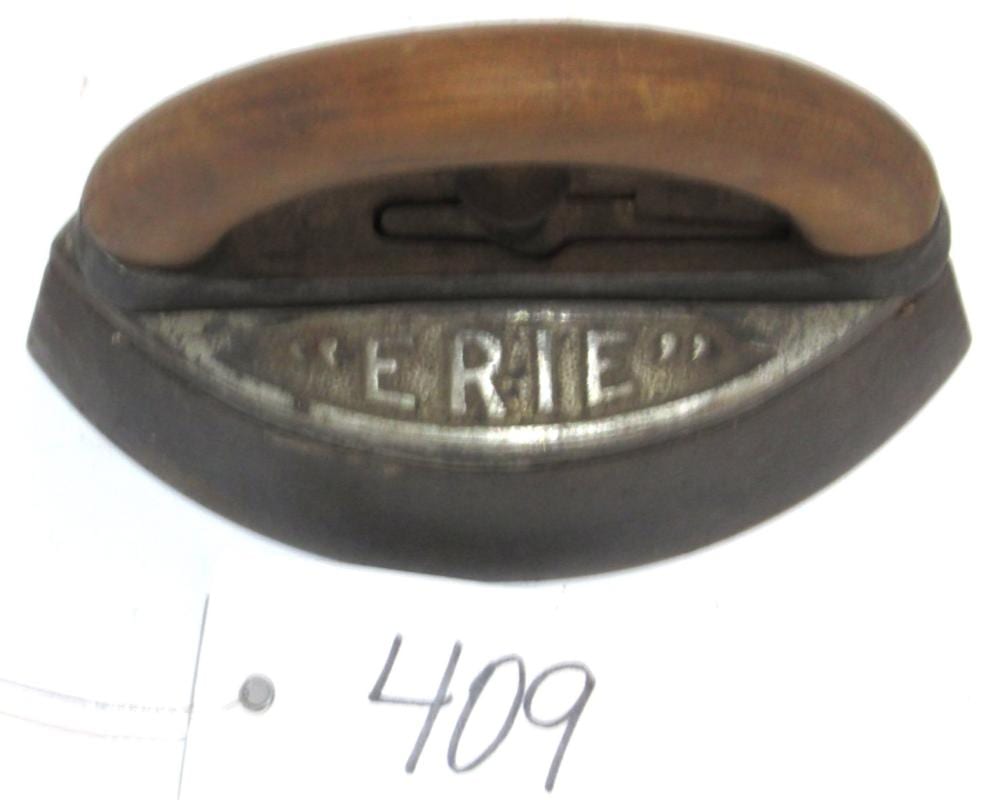
- Foundry or maker’s marks, patent dates, and model numbers boost confidence and price. Check the underside of the sole, lids, fuel caps, and handles.
- Names to watch: Mrs. Potts (cold-handle sad irons), Hotpoint, General Electric, Landers Frary & Clark (Universal), Westinghouse, Coleman, and regional European foundries for earlier box irons.
- Materials and ornament
- Brass and copper bodies (especially on charcoal irons) attract decorative buyers; nickel-plated or chromed early electric irons appeal to Art Deco collectors.
- Aesthetic details—animal-head latches, crisp casting, finely shaped handles—support higher prices.
- Completeness and sets
- Sets with multiple bases, detachable handles, trivets, original paperwork, or boxes can command a premium.
- For fuel irons: tank caps, burners, heat diffusers, and original tools or instructions matter.
- Condition and functionality
- Flatness of the soleplate, absence of cracks/pitting, intact hinges and latches, and honest patina all help. Warped soles reduce desirability.
- For fuel and electric irons, assume display use only unless tested by a qualified professional. Original cords on electrics are often brittle; intact cords and switches add value as artifacts, not necessarily as safe appliances.
Current price ranges you can expect
Markets fluctuate, and regional demand matters, but this is how the main types compare in retail and well-presented online sales; check recent sold listings for the same type before pricing. Private or local sales may be lower; exceptional provenance or condition can push higher.
Common late 19th–early 20th century sad irons (single base)
- Typical: the most common and least expensive antique irons
- With crisp marks, unusual shapes, or larger tailor’s sizes: sell above typical examples
Mrs. Potts-style cold-handle sets (multiple bases plus handle/trivet)
- Partial sets: priced by the pieces present
- Complete, clean sets with legible marks: worth noticeably more than partial sets
Box/slug irons (non-fuel) with insert cores
- Plain iron bodies: generally modest
- Decorated or uncommon regional types: sell well above plain bodies
Charcoal irons (European/Asian/African)
- Common brass-bodied examples: generally modest
- Zoomorphic or finely cast lids/finials with honest age: sell well above common examples
- Note: modern tourist reproductions often trade for far less
Tailor’s “goose” irons
- Functional plain examples: generally modest
- Early hand-forged or named-maker variants: a premium over plain examples
Fuel irons (alcohol/gasoline/kerosene)
- Typical branded examples (e.g., Coleman): common and moderately priced
- With original box/papers/accessories: a clear premium over loose irons
- Rare models or near-mint survivors: higher
Early electric irons (c. 1905–1930s)
- Common chromed/bakelite 1920s–30s: generally modest
- Early or unusual designs, marked Hotpoint/Universal/GE in clean condition: sell above common models
- With original box/stand/instructions: premium
Miniature toy irons and salesman samples
- Toys (tin, cast iron, or early electric toy versions): priced on condition and maker
- Salesman samples with maker marks: usually above toys
Museum-grade or exceptional pieces
- Early, ornate European box irons, rare patented prototypes, or documented 18th-century hand-forged examples are the top of the market, with exceptional outliers higher still.
Caveats:
- Pitting, cracks, replaced parts, heavy grinding/polishing, and poorly repaired handles lower value.
- Reproductions of brass charcoal irons are common; genuine age and use markers (soot staining, wear at contact points, oxidation consistent with age) support higher prices.
Identify, document, and avoid reproductions
Follow a simple, systematic routine:
- Start with type and construction
- Determine whether it’s a solid sad iron, a box/slug iron, a charcoal burner, a fuel iron, or an early electric.
- Inspect construction quality: crisp cast lines, tight hinge/latch fit, uniform thickness, well-finished sole.
- Hunt for marks
- Look under the base, inside lids, on handles, and on fuel caps or burners.
- Record anything: maker names, foundry numbers, patent dates, capacity markings, electrical ratings (watts/volts for electrics).
- Read the wear
- Honest age shows as smoothened edges, soot or heat tint where expected (inside charcoal compartments; around burners), and polished high spots from handling.
- Tooling marks can be visible on early hand-forged pieces; later factory castings are more uniform.
- Spot common reproductions
- Tourist charcoal irons: bright yellow brass, thick rough casting, phillips screws on old-style hinges, flimsy latches, sharp interior corners with no soot staining, uniform artificial patina, and lighter-than-expected weight.
- Novelty miniatures with fantasy motifs and no functional evidence are usually decor, not antiques.
- Cross-check parts
- Mismatched handles, modern fasteners, or recently cut gaskets reduce originality. Electric irons with non-period cords or switches may be repaired or altered; originals are preferable for collecting (though not for use).
- Safety flags
- “Asbestos” sad irons (heat-shield designs using asbestos insulation) exist in various forms. Treat unknown insulating materials cautiously; do not abrade or open layered shields.
Document everything with clear photos and measurements (length of sole, width at heel, handle height, and weight).
Care, conservation, and safety
Good stewardship protects both value and health.
Cleaning
- Dry dust first. Use mild soap and water sparingly, drying thoroughly afterward.
- Lift fresh surface rust gently with a soft brass brush or fine synthetic abrasive pad and a light oil; avoid aggressive sanding that flattens casting details.
- Do not strip original japanning, nickel/chrome plating, or lacquer. Over-polishing can erase value.
- After cleaning bare iron, a microcrystalline wax or neutral museum wax can reduce future oxidation.
Handling hazardous features
- Asbestos-labeled or asbestos-shield irons: avoid disturbing insulation. If material is friable/damaged, minimize handling, keep it contained, and seek professional advice before further action.
- Fuel irons: assume old fuel residues are flammable or noxious. Do not light them; vent in a safe area when inspecting.
Electric irons
- Treat cloth-insulated cords and bakelite handles gently. Do not plug in unless inspected by a qualified technician. These are best as display pieces.
Storage
- Store in a dry environment with stable humidity. Keep heavy irons on lower shelves. Separate iron bases from delicate surfaces to avoid staining or indentations.
Preserve patina and original finishes; collectors value originality over shine.
Selling strategy and documentation: present it like a pro
A well-documented iron sells faster and for more.
Build a concise description
- Type: “Box iron with slug,” “Charcoal iron,” “Mrs. Potts cold-handle sad iron set,” “Coleman gasoline iron,” “Hotpoint early electric iron.”
- Maker/marks: quote exactly as stamped or cast; include patent dates and model numbers.
- Materials/finish: cast iron, brass, nickel/chrome, wood/bakelite handle.
- Measurements and weight: provide in inches/centimeters and pounds/kilograms.
- Condition: note flatness of sole, any cracks or pitting, hinge/latch function, completeness (trivet, slug, lid, caps), and whether cords or tanks are original.
- Provenance: family history, original box/papers, or professional appraisal notes if available.
Photography that sells
- Use indirect daylight and a neutral background.
- Capture: full profile both sides, underside of sole, lid interior, hinge/latch close-ups, all marks, and accessories.
- Show flaws honestly. Include a photo of the iron next to a ruler for scale.
Pricing and venue
- Common heavy irons may do best locally to avoid shipping costs.
- Scarcer, documented pieces with clean marks are strong candidates for reputable auctions or specialty dealers.
- For sets, sell together; for multiples of common irons, consider a grouped lot.
Packing and shipping heavy irons
- Protect handles and protrusions first, then the sole. Use double boxing with dense padding.
- Disclose and safely pack any removable fuel components. Do not ship with fuel.
Quick valuation checklist
- Identify the type: sad, box/slug, charcoal, fuel, or early electric.
- Record all marks: maker, patent dates, model numbers, electrical ratings.
- Measure and weigh: length, width, height, and total weight.
- Check condition: sole flatness, cracks/pitting, hinge/latch integrity, plating/japanning.
- Verify completeness: handle, trivet, slug, lid, caps, burner/diffuser, cords, paperwork.
- Assess originality: look for honest wear vs. tourist/reproduction cues.
- Note hazards: asbestos shields, old fuel residues, fragile cords.
- Photograph thoroughly: multiple angles and close-ups of marks and flaws.
- Compare to recent sales for similar type, maker, and condition before pricing.
FAQ
Q: How can I tell if my brass charcoal iron is a reproduction? A: Red flags include bright or uniform yellow brass, rough or overly thick casting, phillips-head screws on old-style hinges, no soot or heat tint inside the chamber, perfectly even “antique” color, flimsy latches, and surprisingly light weight. Genuine examples usually show uneven but logical wear and internal heat staining.
Q: Are early electric irons collectible if the cord is brittle? A: Yes. For collectors, originality matters more than plug-and-play function. Intact period cords, switches, and badges help value as artifacts. Do not power the iron without professional inspection; most are kept as display pieces.
Q: Should I polish my iron to a mirror finish? A: Generally no. Over-polishing removes original finish, flattens casting details, and can lower value. Aim for clean, dry, and stable. Preserve patina, plating, and factory coatings whenever possible.
Q: What are “asbestos sad irons,” and are they dangerous? A: Some late 19th–early 20th century irons used asbestos insulation as a heat shield. If the insulating material is intact and enclosed, avoid disturbing it. If damaged or friable, minimize handling and seek guidance before cleaning or display.
Q: What’s the best way to ship a heavy iron? A: Wrap handle and sole separately, immobilize moving parts, and double-box with dense padding. Keep the iron from shifting. For fuel irons, ensure tanks are empty and ventilated; never ship with fuel.
With careful identification, honest condition reporting, and thoughtful presentation, your antique iron can find the right audience—and the right price—today.