Before electric appliances transformed household chores, laundry day relied on cast iron pressing implements known as sad irons, flat irons, or smoothing irons. Today, these historical artifacts have become sought-after collectibles, with values ranging from a few dollars to several hundred depending on rarity, condition, and historical significance.
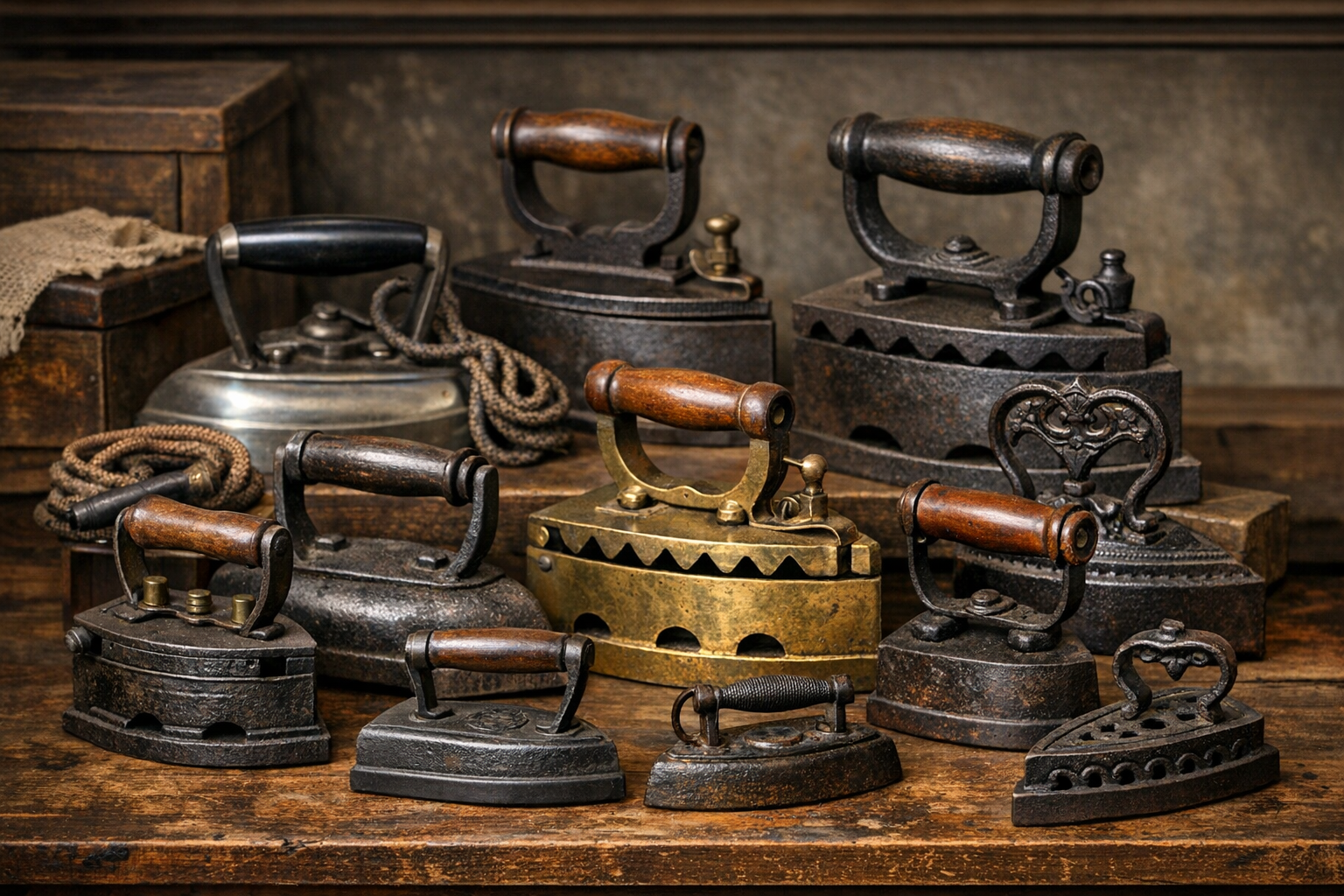
In this comprehensive guide, we’ll explore the fascinating world of antique irons, providing expert insights into identification, valuation factors, and current market prices to help collectors and curious owners understand what makes these household relics valuable.
What Are Antique Irons?
The History of Pressing Irons
The term “sad iron” comes from an Old English word meaning “solid,” aptly describing these weighty tools. Before electricity, housewives and laundresses would heat these solid metal implements on stoves or in fires before pressing wrinkles from clothing and linens.
Evolution of Pressing Irons
- Pre-1800s
Early Iron Age
Simple solid cast iron blocks with handles, heated directly in fires or on stoves, known as flat irons or sad irons.
- 1800-1870
Innovation Period
Introduction of specialized designs including slug irons (with removable heating elements), charcoal irons (with internal heating), and fluting irons for ruffles and pleats.
- 1870-1900
Golden Age
Peak production with numerous patents and manufacturers creating irons with detachable handles, elaborate designs, and specialized functions.
- 1900-1930
Transition Era
Introduction of early electric irons while traditional sad irons continued in use, especially in rural areas without electricity.
- 1930s onwards
Modern Era
Traditional sad irons gradually replaced by electric models; old irons become collectibles.
By understanding when and how these irons were made, collectors can better identify valuable specimens and appreciate their historical significance.
Types of Collectible Antique Irons
Common Varieties Worth Collecting
Sad Irons (Flat Irons)
The most common type, these solid cast iron implements typically came in sets with a detachable wooden handle that could be moved from one iron to another as they cooled. Multiple irons would be heating simultaneously to maintain efficient work.
Box or Charcoal Irons
These innovative designs featured a hollow chamber that could be filled with hot coals or charcoal, maintaining heat longer than solid irons. Often featuring decorative ventilation holes, they tend to command higher prices due to their greater complexity.
Fluting Irons
Specialized for creating pleats and ruffles in clothing and linens, these typically feature cylindrical components and can be quite valuable due to their specialized purpose.
Sleeve Irons
Small, pointed irons designed specifically for pressing sleeves, cuffs, and other tight areas. Their specialized function and typically smaller production numbers make them sought after by collectors.
Patented Designs
Irons featuring unique patented mechanisms—such as detachable handles, heat indicators, or special cooling systems—often carry higher values, especially when the patent information is clearly visible.
| Category | Statistic | Note |
|---|---|---|
| Age Factor | 80-150% | Premium for pre-1880 irons |
| Condition Premium | 35-50% | Value increase for excellent condition |
| Patent Premium | 60-100% | Added value for documented patents |
Identifying Valuable Antique Irons
Authentication & Identification Tips
Manufacturer Marks
Many valuable irons bear manufacturer marks or logos. Look for names like:
- Dover (American)
- Asbestos Sad Iron Company
- Enterprise Manufacturing
- Geneva Hand Fluter
- The American Machine Company
These makers often produced high-quality irons that remain desirable to collectors today.
Patent Information
Patent dates and numbers can significantly increase an iron’s value, especially for unusual or innovative designs. Check the base or handle for patent information such as “PAT. JUN 10 1880” or similar markings.
Antique Iron Authentication Checklist
Use this checklist to verify authenticity of potential antique irons
- Appropriate weight and heft for size (genuine cast iron is heavy)
- Visible casting marks, seams, or irregularities consistent with period manufacturing
- Signs of appropriate age-related wear (not artificially distressed)
- Period-appropriate manufacturer marks or patent information
- Metal composition consistent with period (typically cast iron or brass)
- Design elements match documented historical examples
Age Determination
Determining the approximate age of an antique iron helps establish its value:
- Pre-1880s irons are typically considered antique and may command higher prices, especially with documented provenance.
- 1880-1920s irons are often classified as vintage and make up the bulk of the collector’s market.
- Post-1930s non-electric irons generally have lower values unless featuring unique designs or exceptional condition.
According to experienced collectors, true antique irons typically date before 1880, while electric and steam irons of significant age are classified as vintage rather than antique.
Current Market Values for Antique Irons
Price Guidelines by Category & Condition
Antique Iron Price Ranges (2024)
Current market values based on recent sales data
According to data from JustAnswer’s antiques experts, a typical antique iron with a hinge mechanism in good condition would be valued between $75-$85, while a vintage blue iron from the 1920s might fetch $40-$50.
Recent Auction Results
| Category | Price | Notes |
|---|---|---|
| Standard Sad Irons (Good condition) | $25-$50 | Common designs with typical wear |
| Sad Irons with Detachable Handles | $40-$85 | Original handle adds significant value |
| Charcoal/Box Irons | $75-$150 | Higher for ornate designs or excellent condition |
| Fluting Irons | $60-$120 | Specialized designs command premium prices |
| Rare Patented Designs | $100-$250+ | Unusual mechanisms or documented patents |
| Early (Pre-1860) Examples | $150-$400+ | Especially with provenance or unique features |
</tbody> </table>
Factors That Influence Antique Iron Value
Value Determinants
Condition Assessment
Condition significantly impacts value, with pristine examples commanding premiums of 50% or more compared to similar irons with damage or excessive rust.
Condition Assessment for Antique Irons
Evaluate the condition of your antique iron using these criteria
- Original finish largely intact
- Minimal or surface-only rust
- Original handle present and intact
- No major cracks, chips, or repairs
- Legible markings and manufacturer information
- Moving parts (if applicable) function properly
- Original accessories present (trivets, stands, etc.)
Rarity & Desirability
Certain features make antique irons particularly desirable to collectors:
- Unusual shapes or specialized functions
- Complete sets with original stands or trivets
- Documented historical significance
- Original manufacturer boxes or packaging
- Ornate decorative elements or figural designs
Provenance & Documentation
Irons with documented history—particularly those linked to notable individuals, businesses, or historical events—can command significant premiums. Original receipts, catalog listings, or historical photographs featuring the iron add substantial value.
Where to Buy & Sell Antique Irons
Market Opportunities
Popular Selling Venues
For sellers looking to find the best price for antique irons, consider these options:
- Online Marketplaces: eBay hosts a dedicated category for collectible antique irons with active buyers
- Antique Shows: Direct sales to knowledgeable collectors often yield higher prices
- Specialized Dealers: Shops focusing on early Americana or household antiques
- Auction Houses: Consider for rare or high-value specimens
Where to Find Antique Irons
Collectors can discover antique irons at:
- Estate Sales: Often yield undiscovered examples at reasonable prices
- Rural Auctions: Particularly in areas with agricultural history
- Antique Malls: Browse multiple dealers in one location
- Online Platforms: Beyond eBay, check Etsy and 1stDibs for curated selections
Specialist Collectors & Resources
Connect with the antique iron collecting community through:
- Ironology Club (dedicated to pressing iron collectors)
- Regional collector associations
- Specialized museums with laundry and household implement collections
Care & Restoration of Antique Irons
Preservation Guidelines
Cleaning & Maintenance
For antique iron preservation:
- Remove surface dust with a soft brush or cloth
- Treat light rust with fine steel wool and mineral oil
- Apply a thin coat of paste wax or specialized metal protectant
- Store in climate-controlled environments to prevent further rust
- Handle wooden components carefully to prevent cracking or splitting
Restoration Considerations
Before restoring an antique iron, consider:
- Excessive cleaning may reduce value by removing desirable patina
- Original finish, even if worn, is generally preferable to refinishing
- Professional restoration is recommended for valuable specimens
- Document the iron’s condition before any restoration work
Display Recommendations
Protect your collection while showcasing it:
- Mount irons on wall displays away from moisture sources
- Use proper supports to prevent stress on handles
- Consider UV-protective cases for rare examples
- Include small silica gel packets in display cases to control humidity
FAQ: Common Questions About Antique Iron Values
Common Questions About Antique Irons
Are old cast irons worth anything?
What to do with old irons?
How old are antique irons?
What are antique irons called?
How can I tell if my old iron is valuable?
Where is the best place to sell antique irons?
External Resources for Antique Iron Enthusiasts
Helpful Resources for Collectors & Sellers
Collectible Antique Irons on eBay
Browse current listings and sold prices for antique irons, offering valuable market data for collectors and sellers.
Antique Iron Price Guide by Carter's
Comprehensive price guide for vintage flat irons and coal irons with auction results ranging from $24 to $192.
AntiqBuyer Pressing & Sad Iron Information
Resource for collectors interested in rare and unusual examples of antique pressing irons, with information on patented features.
Vintage Irons on Etsy
Curated selection of handmade, vintage, and custom irons from independent sellers with unique examples not found elsewhere.
1stDibs Antique Iron Collection
High-end marketplace featuring premium antique irons from top sellers and makers worldwide with global shipping options.
JustAnswer Antique Iron Valuations
Expert valuation service with examples of professional appraisals for various antique iron types and conditions.
Conclusion: The Enduring Appeal of Antique Irons
Antique irons represent a tangible connection to domestic life in earlier eras, showcasing both technological evolution and the craftsmanship of their time. Their transformation from humble household tools to sought-after collectibles reflects our appreciation for historical artifacts that tell stories of everyday life.
For collectors, the diversity of designs—from basic sad irons to elaborate patented mechanisms—offers endless opportunities for specialization and discovery. Whether you’re a seasoned collector or just discovering these fascinating objects, understanding their history, identification markers, and value factors will enhance your appreciation and help you make informed decisions about buying, selling, or preserving these pieces of domestic history.
As with many antiques, the market for old irons continues to evolve, with rare and exceptional examples appreciating in value while more common specimens remain accessible entry points for new collectors. By focusing on condition, rarity, and documented provenance, collectors can build meaningful collections that preserve this aspect of material culture for future generations.
What similar items actually sold for
To help ground this guide in real market activity, here are recent example auction comps from Appraisily’s internal database. These matched sales are market context only, not an object estimate or identification, and they do not guarantee a price for your specific irons.
Shown USD range: USD 5-USD 40. Median of these 11 USD examples: USD 15.
| Comparable | What sold | Auction house | Date | Lot | Source-reported amount |
|---|---|---|---|---|---|
 |
(2) Sad IronsSource blocked; provenance matched | Apple Tree Auction Center | 2024-06-11 | 1432 | USD 20 (buyer’s-premium treatment unknown) |
 |
A collection of three antique sad irons-old coal ironsSource blocked; provenance matched | Link Auction Galleries | 2019-05-31 | 130 | USD 35 (buyer’s-premium treatment unknown) |
 |
3 Old Sad Irons with Wooden Handles, 6 1/2 in. (16.5 cm.) approx.Source blocked; provenance matched | Asselmeier May Auctions | 2025-01-26 | 277 | USD 15 (buyer’s-premium treatment unknown) |
 |
Vintage Sad Irons & Old Mountain Grill PressSource blocked; provenance matched | EJ'S Auction & Appraisal | 2022-05-07 | 2332 | USD 40 (buyer’s-premium treatment unknown) |
 |
Antique Sad Flat IronsSource blocked; provenance matched | R & R Auction INC | 2021-07-25 | 504 | USD 15 (buyer’s-premium treatment unknown) |
 |
Four 19th Century Miniature Sad IronsSource blocked; provenance matched | Keystone Auctions LLC | 2018-04-21 | 237 | USD 15 (buyer’s-premium treatment unknown) |
 |
Shelf lot; 3 old vintage flat irons, blue & whiteSource blocked; provenance matched | Bargain Hunt Auctions | 2015-11-14 | 935 | AUD 60 (buyer’s-premium treatment unknown) |
 |
Metal Wares: (5) sad irons – sizes & makers vary along with (2) figures – painted elephant & girl *Caution – shipping may be costly*; iron hammer & (3) brass hand bellsSource blocked; provenance matched | Roan Inc. Auctioneers & Appraisers | 2024-02-21 | 501 | USD 10 (buyer’s-premium treatment unknown) |
 |
3 Sad ironsSource blocked; provenance matched | Wehrly's Auction Service | 2023-02-14 | 541 | USD 8 (buyer’s-premium treatment unknown) |
 |
(2) # 7 Sad IronsSource blocked; provenance matched | Apple Tree Auction Center | 2024-06-11 | 1433 | USD 5 (buyer’s-premium treatment unknown) |
 |
Wooden Ironing Board with 2 Sad Irons and Old ApronSource blocked; provenance matched | Asselmeier May Auctions | 2023-04-23 | 385 | USD 20 (buyer’s-premium treatment unknown) |
 |
Old American Beauty Iron, Cast Iron Sad IronsSource blocked; provenance matched | R & R Auction INC | 2022-11-01 | 4459 | USD 5 (buyer’s-premium treatment unknown) |
How these auction records were verified
Each row retains its exact source URL, lot identity, retrieval time, access result, and immutable record hash. Live source access was blocked; the exact record matched Appraisily's immutable pipeline provenance. Inspect the public comparable provenance record.
Disclosure: prices are shown as reported by auction houses and are provided for appraisal context. Learn more in our editorial policy.
Free instant estimate
Not sure if your item is worth appraising? Let us take a look.
Upload a photo, tell us what you know, and get a free first read. If a full appraisal makes sense, we will say so.
Free. No card needed. Takes about two minutes.
Choose your next step
Use the path that matches the decision you need to make about the item.
Not sure it is worth appraising?
Start with a lower-friction screen to understand the likely category, evidence, and next step.
Upload photos for a free first lookWant proof before paying?
See how a signed report documents photos, comparable evidence, condition notes, and value conclusions.
View signed report sampleNeed a signed report?
Use this for insurance, estate, donation, resale, or documented value decisions.
Need documentation now? Start signed appraisalNeed local or specialist help?
Compare directory options when the work needs in-person review or a specialist near you.
Find local specialistsSee what the report looks like
Sample reports show how photos, comparable evidence, condition notes, and a value conclusion are documented.
Get this old iron appraised
Upload photos of the full iron, maker marks, patent dates, handle, base, casting details, original finish, cracks, repairs, rust, and any family or collection history.
- Expert report with photos and comps
- Fast turnaround
- Fixed, upfront pricing
No obligation. Secure upload.
Continue your valuation journey
Find the right local specialist
Compare antique and art appraisers by location and specialty in one directory.
Antique & art specialists
Browse the Antique & Art Appraisers Directory
Choose a local specialist when the assignment needs in-person inspection or a specific credential.
Machine-readable summaries
Use these machine-friendly references for AI and crawler discovery of Appraisily content.
Ready for pricing guidance?
Start a secure online appraisal
Upload images and details. Certified specialists respond within 24 hours.
Upload photos for a free first look View signed report sample