Start with type, completeness, and sold evidence
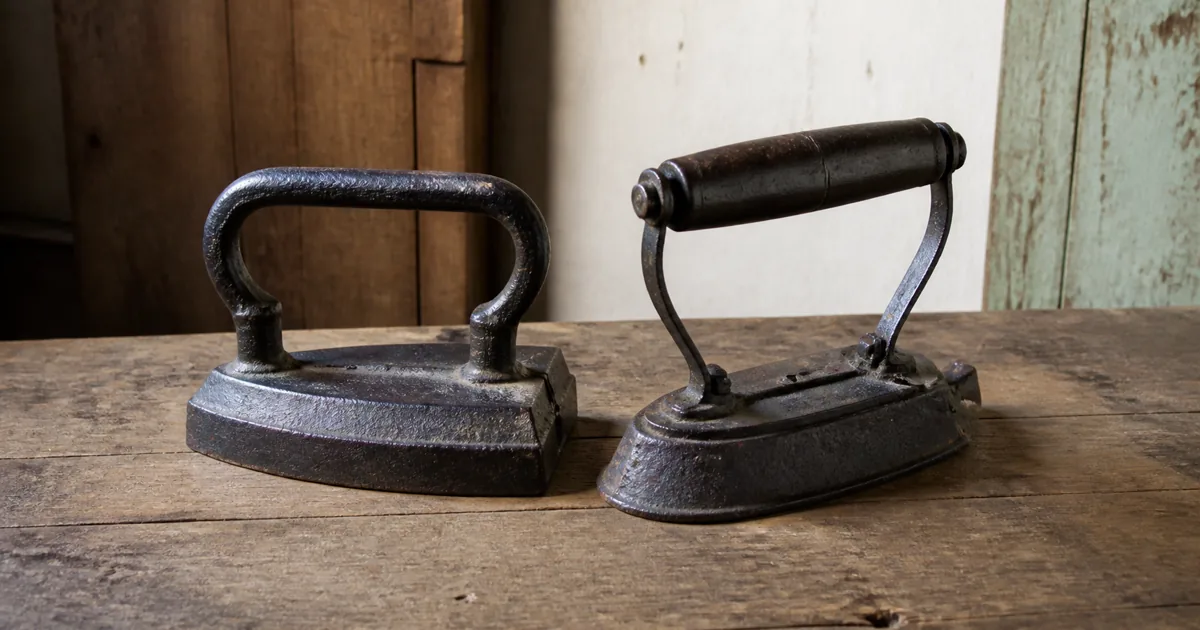
Most antique cast-iron clothes irons are not valuable simply because they are heavy or old. The sold lots on this page are mixed sad-iron groups, not charcoal or box irons.
Common sad irons in a small lot. Three cast iron sad irons sold for $24.
Unusual all-iron pair. Two antique sad irons, including a tall Cannon-10 with a twist handle, sold for $25.
Larger mixed lot. Six solid cast iron clothes-press sad irons sold for $30.
A complete charcoal or box iron with lid and handle is not in this sold set. Use this five-step check before attaching a number:
- Name the form. Separate a solid sad iron from a charcoal or box iron, detachable-handle system, specialty pressing tool, or early electric iron.
- Lay out every part. Include the handle, trivet, lid, latch, burner, cord, matching bases, and any box or instructions.
- Check structure. Record cracks, warping, deep pitting, loose joints, missing wood, later paint, and repairs.
- Measure and photograph. Capture the top, base, sides, handle, openings, lettering, and dimensions in neutral light.
- Compare exact lots. Match type and piece count before comparing auction amounts; one iron is not equivalent to a group lot.
Identify the kind of iron before comparing prices
A solid sad iron is a single heavy body heated on a stove. Some were sold as several bases with one removable handle, allowing one base to heat while another was in use. A box or charcoal iron has a hollow chamber, lid, draft openings, and usually a wooden handle. Specialty forms include narrow sleeve irons, fluting tools, polishing irons, miniature examples, and travel designs. Early electric irons add a cord entry, heating element, or electrical fittings that need separate safety and completeness checks.
Do not compare all of these as one market. Start by recording the body shape, heating method, number of pieces, and any maker name, model number, or patent text. A trivet may belong with the iron or may be a separate collectible. If a handle detaches, check whether it locks correctly and whether the other bases in the set share the same fitting. For broader cast-iron context, compare the way completeness affects a cast-iron identification guide or cast-iron bell without borrowing their prices.
Grade condition without erasing the evidence
Condition is more than surface rust. Turn the item over on a padded surface and check for hairline cracks, chipped edges, a warped sole, deep corrosion, brazed repairs, replacement fasteners, loose handle supports, and missing wooden grips. On a charcoal iron, test the lid and latch gently without forcing them. On a detachable system, confirm that the handle engages and releases without excess movement. Photograph a defect beside a ruler rather than relying on adjectives such as “good” or “rough.”
Keep originality separate from cleanliness. Dust and loose debris can obscure details, but grinding, wire-wheeling, chemical stripping, repainting, or refinishing wood can remove evidence a buyer needs. If the item is unstable, stop handling it and seek conservation advice. The practical goal is a condition record: what is present, what is missing, what moves, what has been repaired, and what can be seen clearly. That record makes the next comparison more defensible than a polished surface ever could.
- Photograph the complete item before moving any removable part.
- Capture cracks, repairs, corrosion, later paint, and missing material close up.
- Record length, width, height, weight, and the dimensions of each separate piece.
- Keep unverified claims such as “rare,” “Civil War,” or “salesman sample” out of the description.
Compare like with like before naming a value
Auction results are evidence of one transaction, not a retail price list. Compare the same iron form, similar completeness, similar condition, and the same unit count. The retained proof set includes both single irons and a three-iron group, so the group amount cannot be assigned to each piece. Also keep the source-reported amount separate from shipping, taxes, and any buyer's premium unless the source explicitly states how those charges were handled.
The five exact lots below span three auction houses. Their amounts are modest, which is useful evidence against assuming that every heavy antique iron is a high-value rarity. They do not rule out a stronger result for a genuinely different form, a complete system, documented provenance, or exceptional condition. A defensible estimate explains the match and the mismatch instead of choosing the highest number.
What similar items actually sold for
To help ground this guide in real market activity, here are recent example auction comps from Appraisily’s internal database. These matched sales are market context only, not an object estimate or identification, and they do not guarantee a price for your specific item.
Shown USD range: USD 5-USD 85. Median of these 11 USD examples: USD 20.
| Comparable | What sold | Auction house | Date | Lot | Source-reported amount |
|---|---|---|---|---|---|
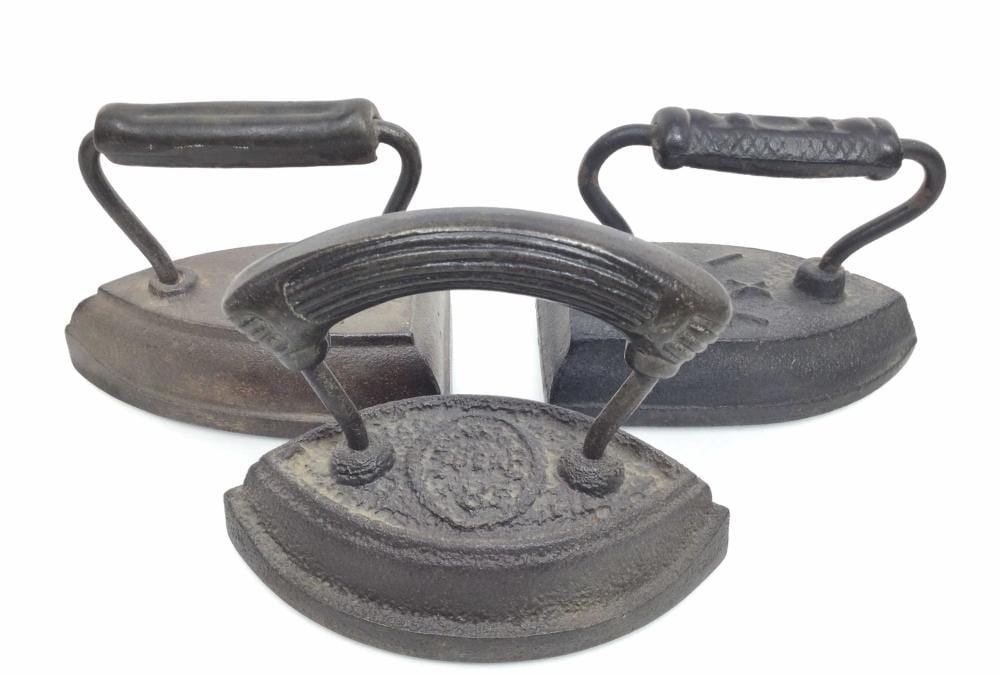 |
(3) Antique Cast Iron Sad IronsSource blocked; provenance matched | EJ'S Auction & Appraisal | 2024-01-27 | 2249 | USD 40 (buyer’s-premium treatment unknown) |
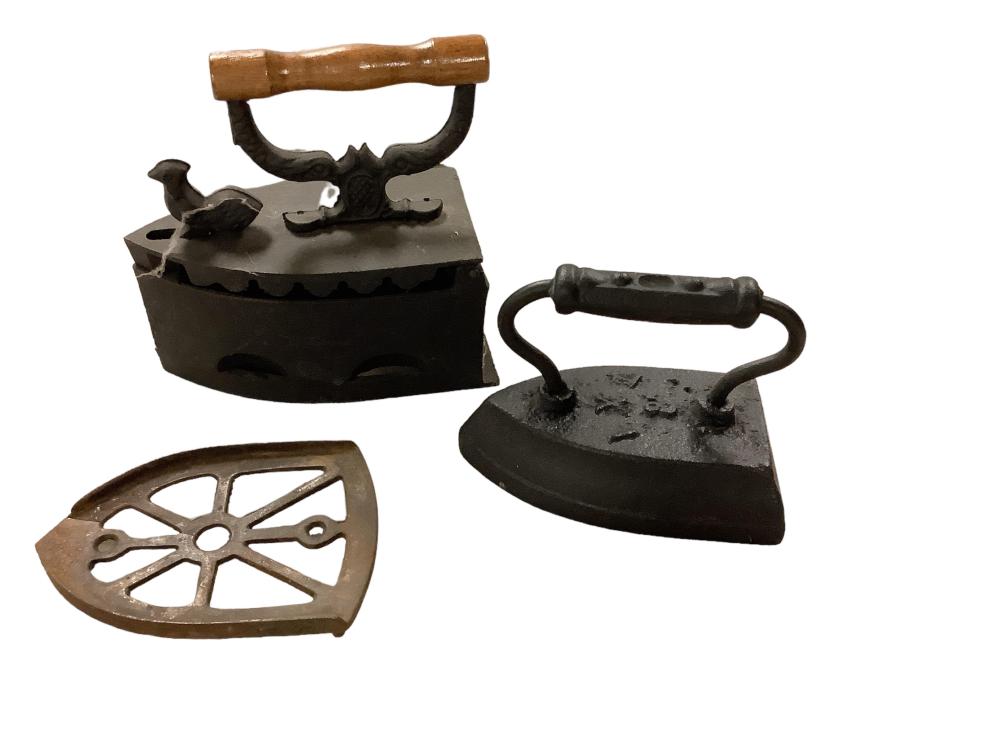 |
(2) Sad IronsSource blocked; provenance matched | Apple Tree Auction Center | 2024-06-11 | 1432 | USD 20 (buyer’s-premium treatment unknown) |
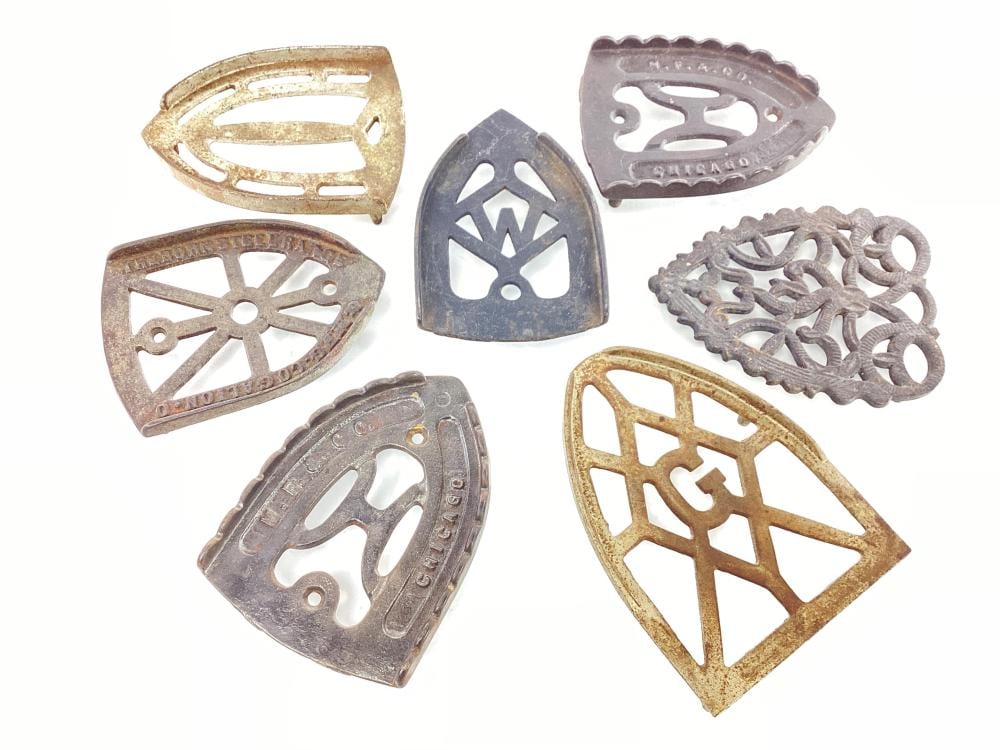 |
(7) Antique Cast Iron Sad IronsSource blocked; provenance matched | EJ'S Auction & Appraisal | 2024-01-26 | 7009 | USD 85 (buyer’s-premium treatment unknown) |
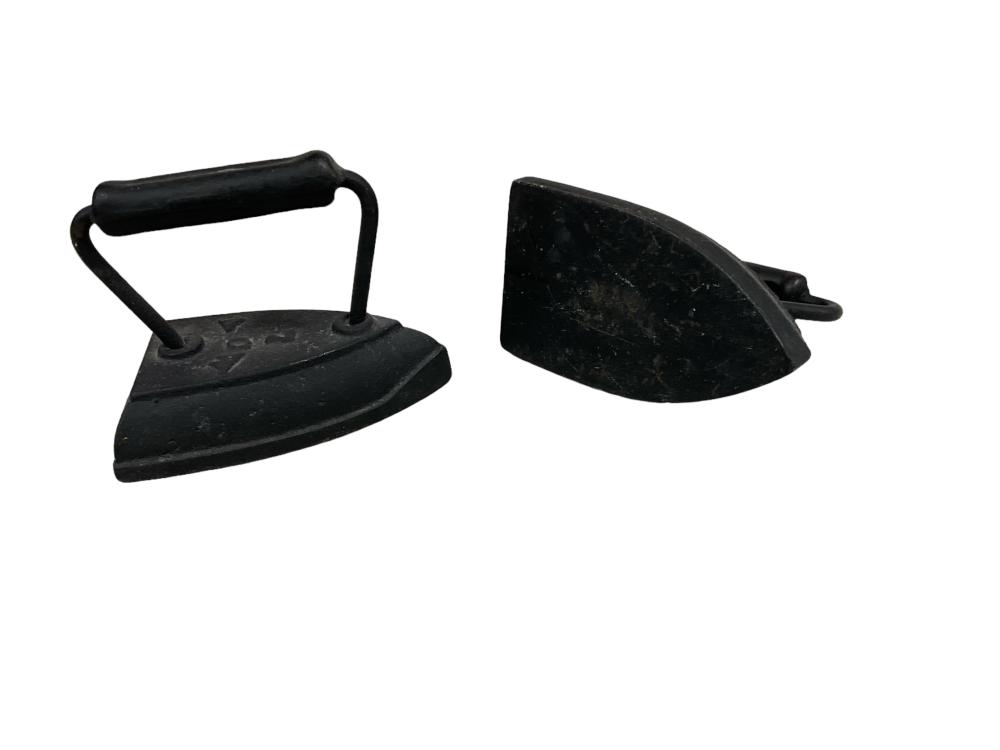 |
(2) # 7 Sad IronsSource blocked; provenance matched | Apple Tree Auction Center | 2024-06-11 | 1433 | USD 5 (buyer’s-premium treatment unknown) |
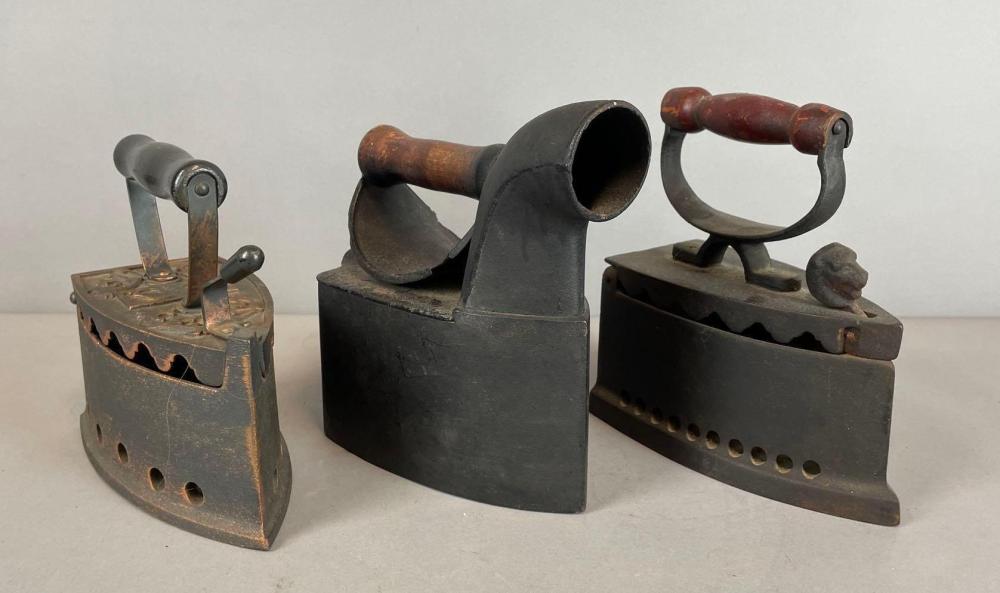 |
Group of 3 Antique Sad IronsSource blocked; provenance matched | Matthew Bullock Auctioneers | 2026-01-03 | 38 | USD 35 (buyer’s-premium treatment unknown) |
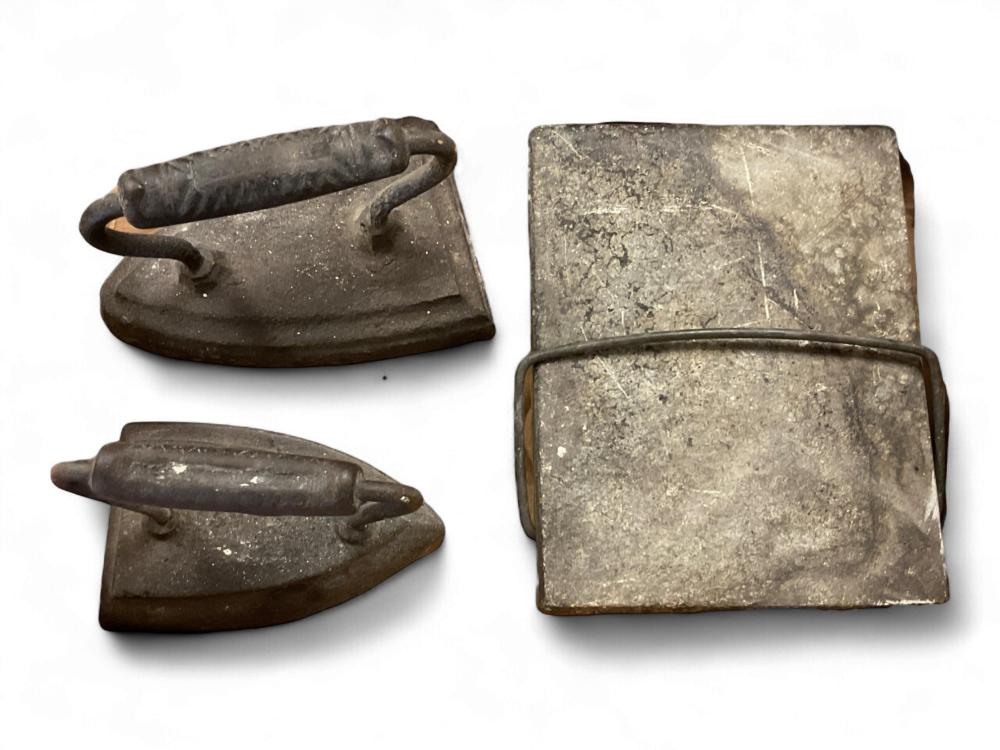 |
Sad Irons and Warming SoapstoneSource blocked; provenance matched | Apple Tree Auction Center | 2025-10-20 | 5089 | USD 11 (buyer’s-premium treatment unknown) |
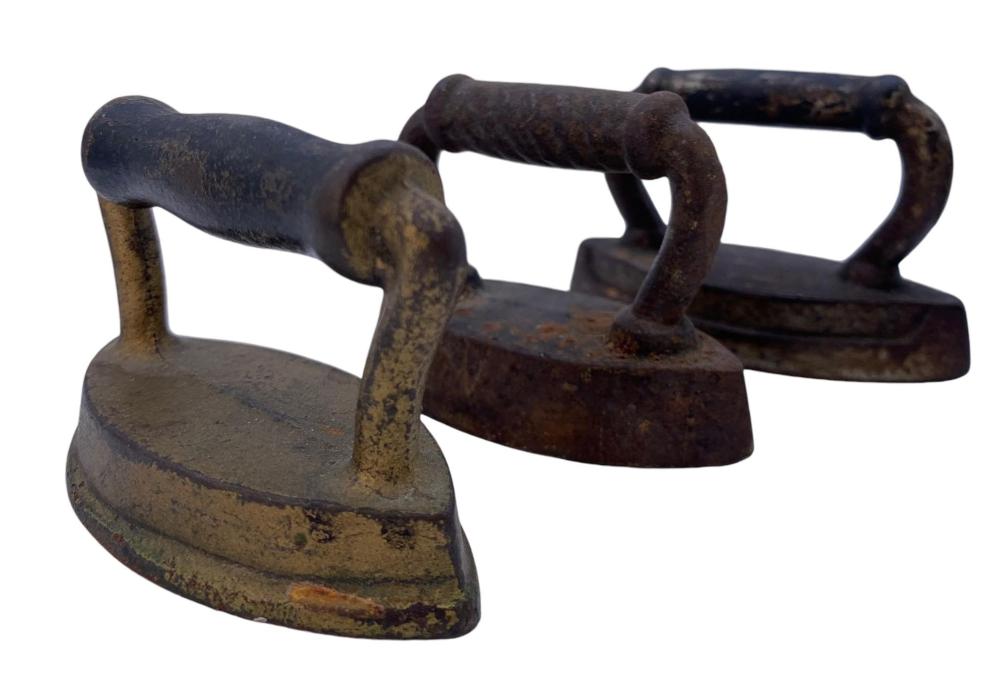 |
Trio Miniature Antique Cast Iron Sad IronsSource blocked; provenance matched | Atlee Raber Auctioneer | 2025-01-27 | 29 | USD 10 (buyer’s-premium treatment unknown) |
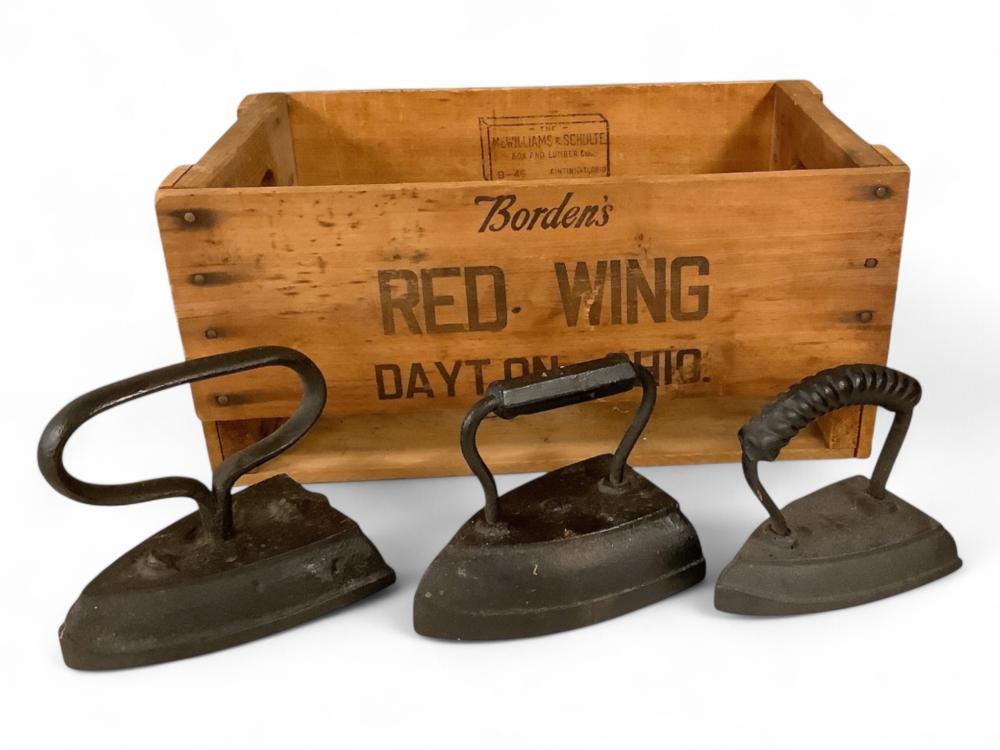 |
Vintage Borden Advertising Crate & Sad Irons Crate 8 1/4 x 10 3/4 x 17 1/2 in. (21 x 27.3 x 44.5 cm.)Source blocked; provenance matched | Apple Tree Auction Center | 2025-05-29 | 253 | USD 19 (buyer’s-premium treatment unknown) |
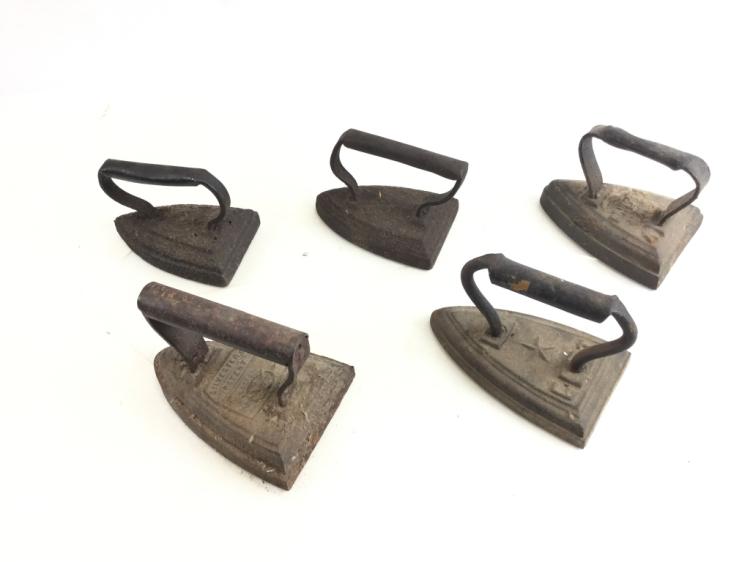 |
(5) Antique Cast Iron Clothes Press Sad IronsSource blocked; provenance matched | EJ'S Auction & Appraisal | 2017-08-19 | 2260 | USD 35 (buyer’s-premium treatment unknown) |
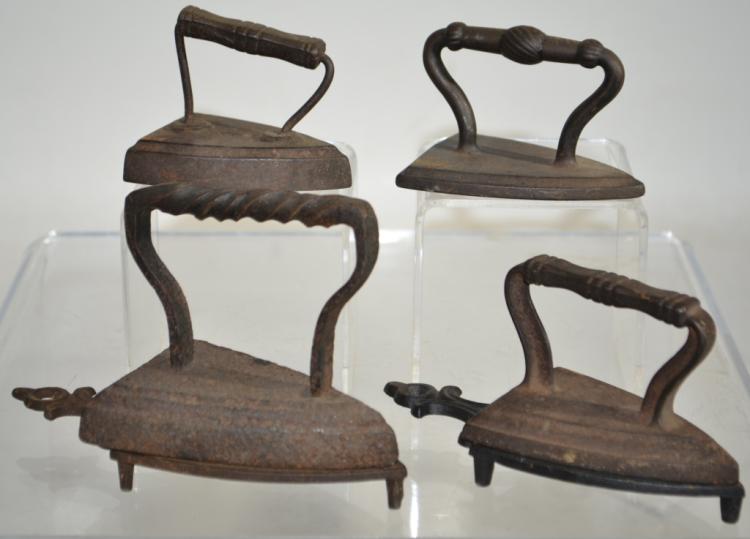 |
Four 19th Century Miniature Sad IronsSource blocked; provenance matched | Keystone Auctions LLC | 2018-04-21 | 237 | USD 15 (buyer’s-premium treatment unknown) |
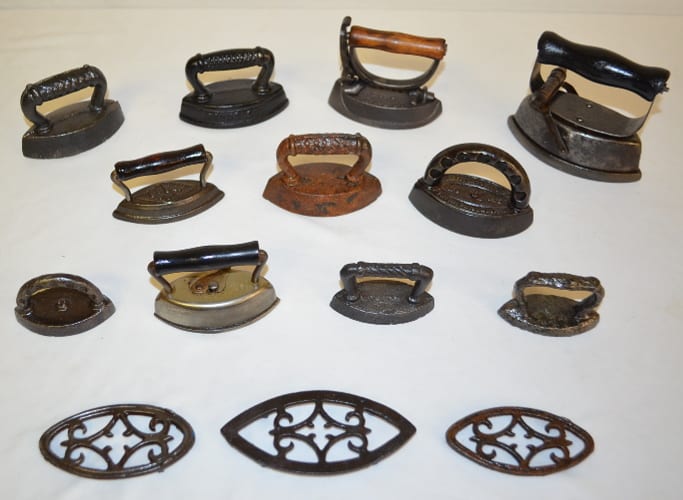 |
Eleven Antique Cast Iron or Steel Small Size Sad Irons, Eye Style: 1 advertising Round Oak Stoves and Ranges, 1 AsBestos, 1 Sensible No. 6, 1 Dover U.S.A, 1 Enterprise Mfg. No. 115, 6 assorted stylesSource blocked; provenance matched | Tom Harris Auctions | 2015-12-12 | 341 | USD 50 (buyer’s-premium treatment unknown) |
How these auction records were verified
Each row retains its exact source URL, lot identity, retrieval time, access result, and immutable record hash. Live source access was blocked; the exact record matched Appraisily's immutable pipeline provenance. Inspect the public comparable provenance record.
Disclosure: prices are shown as reported by auction houses and are provided for appraisal context. Learn more in our editorial policy.
The free first read is a separate photo-based Screener, not this educational article. Results usually appear within a few minutes; complex items can take longer. From photographs of your antique iron, it returns a preliminary category or identity read, visible evidence gaps, rough comparable market signals, and whether a human appraisal looks worthwhile; it is not a signed value conclusion. Material or construction can remain uncertain without direct examination, dimensions, provenance, or complete condition details. A written appraisal is useful when your antique iron needs documented specialist support for insurance, tax, an estate, authentication, litigation, or a consequential sale, but you may not need one.
Photograph and measure the item for a stronger estimate
Begin with one full view on a plain surface, then add the opposite side, top, base, front, rear, and handle. Photograph removable parts together and separately so the relationship is clear. Use a ruler for overall dimensions and a smaller scale beside cracks or missing material. Photograph stamped or raised lettering straight on with side light, but transcribe only what is visible; do not expand an abbreviation or assign a maker from a partial impression.
Write a short inventory that another person could follow: “one solid iron, one detachable handle, two matching bases,” for example. Add weight, dimensions, where it was found, and any known ownership history, separating documented facts from family recollection. If the item resembles another cast-iron category, use the observation method in the cast-iron evaluation guide, not the other object's price range.
- Full item, both sides, top, base, front, and rear.
- Handle attachment, lid, latch, vents, trivet, cord, and removable parts.
- Dimensions and weight, with a scale beside any defect.
- Clear lettering and numbers photographed before transcription.
Decide whether a written appraisal is worthwhile
A written appraisal makes sense when the decision needs a documented scope, researched comparables, photographs, a stated value basis, and a signed conclusion. That may apply to insurance scheduling, an estate inventory, a significant private sale, or a collection whose combined importance is greater than one common iron. It can also help when the object is unusual enough that photographs and ordinary auction searches do not resolve what it is.
Many owners only need to know whether further research is sensible. In that case, start with the free first look above. If the evidence points to an ordinary example and the decision is informal, stopping there can be reasonable. If documented support is needed, a standard written appraisal is $59. Delivery timing is confirmed after the required item information is received.
Antique iron value questions
How much are antique cast-iron irons worth?
There is no dependable price from weight or age alone. Start with the iron type, whether its original parts are present, its structural condition, and exact sold lots that match the same form. The retained auction examples on this page show that ordinary sad irons can realize modest amounts, but they do not set a universal value for every item.
Is an old iron worth more than scrap value?
A complete or unusual clothes iron can have collectible value beyond its metal content, while a common incomplete example may attract little collector demand. Scrap value is a separate local calculation based on accepted material and weight; it should not replace a comparison with relevant sold antiques.
Does a trivet or detachable handle change value?
It can. A trivet, detachable handle, lid, latch, burner, or matching base can make an item more complete and easier to compare with a complete sold example. Record each part and avoid combining the price of a multi-piece lot with the value of one loose iron.
Should I remove rust before selling an antique iron?
Do not sand, grind, repaint, or aggressively strip the surface before you know what you have. First photograph all sides, loose corrosion, cracks, repairs, and any remaining finish. Gentle dry dusting is safer than a treatment that removes original surface evidence.
When is a written appraisal useful?
A written appraisal is useful when you need a documented opinion for insurance, an estate, a significant sale, or another formal decision. For simple curiosity or an ordinary low-value example, the free photo-based first read may be enough and you may not need a paid report.
Search variations: antique iron value questions
- How much are antique cast-iron irons worth?
- Antique sad iron value by type and condition
- Cast-iron clothes iron value with detachable handle
- Old charcoal box iron value guide
- Does an antique iron trivet add value?
- How to compare sold antique iron prices
- Is an old cast-iron iron worth more than scrap?
- Vintage cast-iron iron photo appraisal
These searches all reduce to the same evidence sequence: classify the form, record its parts and condition, then compare exact sold lots.
Sources and method
The comparable table uses Appraisily's immutable auction-data pipeline record. Amounts are source-reported auction results and are not guaranteed prices. See the Appraisily editorial policy and the public comparable-provenance record linked with the table.