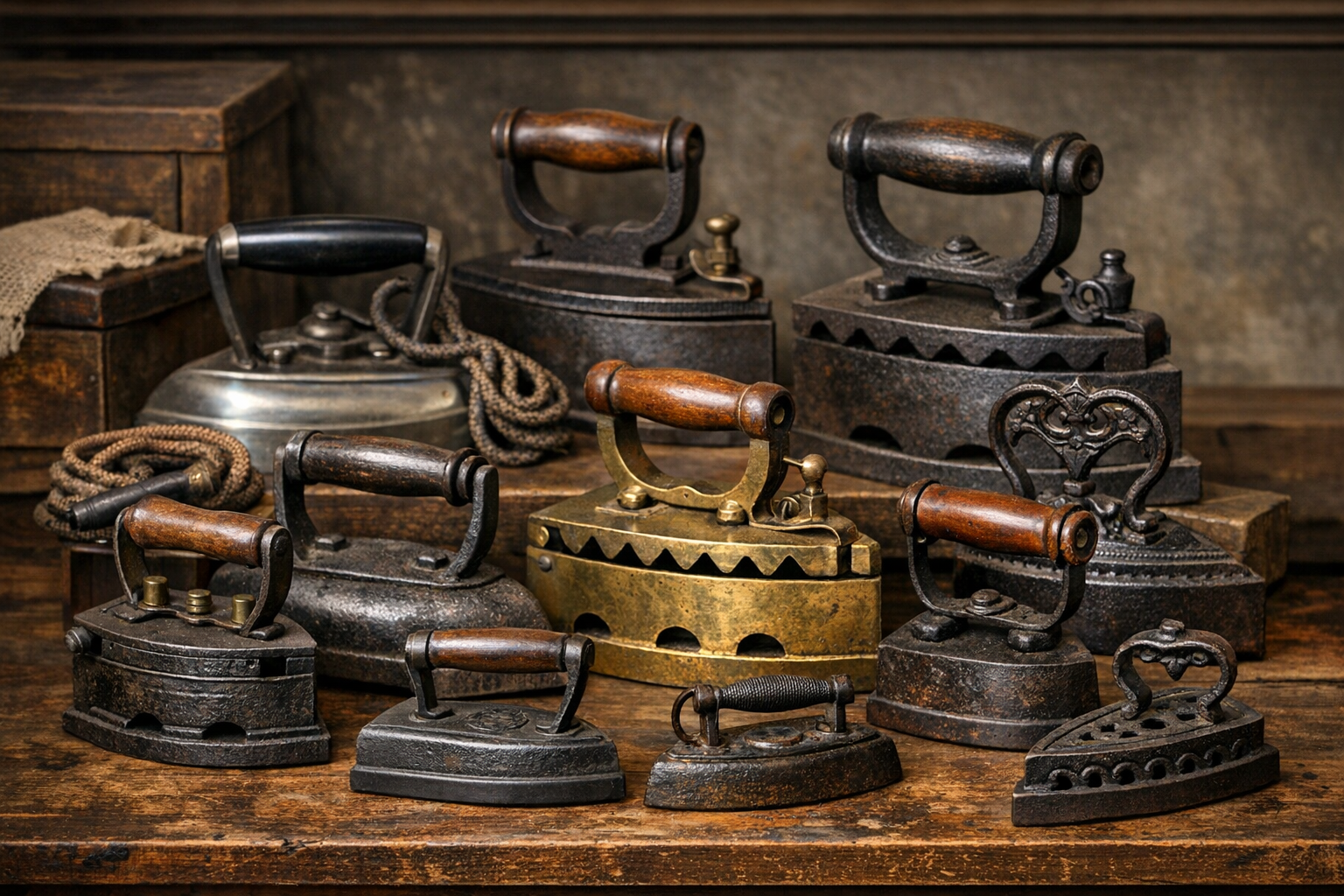
Antique irons range from common household sad irons to scarcer patented, advertising, or specialty forms. The best value clues are maker, type, completeness, surface condition, and whether collectors recognize the model.
Identify the iron type
Flat irons, sad irons, charcoal irons, box irons, fluting irons, sleeve irons, and gas or alcohol irons sit in different markets. A clear maker mark, patent date, or unusual mechanism can make identification much stronger.
Completeness matters
Removable handles, trivets, stands, wood grips, internal heaters, and original finish can affect value. Missing or mismatched parts usually push an iron toward decorative value rather than collector value.
Condition should be honest
Rust, pitting, cracks, repainting, and over-polishing all matter. Light wear is expected, but aggressive refinishing can remove the surface evidence collectors want to see.
What a defensible value needs
Show the top, sole, handle, side profile, any maker mark, and any trivet or stand. Those photos help identify whether the iron is common, decorative, or more collectible.
Need a documented value?
Upload photos and details. Appraisily checks identity, condition, and market evidence, then prepares a signed appraisal report you can share.