Antique Cast Iron Cauldron Value
Value antique cast iron cauldrons by size, feet, handles, gate marks, casting marks, surface wear, cracks, repairs, age, and demand.
What cast iron cauldron actually sell for
A common example is a different sale from a high-end named piece.
Typical sales. Group of cast iron, 5pc: 3 flat irons/sad irons, smudge pot cauldron, and recumbent… sold for $10.
Cast Iron Cauldron 5 x 7 1/2 in. (12.7 x 19.1 cm.) sold for $20.
Cast Iron Cauldron sold for $30.
Cast Iron Cauldron sold for $30.
(EARLY REPUBLIC ERA) CAST IRON CAULDRON sold for $40.
Griswold Cast Iron Cauldron, Kettle, 6 1/2 x 10 in. (16.5 x 25.4 cm.) sold for $50.
High-value outlier. CAST IRON CAULDRON WITH BLACK GRANITE TABLE TOP, sold for $600.
Photograph maker marks, model, condition, and completeness before treating any one sale as yours.
What similar items actually sold for
To help ground this guide in real market activity, here are recent example auction comps from Appraisily’s internal database. These matched sales are market context only, not an object estimate or identification, and they do not guarantee a price for your specific antique cast iron cauldron.
Shown USD range: USD 30-USD 600. Median of these 13 USD examples: USD 100.
| Comparable | What sold | Auction house | Date | Lot | Source-reported amount |
|---|---|---|---|---|---|
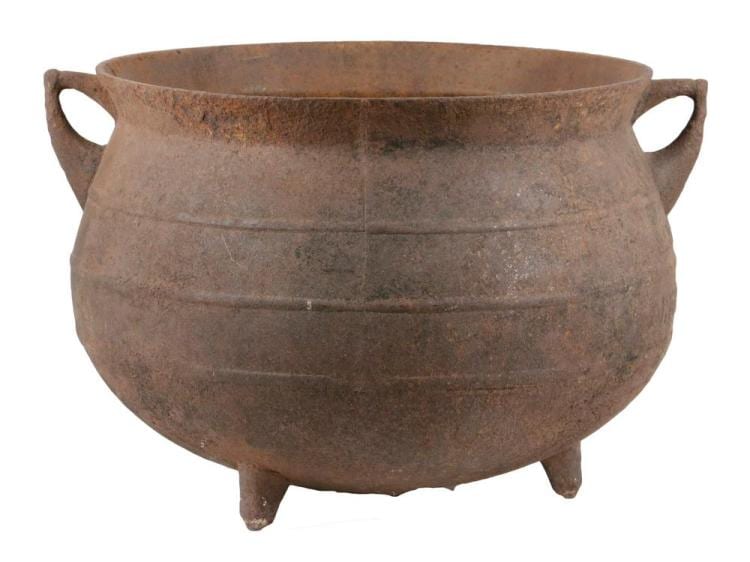 |
CAST IRON CAULDRON | Thomaston Place Auction Galleries | 2017-02-11 | 317 | USD 300 (buyer’s-premium treatment unknown) |
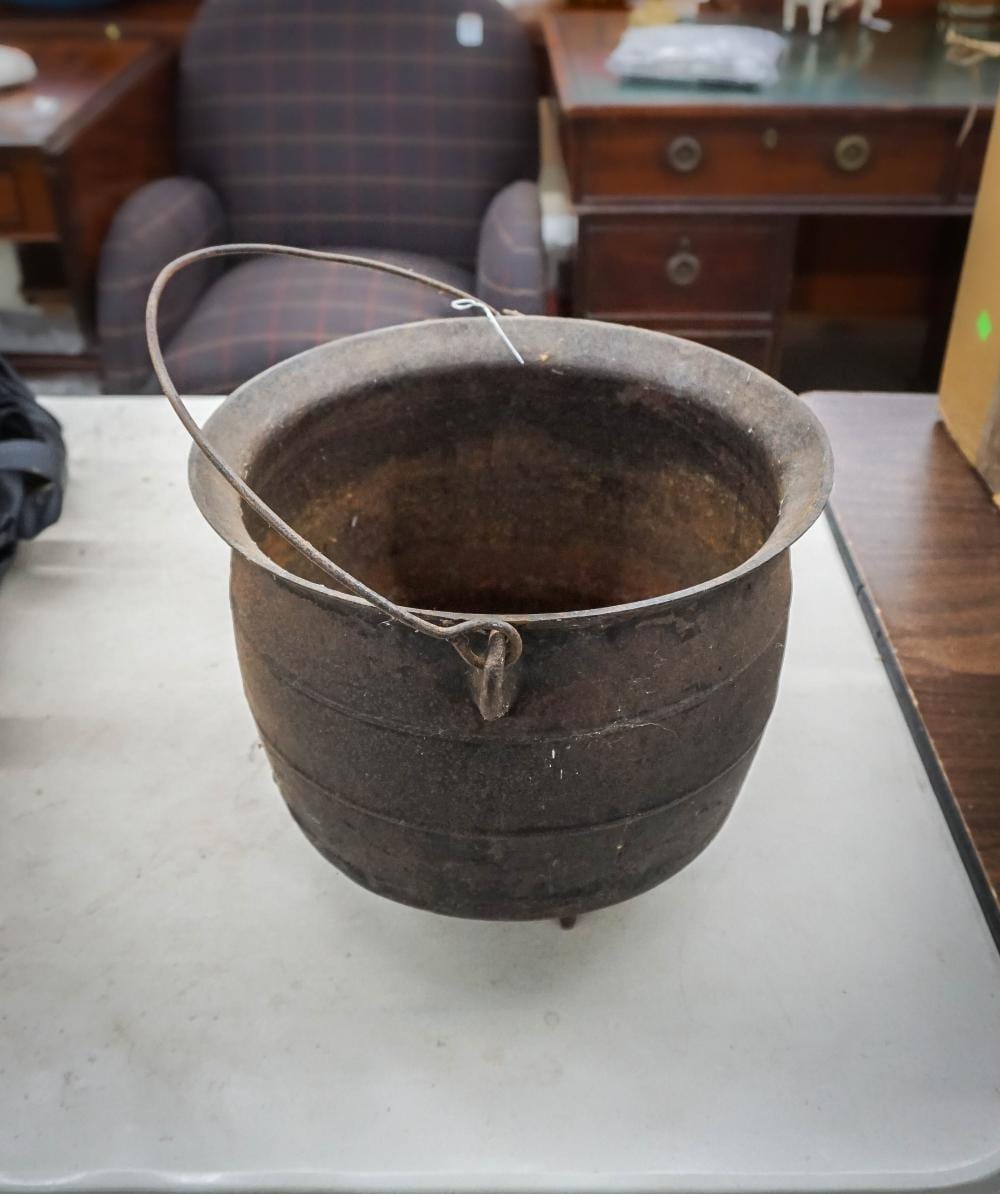 |
Cast Iron Cauldron | Weschler's | 2025-07-01 | 319 | USD 30 (buyer’s-premium treatment unknown) |
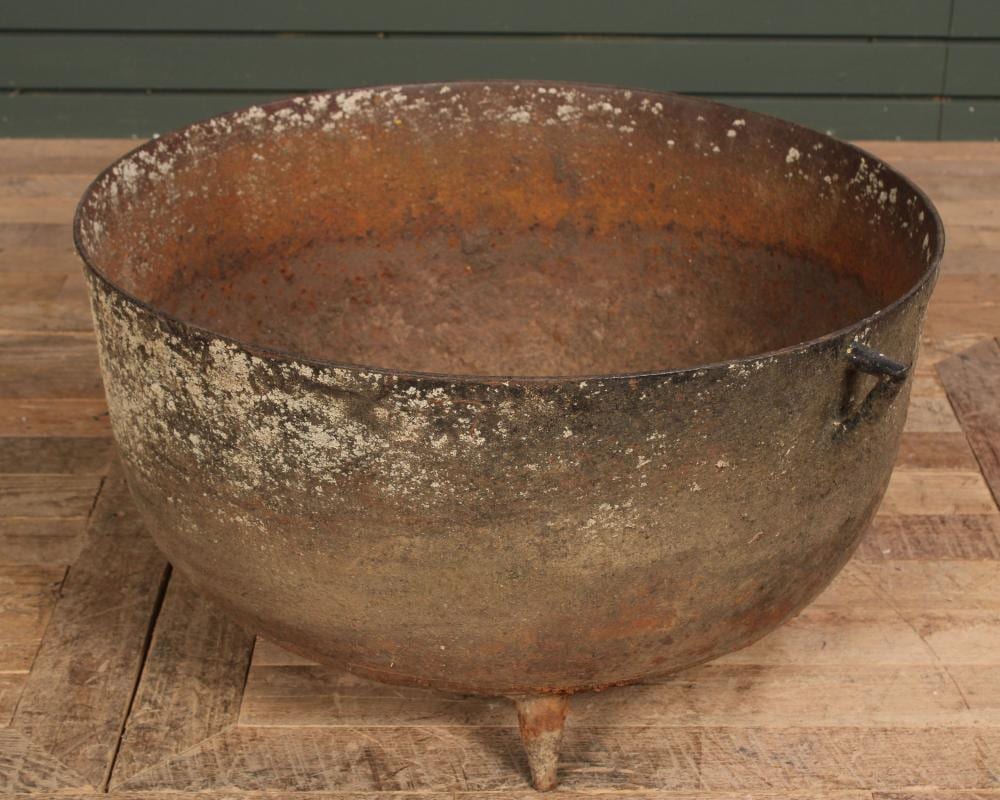 |
ANTIQUE CAST IRON CAULDRON | Ashcroft and Moore | 2025-01-30 | 116 | USD 80 (buyer’s-premium treatment unknown) |
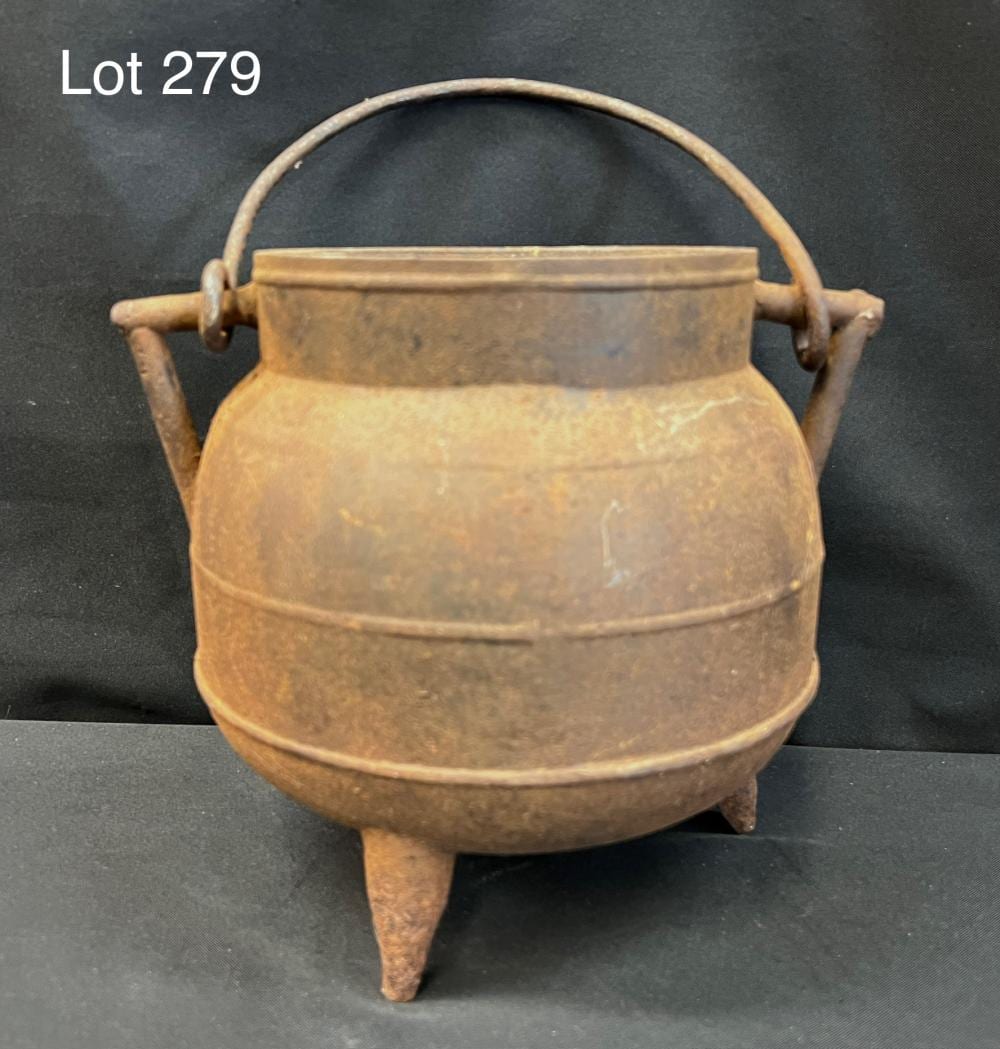 |
Antique Cast Iron Cauldron | Embassy Auctions International | 2025-03-27 | 279 | USD 30 (buyer’s-premium treatment unknown) |
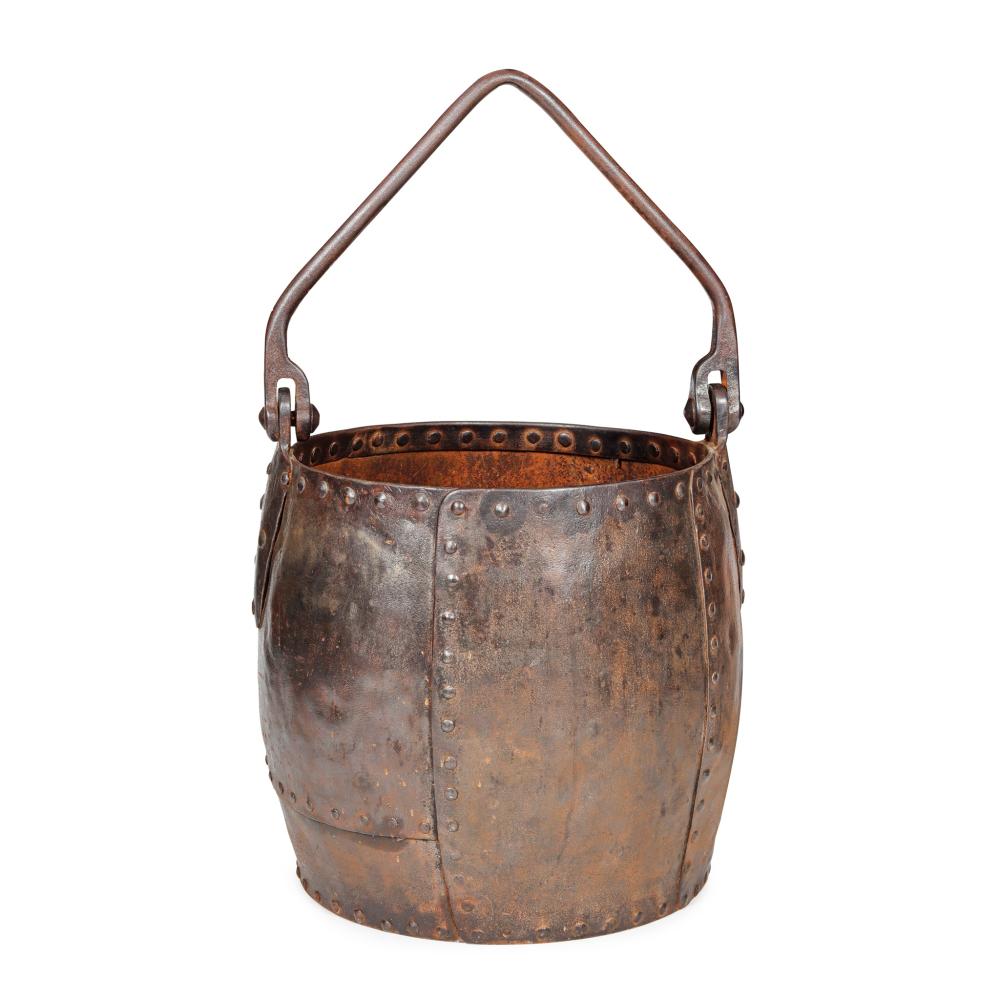 |
LARGE CAST IRON CAULDRON | Lyon & Turnbull | 2020-10-14 | 70 | GBP 2,000 (buyer’s-premium treatment unknown) |
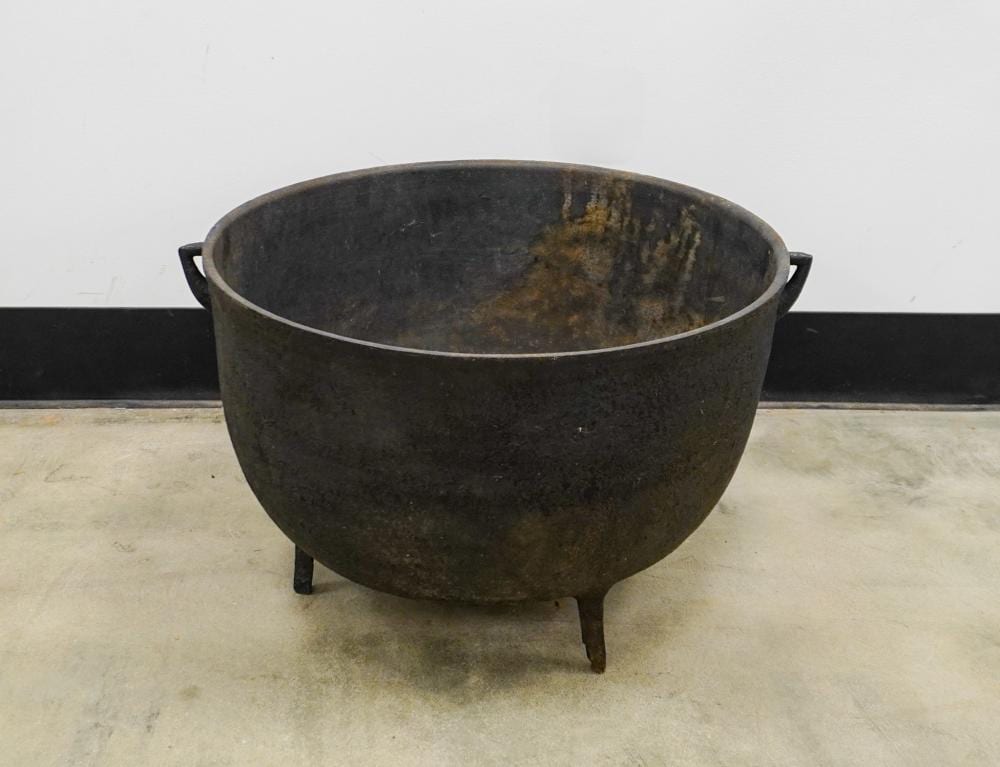 |
Cast Iron Cauldron, D: 25 in. (63.5 cm.) | Weschler's | 2025-06-24 | 220 | USD 225 (buyer’s-premium treatment unknown) |
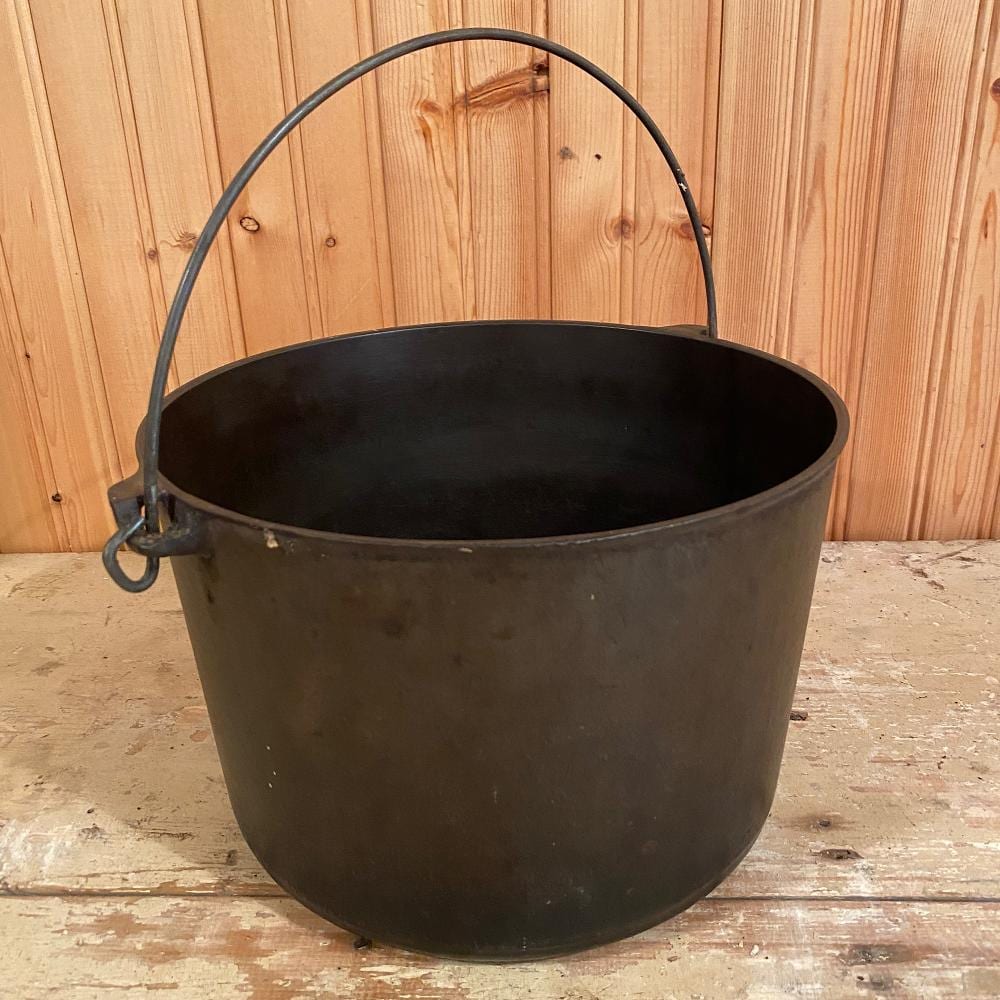 |
Griswold Cast Iron Cauldron, Kettle, 6 1/2 x 10 in. (16.5 x 25.4 cm.) | Asselmeier May Auctions | 2023-06-25 | 67 | USD 50 (buyer’s-premium treatment unknown) |
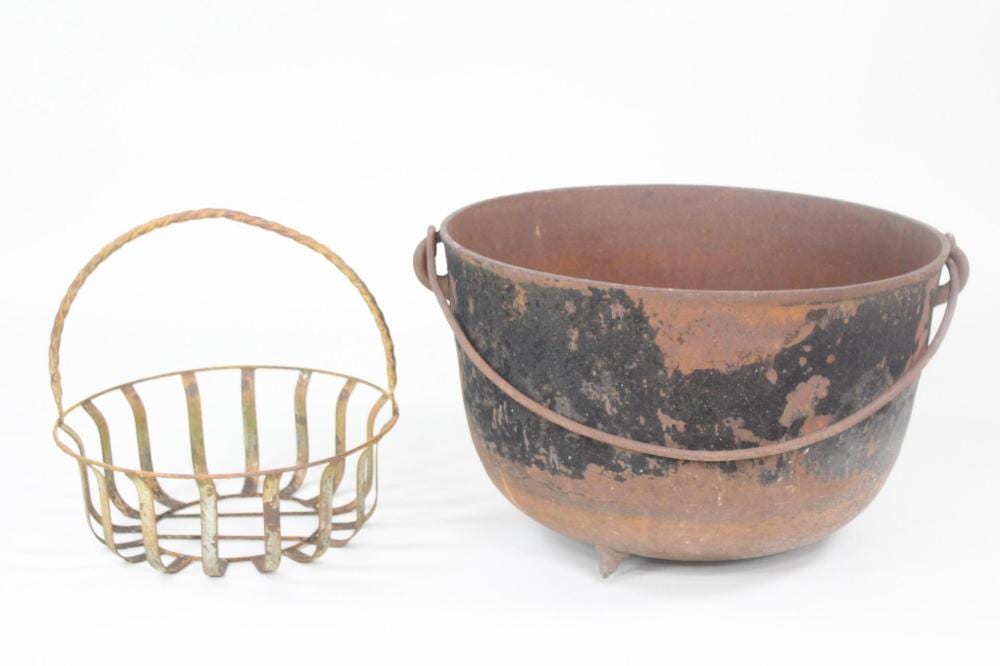 |
Cast Iron Cauldron Pot & Wrought Iron Basket | Public Sale Auction House | 2024-07-20 | 76 | USD 100 (buyer’s-premium treatment unknown) |
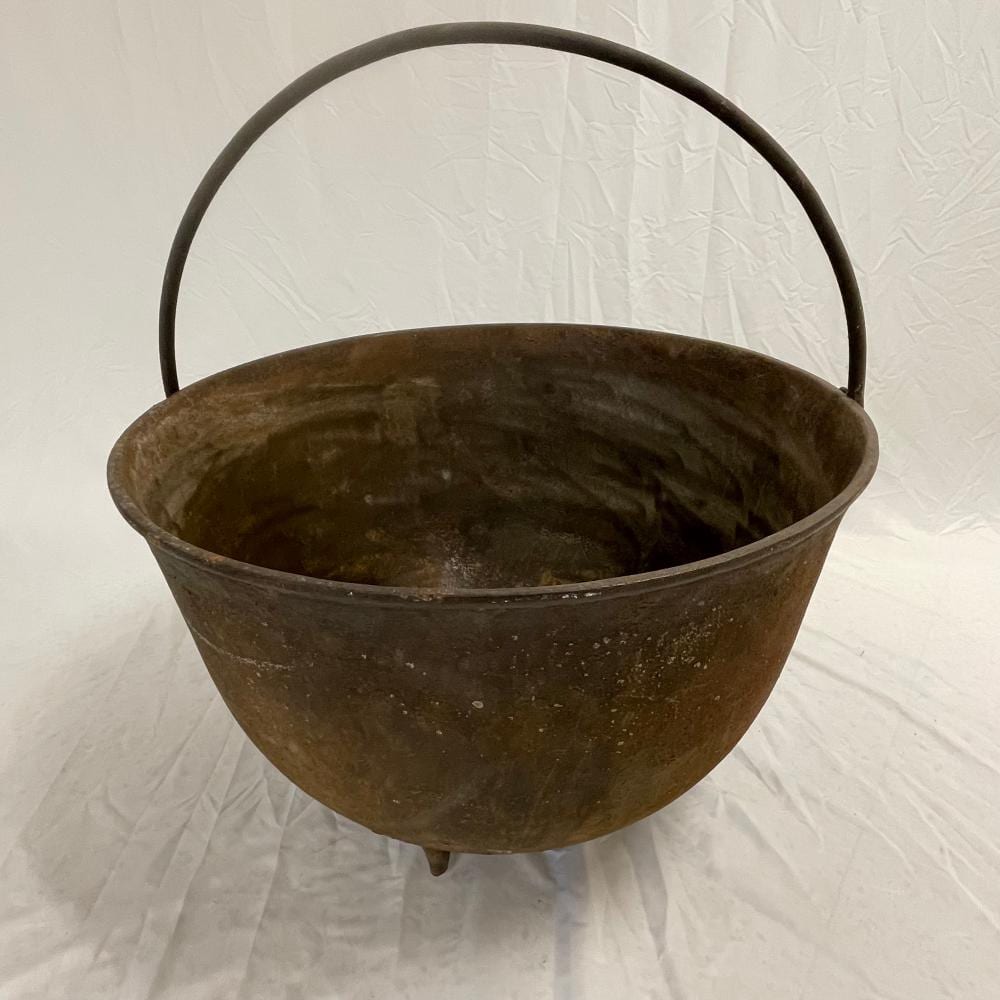 |
Large Cast Iron Cauldron/ Butcher Kettle with Handle 27 x 18 in. (68.6 x 45.7 cm.) | Asselmeier May Auctions | 2023-10-08 | 31 | USD 90 (buyer’s-premium treatment unknown) |
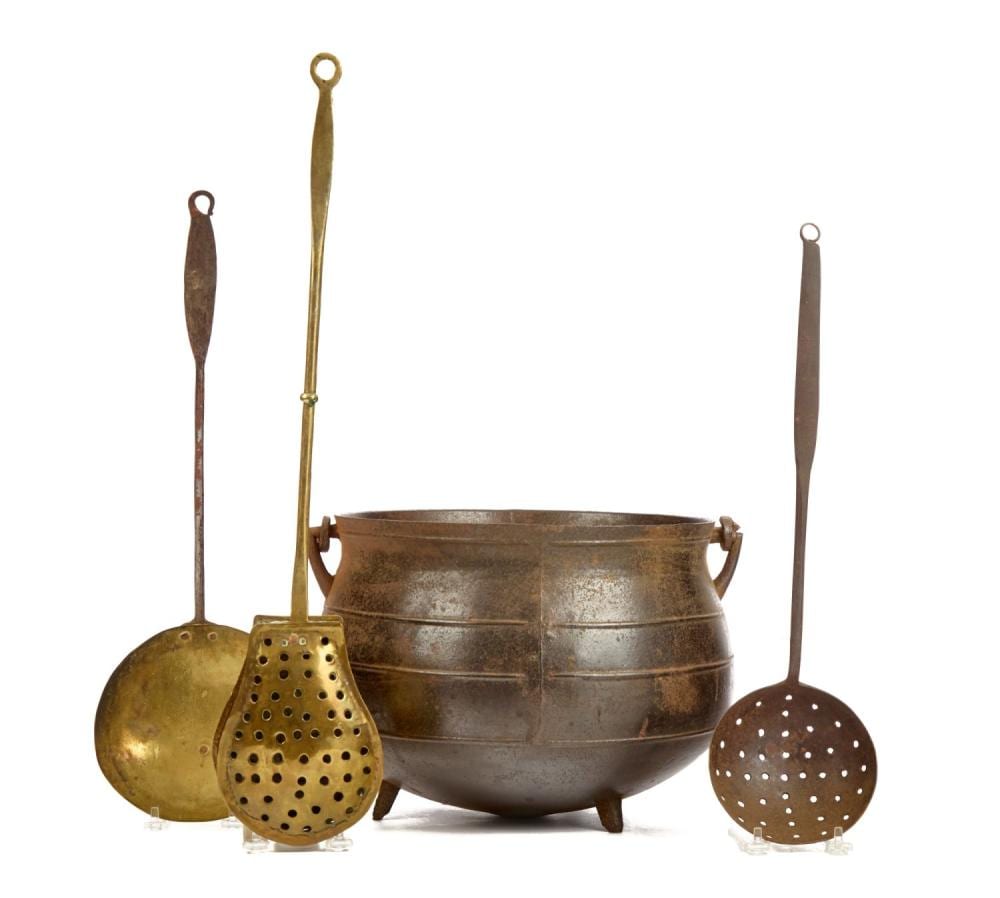 |
ANTIQUE CAST IRON CAULDRON, LADELS, & SLUG WARMER | John McInnis Auctioneers | 2025-04-26 | 683 | USD 150 (buyer’s-premium treatment unknown) |
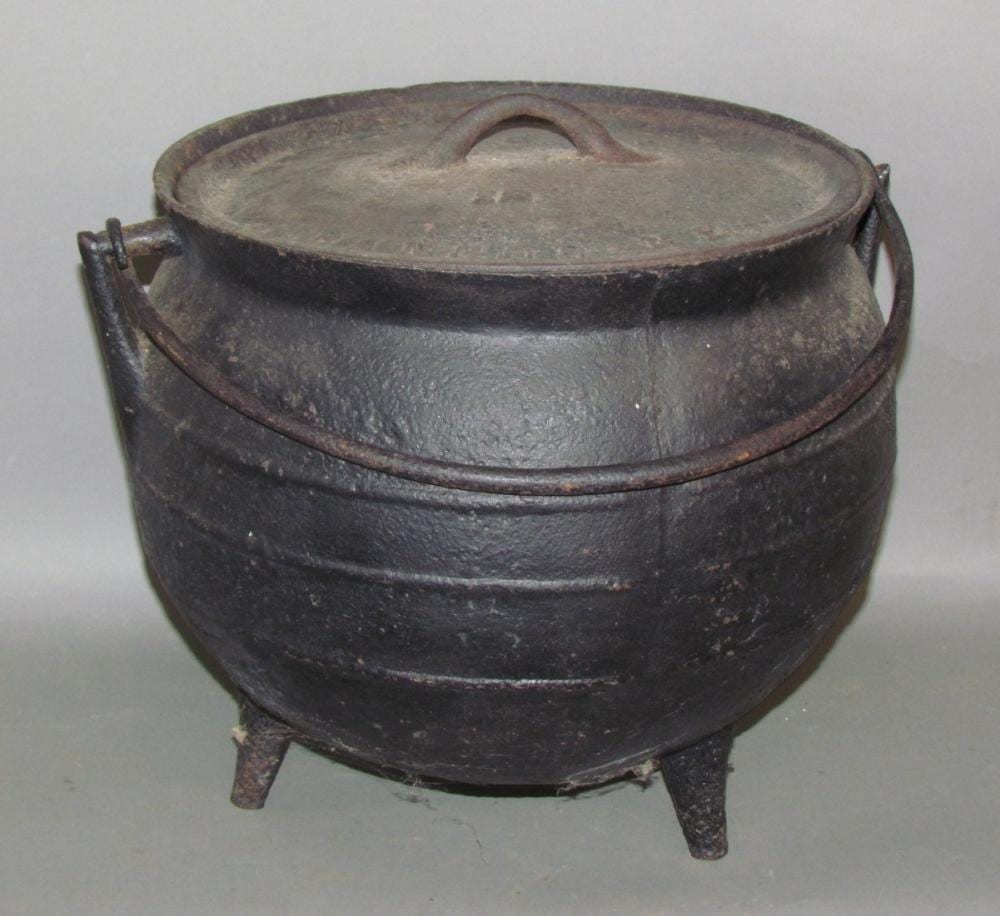 |
Noye's & Nutter Mfg. #12 cast iron cauldron | Horst Auctioneers | 2020-01-10 | 272 | USD 30 (buyer’s-premium treatment unknown) |
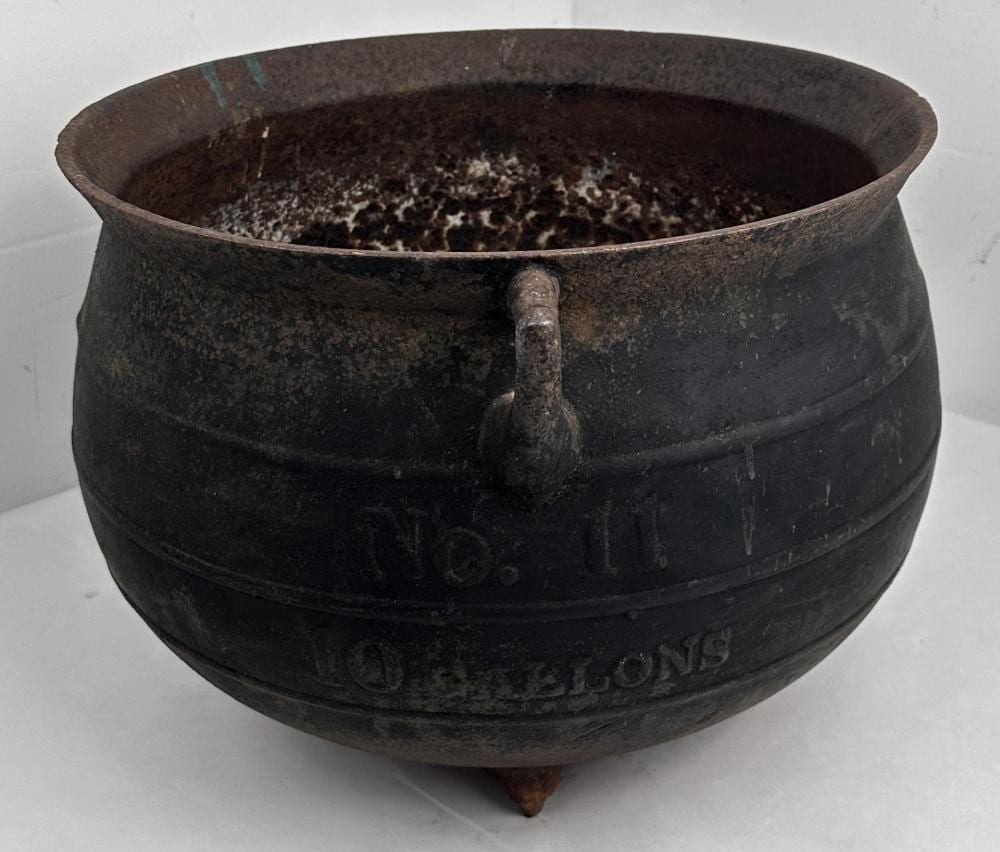 |
Antique Savery Philadelphia Cast Iron Cauldron | Davis Brothers Auction | 2024-04-13 | 1146 | USD 180 (buyer’s-premium treatment unknown) |
 |
CAST IRON CAULDRON WITH BLACK GRANITE TABLE TOP, | O'Gallerie | 2008-07-16 | 720 | USD 600 (buyer’s-premium treatment unknown) |
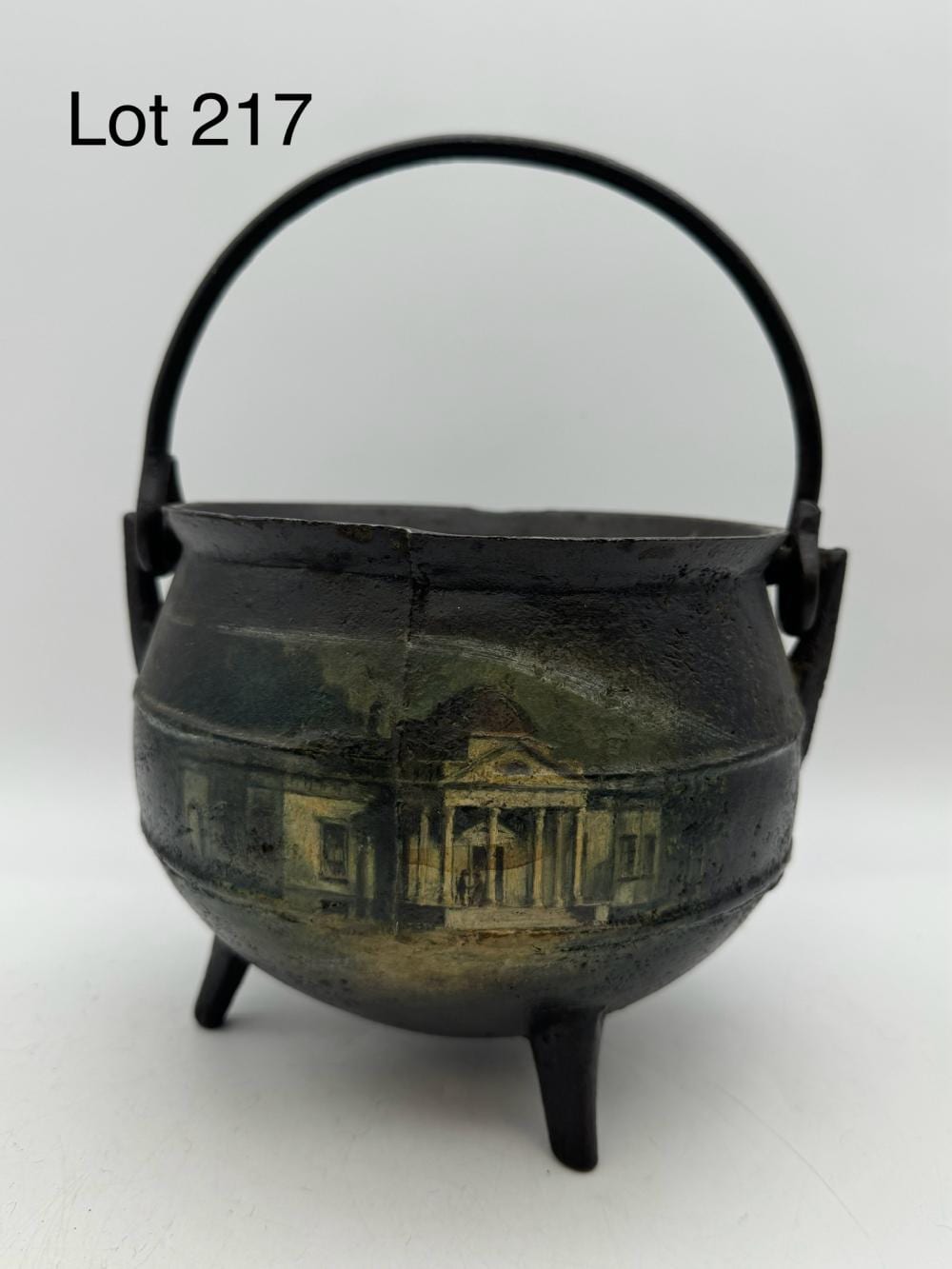 |
Cast Iron Cauldron With Painted Images of Thomas Jefferson, Martha Skelton, and Monticello | Embassy Auctions International | 2025-03-27 | 217 | USD 150 (buyer’s-premium treatment unknown) |
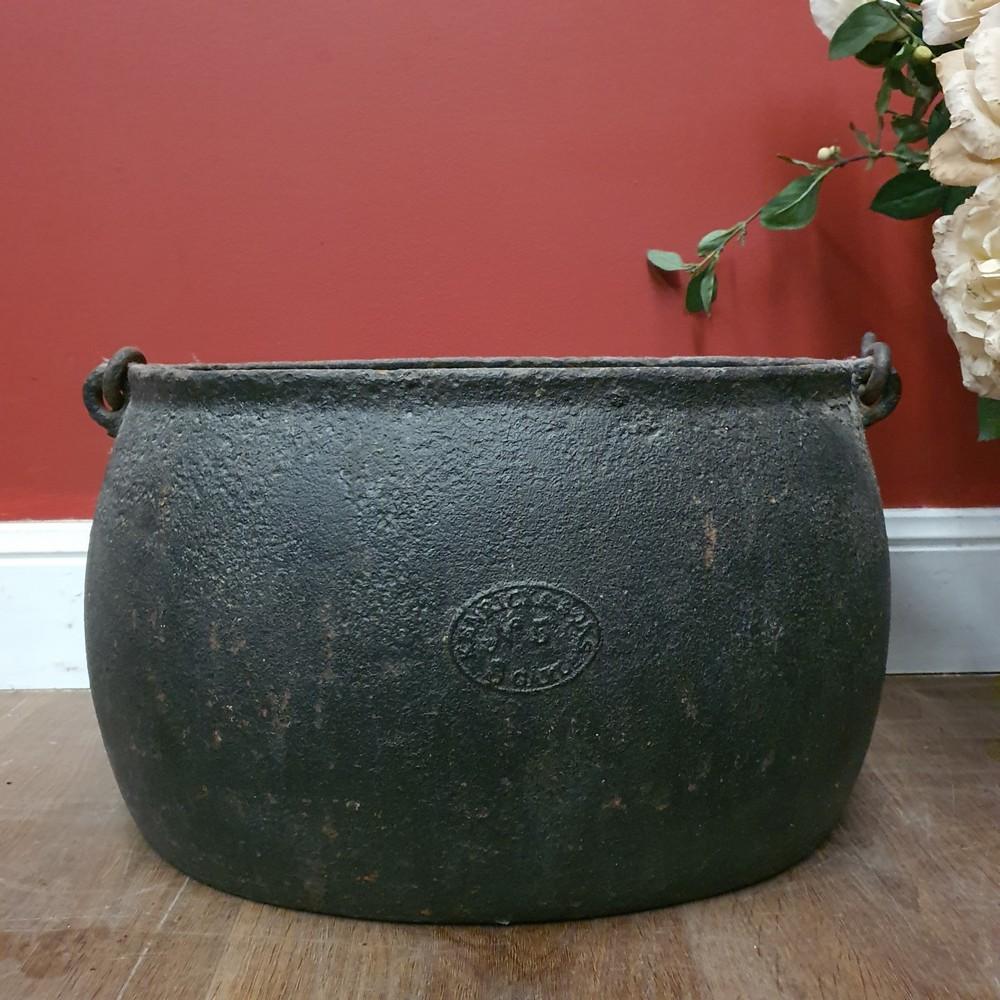 |
Antique Kenrick & Sons Cast Iron Cauldron with Original Swing Handle, Embossed Maker’s Mark to Front, Traditional Heavy-Bodied Cooking Pot. | Because Auctions | 2025-09-19 | 1659 | AUD 160 (buyer’s-premium treatment unknown) |
How these auction records were verified
Each row retains its exact source URL, lot identity, retrieval time, access result, and immutable record hash. Inspect the public comparable provenance record.
Disclosure: prices are shown as reported by auction houses and are provided for appraisal context. Learn more in our editorial policy.
What an antique cast iron cauldron is usually worth
Most cast iron cauldrons in circulation are later or reproduction pieces that sell modestly. Gate marks, a genuine three-legged utility form, readable foundry marks, large capacity, and sound uncracked iron are what separate the collectible examples.
Free. No card needed. Photo upload takes about two minutes.
Need a signed keep-file? antique appraisals is the $59 report. Instant stays unsigned.
Free first look
Not sure whether this cast-iron cauldron needs an appraisal?
Photograph the whole object, maker and model marks, dimensions, attachments, wear, repairs, completeness, and working condition where safe. The photo-based Screener can help identify the likely category and visible evidence gaps before you pay for documentation.
Upload photos for a free first lookFree. No card needed. The photo upload usually takes about two minutes.
The free first read is a separate photo-based Screener, not this educational article. Results usually appear within a few minutes; complex items can take longer. From photographs of your cast-iron cauldron, it returns a preliminary category or identity read, visible evidence gaps, rough comparable market signals, and whether a human appraisal looks worthwhile; it is not a signed value conclusion. Material or construction can remain uncertain without direct examination, dimensions, provenance, or complete condition details. A written appraisal is useful when your cast-iron cauldron needs documented specialist support for insurance, tax, an estate, authentication, litigation, or a consequential sale, but you may not need one.
Today, these vintage vessels attract various types of collectors:
- Historical cooking enthusiasts
- Primitive antique collectors
- Halloween and seasonal decorators
- Practitioners of modern witchcraft and paganism
- Garden décor enthusiasts (repurposed as planters)
Identifying Genuine Antique Cast Iron Cauldrons
Evolution of Cast Iron Cauldron Production
- Pre-1775
Earliest Cast Iron Cauldrons
Feature circular "sprues" where molten iron entered the mold. These are extremely rare and highly valuable.
- 1775-1890
Gate Mark Era
Identified by a distinctive raised line or "gate mark" across the bottom, indicating where iron entered the sand mold.
- 1890-1950
Manufacturer Marked Period
As foundries grew, many cauldrons from this era bear maker's marks, size numbers, and capacity indicators.
- 1950-Present
Modern Reproductions
Often lighter weight with smoother surfaces, sometimes artificially aged to appear antique.
Key Identification Features
According to antique cast iron experts, you should examine:
- Gate Marks: A raised line or scar on the bottom indicates pre-1890 production
- Weight: Genuine antiques are typically heavier than modern reproductions
- Casting Quality: Older pieces often show casting flaws and surface irregularities
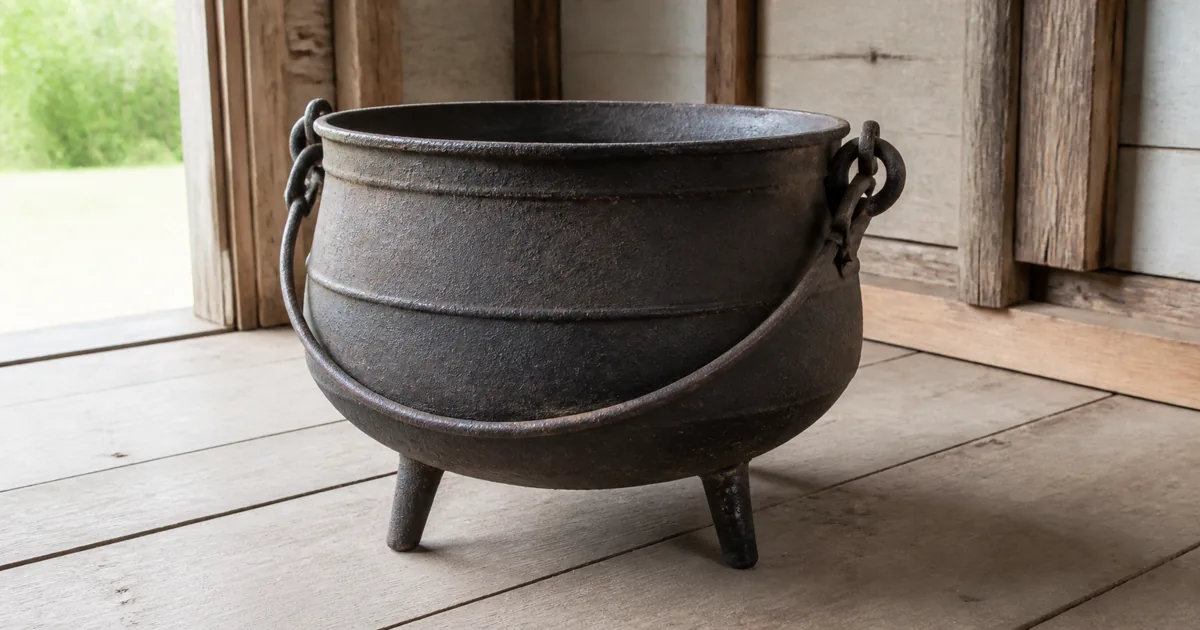
- Three-Legged Design: Traditional “witch’s cauldrons” feature three legs to stand over open fires
- Bail Handle: Authentic hanging handles show appropriate wear and patina
- Size Markings: Many 19th-century cauldrons have capacity numbers (often in gallons)
Factors That Determine Cauldron Value
Age and Provenance: Pre-Civil War cauldrons command higher prices, especially with documented history.
Condition: Intact examples without cracks or repairs are most valuable. Minor surface rust is acceptable, but structural damage significantly decreases value.
Size: Particularly large (30+ gallon) or unusually small cauldrons tend to command premium prices compared to common medium-sized examples.
Maker’s Marks: Cauldrons from known foundries like Griswold or Wagner are worth more than unmarked examples.
Completeness: Original legs, handles, and lids (if applicable) greatly enhance value.
Rarity: Uncommon designs, regional variations, or special-purpose cauldrons may bring premium prices.
Surface Quality: While some patina is expected and desirable, cauldrons with smooth, usable interior surfaces are more valuable.
Condition Assessment For Antique Cauldrons
Check applicable items to help determine your cauldron's condition grade
- No cracks or repairs in the casting
- Original three legs intact and stable
- Bail handle present and functional
- Interior surface free of pitting or excessive rust
- Original patina with consistent color
- Visible maker's mark or gate mark
- No improvised modifications or welds
- Sits level when placed on flat surface
Current Market Value Ranges

Antique Cast Iron Cauldron Price Ranges
Current market values based on recent sales (2023)
Expert Tips for Buying and Selling Antique Cauldrons
For Buyers:
Research Before Purchasing: Study examples from reputable sellers and auction houses to develop an eye for authenticity.
Examine Thoroughly: Check for hairline cracks by tapping gently and listening for a clear ring (dulled sounds may indicate cracks).
Verify Weight: Authentic antique cauldrons are substantially heavier than modern reproductions.
Inspect Inside and Out: Look under handles and around legs for repairs that might be disguised with paint or artificial aging.
Consider Usability: If you plan to use the cauldron functionally (cooking, brewing, etc.), ensure it has no lead residue from previous use.
For Sellers:
Preservation, Not Restoration: Light cleaning is acceptable, but aggressive restoration can diminish value for serious collectors.
Document Provenance: Any history you can provide adds value and credibility.
Proper Cleaning: If cleaning is necessary, use gentle methods that preserve patina. According to Green Witch Vintage, re-seasoning should be done carefully to maintain authenticity.
Detailed Listing: Include clear measurements (especially gallon capacity), accurate weight, and high-quality photos showing any maker’s marks or gate marks.
Target Appropriate Markets: Consider specialized markets beyond general antique outlets, such as historical reenactment groups, witchcraft supply stores, or garden decor retailers.
Where to Buy and Sell Antique Cast Iron Cauldrons
Top Marketplaces:
eBay: The largest online marketplace for cauldrons with specific collectible cauldron categories. Good for both common and rare examples.
Etsy: Popular for both authentic antiques and reproductions, particularly among witchcraft practitioners and home decorators.
1stDibs: Higher-end marketplace with curated antique cauldrons often commanding premium prices.
Facebook Marketplace: Good for local transactions to avoid shipping challenges with these heavy items.
Specialty Antique Shows: Cast iron collector conventions and historical reenactment gatherings often feature authenticated cauldrons.
Auction Houses: For particularly rare or valuable examples, traditional auction houses might yield the best results.
Cast Iron Collector Forums: Sites like Cast Iron Collector provide marketplace opportunities and expert valuation assistance.
Navigating Reproductions and Fakes
Warning Signs of Reproductions:
Too Perfect: Unusually smooth surfaces without casting flaws suggest modern production methods.
Artificially Aged: Fake patina often appears uneven or has an artificial sheen.
Weight Discrepancy: Modern reproductions typically weigh 30-50% less than authentic antiques of the same size.
Modern Markings: Look for “Made in China,” “Taiwan,” or other modern country-of-origin marks on the bottom.
Fantasy Designs: Cauldrons with elaborate decorative elements like pentagram symbols or dramatic dragon heads are almost always modern creations.
New Welds: Authentic antique cauldrons were cast as single pieces or with minimal joins; obvious welding seams indicate modern construction.
Common Questions About Antique Cast Iron Cauldrons
How can you tell how old a cast iron cauldron is?
- Gate Marks: A scar or raised line where molten iron entered the mold indicates production before 1890.
- Circular Sprues: The earliest cast iron cauldrons (pre-1775) often have circular sprue marks.
- Surface Texture: Older cauldrons typically have more irregular surfaces with visible sand casting texture.
- Weight: Antique cauldrons are substantially heavier than modern reproductions.
- Construction Method: Authentic antiques were cast as single pieces rather than being welded together.
Is my cast iron cauldron worth money?
- Age: Pre-Civil War examples are typically most valuable
- Size: Particularly large (30+ gallon) or unusually small specimens command premiums
- Condition: Intact cauldrons without cracks are worth significantly more
- Markings: Identified maker’s marks increase value
- Provenance: Documented history increases desirability
How can I tell if my cast iron cauldron is antique?
- Examine the Bottom: Look for gate marks (pre-1890) or maker’s marks.
- Check for Heat Ring: Many antique cauldrons have a heat ring on the bottom.
- Assess Weight: Authentic antiques are noticeably heavier than modern reproductions.
- Evaluate Casting Quality: Older pieces show more variations and casting flaws.
- Inspect Legs and Handle: These should be cast as part of the cauldron, not welded on.
- Look for Patina: Genuine age shows in consistent surface wear and patina.
How do I restore an antique cast iron cauldron?
- Initial Cleaning: Remove loose dirt and debris with a stiff brush.
- Rust Removal: For light rust, use a 50/50 vinegar and water solution; for heavier rust, consider electrolysis (advanced method).
- Drying: Thoroughly dry after cleaning to prevent new rust.
- Seasoning: Apply a thin coat of food-grade oil (if intended for culinary use) and heat at low temperature.
- Preservation: Store in a dry environment with light oil coating to prevent new rust.
What is the most valuable type of antique cast iron cauldron?
- Pre-Revolutionary War examples (18th century) with documented provenance
- Very large plantation or industrial cauldrons (40+ gallons)
- Cauldrons with clear maker’s marks from prestigious early American foundries
- Examples with unusual features like decorative elements or unique shapes
- Historically significant pieces with documented use in important settings
Conclusion: Investment Potential of Antique Cast Iron Cauldrons
Antique cast iron cauldrons have shown steady price appreciation over the past two decades, particularly for authenticated early American examples. Unlike many antiques that fluctuate with design trends, cast iron cauldrons maintain value due to their:
- Practicality: They remain functional items that can be used or displayed
- Durability: Cast iron’s longevity ensures these pieces can last for generations
- Cultural significance: Their connection to historical cooking and folk traditions
- Limited supply: Genuine antique examples become increasingly scarce
For collectors and investors, focusing on authenticated pieces with clear provenance, unusual sizes (either very large or miniature examples), and pieces from known foundries offers the strongest potential for appreciation.
When properly cared for, these historic vessels serve as both conversation pieces and tangible connections to our cooking heritage, making them both aesthetically pleasing and potentially valuable additions to any collection.
External Resources
eBay Cast Iron Cauldron Collectibles
Browse current listings of antique cast iron cauldrons and view recent sale prices.
1stDibs Antique Cauldron Collection
Curated collection of higher-end antique cast iron cauldrons with detailed descriptions.
Cast Iron Collector Forum
Discussion board with expert opinions on cauldron identification and valuation.
Etsy Antique Cast Iron Cauldrons
Marketplace featuring both authentic antique cauldrons and artisan-made reproductions.
Cast Iron Cauldron Restoration Guide
Expert guide on properly cleaning and seasoning antique cast iron cauldrons.
JustAnswer Antique Cauldron Valuation
Professional appraisal information for determining cauldron values.
Whether you’re considering a cast iron cauldron as a practical cooking vessel, a decorative garden element, a seasonal Halloween display, or a serious collection piece, understanding these valuation factors will help you make informed decisions about buying, selling, or simply appreciating these enduring historical artifacts.
Choose your next step
Use the path that matches the decision you need to make about the item.
Not sure it is worth appraising?
Start with a lower-friction screen to understand the likely category, evidence, and next step.
Upload photos for a free first lookWant proof before paying?
See how a signed report documents photos, comparable evidence, condition notes, and value conclusions.
View signed report sampleNeed a signed report?
Use this for insurance, estate, donation, resale, or documented value decisions.
Need documentation now? Start signed appraisalNeed local or specialist help?
Compare directory options when the work needs in-person review or a specialist near you.
Find local specialistsSee what the report looks like
Sample reports show how photos, comparable evidence, condition notes, and a value conclusion are documented.
Get a Professional Appraisal
Unsure about your item’s value? Our certified experts provide fast, written appraisals you can trust.
- Expert report with photos and comps
- Fast turnaround
- Fixed, upfront pricing
No obligation. Secure upload.
Continue your valuation journey
Find the right local specialist
Compare antique and art appraisers by location and specialty in one directory.
Antique & art specialists
Browse the Antique & Art Appraisers Directory
Choose a local specialist when the assignment needs in-person inspection or a specific credential.